BOW: Chance Coursework 1

From page 42 of the course folder:

A: Is there anything you feel compelled to do at this point in your work but you can’t figure out exactly how it will fit into your project? Talk to your tutor or write about it – perhaps it’s a change of direction. 

B: Would you be comfortable using opportunistic encounters to create your art? In your view, has Calle been deceitful or intrusive in creating the works discussed here? How would you defend or criticise her approach? 

  • I read in another student’s blog they had decided to leave CS aside for the moment and concentrate on the making. This worked well for that student. I, however, have done the opposite – certainly, in terms of images although I have concentrated on the ‘writings’ which I am likely to include in BOW (I do not like the word poems). Even so, one of the most challenging things with CS & BOW is doing them both together. And, I have really needed to understand – as best I can – some immensely complex ideas. So, the time taken to unpick these has been valuable and necessary – but I have reached a point where I really do need to start making imagery. However, when someone asked me what my subject was, I couldn’t give a concrete answer. (Not sure I can yet but perhaps getting there).
  • One of the first writings I pulled together was Orpheus in Homebase. At that point, I realised Consumerism was very much on my mind. but the work is not simply about that.
  • Reading the contributing essay’s in Edgar’s Martin Soliloquies book has led to finding some excellent quotations to add to the essay, and the whole book has given me a further understanding of how and why Martins’ is using multiple sources, which I feel compelled to do. I attempted to do this in A2 but for the submission, settled on a much simpler single series (original) to include although always with the idea that I might include that mini-series within the larger project – using multiple sources.
  • I will write up notes elsewhere but the following from Martins’ book is key and sums up my own intentions very well:

    Roger Luckhurst (academic, writer, literature and science fiction) describes how Martins’ uses found, original, vintage, and parallel projects to ‘derail the over-coherence any series or display or exhibition or book inevitably imposes, fighting to keep the grid of meaning open, defying the dread determinism of the forensic field’ (2016: 118) This reminds me of Robert Wilson’s intentions to keep meaning open, to explore and even embrace ‘the terror’ rather than comfort his audience with trite reassurances. ‘I try to open up, not narrow down meaning’ (Holmberg, 1996: 7)

  •  I have been trying to find ways of doing the above since UVC and not really understanding why – until recently when I think it has started to become clearer. Such experiments were sometimes received positively by OCA tutor guidance, but other times not so much. I see in photography (but not in some avant-garde theatre) a desire for simplicity and a rejection of complexity, which irritates me. It’s true, experimental attempts can be less successful when the outcome comes across as so incoherent there is nothing to grab hold of. (And I’m not saying my failed attempts were, in fact, anything other than that.) But there is something in academic photography that is stilted, conservative, and yes, ‘boring’ – which I find stultifying, overly myopic (ironically for a medium that is all about seeing) and smug. John Tagg talks about photography’s ‘fixity’ in his video on the cabinet and the Victorian desire to categorise and appoint value into the system (2011) – and it seems to me that photography is so mired in this urge – a systemic, ontologically encapsulated motivation, that it becomes almost impossible to avoid. And that even when photographers claim to be addressing the system by making work which is meant to query, unpick or criticise elements within the system, they invariably can’t help but confirm and reinforce the very thing they want to dismantle. (see Flusser 2012) I think Martins’ – and others such as Edmund Clark, Clare Strand and Joan Jonas, all people who work across mediums, are putting themselves in a good position to avoid the traps that working with an inherently isolating/othering medium sets for artists. These artists, to a greater or lesser degree, create rhizome-like systems of work which can respond to spaces or platforms as necessary, using multiple devices and materials. A single project might contain work from other projects and also appear in books, videos, galleries and online  – and in each space it will be different and appropriate to the situation.
  • Indeterminism is the heart of reality, so Carlo Rovelli tells us (2016). We little humans can’t stand that. We want certaintity. We want fixity. Indeterminism terrifies us. Contemporary fluidity terrifies us (as well it might when utilised and taken advantage of by badly motivated actors).
  • The ‘habit of the Cartesian mind’ (Barad, 2007) dominates our consciousness and perception. This is something we humans need to begin to understand – that the habit is constructed and therefore it is possible to deconstruct it. We are in some ways beginning to embody it but without consciousness/cognisance. What informs this habit and the underlying and ‘intra-active’ processes that are emerging today (and have been for a century) are the impetus of my evolving project.
  • Wendy M said when I was doing S&O, think of what you want to say and say it. I have summarised my key statement in an earlier post – STOP CATEGORISING ME!! That’s at the heart of what I want to say. And then, from that springs a whole range of other topics which we cannot ignore  – there is an urge to encourage others to consider the ‘habit of the Cartesian mind’ which spreads out and can be applied to anything and everything from feminism to economics to climate change to migration. By writing the small texts I hope to trigger thoughts and questions assumptions.
  • By refusing to work in the usual way  – i.e. the Cartesian way (which is so often tautological) and embracing context, intra-action, relation, emergence and rejecting discrete isolated objects, I hope to address those assumptions. (I genuinely have nightmares about how this will be received by OCA assessors!)
  • The way I’ve been doing this to date is to write  – and the themes that have emerged are as stated above consumerism (the modern religion) and mythology and ‘the simulation (i.e. the spectacle, the panoply of visual and aural  – moving – realities we live with and as). These are not singular nor are they isolated. They are intra-active and relational. They are lively and rhizome-like.
  • Finally, Martins manages to explore similar subjects through the doorway of ‘death’ and in particular violent suicide. At the moment I think my overriding subject is Entanglement and I am not sure that is as potent or direct. As mentioned the idea of the ‘agential cut’ and therefore ‘Cut’ and its various usages may serve as the title. The idea of lits of little micro-narratives in the form of the writings leads to me thinking about using ‘notes for a short story‘ or a variation on that as the subtitle persists in my mind. But I am aware it’s a bit nebulous for now – although this nebulousness is crucial to the message too.

B – Sophie Calle

I wrote about Sophie Calle during S&O (2017). It’s not really relevant or helpful for me at this point to cover her stalking or revelatory process again. But she is an interdisciplinary artist so a useful reference in that sense. I would, however, point to Sylvere Lotringer’s comments on revealing all in our capitalist culture  – see Overexposed (2007) but will leave it to others to consider whether Calle is critiquing this aspect of our society or not by engaging in it. It’s interesting, however, to compare her to Lortinger’s ex-wife Chris Kraus who wrote I Love Dick (1997) and the comments about Calle being ‘exploitative, invasive, silly if not simply crazy,’ (Shilling, 2011)  – sexist or accurate or double standards? (Think of the many, many violent and sick broken men out there whose behaviour continues unabated and excused constantly by a complicit society …)

Field, SJ. (2017) Self & Other Sophie Calle WordPress [blog] Available at: https://ocasjf.wordpress.com/2017/04/30/artist-sophie-calle/ (Accessed 03/01/2020)

Holmberg, A. (2004) The theatre of Robert Wilson. Cambridge; New York: Cambridge University Press.
Flusser, V. (2012) Towards a philosophy of photography. London: Reaktion Books.
Lotringer, S. (2007) Overexposed: perverting perversions. Los Angeles : Cambridge, MA: Semiotext(e) ; Distributed by The MIT Press.
Martins, E. et al. (2016) Siloquies and soliloquies on death, life and other interludes. (1st ed.) Portugal: The Mothhouse.
Shilling, M. (2017). The Fertile Mind of Sophie Calle. The New York Times. [online] Available at: https://www.nytimes.com/2017/04/10/t-magazine/sophie-calle-artist-cat-pregnant.html?_r=0 [Accessed 30 Apr. 2017].

Artists: Orpheus Standing Alone, Camille L. and Anna L

I recalled seeing this work in a Foam magazine #51 (the previous post is also from that edition) and being really struck by the way it was put together, and incorporated a range of images, styles, as well as text. On the website there are still images, text, a bit of processing and a freedom that one doesn’t see in more ‘conservative’ examples of photographic work. I did not recall the name of the work and had to flick through old copies, and now see a similarity to one of my own texts – Orpheus in Homebase. The linking again of old myth to today’s world. What I take mostly from this work is freedom to play. (Which is interesting given my sense that there is an ever decreasing sense of play related to online forums where the conservatism of Flusser’s apparatus appears to dominate and rule.)

Self Published Art Books
— Read on www.orpheusstandingalone.com/about

Artist: Filip Berendt

Berendt’s ephemeral process equates well to Barad’s agenitial cut which I’ve been exploring in my own work (ideas for so far). There is also the mix of medium and ownership (like Martins and Clark) which rejects the purity espoused by Bate. Additionally, he manages to focus his work on myth and archetypical patterns cross culturally and across linear time. Worth exploring and thinking about, possibly including as an example in CS.

Monomyth project combines authorial photography with abstract painting – photographed objects are spatial collages created on the walls of Berendt’s studio and destroyed once they have been captured on film. Berendt has used that method previously in a couple of cycles (Every Single Crash, Pandemia) in which the only physical trace of the pieces he created – and thus the final effect of the creative act – was a photograph. His latest works refer to the idea of monomyth, introduced by the American mythologist Joseph Campbell (the term was originally coined by James Joyce). Monomyth stands for the archetypal pattern typical of fictional narratives, described by Campbell, shared by all mythical stories, manifesting itself as the hero’s journey, conveying universal truths about self-discovery and self-transcendence, about social and interpersonal roles. According to Campbell – and Berendt – the hero is an individual setting out on a journey leading them to the final destination: profound spiritual transformation. The journey is tantamount to making life meaningful, to searching for and discovering its meaning at consecutive stages of the trip.

text; Agnieszka Rayzacher

— Read on www.filipberendt.pl/

CS & BOW: research – Cultural Capital / Capital Culture text Sunil Shah

Re: the entangled implications of art, culture, business and ethics

‘How can artists and their work stand up to critical scrutiny if the conditions which foreground them are complicit in the creation of the subject matter they represent? What does that mean for the integrity of the artist and the ethics of the photo- journalist, documentarian or creative producer who seeks to address our world’s problems?’ (Shah, 2019)

https://www.mathieuasselin.com/cultural-capital-capital-culture

Currently looking through a book on Baudrillard so good timing to stumble across the above

BOW: A development – Chance

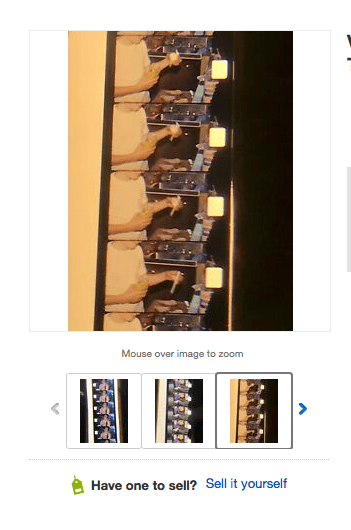
I have had the film returned, digitised. I have not looked at it yet and held off writing more or making any decisions until I saw it. The company who did it were super helpful – and ended up sending two versions, one at the original cine-speed of 18fps and one at the more up to date speed (I will double-check to see if they’ve used of 24fps or something slightly slower as 24fps is still impressionistic even though we are so used to seeing that speed.)

Screenshot of the dropbox that has been sent below. It looks so tantalising! ‘A Commentary’  – how exciting… or perhaps it will just be disappointing and I shall need to go back to the drawing board. Let’s see.

Screen Shot 2019-12-24 at 10.31.43


CS: notes

In my plan, I suggested chapter’s 3 and 4 would merge and become less pedestrian – i.e. subject followed by examples. Instead examples should flow throughout the essay. And that an alternative topic for 4 might present itself at some point. I’m wondering now if addressing the difference between revisionism and reviewing but coming to different conclusions with new information is worth investigating. This would entail looking at quantum erasure too where the past is changed by what happens in the future – as in chapter 7 Barad. (See final episode of Good Omens for example of this in popular culture/fantasy science fiction – relevant for BOW)

BOW A3: Chance elements

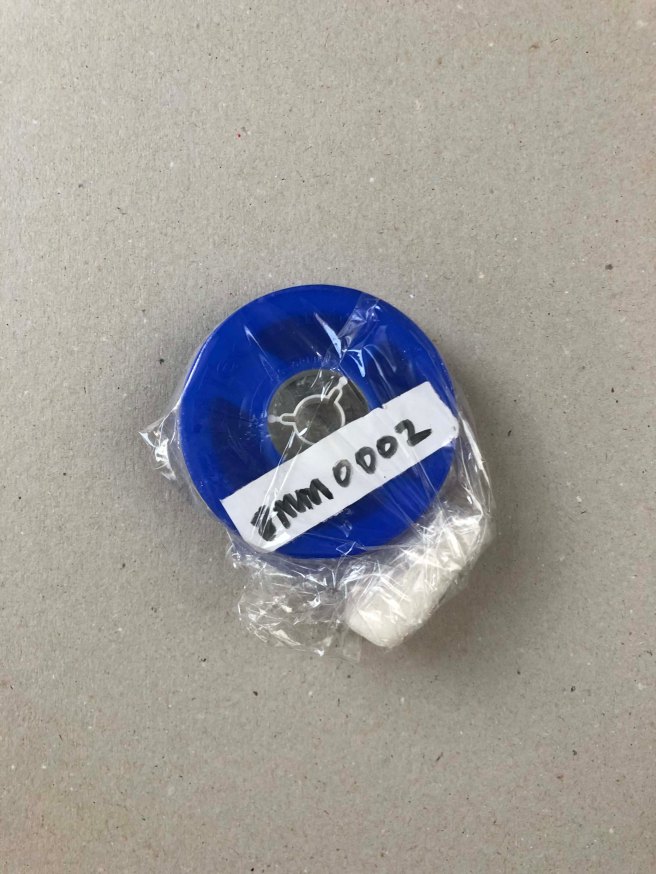
Phew – the super 8 film I ordered from eBay arrived today. I was beginning to get a bit twitchy. Must get this digitised before I can begin to experiment and play with both physical and digital versions, creating assemblages of matter and discursive practice, undoing the past and unsettling identity. I have no idea what is on it  – just that eBay claimed it was made in 1971, the year I was born. I may be able to use the images, I may not. I may only be able to use the object. I don’t know….

IMG_0877

Screen Shot 2019-12-13 at 17.03.48Screen Shot 2019-12-13 at 17.03.40

BOW A3: Planning notes

I wasn’t beginning to panic exactly but about two weeks ago I was wondering if I was ever going to settle on something that felt tangible and a little more focused, something to really begin digging down into.

I’ve been concentrating on the ideas and theories that I’m trying to understand and not really making much in the way of work – although have continued looking/searching for footage and relooking at my own recent work to see what’s emerging.

There are some films I think may be useful. If they haven’t got any actual material in them which I’d like to use, then perhaps phrases or titles inspire me.

I had the following disparate entities along with ideas/responses so far:

  • A string of seemingly unrelated snippets of text  – some in the ongoing stream of Random Notes for a Short Story ##, and some other things that might be called poems – although I want to avoid that word and looking back over these, I think I will find a way of typesetting to avoid them looking like traditional poems and rather like prose perhaps using / between each line. This not only negates the sense of fixed poetry, but it also echoes Barad’s explanation of intra/relatedness. 
  • I looked at images I’d made in Italy (and not used in A2 but in another sequence). The themes are related but the images made me yawn even though they are quite nice photographs. (Hover mouse over image for explanatory captions written for the sake of this post)A convention of used footage (appropriated) downloaded from the internet to make new films, and also still images by simply screenshotting or else literally photographing my computer and the images on the screen – less frequently. My commitment to using digital habits/techniques is deliberate  – see DI&C A3. I have a very serious problem with the common notion in the arts and photography that digital media and techniques are less valuable or less interesting than analogue and historical processes. This trend strikes me as being mired in middle-class, excluding values. I am also echoing a non-Western tradition of valuing things we in the West dismiss – an animist worldview. This was referenced in the Barbican’s recent Digital exhibition AI: More than Human (2019), Nam June Paik retrospective, Tate 2019, and in Lupton’s Data Selves (2019) (citing Bennett’s Vibrant Matter (2009), Thing Power & Enchantment etc… and counters exceptionalism and binary thinking). I will continue in this vein because I think it’s really important to defy the ‘insidious unconscious reinforcers’ (Small, 1999)* that limit us. Artists, in particular, can be as backward-looking as the populists they claim to know better than who come across as if they want to go back to an imagined time that was ‘better’ – by rolling around in nostalgic practices while dismissing newer ones which give creative access to many, many more people.  This strategy of mine is not a wholehearted endorsement of all things digital. It is not a niave embracing of the new and rejection of the old. tech media is not immaterial as many think. It ‘is not clean’ – see CCA talk below. It is certainly not without its negative impact and connotations. As mentioned in a previous blog – this ‘is also explored in Vilém Flusser’s Towards a Philosophy of Photography (2012). The ideology is in the apparatus and photographers (all except experimental ones!) are flunkies or to use his word, functionaries – they ‘are inside their apparatus and bound up with it’ (loc 2086).’ (Field, 2019). (One of the people I worked with via Pic London is doing a talk in Glasgow which I can’t make called ‘Our best machines are made of sunshine’. CCA)
  • When I present work to a cohort of students who I meet regularly there is always a question about the form: ‘but is this acceptable? it’s moving image / or it’s about moving image and this is a photography course?’ It happens every time despite the fact I have sought reassurance from Wendy McMurdo (who suggested using moving image herself, just as I was discovering my long-term interest on the impact of cinema and its related activities on my developing sense of self), and Andrea Norrington (DI&C tutor); and reassurances have been verified by the fact both the tutors I now have are connected to and use moving image as well as other media. I do pass all of this on but yet, each time I’m once again questioned about my use of /reference to moving image. In terms of the recent essay, this questioning tells me I need to make a particular concept much clearer and will discuss when writing up feedback, but other than that, this constant questioning reveals a common confusion over what photography is and how still/moving differ and are the same. What’s more – it reveals the ‘Cartesian habit of mind’ (Barad, 2011) which I am at pains to deconstruct. It highlights the lines we modern Western humans are so desperate to impose. But – even my tutor asked, ‘are you going to concentrate on still or moving?’He has not been following my work for a while though so it’s somewhat forgivable. My cohort, if not avidly following my progress might have least have noticed constant freezing of moving images  – making a single frame out of several, focusing on the cut from one scene to another – where there is a blend of frames on view. They might have seen the reverse action – i.e. instead of adding many frames together to make them move, I have taken single frames and stopped the animation.  Then reintroduced animation while maintaining the stillness. Had they been looking they might have picked up on the desire to stop the ongoing simulation with its ‘insidious unconscious reinforcers’ (Small, 1999) and seen me step inside of it and take a look around.
  • I have explored the difference between film and still image – they are both the same at the centre. We humans either look at a single frame or we add many frames together to create the impression of reality. It is, however, an impression, we do not move at 24 fps and some filmmakers are experimenting with higher fps but we are so used to having an impressionistic view that we don’t always much like it in cinema. But video games, ‘today are developed with the goal of hitting a frame rate of 60 fps but anywhere between 30 fps to 60 fps is considered acceptable. That’s not to say that games cannot exceed 60 fps, in fact, many do, but anything below 30 fps, animations may start to become choppy and show a lack of fluid motion.’ (Klappenbach, 2019)
  • To reiterate – I am stopping the simulation when I take a screenshot or focus on the glitchy frames that show two scenes chopped together.
  • I am making work in the reverse order that is usually made/and chopping up the order.
  • I am looking at the capturing of light  – the core activity of still and moving photography. What happens afterward re the temporality we impose on our captured light (life) is also of interest because it relates to the constructive nature of existence  – which according to some visual scientists is what we ourselves do in any case even when we’re not making films.
  • See ancient mythology and compare to modern mythology (advertising whether honest or subversive in the cinema).
  • The following may be a useful paper for me –
    A New/Old Ontology of Film Rafe McGregor (2013)
    The purpose of this article is to examine the ontological effects of digital technology, and determine whether digital films, traditional films, and pre- traditional motion pictures belong to the same category.
    https://www.euppublishing.com/doi/pdfplus/10.3366/film.2013.0015 
  • Not wishing to introduce spoilers – but McGregor concludes ‘At this point in the second decade of the twenty-first century, however, digital film remains – like traditional film and its predecessors – the art of moving pictures’ and I suspect I will find that at the core of both film and still, regardless of digital or analouge  – the capture of light is the same thing. However, various processes enable different social outcomes due to access, cost, and social biases that are linked to ideologies feeding into them.
  • But – moving image (digital or analogue – once it’s on the internet, there is no difference) gives the appearance of being more like a wave than a particle and therefore, perhaps a useful means of conveying some of the ideas that come along with the particular weird phenomenon where particles behave like waves when measured under certain conditions – and related phenomena.
  • This resolute determination to exist with a Cartesian habit of mind in our institutions and society means two things for me:1. I have found a way forward for this project. I have ordered a Super 8 home movie made in 1971 from E-bay. I was looking for two things – a moving image format that I could cut up (made still) and it should have been made in the year I was born. I will use this alongside fragments of text and make a book (a3) and film (thereafter) with it. I will need to digitise it before cutting it up into what I will need and playing with it which might delay me slightly – but knowing it’s on its way means I am free to carry on writing in the meantime.
  • 2. But it also infuriates me because it’s about pigeon-holing. The need to categorise everything into arbitrary manmade labeled domains limits us exponentially. It stops us from seeing and accepting complexity and nuance. It filters out difference – see Barad ‘indeterminacy is an undoing of identity that unsettles the very nature of being and non being’. You can see this in England right now as it grapples with its identity crisis – what am I? British, European, Labour, Conservative, Liberal or none of them  – oh my god – how can I be all these things and none of them…’ aaargh!!!!’ goes the collective wail. It is reductive and insulting to keep pigeon-holing. It’s also rude and belittling. It is the antithesis of superpositions.

Summary:

  • My work is an attempt to visit a non-cartesian world and see what it looks like
  • It is a response to Cartesian reductiveness and habitual narrowing of meaning
  • It hopefully will do this via many intra/related mico-narratives
  • The themes are human temporality – both biological and mechanical, consumerism (the modern religion) and the relationship between narrative and the evolving worldview we are revisiting (we weren’t always in this place)
  • The process in CS is informing the potential outcomes in BOW for the momentOverall – I think the work could be called PLEASE for mercy’s sake stop with the arbitrary categorising, stop with the Cartesian habit of mind!! But it’s not very catchy, is it?
  • I am not decided yet but I may simply call the work CUT  (perhaps with a subheading about fragments for the modern consumer but I will decide later) linked to the fact I will cut up the film I’ve ordered, edits in filmmaking and meaning (see BBCs latest accepted ‘mistake’ re-editing different answers to questions to imply a new meaning) and links to Barad’s agential cut.

‘Kember and Zylinska (2012) use the concept of the agenital cut to argue that any attempt to impose meaning and order is an intervention (a cut) that produces specific effects, and is inevitably part of the matter it seeks to observe or document. They represent photography as a specific cut in meaning, a way of delimiting from all the choices available that can be recorded and displayed, and therefore, how meaning can be generated. It is the means by which things are brought into being by humans and non-humans (e.g. cameras) working together. Photography makes agential cuts that produce life forms rather than simply documenting them. It is a way of giving form to matter’ (Kember and Zylinska 2012:84) They do not differentiate here between moving and still photography (I would need to investigate further  but it makes no sense to in these terms.)

‘To see one must actively intervene’ (Barad, 2007:51 – citing Hacking)

*Quote taken from an anthropology book about the formation and feedback of culture and self in relation to cost/benefit ratios and social-economic needs. Although the book focuses on childcare practice cross-culturally, the premise is relevant. By looking at photography through the prism of child anthropology (along with the other intra/related disciplines I visit), perhaps I am engaging in a diffractive practice.

Refs:

Barad, K. M. (2007) Meeting the universe halfway: quantum physics and the entanglement of matter and meaning. Durham: Duke University Press.

Flusser, V. (2012) Towards a philosophy of photography. London: Reaktion Books.

Klappenbach, M. (2019) Understanding and Optimizing Video Game Frame Rates. [Gaming Magazine Online] At: https://www.lifewire.com/optimizing-video-game-frame-rates-811784 (Accessed 02/12/2019).

Lupton, D. (2019) Data selves: more-than-human perspectives. Cambridge, UK ; Medford, MA: Polity.

Small, M. F. (1999) Our babies, ourselves: how biology and culture shape the way we parent. New York; London: Bantam ; Kuperard.

BOW/CS: To-do-list

  • Do BOW A3 coursework
  • Add peer feedback comments and response to relevant page CS A2
  • Make adjustments to draft where necessary
  • Update where I’m at with BOW A3 planning and ideas
  • Begin writing (in note form if necessary) CS A3

It’s busy here (pre Xmas/school/work etc.) and I am feeling a little overwhelmed with everything that needs doing in order to keep on top of deadlines, as well as not losing touch with the unfolding thread. I think the hardest thing is about this – other than the difficulty of pulling apart thoughts relating to a tricky subject  – is doing two courses together. Managing time and thoughts is incredibly challenging.

Ordering of the above:

  1. Update where I am with BOW A3 planning/ideas
  2. Add peer feedback to CS A2
  3. Make adjustments to CS A2 where I can at this time
  4. Do BOW A3 coursework
  5. Begin writing CS A3 plan and 1000 word sample