Artist: Peter Horvath

https://www.riseart.com/article/2019-12-17-artists-interviews-peeling-back-contemporary-collage-with-peter-horvath

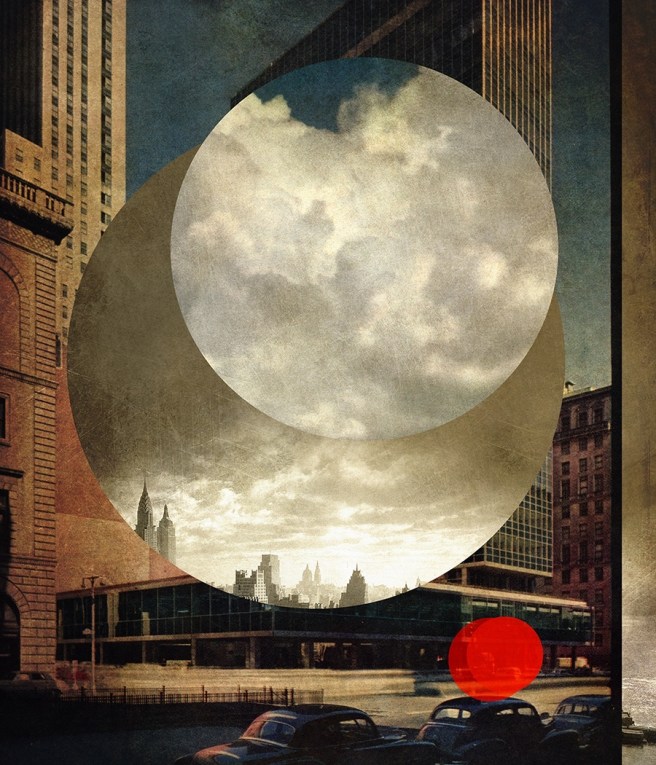
Peter Hovarth New York State of Mind 2018

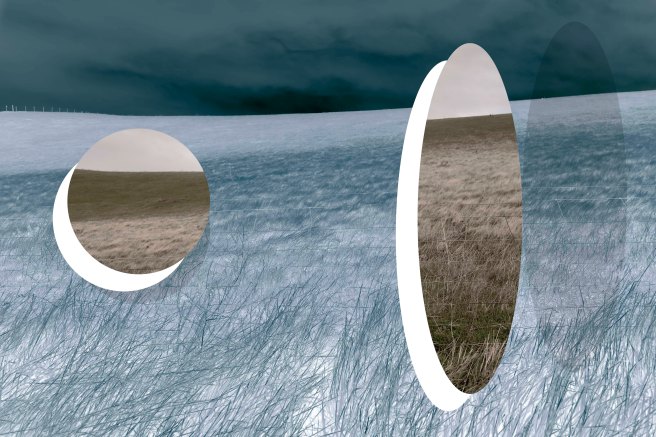
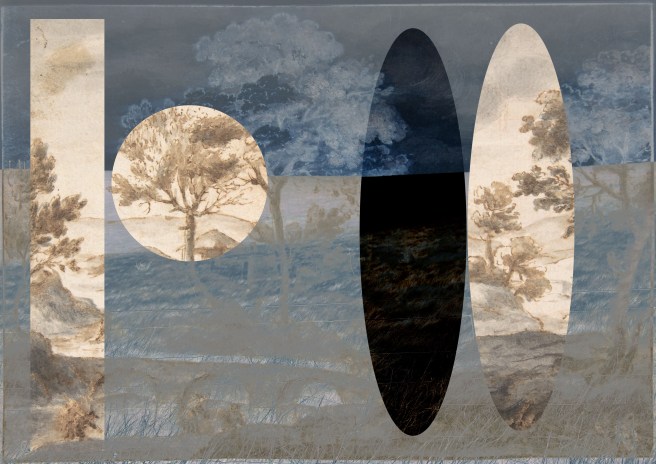
Using mainly images from early 20th Century advertising and Hollywood, these pieces explore early consumer culture. However, by taking these images out of their usual context, Horvath repurposes them and completely redefines their meaning in fresh and interesting ways. We caught up with Peter to find out a little more about his artistic journey, process and some of his plans for the future.‘ Couldn’t be more relevant!

Useful example of someone making work about consumerism. Will keep as someone to refer to possibly when writing up BOW notes. And although I’ve sort of rejected or not developed what I was playing with earlier this quarter, some of his images are reminiscent of these experiments.

CS A3: Plan, sample text, schedule

Full document – inlcudes Sample, plan, schedule, bibliography and reflection:

CS A3 Entanglement Draft 5 – sample only .edited

Cut section (focuses on systems but think this muddies the water in an essay that needs to retain focus, despite the rhizome nature of the methodology – the cut section provides a background, so might need to insert some nuggets of information into the main body, however.)

Section cut from plan CS A3


CS A2: Rewritten following feedback

Added here 01/09/2020

Adjustments made to citations and referencing and a couple of sentences rewritten – submitted for assessment.

December 2019:

Following feedback from various sources including Matt, and while continuing to work on CA A3, attached is an updated version of the Portfolio Review assignment.

(Things to do – double check captions beneath mages.)

December 2019 CS A2 Can I be dead and alive a the same time .edited

CA A3: Plan and sample almost ready to share and submit

I have been really so ill the last week which has meant lots of plans cancelled. The good thing is I have been stuck indoors watching YouTube videos of Karen Barad and reading her book and making notes and writing and rewriting and preparing A3. I’ve sort of been at it the whole time (maybe that’s why it’s taking so long to get better).

Today I sent the sample to a physicist I have stumbled across who has kindly agreed to take a look at the theory and make sure I’m not making wildly inaccurate claims about quantum mechanics. I think it may be a strange thing for him to do though because Barad whose work my whole hypothesis bounces around is this peculiar hybrid of humanities and science which is unusual. But I am grateful to have the opportunity to have an actual scientist glance over my ideas – even though I suspect it might read to him like a 5-year-old’s version of the ideas he explores.

I asked him to look at the research question and pick holes in it – it is currently looking like this:


Diffraction

Entanglement 

&

Photography


According to contemporary science-philosophies, the notion of isolated, unrelated objects in a void universe expresses an out-dated and unhelpful view of reality. Rather than seeing ‘things’ which have their own place in space and time, many academics have been exploring a universe which is emergent, and where everything is interconnected, relational, dynamic, non-linear and lively. 


Within this evolving view of the universe, how – or can – photography successfully communicate the contemporary model described above? Or is it fatally challenged by its ontology? 


I will upload his response (unless he tells me it’s all crap – in which case I’ll cry and start again) and the rest of the sample before long, hopefully.


Lastly, because of the Hollins paper I recorded here recently, I am tempted to rethink the very top heading. I will wait and see.


BOW A3: Chance elements

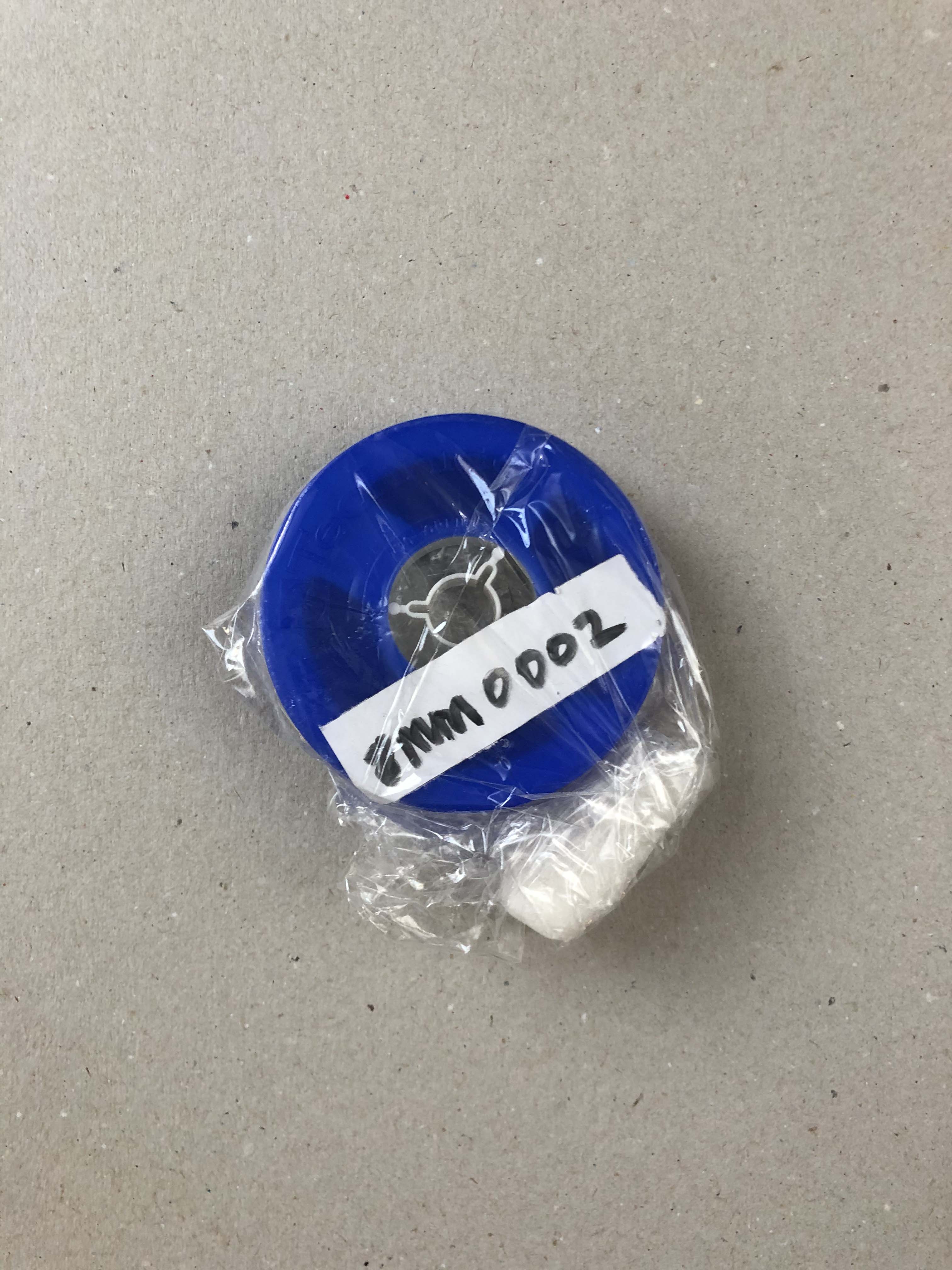
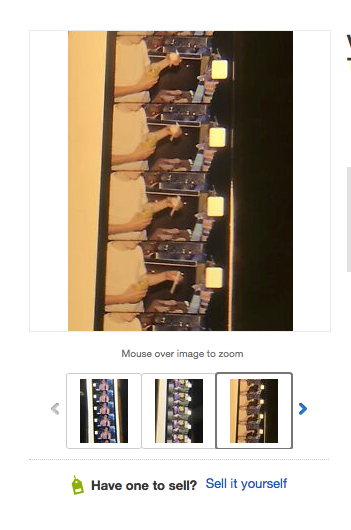
Phew – the super 8 film I ordered from eBay arrived today. I was beginning to get a bit twitchy. Must get this digitised before I can begin to experiment and play with both physical and digital versions, creating assemblages of matter and discursive practice, undoing the past and unsettling identity. I have no idea what is on it  – just that eBay claimed it was made in 1971, the year I was born. I may be able to use the images, I may not. I may only be able to use the object. I don’t know….

IMG_0877

Screen Shot 2019-12-13 at 17.03.48Screen Shot 2019-12-13 at 17.03.40

BOW A3: Planning notes

I wasn’t beginning to panic exactly but about two weeks ago I was wondering if I was ever going to settle on something that felt tangible and a little more focused, something to really begin digging down into.

I’ve been concentrating on the ideas and theories that I’m trying to understand and not really making much in the way of work – although have continued looking/searching for footage and relooking at my own recent work to see what’s emerging.

There are some films I think may be useful. If they haven’t got any actual material in them which I’d like to use, then perhaps phrases or titles inspire me.

I had the following disparate entities along with ideas/responses so far:

  • A string of seemingly unrelated snippets of text  – some in the ongoing stream of Random Notes for a Short Story ##, and some other things that might be called poems – although I want to avoid that word and looking back over these, I think I will find a way of typesetting to avoid them looking like traditional poems and rather like prose perhaps using / between each line. This not only negates the sense of fixed poetry, but it also echoes Barad’s explanation of intra/relatedness. 
  • I looked at images I’d made in Italy (and not used in A2 but in another sequence). The themes are related but the images made me yawn even though they are quite nice photographs. (Hover mouse over image for explanatory captions written for the sake of this post)A convention of used footage (appropriated) downloaded from the internet to make new films, and also still images by simply screenshotting or else literally photographing my computer and the images on the screen – less frequently. My commitment to using digital habits/techniques is deliberate  – see DI&C A3. I have a very serious problem with the common notion in the arts and photography that digital media and techniques are less valuable or less interesting than analogue and historical processes. This trend strikes me as being mired in middle-class, excluding values. I am also echoing a non-Western tradition of valuing things we in the West dismiss – an animist worldview. This was referenced in the Barbican’s recent Digital exhibition AI: More than Human (2019), Nam June Paik retrospective, Tate 2019, and in Lupton’s Data Selves (2019) (citing Bennett’s Vibrant Matter (2009), Thing Power & Enchantment etc… and counters exceptionalism and binary thinking). I will continue in this vein because I think it’s really important to defy the ‘insidious unconscious reinforcers’ (Small, 1999)* that limit us. Artists, in particular, can be as backward-looking as the populists they claim to know better than who come across as if they want to go back to an imagined time that was ‘better’ – by rolling around in nostalgic practices while dismissing newer ones which give creative access to many, many more people.  This strategy of mine is not a wholehearted endorsement of all things digital. It is not a niave embracing of the new and rejection of the old. tech media is not immaterial as many think. It ‘is not clean’ – see CCA talk below. It is certainly not without its negative impact and connotations. As mentioned in a previous blog – this ‘is also explored in Vilém Flusser’s Towards a Philosophy of Photography (2012). The ideology is in the apparatus and photographers (all except experimental ones!) are flunkies or to use his word, functionaries – they ‘are inside their apparatus and bound up with it’ (loc 2086).’ (Field, 2019). (One of the people I worked with via Pic London is doing a talk in Glasgow which I can’t make called ‘Our best machines are made of sunshine’. CCA)
  • When I present work to a cohort of students who I meet regularly there is always a question about the form: ‘but is this acceptable? it’s moving image / or it’s about moving image and this is a photography course?’ It happens every time despite the fact I have sought reassurance from Wendy McMurdo (who suggested using moving image herself, just as I was discovering my long-term interest on the impact of cinema and its related activities on my developing sense of self), and Andrea Norrington (DI&C tutor); and reassurances have been verified by the fact both the tutors I now have are connected to and use moving image as well as other media. I do pass all of this on but yet, each time I’m once again questioned about my use of /reference to moving image. In terms of the recent essay, this questioning tells me I need to make a particular concept much clearer and will discuss when writing up feedback, but other than that, this constant questioning reveals a common confusion over what photography is and how still/moving differ and are the same. What’s more – it reveals the ‘Cartesian habit of mind’ (Barad, 2011) which I am at pains to deconstruct. It highlights the lines we modern Western humans are so desperate to impose. But – even my tutor asked, ‘are you going to concentrate on still or moving?’He has not been following my work for a while though so it’s somewhat forgivable. My cohort, if not avidly following my progress might have least have noticed constant freezing of moving images  – making a single frame out of several, focusing on the cut from one scene to another – where there is a blend of frames on view. They might have seen the reverse action – i.e. instead of adding many frames together to make them move, I have taken single frames and stopped the animation.  Then reintroduced animation while maintaining the stillness. Had they been looking they might have picked up on the desire to stop the ongoing simulation with its ‘insidious unconscious reinforcers’ (Small, 1999) and seen me step inside of it and take a look around.
  • I have explored the difference between film and still image – they are both the same at the centre. We humans either look at a single frame or we add many frames together to create the impression of reality. It is, however, an impression, we do not move at 24 fps and some filmmakers are experimenting with higher fps but we are so used to having an impressionistic view that we don’t always much like it in cinema. But video games, ‘today are developed with the goal of hitting a frame rate of 60 fps but anywhere between 30 fps to 60 fps is considered acceptable. That’s not to say that games cannot exceed 60 fps, in fact, many do, but anything below 30 fps, animations may start to become choppy and show a lack of fluid motion.’ (Klappenbach, 2019)
  • To reiterate – I am stopping the simulation when I take a screenshot or focus on the glitchy frames that show two scenes chopped together.
  • I am making work in the reverse order that is usually made/and chopping up the order.
  • I am looking at the capturing of light  – the core activity of still and moving photography. What happens afterward re the temporality we impose on our captured light (life) is also of interest because it relates to the constructive nature of existence  – which according to some visual scientists is what we ourselves do in any case even when we’re not making films.
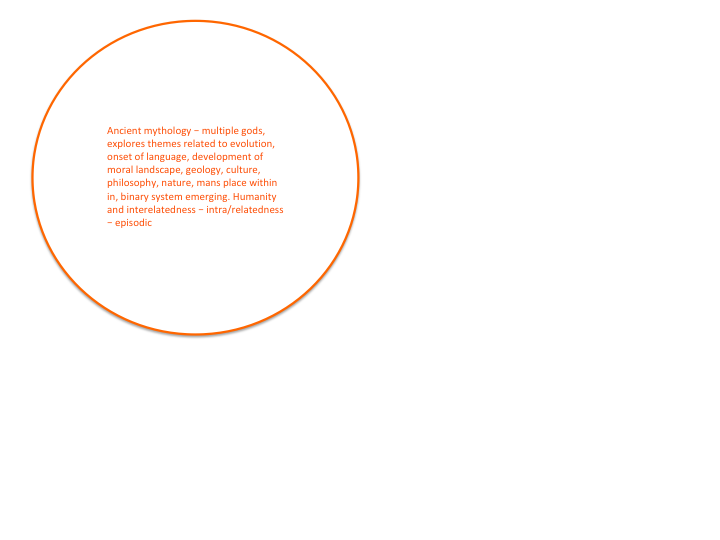
  • See ancient mythology and compare to modern mythology (advertising whether honest or subversive in the cinema).
  • The following may be a useful paper for me –
    A New/Old Ontology of Film Rafe McGregor (2013)
    The purpose of this article is to examine the ontological effects of digital technology, and determine whether digital films, traditional films, and pre- traditional motion pictures belong to the same category.
    https://www.euppublishing.com/doi/pdfplus/10.3366/film.2013.0015 
  • Not wishing to introduce spoilers – but McGregor concludes ‘At this point in the second decade of the twenty-first century, however, digital film remains – like traditional film and its predecessors – the art of moving pictures’ and I suspect I will find that at the core of both film and still, regardless of digital or analouge  – the capture of light is the same thing. However, various processes enable different social outcomes due to access, cost, and social biases that are linked to ideologies feeding into them.
  • But – moving image (digital or analogue – once it’s on the internet, there is no difference) gives the appearance of being more like a wave than a particle and therefore, perhaps a useful means of conveying some of the ideas that come along with the particular weird phenomenon where particles behave like waves when measured under certain conditions – and related phenomena.
  • This resolute determination to exist with a Cartesian habit of mind in our institutions and society means two things for me:1. I have found a way forward for this project. I have ordered a Super 8 home movie made in 1971 from E-bay. I was looking for two things – a moving image format that I could cut up (made still) and it should have been made in the year I was born. I will use this alongside fragments of text and make a book (a3) and film (thereafter) with it. I will need to digitise it before cutting it up into what I will need and playing with it which might delay me slightly – but knowing it’s on its way means I am free to carry on writing in the meantime.
  • 2. But it also infuriates me because it’s about pigeon-holing. The need to categorise everything into arbitrary manmade labeled domains limits us exponentially. It stops us from seeing and accepting complexity and nuance. It filters out difference – see Barad ‘indeterminacy is an undoing of identity that unsettles the very nature of being and non being’. You can see this in England right now as it grapples with its identity crisis – what am I? British, European, Labour, Conservative, Liberal or none of them  – oh my god – how can I be all these things and none of them…’ aaargh!!!!’ goes the collective wail. It is reductive and insulting to keep pigeon-holing. It’s also rude and belittling. It is the antithesis of superpositions.

Summary:

  • My work is an attempt to visit a non-cartesian world and see what it looks like
  • It is a response to Cartesian reductiveness and habitual narrowing of meaning
  • It hopefully will do this via many intra/related mico-narratives
  • The themes are human temporality – both biological and mechanical, consumerism (the modern religion) and the relationship between narrative and the evolving worldview we are revisiting (we weren’t always in this place)
  • The process in CS is informing the potential outcomes in BOW for the momentOverall – I think the work could be called PLEASE for mercy’s sake stop with the arbitrary categorising, stop with the Cartesian habit of mind!! But it’s not very catchy, is it?
  • I am not decided yet but I may simply call the work CUT  (perhaps with a subheading about fragments for the modern consumer but I will decide later) linked to the fact I will cut up the film I’ve ordered, edits in filmmaking and meaning (see BBCs latest accepted ‘mistake’ re-editing different answers to questions to imply a new meaning) and links to Barad’s agential cut.

‘Kember and Zylinska (2012) use the concept of the agenital cut to argue that any attempt to impose meaning and order is an intervention (a cut) that produces specific effects, and is inevitably part of the matter it seeks to observe or document. They represent photography as a specific cut in meaning, a way of delimiting from all the choices available that can be recorded and displayed, and therefore, how meaning can be generated. It is the means by which things are brought into being by humans and non-humans (e.g. cameras) working together. Photography makes agential cuts that produce life forms rather than simply documenting them. It is a way of giving form to matter’ (Kember and Zylinska 2012:84) They do not differentiate here between moving and still photography (I would need to investigate further  but it makes no sense to in these terms.)

‘To see one must actively intervene’ (Barad, 2007:51 – citing Hacking)

*Quote taken from an anthropology book about the formation and feedback of culture and self in relation to cost/benefit ratios and social-economic needs. Although the book focuses on childcare practice cross-culturally, the premise is relevant. By looking at photography through the prism of child anthropology (along with the other intra/related disciplines I visit), perhaps I am engaging in a diffractive practice.

Refs:

Barad, K. M. (2007) Meeting the universe halfway: quantum physics and the entanglement of matter and meaning. Durham: Duke University Press.

Flusser, V. (2012) Towards a philosophy of photography. London: Reaktion Books.

Klappenbach, M. (2019) Understanding and Optimizing Video Game Frame Rates. [Gaming Magazine Online] At: https://www.lifewire.com/optimizing-video-game-frame-rates-811784 (Accessed 02/12/2019).

Lupton, D. (2019) Data selves: more-than-human perspectives. Cambridge, UK ; Medford, MA: Polity.

Small, M. F. (1999) Our babies, ourselves: how biology and culture shape the way we parent. New York; London: Bantam ; Kuperard.

BOW/CS: To-do-list

  • Do BOW A3 coursework
  • Add peer feedback comments and response to relevant page CS A2
  • Make adjustments to draft where necessary
  • Update where I’m at with BOW A3 planning and ideas
  • Begin writing (in note form if necessary) CS A3

It’s busy here (pre Xmas/school/work etc.) and I am feeling a little overwhelmed with everything that needs doing in order to keep on top of deadlines, as well as not losing touch with the unfolding thread. I think the hardest thing is about this – other than the difficulty of pulling apart thoughts relating to a tricky subject  – is doing two courses together. Managing time and thoughts is incredibly challenging.

Ordering of the above:

  1. Update where I am with BOW A3 planning/ideas
  2. Add peer feedback to CS A2
  3. Make adjustments to CS A2 where I can at this time
  4. Do BOW A3 coursework
  5. Begin writing CS A3 plan and 1000 word sample


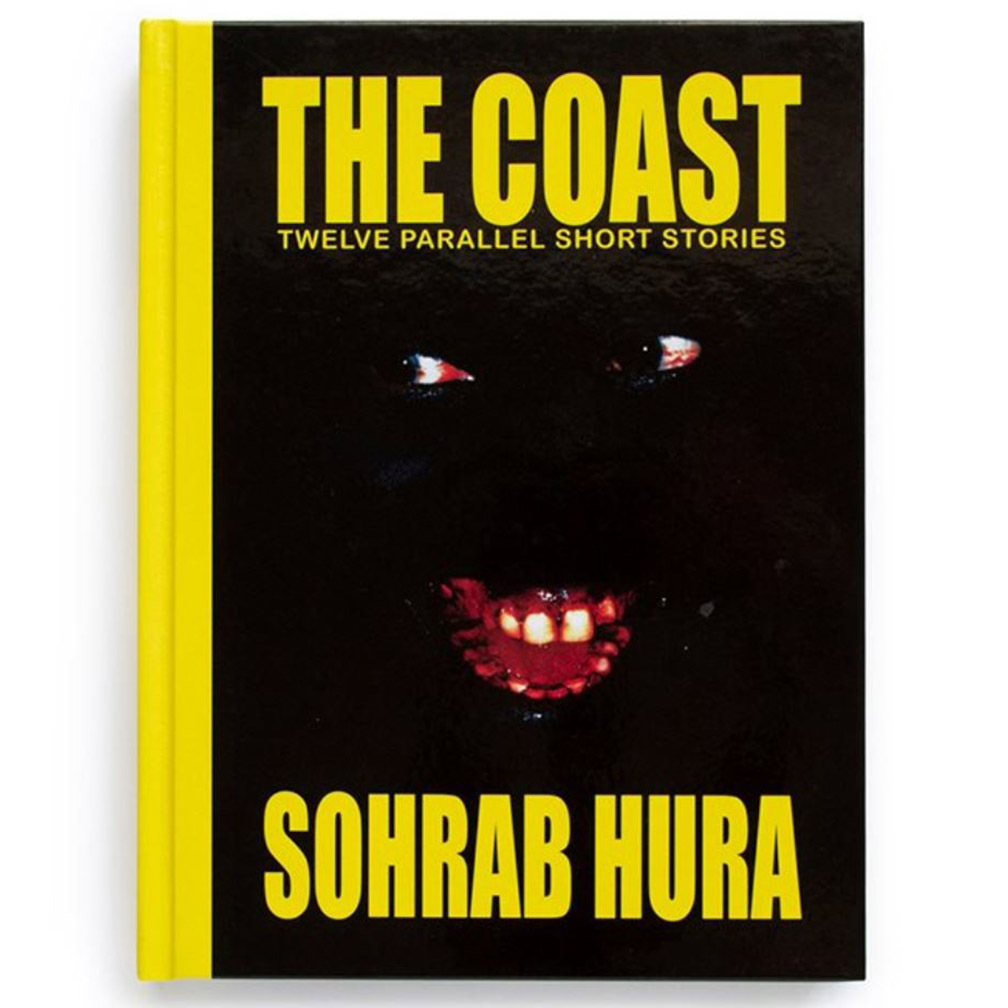
Artist (photobook): Sohrab Hura, The Coast


Absolutely love the look of this book, reviewed by Gerhard Clausing, and it seems inordinately relevant for me and my direction for BOW/CS. The mix of stories, images, the multiple states, not to mention the fantastically bold colours and content all appeal. Some of the images remind me of a clip from one of the films I’ve identified as a possible source a narrative in my own BOW, which will also be a collection of short stories alongside images – some very short indeed. Click on the link for the full review:

https://wordpress.com/read/blogs/4927285/posts/14353


00-coast
Image from the review – see link


“The carefully edited sequence of images and the surrounding mysterious short story versions go hand in hand. Sohrab Hura demonstrates that meanings can be altered by ever-so-slight changes in visual and verbal juxtapositions. This mirrors the current social media frenzy of believing imagined or constructed contexts or rumors more than facts that can be documented in incontrovertible detail. Is the person shown really injured?” (2019)

https://www.sohrabhura.com


CS/BOW Reflection: Long

I felt it would be useful for me to pause and consider where I am at this juncture, and where I came from in order to arrive here. The OCA has been an immensely useful container but the journey I’m on, the desire to understand something fundamental but hard to pinpoint began long before 2014. Perhaps as long ago as when I was a child watching how strangely the grown-ups behaved and wondering why. Or noticing how we (I) emulated others; accents, behaviours, tropes, and then absorbing these actions and making them ours (mine).

This will be a long post and is for my benefit rather than anyone else’s – it feels necessary and important to get these thoughts outside my head as a part of a process in relation to CS and BOW.  And also, that it should be more conversational as opposed to confined by the rigours of academia although the habit to identify quotes is strong nowadays. Ruth (previous CS tutor) had suggested experimenting with form for CS and so I won’t rule out including sections of this, or developing it, if down the line that seems like a route I would like to take.

I started making notes for this blog yesterday as I marched along the street, sweaty because it was very mild and I was dressed for the artic, muttering to myself about what exactly it is I am exploring here in this work; I began to formulate a narrative that linked my life with the theories and ideas I am looking at.

Right now, I think it always starts with digitisation. I am fascinated by the revolution we are currently living through, by the assumptions people make about it. About where it comes from, what it’s doing, why we’ve contrived to arrive at this point (without volition – is that possible? Or is contrived the wrong word?)

Groups used to be smaller. For most of our evolutionary history, we lived in manageable extended families. Across cultures, there were some basic similarities. Nikolas Christakis covers these in his book Blueprint (2019). He talks about a social suite, which ‘includes individuality, love, friendship, co-operation, learning and so on’.

He also talks about the dyadic nature of humans. I really like this. It’s a word I came across when I was reading about babies and their primary carers. In the baby literature, it implies living in this secondary invisible placenta; it contains mother and child. Both are deeply connected within and even shielded from something outside the dyad. Not all mothers experience this. And modern culture seems to makes it challenging for genuinely dyadic relationships. Some people suggest the high numbers of post-natal depression are related to this failure to connect – and I suspect there is some truth to that although it can also be down to a lack of support, which is of course, another connection with other mothers/parents/helpers – or allo-parents, a term used by Sarah Blaffer Hrdy, a socio-anthropologist who writes about mothers.

I was lucky. I did experience a deep connection with all of my children. During my divorce, I seemed to be able to protect my youngest in this little bubble from all the toxicity outside of it. It also taught me that symbolic language isn’t always necessary  (I should have been far more consciously and intellectually aware of this given my acting training)- that we can communicate without it, even while we are asleep. And that has been very important throughout this course. I’ve learned that symbolic language is a distancer. It helps us to distance ourselves from ourselves, never mind anyone or anything else. “Use your words” is a constant refrain to toddlers who prefer to lash out when angry. We ‘otherise’ ourselves, remove something and in the process de-intensify it – be it rage or love – through the use of symbolic language whether it’s written down or simply spoken. We send our thoughts out into the world with language; a little bit of ourselves leaves our bodies and lands elsewhere. It can land as a caress or a weapon and it has an effect but, while wounding with words can be devastating and the cause a chain of fatal events, it removes us from direct violence. Again, Christakis discusses this, as does Richard Wrangham in his book The Goodness Paradox (2019)

A little bit of us – a thought that gets heard is something that can affect others.

In a dyad between a mother and child, something else is going on. Physical reactions take place that don’t need words, not even as thoughts. A baby wakes in one room and your breasts start leaking in another. The prickly sensation of your milk ducts filling up is what alerts you and you check in to see your infant’s beaming face  – and they seem to have known you were on your way. I’m painting an idyllic picture  – it’s not always like this, obviously. And some women and babies have a really terrible time. There is so much in modern culture which gets in the way of the connecting behaviours that evolved to help us survive. But somehow most mothers (although not all) and also fathers overcome the many, many obstacles. When your child falls over, a jolting sensation takes place in your own body as if you too have fallen. The theory suggests mirror neurons are responsible, which apparently exist in all primates (and beyond no doubt). It happens with other relationships too but it’s very noticeable in parent/child pairs.

Christakis discusses the hyperdyadic nature of the human species. In other words, we are all connected, that is how we operate. Hegel talked about collective consciousness.  Edward O’ Wilson has spent a lifetime investigating the hive and applying it to human behaviour. Social contagion or mimetics are other words to describe this phenomenon. Despite sounding so modern, it seems plain as day to me that we are networked creatures and always have been. Christakis’s earlier book is indeed titled Connected (2009). These connections mean that ideas spread around cultures and groups even when there has been no physical contact. Wilson discusses this strange ability seen throughout history when inventions take place in more than one place at the same time.

The Internet is a response to a lack of connection, perhaps in particular relation to population growth. As groups got larger, we stopped being connected. Social fragmentation, evident in the artwork of the early 20th century is one expression of this loss of connection between people and in relation to how reality felt. We humans then ingeniously came up with a way to address that. We dug down into reality and found a way to emulate it. Despite its relative technological advancement our code is still a crude copy. And there is a problem. The code we use to make these connections is a language. It underpins all the forms and media that we see on our screens, which is also another layer of language. So inherent and embedded in the anatomy of the Internet is a process of distancing. What’s even more difficult, as my lovely and intelligent friend rages about often, the people writing the code are very frequently a certain type. “They are the nerds!” she states angrily. “The people who aren’t naturally social, who don’t understand relationships, who are on the spectrum and can’t communicate. The ones who don’t have any empathy!” This is blatant stereotyping but the people writing the code are aware there is a problem. They know they need to write empathy into the code. They know this. However, for now, empathy is missing and the fact the whole thing is structured on language which is itself a distancing process means there is a structural problem which we may never be able to overcome, although I have faith in humanity

We can be optimistic because while we have collectively tried to re-connect using digital technology, which emulates natural linkages, today we’ve not even begun to see just how powerful our technology will be. This is both frightening and exhilarating. Once quantum computing moves out of its infancy we will not only emulate ‘hyperdyadicness’ (not a real word, I know), we will reach a point where simulation and nature are interchangeable. There are many, many foreseeable and unforeseeable problems but we will go on an incredible journey as our clever people look for the solutions.

We have begun the process though. So far it has wrought terrible consequences in the form of nuclear war. But what we’ve lost over time as language developed and civilisation grew is currently being rediscovered through quantum science and systems theory (which is interdisciplinary – don’t underestimate how crucial that is). People often see similarities between Eastern philosophies and the newer sciences. But I am wary of spouting racist claptrap. However, it is well documented that the Dalai Lama is interested in quantum mechanics and Luisi and Capra (2007) devote a carefully written chapter to the relationship between spirituality and science.

Karen Barad’s book Meeting the Universe Halfway (2007) deals with the philosophy of quantum science. She cannot stress the importance of entanglement enough. She explains how ideology and world-views are embedded in the apparatus’ and the framing of our experiments and subsequent related objects and behaviours. This embedding is also explored in Vilém Flusser’s Towards a Philosophy of Photography (2012).  The ideology is in the apparatus and photographers (all except experimental ones) are flunkies or to use his word, functionaries  – they ‘are inside their apparatus and bound up with it’ (loc 2086).

What stops us from seeing this is our ‘Cartesian habit of mind’ (Barad, 2007). Both Systems Theory and quantum science urge us to move away from the strictures of a Newtonian/Cartesian worldview where isolated objects exist in a void universe and nothing is connected or relational. Entanglement has been lost in our understanding of reality and we are working our way back to incorporating it now. But there is a long way to go and it’s on the fringes of society – although arguments to suggest it is becoming embodied through our interactions with digital data.

The problem with arbitrary lines around isolated objects is that it too often engenders a simplistic, black and white of view of the world. (And that is being kind.) This can be seen across disciplines and in photography it is endemic. Photography which claims so loudly to be a ‘caller out of injustices’ seems in fact to reinforces unhelpful mentalities, undermines any attempts to move away from hierarchical thinking, narrows down meaning, oversimplifies complex issues, attracts monism, flattens nuances, strips away context and relationships. Still photography in particular entrenches all of that. It isolates and insists on objects in a void. It suggests the opposite of a ‘dynamic and shifting entangling of relationships’ (Barad, 2007: 35) no matter how hard people point out – and writers such as Ariella Azoulay have done -– that history and the objects we construct are forever subject to re-examination, are alive with possibility and liveliness.

There is something inherently unavoidable and entrenched, in particular in still and analogue photography. I look at the ontology of a photograph and see that at its core, still and moving image are one and the same thing. We may intervene and add lots of frames together or else we isolate a single frame but they are both an agential cut (a Baradian term which I will explain more fully in my extended essay and in BOW). It’s the isolating that causes problems.

I find it hard that people fail to appreciate intra-relatedness. My interactions with a secondary school shocked and enraged me too as my child was being so badly affected by their entrenched position in an out-dated reality, in a constructed and ludicrous simulation of the past that is no longer relevant and entirely inappropriate to its surroundings, and that they seemed utterly oblivious to emergent changes to the world or else angrily against them. This is especially unhelpful for young people who have grown up with the problematised Internet which, despite its many issues engenders a networked view of reality. It is frustrating beyond belief that so many want to drill down into detail so tiny, they leave no room and can only focus on single issues, which they hope will somehow communicate something greater, rather than simply isolating themselves and their ideas in the void. It astounds me how this habit of monism fails us but is still so prevalent and is taught in schools and colleges and universities; but then I recall the citation which I begin CS A2 (draft) with by Capra and Luigi: ‘It [this habit I’ve described] derives from the fact most people in our modern society, and especially large institutions, subscribe to the concepts of an outdated worldview, a perception of reality inadequate for dealing with our overpopulated, globally interconnected world.’ (2014) Inadequate is the key term here. Inadequate. This old way of seeing and being will not serve us going forward. That is not to say we should forget history. We can’t. Because in an intra-related world the past is enmeshed with the future and the present. We must, as Azoulay (2019) recommends, re-evaluate our Cartesian linear view of time.

In my work I am, like the child who watched and noticed the adults and my friends all copying each other, performing roles, connecting. We have always done this. The Internet makes it visible. It somehow speeds the process up (See Virilio (2008) on speed and technology). The breaks are no longer in place. But we will write them into the code again. In the meantime, I do believe we need to find ways to communicate and explore intra-relatedness. We must challenge linear understanding, flat thinking, monism. Not everyone I value or follow agrees that there are no objects, that process supersedes things. However, we have lived with that myopic view for so long in the West and it has taken us to a very dangerous place. And so it behooves anyone who has the capability of addressing and deconstructing it to do so.