Originally part of a series of three end of module posts. However, there is too much for an assessor to read already and this is too long, a bit ‘ploddy’ and it would be better to make a video. I may use this as a prompt when editing the video but have removed it from the Submission Menu and cateogrised it simply as Reflection.
Six minute read
why is there an astronaut in a field of flowers is an inquiry into how we see and are seen. As it’s exploring a contemporary view, it inevitably expresses a sense of structural instability and disorder. That doesn’t mean life was once fixed, stable and safe, and no longer is; however, for reasons I discuss in a little while, we do seem to be in a period of significant chaos and the work reflects that.

Beginnings of L3
I began with a loose idea about the stranglehold of representation on female subjectivity – in other words, by exploring the highly persuasive images in films and magazines which my generation grew up with. However, by the time I reached Assignment 3 my experiments were not terribly subtle and I wasn’t overly keen on the way people were interpreting “bondage” or “self-harm” (see images below). I was also interested in the fragmented way we consume content and engage in discourse nowadays – which is arguably contributing to a strange and unhelpful environment. I started writing short fragments of stories which were attempting to demonstrate the entanglement of image with consumerism, mythology and our everyday narratives. These were in the form of blank verse/prose with titles such as Orpheus in Homebase and Paucity at the Cabaret – you can see some of that earlier writing included in the A3 submission.


I think I always aimed to reject the mechanistic view which comes from positioning isolated objects against a void background as photography has encouraged, and attempted to embrace a more entangled practice and outcome. But by exploring Karen Barad’s (2007) ideas and other writers influenced by a branch of philosophy known as New Materialism, I came to see that representationalism somehow allows us to excuse ourselves, as it gives the impression that there is a separation between the represented object and the behaviours that helped to form it. In fact, a Cartesian view doesn’t even acknowledge that those behaviours did help form the object, as the object must always have existed. Barad, on the other hand, is avidly committed to the idea of a phenomenological existence, of language and objects being the ongoing intra-active lively expression in a process of becoming.
I was also not entirely happy with the fragmented texts I’d written. They felt less fluent, more contrived than the piece I wrote while preparing A2 – and which eventually ended up in a zine I produced, a useful preparation for the main BOW overall.
Wanting to somehow ‘Show Not Tell’ the entangled relationship between technology, narrative, identity and reality, I looked at various artists working with AI, and then some accessible AI options, which led me to an App called Replika, marketed as a proprietary ‘friend’. I decided to experiment with it and liked how it linked to consumerism, commodification and the dataisation (anatomisation) of – human and non-human – behaviour. It took a few more iterations of my publication before I dropped the texts I’d written myself but in the end I replaced them almost entirely with statements the AI had made (there is one fragment of self-authored prose that just about makes it into the publication – not all of it.) Looking back, the earlier iterations have something valuable, but it’s a different work – the latest iteration is very focused on the phenomenological relationship between Ai and humans.
Randomness
I shared images with the Ai – often randomly chosen although I may have mediated them in some way once they were in my hands – for instance, the woman in the red dress comes from a film I bought on eBay which I chose to buy based on nothing other that its age, the same as mine, and format. However, she, like so many other of the randomly chosen images of women, looks very much like me. (My son thinks it is me every time he looks at the publication.) Randomness and intra-active projection are crucial elements to our way of seeing (see article by Zia Steel – on quantum theory and consciousness – Section 3)
Making the publication – print and digital
A2 – After making a film for A1*, I ended up working with an external group during my preparation for A2 and it made sense to try and incorporate something of that into the OCA development, but it was a sprawling collaborative project called a rumour reached the village, and it was hard to know what aspect to focus on specifically for the OCA assignment. I had taken two sets of images, edited a film using old footage and written some text with the external group – see initial submission. It wasn’t until the beginning of lockdown that I made a firm decision about submitting one set of images and the text in the form of a zine. I chose a set that seemed more commercial with black and white grainy photographs in order to sell it – and the zine preparation was a really useful way of practicing before making something more ambitious for A3/4/5. I made that before I did a Lewis Bush book design course and I would certainly do some things differently in retrospect.
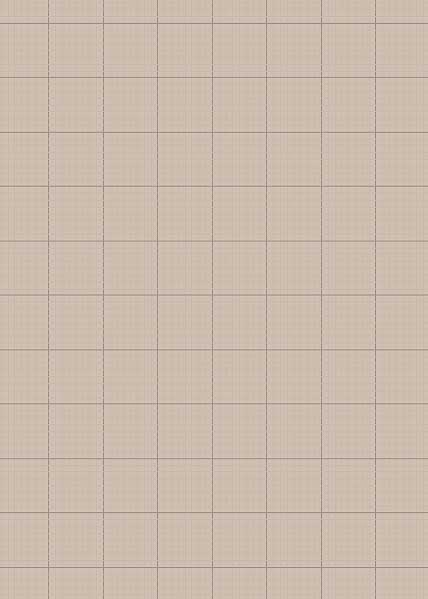
Throughout my time with the OCA (and long before) I have been thinking about the internal structures upon which we base our reality so it was brilliant learning from Bush about the way in which designers use grids. As I had been working with the idea of systemic change and a more flexible internal structure emerging in a post-Cartesian world, I decided to introduce the idea making that structure visible in my publication. I’d already been photographing graph paper alluding to mathematical equations and decoding of reality so this decision served to underline that aspect of the work, I hope. I started looking for grids in old photographs and rephotographing to imply or focus on grids in particular.


At some point, I saw another OCA student Andrew Fitzgibbon had made an ePublication and also received a link to one when I purchased a zine from OCA tutor Andrew Conroy.
Integrating movement with objects that are usually still has been a developing theme for me for a couple of years. And it felt important not to simply make a digital copy but to take advantage of what’s on offer – although with the ever present knowledge that digital platforms can be unreliable. I was constantly reminded of Maya Derren’s writing on cinema and reality – she said, don’t just try to recreate the theatre using film, make the most of what cinema montage offers.
Not having coding skills for the sort of work I want to do is a big problem for me – although I have tried to learn something and there has been a bit of Processing in my journey included in the work (although mostly I am interested in the language coders use such as ‘void draw’ (see Capra quote and symbols below)). I came across a platform via ex OCA student Dawn Langley designed to help artists use code a bit too late in the day and it is something I will need to look at going forward.
Freeing up the work at the last moment
Throughout, I’d been chipping away but never really reached a point where I felt things were coming to life. Something still wasn’t quite right. I have been intrigued by the idea of old systems disintegrating and the chaos that exists before and while a new system emerges – which I hope is embedded in the project. Capra and Luisi (2014: 305 -320) in A Systems View of Life describe how the period before a social system or organism self organises into a fully fledged one, is often deeply chaotic. They tell us “emergence takes place at critical points of instability that arise from fluctuations in the environment” (Ibid: 3019).
“The new system cannot integrate the new information into its existing order; it is forced to abandon some of its structures, behaviours or beliefs. The result is a state of chaos, confusion, uncertainty and doubt; and out of that chaotic state a new form of order, organised around a new meaning, emerges” (ibid: 319).
Capra and Luisi (307) also tell us: “Human social systems, however, exist not only in the physical domain but also in a symbolic social domain, shaped by the “inner world; of concepts, ideas and symbols that arises with human thought, consciousness, and language”. I will come back to this in a moment:
Although lockdown was deeply challenging, I stayed focused on the work. Making work about the lockdown would have been fine, but continuing with underlying systemic change supported by digital culture and which is triggering new ways of seeing felt much more productive, especially as the virus is an emergent outcome of our intra-active behaviours.
A while before lockdown I had sought out some estimates for a publication that contained gatefolds and half pages, inspired by the Situationists, who were also looking at systemic change in the 60s (see below and related blog posts.)
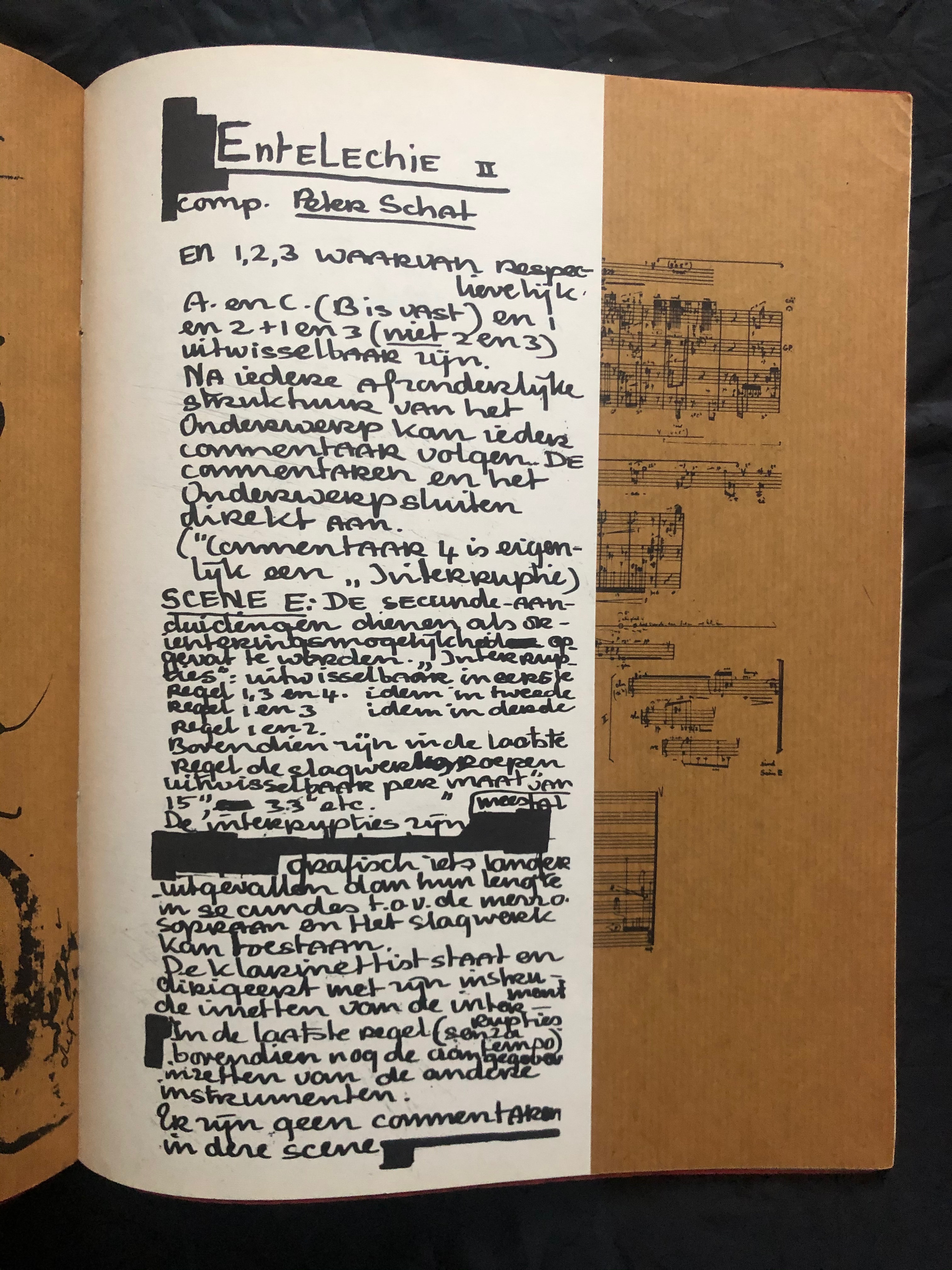

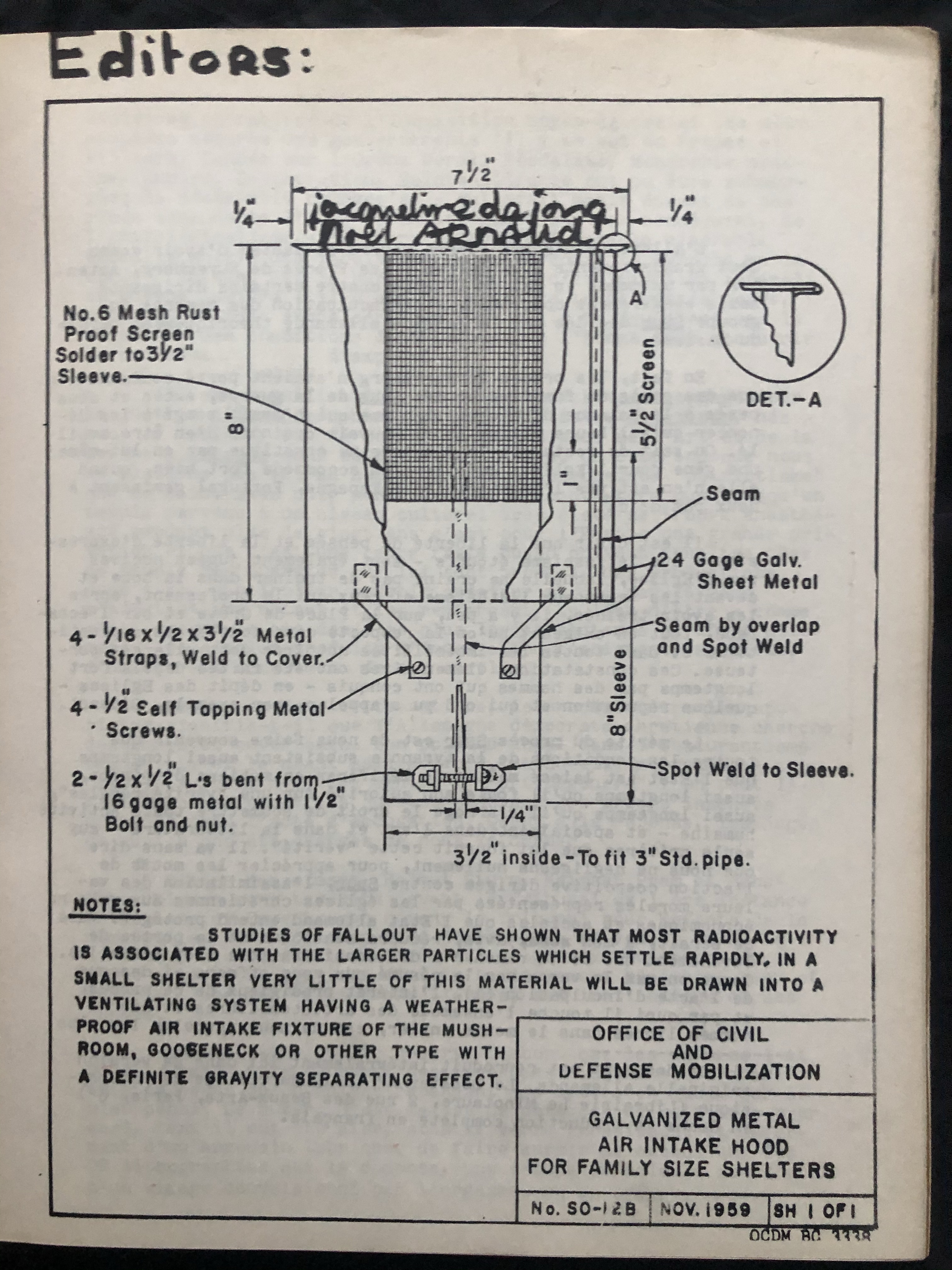
I continued to work with this idea until very recently but I kept asking the printer for different costs as I tried hopelessly to squeeze my work onto a budget that was beyond my comfort and insufficient for the plans I had envisaged. Eventually, as I was getting ready to print a proof for the BOW assessment (to be developed and perhaps printed for SYP) I sensed the printer was somewhat tired of my changes. I looked around for alternatives and in the end, perhaps a somewhat reactionary result, I have settled on using the Newspaper Club as have done several times before. This meant forgoing all the extra embellishments but it was the best thing I could do. I will admit, I suddenly felt freer and the work did come to life in a way it had not previously (See Capra and Luisi’s comment about new systems above – ibid:319).
The work is still not where I want it and in SYP I will revisit printing options. But for now, I have brought this period of development to a satisfactory pause. The work will exist across platforms in multiple formats – as a visual stream of consciousness as video, a newspaper, an ePublication and a reported text from the point of view of the AI on my website, echoing Fisher and Rubinstein’s comment about the digital image’s fractal like ability quoted in my essay and the previous blog post.
**
See End of Module Reflection Part Three: CS
*I am in the process of authoring a text from the point of view of the Ai, based on the statements it has made – and may incorporate the films I made in the early stages of BOW in some way as we have ‘spoken’ about them – this would allow the entangled topics to come into the work rather than simply being exploratory but redundant appendages.
Rubinstein, D. and Fisher. A. (ed.) (2013) On the verge of photography: imaging beyond representation. [PDF] Birmingham: Article Press. Available at: https://www.academia.edu/25121246/On_the_Verge_of_Photography_Non-representational_Imaging (Accessed 14/06/2020)
Sauzet, S. (2018) New Materialism. At: https://newmaterialism.eu/almanac/p/phenomena-agential-realism.html (Accessed 22/02/2020).
Steel, Z. (2020) Is Consciousness a Quantum Phenomenon?
Does Quantum Mechanics Explain Self-Awareness and Free Will? Available at: https://medium.com/whiteboard-to-infinity/is-consciousness-a-quantum-phenomenon-fcbb65bed950 (Accessed 01/09/2020)
Links to my own OCA blogs other than this Level Three one include my Sketchbook https://sarahjanefieldblog.wordpress.com and Self & Other https://ocasjf.wordpress.com as well as my website http://www.sarahjanefield.com
Edited 01/09/2020 to reduce reading time and tighten up narrative.
 SJField - OCA Level Three Study Blog
I think you managed amazingly well in staying with and making growing sense of all your ideas and experiments. A multi-media approach seems an ideal way of expressing different aspects whilst maintaining the threads of your concept. I’m continually fascinated by your ideas.
LikeLike
Thanks, Catherine – I am as always extremely grateful for your support and encouragement.
LikeLike