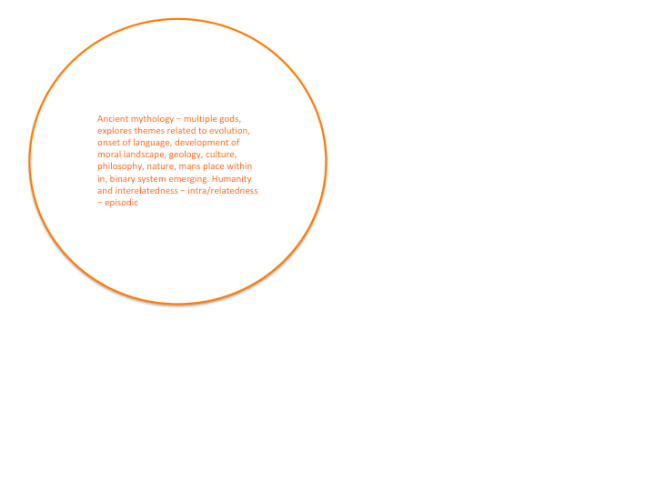
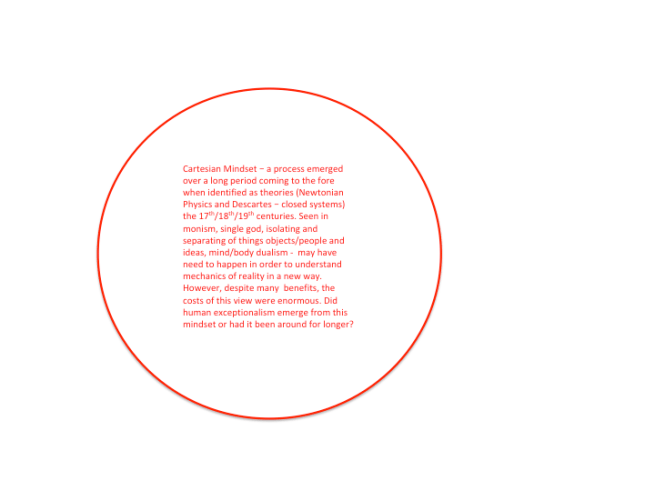
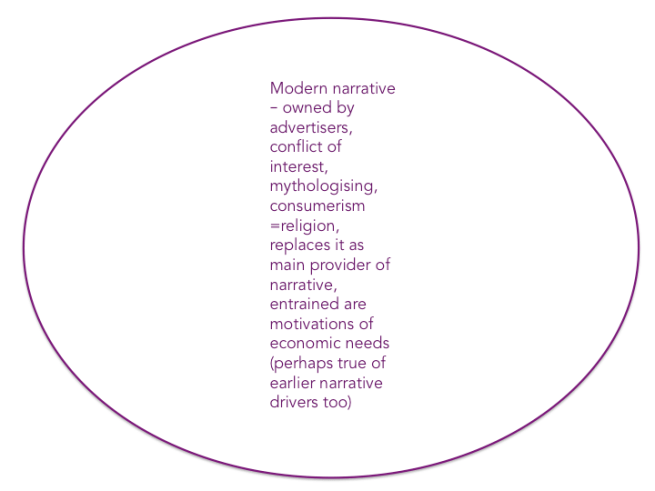
Step by step notes – putting concepts outside head
Today – Consumerism via narratives/moving image dominant form relating to ancient mythology



SJField – OCA Level Three Study Blog
Body of Work & Contextual Studies
Step by step notes – putting concepts outside head
Today – Consumerism via narratives/moving image dominant form relating to ancient mythology
Time and shame
I’m not doing this in the order I would usually do things. I was away from home for 4/5 weeks and didn’t want to fall too far behind, so I packed up a selection of books I thought would be useful and planned to write my essay once I’d arrived in Italy. I hoped this would be a good place to write. After all, I was away from London and my paid work demands, plus able to live in a kind of denial about the stresses and financial difficulties of life for a little while. However, family, lack of WIFI and other tech issues made it challenging. So research was a bit tricky… Although I loved being away, I really longed for a quiet, properly resourced space. I mention all of this because while there an article about women not having time or space to think, to create and make work went viral.
Brigid Shults wrote in The Guardian, “Women’s time has been interrupted and fragmented throughout history, the rhythms of their days circumscribed by the sisyphean tasks of housework, childcare and kin work – keeping family and community ties strong. If what it takes to create are long stretches of uninterrupted, concentrated time, time you can choose to do with as you will, time that you can control, that’s something women have never had the luxury to expect, at least not without getting slammed for unseemly selfishness.” (2019)
I think there is probably something to retain for possible future developments about this fragmentation of time and focus, the stop/start way of working and ceaseless interruptions women live with and that successful creative men have been able to live without. I suspect at some point I may want/be able to weave something of this into some work. And of course, not forgetting the shame. Even as I write this I feel tremendously guilty for sounding unappreciative of the time I took, and how I was able to catch up with so much reading. I feel compelled to express my gratitude for all that was given. (And a great deal, not only in terms of time, was gratefully received by me.
Essay
I wrote the essay which I sent to Roberta and warned her that I would look at it again after a few weeks and see where I could make better connections. Predictably, the minute I sent it off I noticed that I had relied on quotes I’d used in previous essays and I was sort of repeating myself. I don’t think there is too much wrong with this as I refine ideas and rely on really important concepts that are at the core of my developing work. However, I felt I was beginning to limit myself.
Therefore, I will take the comments that Roberta made plus a few I made myself and respond, sometimes based on reading I did following submission. Then I hope to have a short online meeting with her and following that I will fill in the formative feedback form taking edited highlights from this document and anything vital form our talk.
Comments
Essay text in green, Roberta’s comments in orang
The other critical element in this first chapter is how the articulated machinery on which Industrialisation relied affected perception and therefore artistic practice. The difference today is how digital machinery produces a far less articulated reality – and instead, there is a perceived flow as information travels and morphs and transforms. I was struck by the many references to machinery, “houses and cities could be openly conceived of as ‘machines for living in” (p32). Nowadays, existence is often written about in computer-related metaphor. Donald Hoffman’s recently published The Case Against Reality (2019) (which I will write about elsewhere) contains a hypothesis which describes reality as a series of desktop icons on a computer interface – and so, if one is wary of the current tendency to think of the brain as a computer, you have to tread quite carefully through his arguments in order to avoid being reductive. However, this loss of a fixed stable reality that is always around even when we’re not, which according to Harvey could be felt and was being expressed towards the end of the Modernist period, seems now in full swing.
I realise I digressed slightly with my rant about the irony of snobbish artists who peer down their noses at so much while at the same time claim to be something other than and often better (more valuable) than the ‘bourgeoisie or petit-bourgeoisie’ – however, my desire to embrace popular culture as I did in Self & Other when I made work using Snapchat, and when I use proprietary filters is related to this aspect. Recently I have focused on vintage material downloaded from the internet, i.e. rendered digital, and where signs of age are fetishised, but it may be that at some point I need to be really brave and grab material that has none of that safety-net.
But perhaps more importantly, the changes happening to our understanding of reality, the theories of which then go on to help design our technology are having the most seismic and profound impact on who we are and how we see ourselves. And I think that is probably at the core of what I’m aiming to explore.
McLuhan, and later others such as Kathryn Hayles in How We Became Post Human (1999) (a very important book for me) discuss how we instantiate technology; i.e. how the media we use becomes an extension of our nervous systems and how we internalise it. McLuhan’s ideas inform systems theory; not only does the type of media rather than the message have an impact on us – there is a feedback loop, both language (whatever media is used) and we exist in a living, dynamic symbiotic relationship. Andy Clarke is another philosopher who suggests that language itself – the process of speaking – is a prosthetic extension, a technological tool which has changed (through feedback loops) the way we evolved.As perception of fixed Cartesian concepts dissolve, replaced or added to by dynamic atomic units, and as relationship and context become more and more valued, perhaps it might be appropriate to say, you cannot view one without the other – the chosen medium and the content together are the message and to try and separate them risks being reductive.
In reference to representation – perhaps I am worrying too much about this. Hoffman’s book about reality suggests that the way in which we construct our so-called ‘real’ representation is absolutely critical to how we animals experience existence – and so maybe how I make things that end up looking and sounding and feeling a certain way is key. But what appears is also key and one cannot separate the two – or else it risks being reductive. Of course, lots of art seems to deliberately aim for reductiveness as perhaps it strives to make sense or unpick tiny aspects of living.
I do believe these walls have always existed. We see them more nowadays because that’s what digital technology does. It makes the structures visible. That’s not to say that digital technology hasn’t made it worse. See my response about the complex, dynamic interrelated process of reality below.Saying all that, I find collaboration incredibly challenging at the moment – and although there are many diverse reasons for this, I think it is interesting psychologically speaking that my reference to relationship below, although meant broadly, might also be suggestive of something more personal. I disagreed with Will Self’s comment about ‘there being no other’ in this new Millenial world of ours (how perfect that a man called Self should say this) but as I interact with people from a younger generation I am beginning to find it harder and harder to stray true to my conviction that he must be wrong. I mention this as it seems important to the whole issue of supposed ‘post-humanism’ and Hayle’s references literature that deals with the isolated individual.
For the time being, I would always argue that photography, like all language – it is, after all, a language itself, exists as part of a rich, complex, dynamic interplay – one of many nebulous elements that emerge and feedback in the process of reality construction.
Comments from the reflection section:
Yes, it is good to read more widely but state your case for doing so too. – the world is changing so much – I think it’s incredibly important to place what we read about photography in broader context otherwise it becomes insular, circular and drier and drier, and irrelevant. I can’t see the point in simply re-stating what has already been said when the world we live in today is informed by new ideas. Saying that I love reading perspicacious texts which could describe the digital world long before the internet was conceived of, such as Guy Debord’s’ Society of the Spectacle. It reminds me not to be parochial about time which can lead to us thinking that the issues we are facing are all about us and us alone now, rather than stemming from historical processes.
I think it will be more a question of greater depth of analysis of the avenues you touch on here: montage, structuralism, post-structuralism and its impact on film art. I totally understand that I will need to find a way to discuss things in more depth – this I think is the challenging (exhausting!) thing that I need to overcome.
Making a bold ‘claim’ is good. You then want to then back that up and place your own work within a wider context (historical theoretical etc). I re-read James Elkins who has given me much fodder for suggesting that photography is at high risk of being tautological, if not damn boring.
There is no problem at all using first person now in academic writing. The argument is that knowledge is not neutral and that all knowledge should be situated. I’m not convinced the OCA is up to speed with this and will discuss when we meet.
Overall, I could do with going back and fleshing out one of two topics while dropping others for now. Roberta wrote in an email “ease out your idea a little more so that you give yourself space to explore structuralism/post-structuralism in relation to photography and to film – and to why both have become so central within art discourse – esp. as it makes no sense to talk about the original photo or film. My suggestion would be to begin to look at theories you use in more depth. Montage/bricolage in relation to Modernism and structuralism/post-structuralism in relation to Postmodernism…also of course ideas of sole sovereign authorship: ‘The Author’ or ‘The Artist’ are put under strain by those theories – collaboration is, of course, interesting here” (2019)
Links
https://www.theguardian.com/commentisfree/2019/jul/21/woman-greatest-enemy-lack-of-time-themselves?
CMP=fb_gu&utm_medium=Social&utm_source=Facebook&fbclid=IwAR18oNQakkE_TGTiI8ED__wkMIXGQ42I71tui9CZIor9faiPsLDAcc_hKtg#Echobox=1564153102
https://www.theguardian.com/books/2016/nov/25/will-self-humans-evolving-need-stories
Hayles, K. (1999). How we became posthuman: virtual bodies in cybernetics, literature, and informatics. KINDLE Edition Chicago, Ill, University of Chicago Press.
Harvey, D. (1990) The Condition of Postmodernity, London Blackwell
https://www.tcd.ie/French/assets/doc/BlattOnErnauxMarie.pdf
I had reason to return to the above text recently. I referred to it in S&O A5 as it mentions writer/artist Alain Fleischer and his work made in Ferentillo which is where I am now. He links photography with mummification as I quoted in S&O. One of my partners highlighted a different quote when I shared it with them.
“In the darkness of the catacombs … mummies are like
photographic images that have been developed but not fixed,saved from a fatal and definitive exposure to the light of the living, rescued from an ultimate oxidation by death’s
corrosives, thanks to a red, inactinic light, a laboratory light.
Like photographs yet to be printed, cadavers … to become
mummies, were initially material supports, emulsions, conserved in the dark, subsequently treated with acids, then exposed to light before being brought back underground.”
I visit the village regularly as my mother moved here in 2000 with her husband. He died suddenly in 2005. I made work for TAOPA5 and S&OA5 as well as a smaller project in between modules.
https://ocasjf.wordpress.com/2018/05/17/assignment%e2%80%8b-5-i-will-have-call-you/
http://sjf-oca.blogspot.com/2015/06/assignment-5-context-narrative.html
This summer, after my mother broke her ankle badly and ended up remaining here for far longer than she might have done, the boys and I decided to spend most of the break in Ferentillo with her, for a variety of reasons, not least of which was a desire to escape the U.K. and it’s interminable internal wrangling over Brexit.
As the collaborative project I’m involved with (Pic London) is based around the idea of a village it is perhaps fortuitous to be in this particular village with its references to death, mummification and previous work for an extended period.
I have also been re-reading James Elkin’s and struck by the discussion he has with himself about a realisation we are at times little more than hungry, violent critters despite all the symbolism with which we prop up our illusions of reality.
In addition, I sent in an essay for CS1 and have had some extremely helpful feedback from Roberta, my CS tutor which has prompted further thoughts and responses. I’ll revisit this on my return to London – however, some of my thoughts will likely end up in some writing I’m doing in preparation for the pic london work. (Not sure yet, how this writing will inform or be part of any work yet).
The writing centres around a man called Fiore who lived “both inside and outside” the village (Field, 2019 – draft foundation text for Pic London project). I don’t want to repeat myself but briefly, Fiore befriended my mother and her husband Roger. He built an illegal pool which we swam in and which was never blue, as Fiore couldn’t quite get to grips with the filter or chlorine. He had lost his wife to cancer and his daughter killed herself in grief soon afterwards. Later he got together with his housekeeper, Dora. He was a good friend to my mother’s after Roger died. Fiore owned a goat called Berlusconi who was strangled to death when his chain got caught on a tractor wheel. All Fiore’s neighbours were invited to a feast of Berlusconi but Fiori refused to eat him.
The writing is, like my previous writing, like a plait made up of different strands that will incorporate Fiore’s story, my reasons for being here – austerity, middle-class angst around failure, and a discussion about photography in relation to bacteria, citing Elkins’ book, and death.
At first I thought I’d be making a film like the previous two projects I’ve done – Origin of the Common-Place and Sirens. But the more I work on it the more it feels like it might be a photo-text like the ones discussed in the paper above:
The interphototextual dimension of Annie Ernaux and Marc Marie’s L’usage de la photo by Ari J. Blatt
There is not very much time but we’ll see.
Things to do;
Look at Robert Mapplethorpe’s work. I keep coming across his stuff which feels odd, like the universe is asking to to look at it. Then I suddenly clicked – flowers/Fiore. (Not to mention death).
In Format’s Talent there is a series called Flowers for Donald. I plan to take another look at that in more depth.
Try to find a vintage film/old book about flower arranging for possible use
Themes other than the subject of flowers which has emerged in the highly flashed night images I’ve been taking; water, stars, shooting stars, hear, climate, death.
Not sure how this work relates to BOW yet but some of the research Roberta talked about re. Modernism and appropriation should be relevant at the very least.
(NB: Quotes about photographs being mute and the closed circular arguments that arise out of only reading photography books in Blatt’s paper)
I’m retreading What Photography Is by James Elkin and have come across Abalardo Morell’s camera obscura images. I particularly like the ones with very modern city scapes . These may something to refer to in an essay if I continue to explore the inverted way we seem to have been heading, which I think probably will.
I’ve been alluding to what I understand as a relatively new phenomena recently in my CS1 essay and in one of the short story fragments; others’ exteriorisation emerging internally in individuals due to technology’s ability to do away with traditional boundaries between individuals. (How interesting this should have come about in an era when individualism has been so highly valued.) I think is something I should look into more and am re-reading (and reading some chapters for the first time) Hayles’ How We Became Posthuman. Chapter 7 Turning Reality Inside Out: boundary work in the mid-sixties Novels of Philip K Dick is probably going to be useful and clearly demonstrates how these issues arose prior to the internet – although made far far tangible and evident by its now overwhelming presence.
“When system boundaries are defined by information flows and feedback loops rather than epidermal surfaces, the subject becomes a system to be assembled and disassembled rather than an entity whose organic wholeness can be assumed” (160)
… “the weaker system is made to serve the goals of the stronger rather than pursuing its own system unity” (ibid)
“… a persistent suspicion that the objects surrounding us – and indeed reality itself – are fakes” (161)
And finally for now …
“The interpellation of the individual into market relations so thoroughly defines the characters of these novels that it is impossible to think of the characters apart from the economic institutions into which they are incorporated” (162)
I read about Freund in Fifty Key Writers on photography and think her writing will be useful for me. Reading about her, I see further references to meaning being dissolved during the years leading up to WWII. “They (she and Benjamin) shared a mutual desire to displace the empty, iconic forms of fascist art and writing with an intimate humanism in the arts, and a need to restore meaning and value to a world emptied of content.” https://jwa.org/encyclopedia/article/freund-gisele
I have written about zero signs a plenty and will no doubt continue to do so.
Freund’s commitment to images which contained a sense of humanism and her aversion to props, posing and styling echo my own working preferences. She worked as I try to, engaging in a conversation and capturing moments which she didn’t believe signified the whole person or their ‘soul’ but aimed to represent a kind of stream of consciousness, according to the author of the Encyclopaedia of Jewish Women page on Freund, Carleen Meeker.
Her writing sounds very much like the sort of thing I’d find useful – she too is interested in ‘the role of context in meaning’ or ‘the relationship of “the artistic scope of a work to the social structure at the time of its production”‘ – and she sees the negative and positive aspects of technology when describing its affect and impact (2013, 110).
I look forward to finding out more.
Durden, M. 2013 Ed. Fifty Key Writers on Photography, Routledge, Abingdon
Write a 1,000–1,500-word essay that relates your current work (the work that you made or are making in Body of Work) to an aspect of visual culture discussed in Part One.
Your text should be fully referenced and illustrated with your own photographs plus supporting figures where appropriate. Submit your essay to your tutor by whatever means agreed, either a hard copy in the post or a Microsoft Word or PDF document in an email.
You may find it difficult initially to identify which of the five concepts discussed in Part One (i.e. modernism, postmodernism, poststructuralism, photography and reality, globalisation) are relevant to your practice. However, this challenge is part of the objective of the exercise. Consult your tutor if you are experiencing difficulties.
Modernism
Post-Modernism
Post-Structuralism and the language of photography
I have been convinced that this is where my work is situated. I am just fascinated by semiotics and how our reality is contained in the language we use. For me, this is the most interesting work to be persuing. But it seems very much tied up with the next section. The language we use, which emerges from us and also feeds back is the material out of which reality is built so both this section and the next section are important to me.
Early seeds for BOW, which I have started recording on my Sketchbook pertain to the performance of identity and experience, how we perform our roles and accept scripts handed to us by the narratives we watch/read/hear. We learn these scenes, responses, actions from the films and TV, now games, we engage with – and therefore the Bate quote on page 21 of the course folder may be worth delving into further.
My work on the previous course looked at this – the language of film and music which I grew up with and experienced in early adulthood.
Photography and reality
Photography and the global age
This heading is the least interesting for me – simply because of all of the above links directly to it anyway – and so feel I can’t fulfill a separate heading. However, I am interested in briefly discussing comments about art and finance. It becomes increasingly clear to me that art, and photography in my experience, is so much about money, snobbery, elitism, and privilege. A person can buy oneself a career if they have the funds and time to do so. Of course, any endeavor whether in the arts or not is often reliant on networking and ‘playing a certain game’ – and it’s impossible to escape that kind of thing. It’s probably always horrible and I’m very uncomfortable with it – it feels grotesque and very ugly indeed to me. It means some artists are at an advantage before they’ve even made anything at all. I also notice how art is used in the City or people’s homes to demonstrate wealth and status. The information contained in certain pieces of work is less about the artists’ claimed original intention and more about money and showing off. Perhaps it’s not Salgado’s fault but his work does this for me and recent experiences of this type of thing as I’ve met people in the industry have made me feel really awful and like running away into the hills never to be seen again.
Refs and possible research links
Brown, A . 2008 Demonic Fictions, Cybernetics and PostModernism
https://www.academia.edu/2020158/Demonic_fictions_cybernetics_and_postmodernism
Christakis, N. 2019 Blueprint, New York, Little Brown Spark
Lotringer, S. 2007 Over Exposed, Los Angeles, Semiotext(e)
Rovelli, C. 2016 Reality is Not What it Seems, London, Penguin
We are asked to look at Chapter 2 “Photography” by Richard Howells (2011). To begin with, the chapter sums up the very short history of photography. Although not Areilla Azoulay’s non-Cartesian version, which I talked about in my DI&C essay, and which posits that we cannot separate the invention of photography from its related activities, that of empire building which began in the 14th century when Columbus sailed across the Atlantic and began the process of taking people and land on behalf of European conquerors. I’ll touch on this briefly later. However, the author does take us back to cave-drawing (as far back as 25 000 years rather than 40 000 which is where academics have placed the earliest discoveries; coded symbols that can found over eons of space and time). This is important because photography is simply one more way for us to exteriorise our inner selves, to other the self, to store consciousness. That it’s mechanical is important but doesn’t render it less than.
It was interesting to touch base with the received story again, having read about it in various books while studying but specifically, in a wonderfully entertaining book called Capturing the Light by Helen Rappaport and Roger Watson (2013) which goes into much greater detail, although with less critical depth.
However, I found it difficult after reading the chapter to get beyond the inclusion of Roger Scruton’s essay, Photography and Representation‘ in “The Aesthetic Understanding‘, Essays in the Philosophy of Art and Culture‘ (1983). Scruton isn’t only a Conservative, he is a reactionary extremist who promotes the most appalling ideas and is a friend of the Spiked bunch, who, quite frankly, seem completely nuts. (And I used to quite like some of what Frank Ferudi said about parenting.) Scruton was recently sacked from his position at the head of the Government funded Building Better, Building Beautiful Commission (what he was doing there, is anybody’s guess – a mate of a mate, no doubt) for making comments that aren’t even worth repeating. He has spent his whole life offending people and seems to feel hard done by, having ostracised himself from various British academic institutions. His own father was, by all accounts, chaotic and damaged and very anti-establishment. Read into that what you will.
I appreciate that the original chapter was written some time ago (2003) and Scruton may, in keeping with the times and contemporary discourse, have virulently amplified his conservative message in recent years. But I find his argument sort of ridiculous – and Howell talks about it being flawed. I also know difference of opinion is important and having both sides of any argument is thought to bring about some form of synthesis, leading to a balanced idea of reality. However, modern science and philosophy are rendering the arguments included in Howell’s chapter and in particular Scruton’s, not only flawed but almost irrelevant. Before introducing Scruton, Howell tells us how some people felt that photography cannot be art because it merely records the natural world, reality, as it is, which is where Scruton we are told, positions himself.
For a moment, I’ll deviate here and talk a bit about ‘reality’.
Two years or so ago I got off a train at a station beyond my intended stop. I realised my mistake but wasn’t sure how long I’d been distracted by my book, and looked at the map on the platform to see where I was and where I needed to get to. For a short moment, but long enough to cause a sense of panic and alarm, my memory stopped working. I recognised the signs on the maps as signs but had no recollection of what any of them meant, no access to their meaning. It was like looking at a map in a foreign language at the same time as not even knowing what a language might be. It may have been an early sign of something sinister healthwise to come, however, it has not happened since and I hope and suspect it was simply a brain glitch brought about by stress, tiredness, and distraction. It felt like it lasted about a minute. The experience, however, demonstrated what my consciousness and its integral function, memory, does for me. It enables me to get from A to B so I can survive. Without that ability I would not be able to move about in the world, feeding myself, interacting with people, finding a mate – doing all the things that keep the genes alive and reproducing. This is what our consciousness is – an evolved survival mechanism. And as hard as it is to accept, we have evolved to see only what we need to see in order to exist. We have a limited, locally based view of reality that is myopic but highly specialised. Some criticise this materialist view suggesting it leads to emptiness, an existence that lacks meaning, but the illusion of reality is literally all we have and to belittle or undervalue it isn’t automatic or necessary. One hopes we can afford to be honest with ourselves, although as we look about today, it does at times seem perilous and perhaps terrifying for people.
I am looking forward to receiving my delayed copy of “The Case Against Reality” by Donald D Hoffman. But since 2015 I have been reading as much as I can to understand this illusion of reality including Reality is Not What is Seems Rovelli (2016), The Ego Trick Baggini (2015), and The Biological Mind Jasonoff (2018) amongst many others which look at life systemically. I think the science contained in these books potentially nullifies any arguments about photography being simply a recording of reality – because our reality is SO subjective and particularly nowadays when digital technology is fundamentally changing what we expect from reality – and because any language form, photography included, is an emergent property which is what is so fascinating about mark making – however we choose to do it. And that’s before we even touch on individual subjectivity (as opposed to species subjectivity), technical ability, and choice, or processing whether in the darkroom or your desktop.
And in any case, the arguments against photography of any description being an art form because it is a copy, where photographers simply record rather than dictate what’s included, were made redundant the moment a urinal was placed in an art gallery. If you think photographs merely copy reality, then they are the ultimate readymade. Although I do see some conservatives are likely to dismiss appropriation as a viable art form too, missing the point of it entirely. But like the evolving nature of gods and God as civilisation develops, what we need from art changes too. And conceptualism rather than dogmatic religious iconography is clearly more relevant today as the nature of reality is unpicked and newly understood. Photography, being an emergent property that came along with the evolution of technology over several centuries alongside its sibling, or perhaps its close cousin, Capitalism, is not only interesting as a concept but crucial to the way we see and understand life today, and therefore an integral form in any artistic exploration regardless of whether it ‘ideal or real’ (Scruton’s distinctions). Even if all the artist is doing is making something pretty, which is of course just as valid as documenting society, or commenting on language. These distinctions are as silly as the ones about digital technology not being ‘lovely’ enough to produce art.
I am looking forward to receiving my book by Hoffman so I can keep investigating this subject and bringing it into my own work. In the meantime, I used to think that all the technological advances we relied on were changing our evolutionary path whereas now I see that they are part and parcel of our evolutionary path. They are expressions which lead to feedback loops. I think that’s why distinguishing between forms and saying one is art and one isn’t is a limited and limiting view.
While doing UVC in 2016, I was asked to look at Rhetoric of the Image and talk about a couple of advertisements, relating them to Barthes’ ideas. It’s really interesting to look back, as the examples I explored were to do with the yet-to-be-held referendum. Barthes’ style is so opaque at times, I am still not sure if I was making the right sort of connections, but I don’t think I’d change much of what I said as I view my blog in retrospect, with three years of history between the time I wrote it and today.

Some notes of my most recent reading of Rhetoric of the Image:
The Linguistic message
These adverts (regardless of one’s thoughts about the content) are tapping into society’s mistrust of advertising and consequently meaning. As the meaning of advertising signification is now suspected of being false, (and so much more besides) we might question Barthes statement in retrospect. Although unusual, these adverts do not subscribe to Barthes analysis so easily. Meaninglessness is a big issue today – also referred to as ‘fake news’. A century of being manipulated by advertisers might be responsible for this sense of society having been gas-lit, leaving us all in an unstable landscape (like the cartoon landscape of Holden’s film). Images, which can and do invite multiple readings, even with the tyranny of advertising slogans, but which ultimately lie to us have contributed to this.
(Below – my comments are in orange, otherwise quoted from Barthes)


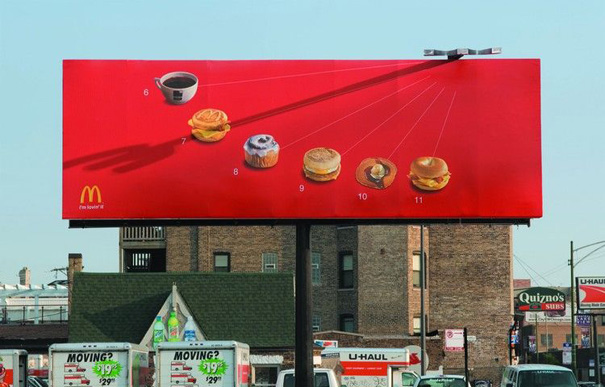
The Denoted Image
Refs: All accessed 23/24 June 2019
https://stylecaster.com/beauty/vintage-chanel-no-5-ads/#slide-11
http://www.cinemamuseum.org.uk/2019/andy-holden-laws-of-motion-in-a-cartoon-landscape/
https://www.theguardian.com/media/2016/may/25/eu-referendum-poster-minority-ethnic-voters
Barthes. R (2013) Rhetoric of the Image in Visual Culture: A Reader, London, Open University, Sage Publications; 33-40
Flusser, V. (2000) Towards a Philosophy of PhotographyTrans. Mathews A. (Kindle Edition) London: Reacktion Books
N. K. Hayles. (1999) How We Became Posthuman: Virtual Bodies in Cybernetics, Literature and Informatics. Chicago: University of Chicago Press
 SJField - OCA Level Three Study Blog