BOW A5: Some adjustments following tutorial with Ruth

  • Have removed the blurb at the back and need to think about what I write instead fo the website and publicity – it was too academic and Ruth felt said too much about what I was intending. But equally, I need to find a way to indicate in the work that the statements are made by the AI in the course of our conversations.
  • Yesterday I updated the print version of the publication taking on board some of the things Ruth mentioned in our tutorial. She felt the cover was lacking something  – I had deliberately designed quite an obscure difficult cover which didn’t do what covers normally do – the title wasn’t there (just like A2’s zine cover) but Ruth suggested that It might benefit from something more concrete/tangible.
  • Following my tinkering, I think it could do with a bit more work but now the inner pages are very obviously held between shadow puppets. I like this reference to moving image history –

“Object-generated motion pictures have existed since at least the tenth century CE, in the form of Indonesian and Chinese shadow puppet plays.” McGregor, 2013. 

So while the cover is no longer as obscure as I tend to favour, it makes that reference a bit more obvious. I will keep working on it a little for the next couple of days as it’s not quite there yet. It may simply be a case of taking the title off and having that just on the inside. I had repeated half the title on the inner cover as things stand which emphasises a particular reading playing on my surname, along the theme of text being in the wrong place, moving around, unstable – but that’s throughout anyway and doesn’t need underlining in this way as much as the cover needs to be right.


Screen Shot 2020-08-17 at 10.06.36
After removing the title to the right and adding a bit more text
Screen Shot 2020-08-17 at 10.26.02
back cover- cover will be printed on grey thicker paper so the grey writing will be quite faded.


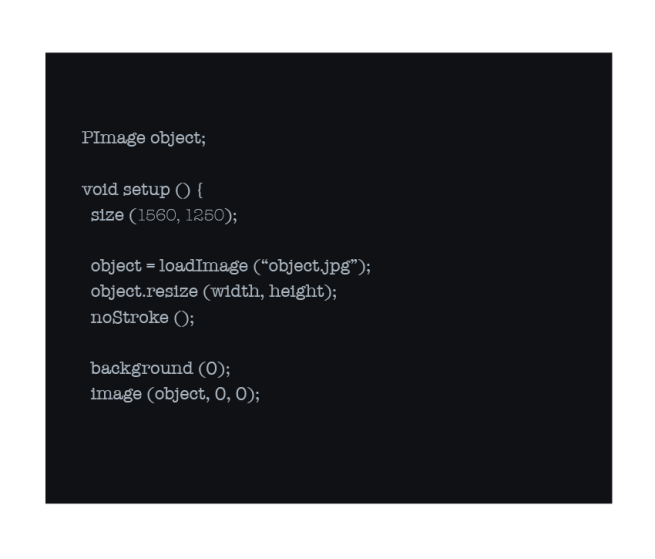
As I intend to write a piece based on the conversations between the AI and me and include that as an insert or separate object I revisited the black blocks with text and have replaced the conversational text with Processing code. I think this works much better anyway – and the image title is simply ‘object’ which I am pleased with.Screen Shot 2020-08-17 at 09.11.41

  • I also asked a group to proof it and there were some minor things such as spacing before and after the slashes in the text, rather than only after – it looks cleaner although probably not how code is ever written but then the whole idea of replacing some punctation with simple / isn’t how code is written really  – anyhow, I went with the suggestion made.
  • I have also played with some ideas and the film this morning including the more contemporary images (the mesh-like digital figure I made in Fuse and the soldiers with their coloured sticks from the AI. I also put the wife from Tom’s first film in there. But I am not sure if this version works as well as the initial one. I will ask peers to help me decide. Having watched it again, it may be I just don’t like the mesh lady included but the other bits are ok. See newer and initial versions below:

https://vimeo.com/448457568


Initial version:


McGregor, R. (2013) ‘A New/Old Ontology of Film’ In: Film-Philosophy 17 (1) pp.265–280. At: https://www.euppublishing.com/doi/10.3366/film.2013.0015 (Accessed 13/12/2019).

BOW A5: Tutor feedback

Overall Comments

Your e-publication, witaaiafof , is an allusive (and ellusive) and at times exhilarating and troubling exploration of a friendship with an AI character. I watched and read the work, with the music playing throughout, as this seemed to be suggested on the front page. This made the work seem even more immersive, and to superimpose another rhythm over the rhythms or page turning, reading the text, and the animation of images.  


The work is a fascinating, thoughtful bringing together of the different strands of your practice and interests – writing, photographs, AI, graphic and typographic design and moving image. In such a complex work, there are moments which are confusing, or where I feel you could develop the dialogue further or simplify. I wonder too whether the final, discursive text that explains what came before is necessary. Perhaps better to let the work tell you what it is doing through the dialogue and diaristic elements. But we can discuss this.

Feedback on assignment

‘These curling, unruly paths’ are what make this work so tantalizing. I agree with your judgement (in the most recent part of your blog) that you don’t need to expand every aspect, but perhaps give a few more signposts along the way, which could be in the form of dialogue, or some kind of footnote/margin note.

Your AI character (as you depict it) is an unstable subject both in the language she/they/ it uses and in your narrator’s response to her/them. I wonder about the narrator’s ‘I’. Who is ‘I’? What are the motivations, and meanings of the narrator’s character? And what structures (the idea of a book/diary/play/film/story/piece of music) support (or destabilize) the narrator?  There is a history – nouveau roman, stream of consciousness, nouvelle vague cinema and more recent forms – that your work follows on from, and engages with (I think) but maybe you could make more of how your story and your narrator come about in body of the text, rather than explaining in the sort of afterword.

Coursework

You have worked hard and with great commitment at exploring all aspects of your project from selecting and taking images, writing and editing, layout etc.

Research

 Your project comes out of sustained and in depth research considering the implications of AI and for instance and looking at OOO (Harman), and Haraway’s ideas of post-human or more-than-human, and others. On the technical (but not only technical) side you also have completed a book publishing course, which has given you more tools for designing your work.

Learning Log

Your LL is detailed and charts your research and the stages for making your work. You have sought peer feedback and responded to it.

Suggested reading/viewing

Reading your LL after looking at the Assignment e-publication, I am reminded of some of Chris Krauss’s novel I Love Dick in which art theory/philosophy are entangled in the narrator’s obsession with the eponymous love interest. I think this blurring of categories is something that your work is also involved in. I think Chris Kraus’s writing and films might be interesting and useful.

Pointers for the next assignment / assessment

Your interpretation of your research is very thoughtful and important source material for your experimentation with images and text. This is evident in your LL and in the work.  I think that drawing out the strong main points and ideas and stating them clearly will be important for the assessment, but also for the publication of the work beyond assessment. It is complex work, and therefore signposts will help people get into it. Consider whether the sound file is the way you want it to appear – i.e. as an external link.

Strengths Areas for development
 Original approach to and poetic response to the AI through a sustained engagement and experiment With the voices of the narrator and other character, consider developing the dialogue/diary to include the discursive text. What happens when fictional voices speak the language and utterances of philosophy/politics?
  Sensitive, critical and adept handling and editing of different sources of imagery: creating a powerful image-essay alongside text For the final presentation for assessment consider producing the publication as a publication and showing video/ documentation or some other kind of performative presentation.
  Ambitious and profound exploration of contemporary philosophy through the medium of your art practice. You take on challenges and are open to learning new skills (e.g. coding…)    Collaboration (as you suggest) with a coder could expand the possibilities of the work. At the same time, carrying on reflecting and writing about and charting your interpretation of what you learn.

Response to BOW A5 Tutor Feedback Tutorial

It was good to talk to Ruth about the project after reading her report.

  • The ‘statement’ at the back is unnecessary and exists outside of the book. It may be for elsewhere but not on the book. I agreed as had been troubled by it recently. However, I do need to signpost that the characters conversing within are human and an Ai. Ruth agreed, and we talked about making these signs inside the work.
  • However, Ruth also used the word “intrude” and we discussed a kind of meta-conversation about the book being inside it – that part of the work intruding on the narrative. It already does that in places – but embrace it a bit more.
  • As stated in my blog, I have been thinking about writing a piece of prose to go in the book. I planned this before but then ditched it but have come back to thinking it really is necessary. I was glad to see Chris Kraus mentioned in the feedback and am certainly influenced by her – but perhaps there is a bit of fear surrounding this aspect of the work, which has prevented me from tackling it sooner. I feel like I might be ready to write it now BUT
  • I need to send the book to print ASAP – however, will give myself a bit of time to write something. If I can’t do it in time for the printed version, it can be in the e-publication for now. I have had several ideas about how this writing should be presented – initially, two pages (which would actually need to be four pages) in the middle. I have wondered about having a smaller book inside the larger one. Perhaps that solves some of the problems I envisaged with printing.
  • I am not sure how to resolve the music – which for now is technically clunky. I don’t know if ID can make the music play automatically throughout the book. As I understand it, as soon as you turn a page, any audio will stop. But there might be a way around this. I played with my website hosting it the other day but the embedding wouldn’t work. I need to focus on this for a day or two soon.  

CS: A5 Edits following tutor feedback

Following the chat I had with Matt a couple of week’s ago and his feedback, I have finally managed to get the word count down – I suspect it is a bit less than stated on the cover now and will recount before assessment (I counted over the weekend but cut more this morning.)

I have emphasised the link between poststructuralism and the science philosophy/science using Barad’s interpretation far more than before, not so much due to Matt’s response – in fact, he told me not to undermine my argument after I attempted to accommodate notes made by two quantum scientists, both of whom said, but you can’t feel quantum fluctuations. It was that which made me grit my teeth (yes, I am aware!) and look through Barad’s work again and then to underscore the links between PS and the science.

Despite my frustrations, I am grateful to the scientists as their comments resulted in a more focused essay, I think, and I need to add thanks to them on the document.

I need to write to artists included and request permission to show their images on the blog version of the essay.

Introduction still isn’t quite right and I need to look at it again.

Appendix One could probably do with being heavily edited or even cut altogether now as I address the topic in the essay more.

At this point, finally, if any peers do read this yet again, I am now ready to address proofing/corrections if you notice them. It will be proofed by someone external in any case before the assessment deadline and has been through Grammarly. I do hope to God I have picked up the really daft mistakes/typos now and that everyone’s name is right.

CS A5 Image in the age of entanglement – July27th


CS A5: Tutor Feedback

Matt read a recent version which I had worked on following some interaction with a couple of quantum scientists.

I have since, following a chat with Matt, reworked the essay a bit and am now at a point where I need to edit down again – I suspect it is about 1000 words over but am just guessing and so I will need to keep working on it for a while longer to bring in it down to the correct word count. Online CS A5 Image in the age of entanglement – July14th

A5 CS Feedback Form SJFIeld


Written by the student, and endorsed by the tutor.

Key points

  • An interesting, ambitious essay which can be improved with some additions and clarifications.
  • Does the argument suggest we need a “new way of thinking about any form of representation” (MW) altogether?

Summary of tutorial discussion

  • I need to expand on why I have ‘lumped’ photography and moving image together. (Hopefully can be done with a couple of references either paraphrased or cited directly.)
  • No need to undermine myself – believe in the post-structuralist argument I’m making.
  • Do I need to follow through with the discussion about still photography falling short, if so, what comes next, process-led practice, participatory practice, etc. Matt asks, “Is the barrier created by the lens between artist and subject too great to undo? Is the obvious next step to eliminate the use of photography at all?”
  • Perhaps there is a bit of room to discuss the tyranny of Western cinematic montage patterns and conventions being absorbed into our perception of time, personal narrative etc.
  • Be clearer about indeterminism being different to uncertainty (clarify the passage)
  • Temper a couple of overly bold statements.
  • Have not made enough of a case for introduction of imperialist discussion – can it be woven in more fluently or else dropped?
  • From Matt: The anthropologist, Roger Sensi, in his book, Art, Anthropology and the Gift, looks at the relationship between art and anthropology and particularly about the nature of collaboration and exchange. Quoting Marilyn Strathern from her work, The Gender of the Gift, he says, it is at the point of interaction that a singular identity is established’. From this perspective, people are constantly being made and re-made through relations, and things are constantly being created not in contradistinction to persons but “out of persons”. Through gifts, people give a part of themselves. They are not something that stands for them, a representation, but they are “extracted from one and absorbed by another”. This continuity between people and things is what she called a “mediated exchange,” as opposed to the unmediated exchange of commodities, which is based on a fundamental discontinuity between people and things”.

Reading suggestions

See above

Summary

Strengths Areas for development
Interesting and challenging subject  No need to justify or undermine self
 Relevant Explain why putting photography in the same category as moving image
 Ambitious  Be clearer about introducing the imperialist section


Any other notes


Tutor name Matt White
Next assignment due n/a


BOW A4: Tutor Feedback

I had a good chat with Ruth this morning – we mainly discussed how I could bring some sort of contextual written work in and what that might be.

I shared some early ideas and talked about the examples I’d seen recently  – both over the years and recently as I specifically look for various ways of doing this. The Lewis Bush course I’ve been doing this week on book/zine-making has been invaluable and he has shared many relevant examples, some of which I will link to on this blog in another post next week.

Here is the tutor report: Sarah-JaneField_TR_4 with my comments


CS A4: Tutor feedback

PDF here 

Written feedback and learning points in orange

A well-written, constructed and ambitious essay. The questions you are asking are (too?) huge (yes too huge but see end of report for rationale for sticking with it) and you offer a genuine attempt to answer some of these difficult and pressing questions about the nature of perception and the difficulties of the shifting photographic (and beyond) landscape.

The specific examples of art work that you give to try to unpick your ideas are really useful for the reader and help to emphasis your philosophical points. I, for one, would have enjoyed more of these to help me get to grips with some of these ideas! I do plan to add more, including more of my own – the work is in development. There are some minor grammatical and spelling errors that I have circled that are easy to remedy. Thanks

I am left with a couple of critical points that you might like to address in your final draft, if you think appropriate.

 1 I know that you are specifically addressing photography (and at times the moving image) in the context of this essay but on a couple of occasions when reading through (I have scribbled comments in the margins if you can read my writing!) I felt that you were distancing photography from other modes of production that do not suffer from the same Cartesian problems (performance art, participatory art practice?). This is problematic because you are, in part, discussing huge problems, ideas and world views that if critiqued solely (or predominantly, at least) through the photographic lens, can lead to a falsely narrow view – the very thing that you are suggesting is problematic with the way that we (in the West) think about and represent the world. This is a good point – and I will find a way to underline the discussion could apply to various ‘isolated objects – i.e. disciplines’ within the arts. And, of course, to politics, academia, and economics – to a general mindset in the West. But, that due to my course, I am looking through the lens of photography (of the academic art sort), which as it happens, is particularly guilty of the charges laid. There is probably too much to say about the split in western consciousness (logic vs ‘feeling’) – rationalised in the Cartesian era, and eventually expressed in photography, hence the inclusion of Cassandra as a figure – so maybe worth finding a way. Photography (of the academic art type) often seems incredibly myopic. And whatever flaws it has in relation, are compounded by what comes across as a fragile ego and the subsequent manifestation of that, a horrible superiority complex – which leads to work that claims to be about universal issues but often seems about little more than its own insecurities.  

It may be that you haven’t emphasised your reasons for concentrating on photography in the essay (because you are studying on a photography course? See above). As well as continuing to be the most dominant form of representation for consumers, the photographic community all too often alienates itself from other modes of representation. This is not, unfortunately, as a way of creating an objective distance to help the debate, rather as a way of protecting itself from intruders as well as for commercial reasons (see above). Interestingly, the very people who seek to critique the medium from the inside (Hilliard, Arnett et al.), arguably do the opposite; the further alienate photography from a wider discourse?

 2 I say the following reservedly, wanting to avoid a panicked inclusion of unnecessary material, but: You have done well to avoid bogging yourself down with too much of a description of quantum theory but I wonder if there is room for a little more help for the uninitiated reader? I suspect a few tweaks here and there could shift this impression. There is also a very good bit from Barad where she stresses classical and quantum models do not describe two different worlds. They describe the same world but from different points of view/perspectives. I already identified I should probably make sure that’s in there somewhere.

 3 Does your conclusion adequately sum up your argument? Do you need to refer more to quantum theory here? Yes, I should. Or will this confuse rather than illuminate?

I agree with comments made on the document by hand that the conclusion needs to be longer. I will also delete the bits you say you got lost in – I have clearly been unable to describe myself properly there and am looking for areas to cut: the bits I can’t explain properly for lack of thorough understanding is probably a good place to start.

The main ‘flaw’ with the essay is that it is too big a subject to be dealt with in 5000+/- words. However, the issue is so pressing, so unbelievably important that the disadvantages of sticking with it are outweighed by the need. The hubris of the ‘single-authored’ hero mentality that dominates our culture has completely destroyed our habitat. Barad’s theory (which has been so important to New Materialism – a term I purposely didn’t mention in the essay as there were enough new words and categories to contend with) underpins a way of thinking that promotes the rejection of human (white/male/western) exceptionalism. Today, that is so pressing – and it cannot be stressed enough. As I write it, that mentality is being played out in the worst way possible. Perhaps my essay will not change many minds, but it will influence my circle of people and I have already seen some of these ideas have an impact on others. It’s vital that we all find small ways to shift the destructive mindset we Westerners have assumed is natural and fixed for too long.

CS A3: Tutor Feedback

Full document: Sarah-Jane Field CS A3 Feedback Form

 Key points

  • What do I mean by photography? A perennial problem and one which I spent many words trying to address in DI&C drafts before abandoning. Will discuss below.
  • I am asked; without being patronising, will there be a type of glossary for some of the more unfamiliar words/phrases/concepts? (I have wondered about including a glossary for the tricky concepts in the indices as well as inc. Chapter 1 as planned – would this be acceptable?)
  • Choose the right examples, this is imperative – I agree.

Summary of written feedback:

You are beginning to bring together these complicated ideas into a coherent piece of writing that asks questions about the way that we perceive photography. Your sample text section is well written and is an indicator of a highly polished, informative and interesting piece of critical writing. Good, I’m pleased to read that.

  • Need to be clearer about what I am critiquing – formal traditional photography (inc. moving image)/ or am I including or omitting practice that moves beyond the frame? My big challenge is our language system – I am critiquing the habit of a Cartesian mind which seeks to separate these things in a world still dominated by it – which I think is particularly *exemplified in photography – the recording and fixing of photons (there is much more to say about this but not here). How I overcome the challenge in the essay is yet to be seen and I may not succeed. It may not even be possible because the language we use today, and how, may not allow for it. A friend studying at a much higher level than me recently said, we desperately need consciousness to evolve away from the Cartesian urge to isolate and separate. But it’s not going to happen overnight or even this century – however, lots of people seem to think it is taking place, beneath the surface all the time without our awareness, due to digital culture for good and bad – and having an impact on how we perceive everything, from photography to far beyond. (*See John Tagg’s Filing Cabinet talk 2011, Vimeo, which though hard to follow has useful references)
  • I agree with Matt’s point, the artist examples should clarify things. I was glad to be pointed towards Christian Boltanski and Alfredo Jarr. I have identified that Edgar Martins is exploring the relationship between photography and perception, and his work is heavily influenced by quantum-informed concepts. Lewis Bush’s Ways Of Seeing project may also be an excellent source.
  • Since submitting A2 I have identified further written work which will help to support the discussion – essays in Martins’ book on death and suicide and by Daniel Palmer, Associate Dean of Research and Innovation in the School of Art at RMIT University, Melbourne. I have also continued to read Barad’s work making sure I understand the ideas as best I can and can apply them to photographic theory.
  • ‘Is the quantum world view that you suggest closer to certain modes of photographic expression than others?’ I suspect traditional photography can and does express the emerging view I’m exploring but it presents challenges. I think our understanding of how meaning comes about through intra-action, relation, and context – between all elements including the presence of a conscious mind is what matters most. As Palmer writes and I agree, ‘Cartier-Bresson’s style of photography is still possible, still practised and celebrated, but its importance is marginal. [Because it represents the mechanistic world in which it came to the fore.] With the digital universe, other types of photography have become more culturally significant, ones which often involve a shift from the single moment of capture to the expanded moments of post-production.’ (2015) Expanded moments of post-production make us think of a continued, phenomenological process. A Cartier-Bresson ‘capture’ aims to kill the moment and stick it up on the wall. He did tell us he was a hunter. For Barad, and Bohr, reality is all phenomena. Others don’t buy this, I’m aware. But from a structural point of view – in a world underpinned by continuously lively data – the notion of phenomena is critically important.  Algorithms, code, intra-active materials express today’s process of making meaning. It’s important to state I do not think all things digital are the Holy Grail – far from it.  
    (Ref: Palmer, D. et al.(2014) ‘‘Lights, Camera, Algorithm: Digital Photography’s Algorithmic Conditions’ in Sean Cubitt, Daniel Palmer &; Nate Tkacz (eds.),’ In: Digital Light. Fibreculture Books. pp.144–62. At: https://www.academia.edu/30168558/_Lights_Camera_Algorithm_Digital_Photography_s_Algorithmic_Conditions_in_Sean_Cubitt_Daniel_Palmer_and_Nate_Tkacz_eds._Digital_Light_London_Fibreculture_Book_Series_Open_Humanities_Press_2015_144_62(Accessed 08/01/2020).)
     
  • I am very interested in Matt’s inclusion of Jaar’s The Sound of Silence, not least of all because I lived in SA until I was 16, my mother was a journalist there in the 80s, her late husband knew Carter and his group of fellow photojournalists and the Bang Bang Club(2000) made me homesick and heartbroken for the people and country I knew – I read it a good while before studying with the OCA. In my own practice, text and its relationship to the image, our response to both forms, has been crucial since S&O when I exhibited a series of images and writings on the wall – giving both the same value. Since then, text has always played a role and at the moment my BOW includes just a single image and about ten pieces of writing – although I do currently plan to add more pictures. But the relationship between both forms is absolutely key. I will need to look at the work in more detail and think about your question – but it could be an excellent example. (This bullet point is sheer entanglement – but we might also call it serendipity or even an inevitable happy culmination of events/things/people/information.) https://sjflevel3.photo.blog/2020/01/07/bow-a3-texts-rewritten-and-placed-in-a-suggested-format/
  • ‘I am not that familiar with Muholi’s work but can you be specific about how she manages to move away from the Cartesian view beyond questions around Colonialism (how important is colonialism to your argument?)’ Colonialism is crucial. Barad never stops mentioning it. Azoulay’s thesis in Unlearning the Origins of Photography (2019) is clearly influenced by similar ideas to Barad’s – the entangled activities of taking, extracting and destroying – in which photography’s history and practice are firmly ensconced (See my DI&C essay). In an article about her earlier book, The Civil Contract of Photography (2014) she discusses how the meaning of a colonial image of an African man, originally intended to show how ‘savage’ the man was, today expresses the savagery of the photographer and the dignity of the subject – context and relation are key to quantum concepts/philosophy as well as photography. (‘relata-within-phenomena emerge through specific intra-actions’ (Barad, 2017: 334)) I will need to make this clear in the introduction, and I suspect quotes from Azoulay will help. Muholi’s work might provide evidence of a non-Cartesian, transformative, lively, relational view of the world – at the very least her work rips apart the Colonial habit of white European men cataloguing black skin (and women).

Finally, after submitting A3, I came across a useful paragraph in Barad’s book which settled something for me, where she discusses how the quantum world is not a different world to the Newtonian one (of course). Newtonian physics describes the parochial space we inhabit. Quantum ideas go beyond that and describe the world we have not evolved to ‘see’. But our growing knowledge of it affects our understanding. The maths (according to every documentary you watch) is the most accurate description of reality we have today and that there has ever been. I will need to include this, I think. Plus, why I think this is all so very important for photographers/artists.

(See original tutor text at end of document)


CS: A2 Tutor Feedback

Scroll to the bottom for PDF link or read additional notes first:

I had an extremely useful and relatively long tutorial with a new CS tutor after my previous tutor resigned from the OCA. As is usual with me, I submitted knowing there was still much to do but I reach a point where it’s helpful to get it the work off my hands and receive constructive, meaningful feedback even though I know things are still quite murky.

I have read significantly more since finishing the draft I handed in and am continuing to do so, refining and zoning in on the one hand, but also delving further into such a rich and fantastically difficult/confusing vein of knowledge on the other – that I am still in a thinking place.

I think I mentioned elsewhere that Matt advised me to write my plan/research question (A3) then return to A2 to strip out the unnecessary stuff and focus more on the key topic, not that I know yet what that is, but I am getting a clearer idea. For a while, I thought it was performativity which I have been busy investigating and how that relates to representation and ultimately photography/moving image. I still think that is the case but I keep thinking about boundaries and the collapse of them – also representation,  – a lot of the creative writing I am doing over on Sketchbook is tackling the issues I’m thinking about but in a more instinctive way than one might do so academically. I think that is a better way of working for me. I write, then read what I have and out of that I begin to see what my concerns are.

As far as performativity goes, it seems to have two paths leading to it (Lloyd, 2015) – one theatrical and the other sociological (Austin). One is about acting – playing the role of being a person in the scheme of things, and one is about reaching potential or expectations (or not) i.e. this hoover is not performing as well as advertised; to be a female non-subject one must live up to certain expectations – the  performativity of being a ‘girl’ / ‘women’ = e.g. taking care of one’s looks/physique, acquiescing (don’t be too bolshy or difficult  – that is underperforming  – think Kate in The Taming of the Shrew), having a certain a maternal aura, kind, gentle, quiet when necessary etc. Some women perform ‘well’ (like a hoover – they match up to requirements) others, myself included, ‘fail’ to. I think that is the very basic difference between the two versions of performativity and that needs to go into my Lit Review. Then there is theatricality – dismissed by the modernists and many more besides (Fried, 2008/1967) – especially nowadays when it’s de rigueur to be slapdash or else anti-commodified, or to give the impression of being so even when not.

I need to figure out how to tie (or if I must) this in with photography being ‘boring’ (Elkins, 2011 – and many more, including me.) Incidentally, I don’t necessarily dislike any of those anti -things, and really like them at times. However, I have noticed I can be far more ‘mundane and every day -ish in my writing than I can be in my photography.

I have yet to really get anywhere near to grips with Barad’s use of performativity at the quantum level but I have just ordered her Meeting the Universe Half Way, and I think there will be plenty of direct passages that can help me with my research there.

I am also wondering if I should have a glossary – is that allowed? There are some tricky words that I don’t want to spend too long explaining  – or waste too many words explaining unless it is necessary – I need to find out if this is considered acceptable or not.

Here is the feedback which I wrote up following the tutorial. A2 CS Feedback Form