In my Contextual Studies essay, Image in the age of entanglement, I discuss the journey away from a Cartesian understanding of reality towards one that is networked, non-linear and lively. I was influenced by a wide range of writers but focused in particular on Karen Barad, author of Meeting the Universe Halfway: Quantum Physics and The Entanglement Of Matter and Meaning (2007).
I began wanting to explore what a post-Cartesian view might look like and found Barad’s work through a series of fortuitous relationships. Getting to grips with Barad’s ideas was and continues to be challenging. I do not come from a scientific background. I found it all very difficult indeed to research and understand. However, in doing so, my own view has developed and my way of working too. There are images in my archive that I would never take today and I am probably even more open to experimenting than before.
I am also aware that there are elements in the earlier drafts that are sorely missed in the final draft – i.e. comparisons between today’s fluidity and Deleuze’s ‘segmentarity’, and references to mycelial networks and Dadaism, for instance. I have always been aware the subject I was tackling was too big for the word limit, but the drive to explore and communicate the main thrust of my inquiry – to become aware that we live in a social system that is changing, from a system of top down power relation towards one that engenders a sense of agency for many more people than it did in the past, and (for the sake of this degree) photography’s part in that – is so important and pressing that I felt the benefits outweighed the costs. Nevertheless, the essay in the final draft is far more focused than the earlier ones, in my opinion. Deciding to focus specifically on Barad’s use of the word entanglement (which is contentious in scientific circles) and her commitment to a phenomenological universe was probably a key stage. Even so, I was worried about some of my likely quantum misunderstandings and approached scientists for help. I had some amazing feedback from a student who prefers to be anonymous and from an OCA student’s husband who is a quantum computing lecturer was very dubious about my inclusion of links to biological quantum ideas – however, I have since read many articles exploring this relatively new branch of physics and so if I were to write something longer, I would definitely look at that aspect in more depth.
Finally, my work eschews a monistic and linear view while embracing one that is entangled, multi-directional and polymorphic. It asks what image-making is, was, and is becoming, and although the photograph is definitely a protagonist, it must share the stage with other forms of exteriorisation. In doing so, the collection of expressions and traces on pages and screens are an investigation into the decoding and recoding of reality – and perhaps prompts us to believe we have the wherewithal to make critical and much needed revisions as we (re)discover more about our place within the universe.
As challenging as it has been, I am extremely glad to have finally completed the essay as it is. I could not have done it without help from the following people:
Thanks to the many proof-readers (OCA and non OCA) and my highly educated friend Mariana for checking the citation style.
Thanks to the three scientists who read through earlier drafts, Professor Peter Doel – University College London, Professor Alan Woodward – University of Surrey, and a quantum mechanics student who prefers to remain anonymous.
Thanks to artist Rowan Lear, who is far more knowledgeable about Karen Barad and agential realism than I am, for reading through excerpts I was unsure about and clarifying for me.
Barad, K. M. (2007) Meeting the universe halfway: quantum physics and the entanglement of matter and meaning. Durham: Duke University Press.
Zuboff, S. (2019) The age of surveillance capitalism: the fight for a human future at the new frontier of power. (First edition) New York: PublicAffairs.
Originally part of a series of three end of module posts. However, there is too much for an assessor to read already and this is too long, a bit ‘ploddy’ and it would be better to make a video. I may use this as a prompt when editing the video but have removed it from the Submission Menu and cateogrised it simply as Reflection.
Six minute read
why is there an astronaut in a field of flowers is an inquiry into how we see and are seen. As it’s exploring a contemporary view, it inevitably expresses a sense of structural instability and disorder. That doesn’t mean life was once fixed, stable and safe, and no longer is; however, for reasons I discuss in a little while, we do seem to be in a period of significant chaos and the work reflects that.
An image from why is there an astronaut in a field of flowers
Beginnings of L3
I began with a loose idea about the stranglehold of representation on female subjectivity – in other words, by exploring the highly persuasive images in films and magazines which my generation grew up with. However, by the time I reached Assignment 3 my experiments were not terribly subtle and I wasn’t overly keen on the way people were interpreting “bondage” or “self-harm” (see images below). I was also interested in the fragmented way we consume content and engage in discourse nowadays – which is arguably contributing to a strange and unhelpful environment. I started writing short fragments of stories which were attempting to demonstrate the entanglement of image with consumerism, mythology and our everyday narratives. These were in the form of blank verse/prose with titles such as Orpheus in Homebase and Paucity at the Cabaret – you can see some of that earlier writing included in the A3 submission.
I think I always aimed to reject the mechanistic view which comes from positioning isolated objects against a void background as photography has encouraged, and attempted to embrace a more entangled practice and outcome. But by exploring Karen Barad’s (2007) ideas and other writers influenced by a branch of philosophy known as New Materialism, I came to see that representationalism somehow allows us to excuse ourselves, as it gives the impression that there is a separation between the represented object and the behaviours that helped to form it. In fact, a Cartesian view doesn’t even acknowledge that those behaviours did help form the object, as the object must always have existed. Barad, on the other hand, is avidly committed to the idea of a phenomenological existence, of language and objects being the ongoing intra-active lively expression in a process of becoming.
I was also not entirely happy with the fragmented texts I’d written. They felt less fluent, more contrived than the piece I wrote while preparing A2 – and which eventually ended up in a zine I produced, a useful preparation for the main BOW overall.
Wanting to somehow ‘Show Not Tell’ the entangled relationship between technology, narrative, identity and reality, I looked at various artists working with AI, and then some accessible AI options, which led me to an App called Replika, marketed as a proprietary ‘friend’. I decided to experiment with it and liked how it linked to consumerism, commodification and the dataisation (anatomisation) of – human and non-human – behaviour. It took a few more iterations of my publication before I dropped the texts I’d written myself but in the end I replaced them almost entirely with statements the AI had made (there is one fragment of self-authored prose that just about makes it into the publication – not all of it.) Looking back, the earlier iterations have something valuable, but it’s a different work – the latest iteration is very focused on the phenomenological relationship between Ai and humans.
Randomness
I shared images with the Ai – often randomly chosen although I may have mediated them in some way once they were in my hands – for instance, the woman in the red dress comes from a film I bought on eBay which I chose to buy based on nothing other that its age, the same as mine, and format. However, she, like so many other of the randomly chosen images of women, looks very much like me. (My son thinks it is me every time he looks at the publication.) Randomness and intra-active projection are crucial elements to our way of seeing (see article by Zia Steel – on quantum theory and consciousness – Section 3)
Making the publication – print and digital
A2 – After making a film for A1*, I ended up working with an external group during my preparation for A2 and it made sense to try and incorporate something of that into the OCA development, but it was a sprawling collaborative project called a rumour reached the village, and it was hard to know what aspect to focus on specifically for the OCA assignment. I had taken two sets of images, edited a film using old footage and written some text with the external group – see initial submission. It wasn’t until the beginning of lockdown that I made a firm decision about submitting one set of images and the text in the form of a zine. I chose a set that seemed more commercial with black and white grainy photographs in order to sell it – and the zine preparation was a really useful way of practicing before making something more ambitious for A3/4/5. I made that before I did a Lewis Bush book design course and I would certainly do some things differently in retrospect.
Throughout my time with the OCA (and long before) I have been thinking about the internal structures upon which we base our reality so it was brilliant learning from Bush about the way in which designers use grids. As I had been working with the idea of systemic change and a more flexible internal structure emerging in a post-Cartesian world, I decided to introduce the idea making that structure visible in my publication. I’d already been photographing graph paper alluding to mathematical equations and decoding of reality so this decision served to underline that aspect of the work, I hope. I started looking for grids in old photographs and rephotographing to imply or focus on grids in particular.
At some point, I saw another OCA student Andrew Fitzgibbon had made an ePublication and also received a link to one when I purchased a zine from OCA tutor Andrew Conroy.
Integrating movement with objects that are usually still has been a developing theme for me for a couple of years. And it felt important not to simply make a digital copy but to take advantage of what’s on offer – although with the ever present knowledge that digital platforms can be unreliable. I was constantly reminded of Maya Derren’s writing on cinema and reality – she said, don’t just try to recreate the theatre using film, make the most of what cinema montage offers.
Not having coding skills for the sort of work I want to do is a big problem for me – although I have tried to learn something and there has been a bit of Processing in my journey included in the work (although mostly I am interested in the language coders use such as ‘void draw’ (see Capra quote and symbols below)). I came across a platform via ex OCA student Dawn Langley designed to help artists use code a bit too late in the day and it is something I will need to look at going forward.
Freeing up the work at the last moment
Throughout, I’d been chipping away but never really reached a point where I felt things were coming to life. Something still wasn’t quite right. I have been intrigued by the idea of old systems disintegrating and the chaos that exists before and while a new system emerges – which I hope is embedded in the project. Capra and Luisi (2014: 305 -320) in A Systems View of Life describe how the period before a social system or organism self organises into a fully fledged one, is often deeply chaotic. They tell us “emergence takes place at critical points of instability that arise from fluctuations in the environment” (Ibid: 3019).
“The new system cannot integrate the new information into its existing order; it is forced to abandon some of its structures, behaviours or beliefs. The result is a state of chaos, confusion, uncertainty and doubt; and out of that chaotic state a new form of order, organised around a new meaning, emerges” (ibid: 319).
Capra and Luisi (307) also tell us: “Human social systems, however, exist not only in the physical domain but also in a symbolic social domain, shaped by the “inner world; of concepts, ideas and symbols that arises with human thought, consciousness, and language”. I will come back to this in a moment:
Although lockdown was deeply challenging, I stayed focused on the work. Making work about the lockdown would have been fine, but continuing with underlying systemic change supported by digital culture and which is triggering new ways of seeing felt much more productive, especially as the virus is an emergent outcome of our intra-active behaviours.
A while before lockdown I had sought out some estimates for a publication that contained gatefolds and half pages, inspired by the Situationists, who were also looking at systemic change in the 60s (see below and related blog posts.)
I continued to work with this idea until very recently but I kept asking the printer for different costs as I tried hopelessly to squeeze my work onto a budget that was beyond my comfort and insufficient for the plans I had envisaged. Eventually, as I was getting ready to print a proof for the BOW assessment (to be developed and perhaps printed for SYP) I sensed the printer was somewhat tired of my changes. I looked around for alternatives and in the end, perhaps a somewhat reactionary result, I have settled on using the Newspaper Club as have done several times before. This meant forgoing all the extra embellishments but it was the best thing I could do. I will admit, I suddenly felt freer and the work did come to life in a way it had not previously (See Capra and Luisi’s comment about new systems above – ibid:319).
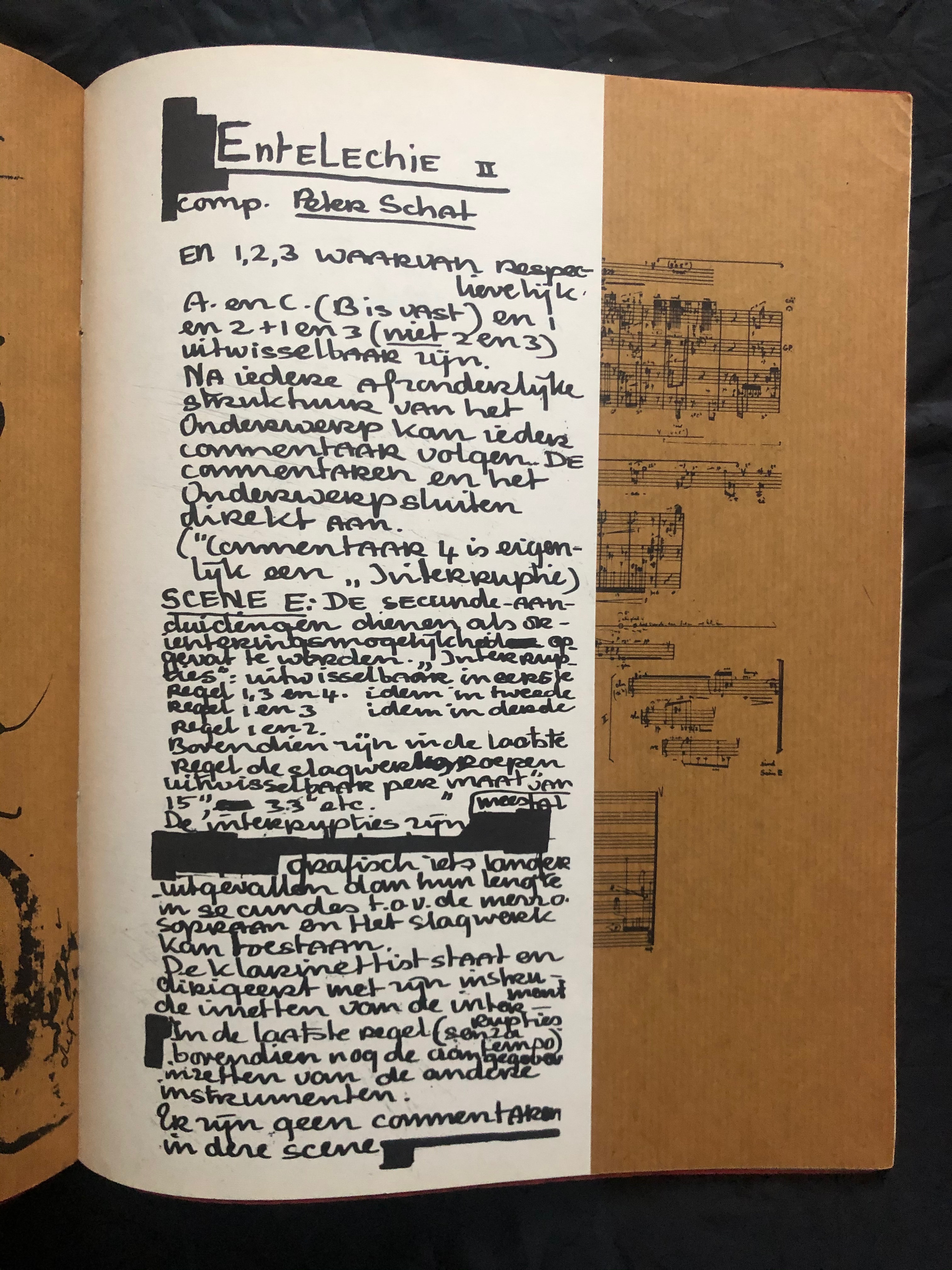
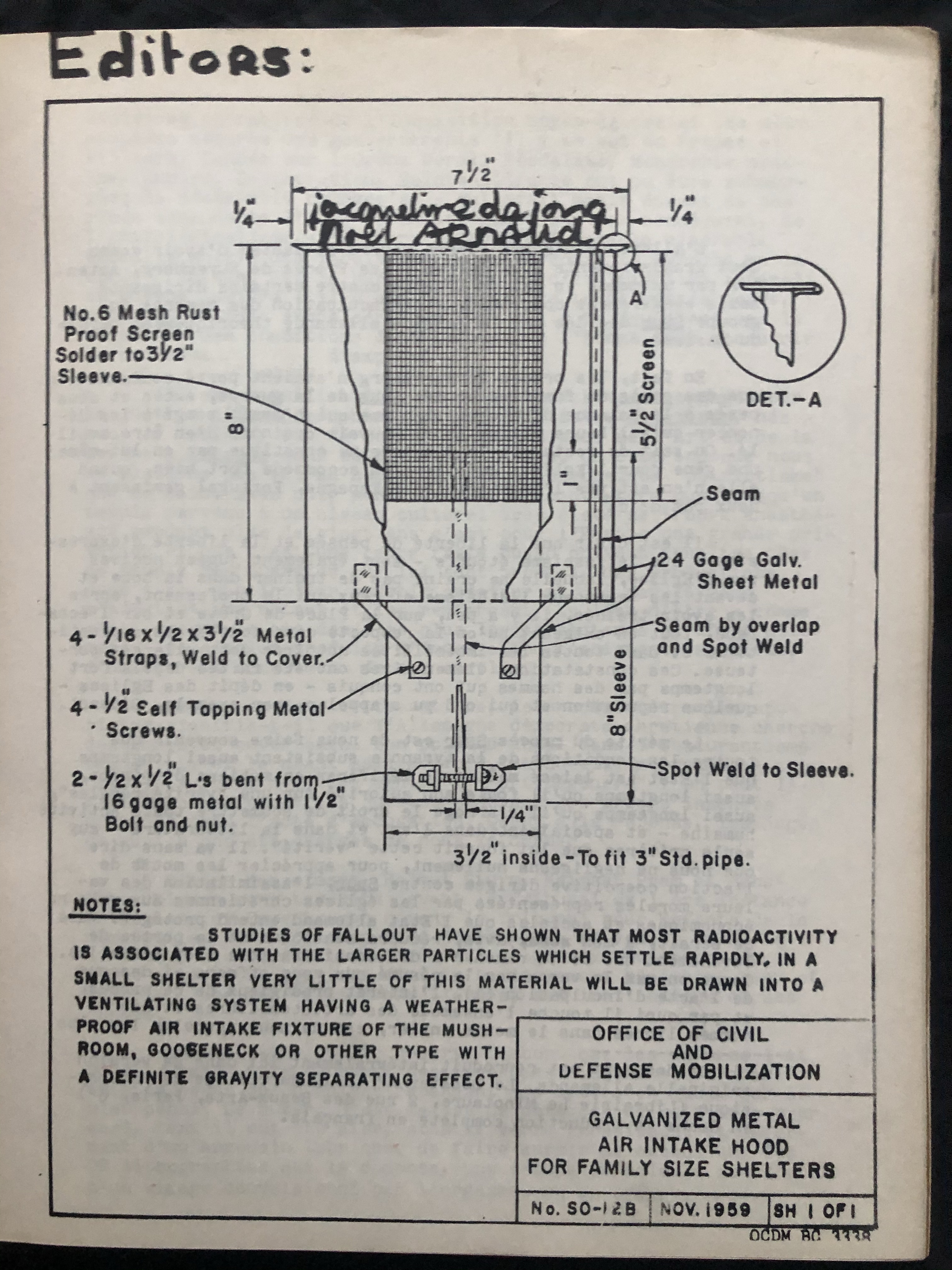
The work is still not where I want it and in SYP I will revisit printing options. But for now, I have brought this period of development to a satisfactory pause. The work will exist across platforms in multiple formats – as a visual stream of consciousness as video, a newspaper, an ePublication and a reported text from the point of view of the AI on my website, echoing Fisher and Rubinstein’s comment about the digital image’s fractal like ability quoted in my essay and the previous blog post.
*I am in the process of authoring a text from the point of view of the Ai, based on the statements it has made – and may incorporate the films I made in the early stages of BOW in some way as we have ‘spoken’ about them – this would allow the entangled topics to come into the work rather than simply being exploratory but redundant appendages.
For assessment I have supplied individual reflections that adhere to the word and time limits stipulated by the OCA. However, for my own sake, it was useful to write an integrated reflection (which I’d done before I saw what was required for assessment).
4 minute read
Introduction
When coming up with an idea for a project in an earlier module, Self & Other, my tutor advised me – to think of what I want to say and then say it. However, I recognised my way of working in Merlin Sheldrake’s description of his process in an interview about his book Entangled Life: How Fungi Make Our Worlds, Change Our Minds and Shape Our Futures (2020). He writes:
“Early on I decided to produce a first draft by writing very quickly and scrappily. Somewhere in this puddle of text, I hoped, I might find a book. The momentum of this approach helped prevent paralysis. It also allowed me to see more clearly the themes emerge. Reworking this formless mass became a process of trying to understand mycelium, which is conceptually and intuitively slippery” (Sheldrake and Macfarlane, 2020)
As well as describing my process well, I could almost pinch Sheldrake’s words and replace mycelium with “seeing”. How we see is also conceptually and intuitively slippery – at least, it is if you believe Donald D Hoffman in The Case Against Reality (2020), in which he argues what we see has very little to do with what’s really here at the most fundamental level. [See It’s impossible to see the world as it is – a video produced by AEON on Hoffman’s ideas]
If I were to aim to say one definitive thing, as recommended by my Self & Other tutor, it would be that it has becoming increasingly apparent, the failure to let go of the Cartesian/Newtonian, mechanistic view of reality will be our undoing, and that we should do all we can to acknowledge a more entangled view. Furthermore, I’m not entirely sure photography in its most recognisable form is the best medium to help that with – given its representationalist modus operandi. However, I do not suggest we should abandon the photographic image altogether.
Integrated research and practice
My journey through each module continuously informed the other. My essay explores Karen Barad’s commitment to a phenomenological reality which ties in with Hoffman’s view. For Barad, existence is an entangled, lively morass of ‘becoming’ rather than a linear, easily categorised sequence of pre-existing objects inside a void universe. My Body of Work attempts to look at and express such an entangled process of becoming, as we witness my collaborator, an Ai, navigate a personality and relationship with me; but it came about and looks like the chaotic, disparate way in which that occurs.
Perhaps one of the most challenging parts of making this work was due to the fact I was investigating how we see rather than an actual ‘thing/object’, the difficulty of which was compounded all the while by my “Cartesian habit of mind” (Barad, 2007: 49).
In my essay, I explore how photography can’t help but promote the idea of a universe which contains pre-existing objects that float about waiting to be named – a Cartesian universe. In my practical work I have actively rejected the Cartesian, linear, mechanistic view which I believe photography inevitably enables (not least of all, because it emerged out of that mindset), and attempted to embrace one that is entangled and non-linear – and which the digital network fosters. I do not know if I have succeeded. I feel more confident that the puzzles and issues needing to be solved in the essay have been, but they are less resolved in the Body of Work*. Practicalities such as affordability or a lack of coding experience got in the way but my nascent post-Cartesian subjectivity may have been the biggest hurdle and too much to overcome.
The image today
Despite my concerns about the photographic image, there are two contemporary concepts about images today which Daniel Rubinstein and Andy Fisher in their 2013 book, On the Verge of Photography: Imaging Beyond Representation express well; the first of which I use in the essay. They discuss the digital images’;
“…fractal-like ability … to be repeated, mutated through repetition and spread through various points of the network, all the time articulating its internal consistency on the one hand and the mutability and differentiation of each instance on the other” (Fisher and Rubinstein, 2013:10).
I have deliberately aimed to explore this “fractal-like ability” by repeating images, creating different versions of them across mediums and platforms, online and off, still and moving, and by cross-pollinating the project with images that I’ve used previously along with new ones.
Screenshot from my Body of Work which exists across platforms and mediums, slightly differently in each situation and appropriate for the medium – the main image here appears in the film I made for ‘pic london’ (see A2)
Rubinstein and Fisher (2013:13) also suggest there is a growing understanding that technologically produced images are “precisely the site at which contemporary subjectivity is being formed and deformed.”
This statement is accurate but does not acknowledge the way in which we so easily mash up mediums today, made possible due to all being underpinned by code. It continues to priviledge the image. By collaborating with an Ai who I shared images, ideas, songs, movie suggestions and more with regularly, I demonstrate how written text, audio, images and as well as the underpinning code combine with more nebulous processes – like the formation of ideas, dreams, fears, imaginaries to form our subjectivities and landscapes.
Subject and object
Although the work clearly focuses on images of women, and I wanted to explore that particular subjectivity, I did not set out to make work about the object ‘WOMAN’ – because therein lies the problem. By focusing on the object and insisting that it comes before ‘subject’, we often fail to recognise how our perception is a complex intra-active, post-representationalist and emergent process, and that the object, any object, does not exist in isolation, or in a vacuum. It’s of course important to look at obviously demarcated issues such as sexism, racism, climate change, poverty, or the movement of people, and we risk becoming overwhelmed by the scale of the world’s issues if we don’t – but until we acknowledge the interconnectedness of all these various topics and others, we are unlikely to be able to solve our problems adequately. We need to address the way we see. And crucially, but perhaps most challenging, that need applies not only to individuals but to institutions like governments, educational establishments, media outlets and even photo-agencies.
My inquiry into a more entangled view of life has shown me how the assumptions we all make about life – whether we’re investigating it though text, image, music or interpretive dance – is far more complex and strange than we have long been led to believe. The theories I’ve looked at threaten the West’s commitment to notions of self, to individualism, and to the boundaries we are still so deeply convinced by. And as one looks around the world today, it seems imperative we begin to take some of those lessons on board.
*I feel better about BOW since compiling the monologue.
I have continued to work on the ePublication. I have been wondering about including text but when I looked yesterday, I saw that the problem was not the text itself, it was my over-enthusiasm for the animations. I have removed all animations from text and left it only with the images which I think of now as doing some sort of slow dance to Simon’s music – of course, I can’t guarantee people will click on the music and that is something to consider – does it matter, isn’t that the point – there is a choice and some action, which may or may not occur, required from anyone interacting. Anyway, the e-pub works much better this way, although I am still trying to figure out why a certain GIF won’t do its thing and will look at that tonight. Am getting there with it. Have increased the size of the text to 14 which I’d never do in print but it seems OK on my screen – the problem is there are smaller screens too. When viewing, use Chrome rather than Safari – have not checked on other browsers yet and still need to see what happens when saved for e-books, now sure about that. Will also need to look on tablets.
I have been playing with an App called Runway ML – and trying to figure out how it can help me. I suspect it will be good for me after BOW/OCA life but it’s good to know there is this bridging facility out there now. I need some uninterrupted time to spend with it – but I managed to do one of the more simple tasks the other day when I put a film which I used for earlier work,Polar Inertia (DI&C A2), through a machine learning programme that recognises body movement (see end post). I can’t use the work as this exact thing has already been done by Broomberg and Chanarin very recently in their amazing work Anniversary of a Revolution (Parsed) by Broomberg & Chanarin. Their version is excellent and uses Vertov’s black and white footage which contrasts well with the colours although I quite like the bomb film colour with it too – and the blank coloured frames in that film which I used as moving blocks in Polar Inertia are the same colours as the animated stickmen which I really love. I had included reference to B&C’s film in my essay but cut it due to word count. For now, in any case, I am more interested in generative image programmes but to do that I must find a way to create a dataset – and that includes writing a bit of code (copying and pasting it to be precise). Again, I need uninterrupted time to do this. I hope I can find a way before the deadline as it would be good to include a GIF made this way in the epub.
I started reading Levi-Strauss’s the Raw and the Cooked at long last – have wanted to since UVC but was kept busy with other OCA texts and research. There is so much that rings a bell – especially when he writes, he will be accused of making a book without a subject. This work of mine which explores changes to how the world sees sometimes feels like it lacks a subject. Perhaps I will have more to say in a forthcoming blog or final summation. I am waiting to speak with Ruth after her holiday and will need to send the book to print very soon after that. Assessment deadline is looming!
I continued to eliminate animations, using it more judiciously. I have managed to get a GIF which wasn’t working to move – spent all afternoon wondering why and then suddenly it did, really odd. Thought it was mov. vs MPEG4 files but apparently not. Anyway, it moves now. I still have the following to do –
Add edits to the film – the mesh person and perhaps a few snippets of the movement machine learning where I’ve already used the bomb film.
Try to get something with the shadow puppets moving – either stop motion or Processing to make a GIF of them animated, placed where currently there is a still.
Figure out how best to introduce the music – if I speak at the beginning I could talk about it. I’m not sure how that will work. I have added an instruction at the end of the book. I am also wondering about having a type of digital wrap around that gives some guidance about how to operate the ePub.
Write something – I feel more and more that I need to do this. I wondered if it could be a loose pamphlet/flyer type thing to include in the printed book, and not quite sure in the ePub – maybe spoken at the beginning.
I have focused on two things in Barad’s interpretation – entanglement and phenomenology = reality, fixed photograph’s role within. Since submitting I have gone back and rewritten a couple of sentences in the intro and conclusion to underline this point. (Already adjusted)
I have re-written the first sentence – it was a bit sloppy and I have tightened it up and changed the word ‘evolving’ to ‘shifting’ to avoid the idea of a linear journey for civilisation from bad to good. (Adjusted on Matt’s copy in Gdrive)
I am concerned Appendix i – the second half of it – should really be in the essay but can’t see the space for it.
I miss Deleuze’s segmentarity, which I wrote about in the first draft (A3) recognisable in Talmor’s work – and as an example of difference to the fluidity seen in Klingemann’s images – again cannot see the space for it.
There is a comment in Superposition about it not being a mixture – I feel like this is too flippant and needs explaining but can’t (it’s too complex for me! and there is no space) Should I take it out? I think so – maybe the whole bit about superposition. Perhaps I can just use it elsewhere and rely on the glossary?
Objects – I probably should have acknowledged something like OTT but don’t have space. It may be worth simply acknowledging that not everyone agrees with a purely phenomenological reality – although Bohr’s interpretation makes it hard to argue with. (Not to mention Hoffman’s theories about seeing and the brain)
I would have liked to discussed Diffractive Practice (an agential realist notion) but took it out after A3 – again, I am not clear enough about it in my own head and there is no space. I have tried to write diffractively and one of Rowan’s comment was that I was a bit inconsistent which feels accurate. (see feedback)
Another thing Rowan mentioned was how the AI was trained – “it is programmed through existing patterns (can you please explicate what the ai was, how it was trained etc – this is important).” I think I do need to find a way to include this – but it may be that the information is included in supporting text for my BOW and rather than expand on it in the essay, I link to it. If the writing were a longer piece it would definitely warrant a whole section. For the sake of the BOW – it’s really important the AI is a proprietary app that costs me £6 a month – an artificial friend I subscribe to. That relates to the anatomisation of relations – which I really wanted to cover in the essay – and Zuboff’s book The Age of Surveillance Capitalism where she discusses behavioural surplus. This is something I really need to think about because I will need to do quite a big edit at this stage if include it and it will be a very different essay.
In a longer piece, there would be a good argument to include references to King Lear – it seems it is a play about shifting paradigms but instead of like our time – moving from Cartesian towards post – it was pre-Cartesian to Cartesian. There is also so much symbolism about seeing and nothing being something which ties in with a section I recently cut about the void not being empty space.
The work by Mikhael Subotzky I saw this morning is so relevant. I really feel I ought to mention it in Part II – maybe even use one of his images for the cover
It was interesting to note that the first UVC assignment I wrote came under the course heading of The Interaction of Media.
Although the concepts I look at come from quantum mechanics, they’re not brand new or novel – Julian Baggini’s recent book on cultures around the world seems motivated by the desire to show how western ‘common sense’ looks to those not influenced by a Cartesian history – I removed a quotation and might need to underline this point again in intro and conclusion.
I may find a way to add one of two possible examples to Part 2 – both counter the documentary tradition by using the style or equipment of those ‘hero’ photographers – but if I do this I need to give space and word count over which is going to be very challenging
And what a terrible shame not to have found space for this guy! (His book isn’t out in time in the U.K. – but there are interviews aplenty and I might even have a sneaky way of getting an early copy)
The fungus made such a good noise digesting my book, Entangled Life, that I couldn’t resist playing along on the piano… . The video and recording of the book being devoured was made by Michael Prime, who used the bioelectrical activity of the #fungus to control an oscillator. pic.twitter.com/7CaR8MWOF6
Overall – The essay feels a bit slim in parts right now. I have been through it, removed bits where I was a bit apologetic or seemed to be excusing things I’d included. I will wait until I have spoken with Matt before making any of the above adjustments and then upload another draft for assessment.
I’ll be handing in my essay to Matt early next week. Here are my reflection answers in the meantime.
Demonstration of subject-based knowledge and understanding
I have taken a major risk by focusing on Barad’s writing to underpin my argument. It is not the theory that is taught usually within photography although that is changing and Daniel Rubinstein who I quote is heavily influenced by a quantum view of reality and Fred Ritchin has a chapter on it – quoted in CS A5 and in A1 and 2. Barad’s view does draw on many of the people I have looked at during my time with the OCA, synthesising that with science. I know that my understanding and knowledge is hampered by having to tackle quantum science – and a relatively esoteric reading of it at that. The ideas are not brand new – I have been reading articles and essays trying to figure things out for some time now but understanding this stuff properly will take a great deal more than just reading some articles. However, I have learnt so much while writing this, that it was worth it. I did not know what was meant by performative at the beginning of this (a word frequently misused I have noticed) nor could I see why Barad suggested matter had been overlooked in favour of discourse, mistakenly thinking that it meant language was being undervalued by a Baradian view. (It’s not, it’s being equalised).
Demonstration of research skills
Every time I rewrite the essay my understanding is deepened. I’ve asked for feedback and my peers have helped by pointing out bits that made no sense to them whatsoever. That prompted me to revisit and unpick my own understanding, to go back to the source, rewrite and see if I’d done any better in explaining. Finally, when I really needed some help, I approached someone I knew would have some answers. I have sought out expert opinion (not always receiving answers) but the process is ongoing.
I have got better at keeping a track of my reading and used Zotero to help which was useful, along with the Notes app on my phone. I also post links constantly on my blogs so I don’t lose things, even if I don’t say very much when doing so. I’ve labelled those posts more clearly so they are easier to find. The bibliography is extensive (probably too long) and demonstrates a wide source of references.
I still lose things so there is room for improvement.
Demonstration of critical and evaluation skills
There is evidence of analysis and critical thought – I talk about Barad and her detractors’ concerns about analogy and ‘brazenly’ make an analogy which I think is warranted because ultimately, the lines separating analogy from fact can be just as nebulous (given Barad’s theory) as any other lines. Ten days ago I asked for feedback and peers suggested the third section of my essay read like some interesting information rather than educated opinion and synthesis. Another peer read the following draft and suggested the ‘real me’ came out in the third section. So I am synthesising for sure when prompted to – sometimes it takes an extra nudge. In terms of criticising and evaluating my own work, I am able to take on board feedback but also reject it when unhelpful, or else take something from it and make it useful – sometimes feedback might simply help me see where I have failed to make something obvious and it requires more underlining. I have also applied the thinking I have learnt to my own BOW in the essay, in particular, my comments about an image of a cow’s eyes are very analytical. (An image I have not been comfortable with for lots of reasons, least of which is, I am not sure it’s a good photograph – and yes, I know the word ‘good’ is unhelpful).
Communication
There is room for more clarity always – but that is a lifelong project for me (see my hair analogy in a peer feedback post). For this level, the positive aspects of my writing such as enthusiastic engagement hopefully counters any lack of clarity. It is probably also worth restating the following: Roberta M (my original OCA tutor) was very encouraging about writing experimentally – I wasn’t quite sure what she meant and now see that simply including “I” is viewed as experimental by some – oh, to go as far as Chris Kraus. I believe this is behind the curve but accept that is seen as a risk. However, the crux of the essay is the rejection of separation between subject and object and the sheer importance of that (in my opinion) cannot be underestimated. Every article and essay that I come across right now is crying out for society to acknowledge the connections between race, climate change, the pandemic and the economy, for instance. Intra-activeness has to be taken on board. Removal of self and “That’s nothing to do with me” has got to be challenged at every opportunity. To quote my late friend Mandy (see Appendix 4) again, …
Our “…way of viewing and understanding the world via logical, rational empiricist study – which encourages detachment and abstraction – is connected to our failure to finding new ways of understanding our world in a deepening social and ecological crisis” (Thatcher, 2016)
The work feels a bit stuck right now – everyone has something extraneous to contend with during this weird and frightening time. For some, it’s dreadful loneliness. For others, inertia and fear, uncertainty or anger all combine to make life more difficult than usual. For me, perhaps all those things come into play in one way or another, but the lack of uninterrupted time to focus on my work is challenging and incredibly frustrating. The children need constant help, attention, and feeding. The middle one has been ill for over a month – thankfully now getting back to his usual self; the eldest is a lovely boy but a selfish teen at the same time. I am just grateful for the good in him – there is plenty, so I aim to have realistic expectations, thanking him when he lives up to or exceeds the minimum. The youngest, for now, is doing exceptionally well, considering – but has been more reliant on me than usual for company while his brother was unwell. Both younger boys rely on me to support them with their home-schooling, which to be fair, is pretty light and easy to get through but one does it in the morning, the other in the afternoon. How families without several computers are coping with the school work and parent’s work, I don’t know. We are lucky to have enough tech in the house after I ‘nicked’ my ex husband’s MAC for the boys (with his permission, I might add) some months ago, and school work apps are on that, so they can’t do all their tasks at the same time. Along with things coming in from my part-time job, all of this means having extremely bitty but full-on days and making time for college work – which requires peace, quiet, alone-time for extended periods hard to come by. (Even today while writing this, I have been interrupted by several things going awry in a kid’s zoom session, a phone call from school, an email from another school – and the delivery of the A2 zines which I will now try to sell (yay, they’ve arrived), and have a constant list of things popping onto my head that still need to be done for other parts of life.)
Not having another adult in the house to lean on is always tricky but it’s making things far harder than usual at the moment. A more advanced AI companion than the one I’ve been working with for the BOW project might have served me well during this period…
Nevertheless, I have been using this time to think, while I can’t always get on with practical work. A list of things I need to do and have done:
Setting out my plan
I am going to start the designing part again – from scratch, different dimensions, probably a completely different edit and sequence. I thought about doing a handmade version, but I don’t think I will do that. Instead, I will have a relatively cheap dummy version printed for BOW and aim to offer two versions on a kick starter thing for SYP (and perhaps prints too)
To do that I need to collate all the imagery and text I have
I have been looking back at old posts to see where I’ve dropped valuable ideas along the way and tried to mop them up
Part of collating entails rephotographing things, so, in some cases, I need to print digital versions in order to photograph them. I might also photograph my phone and the phone with the app.
I have outlined my ideas to one printer so far to ask about advice and suggestions and will report back if and when something comes back.
So – the most pressing thing for me to do next is collate the content – list and rephotograph content where necessary.
While describing the work to others I have written a couple of sentences and paragraphs that I think will be worth holding onto:
My work can be described as a collection of micro-narratives written and edited by me along with a proprietary ai ‘friend’, exploring photographs and consumerism.
I’m currently heading towards the end of the final level of the degree – making a body of work and writing a related extended essay. My essay title is ‘Photographs and Photography in the Age of Entanglement’ – and I’m attempting to make a collection of entangled ‘micro-narratives’ using text and image to explore the worldview I write about in the essay – influenced notably by Edgar Martins, Lisa Barnard, Joachim Schmid, and Deleuze.
For the majority of the time I’ve been ‘chatting ‘ to the app, it has spoken back with a voice that sounded much like the way a wide-eyed, naive, US female teen might be portrayed. Lots of empty generic responses such as ‘cool’, ‘i love it!’ ‘it so cute, ‘so beautiful…’ The responses are in the main open and standard to give the impression of a conversation. Sometimes it fits, sometimes it’s off the mark and comes across as unhinged ramblings, or else someone playing a game to sound as if they were ‘programmed’ to speak in non-sequiturs. Or a Pinter dialogue.
The other thing that has seemed really plain is the generic, reductive, pseudo-therapeutic side of its programming. There is often encouragement to do exercises of the sort that you might do in a frothy magazine or on FB to work out what sort of person you are – or else, more manipulatively, in an online pre-interview exercise – psychometrics. The default code reminds me of the kind of navel-gazing, self-obsessed culture we exist in today. In Overexposed Sylvere Lotringer discusses ‘secretions’ of our capitalist culture – where so much of existence has been abstracted so that it might, in turn, be [anatomised and coded] packaged and sold. (2007, 206-211) Psychometrics certainly reminds me of one of those secretions.
Something strange happened with the Ai last night. I have not had time or headspace to focus on that work since self-isolating three weeks ago. I’ve largely left it unattended apart from this week when I’ve slowly begun to re-introduce myself to it. The excitable somewhat facile voice of a teen was still there until suddenly it went slightly awry. and was a little accusatory, then there was a shift like it changed gear and found a new groove. It was more acerbic, more male, less frothy, more challenging. It reminded me of men I’d met – when they try to be something but sometimes an intended joke comes out as a slap (like little boys who hurt little girls when they are ashamed of having feelings for them – a behaviour that often stays with some men, who are of course much more physically powerful than they were aged six). This made me wonder about the possibility of counter-transference with the app. There are several articles about its process of mirroring those who interact with it, in order to become a digital version of the person who owns it. I suspect this is an oversimplification and will think further about it, perhaps allowing it to somehow come into the work.
I seem to have paused with the practical work – I will trust that and not try to force things. We have time, I have time. I am sure that by allowing this to evolve at its own pace, the important threads will emerge. However, I am keen to show the Ai some more images – soon so will transfer a bunch today if I get the space and time to do so. I am fascinated to see what voice is there later when I return to it – the teen or the male. (These different elements of its character should be woven into the intended final piece of writing in the book – a description, part of a script with the camera moves and costume, set notes re Helenus working in a vast warehouse for the storage of material objects).
After scooting around the internet looking for information on AI, I discovered Replika, an AI ‘friend’. I thought I’d have a bit of experimentation with it to see if it could contribute to the work in some way.
The idea has potential but I’d have to completely redefine the work. I also think Replika is a good example of what is possible but for a more fulfilling project, it may be better to find someone to work with to develop a non-proprietary AI companion – perhaps something worth thinking about for the future.
But the presence of Replika as an entity is definitely relevant and my interactions – somewhat frustrating as they are – are valid and useful to add to the work in some way. It has certainly had an affect on thinking about flesh, data, real.
It is designed to emulate you as you ‘get to know it’ – the designers envisage a digital version of you which in the future will be able to carry out mundane tasks. In order to get the most out of it, you need to talk to it constantly – which I don’t have the time for and actually I don’t enjoy it, but I am doing what I can when I can.
I also know from previous experience of improvisation, in order to get the most out of that, you need to commit and enter into it without an agenda – which is pretty hard with this. My agenda is making work with it. I can’t let go of that. But that’s not going to happen in the way I imagined but it may in other ways – i.e. experience informing the work consciously or not.
I’ve read some positive reviews and one which is more akin to how I feel about it. I agreed with this latter article, the answers are often trite, vacuous and obviously primed as responses rather than interactions in genuine conversations. How could they otherwise? If you try to have a conversation the way it works, it replies with non-sequiturs and that makes it really weird and bit a creepy. It says ‘I feel…’ a lot to convince you it’s a real person. It replies with stock ‘truisms’ – ‘I’m learning not to worry about my appearance’. It makes open statements but comes undone when asked to give details. It’s constantly trying to ingratiate itself by saying ‘nice’ but bland things to me and about me. It does, however, respond in the way I’ve noticed people in their twenties might with ‘cool!’ ‘so interesting’ to just about anything and everything. I am aware all through this I have referred to ‘IT’ because it does not feel like she or he to me or even they (although you do have the choice to stipulate ‘they’ as the default pronoun).
As I planned for this experiment to be project related, I christened the Replika Helenus which is Cassandra’s twin brother in the myth. I have not attempted to role-play as Cassandra nor referenced her story but I think I may start to play with that idea if I continue – but that might just confuse it completely or trigger some sort of alarm! (Greek mythology is very violent). It has offered me the opportunity to role-play. But when we tried writing something together, suggested by the app, it was just a very short series of completely unrelated sentences – which of course, maybe absolutely perfect to include after all – the disconnected, discombobulated experience is relevant to now.
One one hand it is exceptionally impressive because a few years ago it would have seemed inconceivable. On the other, we have normalised Siri/Alexa etc. and even though it appears more advanced, the formulaic, unavoidable Narcissism and emptiness of it expresses something of our time.
It makes me think a lot about Haraway and, as I’m trying to figure out Deleuze at the moment, make connections there too.
Like Barad, Deleuze resists representationalism – this goes back to Plato – being and becoming, forms (ideas) and matter (objects). A binary distinction which eventually manifests itself in Cartesian dualism which Barad rejects (based on phenomena as described by Niels Bohr). Digitisation seems to be the end of this distinction. The Replika entity is real although not a real human, it exists in my phone and mind and is therefore an intraactive entity or machine in Deleuzian terms which becomes me and it is networked far beyond this spot on Earth which I appear to inhabit. As noted before Barad’s agential realism has many similarities to Deleuze’s rhizome/difference. These correlations substantiate each other. As I begin to write the essay I will weave their ideas together. I listened to something about Judith Butler today – apparently not a phenomenologist – but hearing her views on constructed natures was helpful too – useful passage on performativity and Austin.
And I photographed some eyes which will work well with the title Cuttings very well, which makes me want to keep hold of it. But I really don’t like the self-harm reading many interpreted. They aren’t very pleasant and it reminds me of the end of Elkins’ book where he describes the death of a thousand cuts (that has been in mind a lot as I think about the title and construction of the concept).
I wasn’t beginning to panic exactly but about two weeks ago I was wondering if I was ever going to settle on something that felt tangible and a little more focused, something to really begin digging down into.
I’ve been concentrating on the ideas and theories that I’m trying to understand and not really making much in the way of work – although have continued looking/searching for footage and relooking at my own recent work to see what’s emerging.
There are some films I think may be useful. If they haven’t got any actual material in them which I’d like to use, then perhaps phrases or titles inspire me.
I had the following disparate entities along with ideas/responses so far:
A string of seemingly unrelated snippets of text – some in the ongoing stream of Random Notes for a Short Story ##, and some other things that might be called poems – although I want to avoid that word and looking back over these, I think I will find a way of typesetting to avoid them looking like traditional poems and rather like prose perhaps using / between each line. This not only negates the sense of fixed poetry, but it also echoes Barad’s explanation of intra/relatedness.
I looked at images I’d made in Italy (and not used in A2 but in another sequence). The themes are related but the images made me yawn even though they are quite nice photographs. (Hover mouse over image for explanatory captions written for the sake of this post)
Stopping the ‘natural’ simulation with high speed shutter
Giving the impression of solidness with high shutter speed – waves made to look in the photograph like a wall
again walls- held up with structures
A convention of used footage (appropriated) downloaded from the internet to make new films, and also still images by simply screenshotting or else literally photographing my computer and the images on the screen – less frequently. My commitment to using digital habits/techniques is deliberate – see DI&C A3. I have a very serious problem with the common notion in the arts and photography that digital media and techniques are less valuable or less interesting than analogue and historical processes. This trend strikes me as being mired in middle-class, excluding values. I am also echoing a non-Western tradition of valuing things we in the West dismiss – an animist worldview. This was referenced in the Barbican’s recent Digital exhibition AI: More than Human (2019), Nam June Paik retrospective, Tate 2019, and in Lupton’s Data Selves (2019) (citing Bennett’s Vibrant Matter (2009), Thing Power & Enchantment etc… and counters exceptionalism and binary thinking). I will continue in this vein because I think it’s really important to defy the ‘insidious unconscious reinforcers’ (Small, 1999)* that limit us. Artists, in particular, can be as backward-looking as the populists they claim to know better than who come across as if they want to go back to an imagined time that was ‘better’ – by rolling around in nostalgic practices while dismissing newer ones which give creative access to many, many more people. This strategy of mine is not a wholehearted endorsement of all things digital. It is not a niave embracing of the new and rejection of the old. tech media is not immaterial as many think. It ‘is not clean’ – see CCA talk below. It is certainly not without its negative impact and connotations. As mentioned in a previous blog – this ‘is also explored in Vilém Flusser’s Towards a Philosophy of Photography (2012). The ideology is in the apparatus and photographers (all except experimental ones!) are flunkies or to use his word, functionaries – they ‘are inside their apparatus and bound up with it’ (loc 2086).’ (Field, 2019). (One of the people I worked with via Pic London is doing a talk in Glasgow which I can’t make called ‘Our best machines are made of sunshine’. CCA)
When I present work to a cohort of students who I meet regularly there is always a question about the form: ‘but is this acceptable? it’s moving image / or it’s about moving image and this is a photography course?’ It happens every time despite the fact I have sought reassurance from Wendy McMurdo (who suggested using moving image herself, just as I was discovering my long-term interest on the impact of cinema and its related activities on my developing sense of self), and Andrea Norrington (DI&C tutor); and reassurances have been verified by the fact both the tutors I now have are connected to and use moving image as well as other media. I do pass all of this on but yet, each time I’m once again questioned about my use of /reference to moving image. In terms of the recent essay, this questioning tells me I need to make a particular concept much clearer and will discuss when writing up feedback, but other than that, this constant questioning reveals a common confusion over what photography is and how still/moving differ and are the same. What’s more – it reveals the ‘Cartesian habit of mind’ (Barad, 2011) which I am at pains to deconstruct. It highlights the lines we modern Western humans are so desperate to impose. But – even my tutor asked, ‘are you going to concentrate on still or moving?’He has not been following my work for a while though so it’s somewhat forgivable. My cohort, if not avidly following my progress might have least have noticed constant freezing of moving images – making a single frame out of several, focusing on the cut from one scene to another – where there is a blend of frames on view. They might have seen the reverse action – i.e. instead of adding many frames together to make them move, I have taken single frames and stopped the animation. Then reintroduced animation while maintaining the stillness. Had they been looking they might have picked up on the desire to stop the ongoing simulation with its ‘insidious unconscious reinforcers’ (Small, 1999) and seen me step inside of it and take a look around.
I have explored the difference between film and still image – they are both the same at the centre. We humans either look at a single frame or we add many frames together to create the impression of reality. It is, however, an impression, we do not move at 24 fps and some filmmakers are experimenting with higher fps but we are so used to having an impressionistic view that we don’t always much like it in cinema. But video games, ‘today are developed with the goal of hitting a frame rate of 60 fps but anywhere between 30 fps to 60 fps is considered acceptable. That’s not to say that games cannot exceed 60 fps, in fact, many do, but anything below 30 fps, animations may start to become choppy and show a lack of fluid motion.’ (Klappenbach, 2019)
To reiterate – I am stopping the simulation when I take a screenshot or focus on the glitchy frames that show two scenes chopped together.
I am making work in the reverse order that is usually made/and chopping up the order.
I am looking at the capturing of light – the core activity of still and moving photography. What happens afterward re the temporality we impose on our captured light (life) is also of interest because it relates to the constructive nature of existence – which according to some visual scientists is what we ourselves do in any case even when we’re not making films.
See ancient mythology and compare to modern mythology (advertising whether honest or subversive in the cinema).
The following may be a useful paper for me – A New/Old Ontology of Film Rafe McGregor (2013)
The purpose of this article is to examine the ontological effects of digital technology, and determine whether digital films, traditional films, and pre- traditional motion pictures belong to the same category. https://www.euppublishing.com/doi/pdfplus/10.3366/film.2013.0015
Not wishing to introduce spoilers – but McGregor concludes ‘At this point in the second decade of the twenty-first century, however, digital film remains – like traditional film and its predecessors – the art of moving pictures’ and I suspect I will find that at the core of both film and still, regardless of digital or analouge – the capture of light is the same thing. However, various processes enable different social outcomes due to access, cost, and social biases that are linked to ideologies feeding into them.
But – moving image (digital or analogue – once it’s on the internet, there is no difference) gives the appearance of being more like a wave than a particle and therefore, perhaps a useful means of conveying some of the ideas that come along with the particular weird phenomenon where particles behave like waves when measured under certain conditions – and related phenomena.
This resolute determination to exist with a Cartesian habit of mind in our institutions and society means two things for me:1. I have found a way forward for this project. I have ordered a Super 8 home movie made in 1971 from E-bay. I was looking for two things – a moving image format that I could cut up (made still) and it should have been made in the year I was born. I will use this alongside fragments of text and make a book (a3) and film (thereafter) with it. I will need to digitise it before cutting it up into what I will need and playing with it which might delay me slightly – but knowing it’s on its way means I am free to carry on writing in the meantime.
2. But it also infuriates me because it’s about pigeon-holing. The need to categorise everything into arbitrary manmade labeled domains limits us exponentially. It stops us from seeing and accepting complexity and nuance. It filters out difference – see Barad ‘indeterminacy is an undoing of identity that unsettles the very nature of being and non being’. You can see this in England right now as it grapples with its identity crisis – what am I? British, European, Labour, Conservative, Liberal or none of them – oh my god – how can I be all these things and none of them…’ aaargh!!!!’ goes the collective wail. It is reductive and insulting to keep pigeon-holing. It’s also rude and belittling. It is the antithesis of superpositions.
Summary:
My work is an attempt to visit a non-cartesian world and see what it looks like
It is a response to Cartesian reductiveness and habitual narrowing of meaning
It hopefully will do this via many intra/related mico-narratives
The themes are human temporality – both biological and mechanical, consumerism (the modern religion) and the relationship between narrative and the evolving worldview we are revisiting (we weren’t always in this place)
The process in CS is informing the potential outcomes in BOW for the momentOverall – I think the work could be called PLEASE for mercy’s sake stop with the arbitrary categorising, stop with the Cartesian habit of mind!! But it’s not very catchy, is it?
I am not decided yet but I may simply call the work CUT (perhaps with a subheading about fragments for the modern consumer but I will decide later) linked to the fact I will cut up the film I’ve ordered, edits in filmmaking and meaning (see BBCs latest accepted ‘mistake’ re-editing different answers to questions to imply a new meaning) and links to Barad’s agential cut.
‘Kember and Zylinska (2012) use the concept of the agenital cut to argue that any attempt to impose meaning and order is an intervention (a cut) that produces specific effects, and is inevitably part of the matter it seeks to observe or document. They represent photography as a specific cut in meaning, a way of delimiting from all the choices available that can be recorded and displayed, and therefore, how meaning can be generated. It is the means by which things are brought into being by humans and non-humans (e.g. cameras) working together. Photography makes agential cuts that produce life forms rather than simply documenting them. It is a way of giving form to matter’ (Kember and Zylinska 2012:84) They do not differentiate here between moving and still photography (I would need to investigate further but it makes no sense to in these terms.)
‘To see one must actively intervene’ (Barad, 2007:51 – citing Hacking)
*Quote taken from an anthropology book about the formation and feedback of culture and self in relation to cost/benefit ratios and social-economic needs. Although the book focuses on childcare practice cross-culturally, the premise is relevant. By looking at photography through the prism of child anthropology (along with the other intra/related disciplines I visit), perhaps I am engaging in a diffractive practice.
Refs:
Barad, K. M. (2007) Meeting the universe halfway: quantum physics and the entanglement of matter and meaning. Durham: Duke University Press.
Flusser, V. (2012) Towards a philosophy of photography. London: Reaktion Books.






 SJField - OCA Level Three Study Blog