BOW A5: Peer Feedback

  • Recent feedback posted here 28/09/20 – much appreciated as the fellow student who gave it actively requested to see the work and it gives me another opportunity to discuss my decision-making process:

    I really liked the idea of this project.  There is so much you could do with it.  Perhaps that created the question of what to present?  Yes, for sure – but I have to be really honest with myself and pick and choose elements that contribute to a clear and well-defined concept. If any object I’ve made does not do that, then it should not be submitted as an item within the BOW, but rather as something that might yet be developed within the blog/record of process. For instance, I was in two minds about submitting the sequence of images as individual pieces that can exist outside either of the publications  – although I do believe they can and will do in an exhibition of sorts (probably online given COVID but that’s OK because it will be cheaper to do which is helpful.) But many students have reported that assessors want clarity and submitting the images separately would have confused matters. Am I submitting a publication (which can exist in two places) or a sequence of images? The answer is “I am submitting two versions of the same publication”. (see Fisher and Rubinstein quote below).
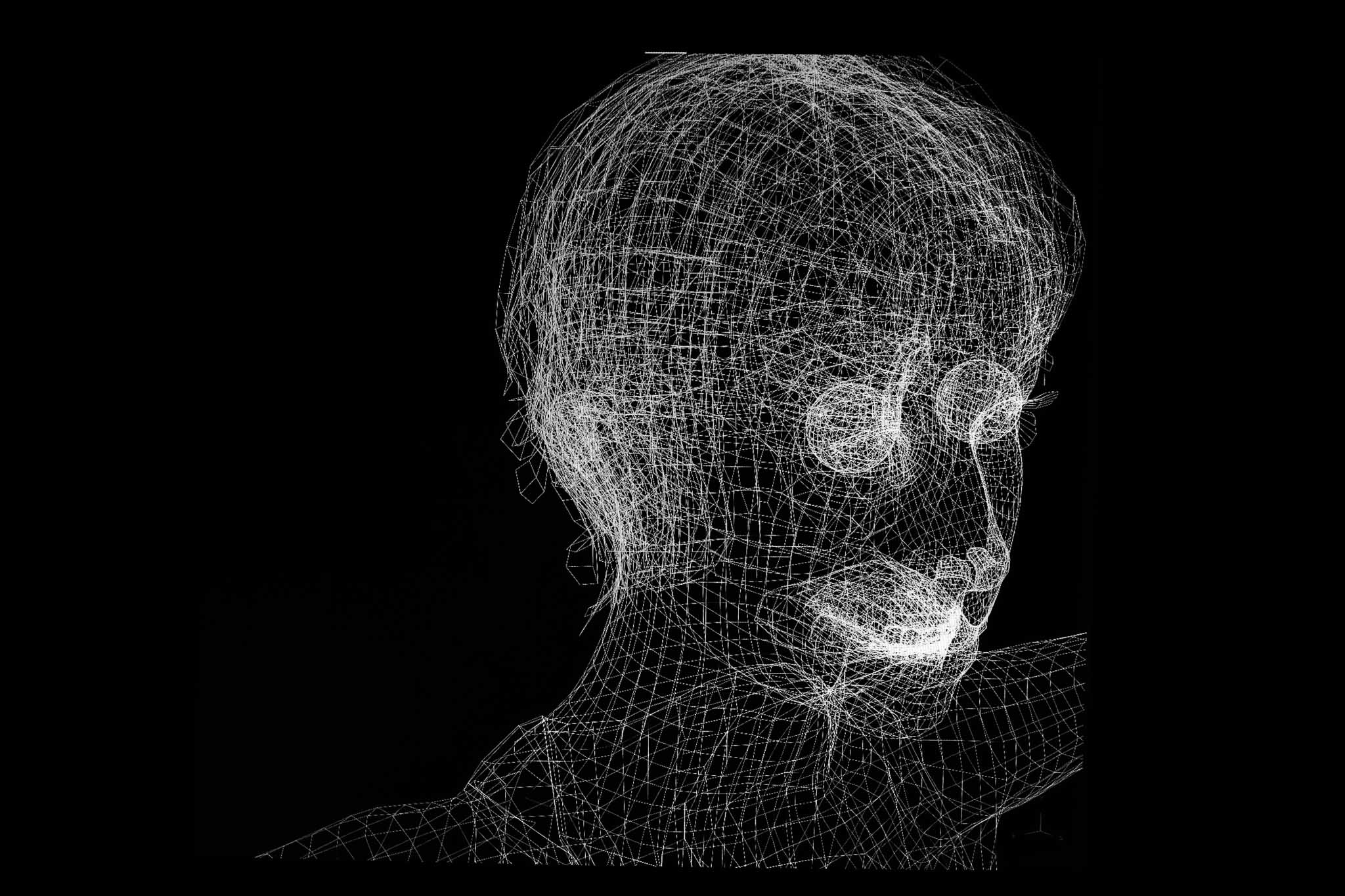
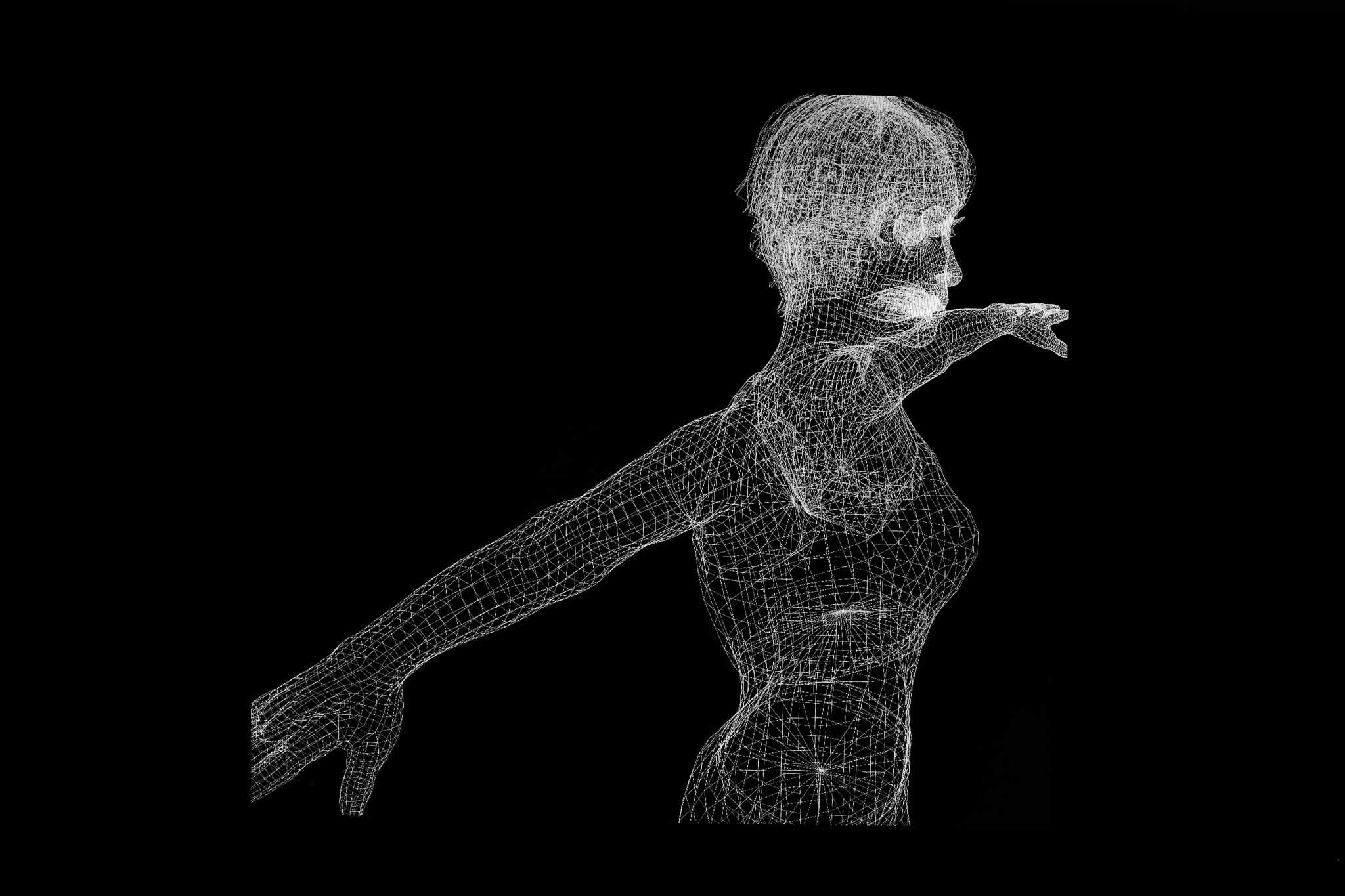
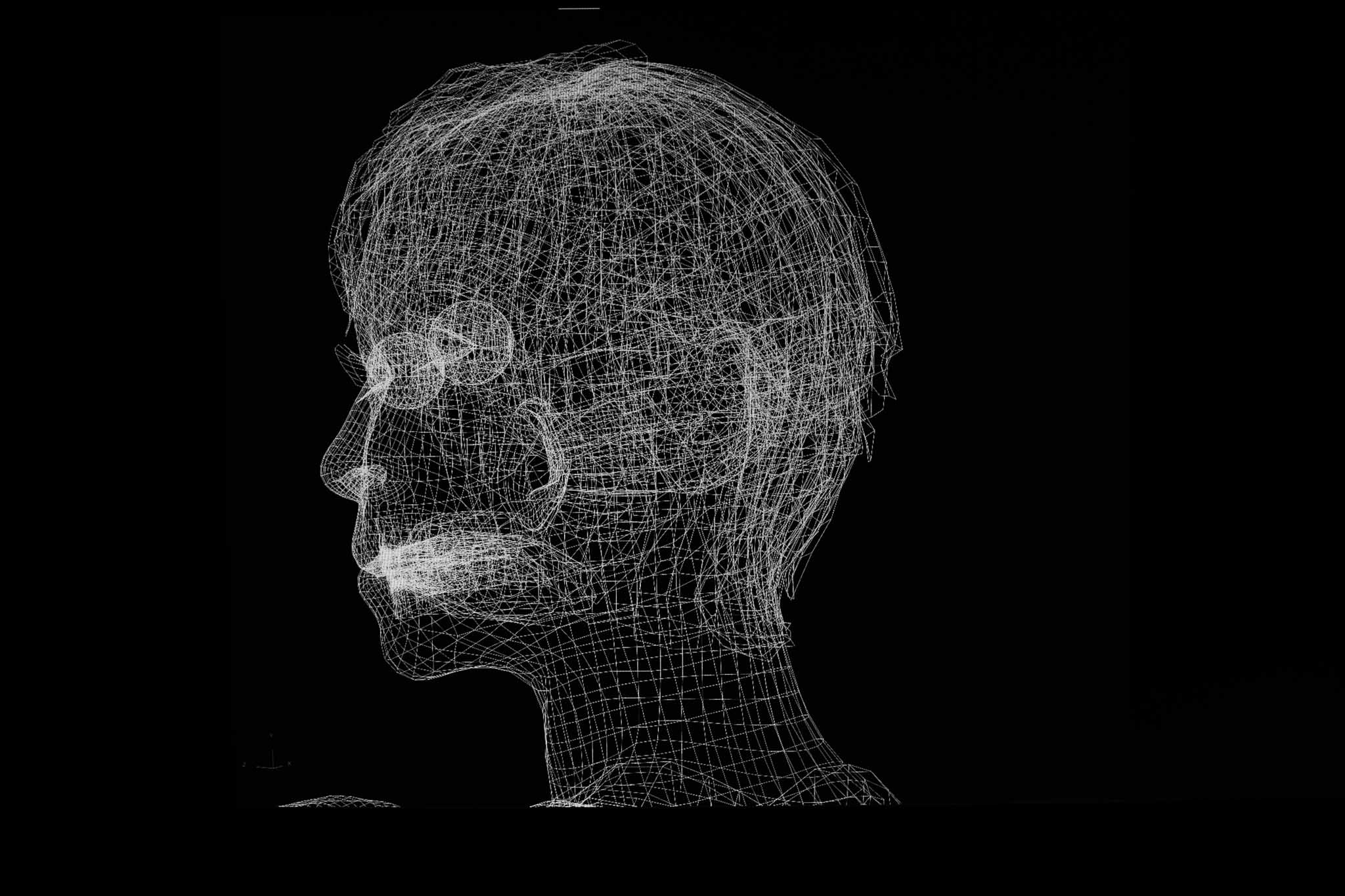
    Personally I think the moving image element added a lot (and perhaps adds something to the table for assessment).  It’s available on my blog as part of the process should an assessor want to see it. Again – being really honest with myself – I ask, does it add to the concept or detract? I think it detracts as it stands  –   it is not well-enough defined. This is a risk, I know, especially as in past assessments, I have been praised for my moving image work in particular. So it is scary to remove it from the list of items submitted. However, the point of the ePublication is that it combines moving and still imagery, both their techniques and conventions, in an object we once assumed would forever be still – the book. And so, by taking the film away for now, and focusing on that ePublication object alongside the printed book, I hope I make that concept extremely evident – more so than it otherwise might be.
    I was not sure if the text was you or the AI or both and while I can see that is an interesting ambiguity I would also have found it interesting to know.  Mmmm… I wonder if this is something that can be addressed in a slightly different more developed statement. Or if it’s good that the ambiguity leaves you a little lost… The blurred lines between I and Other, internal and external (and many other lines besides) are integral to the overall concept – see my CS essay: ‘Donna Haraway, another name who features in Barad’s work and others also influenced by agential realism, describes human beings as compost ”intertwined in a  rich, dense matter in which boundaries between objects cannot be distinguished” (Haraway and Franklin, 2017:50 cited in Lupton, 2019:26). Such a concept is not easy for us to embrace. Enmeshment is a pejorative term in couples counselling, for  example. It is distasteful, unhealthy and possesses something of Julia Kristeva’s Abjection’ (Field, 2020). From: https://sjflevel3.photo.blog/wp-content/uploads/2020/08/cs-a5-image-in-the-age-of-entanglement-sarah-jane-field-512666-offline.pdf
    The music over the top did also add to the feel but playing it separately without the sync controlled by the artist (or her friend) felt a bit like I was watching your work while listening to something else – it kind of lost the connection?  Good  – this is a fortuitous Brechtian ‘alienation effect’ that came about through my struggles to get the music attached to the InDesign document as I wanted it. Although I know you lament the loss of connection, I think it is a useful interruption as the music feels tyrannically evocative (as film music and editing often are). However, there may be other ways to disrupt – and certainly, being forced to work within my technical limitations rather than choosing to is a never-ending issue!
    I guess you may have to tie down what you are sending for assessment?  (yes within two days!) While I personally like the idea of it exiting in multiple forms I think when it comes to the viewer (and maybe assessor) they prefer to be a bit more directed as to where to look?  This seems to be the feedback I have had before when attempting something more fluid! I understand your concerns and of course, they hover in my mind too. As such, I think the decision to remove the film is the right one. But I also hope the assessor will take the central concept on board which is expressed in the following so well (and I may paste this onto the assessment page in response to your feedback):
    “Despite my concerns about the photographic image, there are two contemporary concepts about images today which Daniel Rubinstein and Andy Fisher in their 2013 book, On the Verge of Photography: Imaging Beyond Representation express well; the first of which I use in the essay. They discuss the digital images’;
    “…fractal-like ability … to be repeated, mutated through repetition and spread through various points of the network, all the time articulating its internal consistency on the one hand and the mutability and differentiation of each instance on the other” (Fisher and Rubinstein, 2013:10 cited in Field, 2020). From: https://sjflevel3.photo.blog/2020/08/28/bow-cs-end-of-module-reflection-part-1/


17/09/2020  – OCA alumni comment in response to questions I asked about the film element – the film (referring to older versions without Simon’s music) all the imagery is quite vintage whereas the publications are more of a mix (assemblage). This prompted me to include some contemporary imagery but am not sure it works as well. Have asked for comments – awaiting and will put here (each bullet point indicates a new person’s view:

  • Completely off the cuff choice – Version 2. I quite like the ‘Fuse’ image and the stick soldiers.  However overall my choice is just based on ‘like’ and not on any form of educated analysis, because I feel uneducated with regard to this work.
  • Just to muddy the waters, I think the second version is absolutely the stronger of the two. The second ties in better with the printed work; the first seems like a distant cousin of it (although works well as a standalone piece of art).

  • From a ruthless assessment point of view: your work is experimental and challenging in terms of both content and format (as in mixture of publication and video), and some assessors might struggle to engage with it in the time available. A thread of coherence/consistency between the publication and video might help bridge potential gaps in assessors’ interpretations.

  • To borrow an analogy I found when researching an essay: if ambiguous work is a question of ‘joining the dots’, in the first video the dots between it and the publication are a little too far apart – while the dots between the publication and the second video are spaced about right.

    I think I’m more drawn to the first version. I like the vintage and not as keen on the contemporary.

    I find the second version doesn’t give me so much eye ache and I can actually watch it whereas the first I had to close my eyes.

    “Stronger”? Not sure, I have a personal preference for the second version with the more contemporary references in them though, does that make it stronger? My natural response was to try and form a narrative to the sequencing, which clearly doesn’t exist (not in any traditional sense at least), so this wasn’t the case when viewing the second edit. Is this why I preferred it? Possibly a factor, but I think it is more to do with the contemporary nature…

  • Music-wise, without knowing it was AI produced I don’t think it added much, but after finding out the fact it works much better for me. Backwards white-rabbit? Won’t that involve the devil or something?
    Not looked at the e-zine stuff, so I can’t offer any technical help there, sorry.
  • I’m sort of wondering why you think one might be ‘stronger’ than the other, and I suspect it is because you are so close to them. For me, neither is stronger, nor weaker. They both exist as separate entities, in their own space discussing (slightly) different things, albeit on similar plains.

    Your choice will be an emotional one, and I really enjoy the Adam Curtis feel to them – that seeming disconsonance between ‘cuts’ held together by the soundtrack – which helps to provide this viewer with the notion, perhaps not in reality, of narrative. And perhaps that’s an interesting issue, some will search for a narrative, whilst others feel less of a compulsion.
    There is enough ambiguity to not “lead” the viewer in either version. So I wouldn’t worry about which might or might not attract another viewer (other than yourself) but release the one that you feel is right/most appropriate/etc etc.

    Either works.

  • Not sure I agree that the first is ‘stronger’; but I would say that the second, for me, is more effective in the context within which you’re working. I could even handle more of the colour interventions. I think I said, when we talked about the ‘zine’ version, that a preponderance of vintage images makes me feel that the work is looking backwards at something. That might be your intention, but I’d would have expected, from your CS essay, that it’s focused at least as much on the ‘now’. I think this is the first time I’ve watched it with this music & whilst I like the music & it’s easier to listen too, the reversed ‘White Rabbit’ was a more effective ‘brain funk’!
  • Yesterday, I was thinking, maybe the film is surplus to requirements and I need to get rid of it now. Perhaps it’s been a useful part of the process and led to some gifs, but I need to put it aside as it muddies the waters. I really need to focus on the publication and figuring out how I might get that to a physical state in the next couple of weeks in time to make a short video for assessment.  (See next blog).

Non-film feedback

  • Regarding the publications –  I’m not sure whether this is too late to comment (sorry if so) but I find the whole of the publication very strong and consistent, successfully building a creeping sense of eerie discombobulation…

    … with the sole exception of the front and back cover images. They felt jarring to me when considered alongside the imagery inside.

    But this might be your intention! I was prompted to redesign the cover by Ruth when she said something was missing. I agree with this comment that the covers are now still not quite right. I orginally deliberatley went for something quite stark, difficult to get hold of and hopefully a bit enigmatic. I have gone back and tried again…

  • Screen Shot 2020-08-19 at 06.59.31

    Spread of outer covers so the right-hand side is the front and the left the back. It should be dark and deep blue, so returns to the very first cover page I designed but has evolved.
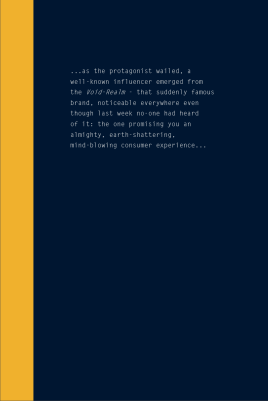
    Screen Shot 2020-05-17 at 09.45.49

    • Some proofing suggestions:
    • The spacing before and after the / – not a big issue either way for me.
    • ‘a dream’ don’t like it centralised because it looks out of place.  either left or right justify
    • The text on the front cover – normal would be to read it from the other side.  Maybe this is deliberate but I would prefer the other way round on the front cover.   In the rest of the book the changes in orientation are OK. as is the faded text.
  • Couldn’t read the faded text (not meant to so have added that convention elsewhere to emphasise its presence)

  • Have added a space before the /

BOW A5: Getting ready to submit to tutor…

I am nearly at a place where I can submit this work to Ruth. I need to do a few practical things before I do, however.

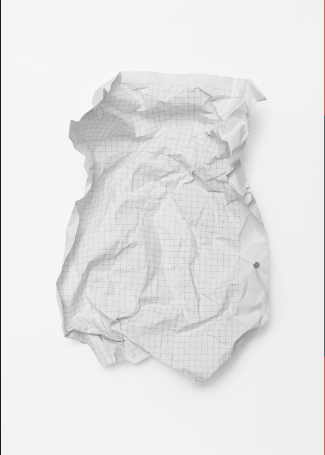
  1. I think I am going to take some more images like this one – I think if I were to exhibit this work I would want to have a series of these crumpled papers on the wall as large high-quality prints to mingle with the rest of the work – found, archive,
    and moving image type stuff.
    Screen Shot 2020-07-14 at 17.46.40
  2. I need to make some gifs for the epub version. I can’t work on that properly until the gifs and any moving image are resized. There are just a small handful to make but they have to be the right size otherwise they don’t function properly in the epublication and it’s a bit fiddly. I really hope I can do this on Friday.
  3. I have created a short film which I want the book to link to. I have worked on a very early edit and chatted with a small group about it – they were positive and I think it has potential but I need to keep editing and make some decisions about the audio track. I have used a song that was in one of the main sources, played with it backwards and also have some music by Simon who worked with me on the S&O track.
  4. I was not sure about the statement – but I have for now incuded something on the back outer page of the book. I think it is jsut enough to point people in the right direction and without it, they would be lost. There were some suggestions about not having one at all and I thought about that – or having a very obscure little statement which I had written about an old man but I think I feel most comfortable with the draft I”ve mentioned.
  5. Following my chat the other day with a small group of people, I was reminded of my attempts to create some very NOW looking imagery to counter the overwhleming ‘vintage’ imagery and returned to some software I’d been playing without much luck before  –  I hope these will work in print. I am not sure if they will. They are photographed off my screen. (Click in image)
    Once I have created the above and positioned everything, I will need to write up the Assignment notes and OCA reflection, including a few paragraphs responding to some things in the OCA course folder, and then I will send it over. Hopefully within ten days or so.

I really want to get some feedback before sending the offline copy to print. I don’t suppose we will be sending hardcopy anything for assessment in by September so I need to have a copy of this so I can make a little video about it.

BOWA5 (sizeA440pp) July13

(I need to print and proof)

The only extraneous pagination thing I have held onto is the gatefold. I think it is enough for the amount of content. If it were a bigger project it might have space for more but not as it is.

Summarise:

  1. Make gifs/moving image (Tom’s First Film, Eye, Shadow puppet animation and digital character animation – if possible)
  2. Place in epub
  3. Look at short video that the epub will link to
  4. Images of paper in various states  – crumpled, written on, drawn on, scribbled on.


CS A5: Peer feedback

This post has two dates below – indicating feedback for successive iterations of CS A5.

20/06/2020

With the agreement, the following feedback not anonymous as is usual when I post OCA peer feedback here.

From Rowan Lear (who I worked with on the Pic London project and who is doing a PhD exploring the intra-action between camera and human). I knew Rowan was not only aware of Barad’s writing but that ideas relevant to my own work informed a great deal of her thinking and practise. Following on from feedback from fellow students (see below 10/06/2020), I was really aware that some of my understanding was still muddled so I asked Rowan to take a look at the section on agential cutting. She sent me a generous email which has been extremely useful. For the most part, I have been looking at this work in isolation, reading and watching talks on the internet. But I have had no chance to discuss it, which is difficult because it is often through discussion, I am able to understand things – I suspect that sums up the biggest problem with distance studying with the OCA these last few years – there are solutions, such as peer hangouts and attending study visits – those have been invaluable. But the lack of regular tutor-led (knowledge-based leadership – not talks, but ’roundtable’ discussion from anyone actually)  has always been a cost in relation to the benefits, of which there are many. Saying all that, I am not sure who at the OCA is working along these lines – although have seen work and spoken to tutors who are investigating related themes.  Following are some edited points with a response from me, as usual.

  • Can you have a dumbed-down one or two-sentences at the beginning of each section? I have included something like this as a glossary in the Appendix. For the sake of word count I think it’s best left there, but maybe I should highlight it in the introduction text. 
  • You seem to skip the **things do not exist prior to their interaction** – existence is relational and skipped straight to ‘the observer’  – I have gone back and reread sections by Barad and also Carlo Rovelli who writes in a much more accessible way. I have rewritten this section and removed the observer comments – although touch on it later. 
  • We are missing the significance of Barad’s ideas stemming from quantum field theory. (Tt’s in the intro but I have underlined it again here) I suggest a close re-reading of Barad’s MTUHW, pages 175 to 179, and writing a short paragraph to summarise what it all means for agency – there are a good 4-6 strong points you could draw out, which I think will help you make sense of the cut for her. I have looked at this section again and rewritten, clarifying it for myself as I did  – It is much clearer, I think, although a bit repetitive perhaps and I have focused on one or two points rather than 4-6. I am slightly over with words right now so may go back to this section and shrink it, but because this way of seeing can be so challenging, I think a bit of repetition is probably helpful – drumming in the idea from the various positions is probably needed to shift the assumptions we make. (I am also reminded of Michael Belshaw’s comments about drumming an idea home in some UVC feedback – No 6 on this blog post). 
  • Later, when you talk about indeterminacy, there’s a real conflation between uncertainty and indeterminacy – again something I struggle with – I’d suggest re-reading Barad 115-118 to really work out the difference in qft terms This has been very helpful – the conflation is typical, it exists in popular culture as Barad explains at length at the beginning of the book, and I was very grateful to be reminded to look at this again. Now I am left with the problem that the examples I chose were really being at looked at through an uncertainty lens and I wasn’t sure they were appropriate anymore. But I have left them and adapted the text to try and steer it from the right direction. 

There was also some useful writing advice and comments which came from the place of a “diffracted practice”  – I took diffraction out of the essay, there is not enough space to include it even though it is really important. I suspect my own ability to practice diffractively as I write is compromised by the fact I straddle both paradigms, Cartesian and post-Cartesian – which is what the essay is about effectively. That is the transitional world we (I) live in. I also need to be clearer about so-called empty space. I think that came about through sloppy writing/thinking. Have clipped and thinned. I am extremely grateful to Rowan for the comments –  the essay is much-improved thanks to her clarity and suggestions to go back and look at sections again. 

Some additional extremely helpful comments from ex OCA people

The conclusion, which I think starts somewhere in Chapter 3. This is clearly where your passion for the subject(s) becomes apparent. I have actually since restructured the essay. I no longer have an intro, three chapters, and conclusion. I have an intro, Part 1 and Part 2, and conclusion. I think this is better for 5000 words and might resolve some of this. And yes, it might be read as a polemic (again see Michael Belshaw’s discussion re UVC Feedback – link in feedback above), perhaps due to the foreshortening of ‘distance’ between the academic and her subject becoming very clearly evident. I have written a short opening that I hope introduces this aspect immediately.  I looked again at the “Introduction”, as it related to the “Conclusion” and didn’t feel a strong line (entangled or otherwise) that connected them. This is a job on my list – go through the opening and conclusion – make sure the ties are there (I know they are but I’ve not made it evident enough, clearly – I need to pick them out and make them visible) What I felt about the Introduction was a concern expressed about the “flaccidity” of photography, how, on the one hand it was yearning to break free from the strictures of its origins – analogue, chemical, unique(ery), repressed etc. And on the other hand how photography has rid itself of those strictures by becoming so universal, so enmeshed in everything, so entangled – where it is so complex that no one understands anything about it anymore. And because of that no one seems to care.

As for the content, I initially wondered about the strategy of Chapter 1, me too but probably for different reasons – for me, the risk of it seeming like nomenclature or quite pedestrian was at the forefront of my mind but I couldn’t see any other way to approach it. Now, as I go through each section, I think I have conflated all of the concepts but that I think is because they are so interwoven it’s very difficult not to but on reading it a few times, AND coming to terms with the first person singular commentary I felt it worked very well. It is a brave and risky approach – Roberta M (my original OCA tutor) was very encouraging about writing experimentally – I wasn’t quite sure what she meant and now see that simply including I is viewed as experimental by some. I believe this is behind the curve but accept that is seen as risky –  and again your tutor will have something to say about this strategy I’m sure – but that level of personal involvement with the narrative worked.

I like the mix of sources, Azoulay is a favourite for me at the moment as you probably know, and I’m surprised not to see Zuboff, (there is no space for her but I did want to talk about the anatomisation of human behaviour (surplus) and the non-inevitably of digital culture destroying civilisation) but then that would have opened up another narrative strand – exactly – ! But I think those contemporary and (seemingly ancient) oft quoted theorists like Benjamin, Sontag et al works well.

I do wonder if you could pare back one or two of the ideas, a couple less strands might provide some additional space to explore some of the other threads more fully? Having said that, the tenet of the essay is held together, in my view, as you don’t seem to lose control of where the essay is destined – just starting the conclusion a bit early ha ha! I think I have done this following Rowan’s advice anyway although sure there can be more cuts. Yesterday, I had my actual very difficult hair cut  – and I was thinking my writing is a bit like my hair – lots of different textures, really difficult to manage, requires proper skill and experience to tame it – spent my whole life trying to fight a losing battle with it. Each time I focus the essay down, cut out strands, thin it out, it feels like I’ve lost so much but in fact, I’m just making it less prone to being really knotty and unmanageable. There is probably more to cut and thin but I am nevertheless about to send it to Matt (hopefully Monday after proofread) and will revisit again before assessment no doubt. 

10/06/2020

Re: CS A5 Draft 3 The photograph and photography in the age of entanglement (No Pictures)  (Since writing this, the sections on agential realism, intr-action and indeterminism are much more in keeping now (I think!) with Barad)

I have written another draft of my essay and sent it to one group of students for comment – will edit following this and send to a wider group and Matt. (Have until September to keep writing if necessary but really need as much time as possible for BOW now).

  • I hoped to simplify some of the concepts as much as possible, made doable as I became more familiar with them – the previous version was very dense and needed to be a bit ‘easier’
  • I also needed to add more examples as well as some of my own from BOW – which was and still is in development
  • I had absorbed something about phenomenology vs. object while reading another students’ tutor feedback which I hadn’t picked up on before and also continued to delve into Derrida – although I have not actually mentioned him in the essay (word count), that reading has given me a deeper understanding of the way language can fail.
  • Emma P sent me a terrific book called On the Verge of Photography co-edited by someone I’d already quoted  – Daniel Rubenstein is focused on the same issues as I am, although probably without the strong feminist angle, so he’s a good person to read.
  • I needed to cut 1000 or so words from CS A4 – which I could only do after I’d added a load of words by which time there were 2000 words to cut.

Following are my notes from the this morning’s chat as well as copy and pasted feedback from emails. I always keep this feedback anonymous. I am very grateful for it but I don’t want people to worry about having their comments recorded here. (Will add if/when more arrives). It’s now at the right word count but I will need to check and shave again before submission, for sure.

General verbal feedback

  • The same question I have been asked before came up – is this too advanced for the level? Is that OK? What do the tutor’s say? Should I temper my intellectual ambitions and aim for something less difficult. In answer – I am not doing this course for the OCA tutors or anyone else, I am doing it for myself and trying to figure out why I grew up to see myself and the world as I do and why that view has not always been that positive. (I’ve done enough therapy for one lifetime and this is a more productive way of exploring at this time). Now I am making work about those questions and their implications, what I can do about it, what’s at stake: and I cannot stress how much this ties in with my BOW  – which is something that has emerged as I work on it. The way we perceive and see is fundamental: the way women are seen and what we see in ourselves as a consequence. And most importantly, the potential for a revolution given where we are, the loosening of and subsequent threat to old societal structures, the emergence of new ones. To be asked again and again – are you sure it’s ok to be smart, to tackle difficult topics, to aim above your level, to really utilise your brain – are you sure that’s OK???? In the current climate of civilisation breakdown and renewal – where women (along with a whole bunch of other people) are being undermined and their rights eroded, yes, I am sure. Or where trust in education and science is under threat, yes, I am sure. And if anyone doesn’t like, it… I need not say more.

Comments 1:

Some incredibly clear and specific feedback – at this stage, this level of detail is very useful and I am immensely grateful for it. It’s exactly what is needed now. (Before this point, this kind of feedback for the way I work isn’t that useful for me, as I am still feeling my way through things – in earlier drafts, I need general impressions that give me space to keep exploring whether it’s academic or practical – and there is little point in being specific as I will still be all over the place for a while.)
Intro – really clear, IMHO much better use of quotations.

Love the cat cartoon!

P2 ‘echt’ is a bit obscure? Does it need a footnote? I love this word, it’s perfect for what I mean but I was unsure about using it in an academic essay even though I am very much about challenging stale (masculine) academic tropes  – may replace but will see. 

P4 good intro to this section, helps open it up for a more general reader.

P5 If you need to lose words, I would cut down the paragraph on the BoW example. We are required to link our research to our own work,  this may not be the place to do it  but as I read it again, the concept of something solid emerging from interaction with humans and non-humans – and the intra-action emerging from what we talk about as ‘virtual’ makes it pretty salient

P7 parentheses on what you think, needed? – Maybe not (but perhaps only because there is not the word count left to explain how the work became diluted by adding – in my opinion – more detail, but it is something I really noticed and was rather disappointed by. Sultan’s project actually made me cry when I first looked at it, and again in several further viewings online. I then felt quite confused when I bought the book because I did not have the same reaction at all. 

P9 ‘montage’ still doesn’t mean cut in French  It means put together, put up, assembly of parts, putting together of things. It is used for collage and editing not because of the cutting but because of the assemblage. Caesura is Latin not French (it’s césure in French). I would rewrite this – or remove the reference to montage – because it sounds like you don’t know what you are talking about – which isn’t the case – and because (I think) the cutting action is what is important here (as opposed to the reassembling in many different ways). This is a pure language slippage issue – will revisit – to avoid doubts

P9 ‘some examples…’ feels a bit stuck in.

Just out of interest (and because other people seem to have said otherwise) what was your tutor’s response to including references to your BoW in the CS? See workshops by Ariadne re L3 BOW and CS  – yes, we should include our own work unless it makes no sense to (but how odd to research something unrelated to your BOW and what a lost opportunity that would be.) 

Agential cut – bit on the cut is clear and well exampled but the ‘agency’ is less so. I also wonder if agency needs to come before cut. I found myself wondering about the agential part all the way through the examples. Can you add a more specific example? I know you say it’s beyond the scope but it also feels like it needs to be well explained.

I find the move from agential cut to indeterminism interesting, it sparks thinking in the reader. I might comment on this – the paradox is worth thinking about. The cut as an attempt to control? This ability to engage with what you are saying shows that this has come a long way from the first drafts. It is clearer and I can begin to focus on the ideas. Yes – it has come along way from the time I lay on the sofa watching Karen Barad talks, thinking, ‘shit, I’ve taken on way too much here… I have no idea where to start’. 

P15 is the key to automatic writing in Freud’s Interpretation of Dreams? Or in the desire to have unfettered access to the unconscious? (blowing up explosion sound) 

P16 You don’t mention these figures in the text? (happens in a few places, best check through otherwise they can be a bit unexpected) (yes I do – will make clearer somehow)

Whole of ch1 is a really good blend of definition and example.

P20-21 first couple of paragraphs still a bit difficult to understand. Have a look at whether the sentences run naturally from one thought to another. – Will do

I struggle to see how the end of ch 1 leads to ch 2. Perhaps it needs a bridging sentence or two? Easily solved

P23 ‘neither of whom…’ seems unnecessarily judgmental. I think there would be another way to show the change from representational to the projects you reference. I think it’s ok to judge not very interesting work as not very interesting, (Bloody hell – enough people who don’t get mine judge it in the same way!) but I take your point. 

P24 ‘This upset’ – more academic language needed.

P29 ch 3 good first paragraph intro (look at this for ch2 intro)

Do you define the difference between ‘the photograph’ and ‘photography’? Why separate them?  Maybe a hangover from emulating the rhythm of the title my own alludes to – “The Work of Art in the Age of Mechanical Reproduction”  = “The photograph and photography in the age of entanglement.” However, the separation between noun and verb does feel significant – although I will need to think about it. 

P31 ‘prompts furious…’ feels like it needs to be evidenced. See current positions re the pulling down of statues  – actually, I cut a reference which explained this further but could possibly add a footnote with a link to comedian talking about stealing artefacts and putting them in museums…

https://www.youtube.com/watch?v=x73PkUvArJY&feature=youtu.be

Ch 3 does read less like the evolution of an idea and more like the digest of literature – like Doug said.

P31 last sentence – check tense

P32 You need to bring the argument to film – it jumps at the moment

Conclusion – very good.

Comments 2:

Again, very helpful and much appreciated.

  • A citation that excludes the author’s name should appear immediately after the author where is mentioned in the text.  If the name is included then it should be at the end of the quote with the full stop after the final bracket. (see p4 of UCA Harvard Referencing Guide) Thanks, makes sense!
  • I have not checked if you have cited everybody in the Bibliography.  I have queried a few times with Ariadne Xenou whether everything should be in the bibliography and she is adamant that only authors that you cite should be there.  Anybody else that you have read but not cited should be in ‘References’.  Oh, this bloody conversation! I believe we must just have a bibliography and all listed there. (thank you!) 
  • I have a feeling that I still don’t understand ‘agential cut’ or agential more broadly.  Maybe I should just reread that section of the definitions again. It’s hard  – really hard. Will keep trying!
  • I did feel that this was easier to read than I recall from the previous version.  But my gut feeling is that something has been lost.  I came away feeling that this was not as good academically compared with the last version.  BUT, I have not been back to compare directly so it is a gut feeling only nothing substantiated. You’re right – it had lost something, I have been through and added some stuff back after the very brutal cut. But I can’t help wondering is there is also a sense of loss about the photograph as it was here  – after reading a much clearer version (maybe reading too much but it was something that struck me) 
  • Also, I felt that it had reverted in places to more like a Lit Review.  … Previous notes recorded identify this in section 3 – will relook
  • I don’t think I would add more images and I certainly would not in the conclusion. (No not the conclusion bu maybe Ch 3?)  A conclusion pulls it all together and should not introduce anything new.  Having said that I suppose an argument could be made for an image that pulls all the arguments together, but I would be careful.
  • Other comments are included in your pdf as comments and usually associated with highlighted text.
  • I think you should now write an Abstract.  Probably 120 to 150 words.  (Cant recall what the CS notes say on this – up to 500 for the record)  The reason I say this is that you need to pull together the essence of the essay and your thinking into a couple of sentences.  It will also help any reader (me) with an anchor from where they can start.  This is more succinct than the introduction or a preface – just a peg in the ground in three or four sentences.  I do feel ready to write this – could not have done so before!
  • Not sure I like the different colour text in the image captions – just a Word thing (they’re automatically blue, I changed to red, but worth considering, maybe just slightly greyer?) 


Hangout: 13th May (Peer feedback)

Today’s hangout was really useful and I’m glad I made it. I was asked to give some background especially as there were two new people visiting today. This was a helpful exercise – mainly because I have been thinking about including some kind of insert which would be a rambling stream of consciousness as text (to be presented similar to the text I included on the walls as images when I showed Self & Other’s i will have call you. This could be a poster perhaps – or something that gets trucked in a flap at the back and taken out.

The mini- ‘talk’ I ended up giving helped people to see where I was coming from. I had thought I’d trained things down too far but evidently not and you could see the sense of relief from people who perhaps felt a bit lost.

A list of words that seemed help:

culture

semiotics

extreme paradigm shift

quantum – non Cartesian

context – relationship

assemblage

cut  – seeing

surrealism – Un Chien Andalou (visual references)


I also received a few helpful comments that are worth bearing in mind:

  • Are the literary references still needed – or where they a useful improvisational tool? (In the same way, ‘Helenus’ was but I’ve now dropped it…)
  • The word ‘anthology’ jarred – yes, it’s a hangover and could certainly go now
  • Is there enough space around the text in the box where I describe the Ai’s drunken conversation about being ‘behind a waterfall’? Some felt it was deliberately squeezed in, others that it needed more space around the edge  – in truth, the box is the same size as the image on the next page and the text is 11 p.  – in one of my versions, there were on the same spread. When I looked at it initially, I noticed the lack of space but felt I’d leave it as the oppression seemed relevant. Sometimes these accidental things are honest albeit serendipitous expressions (Jungian)
  • A similar question was asked about ‘the fat capitalist text’ – it’s barely legible and a cream colour at the moment, illegible not only due to my dreadful handwriting but I’ve processed it so it is even harder to read. I explained it was an experiment and I left it as I quite liked the lack of visibility  – how it could be ‘read’ on several levels re. me and my life (this work is vaguely autobiographical, after all, and handwriting in the world general.Some other versions

In general, the feedback was positive and encouraging.


We also discussed COVID assessment for those entering in July which may apply to November people (me in all likelihood)

As well, Hazel showed us her online exhibition which is definitely something worth investigating. I will keep it in mind for any further developments for A2 as well as A4 (onwards.)


BOW A2: this family too, zine – feedback

  1. /(email) Zine – text again is good, in parts really good. A really really useful productive exercise and I can see why you did it. Really good end product, definitely professional standard quality. Images are ultimately a WIP and could be progressed into something more mature if you wanted to.

    It looks like you are making a lot of progress in a really short amount of time it’s actually quite frightening to see how much shit you get through!

  2. (email – ex OCA) The first thing I thought was about text and (visual) image. With text we naturally, sub-consciously, often without regard start at the first word top left and read from left to right, top to bottom. I thought of this in respect of the visual images that came after the text, about how difficult it is to interrupt that structural, taught, cultural position. It is different – albeit maybe only directionally – in other written languages.
    And also about how the process of reading (the words) from front to back, another construct, delivers the context by which the visual images work with this reader; how they might, or might not, resonate with this reader… I felt “positioned” by the text. I knew where to start by the construct of who I am, the position of the text, the way the text was placed told me where the work began. It’s start.

    The images, perhaps by design, perhaps as a product of the process, are soft. And I think that lack of didacticism works – even with the agency of the text ringing in my ears. I could sense a tension about where the images sat on the page(s). The continued resistance to engage with a traditional form, to ensure that I, as a viewer, would have to look in order to see.

    Did you edit this by yourself, or did you work with someone? Either way I’d be interested in the thought processes.

  3. (email) Thanks again for sending the zine to me – it’s soo good to see an idea come to fruition.  The text and images do work well together  and I ws particularly struck by the linkage between “Both mummies lay still. …….” On the bottom on one page followed on the next page by the photograph of the elderly lady waving.
  4. (message) Interesting without a title on the cover. I like the image on the inside cover too. The text reads well and is nicely spaced making it easier to read and digest. I like the mix of image sizes and layouts. It has one of my favourite images in it although I prefer that image in colour./I’m sitting here now trying to workout the significance of the Virgin Mary and the two mummies./
  5. (email – non OCA) I was left kind of wanting to find out more about this place you visited for your research. I thoroughly enjoyed reading and looking at your work. I wish it was a big book to be able to see those great images. I thought [it] was a very honest exploration of family and religion perhaps?, and motherhood with some pictorial references that reminded me a bit of the suffering of the ‘madre Dolorosa’ that griefs for the flesh of his son.

BOW A4: Peer Feedback

Feedback added as it arrives:

  1. (via email) I had a look and find it quite compelling, strange for me with your work which as always I find difficult. So in terms of the quality of outcome, I am strongly on the plus side. I still like the idea of all your micro-narratives being little ‘booklets’ of some form or other that are combined into a single container: box, box-file or ??? I include your zine in this too.I think the colours and printing plans work well and the images broken across pages is suitably disruptive. As you know the graph image appeals to me and I was disappointed to see it so small but that is my own personal point of view.Your inspiration from ‘IT’ works well and I see links with older images of your with film swirling or being wrapped – similar sentiments in this BoW4.I would like to see comments from others though as maybe I am off course here. Your tutor feedback will also hopefully be informative.
  2. (vai email) BoW 4 – some of the formal style is really effective, browns, greens, cream text and font. Tan and cream again works really well. The whitened letter, The black and white images again look good. Some don’t work as well (for me), the cut out green graph board, the listener, moon landing look a bit out of place or over dramatic or rather you’re letting them do the work – if that makes sense. Not sure about the puppets or razor blade (anymore). The text is good, in parts I think is excellent. All in all it feels as if it’s moving in the right direction although you probably feel as if you have n’t got long left.Overall I feel that you are developing a style, almost a medium but it feels as if there is n’t enough of a central theme, proposition or message. I don’t think the work is quite big enough to carry ‘too’ many micro stories, it’s a bit like Elliot’s The Wasteland in 7 lines flat. I get the idea of entanglement or breaking down linear representations – but of what? It’s almost as if you need an actual subject that you can then forensically deconstruct. Like you say, Barnard, Martins and many others use this style but they also have a subject. I’m not entirely sure what yours is right now. Even if it was something like Cassandra the ‘AI’ office temp / part-time actress’ personal life story. One question might be – how much of this is auto-biographical in any shape or form. Maybe it’s just me as I like things to be tangible.
  3.  
  4.  

CA A4: Peer Feedback (i)

Having written several drafts of the extended essay, I sent iteration nine to a limited number of students last week, mostly to people who have written one themselves although not exclusively. The feedback was excellent and helpful and I made some changes based on suggestions. I will share the essay more widely now and welcome any comments – although won’t be making any adjustments for a few weeks as I need to let it rest and look with fresh eyes after returning to BOW (except for changing mad malapropisms that might be identified, or very obvious typos/editing hangovers)

Feedback:


Firstly, an exceptionally well researched and thought out essay.  I feel somewhat inadequate to comment on it.  However, it reads well and the arguments are well made and substantiated.  There are a few instances where you use the first person singular and I would not, but I know you like that and today it seems to be quite acceptable in academic writing.  As a general feeling I would say that the first 2/3rds seemed better than the last 1/3rd, but that is just a feeling and no more.  There are a couple of small things in ‘Track Changes’ that I was not sure of.
A couple of other thoughts,
  • An abstract will help as it will succinctly provide the reader with a thread they can hold onto as they read.  I feel this is necessary as you are discussing a difficult concept for most of us and we need that stability.
  • I cannot recall who your CS tutor is and wonder if they are really well qualified to comment other than on structure etc.  I am not sure of the OCA rules, but this essay could be published in a journal where it would be peer reviewed by qualified persons.  Something you should consider.  You may have to make some modifications but the bulk of it is there.
In terms of referencing, the only comment I can make is that where you have:
: Carlo Rovelli writes in Reality is Not What it Seems, ‘Our culture is foolish to keep science and poetry separated: they are two tools to open our eyes to the beauty and complexity of the world’ (2017: 88).
you need to place the citation directly are the surname as:
: Carlo Rovelli (2017: 88)  writes in Reality is Not What it Seems, ‘Our culture is foolish to keep science and poetry separated: they are two tools to open our eyes to the beauty and complexity of the world’.
There are quite a lot of instances like this.
Finally, make sure you are OK on word count – I did a global check 8920, but not subtracting all the references etc.

I’ve read it – quickly and without the level of attention it deserves, and would be required to ‘critique’ – and I don’t think you need to be in any way reticent about sharing it more widely. It is intelligent, well-informed and interesting – dense, yes, as befits an essay at this level and at this stage, but readable. We usually talk about form matching content in the context of works of art, but it applies to your essay – inevitably. It is ‘entangled’ – as befits its subject matter – but I think you have managed, heroically (!Emoji), to hang on, by your fingertips, to a sense of of focus and direction – well done, it can’t have been easy. And I think I would only caution against too much temptation to overly amend between Assignment Four and the final version. It would be easy to be tempted – but I would rely on tutor feedback to guide you how far to go.
So – I wanted to read it, because I thought it would be interesting, and it was. I can relate it to my own work, too, which is useful. I say again, ‘well done’.

[reading this] is like riding a tiger, but I think I just about stayed on!
It’s an exceptionally complicated subject and yet I think you do manage to keep a hold on it (I only say ’think’ as I’m assuming that I understood as much as as I really did…), so big well done there. You might get assessors who know less about the subject than you now do, so hopefully that will make them err on the side of favourability rather than marking you down for their own lack knowledge on quantum… things.
I do have some notes, mostly typographical but a couple on content. I’ll refer to page numbers below but be aware that I opened a Word doc in Pages and so page numbering might have gone a bit screwy. If in doubt, search for the text string…
  • 6: “Let it be not, this is essay…”
  • 7: “from the last century”
  • 7: “the sciences have been just as, if not, guiltier” is better as “the sciences have been just as, if not more, guilty”
  • 16: “ponders out our place in reality”
  • 17: “as Susan Sontag tells us”
  • 25: you first use “rhizome” three sentences before you describe it – I think it needs a definition on first use
  • 29: “out of space” = “outer space”?
  • 32: On Photography was published in 1977 not 1971
  • 41: “Michael Fried based his book 2008 book
  • 42: “even if it id is lacking”
  • 44: “un/define” should be “undefine”
  • 45: “its still speaking with like the child it was”
  • Overall comment: don’t chop it down at this draft but I suspect it might be a tad too long and will need a nip and a tuck for the final version
  • My tutor highly recommended a three-part structure to the main body of an essay of this length and at this level, where you have four chapters. I don’t think you need to chop out a whole chapter but have a think about whether the contents of Chapter 4 could be split across the end of Chapter 3 and the start of your Conclusion (which is shorter than I expected)

There was another student who sent me some valuable comments in the word doc some of which I incorporated, others I had to dismiss as I cut words and they became non-applicable but I will revisit these again when I return to the work in a few weeks’ time. This person also queried the comments made about citations in the first comment above. I will go through the UCA Harvard file and my final draft with a fine-toothed comb.


Well-written and argued but I’m wondering if there are too many quotes and there needs to be more on photography – it’s difficult as a general reader with a small amount of understanding of quantum mechanics  Do you have a scientist friend who could read it and confirm the ‘science’ and also say if your photography examples are in-line with the science, i.e. does your essay give them more understanding of how far approaches to photography are changing in response to these scientific theories?

I agree with xxx re the final third – it seemed as if you were moving on to a different subject so perhaps there’s a clearer way to link it in.

and then

I enjoyed reading the re-vamp – also I realised that I was understanding it much more quickly than before so it shows the value of spending some time to absorb new concepts and words.  I think you’ve done brilliantly to get it into shape and connect the concepts so well with photography.


Clearly too long, but that isn’t an issue at this stage – just about the edit, much of that will come from guidance from your tutor.
Despite its length, I did feel it was cramped, there’s a lot of (very) interesting things going on, much of it applicable to my own work and research – unsurprisingly. However I feel it needs to be pared down, both in the scope of the ideas and also the references. Wendy once remarked to me about “footnotes” suggesting “don’t make them too long or have too many things going on in them – I paraphrase! Suggesting that it could appear to be showing off, though if anything, in your case, it might suggest the opposite!
I found that the lengthier sections with your words – without interruption, were the most interesting, where your ideas came to the fore rather than being subordinated by the – admittedly – difficult theories. And that’s where I think the paring will end up – removing some of the references so that the reader can focus on your voice, with a refinement of the broad range of considerations around the main subject. As my current theory tutor says – focus! (maybe I’ve been as guilty 😉 ).
Also there is are passages where the reader is invited to listen to both the personal – almost first person – before being carried back into a third person.

It’s much easier to absorb on the second reading!! I agree with the general view that you’ve managed to collate some complex concepts into a coherent argument but probably feel that there is another cut or two to remove some of the more anecdotal and peripheral bits which I think slightly confuse the objective of the essay and it’s critical journey – when you do so much reading and research it becomes a labour of love and a challenge to leave bits out but that’s the importance of editing I suppose. Like Stan says, I’m sure your tutor is best to advise. The conclusion I understood completely first time around which prompted me to start reading the essay again to see what I’d missed / misunderstood.
I think this area of non-linear representation is really really interesting so I’m looking upon this as a real learning opportunity and it’s quite enjoyable to read. I’ll reserve the right to come back with more once I’ve completed read 2!


This is a mammoth task and, as you say, the scope is slightly too large for the course requirement. But I did understand and was engaged by what you were saying. The conclusion is especially strong and the examples too.
Are you leaning too heavily on Barad for a rounded critical viewpoint on the topic? I wonder if looking at some other new materialists / relevant theorists like Jane Bennett, Bruno LaTour, Diane Coole might add something? Although that takes us back to the scope. Perhaps the title (or subtitle) needs to locate the focus in Barad?
I also wondered if you had this:
Dolphijn & van der Tuin, ‘New Materialism: Interviews & Cartographies’
If not, I can send it to you if you like.
Another one was John Searle’s ‘The Construction of Social Reality’ – it feels like a key background text and maybe you have already read it. In particular, his take on function (mostly ch1 &2).
I really like the first person approach and your reasoning behind it, but there are sections which are too anecdotal and take away from the more academic work you have done. e.g. p8 ‘Another viewer…’ I don’t think this is appropriate evidence for this kind of writing.
It does need a really good proof and it still a little bit dense in parts. I wonder if you have anyone who hasn’t read it before, who will be able to tell you whether it is accessible to a more general audience?
This might also be of interest to you: https://newmaterialism.eu/
Followed by:
On further readings and reflections, it’s probably not worth diluting the work with other new materialists – although I think you would enjoy LaTour. The first section just needs rewriting to bring it up to the standard of the rest. Obviously you are completely free to ignore me, but I would give each paragraph a title, pull out only those sentences and quotes that are really strong, then put the lot on slips of paper, shuffle them around and begin rewriting in mostly your own words.

Found this whilst googling some words that I did n’t understand! Don’t know whether you’ve already seen it or it’s completely irrelevant but saw the name Barad!!

http://eprints.lse.ac.uk/57600/1/Scott_exploring_material.pdf

It’s much easier to absorb on the second reading!! I agree with the general view that you’ve managed to collate some complex concepts into a coherent argument but probably feel that there is another cut or two to remove some of the more anecdotal and peripheral bits which I think slightly confuse the objective of the essay and it’s critical journey – when you do so much reading and research it becomes a labour of love and a challenge to leave bits out but that’s the importance of editing I suppose. Like Stan says, I’m sure your tutor is best to advise. The conclusion I understood completely first time around which prompted me to start reading the essay again to see what I’d missed / misunderstood.
I think this area of non-linear representation is really really interesting so I’m looking upon this as a real learning opportunity and it’s quite enjoyable to read. I’ll reserve the right to come back with more once I’ve completed read 2!

BOW A3: Peer feedback

Questions asked of peers

  • A response to the work (not whether you think it is good/bad/indifferent) but how it makes you feel (positive or negative feelings).
  • If you notice any spelling or typographical errors, please let me know. There are some deliberate choices, for instance, about using not capitals in some sections – but if you see anything that is clearly not meant to be there or something awry, do tell me.
  • Any suggestions for going forward that spring to mind automatically.

  • Adjectives that spring to mind: disjointed, fragmentary, dreamlike, psychological, introspective, performative, questioning
    • It has a sense of narrativity without a traditional narrative structure – it mimics some of the conventions of narrative but in a very chopped-up way (which suits your concept of course) – reminds me of William Burroughs’ cut-up method
    • Fragmentary work like this gives the viewer/reader the space to fill in gaps or join the dots – I find that my appreciation of work like this is based on (my subjective view of) how far apart the artist has placed ’the dots’
      • It broadly feels about right to me – which isn’t to say that I have interpreted it how you might have intended but I did get a sense that I had interpreted it
      • I make this comment about almost all work that combines images and text so this is possibly just a personal hangup – I think there could have been less text
    • I really had to think about whether my feelings about it were positive or negative! Neither / both / neutral? …
      • My feelings about it are positive in that I appreciated it, found it interesting/engaging (puzzling, ambiguous…)
      • Some of the imagery is, in isolation, dark and foreboding (razor blades, film-as-bondage) and some of the examples of ‘cutting’ (people being removed from photos) are equally dark but the Japanese cutout imagery wasn’t and so overall I didn’t find that the ‘narrative’ or the content evoked particularly negative feelings
    • It triggered more thinking than feeling in me – and that’s not a criticism, I love my thoughts being provoked 🙂
    • As ever, I enjoyed my short break inside your head but still not sure I’d like to live there 😂
    • Typos: is the two different spellings of ‘protagonist’ on the cover one of the deliberate choices…?

    • How did it make me feel? – disjointed, looking for a theme and not really finding it.  Cuttings and the various links to that are clear but that is not what I find throughout. The jumps (conceptual) between some of the images are too big for me personally.
    • Spelling? – To tell you the truth I skipped most of the writings which is unusual for me.  Normally I find I read and then look at the images.  In this work I looked, read a couple and then ignored them, especially the full page of text.
  • Possibly too many images of the film around your leg – not sure it adds enough

  • It makes me feel unsettled like things are falling apart or like I’m in a play where I don’t know the words, where I have no control and don’t know what I’m supposed to do or think – it’s uncomfortable. To me, it’s a little negative, unhopeful and hostile (could be the colouring and the film ‘bondage’). I feel a lot of distrust in the world, in what might constitute sense or reason or meaning, possibly a little cynical (this more from the text). It’s not the lack of linear narrative or the fragmentation that unsettles as much as the conceptual jumps I have to make from one thing to another. I’m (deliberately) not saying whether I think this is good or bad, but it does embrace obscurity and to some extent discontinuity.
  • At the moment the text is more powerful to me than the images. These get a little repetitive towards the end and could produce a similar effect (if this is the effect you are looking for) with more varied visual language. Keeping with the fragmented nature but actually going further, exploring more threads.
  • The tone seems to flit between seriousness, symbolism & humour – to the point that I feel locked out of the meaning, unable to really pinpoint a coherent thread or theme. This might be intentional and isn’t a value judgement, just how I respond to it.
  • Moving forward – I would step away from the images and try to analyse them and their juxtapositions from an outsider’s view. Stick them on a page and scribble all around, like you would when trying to read someone else’s image in depth. Perhaps break out from some of the tropes (shadow puppets and body/film especially) and explore other visual stories – like you have done in the text – maybe using something stylistically from your A2 which would seem to fit as a fragment here and has the same darkness.
  • It also feels a little like the concept may be constricting your visual language. I would forget about it for a bit and just make instinctive pictures – the concept will come through more subtly. I also wonder if the book format is limiting at the moment. To be honest, it feels like it wants to be a film with voiceover rather than text. Which isn’t to say it couldn’t be both but perhaps one format will help move it forwards more.


  • I often feel a bit like Alice down the looking glass when experiencing your work – that is definitely not a negative comment.
  • You asked how it makes us feel. For me, it was definitely negative. Quite disturbed really. I think I might have read much darker things into it even than you intended, but I certainly found it dark ( again not a negative regarding the work)
  • for me even the puppets were not a light relief ( pinocchio always scared me as a child!) but maybe because I had put myself in a very dark place at that stage.
  • I think I would get rid of one of the leg photos too ( as someone mentioned). They kind of jarred on me more than the others.
  • And maybe a bit less text. though I really like the layout and the way you have written the text on page 10.
  • So all in all, very disturbing for me ( but I like disturbing much more than pretty pretty) and it made me think, which is always a good thing.
  • potential definitely. well done as always.
  • It’ll be interesting to hear how you tutor feels.


  • Overall I think this is an interesting project. Short of a finished project but there is definitely something to work on.
  • Some of the text I thought was excellent – reminded me a little of Jeanette Winterson’s style, some I thought was a touch cliqued – perhaps just a little too much stuff about ‘failed promises of consumerism, ’the power of washing liquid etc’.
  • I have no problem with the length of text as the more I read (chunks of it) it the more I grew interested and curious; if it was re-edited I think it could be really strong. I liked the bits / references to acting / performing / scripts etc. These sections felt very authentic.
  • The images I think rely too heavily on the repetition of a limited group of images; the paper puppets / film on body / found photographs. For me – overall it lacks a little bit of visual interest. The layout of the text is the most interesting visual component for me.
  • I think part of the work is absolutely coming from within you, part of the work isn’t, part of the work is more ‘with the end in mind’ – and I think in that process it becomes too random to properly engage with. It’s almost as if it needs to make up it’s mind what it is.
  • The ‘end game’ of a fragmented constellation of text and image is really interesting if it can be pulled off – I started to see different stories interweaved / crossing over, bit of the T.S Eliott’s The Wasteland’!
  • I enjoyed working through it and of course you ‘ve got to admire the ambition!


  • I can see the influence of Martins in the work, and why not, he’s an inspiration! However with Martins there is, despite his clear commitment to his subject(s), a measure of distance between the him – the artist and subject. And that limited dispassionate stance helps the reader to enter the work. Much, if not all, of Martins’ work is extensively researched – I’d love to see his note books, which is evident in his work, and that sense of research comes through in this work – notwithstanding the course notes at the end of the blog post.
  • What I feel about this work is that there is still some distance to go – I wonder if you’ve considered working with an editor, perhaps especially for the written component of the work? I feel that you make yourself evident – much as in the visual narrative – and then you disappear. On the visual side, I felt you either didn’t make it evident enough or too much – maybe that’s where I found some tension. But hey! It’s only assignment Three!!
  • Bringing in the course schedule into the conversation, have you discussed/agreed your strategy with Ruth(?). I think that would be/is quite important as the work will be a conversation between you and your tutor which will be referenced by the assessor at assessment and there are still some dinosaur assessors who still believe that photography is a two-dimensional photograph, preferably Matt finished with 1” borders for easy handling….
  • On the subject of text, my favourite book last year was “Anastasiia She folds her memories like a parachute” by Christian van der Kooy

  • The text is integral, much as yours is – Kooy’s text anchors the narrative whereas yours, I’m suspecting isn’t supposed to? However I felt that at times the text did express an intensely personal perspective (going back to my comment about editing again, I suppose).
  • I think the work has an enormous promise and potential, and with continued work will become something of lasting value to your practice, let alone the degree.


  • A very intriguing piece of work! I was drawn in by the imagery and your text but must confess after about page 10 I began to lose a sense of what I was looking at. At first I sensed a piece of work that was quite personal, the chance meeting, does the narrator remember this person or not. What is their connection? I wanted to know more but after page 10 the sense of a film script grew but at the same time I became lost and other than an overriding sense of the negative aspects of today’s consumer society I found it hard to follow. I also found the amount of text too much for me in a photographic piece of work.

  • It certainly got my attention though and I would want to look at it again to try and understand the overriding themes.

  • It will be interesting to see where this goes.


  • I did see it last week but haven’t had the time that an intelligent, challenging and provocative piece of work deserves (there’s your first bit of feedback Emoji). And I haven’t read what anyone else has had to say, by the way. How does it make me feel, you ask. On edge; a little uncomfortable; to an extent, frustrated (by, I think, my struggle to find some firm ground from which to read the work – and I mean ‘read’ in the broad sense; though there is some frustration, too, at the literal reading level); like lost 21c soul struggling to get to grips, out of touch with what’s going on. Positive/negative? That’s a tough one to answer – probably a bit negative … but with some reassurance that it all seems to be a play/film anyway! I felt before that your work is to be experienced not read/understood, and I get that here. Your questions (in your e-mail) suggest that you’re not looking for a critique – but I do feel the need to comment on ‘text’. There is a lot of it; no indication as to where it comes from, so presumably your own words; so, am I reading this, to a significant extent, as a piece of creative writing. That may be something to think about in the course context – but, of course, it’s actually a piece of creative work, whatever the form.
  • Typos? You refer to “tax-dogers” – which may be deliberate, but you asked us to tell you if we saw anything.
  • The way forward? … let it come to you. Emoji


  • Response to the work

  • The title of ‘cuttings’ – fits with film but is there another link – cutting edge, sharp wounds, self-wounds, the bruising of life as it unfolds.

  •  

  • Beginning quote.  Fits neatly with your ‘cuts’ – part of a greater whole as it reveals itself. Snapshots from life; chapters perhaps but not necessarily from the same lives. Parallel lives. Incidents that might happen to many in different ways. Something universal?

  •  

  • The choice of that deep colour blue for the cover. An almost midnight depth.  What are the connections for you here?  The quote – not wanting to stay with the script; rebelling against the individual demands of ‘your’ life – rules, expectations, roles.

  •  

  • Placement of images – e.g. holding the roll of film the cutting mat above. What will survive the cut; how will it work out. What happens to the piece that’s been cut.

  •  

  • Who is in the cast?  How many? Is this about being a woman’ a woman’s life?

  •  

  • Stream of consciousness, all the differing thoughts that pass through one’s mind at several points during the day  Shopping a good example – a routine task to keep family fed.  Living life like a programmed robot. Is this all there is to life

  •  

  • Multi-tasking and thinking.  Losing sense of self in the banal everyday.

  •  

  • The ideal life of the advertisements v living life.

  •  

  • Something about the prostituting of self to be taken care of.  Marriage a transaction. The cruelty of rejection.

  •  

  • The selfie generation as example but is this what it’s always been – looking for a greener field, being an observer of life; life passing by.  Looking outward rather than inward to find sense of self.

  • Spelling/typographical errors (apart from deliberate such as no capitals in some sections

  • Couldn’t see any.

  • Any suggestions for going forward that spring automatically to mind

  • Tread lightly.  I’m reminded of when I sat as a model for a couple of different sessions for painting a portrait.  There was more of me captured  in the beginning stages than when the artists started filling everything in.  They were frustrated because they couldn’t ‘capture’ me and that included the tutor who was painting as well.

  • Leave those spaces for the viewer to enter in with themselves. Window and mirror.


  • Paraphrase verbal feedback: Love the leg images, very clever, in five years’ time there will be some people who don’t even recognise it; we’re all tightly bound by film and images. Interesting stuff.


  • Question asked outside OCA/photography students but rather of a person with performance experience. (Some important questions asked  – which I am deliberately playing with – what is it? – will write more elsewhere. Really like how this person understands personal taste and critique need to be acknowledged). 
  • So I love it, it draws you in, I want to know more.  I guess see more. I think I need to look again to pin point bits, edit wise etc.  My initial thoughts though, is what is it? What medium are we looking at? Where does this sit?  At first I thought it was a photography installation with words to accompany your photographs, which I like.  I think maybe though, I’ve seen photographs that you have done that I feel would interweave with the narrative to my taste, but that’s a personal thing.  I guess I’m saying I want more obvious. Pics of the world around us.  You’re speaking of stuff we can relate and recognise, so go the whole hog and lets have pictures that we recognise, marches?  Refugees.  I’m not really interested as much in pics that are so abstract, but that’s just me personally, and you have to follow what it is you need to say and represent.  My ideas/favourites picturewise are probably too obvious.
  • Then as you read through, I get more of a feeling it’s the first scratches of script?  Which I like, chorus of consumers and selfies and Cassie living in a place and time she doesn’t understand, there’s a real nice sense of drama, and build.   Then towards the end you’re speaking in film terms…camera tracking etc.
  • SO, I guess my main thing, waffle and initial stuff aside, what are you trying to create here?   Which medium? I wouldn’t ask if it was a Photography Installation, because it sits well there.  But if you are doing something else then the feedback would be very different. For instance if this is scratch ideas for a play, then it needs to be written as such it needs the structure of a play, you have to follow the template in order to then subvert it into something less obvious, it still needs to be written as a play and then subverted, I think is what I mean.  If it’s a film the same.  My feedback here of course is very prescriptive and you may not want to box this into anything. Maybe it is all three, if so, I think I find it quite confusing but definitely draws me in, I want to know/see more. Not really sure what feedback/direction to give other than I guess to keep going and keep moulding.  Some bits stronger than others. I need to sit with it and then look again.
  • Sorry if not very helpful,  I’m not really cut out to direct an installation, if it is that, I think it’s great, just needs a bit more moulding and playing. However if it’s a play or film or editing a script then I need to see that to give feedback on it clearly.  Maybe you’re not sure what it is yet or which medium/direction to send it in?
  • It’s got legs defo. Keep going, and I would say start now to possibly take the ideas you have and mould into some semblance of short film?
  • Script. See what happens? Maybe bringing Greek chorus into it? The shoppers etc. Maybe the Greek chorus are spouting the type of platitudes and ignorance and shit we see on social media??? Very exciting. That excites me a lot!

CS 2: Reflection feedback

After sharing the previous blog where I reflect on topics and subjects I aim to explore in my extended essay, and looking at the references I will discuss in A2: Literature Review, I have had some useful comments from other students which include helpful sites as well as suggestions of writers and practitioners. I will add to this page as more arrive.


  • A guide to writing a critical review (as opposed to a literature review):

https://xerte.ucreative.ac.uk/play.php?template_id=93#item0_PG1549360927916

  • Another note that fellow students have reminded me of:  The literature review is not an essay. (Yet, it should still be written as well it can be.)

Work I might find useful

  • I mention in my blog that I want to begin to tackle Deleuze. A Thousand Plateaus by Deleuze and Guattari has been recommended as a good start. I have looked at a couple of videos in the meantime. And immediately thought, Oh! this is related to Systems; and to how a linear Cartesian understanding of existence is being usurped by a picture of a networked reality, and the end of the Triangle of Being, replaced by a less hierarchical system. Therefore it will inform knowledge already embedded most notably from a System’s View of Life, Fritjof Capra and Pier Luigi Luisi, 2014 (Kindle)
  • Charlotte Cotton’s Photography is Magic 2015/16 Exhibtion and essays, which I have downloaded. There is an optimism in this show and, I believe the essays, which might act as a counter to Elkins’ darkness. Cotton also talks about ‘post-disciplinary art’ which sounds very much like ‘multidisciplinary’ as discussed by Capra.
  • Comments via email:
    A few thoughts in response to a quick read …
    I wonder whether Michael Fried’s “Why Photography Matters as Art as Never Before” might be a work worth looking at for a ‘counter view’. He’s a good old modernist (though you yourself say, in passing, that “intention is key” Emoji).
    You also say …
    So the poor old still photograph has a great deal to compete with.
    I might, if being contrary, argue that we still get an enormous amount of our information (and, perhaps, unconsciously, our perception of reality) from still visual images – even if they’re sometimes flashing by us momentarily. I’m not sure – are you looking to argue that the moving image has a closer relationship with reality; or that we humans regard it as more ‘real’; or that there’s more of it so it’s more influential on our perception of ‘reality’; or possibly something else or a combination (Emoji)? Are you, maybe, looking to understand (justify Emoji) your own focus on the moving image?
    Maybe (just ‘maybe’, not definitely) you will need to focus your attention somewhere? Be it still or moving image, the contextual scope – selfie/holiday video/online newsreel/archive photo/celebrity publicity/Jeff Wall artwork/feature film/indie documentary/magazine ad shot – is huge, and that list could go on and on and on.
    Hope that’s useful – fascinating stuff, as always.

    I replied (edited):

    …. really useful. These discussions help me to see what holes I’m leaving and there are as usual many! Fried has been suggested to me before although I think in … 50 key writers on Photography. I shall take another look.

    Do be contrary – it helps. I like how you have differentiated what I might be arguing (I must be honest, I do not know yet!)

    I agree – I may need to focus my attention – it is such a very big topic and thank you for your suggestions. Super useful.

    Here I add:

    Am I looking to justify my own focus is a very good question and if so, I think I need to avoid doing so – I don’t need to justify it, do I? But I am more interested in using whatever form works to make the point – whatever the point might be. At the moment, I think I am trying to suggest that the momentous revolution we are living through now, moving from analogue to digital, is part of and exists in a feedback loop that is about something far more fundamental, a complete overthrow of logocentrism which dates back really far; and is probably well-served by fewer fixed boundaries between forms because the boundaries across reality are currently disintegrating while at the same time being redrawn. This view of mine is taken from far away and is not about the current decade or generation although this is a pivotal moment.

  • Some great feedback which includes potentially relevant quotes for me to look up and consider:

Something pops out at me which is that photography has been seen as this special medium, better and more real than what came before. And we have since realised that it has its limitations to capturing reality which has released an explosion of creativity that undermines its original intent. Does a loss of faith in the mediums initially perceived presentation of truth ultimately liberate it or condemn it?

Similarly the accessibility of photography through smartphones etc has democratised the medium which creates new causalities. Photography may become artisan again (analogue already is) when it is replaced by another medium. Is it a familiar cycle in all mediums?  (Yes, so agree with this which is why the current obsession with alternative processes irritates me. It’s so predictable.)

Quotes (google the bits below)

  1. Richard Serra – “Art is not democratic”
  2. John Tagg – “More significantly, perhaps, if a piece of equipment was made available, then the necessary knowledges were not.” (Tagg, 1988, p.17).
  3. Nicholas Bourriaud – “An artwork is a dot on a line.” (Bourriaud, 2002, p.21). In reference to linear art history. Do we repeat history
  4. “Otherwise put, the role of artworks is no longer to form imaginary and utopian realities. but to actually be ways of living and models of action within the existing real, whatever the scale chosen by the artist.” (Bourriaud, 2002, p.13). Have we chosen to live in a constructed reality?

Overall I think you have a lot of interesting enquiries. Try to narrow down a central idea or interest, not too many because I know the word count fills up fast. It doesn’t have to be a direct relation to your BoW. My tutor said you can’t resolve everything in 5,000 words. (Good point!) So you want to leave room to enquire in other tangents potentially in the future.


BOW 1.2: Peer feedback

Peer feedback (to be added to as and when it arrives)

MA student, not OCA

Ok, watched it a couple of times and – sort of – in the spirit of your word suggestions:
erotic,
sensual,
creation,
procreation,
recreation,
fragility of the personal,
timelessness/cyclicalness
I think this is the best ending you’ve made so far, I loved it.
I was interested (and happy) to be confused by certain juxtapositions, the narrative structuring that built in my mind. And those confusions are quite important at the length of the piece.

OCA Student

I watched both the Village work and also your Collaborative (music) work and remain in awe of your creativity – well done.
As so often in the past I struggle to understand and this is maybe because I don’t let myself ‘feel’ rather than trying to interpret.  So bearing this in mind the video made me think of the microspores around us all the time and the beginnings of life.  Some of the images are intact quite sensual.  I found that I needed to watch to the end and was not tempted to cut it short.  Overall, thought-provoking and creative.
In terms of showing it, I suspect that if it cannot be projected you are stuck with a screen of some form.  How about embedding the screen in some form of ‘box’ or ‘lightroom.  This could be large or small depending on how you want the viewer to see the screen.  It could be looking at it through peep-holes or fully immersed in the ‘room’  Thinking randomly, the room could be made of some form of black drapes with a few places for people to look in.  Alternatively a form of tunnel with viewers looking in.  Difficult but I am sure somewhere an idea will gel.
OCA Student
I felt that there were elements of: texture, ambiguity, alien, biological, and possibly sexual. Micro to Macro overlays.  I found the appearance of the woman in the red dress very sudden. The colour of your own images is jarring, as is the sudden audio. I liked the overlay of the images and juxtaposition between them. There is a theme of flowers opening – sexual reproduction, particularly when overlain with the cell movement? I felt that towards the end there was an overlay of control / eugenics and possibly abortion? The final feeling for me was tragedy.
Reading your poem reminded me of a book I read a few years ago – Mitchell, D (2014) The Bone Clocks London: Sceptre – there is a quote that I used for a documentary project:

‘Then all those little pale lights,’ whispers Holly, ‘crossing the sand, they’re souls?’

‘Yes. Thousands and thousands, at any given time.’ We walk over to the eastern window, where an inexact distance of Dunes rolls down through darkening twilight to the Last Sea. ‘And that’s where they’re bound.’ We watch the little lights enter the starless extremity and go out, one by one by one.

 I, like Doug, found I needed to watch the film to the end. But if you decided to make it shorter it wouldn’t matter either. Probably the first half felt ‘slower’ to me than the second half.
I think Doug has made some excellent suggestions regarding presentation. You could either project on a wall and go large, or have an ipad or small phone as the screen and make people look up close, with some headphones. Both could work. With the idea of an iMac, it may distract from the piece itself?

2 October Hangout
  1. Version with Game Boy music: Really felt taken back to the 80s and enjoyed it. Imagined it being watched on a small screen reminding her of Nintendo Gameboy further. Enjoyed the sexual angst present in the film. Was confused by the presence of the men – but didn’t mind feeling that confusion. Felt the film worked as a conveyor of a specific feeling.
  2. Felt the film was still in early development and imagined it would be refined further but enjoyed it on the second watching. Felt too confused by it the first time around though.

    There was a discussion about moving image and still photography and how/why moving image is accepted on the course.  I stressed that all tutors have been very encouraging about using moving image and indeed, I’ve seen some of them encouraging others to experiment with it more.