I’ve not been able to attend these meetings for some time. So I was rather glad to be able to now that it’s being held online.
Several people shared work.
Jonothan showed his project about the regular controlled burning of local woodlands. The group talked about spacing out the images, giving value to the strongest ones, honing in on a single narrative, and addressing the cover, which was described as tautological. I would suggest the twin narrative can be made to work but that it requires recognising each strand, then deciding how to weave them together.
Dawn showed us her scrolls which were made with generative deep learning AI. I am desperate to find out more about this and will chase. It was great to see how someone I know has been able to make use of this technology as it has felt out of reach. Everything I have read points to large amounts of memory required – my poor old Mac is struggling as it.
Catherine showed us her reconfiguring of Assignment 1. It’s been great watching her experiments with infra-red and I have sent her Hoffman’s video about seeing just in case she’s not seen it as I suspect it might be useful in some way – related to our evolutionary but parochial human view.
I shared BOW A2 which I plan/hope to prints as a zine and offer or sale. I am not sure I will be able to get it printed though when the lockdown happens and may need to print it myself here – in which case perhaps as postcards – or some other format; I’ll be seeing what I can order. It’s black and white so the printing is completely doable here by me – colour is a real issue on my Canon that I’ve not yet solved. I have also looked at a postcard booklet which I could get a printer to do but they are unlikely to be operating. Will have to see what happens over the next few days but I’d like to have it ready fairly soon in any case. See separate following post about the work.
Nicola discussed her concern about the first assignment for documentary which requires you to look at community. I recalled this excellent project by John Clang – Being Together and sent it over. Seems this solution will really come into its own now. https://johnclang.com/being-together.
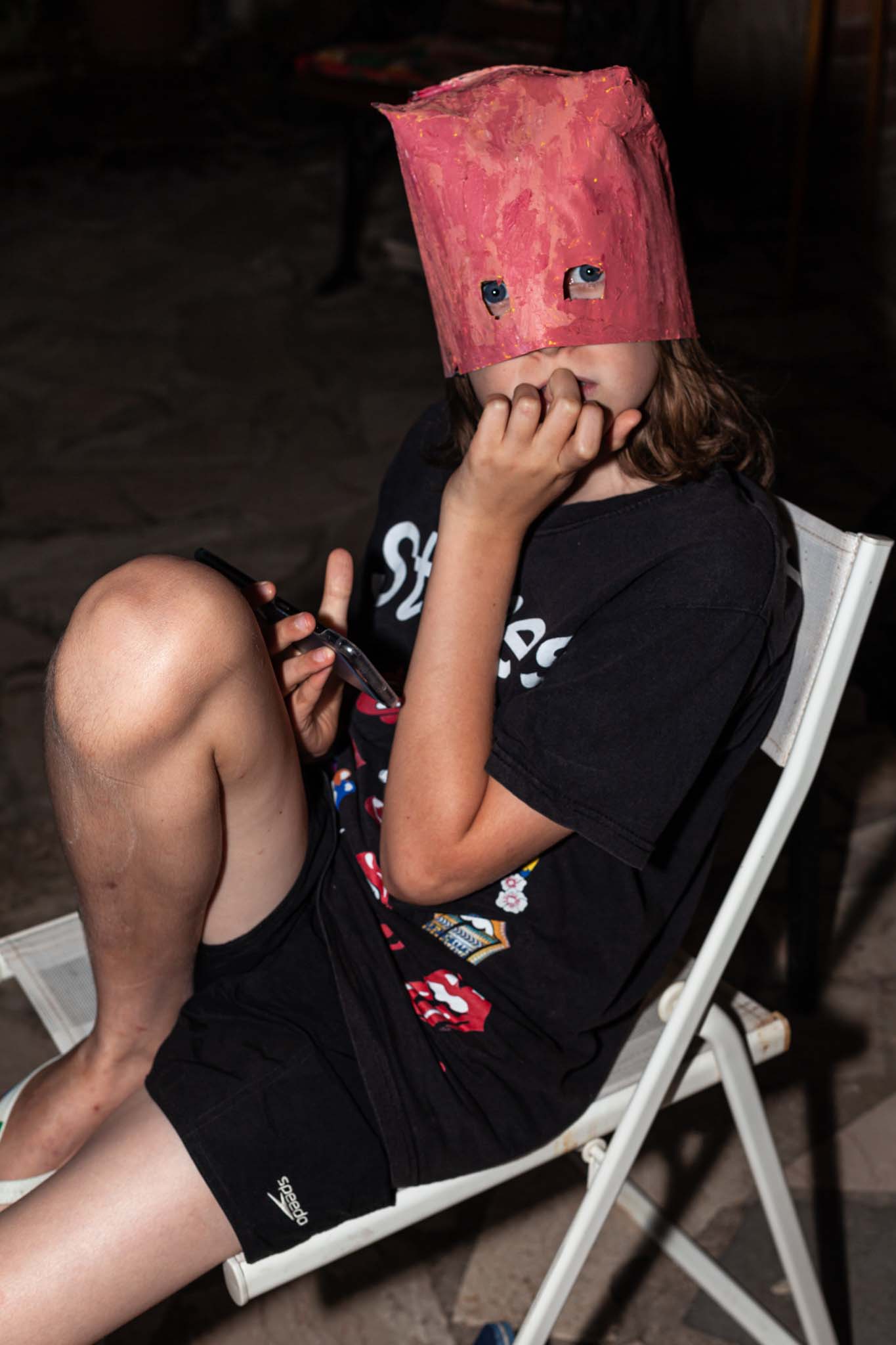
Pauline has the same problem – being locked inside but needing to look at community. She showed us two surreal images both of which seemed to connote separateness, being locked out, boundaries both existing and being destroyed, entropy.
It was an excellent day and I look forward to more sessions like this.
Spend some time reviewing your personal reflection and yourtutor feedback. Develop a series of carefully considered images that moves your idea forward. Hand in this series to your tutor together with a new reflective commentary setting out where you plan to go from here.
After discussing my plans with Ruth, I decided to submit new work rather than developing the first assignment, Sirens (2019) any further. The research, development, and various elements I made during the leadup to this submission have many of the same qualities and tropes as Sirens, i.e. exploring versions of collaboration, working with archival images and moving-image collage. However, what I’m actually submitting is very different. Nevertheless, the work is still ‘my voice’ and ‘style’ and I see it as a development from the previous work.
A brief preamble:
I submitted OCA DI&C work to pic.london’s open call. A blog for We Are OCA (Field 2019) describes my experience albeit in a relatively easy to digest way. I didn’t feel in a position to write anything more analytical in that forum but it may be worth scanning, (although there is no need for the purpose of this assignment as everything necessary should be on this page).
Up until very recently, I thought I would submit the work included in the show for this assignment – see here. However, after more thought (explained below), I decided not to, as the book I’ve made seems more of a cohesive project than the collective ‘manifestation’ – and stronger than the collage film I edited.
Therefore, for this assignment, I will talk about my experience in the collaboration as well but submit a proposal for a book which is not part of the pic.london exhibition but a development using some of the material I included there in a different format.
In the book version, the verse is split across pages emulating the Bourgeois book below but I might prefer it on one page.
Assignment work
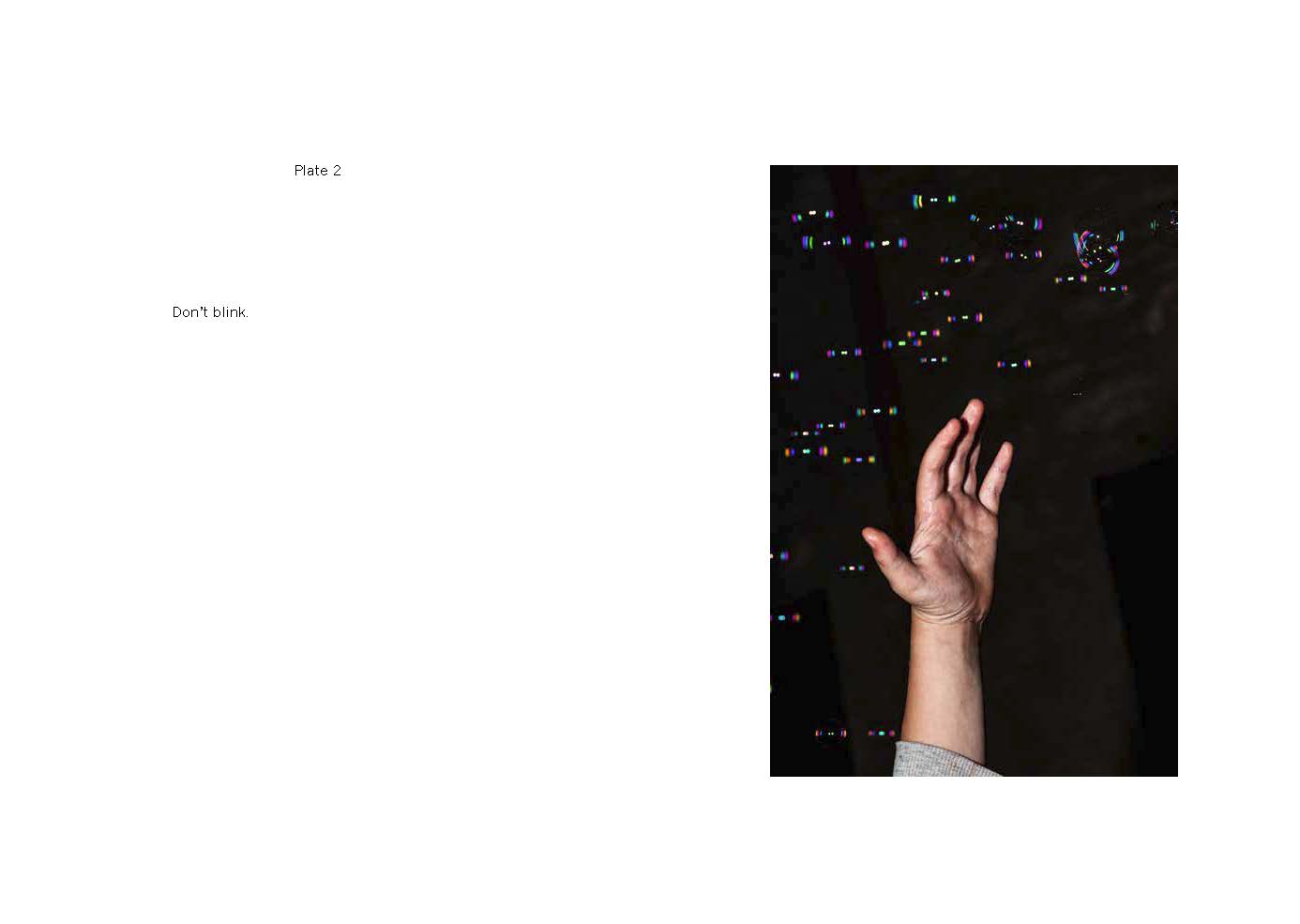
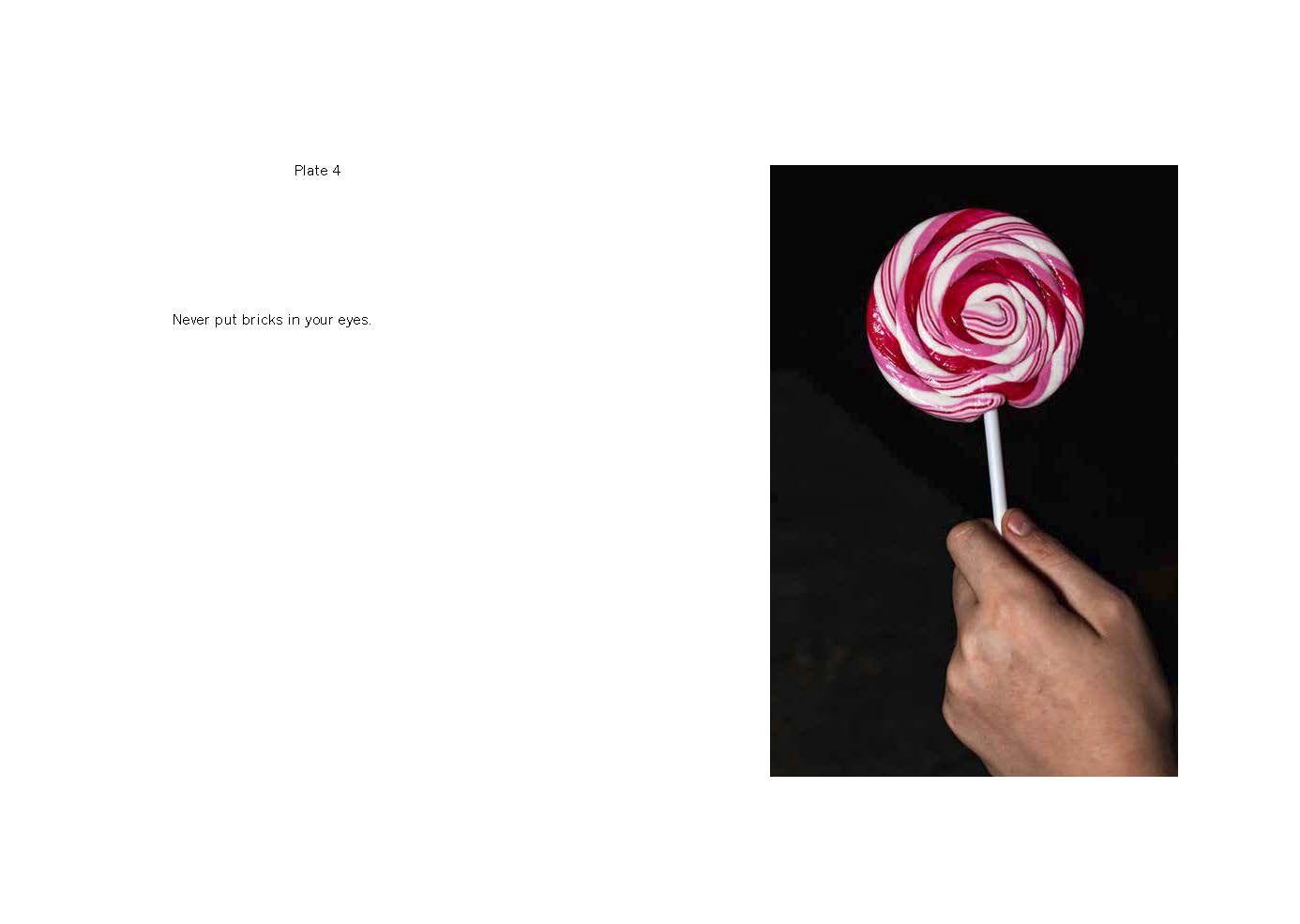
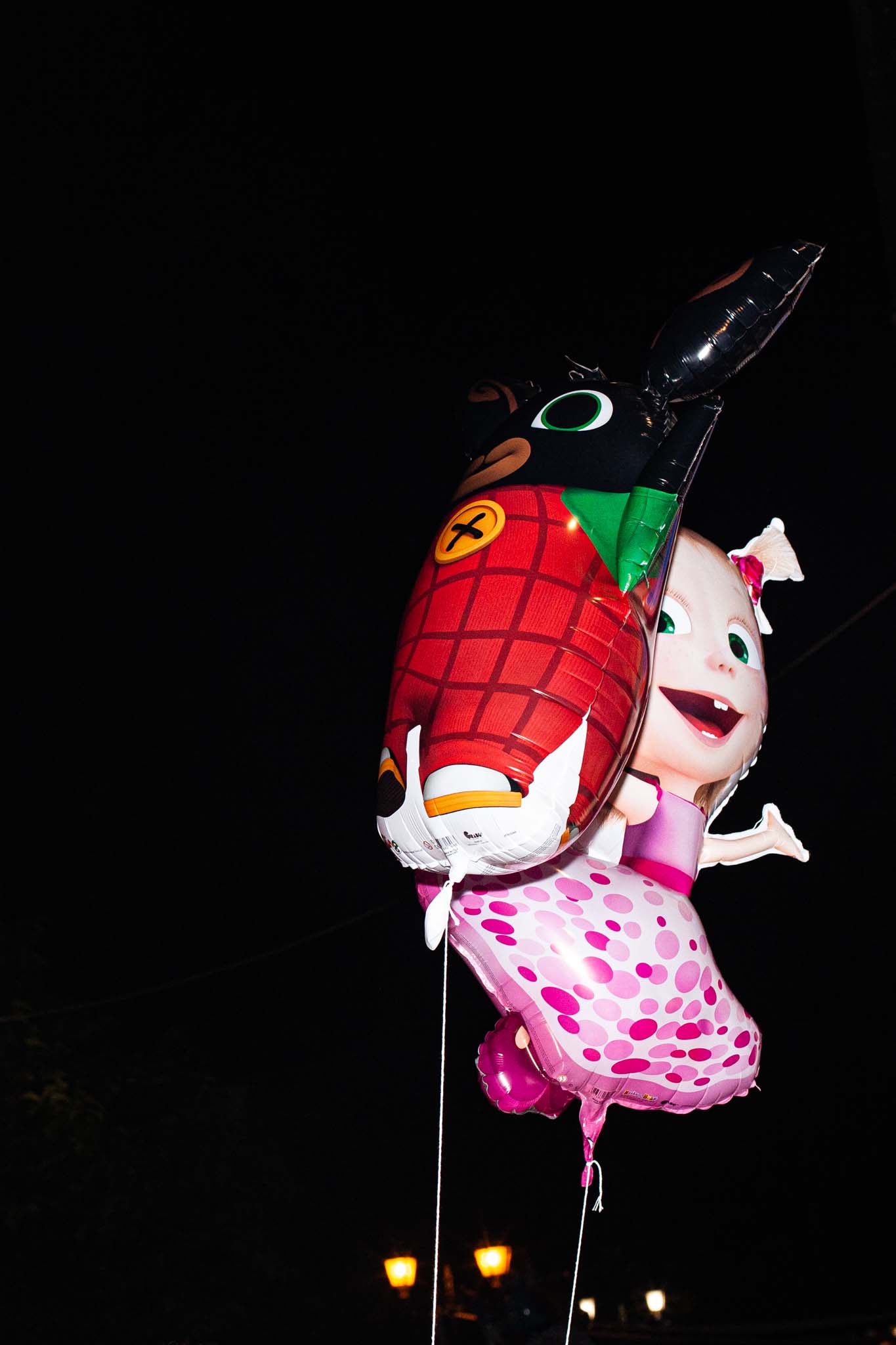
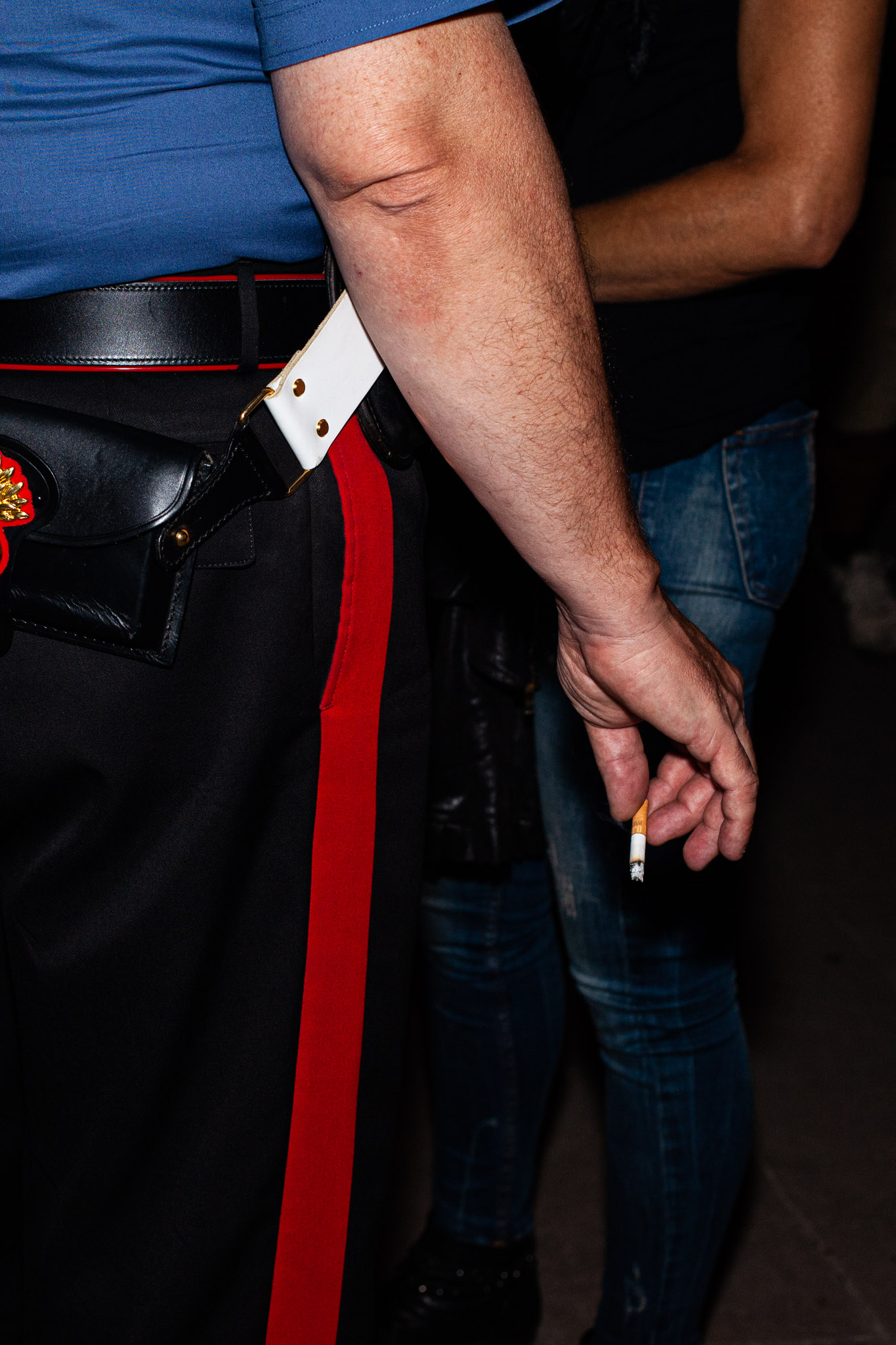
ON THE EDGE OF THE VILLAGE
Individual Plates below or PDF of A5 -BOW Assignment Two Draft 5 (Please click on images to see a larger version)
Work in progress and contact sheet
Some of these images were originally included in the film – I really wanted to experiment with found and original images together. But I didn’t feel it was working so took them out. That doesn’t mean it couldn’t work but I was unable to find a way with this. I feel like this work has the potential to grow into something else and may eventually include something of the film or an element that might emerge from it.
I am submitting this work as work in progress – knowing the sequence isn’t finalised and some of the images could yet be replaced and crop revisited, the text re-set. Below is a small contact sheet. Should I wish to add to these in the future (perhaps before assessment) I think I would want to make sure they were taken in the same village, which would mean waiting for my next trip there.
I have also wondered if I would just present the text with a single image and played around with that option.
Additional layout suggestion (added 16/10/2019) which does not follow Bourgeois’ pattern and keeps the verse in one place (although still not content with the way it’s presented here). Again – sequencing not set.
Although there is a wide range of influences feeding into my ongoing work, and I discuss them at length in all my blogs, some key artists and writers are summarised in L3 BOW A2 Research & Reflection, Cultural Influences blog, there are three significant ones for this project as presented above.
Louise Bourgeois He Disappeared into Complete Silence 1947
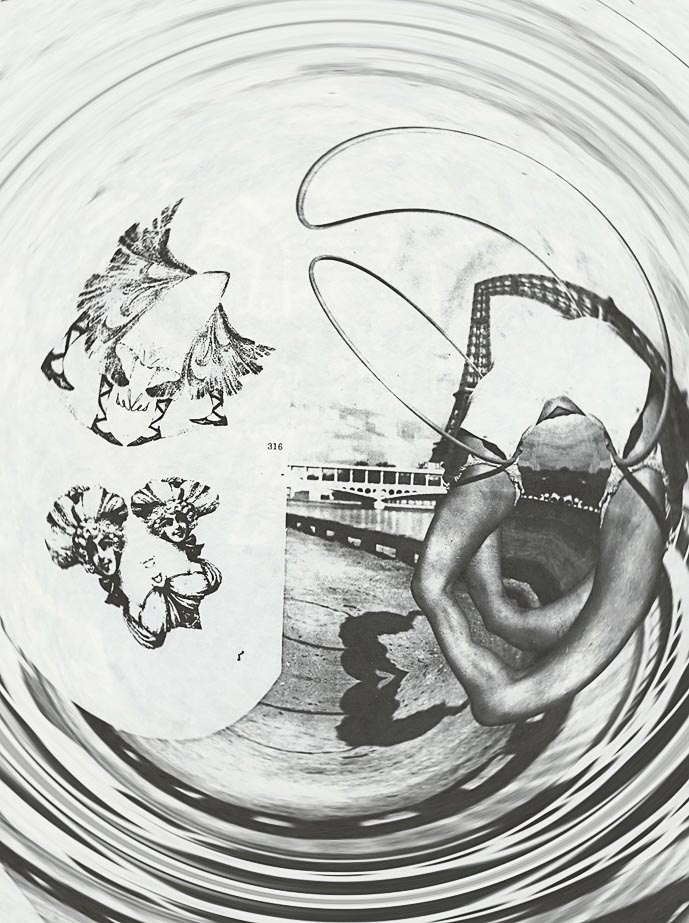
I was very struck by Bourgious’ book He Disappeared into Complete Silence (1947) when I saw the plates in a retrospective at Tate Modern (2015). I have wanted to do something inspired by the layout, and combination of text and image which don’t seem obviously related. (See my UVC notes on Barthes Rhetoric of the Image (2016)) Bourgious’parabels are individual whereas my text follows on, but I hope that my plates could function as self-contained items too. I have emulated the layout in the PDF mock-up above.
2. Assemblage
I am currently reading Deborah Lupton’s Data Selves (2019) as I suspect it will be integral to CS and BOW work. She summarises her ‘more-than-human’ approach in the opening chapter: she “recognizes that humans and non-humans are entangled in hybrid, unstable, and generative ways; takes into account the importance of considering the distributed agency and ‘vital capacities’ (‘thing-power’) of human and non-human assemblages” and “places an emphasis on the embodied, sensory and otherwise material nature of meaning, knowing, perceiving and making as part of human embodiment” (43)
Lupton is interested in “where the boundaries between object and life are constantly blurred” (25). “Western societies”, she says, privilege “world views that seek to stringently define and police the boundaries between humans and non-humans and nature and culture.” (25). She defines her approach as diffractive but stemming from a feminist new materialist viewpoint. A significant part of her book is about the boundaries between life and death, and of course, digital culture and technology’s impact on that. Although I had not read or even heard of Deborah Lupton until recently, many of her ideas seem related to systems theory, Santiago’s theory of cognition, and quantum-influenced philosophy which inform my own thoughts. I have also since discovered, thanks to fellow OCA student Holly Woodward, Object Orientated Ontology (OOO) (Field, 2019b) which rejects materialism and is suspicious of the over-belief in scientific philosophies where the idea of process rather than object dominates, but also rejects the privileging of human beings over everything else in the universe. (I don’t understand the view that materialism is reductive because emergence is so important – emergence, it seems to me, is where the inexplicable occurs, where the strangeness and ‘enchantment’ (Lupton, 2019: 32) (Bennet, 2001: 2) take place. Emergence, I think, gives us this vast mysterious area that exists between raw information (process) and solid lived experience (objects). For emergence to occur there has to be various types of assemblage.
Lupton also quotes Donna Haraway who “now positions humans metaphorically as compost, intertwined with other living and non-human entities in a rich dense matter in which the boundaries between objects cannot be distinguished” (Lupton, 2019: 26) (Franklin and Haraway, 2015: 50). She refers to herself as a compost-ite according to Lupton. (26) As much as I like the metaphor (and the humour) and personally buy into a rejection of Cartesian separateness while embracing the idea of relationship and a multi-dimensional meshlike universe, I think language, our parochial positioning, and our evolutionary visual system prevents it from accurately describing our reality. Granted, our version of reality may indeed be a complete illusion and according to Donald D Hoffman, author of The Case Against Reality (2019), the objects we see may effectively be icons on a desktop, contrivances in a user-interface which we have evolved over a very long time to give us the best chance of surviving long enough to make and raise offspring. Nevertheless, it’s the only reality we’ve got access to for the moment and I suspect quite a long time to come. And isolating, defining language is fundamental to our being.
3. Alain Fleisher Mummy, mummies 2002
I have quoted and referenced Alain Fleisher’s work repeatedly since Self & Other when I stumbled across a mention of him in another student’s blog. I describe why I noticed him on my Sketchbook blog while writing about some images I took of my family,
“Each year I visit a small village in Umbria called Ferentillo where my mother owns a house. While there, like most mothers I take lots of photographs of my children. Ferentillo is one of two places in Italy with a strange and unusual history relating to mummification. Beneath the church, Santo Stefano, in Precept, one of two sides to Ferentillo, there is a crypt where 20 mummies are displayed. The bodies become mummified due an unusual micro-orgamism in the soil. You can read a little more here. After reading a paper via a fellow student’s blog which links the mummies to photography I decided to explore this further since I had already made work for an early module in the photography degree I am doing while visiting Ferentillo about my family called This Family. In the previous project I documented my family and combined words in a short book. (2017)
I mention and refer to him again at the end of S&O when describing the still images element of my A5 project, i will have call you
“Mummification and photography are united against the disappearance of appearances: they are alike in their materiality, their techniques, and their codes of resemblance” (Alain Fleischer) A photographic performance, placing mirrors in my mother’s garden in Ferentillo, known for a micro-chemical in its soil which mummifies the dead. Mirrors have historically been seen as a doorway between the living and the dead. Phones nowadays perform some of the same functions as a mirror, seen most notably in relation to Selfies. (2018)
There is a decent image of the front cover of Fleischer’s book here. He has photographed the mummies in black and white and made them look very much more dramatic than they do in real life. Although that is quite dramatic too. But in Fleisher’s images he’s beautified the mundaneness of them. For many years there was a huge shabby 70s table (which my ex-husband was desperate to buy and I’m very glad he didn’t/couldn’t because it struck me as ugly, shabby and not in a good way, which could also describe the venue) at the entrance fo the ‘museum’ which has the feel of someone’s basement. The mummies are behind glass and are rotting (albeit arrested/extremely slow rotting) and there is something quite tacky about these poor souls on show. They are simply dead bodies – the word mummies exoticizes them somehow. They’re not very pleasant as you might imagine. However, as Deborah Lupton says about some other remains, they are “reanimated with affective force and meaning” (38) and so a ‘lively’ element in the universe (which she likens to digital data). Death when seen in this way, she says, is a continuum. (39)
Collaboration
A rumour reached the village is a collective inquiry that began in a game set in an imagined community, riven with witchcraft, industry and accusation. Over three months, six artists exchanged challenges and responses, out of which common themes emerged: loops and circles, colonies and growth, architecture and language, nature and storytelling. The culminating exhibition is a settlement of images, objects, moving image and living cultures, questioning the stories and materials on which communities are built. (2019)
The work I’m submitting emerged from my collaborative time with 5 other artists working under the auspices of pic.london. My collaborators were:
As part of my on-going research into language, culture and reality, I’d been reading Richard Wrangham’s The Goodness Paradox (2019) and books by Nicholas Christakis who wrote Connected (2009) which is about social networks (in general, not just digital ones.)
Wrangham’s book centres around the idea that human beings evolved with an ability to temper their immediate aggression, while simultaneously developing a propensity for calm, rationally-considered, pre-planned violence. Humans also became hyper-co-operative; and today collaboration is part of our DNA. Wrangham suggests these trends are underwritten by our ability to talk to and about each other, and that we have an ever-present unconscious fear someone might be watching, gossiping, and planning to do away with us if we don’t conform. Gossip allows us to conjure up stories, deny and blame others, and plan punishment for anyone deemed a deviant. Wrangham’s theory along with Christakis’ ideas about connection sit at the centre of my contribution to the project. (2019a)
We created a research booklet, thanks to the efforts of Rowan Lear and the Publication Studio at CCA Glasgow, and built an installation onto which we placed images, objects, moving image, and living cultures. (see below)
I hesitate to write the following as I am well aware much of my frustration comes from my own uncertain place which is bound up with having been an actor and wanting to incorporate that into new work. Despite leaving acting years ago, it’s still a huge part of my inner being. What’s probably important for me to take on board is the others are visual artists rather than actors. They did not go to drama school nor did they spend a lot of time attending acting classes and learning to improvise.
When you begin a theatre job as long as you’re lucky with your director you might spend a good amount of time playing games that allow you to build up relationships. Even simple rehearsing with a text should be like game-playing and games are often used to facilitate exploration. These relationships go on to help form a universe. It has to happen fast – you might get three weeks to rehearse and then you must create the universe you’ve made every day in a show where it should continue to evolve and grow. At the end of a job (they are often just a few weeks long), it often dissipates just as fast which can feel weird given how close everyone might have felt a few days earlier.
I come from a school in which ensemble is highy valued – companies who work this way often work together for a long time. You cannot have an ensemble unless all contributors are invested in the universe you’re creating. Being invested means different things, but having conversations and responding to others helps. For some reason, this was extremely difficult and I don’t think it was simply because we were scattered about the world, although technology did play a part.
Ensemble is – I think – all about making that compost which Haraway describes. But definition or form which might emerge cannot happen unless the compost has been made. And because we are creatures of language, definition seems worth aiming for – when collaborations are most successful the definition is often something no individual could have created on their own. There is a synthesis in that middle emergence ground as described above.
Although there is some valuable work, I don’t feel we made rich enough compost. And so the work is less of an ensemble than a collection of individual’s work presented in a form which shows potential but which ultimately doesn’t meet the criteria for ensemble. The word collaboration seems to carry many versions of people working together though – and ensemble is probably the most cohesive ideal to aim for.
Saying all of that we worked together well when we began to install the work. And communication is much freer now after the event. We were also by far more of an ensemble than any of the othe groups who worked in pairs or alone or with others outside their group. (William Kentridge is a good example of an artist who embraces collaboration and ensemble).
Nevertheless, an overwhelming sense of isolation is what I’ve made work about here. Because that is what I picked up during the months we were trying to forge a common language. And it probably began to emerge quite specifically for me when I suggested a visual improvisation. We had agreed we wouldattempt to improvise using images/text via social media. After saying, let’s create a ‘self-portrait’ based on the character we’d played in a game during one of our workshops, someone refused saying, “portraiture was so isolating”. I felt blocked and frustrated by this probably because I had this memory of ensemble in my expectations; but, while I respect someone’s discomfort with the idea of photographing themselves (I don’t like it either) that kind of response goes very much against the spirit of the process. One of the most important rules in improvisation is to avoid blocking. If you’re handed something, no matter how awkward or difficult or uncomfortable, you go with it. You transform it. You make it work. If you don’t the improvisation dies and so when you refuse something, which you may feel ideologically compelled to, you should know you’re making that call. What’s more, what I’ve submitted here is a self-portrait although I don’t physically appear in any of the images. We can and must take liberties with language when improvising. For improvisation to flourish, we absolutely must take the baton pass it on. Anything else goes. That’s it for improvisation. But without those two crucial foundations, it cannot come to anything. I didn’t feel this happened and perhaps mainly because it’s not a familiar language for artists who are used to working on thier own.
Hence, my work explores that isolating experience and literally isolates objects using the flash, and in the text, I convey isolation hinting to much that was discussed before the Collaboration section in this blog as well as those feelings I’ve described. I was interested to watch Netflix’s The AO (2016/19) which explores the isolated lives of the characters who are separated by glass while forced to live in a cave – one of a plethora of modern productions about people who break boundaries between life and death, or else live in the afterlife (and I am looking at the significance of this if any in CS.). As I say in my CS literature review, unlike Plato’s Cave, the reality is not happening outside. It is inside the cave, the characters are the shadows themselves. There are many references to digital culture in the programme.
**
In the end, I made a film for the exhibition. All of the elements in it are a response to the conversations we did manage to have. But it was made alone and we never reached a place where we could share constructive criticism which I do find useful – plus it allows for a collaborative conversation to take place. I do know reaching such a point can take a good while and requires trust.
A group where the impro/game rules were very clear and the resulting example here truly collaborative https://artlicksweekend.com/2019/event/short-straw/ I woud not have known about this group if not for one of my ccollaborators. (Added 17/10)
What I showed there:
I showed three minutes of four-minute film on a Kindle within the collective circle (as described here)
The Kindle is an object of value itself and perhaps in a McLuhanesque way, perhaps it doesn’t matter what was on it. However, I wish I’d showed the final minute (Challenger exploding) rather than the first three. It’s called Gossip.
I also showed the same three minutes on a TV screen on the wall which alternated with a film of us playing the stick game. In fact, I wish I hadn’t added it. It’s a film made for projecting or watching on a computer or small digital device. Not a TV. But that’s just something to learn for next time. Before making final decisions about equipment make sure you’ve seen the work on various options.
The room is very light so projecting it wasn’t really an option although others just put up with the light or got the organisers to build them a dark space (which wasn’t desirable in our case).
I made a full version of the film available online. (see below) This differs from the exhibition version too as the sound online is the Game Boy audio-track. I do not like the space sounds I added to the exhibition version – it’s quite rubbish, really. And there are silly reasons for making that mistake but it’s done. I like the kitschiness of the online version of the film – it’s made that way by the combination of colours and the music and that works for me.
I showed the verse in full unlike here where it’s cut into segments on each plate. It was placed beside and under other’s contributions which worked well enough.
These elements existed in relation to others’ work and functioned as objects regardless of the material (digital/growing/image/archive/glass – crockery etc).
See the installation below. I do plan to take some images when I invigilate on Wednesday.
Some of the images I constructed on my phone while away and added to the IG platform (often but not always appropriated, some from a Situationist book, and adjusted using proprietary apps – playing with the accessibility of digital tools) Sadly my phone broke while away and I lost quite a few too. (click to see larger version)
Although I feel I have submitted a more cohesive element/work which emerged from this process, I like the kitschiness of the online version of the film. I think it is far better in the end than the version in the gallery but the sound was too much without earphones and one of the collaborators expressed ‘a hatred’ of earphones in galleries and I didn’t feel it was worth arguing about, perhaps because I was uncertain about the work in the first place. I also think the first section of the film is too long and it could afford to lose a minute or so.
I was also grateful to Josh Phillips for being in charge of the wooden platform and building it and making it work. Installation images:
OCA Reflection:
Demonstration of technical and visual skills
Further evidence of strengthening skills and the ability to recognise what and why things work or not. Lots of work to draw from.
Quality of Outcome
I think the book I’ve suggested is potentially much less incoherent than the film or the collective work. I quite like incoherence to be honest, or at least don’t’ have a problem with it but think something potentially precious never emerged in the collective, although it might have done. I think there is some interesting and strong individual work within the collective but that it does not work as an ensemble piece as well as it could have done. I am really interested in collaborating, assemblages and objects, however, and look forward to exploring this more. A book or an online version of some type is an assemblage in any case, as is the film above. I found it very difficult to think straight in a group of six quite different people. I think I also prefer the verse unbroken so if I decide to print a booklet for assessment I will play with different ways of compiling it.
Demonstration of creativity
The book format is much more sedate, perhaps even more mature, less histrionic than previous work. The written work is a good standard. (The film which I’ve not submitted is not as potent as my previous one although some aspects of the montage are are successful, the music with the challenger seems to have an effect on viewers.)
Context
Strong, pulling from different sources. Perhaps could add a photographer although looking at the issue of photography as a medium (rather than an art in itself) to make art within CS A2. References:
Blatt, Ari J.(2009) ‘The interphototextual dimension of Annie Ernaux and Marc Marie’s L’usage de la photo‘, Word & Image, 25: 1, 46 — 55, 27 – Alain Fleischer, Mummy, mummies (Lagrasse: E ́ ditions Verdier, 2002), pp. 15–16. Translations mine. (Blatt) Available at: https://www.tcd.ie/French/assets/doc/BlattOnErnauxMarie.pdf (Accessed: 24/5/2017)
Cluitmans L & Zeqo A(2011) He Disappeared Into Complete Silence, Rereading A Single Artwork by Louise Bourgeois, Amsterdam, De Hallen Haarlem/Onomatapee
Christakis, N. and Fowler, J. (2011). Connected. 1st ed. London: HarperPress.














 SJField - OCA Level Three Study Blog