I have discussed my reasons for wanting to work with still and moving image together in a previous blog – See Point 2.
I began L3 very much with moving image in mind and created A1 with a music student, and during A2, where I worked with pic london, I made a film – which could be linked-to in this project in an installation – and web presentation which I will concentrate on in SYP.
However, by A3/A4 I was focused on a publication which will go to print at some point. But I always planned to have that fixed element accompanied by a moving image or series of moving images too. Once I had reached a point with the print version I returned to thinking about a film and visited the store of films I’d identified as possible sources of material earlier on.
I had collected the following:
bb_minnie_the_moocher
natural history of psychotic illness in childhood
the hydrogen atom as viewed by quantum mechanics
Eye film cut
How_the_Eye_Functions
Medicusc1939
Over the months of making this work and the essay, it became clear I was exploring perception and how that is changing.
I also added a couple more films including one about digestion (thinking about Otto Fenical) and
As much as like the music, it places it somewhere very specific which I didn’t want so tried the music backwards
But it still wasn’t right, even though some comments were, it sounds Russin and therefore relevent to today’s cultural consciousness with al the talk of The Russia Report) so I approached a couple of composers. I had worked with. Simon Gwynne wrote the music for my S&O final project .
Simon was more than happy to write something new but he had already been experimenting with an AI programme and I listened to those tracks and some others he’d recently written. I really liked the AI stuff – my son says it reminds him of Minecraft music… which is probably quite appropriate. If I were to install this, I wonder if I could give people a choice – they could choose between the harsh backward version or the gentle AI version perhaps.
I do still need to edit some contemporary animations in, I think. I have been playing with ADOBE Fuse and will see if I can make the animations work – they don’t need to be long and even if I simply screen-record the process, that might work.
Here the film is with some of Simon and his app’s music:
I have started watching decent films and looking for innovative filmmakers after a break of actively doing so – recall, I began L3 watching as much sci-fi as possible. However, I have now reached a point where I’ve got something that could act as a kind of loose script to begin making related work to live online in the form of moving images, perhaps gifs or short films. I am not sure yet what they will be or look like – but as I said in the Assignment, I feel quite strongly the work needs that – at the moment, perhaps it is like a plan/script/blueprint. I don’t think it should be a sub-element. I do think it should be a partner to act in tandem. Whether I use SYP or BOW A5 to work on it (perhaps both) is something to be seen.
I watched Claire Denis’ High Life (2018) on Friday and have spent the rest of the weekend watching and reading all I can about her.
High Life is visually incredible and all the way through I kept being reminded of contemporary photography I have seen recently – especially Valentine Bo, Your next step would be to do the transmission. (Interestingly, this work has stayed with me although I was not sure of it when I saw it at Foam’s Talent Exhibition in Vauxhall last year). Denis’s work is darker, less deliberately kitsch, and for me – perhaps unfairly, in a different realm by far. I wondered who had done the set design as its very distinctive. Somewhere on the internet, it claimed that Olafur Eliasson had designed the space-ship, but Denis says in an interview his contribution is only the yellow light (unsurprisingly) at the end. Of course, there is a team of art, set, and production designers, and together, with Denis, they create a tangible, distinctive and stunning although grotesque landscape perhaps as Peter Greenaway or Andrei Tarkovsky can. I plan to watch the film again as there is so much to see.
But I am most interested in the way Denis eschews Hollywood conventions and narrative structures. I had recently also watched Ridley Scott’s The Martian (2015) which ends with typical Hollywood heroism. Denis’s films never end that way. Both films are about an abandoned human far from earth (home) but Denis’s is profound in ways that the Hollywood film (very exciting and well-executed) could never be.
In Beau Travail (1999) I was reminded of Richard Wrangham’s Goodness Paradox where we are told how humans are the only mammals that plan their violence. There is something so psychopathic about the way the Foreign Legion soldiers are required to iron and make their beds to absolute perfection. The violence is made more terrifying as the film is at times like a ballet or an opera exploring ritual and distancing – which we use to remove ourselves from the destruction and violence we commit.
Like Denis, I grew up in a colonial country and knowing something of the inherent violence and ongoing trauma for people and land meant White Material (2010) would always be a profound watch for me.
Denis never glamourises violence. She often doesn’t show it directly. We more usually see the outcome or obstructed views. She also directs the camera unusually at times, we see nothing but the back of someone’s head for far longer than in other films. In High Life, she mixes ultra HD and special effects of the present which is really the future with Super 16 for the past. The colours are beautiful and alluring in both cases.
There are no linear narratives. She is very sparing with dialogue and uses layers of sounds, music, abstract visuals. She is an incredible filmmaker. I really like that she has always been determined to do things her way, that she refuses to give in to normal conventions of film. She says in an interview, yes, perhaps she is like that because although European, she did not grow up in Europe. I often wonder the same thing about myself – this sense of being an outsider informs a great deal across all aspects of my life. I wish I had the same presence and certainty about that difference throughout my own life. Instead – I realised just a few years ago. I will watch her first film Chocolat (1988) and then watch High Life again for inspiration – paying careful attention to the editing choices she makes. I also read, she shoots quickly but makes the film in the editing suite – which is clear. Each element is given value. Nothing is tagged on.
Denis’s sets up her shots like photographs too. And the camera stays, settles, waits before moving on or a cut is made so we can take what is being seen in. The end of Beau Trevail is truly great.
I like this from Slant Magazine, “Denis isn’t interested in Hollywood-style verisimilitude, as High Life is only interested in using the space-outlaw template to talk about Earth. The film asks down-and-dirty questions about what really resides beneath thousands of years of human progress, a savage and haunting antidote to the high-minded idealism of movies like Christopher Nolan’s Interstellar and Ridley Scott’s The Martian.” (MacFarlane, 2018). It reminds me of Wrangham’s arguments about our complex nature.
I wasn’t beginning to panic exactly but about two weeks ago I was wondering if I was ever going to settle on something that felt tangible and a little more focused, something to really begin digging down into.
I’ve been concentrating on the ideas and theories that I’m trying to understand and not really making much in the way of work – although have continued looking/searching for footage and relooking at my own recent work to see what’s emerging.
There are some films I think may be useful. If they haven’t got any actual material in them which I’d like to use, then perhaps phrases or titles inspire me.
I had the following disparate entities along with ideas/responses so far:
A string of seemingly unrelated snippets of text – some in the ongoing stream of Random Notes for a Short Story ##, and some other things that might be called poems – although I want to avoid that word and looking back over these, I think I will find a way of typesetting to avoid them looking like traditional poems and rather like prose perhaps using / between each line. This not only negates the sense of fixed poetry, but it also echoes Barad’s explanation of intra/relatedness.
I looked at images I’d made in Italy (and not used in A2 but in another sequence). The themes are related but the images made me yawn even though they are quite nice photographs. (Hover mouse over image for explanatory captions written for the sake of this post)
Stopping the ‘natural’ simulation with high speed shutter
Giving the impression of solidness with high shutter speed – waves made to look in the photograph like a wall
again walls- held up with structures
A convention of used footage (appropriated) downloaded from the internet to make new films, and also still images by simply screenshotting or else literally photographing my computer and the images on the screen – less frequently. My commitment to using digital habits/techniques is deliberate – see DI&C A3. I have a very serious problem with the common notion in the arts and photography that digital media and techniques are less valuable or less interesting than analogue and historical processes. This trend strikes me as being mired in middle-class, excluding values. I am also echoing a non-Western tradition of valuing things we in the West dismiss – an animist worldview. This was referenced in the Barbican’s recent Digital exhibition AI: More than Human (2019), Nam June Paik retrospective, Tate 2019, and in Lupton’s Data Selves (2019) (citing Bennett’s Vibrant Matter (2009), Thing Power & Enchantment etc… and counters exceptionalism and binary thinking). I will continue in this vein because I think it’s really important to defy the ‘insidious unconscious reinforcers’ (Small, 1999)* that limit us. Artists, in particular, can be as backward-looking as the populists they claim to know better than who come across as if they want to go back to an imagined time that was ‘better’ – by rolling around in nostalgic practices while dismissing newer ones which give creative access to many, many more people. This strategy of mine is not a wholehearted endorsement of all things digital. It is not a niave embracing of the new and rejection of the old. tech media is not immaterial as many think. It ‘is not clean’ – see CCA talk below. It is certainly not without its negative impact and connotations. As mentioned in a previous blog – this ‘is also explored in Vilém Flusser’s Towards a Philosophy of Photography (2012). The ideology is in the apparatus and photographers (all except experimental ones!) are flunkies or to use his word, functionaries – they ‘are inside their apparatus and bound up with it’ (loc 2086).’ (Field, 2019). (One of the people I worked with via Pic London is doing a talk in Glasgow which I can’t make called ‘Our best machines are made of sunshine’. CCA)
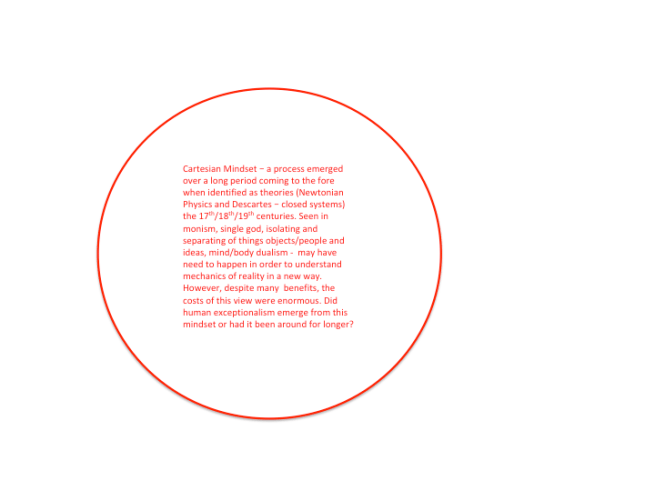
When I present work to a cohort of students who I meet regularly there is always a question about the form: ‘but is this acceptable? it’s moving image / or it’s about moving image and this is a photography course?’ It happens every time despite the fact I have sought reassurance from Wendy McMurdo (who suggested using moving image herself, just as I was discovering my long-term interest on the impact of cinema and its related activities on my developing sense of self), and Andrea Norrington (DI&C tutor); and reassurances have been verified by the fact both the tutors I now have are connected to and use moving image as well as other media. I do pass all of this on but yet, each time I’m once again questioned about my use of /reference to moving image. In terms of the recent essay, this questioning tells me I need to make a particular concept much clearer and will discuss when writing up feedback, but other than that, this constant questioning reveals a common confusion over what photography is and how still/moving differ and are the same. What’s more – it reveals the ‘Cartesian habit of mind’ (Barad, 2011) which I am at pains to deconstruct. It highlights the lines we modern Western humans are so desperate to impose. But – even my tutor asked, ‘are you going to concentrate on still or moving?’He has not been following my work for a while though so it’s somewhat forgivable. My cohort, if not avidly following my progress might have least have noticed constant freezing of moving images – making a single frame out of several, focusing on the cut from one scene to another – where there is a blend of frames on view. They might have seen the reverse action – i.e. instead of adding many frames together to make them move, I have taken single frames and stopped the animation. Then reintroduced animation while maintaining the stillness. Had they been looking they might have picked up on the desire to stop the ongoing simulation with its ‘insidious unconscious reinforcers’ (Small, 1999) and seen me step inside of it and take a look around.
I have explored the difference between film and still image – they are both the same at the centre. We humans either look at a single frame or we add many frames together to create the impression of reality. It is, however, an impression, we do not move at 24 fps and some filmmakers are experimenting with higher fps but we are so used to having an impressionistic view that we don’t always much like it in cinema. But video games, ‘today are developed with the goal of hitting a frame rate of 60 fps but anywhere between 30 fps to 60 fps is considered acceptable. That’s not to say that games cannot exceed 60 fps, in fact, many do, but anything below 30 fps, animations may start to become choppy and show a lack of fluid motion.’ (Klappenbach, 2019)
To reiterate – I am stopping the simulation when I take a screenshot or focus on the glitchy frames that show two scenes chopped together.
I am making work in the reverse order that is usually made/and chopping up the order.
I am looking at the capturing of light – the core activity of still and moving photography. What happens afterward re the temporality we impose on our captured light (life) is also of interest because it relates to the constructive nature of existence – which according to some visual scientists is what we ourselves do in any case even when we’re not making films.
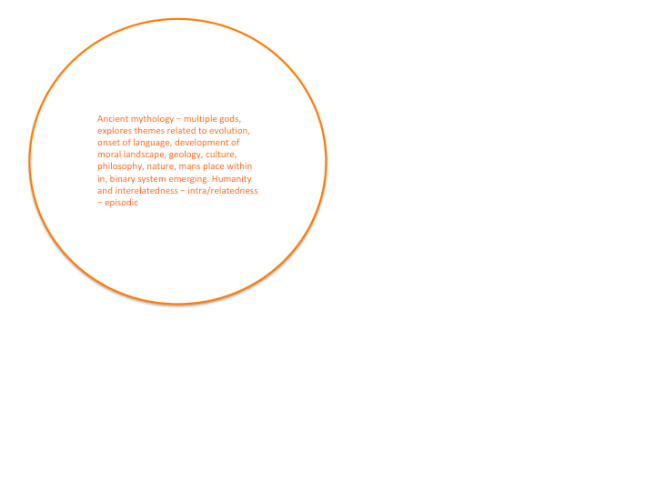
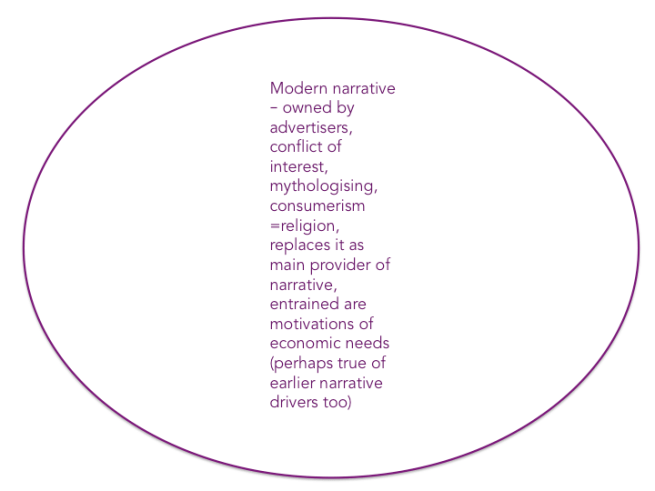
See ancient mythology and compare to modern mythology (advertising whether honest or subversive in the cinema).
The following may be a useful paper for me – A New/Old Ontology of Film Rafe McGregor (2013)
The purpose of this article is to examine the ontological effects of digital technology, and determine whether digital films, traditional films, and pre- traditional motion pictures belong to the same category. https://www.euppublishing.com/doi/pdfplus/10.3366/film.2013.0015
Not wishing to introduce spoilers – but McGregor concludes ‘At this point in the second decade of the twenty-first century, however, digital film remains – like traditional film and its predecessors – the art of moving pictures’ and I suspect I will find that at the core of both film and still, regardless of digital or analouge – the capture of light is the same thing. However, various processes enable different social outcomes due to access, cost, and social biases that are linked to ideologies feeding into them.
But – moving image (digital or analogue – once it’s on the internet, there is no difference) gives the appearance of being more like a wave than a particle and therefore, perhaps a useful means of conveying some of the ideas that come along with the particular weird phenomenon where particles behave like waves when measured under certain conditions – and related phenomena.
This resolute determination to exist with a Cartesian habit of mind in our institutions and society means two things for me:1. I have found a way forward for this project. I have ordered a Super 8 home movie made in 1971 from E-bay. I was looking for two things – a moving image format that I could cut up (made still) and it should have been made in the year I was born. I will use this alongside fragments of text and make a book (a3) and film (thereafter) with it. I will need to digitise it before cutting it up into what I will need and playing with it which might delay me slightly – but knowing it’s on its way means I am free to carry on writing in the meantime.
2. But it also infuriates me because it’s about pigeon-holing. The need to categorise everything into arbitrary manmade labeled domains limits us exponentially. It stops us from seeing and accepting complexity and nuance. It filters out difference – see Barad ‘indeterminacy is an undoing of identity that unsettles the very nature of being and non being’. You can see this in England right now as it grapples with its identity crisis – what am I? British, European, Labour, Conservative, Liberal or none of them – oh my god – how can I be all these things and none of them…’ aaargh!!!!’ goes the collective wail. It is reductive and insulting to keep pigeon-holing. It’s also rude and belittling. It is the antithesis of superpositions.
Summary:
My work is an attempt to visit a non-cartesian world and see what it looks like
It is a response to Cartesian reductiveness and habitual narrowing of meaning
It hopefully will do this via many intra/related mico-narratives
The themes are human temporality – both biological and mechanical, consumerism (the modern religion) and the relationship between narrative and the evolving worldview we are revisiting (we weren’t always in this place)
The process in CS is informing the potential outcomes in BOW for the momentOverall – I think the work could be called PLEASE for mercy’s sake stop with the arbitrary categorising, stop with the Cartesian habit of mind!! But it’s not very catchy, is it?
I am not decided yet but I may simply call the work CUT (perhaps with a subheading about fragments for the modern consumer but I will decide later) linked to the fact I will cut up the film I’ve ordered, edits in filmmaking and meaning (see BBCs latest accepted ‘mistake’ re-editing different answers to questions to imply a new meaning) and links to Barad’s agential cut.
‘Kember and Zylinska (2012) use the concept of the agenital cut to argue that any attempt to impose meaning and order is an intervention (a cut) that produces specific effects, and is inevitably part of the matter it seeks to observe or document. They represent photography as a specific cut in meaning, a way of delimiting from all the choices available that can be recorded and displayed, and therefore, how meaning can be generated. It is the means by which things are brought into being by humans and non-humans (e.g. cameras) working together. Photography makes agential cuts that produce life forms rather than simply documenting them. It is a way of giving form to matter’ (Kember and Zylinska 2012:84) They do not differentiate here between moving and still photography (I would need to investigate further but it makes no sense to in these terms.)
‘To see one must actively intervene’ (Barad, 2007:51 – citing Hacking)
*Quote taken from an anthropology book about the formation and feedback of culture and self in relation to cost/benefit ratios and social-economic needs. Although the book focuses on childcare practice cross-culturally, the premise is relevant. By looking at photography through the prism of child anthropology (along with the other intra/related disciplines I visit), perhaps I am engaging in a diffractive practice.
Refs:
Barad, K. M. (2007) Meeting the universe halfway: quantum physics and the entanglement of matter and meaning. Durham: Duke University Press.
Flusser, V. (2012) Towards a philosophy of photography. London: Reaktion Books.
“translating into something we can perceive” (see Donald Hoffman’s theory)
“science has gone beyond this” (dualism between rational and irrational) – I so agree and want this in my work somehow
“we spend an enourmous amount of time dreaming and that is beyond reason”
“committed to looking at things which are not acknowledged or ridiculed – a whole range of things like this”
From
Also interested in the way cinema has replaced religion (I have been so interested in how the cinema is making the same stories as we have seen in mythology)
She is interested in the devices of cinema and how they communicate the magical, magical, non-rational
Think Hiller’s work is extremely relevant for me
The Clinic piece is “very austere, very difficult, and challenging” which relies entirely on people’s imagination and willingness to engage.
belief in rationality is a belief system
looks at the commodification of spirituality
looks at social world
difference between subject matter (e.g. apples) and content (about other things)
people get diverted by the subject matter and don’t reflect on the content
different relationships between sense and modality – sees this as a possibility
voice is body
work today is heavily influenced by the 70s
See 19.16 mins to see moving image and object installed
I’m only at the sketchbook stage, she ends her interview with
Mark Lewis was a photographer but he now works with film and creates video installation. He explores “duration” and “the “species present” (AA School of Architecture, 2017), i.e. the impossible to pin down in-between space ‘bookended’ (ibid) by past and future. Work has a temporal span but “do not expect action”. Talks about a tension between boredom and revelation.
He tends to strip film convention back to its most basic elements and avoids using audio because it is too powerful and emotive. (I avoided music in very first documentary/type moving image project for this very reason.)
Makes film installation specifically for the museum and not the cinema – short, exploring camera moves and taking them to their extremes. Long shot might go on for ten minutes.
Says art increasingly focusing on the quotidian – painting and photography went a very different way to the way cinema was going. (Asks why film went down the path it did… suggests there was no reason and it was a choice to become dramatic/theatrical.)
I really like how Mark Lewis describes his working process as ‘intuitive’. He takes pictures, pins them up on a wall and then if he’s lucky it might evolve into something a few months later. I suppose I recognised this in my own meanderings.
One of my Pic London collaborators told me about James Richards:
From the Tate site:
“Richards generates meaning through abundance, by way of allusion, ellipsis and unity of tone, the lack of legibility counterbalanced by a strong sense of mood. The White Review”
Richard’s work will be really useful for me as he’s doing the same sort of thing – improvising, mixing, creating audio-visual collages. Here are some of the key phrases which stuck out for me from his Tate SHots interview:
The material… none of it is abstract… it is all stuff from the world… continuously gather and experiment
In the film below the time-lapsed Lillies are filmed in front of a painting that has a slight cartoon quality to it – of a wolf and bloody sheep, creating a ‘moving image still life‘ with death and gore in the Lillies as we watch them open and wilt, and in the painting that surrounds them. Death, dying, life, living, beauty, terror, sex all in this tightly compacted text. Content becomes abstracted by the close-up crop. Good for me to see how he relies on others to edit and animate. This later work has more of a polished feel and although I’m beginning to feel that the Brechtian/Deren habit of opting for less polished settings is not fashionable at the moment – I think my heart still resides more with a raw and under-commodified aesthetic.



 SJField - OCA Level Three Study Blog