Tableaux
If there is any validity in Maya Deren’s advice to film-makers that they are better off embracing what the medium of film offers instead of trying to emulate theatrical tropes, (and I think there is), I wonder too if it’s worth thinking about applying the same advice to still photography in relation to cinema or painting. As I write this, however, I remind myself I also believe we shouldn’t limit ourselves by the fixed boundaries we place around ideas and concepts. I’m also loathed to sound like the deeply conservative Roger Scruton in his essay Photography and Representation in The Aesthetic Understanding: Essays in the Philosophy of Art and Culture (1983), as part of the thinking I’m highlighting here is the way still photography can reveal something accidentally or unintentionally in the split second that the frame is made. Of course, painting can also do that over a longer time frame too – the artist paints or draws and when a viewer looks at the result, they might perceive something the original artist had no intention of revealing about themselves or saying, or they might impose a new meaning onto it. Signification has plasticity in any medium, depending on context and who engages with the signifier, regardless of form.
Gregory Crewdson’s work, in particular, however, often makes me wonder why he didn’t just make a short film instead. At the same time, his work harks back to painting, especially Edward Hopper scenes, only Hopper’s work doesn’t carry the same sense of contrivance as Crewesdon’s expensive and highly processed work.
If one is going to create a fictional scene using still photography, then really taking an idea as far to the edge as possible is more understandable (for me at any rate). Joel Peter Witkin and Les Krim seem to take what advertising aims to do, which is construct a scene that presents a version of reality, then they push it into a place which demonstrates it is completely made up, and therefore highlight how that is how it is with all images. And so, whether you ‘like’ what they create or not, there is a sense of having made a statement about our vision of reality. In my opinion, Crewdson’s work does not do this despite the fact there is always much in the press about his very expensive and elaborate process. Given how much money he spends and can presumably get hold of, and it might seem a bit harsh to say, why not make a film instead? Photographers do go on to become filmmakers and their visual fluency often shows, such as Wim Wenders, Agnès Varda, or Stanley Kuberick.
In relation to moving-image, I recently saw Synecdoche by Charlie Kauffman and can see some visual similarities between Kauffman’s landscape and Crewesdon’s, however, the film’s presence made sense to me; it’s contemplation on the apparent pointlessness of existence narrated via bizarre motifs, such as the fact the character Hazel lives in a house which is always on fire – but only at the end of a long life does she die of smoke inhalation. Kauffman uses film and its relationship to time and temporality to play with this idea along with many others related in the narrative. Therefore film is the perfect medium for this work.
Crewdson also creates surreal realities and perhaps those are the ones that appeal to me more than the simpler Hopperesque scenes, even though I might feel tremendous sympathy for the state of alienation he seems to be exploring in an American landscape. As I write, I am reminded of another moving image work – this time television, which explores similar themes, Lodge 49 (2018) – i.e. alienation of the individual in our epoch. Perhaps all of this – my responses – relates to something I read about in the Paul Thulin article – and that is a frustration with the limits of language – in Crewdson’s work, for me anyway, the photographic image seems insufficient. Maybe I’ll change my mind in time as I have done with other work.
I do have some ideas I want to play with over the summer which would probably fit neatly into Tableaux, and in the past, I have made staged images, (TAOP A3 and S&O A5) but my own images (still and moving) are nearly always more likely to be situated within Personal Journeys and Fictional Autobiography. But, if I were to opt for more tableaux style images, I think I need to remember to play with pushing the boundaries of reality.
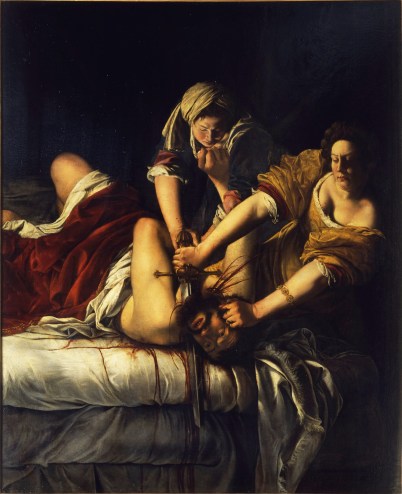
Personal Journeys and Fictional Autobiography
This is probably where I am most at home. But my own personal journey is not as gritty, exciting or exotic as some of the examples we are given in the course folder; Goldin, Mapplethorpe, Billingham. I know this shouldn’t matter – but of course, it’s hard not to feel it does. Nevertheless, there is a lot of drama in my life and as Kauffman’s film above demonstrates, we are all the main characters in our own drama – but making work about my dramas has limited appeal. That’s not to say I don’t use the things I experience to inform work. I just prefer to avoid what I – perhaps a bit impatiently and unkindly – refer to as ‘woe is me’ type documentary. Perhaps I will say more when discussing conceptual photography.
Larry Sultan’s Pictures from Home and Sally Mann’s lifelong work exploring her children and family were the earliest examples of work I was encouraged to look at, which is why I probably initially headed down that path. Even so, I feel quite ambivalent about continuing to do so. I continue to document my family life, sometimes candid, sometimes set-up and generally submit those type of images to photography competitions, or share them as they are the ones I feel people respond to, even though they are not in my mind the most interesting work I am making. But there are aspects of my own family story which belongs to the other people in it and they may not want me to bare their issues and problems with life online or in photographs – so I would always be quite wary and need to toe a personal line.

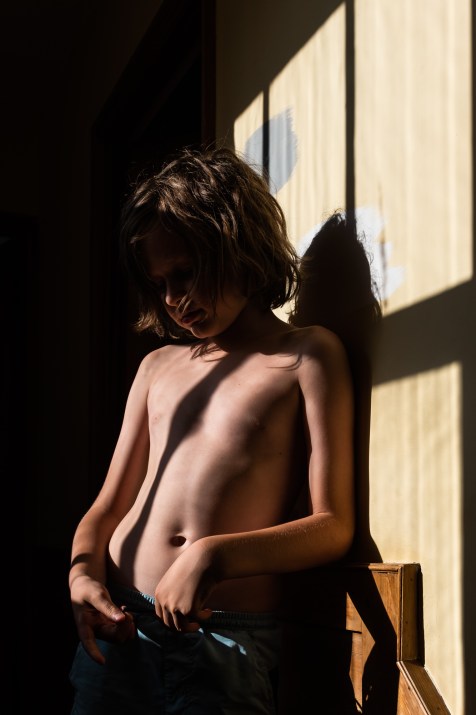
However, the boys and I will make some fictional work over the summer (if they want to which they claim to for now – well two of them do) which will no doubt be personal too. I may be influenced by the Random Short Story notes… or maybe not.
I will respond to the other genres mentioned in the folder in the next blog.
Refs:
https://artsandculture.google.com/asset/judith-and-holofernes/oQF3gDEYNkutBA?hl=en-GB
https://www.sarahjanefield.co.uk/OCA-My-Mothers-Name-is-Eve/n-gW3jjr/
 SJField - OCA Level Three Study Blog