CA A3: Plan and sample almost ready to share and submit

I have been really so ill the last week which has meant lots of plans cancelled. The good thing is I have been stuck indoors watching YouTube videos of Karen Barad and reading her book and making notes and writing and rewriting and preparing A3. I’ve sort of been at it the whole time (maybe that’s why it’s taking so long to get better).

Today I sent the sample to a physicist I have stumbled across who has kindly agreed to take a look at the theory and make sure I’m not making wildly inaccurate claims about quantum mechanics. I think it may be a strange thing for him to do though because Barad whose work my whole hypothesis bounces around is this peculiar hybrid of humanities and science which is unusual. But I am grateful to have the opportunity to have an actual scientist glance over my ideas – even though I suspect it might read to him like a 5-year-old’s version of the ideas he explores.

I asked him to look at the research question and pick holes in it – it is currently looking like this:


Diffraction

Entanglement 

&

Photography


According to contemporary science-philosophies, the notion of isolated, unrelated objects in a void universe expresses an out-dated and unhelpful view of reality. Rather than seeing ‘things’ which have their own place in space and time, many academics have been exploring a universe which is emergent, and where everything is interconnected, relational, dynamic, non-linear and lively. 


Within this evolving view of the universe, how – or can – photography successfully communicate the contemporary model described above? Or is it fatally challenged by its ontology? 


I will upload his response (unless he tells me it’s all crap – in which case I’ll cry and start again) and the rest of the sample before long, hopefully.


Lastly, because of the Hollins paper I recorded here recently, I am tempted to rethink the very top heading. I will wait and see.

 

BOW A3: Chance elements

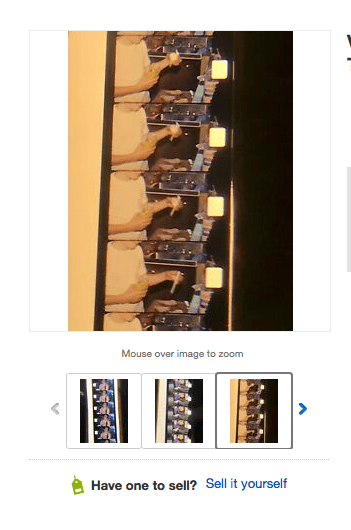
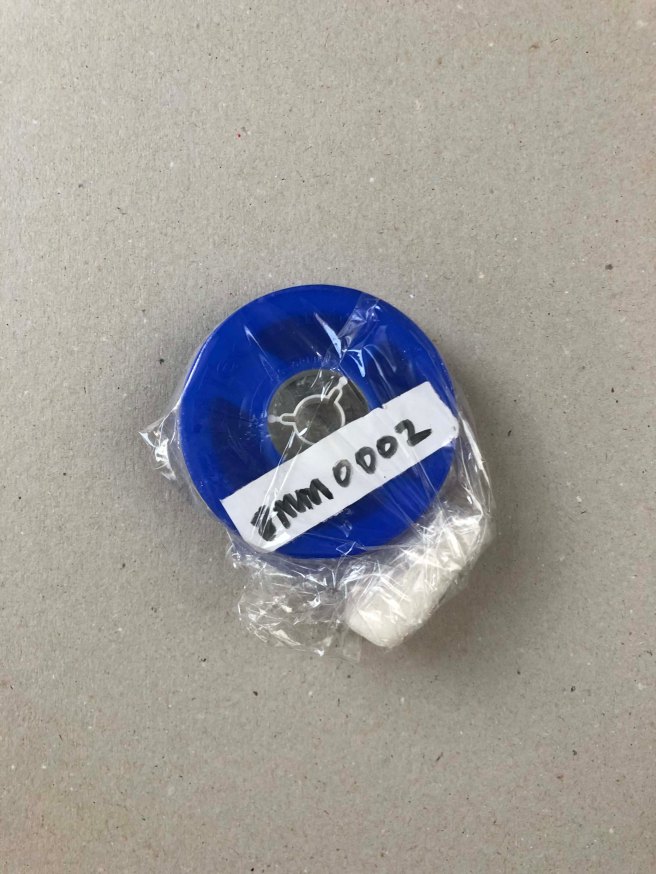
Phew – the super 8 film I ordered from eBay arrived today. I was beginning to get a bit twitchy. Must get this digitised before I can begin to experiment and play with both physical and digital versions, creating assemblages of matter and discursive practice, undoing the past and unsettling identity. I have no idea what is on it  – just that eBay claimed it was made in 1971, the year I was born. I may be able to use the images, I may not. I may only be able to use the object. I don’t know….

IMG_0877

Screen Shot 2019-12-13 at 17.03.48Screen Shot 2019-12-13 at 17.03.40

CS: A3 Research direction/question

I’ve been thinking … and beginning to reach an idea/draft research question

Entanglement

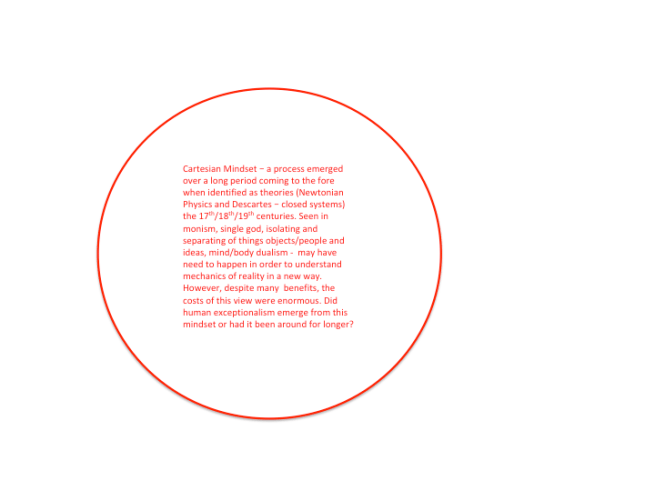
At a time in our history where a Cartesian [isolated, discrete unrelated objects in a void universe] view of life is increasingly being left behind, can still/straight photography ever be capable of expressing an entangled view of reality? Or does photography’s history and ontology condemn it forever to being a reinforcer of fixed (and many would argue – outdated) realities?

Peer responses here and in comments below blog:

1. First thought – ‘Entangled’.
Wow, quite a complex idea, but then I suspect I am of the ‘Cartesian’ way of thinking.  Maybe as a counter I would posit that everything is made up of discrete elements but that today there are more links and they are easier to make.  As a result still/straight photography is still quite capable of providing a view of reality.
I think that you have formulated a very interesting topic and although the title may alter the concept of still images still being relevant in presenting a view of reality is an interesting one.  I look forward to this.
2.  It’s a fascinating question, concisely but comprehensibly worded. Go for it.The key will be making your response to the question understandable to the ‘average academic reader’. It’s potentially such a complex (and to many people, abstract) subject that you’ll need to keep checking that what you’re writing doesn’t only make sense to you 🙂

But as a starting point, as a research question – this is great.

3. So it’s an exploration of the Cartesian model (which I would personally find very interesting) and then of straight photography and it’s relevance to, I assume, new models of realising reality (again really interesting)

There are some really important questions in this! It’s a great starting point and I thing it’s a very coherent thought process. 👍🏻 [Coherent! – that’s a first for me!]

BOW & CS Notes/Research: Karen Barad

A phenomenon is a specific intra-action of an ‘object’; and the ‘measuring agencies’; the object and the measuring agencies emerge from, rather than precede, the intra-action that produces them.” (Barad, 2007, p. 128). From Sauzet, 2018 – https://newmaterialism.eu/almanac/p/phenomena-agential-realism.html Accessed 21/10/2019

From Deborah Lupton’s Data Selves (2019) I have discovered Karen Barad who is a key figure within new materialist philosophy. Her background in quantum physics makes her significantly important to the ideas behind the work I’ve been developing. There are lots of relevant things going on in this short video but I will do some reading before doing a longer post about some of her ideas. But essentially, for her, everything starts with entanglement and in the following video, she describes how measurement is one aspect of an assemblage (entangled collection of processes) that results in a phenomenon (how does this relate to objecthood?). Things don’t exist independently of each other – they come into being due to their interaction. I feel like there will be much to gain from looking into her theories further and I may need to reword some of my lit review to be more accurate/specific and ascertain that measurement is seen as an emergent process not a fixed external object. Here are some links for now.

Ideas in here relate to DI&C work specifically A2 & A5

A2: Polar Inertia; the depletion of time, the negation of space – Assessment submission

A4/5: Film slightly reworked following feedback

One of the other collaborators from A rumour reached the village posted the following, so I had come across Barad before but her name had not stuck – although I liked the post very much when it first appeared.

All of this also ties in very much with some of the arguments I made in the DI&C essay I wrote in particular referencing Ariella Azoulay’s ideas about reconfiguring logocentric linear history.