BOW A5: … a field of flowers…connections

A series of slides I am likely to use in a short video to send in for assessment. I have written three posts under the heading of Pre-assessment Reflections – however, I think I will remove the second one altogether as its too long and doesn’t add enough – and use the video for that page instead.

  1. why is there an astronaut in a field of flowers and other works (Field, 2014-2020)
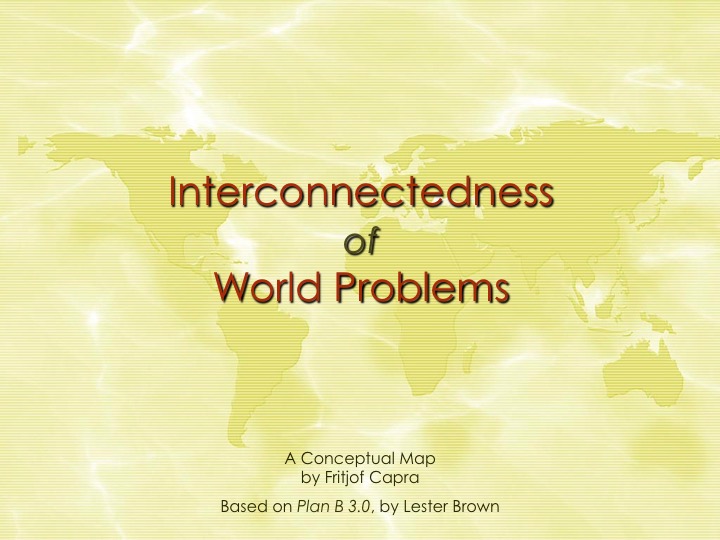
  2. Capra and Luisi – the interconnectedness of world problems
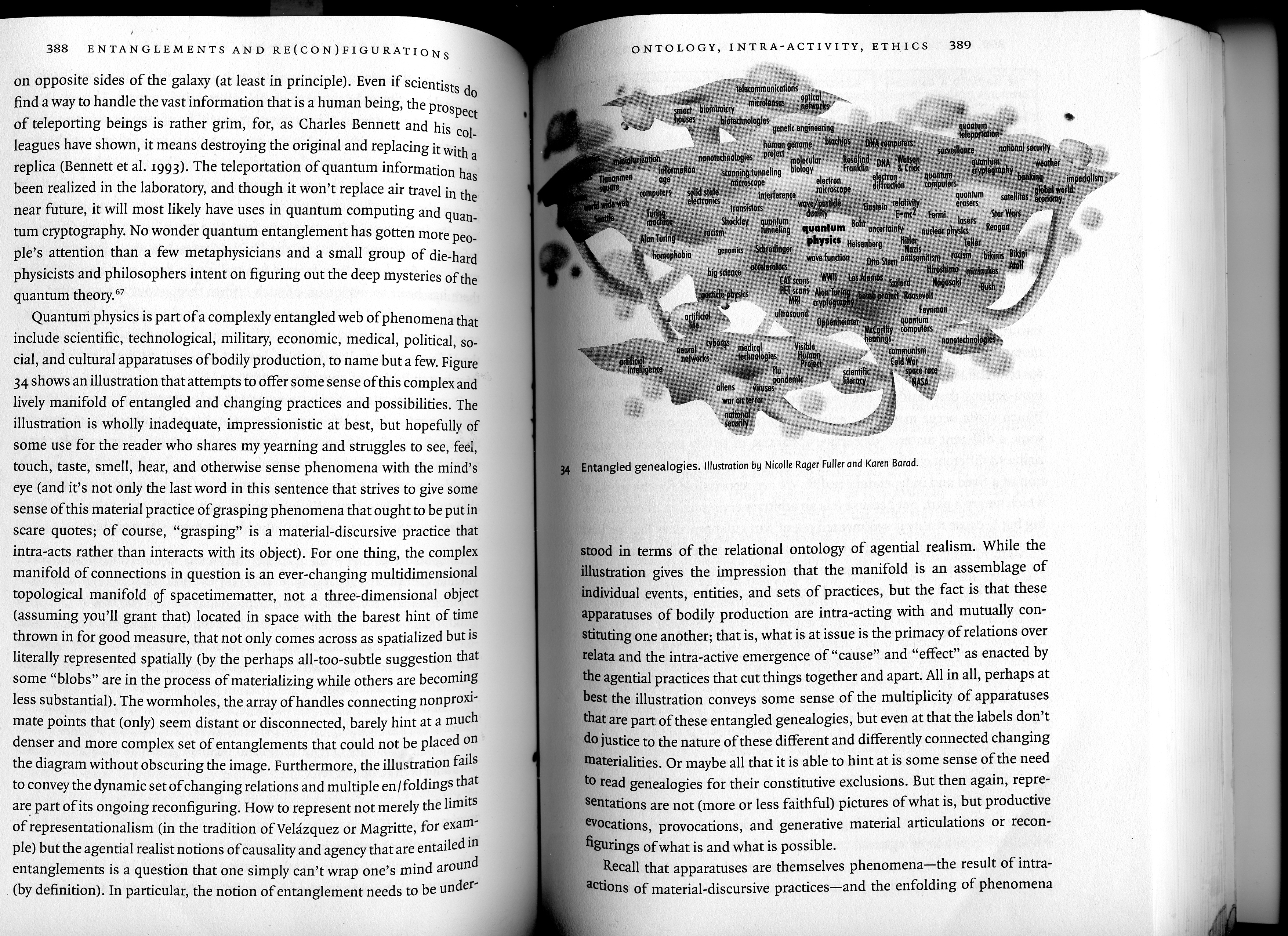
  3. Barad, 2007:389 – Genealogy of entanglement
  4. Richard Giblett Recent work : 2006-2009 Represented by Galerie Dusseldorf 21. Mycelium Rhizome, 2009 Pencil on paper 120 x 240 cm Collection of the artist Represented by Galerie Dusseldorf

CS A5: Research, Fungi’s Lessons for Adapting to Life on a Damaged Planet | Literary Hub

Merlin Sheldrake’s new book Entangled Life looks at the complex world of fungi, its adaptive ability, and its interconnectedness with all other forms of life.
— Read on lithub.com/fungis-lessons-for-adapting-to-life-on-a-damaged-planet/

This book won’t be published in time for CS assessment deadline but this interview will have something useful, no doubt.

Artist: Kata Geible – Sysyphus (2018)

http://www.katageibl.com/sisyphus/

Emma P sent me a useful reference – which I may well include in CS and/or BOW context. Geibl, like me, has played with entangled narratives from different points in time/place to explore the construction of reality today – her work, however, seems aesthetically far more ‘grown-up’ than mine. However, there are key differences and the statement (for me) somehow detracts from the work as it reiterates ideas that are fast becoming old questions as technology and science continue to develop apace. Having attempted a statement, I am only too aware of how difficult it is to convey the complexity of an idea in a clear and concise way, and presumably, Geibl is writing in a foreign language here which must make it doubly difficult (I can barely explain myself in English and it’s my only language!). Geibl’s statement says,

“How we used to think about the world is changing radically every day. Religion is replaced by science, we are flooded by images every day, we want instant access to knowledge. Photography as a medium has the ability to capture everything that’s in front of the camera, the machinery sees even what the human eye is not capable of. We can see universes, stars exploding, microscopic worlds, atom bomb detonation with the safety of the far distance. Through these images, we think we can get closer to understand how the world is functioning without ever experiencing or seeing it through our own eyes.

In series Sisyphus, I constructed an imaginary laboratory where it’s up to the reader to decide where the line lies between fiction and reality without any scientific explanation.” (2018)

Some statements worth investigating in these rough-thinking-as-I-type notes:

  • ‘Photography as a medium has the ability to capture everything that’s in front of the camera’ – this could be accused of being a limited view of photography, one firmly connected to visual sight (I am aware many of my metaphors are too – so powerful within our culture is the idea of ‘sight’ dominating). Using code and AI, modern-day photography can creep around corners, peer beyond boundaries, make calculated guesses about things that are behind it, or the other side of a planet. It is no longer merely ‘photo’, light-based. The whole idea of ‘what we see’ vs. what is actually real is being investigated today – and Geibl creates a narrative which is suspicious of actors creating these untrustworthy realities. Traditional photography creates a boundary, in the same way painting also used to. It suggests the (limited) world is in front of the viewfinder and separate from it (rather than an entangled part of the process which leads the emergence of a manifestation we call ‘the view’)
  • ‘the machinary sees what the human eye is not capable of’ (sic) – this is true and not true at the same time. Old photography equipment has less of a spectrum than any biological eye, as does the rendering equipment (printers, screens). So it sees less than we do – but its limitations lead to realities that somehow see more than reality, a hyperreality, i.e. expressionistic outputs that add to reality. Modern seeing machines decode and recode our perception of reality which is necessarily limited so that we can comprehend it – some contemporary views suggest, we are myopic creatures that have evolved to see/experience only what we need to see/experience in order to continue mating and surviving. Or rather see/experience in a way that is useful for our survival. The notion of photography (especially traditional) is the ultimate manifestation of a fixed view, of what we see being actual reality. Modern technology undermines that. 
  • ‘We can see universes, stars exploding, microscopic worlds, atom bomb detonation with the safety of the far distance’ Am reminded of Virilio (often am when looking at modern tech and reality) and time and space being on top of each other, life sped up exponentially. Technology condenses and collapses perception of spacetime (?) at the same time as fragmenting it – separating us from parts of ourselves, scattering individualism, dissolving the lines that kept it in a certain place. Fiction and ‘reality’ are entangled.

Having said all that, I really like the work. Visually, for me at any rate, its interesting, intriguing and aesthetically appealing. The concept, closely related to mine, seems like it misses something crucial and remains tied to slightly predictable questions – “Who is manipulating us? We can’t trust photography, who can we trust? Our visual media is untrustworthy.”   Perhaps my own statement might say, “whether or not we can trust the things we see/experience to be true has in recent times very quickly become an irrelevant question. We all exist in an entanglement of varied realities  – your reality and mine can never the same, but there will be meeting points – intersections and nodes consisting of common threads.” (…. etc, and something else besides.)


BOW A4: have continued fiddling

I’ve been plodding along this week rejigging, rewriting, rephotographing. Has felt frustratingly slow but the events of the last months will absolutely feed into the introduction I am currently writing – system’s change, metamorphosis, the violent shifts of morphology, autopoiesis.

Here are some pages – but still going:

Title page still only an idea – other titles being considered and the image is too full of saturation, need to dial it back

The index is not accurate

Bondage film is a composite that needs to be photographed for real – constructed in ID for now

More pages to come – click on image and scroll across


A2: A little more​ work on the zine

I have managed to look at this, this afternoon after feeling rubbish all week, working from home for my part-time role, trying to keep going with the BOW A4 project, and keeping the children occupied without all the various online education things set up properly yet. The whole world is in the same boat – and I just have to accept everything will take longer – we’re not going anywhere, I guess, so it doesn’t matter. We are being made to slow down. Which is a good thing no doubt – and what’s more, the Conservatives have been forced into shifting dramatically closer towards socialist principles, although it does seem to be business rather than sick, old, and vulnerable who have the support so far (I wonder if Johnson will be booted out soon and Rishi Sunak  put in a caretaker role…)

Anyway, I am getting closer to writing an introduction for BOW A4 but in the meantime has developed the one for this. It’s a tricky precarious path I’m treading … some will misinterpret so I need to find ways to remain ambiguous but explore what I’ve been looking at throughout the modules – entanglement.

At the moment, the (poetry) writing is at the back of the book. I wonder if it needs to be at the front?

I need to re-edit the fish pic – it’s too black.

But otherwise, here, I think it is. Will send to peers shortly and see what they say/

Mono only 2 – plain cover only

Cover with title 1

Mono only 2 full

I have also been looking at doing this as a postcard book but struggling with the poem bit at the moment. Not sure how to typeset it and make it work.


alternative introduction :

This project is one of several strands of work which emerged while working on a collaborative project titled A rumour reached the village. While the poem was included, these particular images did not end up in the shared exhibition.  They and the group show were made while contemplating the political uncertainty affecting the European Union, when I visited my mother in Ferentillo, Umbria, for the duration of the summer school holidays in 2019. [The sequence arrived at in late 2019].

The United Kingdom’s transitional exit period officially began in January 2020. By March, all of Europe was in lockdown due to the Coronavirus pandemic. Italy has, at the time of writing been one of the most severely affected outside of China where the virus is believed to have emerged. The UK was one of the last European countries to introduce severe restrictions on movement and social interaction imposed to stop the spread of the virus.

The village of Ferentillo consists of two wards, each with their own crumbling, medieval hilltop castle built for observation, protection and a place from which to call the alarm in case of danger. It is known for its museum beneath the crypt of Church of Santo Stefano, where naturally-mummified bodies are displayed in glass cases. Some bodies are nearly four centuries old, the youngest is from the nineteenth century. The preserved inhabitants include birds and animals, villagers and visitor’s from afar, including China.

The work is made to acknowledge the fragility and ingenuity of humankind, and the entanglement of past, present and future, as well as financial, cultural and organic systems. It emphasises the fleeting moments of our personal experiences; and celebrates, as well as recognises, that which is greater than the individual. It focuses on cultural structures and natural phenomena, growth, and the vastness of existence. It is the third project I have made in the area.

2020


CS A4: Draft extended essay

The essay below is a draft online version. It does not contain all the images I’ve referenced. In some cases, I have not yet approached the artists for permission and in others, I am still waiting for a response.

There are some formatting things that will need to be resolved as well as the following:

  1. I need to address the backward page numbering in the contents and pre intro section – please ignore that peculiarity for now.
  2. My bibliography is not up to date – I need to double-check it.
  3. I will take a very careful look at the Harvard referencing document before submission. I can’t be sure it’s all as it should be right now.
  4. I will add more of my own BOW as it develops
  5. I need to think about the images I have used some more and also if other images might be worth including earlier and later
  6. I have of course noticed mistakes with names and sentence structure since posting. Including Bernard instead of Barnard – which I was so careful to get right but clearly failed! (fixed now)

Draft PDF (sans some images):

Without (c) images 8 March – CS A4 The photograph and photography in the age of entanglement

OCA reflection 

1. Demonstration of subject knowledge based on understanding

I feel compelled to qualify the whole thing by saying…”I think this is what Barad is telling us, but there is always the chance I have got it spectacularly wrong”. I have taken a big gulp at the beginning of every stage and thought I have bitten off far more than I can chew. A physicist read the plan and draft submission (A3) and confirmed nothing was embarrassingly wrong. I have had to work very hard to understand Barad’s and Deleuze’s ideas and have a long way to go before being fluent in either – I am also constantly adding or adjusting sentences to be more accurate every time I grasp something a little more deeply. Saying all that, I suspect the demonstration of knowledge for this level is of a high standard.

  1. Demonstration of research skills

I hope I have demonstrated an ability to explore beyond photography and to connect the work to it. I made use of a wide variety of sources – videos, books, exhibitions, discussions, emails to academics to clarify things (some of whom are generous with their time and answers, some of whom aren’t). I feel like I have kept hold of everything by the skin of my teeth, sometimes accessing old blogs and copying what I wrote into the essay before refining.

You can see much of my research on my blog or on the Sketchbook blog linked to it when topics were slightly less related. I need to go through everything in the essay with a fine-toothed comb and the Harvard guidelines to make sure everything is as it should be before submission, including all references listed. (I know some are missing.)

  1. Demonstration of critical and evaluation skills

This is always the hardest part – not made any easier by the opaque language many academics use, which makes it challenging to learn from them. However, I hope I have critiqued the work I’ve included using the terms I introduced adequately.

  1. Communication

The topic cannot be addressed in 5000+ words. I know that now. But there is a structural problem too. It’s entangled and rhizome-like but the conventions we use for essay writing are linear and top-down. This is probably a good way of describing the present paradigm – code (if I understood this correctly when doing a Processing course) enables a networked, dynamic reality but is contained within a structure based on Cartesian coordinates. What we seem to have ended up with is overwhelming internal tension compromising the structure within which we frame our reality – I expect that sentence could do with going into the essay but it would require explaining and I already need to shave about 750 words. However, I do plan to leave this alone and revisit in a few weeks after working on BOW A4. I will also put the essay through a more robust AI programme to clean up sentences etc. at that point.

Artist: Cristiano Volk (again!)

Am in the middle of my essay (hard work and difficult!)  – therefore, very quickly with this – another photographer breaking out of photography’s restrictive conventions. Clausing writes: ‘Volk uses found photographs and newly photographed work to take us from the particular to the universal. In this visual journey we see views of body cells, natural scenes, spacescapes, and everything in between.’ (2019) I could use this as an example in the final chapter of the said essay but am already referring to Lisa Barnard and Edgar Martins who expansive works really demonstrate the point well – and I have many words to cut yet. But we’ll see.


3-volk2a
Image from Clausing’s review (Photobook Journal)


See Gerhard Clausing’s latest review:

https://wordpress.com/read/feeds/94577361/posts/2606657308


CS A4: research Deleuze

In order to concentrate on BOW I had to remove myself temporarily from the CS module – still keeping one foot in obviously as both are informing each other – but now climbing back into it is taking a bit of time/space. I’ve just started reading Baggini’s How the World Thinks (2018) but I need to head back to Barad and also start delving into Deleuze esp. Difference and Repetition (1968). The video below is an excellent introduction. Interesting to compare with Barad.


Difference / diffraction

Rhizome / entanglement

The virtual by Deleuze is described in the same terms as Barad and other quantum people.

https://images.app.goo.gl/uYqeqcZdYqw92LkT6

Several useful YouTube vids and podcasts – weird that Barad doesn’t refer to Deleuze more


https://www.youtube.com/watch?v=R8DTBWaUqYo

https://podcasts.apple.com/gb/podcast/the-partially-examined-life/id318345767?i=1000159329268 (English guy’s comments useful – if (Life Not School Digest 23 Jan 2013))

Medium post with several podcasts, Philosophize This, John David Ebert, Todd May

BOW: Chance Coursework 1

From page 42 of the course folder:

A: Is there anything you feel compelled to do at this point in your work but you can’t figure out exactly how it will fit into your project? Talk to your tutor or write about it – perhaps it’s a change of direction. 

B: Would you be comfortable using opportunistic encounters to create your art? In your view, has Calle been deceitful or intrusive in creating the works discussed here? How would you defend or criticise her approach? 

  • I read in another student’s blog they had decided to leave CS aside for the moment and concentrate on the making. This worked well for that student. I, however, have done the opposite – certainly, in terms of images although I have concentrated on the ‘writings’ which I am likely to include in BOW (I do not like the word poems). Even so, one of the most challenging things with CS & BOW is doing them both together. And, I have really needed to understand – as best I can – some immensely complex ideas. So, the time taken to unpick these has been valuable and necessary – but I have reached a point where I really do need to start making imagery. However, when someone asked me what my subject was, I couldn’t give a concrete answer. (Not sure I can yet but perhaps getting there).
  • One of the first writings I pulled together was Orpheus in Homebase. At that point, I realised Consumerism was very much on my mind. but the work is not simply about that.
  • Reading the contributing essay’s in Edgar’s Martin Soliloquies book has led to finding some excellent quotations to add to the essay, and the whole book has given me a further understanding of how and why Martins’ is using multiple sources, which I feel compelled to do. I attempted to do this in A2 but for the submission, settled on a much simpler single series (original) to include although always with the idea that I might include that mini-series within the larger project – using multiple sources.
  • I will write up notes elsewhere but the following from Martins’ book is key and sums up my own intentions very well:

    Roger Luckhurst (academic, writer, literature and science fiction) describes how Martins’ uses found, original, vintage, and parallel projects to ‘derail the over-coherence any series or display or exhibition or book inevitably imposes, fighting to keep the grid of meaning open, defying the dread determinism of the forensic field’ (2016: 118) This reminds me of Robert Wilson’s intentions to keep meaning open, to explore and even embrace ‘the terror’ rather than comfort his audience with trite reassurances. ‘I try to open up, not narrow down meaning’ (Holmberg, 1996: 7)

  •  I have been trying to find ways of doing the above since UVC and not really understanding why – until recently when I think it has started to become clearer. Such experiments were sometimes received positively by OCA tutor guidance, but other times not so much. I see in photography (but not in some avant-garde theatre) a desire for simplicity and a rejection of complexity, which irritates me. It’s true, experimental attempts can be less successful when the outcome comes across as so incoherent there is nothing to grab hold of. (And I’m not saying my failed attempts were, in fact, anything other than that.) But there is something in academic photography that is stilted, conservative, and yes, ‘boring’ – which I find stultifying, overly myopic (ironically for a medium that is all about seeing) and smug. John Tagg talks about photography’s ‘fixity’ in his video on the cabinet and the Victorian desire to categorise and appoint value into the system (2011) – and it seems to me that photography is so mired in this urge – a systemic, ontologically encapsulated motivation, that it becomes almost impossible to avoid. And that even when photographers claim to be addressing the system by making work which is meant to query, unpick or criticise elements within the system, they invariably can’t help but confirm and reinforce the very thing they want to dismantle. (see Flusser 2012) I think Martins’ – and others such as Edmund Clark, Clare Strand and Joan Jonas, all people who work across mediums, are putting themselves in a good position to avoid the traps that working with an inherently isolating/othering medium sets for artists. These artists, to a greater or lesser degree, create rhizome-like systems of work which can respond to spaces or platforms as necessary, using multiple devices and materials. A single project might contain work from other projects and also appear in books, videos, galleries and online  – and in each space it will be different and appropriate to the situation.
  • Indeterminism is the heart of reality, so Carlo Rovelli tells us (2016). We little humans can’t stand that. We want certaintity. We want fixity. Indeterminism terrifies us. Contemporary fluidity terrifies us (as well it might when utilised and taken advantage of by badly motivated actors).
  • The ‘habit of the Cartesian mind’ (Barad, 2007) dominates our consciousness and perception. This is something we humans need to begin to understand – that the habit is constructed and therefore it is possible to deconstruct it. We are in some ways beginning to embody it but without consciousness/cognisance. What informs this habit and the underlying and ‘intra-active’ processes that are emerging today (and have been for a century) are the impetus of my evolving project.
  • Wendy M said when I was doing S&O, think of what you want to say and say it. I have summarised my key statement in an earlier post – STOP CATEGORISING ME!! That’s at the heart of what I want to say. And then, from that springs a whole range of other topics which we cannot ignore  – there is an urge to encourage others to consider the ‘habit of the Cartesian mind’ which spreads out and can be applied to anything and everything from feminism to economics to climate change to migration. By writing the small texts I hope to trigger thoughts and questions assumptions.
  • By refusing to work in the usual way  – i.e. the Cartesian way (which is so often tautological) and embracing context, intra-action, relation, emergence and rejecting discrete isolated objects, I hope to address those assumptions. (I genuinely have nightmares about how this will be received by OCA assessors!)
  • The way I’ve been doing this to date is to write  – and the themes that have emerged are as stated above consumerism (the modern religion) and mythology and ‘the simulation (i.e. the spectacle, the panoply of visual and aural  – moving – realities we live with and as). These are not singular nor are they isolated. They are intra-active and relational. They are lively and rhizome-like.
  • Finally, Martins manages to explore similar subjects through the doorway of ‘death’ and in particular violent suicide. At the moment I think my overriding subject is Entanglement and I am not sure that is as potent or direct. As mentioned the idea of the ‘agential cut’ and therefore ‘Cut’ and its various usages may serve as the title. The idea of lits of little micro-narratives in the form of the writings leads to me thinking about using ‘notes for a short story‘ or a variation on that as the subtitle persists in my mind. But I am aware it’s a bit nebulous for now – although this nebulousness is crucial to the message too.

B – Sophie Calle

I wrote about Sophie Calle during S&O (2017). It’s not really relevant or helpful for me at this point to cover her stalking or revelatory process again. But she is an interdisciplinary artist so a useful reference in that sense. I would, however, point to Sylvere Lotringer’s comments on revealing all in our capitalist culture  – see Overexposed (2007) but will leave it to others to consider whether Calle is critiquing this aspect of our society or not by engaging in it. It’s interesting, however, to compare her to Lortinger’s ex-wife Chris Kraus who wrote I Love Dick (1997) and the comments about Calle being ‘exploitative, invasive, silly if not simply crazy,’ (Shilling, 2011)  – sexist or accurate or double standards? (Think of the many, many violent and sick broken men out there whose behaviour continues unabated and excused constantly by a complicit society …)

Field, SJ. (2017) Self & Other Sophie Calle WordPress [blog] Available at: https://ocasjf.wordpress.com/2017/04/30/artist-sophie-calle/ (Accessed 03/01/2020)

Holmberg, A. (2004) The theatre of Robert Wilson. Cambridge; New York: Cambridge University Press.
Flusser, V. (2012) Towards a philosophy of photography. London: Reaktion Books.
Lotringer, S. (2007) Overexposed: perverting perversions. Los Angeles : Cambridge, MA: Semiotext(e) ; Distributed by The MIT Press.
Martins, E. et al. (2016) Siloquies and soliloquies on death, life and other interludes. (1st ed.) Portugal: The Mothhouse.
Shilling, M. (2017). The Fertile Mind of Sophie Calle. The New York Times. [online] Available at: https://www.nytimes.com/2017/04/10/t-magazine/sophie-calle-artist-cat-pregnant.html?_r=0 [Accessed 30 Apr. 2017].

Artist: Filip Berendt

Berendt’s ephemeral process equates well to Barad’s agenitial cut which I’ve been exploring in my own work (ideas for so far). There is also the mix of medium and ownership (like Martins and Clark) which rejects the purity espoused by Bate. Additionally, he manages to focus his work on myth and archetypical patterns cross culturally and across linear time. Worth exploring and thinking about, possibly including as an example in CS.

Monomyth project combines authorial photography with abstract painting – photographed objects are spatial collages created on the walls of Berendt’s studio and destroyed once they have been captured on film. Berendt has used that method previously in a couple of cycles (Every Single Crash, Pandemia) in which the only physical trace of the pieces he created – and thus the final effect of the creative act – was a photograph. His latest works refer to the idea of monomyth, introduced by the American mythologist Joseph Campbell (the term was originally coined by James Joyce). Monomyth stands for the archetypal pattern typical of fictional narratives, described by Campbell, shared by all mythical stories, manifesting itself as the hero’s journey, conveying universal truths about self-discovery and self-transcendence, about social and interpersonal roles. According to Campbell – and Berendt – the hero is an individual setting out on a journey leading them to the final destination: profound spiritual transformation. The journey is tantamount to making life meaningful, to searching for and discovering its meaning at consecutive stages of the trip.

text; Agnieszka Rayzacher

— Read on www.filipberendt.pl/