CS Part 1: Rhetoric of the Image, Barthes, 1964

While doing UVC in 2016, I was asked to look at Rhetoric of the Image and talk about a couple of advertisements, relating them to Barthes’ ideas. It’s really interesting to look back, as the examples I explored were to do with the yet-to-be-held referendum. Barthes’ style is so opaque at times, I am still not sure if I was making the right sort of connections, but I don’t think I’d change much of what I said as I view my blog in retrospect, with three years of history between the time I wrote it and today.

  1. A slight diversion from Barthes’ essay but relevant and perhaps linked to another of his well-known essays: It’s interesting I picked up on the tautology in the advert  – it seems to me (in my personal and most likely biased view) that Brexit and tautology are very closely related. “A vote is a vote” in the advert seems like a forerunner to “Brexit is Brexit”. Do we really need to be told a word means a word? Why must political ideas all be reduced to meaningless empty circular straplines? Does this negate meaning or invert it? Is the advertising industry guilty of dumbing us all down to such an extent, that we really are only capable of hearing and taking on board – ‘Apple means Apple’. See my Notes on Myth Today (1957) “Tautology – An ugly thing. One takes refuge in tautology as one does in fear, or anger, or sadness. Tautology creates a dead motionless world. See my blog post for Project 1 – Operation Black Vote advert” (Field, 2016)

    3543
    From: https://www.theguardian.com/media/2016/may/25/eu-referendum-poster-minority-ethnic-voters (24/06/19)
  2. Looking at the advert I originally, critiqued, I am also struck by the dreadful stereotypes it perpetuates. This is hardly surprising, given the advertising industry tends to be populated by people who might never have met anyone who exists outside their quite narrow circles. We must all fit into neat little boxes and woe-betide anyone who can’t. There is no space for anyone ill-fitting in the post-post-modern digital archive of consumers out of which our current reality is forced.
  3. I have been stuck these last few years by how ignorant of others less fortunate than them, even the most well-meaning people can be. Friends who work in or near Whitehall might have the best ‘liberally’ minded intentions but simply have no idea of the suffering that is actually taking place in this country, of what drove people to vote against the ruling classes in 2016. The UK still seems shackled to a ruling class, many of whom are the great-grandchildren of those who ruled in centuries gone by. That British people aren’t more shocked by this is incredible. That people don’t see it or question it is extraordinary. However, I think and hope more and more people will be less satisfied and more incredulous by that reality, as social media reveals the extraordinary levels of incompetence amongst our rulers. Myths are being upended by social media, but sadly at the same time, new myths are being constructed. We are in a state of chaos and flux.
  4. Yesterday, I saw Andy Holden’s Laws of Motion in a Cartoon Landscape (2011-2016). In it, Holden compares Capitalism to a cartoon character who runs off the cliff but has no idea of the danger until it becomes conscious and then collapses. He likens this to the banking collapse but that might be seen as one wave in a succession of waves, to come. Perhaps society is becoming conscious of the myths we have lived with – what will it take to up-end them, or are they in the most horrific way upending themselves? The hivemind is far more complex than we understand – as a group, we do not seem able to take control of events until they have run their course, no matter how horrific or vile we understand them to be. 

Some notes of my most recent reading of Rhetoric of the Image:

The Linguistic message

  • Linguists, we are told, were suspicious of the linguistic nature of the image. Surely, this can’t the case anymore as people use images and emoticons to communicate more and more, perhaps even usurping text. (33) See page 11 of Derrida’s Grammatology (tr. Spivak, 2016)… “[the] nonfortuitous conjunction of cybernetics and the ‘human sciences’ of writing leads to a more profound reversal”.)
  • Images and text, he states, are ‘antipathetic’ to lived experience. (33) Douglas Crimp also touches on this in The Photographic Activity of Postmodernism, which I looked at previously. Again, Derrida writes “In this play of representation, the point of origin becomes ungraspable. There are things, reflecting pools and images, an infinite reflection, from one to the other, but no longer a source, a spring.” I wonder if this is why we’ve reached this place where tautology rules. We are just so far removed from the origin through layers and layers of representation – we cannot find it anymore.
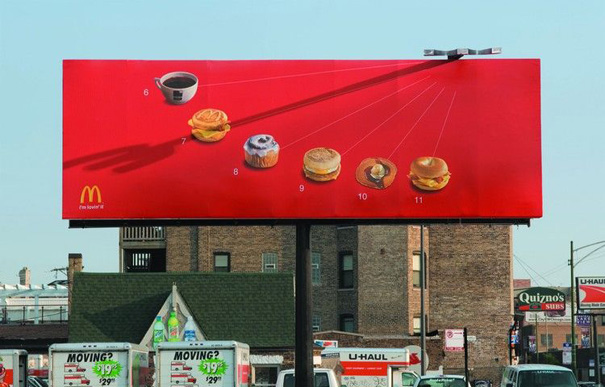
  • Barthes then begins by staying he will use adverts to explain himself as meaning is intentional and frank. The signifiers are “full, formed, with a view to the optimum reading” (34) Barthes’ might have been interested to see the following adverts...

These adverts (regardless of one’s thoughts about the content) are tapping into society’s mistrust of advertising and consequently meaning. As the meaning of advertising signification is now suspected of being false, (and so much more besides) we might question Barthes statement in retrospect. Although unusual, these adverts do not subscribe to Barthes analysis so easily. Meaninglessness is a big issue today – also referred to as ‘fake news’. A century of being manipulated by advertisers might be responsible for this sense of society having been gas-lit, leaving us all in an unstable landscape (like the cartoon landscape of Holden’s film). Images, which can and do invite multiple readings, even with the tyranny of advertising slogans, but which ultimately lie to us have contributed to this.

(Below – my comments are in orange, otherwise quoted from Barthes)

  • Panzini – French and ‘Italianicity’ Denotational and connotational  – in a single sign therefore seen as one message.
  • Image – not linear, order therefore not important
  • A return from the market =  freshness (despite the dried and tinned aspects) and domesticity
  • Half open bag = shopping around for oneself as opposed to the hasty filling up of a more ‘mechanical’ civilisation.
  • Colour (which we don’t see in the reader) implies Italianicity. Stereotypes (based on the fact this is a French advert selling a product that is supposedly Italian. Is this another example of Tautology or reinforcing a message which has already been stated in the pastiche of a name, again underscoring stereotype of otherness – a different group)
  • The sign of the still life (nature-morte) – heavily cultural and reflects history of art in the advert (sales, mechanical, mass produced)
  • “A message without a code”? see below
  • The Panzini photograph/advert offers three messages – The linguistic message and two iconoc messages which Barthes’s suggest  – we might have the right to separate: the perceptual message, and the cultural message. (Confusion comes about from function of the mass image).
  • Linguistic message – “today at the level of mass communications, title captain, accompanying press ect… we are still civilisation of writing”. Some suggest we are becoming less and less so – as iconic signs are used to advertise very well known brands more often than ever. (However, for now, at any rate, these images emerge from written code (the computer translates to another code which we don’t understand and cannot read and that too is a sequence of symbols))
  • gisele-chanel-no-5

apple-commercial-piece-640x640.jpg

billboard-ads-part2-25-1

  • Linguistic sign acts as anchorage and relaythe above images have very little or no writing (which Barthes’ says doesn’t matter, any presence acts as anchorage and relay) I wonder if the power contained within certain corporate non-linguistic signs are so great that it is able to operate as an anchor itself while being read by today’s consumers. If anchorage is control, and certain of its sign then this type of sign is possibly the most self-assured. 
  • All images are polysemous – underlying their signifiers, a floating chain of signifieds, the reader able to choose some and ignore others. Polysemy poses a question of meaning and this question always comes through as dysfunction (note the language of Freud). 
  • Societies ‘fix’ the floating signifieds to counter the terror of uncertain signs. Today, it might seem there are too many unfixed signs as we transition from one epoch to whatever is coming next, digital technology perhaps destabilises, the reaction against this (culture war, as it has been termed) is to head backward, to fix things down, to make things certain again. You see this is the rhetoric of Make America Great Again. A giant, global attempt to fix unstable, ‘flickering signifiers’  (Hayles, 1999).  Additionally, all advertising then taps into this terror. Buy this thing and feel safe is the underlying connotated message. Powerful, beautiful, one of the crowd, above the crowd – all of these are second level messages which sit above the initial one – about keeping the ‘terror of uncertain signs’ at bay. 
  • Linguistic signs have the power to suggest, “What goes without saying …” & “What is conspicuous by its absence” (Chandler, loc 1622) Anchorage banishes one possible signified…it acts a counter taboo. Anchorage can be ideological (and Barthes Myth plays a critical part in this), it remote controls, subtle dispatching, certain of its sign. anchorage is control 
  • With respect to the liberty of the signifieds of the image, the text has thus a repressive value and we can see that it is at this level that the morality and ideology of a society are above all invested. 

The Denoted Image

  • Barthes tells us – only the photograph is able to transmit the (literal) information without forming it by means of discontinuous signs and rules of transformation. Drawing is coded he says, i.e. the style of drawing transmits information. But he insists the photograph does not. Again, unless I’m really misinterpreting something, I find this difficult to accept. Photographic decisions, especially today, seem to contain all sorts of social and structural information – but then today’s photographs are more like drawing than ever as various levels of digital manipulation (or decisions to avoid it) impute information about the society  – in the same way, perspective in drawing does in the West – and therefore, potentially say a great deal.  The expertise and practiced execution of any drawing carry connotation and denote messages too. I cannot see why lighting, sets, film stock (or the digital re-enactment of it) don’t also carry such connotations. I don’t believe that just because something is mechanical, it doesn’t carry a code. In fact, it might carry a very specific code informed by ‘the apparatus’, which is very difficult to shrug off except by experimental photographers who are deliberately finding ways to debate with the code directly, as argued by Vilém Flusser (2000)
  • I wonder if today, our suspicions of photography negate this argument of Barthes of a photograph being without a code, and especially amongst tech-savvy sophisticated younger readers of images who have grown up with Snapchat and Instagram filters. 
  • If I were to use a Snapchat style image of a woman with animated sparkly bunny rabbit ears in an advert – there are several possible readings (perhaps anchored by an ironic strapline for more sophisticated consumers or else reinforced by one aimed at teens who love that kind of thing) but the structural code is inescapable and only a Martian would find it difficult to read. There are quite specific codes in all of the examples I have included here – the overzealous processing in the Vote is. Vote advert speaks volumes, for instance. 

Refs: All accessed 23/24 June 2019

Project 3.1 (b): Rhetoric of the Image

https://stylecaster.com/beauty/vintage-chanel-no-5-ads/#slide-11

http://www.cinemamuseum.org.uk/2019/andy-holden-laws-of-motion-in-a-cartoon-landscape/

https://www.boredpanda.com/creative-billboard-ads-2/?utm_source=google&utm_medium=organic&utm_campaign=organic

https://www.theguardian.com/media/2016/may/25/eu-referendum-poster-minority-ethnic-voters

Barthes. R (2013) Rhetoric of the Image in Visual Culture: A Reader, London, Open University, Sage Publications; 33-40

Flusser, V. (2000) Towards a Philosophy of PhotographyTrans. Mathews A. (Kindle Edition) London: Reacktion Books

N. K. Hayles. (1999) How We Became Posthuman: Virtual Bodies in Cybernetics, Literature and Informatics. Chicago: University of Chicago Press


CS Part 1: The Photographic Activity of Postmodernism, Douglas Crimp, 1980

As with the previous post, I first looked at this during UVC. It is a less hefty, daunting article than Benjamin’s and therefore more digestible. My first encounter seems to have been about becoming familiar with information; names, concepts, era-specific concerns.

Notes:

  • I have begun to suspect that artists are sometimes, perhaps even often, less radical than I had always assumed (and I am wondering if the general population also assume this about artists or was it just me and my naivety?) We tend to expect radical mavericks in our artists; in my imagination they are the people who question the status quo and hold a light up to societies’ assumptions. But, in fact, I sense a deep, (perhaps dishonest) conservatism ‘out there’ which stems from the institutions and their weight in terms of authoritative history – and I wonder if educational institutions, in particular, are guilty of perpetuating this. Do they keep artists in shackles? Perhaps the artists feel safe, as they focus inwards, making work that satisfies the institution’s demands and reinforces its authority, but which at times risk being irrelevant to anyone outside that circle. Crimp begins his article by examining this as he discusses postmodernism and the ‘return of repression’. He talks about postmodernism being a breach from modernism which is dictated by said institutions – namely “the first the museum; then, art history” (91). He suggests it is a fantasy that art is free from the dogma I have described above and that postmodernism aims to rupture that fantasy, in this instance by valuing the copy, the unoriginal, the appropriated. This was a direct response to Modernism, emerging in the 80s, and as an alternative and possibly an antidote to performance in the 70s, where ephemerality, as opposed to fixed longevity, was valued.
  • He goes on to question the dogma that only an original can contain presence; “it may seem a bit odd, because Laurie Anderson’s particular presence is effected through the use of reproductive technologies which really make her quite absent”. Today this looks like an early realisation that the direction reproduction is heading in means we will no longer be able to undervalue reproduction as something cheap and tacky, which we might do with the postcards of the Mona-Lisa. (And which people today do with Snap Chat filters for example.) Perhaps it’s already been written, but I am wondering how a short-story about an all-powerful ‘big Other’ which was conceived of and written in code, based on copies and reproductions, might look.
  • “The presence of the artist in the work must be detectable; that is how the museum knows it has something authentic. But it is this very authenticity, Benjamin tells us, that is inevitably depreciated through mechanical reproduction, diminished through the proliferation of copies” (94) There is so much work nowadays which relies on, queries, makes use of “copies and copies of copies”. I will be referring to Eric Kessels’s  2011 24 Hours in Photos project tomorrow in a workshop for 11-year-olds. Kessel’s work not only carries his presence but the presence of mass production, of the abundance of images, the and the literal physical weight of the spectacle and consumerism, as well as digital materialism (is there such a thing? I think so). The prints, usually only seen as data on a screen, are piled in a church illuminating the shift in power – from god to consumerism or the masses depending on which way you choose to look at it. Perhaps both are valid?  This conversation about aura and reproduction seems like it should be irrelevant today – perhaps it’s been usurped by the dull old insistence by some that analogue is valuable and digital isn’t. Although that particular nonsense might still carry weight in a few, but hopefully increasingly limited circles, I suspect it will need to give itself up soon as more and more people make work about code and its ability to self-generate, or which is interactive, or links up with the science that will take our reality wherever it is going. However, I’m not entirely sure the educational institutions – especially in relation to photography – are as caught up as they might be…
  • “It would seem, though, that if the withering away of aura is an inevitable fact of your time”… we humans will always mourn the passing of time and anything that tells us it is happening, such as technology developing (I wonder if those early wheel adaptors lamented the loss of a time when there was no such ease for older hardier humans who did without!) Even so, both Crimp and Benjamin are actually in favour of this withering away of aura (as each sees it) as it can be viewed as instrumental in the “liquidation of the traditional value of the cultural heritage.” (95).  However, it seems to me cultural heritage continues, to this day, to dominate and retains the world’s long-held structures in position, even with all the melting and blending of conceptual boundaries we know are taking place beneath the surface and above. (I’m continually reminded of the Royal Academy and its significant aura of respectability, power and the calm self-assured certainty it exudes.) Cultural heritage may be secular now in many instances, but it still dominates. 
  • “…then equally inevitable are all those projects to recuperate it, to pretend that the original and the unique are still possible and desirable. And this is nowhere more apparent than in the field of photography itself, the very culprit of mechanical reproduction” This feels like a much bigger conversation which I think relates back to the simple but crucial othering of self through language and what that means for us from the moment it begins to take place in infancy. Crimp quotes Sherrie Levine talking about walking in on her parents having sex, and then feeling the need as a child to split herself in two, as her original self remained distant and impassive, watching. But this is what it is to be human as Crimp describes too – we are constantly having to invent and perform what is expected of us as we struggle to recall earlier versions, which may become subsumed and altered by memory in any case.  
  • There is some attention to the painting’s ‘hatred of photography’. Again, we witness the very human addiction to groupishness. We critters will do this in relation to absolutely anything. Returning to my initial bullet point here – that artists are often not really radical at all. They conform to the same human shapes and patterns of behaviour as anyone else. The petty arguments and exclusions and cliquiness so typical of our species in painting or photography or fragmented groups within are a microcosm of what is taking place all over the world all of the time. What irks about it taking place here is the critical and superior way in which art and artists of all persuasions comport themselves. This article feels as much about that aspect as it does about anything else. I’m not sure how relevant this is but it feels important today, as hate and derision dominate, as superiority complexes clash on social media and then spill into the offline world. I keep meaning to write about The Goodness Paradox (2019) by Richard Wrangham and as reread this article, I was reminded of it. The desire to be in a group, even if the group claims to be about rejecting the main group, is such a powerful instinct. Wrangham’s thesis suggests that the ability to gossip about others meant that we were able to divert attention from ourselves (save ourselves) and accuse others who would risk being executed. The best way to avoid this would be to fit in. If you stood out, you attracted attention and your chances of being excluded/executed increased. Language at once reduces our reactionary aggression by allowing for time and planning but increases our more calculating aggression which is pre-meditated. Our need to be accepted equates literally to the difference between life and death and drives co-operation. With this instinct deeply embedded in our genetic coding, the arguments which rage between painting and photography, or analogue and digital, RA trained or self-taught feel critical because it’s about survival. And the institution is gargantuan and seemingly impossible to stand up against. But civilisation is too far developed to do without so they are necessary and useful – but there is always a loss. Crimp acknowledges the struggle, but equates it here to space on the gallery walls – the life, and death of certain mediums or styles or trends. As digital technology brings in sweeping changes, what can seem like petty and daft arguments to outsiders (and some practitioners) becomes more understandable. And there is a big shift towards self-publication as it becomes more and more possible and affordable. What does this mean for the institution?
  • I will leave any comments about Sherman until I have been to her exhibition with the OCA.

https://www.academia.edu/5728395/The_Photographic_Activity_of_Postmodernism

Wrangham, R. 2019 The Goodness Paradox (Kindle Edition), Profile Books

Revisiting essays and critical theory

I am so glad I did Understanding Visual Culture earlier in my OCA studies – much of what we’ve been asked to look at in the early stages of CS was covered in the previous version of UVC. Saying that, the introductory passages in the CS folder are well written and give excellent and brief but precise descriptions of the main ‘ism’s, which I found useful.

I note the importance of context and meaning in Post-structuralism and see how it echoes a developing understanding of context within interdisciplinary conversations across the sciences, and in particular within physics. I think one of the first times I came across this idea about context and particles may in Carlo Rovello’s Reality is Not What it Seems (2017), although Hayles must surely have mentioned it in How We Became Post Human (1999) which I read earlier. But I have since seen it discussed in a number of other books, including The Systems View of Life: A Unifying Vision (2014) by Fritjof Capra and Pier Luigi Luisi who do an excellent job of linking up various disciplines in a way that some other less expansive thinkers don’t. (Perhaps I mean to say other myopic and parochial thinkers, but I’m being polite.)

Rovelli writes, “The theory [quantum] does not describe things as they are; it describes how things occur and how they interact with each other. It doesn’t describe where there is a particle but how the particle shows itself to others. The world of existent things is reduced to a realm of possible interactions. Reality is reduced to interaction. Reality is reduced to relation.”

and

“In the world described by quantum mechanics there is no reality except in the relations between physical systems.” (Rovelli, 2017; 115)

This is crucial because that theory informed the way code was developed. Although language might be considered a metaphysical system, we everyday users of code (a form most of us have little knowledge of) internalise its mechanisms, which, it is argued, inadvertently influences our understanding of reality. This is further reinforced by systemic feedback loops. Perhaps it will become important to try to describe what I mean by this elsewhere or later in the module. I can see feedback being something worth playing with for BOW at some point, and fun too.

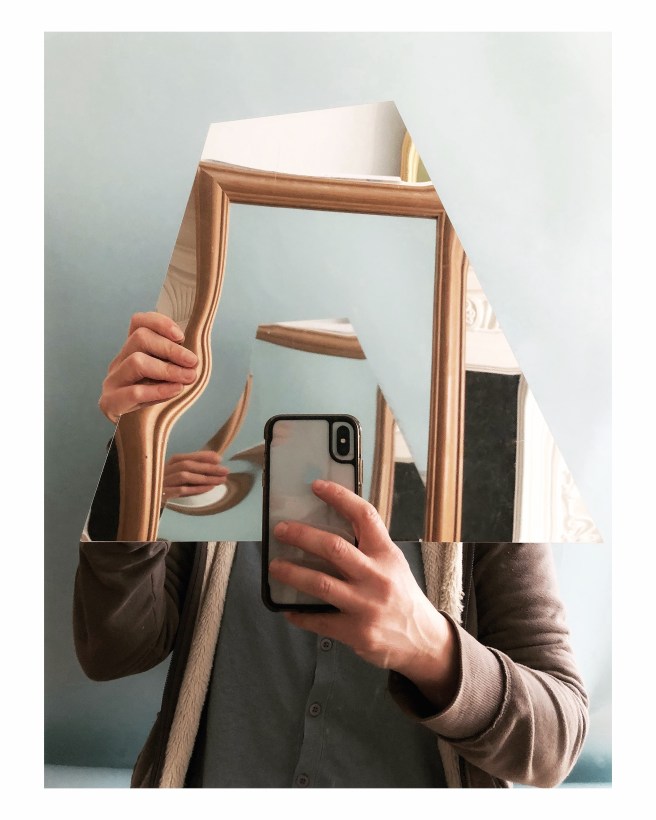
 

Attachment-1
Screenshot from a video I was playing around with during S&O while making the A5 film. I did not pursue it in the end.


25939196007_312c83c8a8_o
This was another experiment exploring the notion of feedback loops made in 2018 shortly after beginning DI&C


We have been asked to read the following essays/extracts and I think it will be interesting to see what I make of them in comparison to how I responded before. I am not going to read my earlier notes yet, but am placing them here to return to later after I’ve read the articles.

Brief of notes on The Photographic Activity of Postmodernism

2: 1 The work of art in the age of mechanical reproduction

Project 3.1 (b): Rhetoric of the Image

We are also asked to look at Crimp’s Museum in Ruins and I made some work which I felt was a response to what I’d read there shortly beforehand.

A5: A Sketch, putting myself in Michael Snow’s Slidelength (1971)…the year I was born, incidentally

Another UVC post worth relooking at are my thoughts stemming from Chandler’s Semiotics: The Basics:

Notes: Paradigmatic & Syntagmatic

Finally, although many writers connect digital technology to photography, few make the connection with quantum theory (which underpins part of digital development in many ways). However, Fred Ritchin does in his book, After Photography (2009).  The other is Katherine Hayles in How We Became Posthuman: Virtual Bodies in Cybernetics, Literature, and Informatics (2009).

Ref:

Rovelli, C. 2017 Reality is Not What it Seems London Penguin