Director: Claire Denis

I have started watching decent films and looking for innovative filmmakers after a break of actively doing so – recall, I began L3 watching as much sci-fi as possible. However, I have now reached a point where I’ve got something that could act as a kind of loose script to begin making related work to live online in the form of moving images, perhaps gifs or short films. I am not sure yet what they will be or look like – but as I said in the Assignment, I feel quite strongly the work needs that – at the moment, perhaps it is like a plan/script/blueprint. I don’t think it should be a sub-element. I do think it should be a partner to act in tandem.  Whether I use SYP or BOW A5 to work on it (perhaps both) is something to be seen.

I watched Claire Denis’ High Life (2018) on Friday and have spent the rest of the weekend watching and reading all I can about her.


High Life is visually incredible and all the way through I kept being reminded of contemporary photography I have seen recently – especially Valentine Bo, Your next step would be to do the transmission. (Interestingly, this work has stayed with me although I was not sure of it when I saw it at Foam’s Talent Exhibition in Vauxhall last year). Denis’s work is darker, less deliberately kitsch, and for me – perhaps unfairly, in a different realm by far. I wondered who had done the set design as its very distinctive. Somewhere on the internet, it claimed that Olafur Eliasson had designed the space-ship, but Denis says in an interview his contribution is only the yellow light (unsurprisingly) at the end. Of course, there is a team of art, set, and production designers, and together, with Denis, they create a tangible, distinctive and stunning although grotesque landscape perhaps as Peter Greenaway or Andrei Tarkovsky can. I plan to watch the film again as there is so much to see.

But I am most interested in the way Denis eschews Hollywood conventions and narrative structures. I had recently also watched Ridley Scott’s The Martian (2015) which ends with typical Hollywood heroism. Denis’s films never end that way. Both films are about an abandoned human far from earth (home) but Denis’s is profound in ways that the Hollywood film (very exciting and well-executed) could never be.

In Beau Travail (1999) I was reminded of Richard Wrangham’s Goodness Paradox where we are told how humans are the only mammals that plan their violence. There is something so psychopathic about the way the Foreign Legion soldiers are required to iron and make their beds to absolute perfection. The violence is made more terrifying as the film is at times like a ballet or an opera exploring ritual and distancing  – which we use to remove ourselves from the destruction and violence we commit.

Like Denis, I grew up in a colonial country and knowing something of the inherent violence and ongoing trauma for people and land meant White Material (2010) would always be a profound watch for me.

Denis never glamourises violence. She often doesn’t show it directly. We more usually see the outcome or obstructed views. She also directs the camera unusually at times, we see nothing but the back of someone’s head for far longer than in other films. In High Life, she mixes ultra HD and special effects of the present which is really the future with Super 16 for the past. The colours are beautiful and alluring in both cases.

There are no linear narratives. She is very sparing with dialogue and uses layers of sounds, music, abstract visuals. She is an incredible filmmaker.  I really like that she has always been determined to do things her way, that she refuses to give in to normal conventions of film. She says in an interview, yes, perhaps she is like that because although European, she did not grow up in Europe. I often wonder the same thing about myself – this sense of being an outsider informs a great deal across all aspects of my life. I wish I had the same presence and certainty about that difference throughout my own life. Instead – I realised just a few years ago. I will watch her first film Chocolat (1988) and then watch High Life again for inspiration  – paying careful attention to the editing choices she makes. I also read, she shoots quickly but makes the film in the editing suite – which is clear. Each element is given value. Nothing is tagged on.

Denis’s sets up her shots like photographs too. And the camera stays, settles, waits before moving on or a cut is made so we can take what is being seen in. The end of Beau Trevail is truly great.

I like this from Slant Magazine, “Denis isn’t interested in Hollywood-style verisimilitude, as High Life is only interested in using the space-outlaw template to talk about Earth. The film asks down-and-dirty questions about what really resides beneath thousands of years of human progress, a savage and haunting antidote to the high-minded idealism of movies like Christopher Nolan’s Interstellar and Ridley Scott’s The Martian.” (MacFarlane, 2018). It reminds me of Wrangham’s arguments about our complex nature.


https://www.theguardian.com/film/2018/sep/10/high-life-review-robert-pattinson-claire-denis-sci-fi-drama-astronauts

https://slate.com/culture/2019/04/high-life-claire-denis-director-interview-sex-space.html

https://www.bfi.org.uk/news-opinion/sight-sound-magazine/reviews-recommendations/high-life-claire-denis-robert-pattinson-space-sci-fi-human-taboos

https://www.slantmagazine.com/film/review/high-life

Wrangham, R. W. (2019) The goodness paradox: how evolution made us more and less violent. At: https://www.overdrive.com/search?q=AE32C3DC-AEC2-4F10-A264-1CE2A6603C09 (Accessed 27/10/2019).

BOW: A3 Today’s​ efforts

Dummy booklet – have created a dummy to demonstrate what I’m aiming for tomorrow when I attend a study visit run by my BOW tutor. I will make a little video and upload in the morning when there is some daylight to do it with.

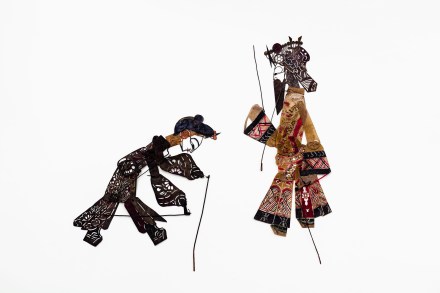
Shadow puppets and Processing Managed to shoot the puppets and put them through one Processing thing I learnt while on the course. I like the fact of making shadow puppets – an original moving image narrative device, far older than photography, but requires light – into still images, then animating the stills. Playing with time, back and forth. I suspect I will make a little very slow stop motion with them at some point – it won’t be very long. But it might be good for one of the texts I wrote. Or all of them? Who knows…

The following is all very rough, as playing. I will obviously need to make sure the dimensions of the sketch match the image in future. Below is a rough screen-recording of the Processing sketch and a screenshot of it at the end plus original image.

Screen Shot 2020-01-17 at 22.50.21.png

Shadow.jpg


BOW: A3 script rather than a ​manifesto

After writing last night, I thought about where I am.

  • Why am I making a book with attempts at still life when I’ve been finding my way with moving image of one sort or another?
  • I definitely want to include some sort of moving image element any installation
  • I wondered if this move away from moving image was promoted by a comment which I felt came with a little jab about the course being a ‘photography degree’.
  • That comment was good though because it consolidated the direction I was going in, and suddenly things started to make sense – a doorway – exploring the boundaries we place around categories of various forms of image-making
  • This reconfiguring of boundaries is exactly what my essay is about, an examination of the ‘cut’. Where do we place boundaries and differentiation? Given the changes to our world, we should not assume anything and so I am looking specifically at the making of images before the broad spectrum of different disciplines emerge. (See my post  – Life After New Media) 
  • When I was an actor I would sometimes stick my script in a book especially if it was a photocopy and then make notes and draw in the booklet. The script would end up being covered in all sorts of doodles.
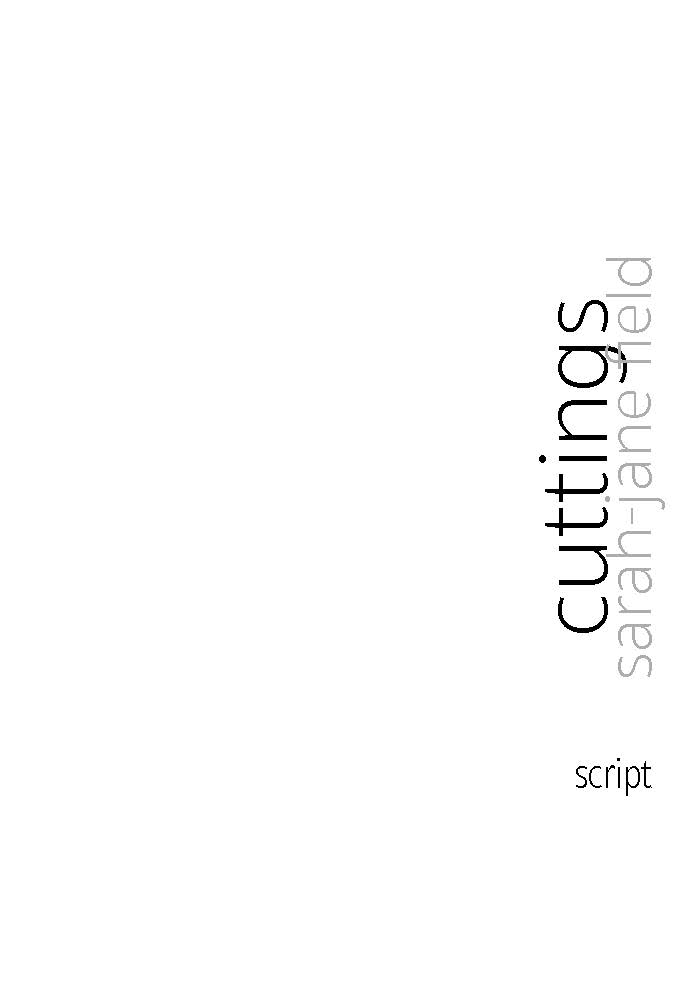
  • And so, I decided the word manifesto on the cover should be replaced with ‘script’ and the subheading is now scaled right back (see below)
  • This suggests I might/should create the script of ‘cuttings’ and then make some sort of film/performance based on it thereafter (A4/A5)
  • I spent tonight printing what I have so far (although dismissed some of the texts for now) and ordered a handful of images last night too.
  • I have printed on different materials – paper, newsprint, transparency, tracing paper etc.
  • I have a tiny 13.5 x 9.5 book and printed everything to fit on these tiny pages so that I can make a mini-book mock-up, including texts that will fold out. (I guess at least one image should do that too.) See incoherence – page 118 Edgar Martins book, essay by Roger Luckhurst – ‘work to derail the over-coherence any series or display … inevitably imposes’
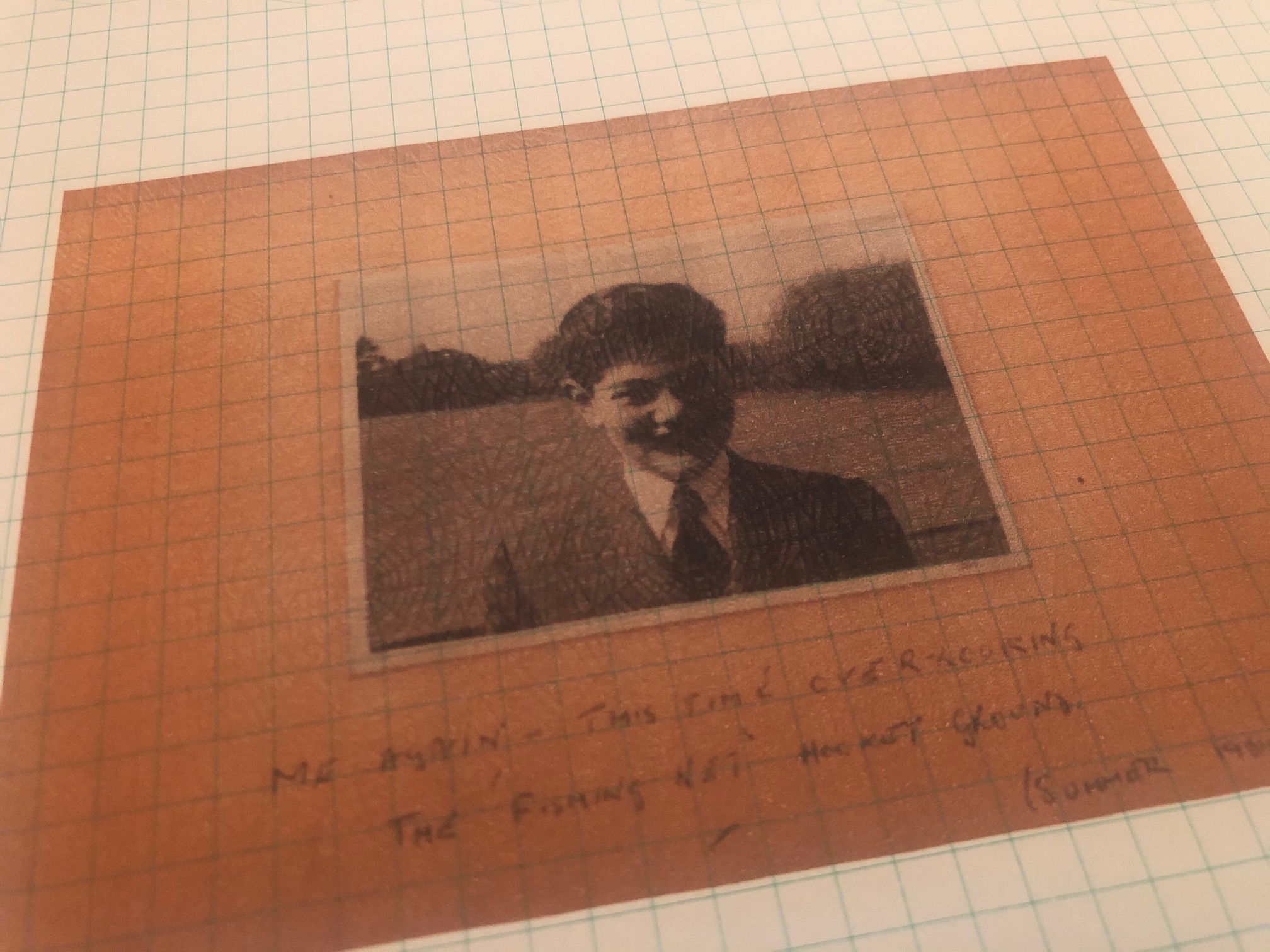
  • By using different materials I hope I am beginning to ‘artistically’ emulate the Standard Model of Reality. This does feel ‘ridiculous’ and any scientist would probably laugh but by using different materials, different media, layers of meaning and symbolism rather than focusing on one single isolated/discrete object, I hope I somehow addressing the ‘Cartesian habit’.Below: Standard model flow cart, one image of my efforts this evening – a photograph printed on graph paper and a cover currently printed on newsprint and will stick with a found portrait. Will upload a video and shots of the little booklet when it’s made.
  • Finally, the little booklet is a small precious thing. Gold has emerged as a key theme along with brown paper and second-hand objects. Like the themes in the text query and challenge reductionism and commodification.
  •  

Bow/CS: Life After New Media, Kember & Zylinska 2012

Some useful references: see artists highlighted in chapter below

See  –  https://www.richardgalpin.co.uk – an excellent visual metaphor

See – http://www.ninasellars.com/?catID=30 Final section in chapter provides a useful analysis

Possible inclusion for CS: The compulsion to define photography in an essay (see CS A3 and early drafts fo DI&C essay) is not merely a means of identifying what the inquiry is about. It goes to the heart of the matter which is querying the ‘Cartesian habit of mind’ (Barad, 2007). This can be resolved by seeing ‘the cut’ for what it is – a way of making meaning out of the chaos and creating matter (material or discursive). I do this making words and categories, painting, sculpting – or by capturing photons when creating images – regardless of what I do with those photons thereafter i.e. add traces together to create movement or give the illusion of stillness  – a freeze. What happens thereafter is not is being explored in this instance. It’s complex though because the thing that I do to make order (cut) compels me to want to cut photography up into a hierarchical system.

Ultimately, it is not the material, equipment or medium which is being critiqued – but the mindset.

Backed up by the following which also helps to define the cut. Highlighted sentences from a critical chapter of Life After New Media: Mediation as a Vital Process by Sarah Kember and Joanna Zylinska (2012)

With Notes – 3 Cut! The Imperative of Photographic Mediation

Kember, S. and Zylinska, J. (2012) Life after new media: mediation as a vital process. Cambridge, Mass: MIT Press. At: http://topologicalmedialab.net/xinwei/classes/readings/KemberZylinska/LANM.pdf(Accessed 11/01/2020).