Inside out confusion

I’ve been alluding to what I understand as a relatively new phenomena recently in my CS1 essay and in one of the short story fragments; others’ exteriorisation emerging internally in individuals due to technology’s ability to do away with traditional boundaries between individuals. (How interesting this should have come about in an era when individualism has been so highly valued.) I think is something I should look into more and am re-reading (and reading some chapters for the first time) Hayles’ How We Became Posthuman. Chapter 7 Turning Reality Inside Out: boundary work in the mid-sixties Novels of Philip K Dick is probably going to be useful and clearly demonstrates how these issues arose prior to the internet – although made far far tangible and evident by its now overwhelming presence.

“When system boundaries are defined by information flows and feedback loops rather than epidermal surfaces, the subject becomes a system to be assembled and disassembled rather than an entity whose organic wholeness can be assumed” (160)

… “the weaker system is made to serve the goals of the stronger rather than pursuing its own system unity” (ibid)

“… a persistent suspicion that the objects surrounding us – and indeed reality itself – are fakes” (161)

And finally for now …

“The interpellation of the individual into market relations so thoroughly defines the characters of these novels that it is impossible to think of the characters apart from the economic institutions into which they are incorporated” (162)

Artist: Gisèle Freund 1912-2000

I read about Freund in Fifty Key Writers on photography and think her writing will be useful for me. Reading about her, I see further references to meaning being dissolved during the years leading up to WWII. “They (she and Benjamin) shared a mutual desire to displace the empty, iconic forms of fascist art and writing with an intimate humanism in the arts, and a need to restore meaning and value to a world emptied of content.https://jwa.org/encyclopedia/article/freund-gisele

I have written about zero signs a plenty and will no doubt continue to do so.

Freund’s commitment to images which contained a sense of humanism and her aversion to props, posing and styling echo my own working preferences. She worked as I try to, engaging in a conversation and capturing moments which she didn’t believe signified the whole person or their ‘soul’ but aimed to represent a kind of stream of consciousness, according to the author of the Encyclopaedia of Jewish Women page on Freund, Carleen Meeker.

Her writing sounds very much like the sort of thing I’d find useful – she too is interested in ‘the role of context in meaning’ or ‘the relationship of “the artistic scope of a work to the social structure at the time of its production”‘ – and she sees the negative and positive aspects of technology when describing its affect and impact (2013, 110).

I look forward to finding out more.

Durden, M. 2013 Ed. Fifty Key Writers on Photography, Routledge, Abingdon

CS: Chapter 2 ‘Photography’ Howell’s (2011) Visual Culture

We are asked to look at Chapter 2 “Photography” by Richard Howells (2011). To begin with, the chapter sums up the very short history of photography. Although not Areilla Azoulay’s non-Cartesian version, which I talked about in my DI&C essay, and which posits that we cannot separate the invention of photography from its related activities, that of empire building which began in the 14th century when Columbus sailed across the Atlantic and began the process of taking people and land on behalf of European conquerors. I’ll touch on this briefly later. However, the author does take us back to cave-drawing (as far back as 25 000 years rather than 40 000 which is where academics have placed the earliest discoveries; coded symbols that can found over eons of space and time). This is important because photography is simply one more way for us to exteriorise our inner selves, to other the self, to store consciousness. That it’s mechanical is important but doesn’t render it less than.

It was interesting to touch base with the received story again, having read about it in various books while studying but specifically, in a wonderfully entertaining book called Capturing the Light by Helen Rappaport and Roger Watson (2013) which goes into much greater detail, although with less critical depth.

However, I found it difficult after reading the chapter to get beyond the inclusion of Roger Scruton’s essay, Photography and Representation‘ in “The Aesthetic Understanding‘, Essays in the Philosophy of Art and Culture‘ (1983). Scruton isn’t only a Conservative, he is a reactionary extremist who promotes the most appalling ideas and is a friend of the Spiked bunch, who, quite frankly, seem completely nuts. (And I used to quite like some of what Frank Ferudi said about parenting.) Scruton was recently sacked from his position at the head of the Government funded Building Better, Building Beautiful Commission (what he was doing there, is anybody’s guess – a mate of a mate, no doubt) for making comments that aren’t even worth repeating. He has spent his whole life offending people and seems to feel hard done by, having ostracised himself from various British academic institutions. His own father was, by all accounts, chaotic and damaged and very anti-establishment. Read into that what you will.

I appreciate that the original chapter was written some time ago (2003) and Scruton may, in keeping with the times and contemporary discourse, have virulently amplified his conservative message in recent years. But I find his argument sort of ridiculous – and Howell talks about it being flawed. I also know difference of opinion is important and having both sides of any argument is thought to bring about some form of synthesis, leading to a balanced idea of reality. However, modern science and philosophy are rendering the arguments included in Howell’s chapter and in particular Scruton’s, not only flawed but almost irrelevant. Before introducing Scruton, Howell tells us how some people felt that photography cannot be art because it merely records the natural world, reality,  as it is, which is where Scruton we are told, positions himself.

For a moment, I’ll deviate here and talk a bit about ‘reality’.

Two years or so ago I got off a train at a station beyond my intended stop. I realised my mistake but wasn’t sure how long I’d been distracted by my book, and looked at the map on the platform to see where I was and where I needed to get to. For a short moment, but long enough to cause a sense of panic and alarm, my memory stopped working. I recognised the signs on the maps as signs but had no recollection of what any of them meant, no access to their meaning. It was like looking at a map in a foreign language at the same time as not even knowing what a language might be. It may have been an early sign of something sinister healthwise to come, however, it has not happened since and I hope and suspect it was simply a brain glitch brought about by stress, tiredness, and distraction. It felt like it lasted about a minute. The experience, however, demonstrated what my consciousness and its integral function, memory, does for me. It enables me to get from A to B so I can survive. Without that ability I would not be able to move about in the world, feeding myself, interacting with people, finding a mate – doing all the things that keep the genes alive and reproducing. This is what our consciousness is – an evolved survival mechanism. And as hard as it is to accept, we have evolved to see only what we need to see in order to exist. We have a limited, locally based view of reality that is myopic but highly specialised. Some criticise this materialist view suggesting it leads to emptiness, an existence that lacks meaning, but the illusion of reality is literally all we have and to belittle or undervalue it isn’t automatic or necessary. One hopes we can afford to be honest with ourselves, although as we look about today, it does at times seem perilous and perhaps terrifying for people.

I am looking forward to receiving my delayed copy of “The Case Against Reality” by Donald D Hoffman. But since 2015 I have been reading as much as I can to understand this illusion of reality including Reality is Not What is Seems Rovelli (2016), The Ego Trick Baggini (2015), and The Biological Mind Jasonoff (2018) amongst many others which look at life systemically. I think the science contained in these books potentially nullifies any arguments about photography being simply a recording of reality – because our reality is SO subjective and particularly nowadays when digital technology is fundamentally changing what we expect from reality  – and because any language form, photography included, is an emergent property which is what is so fascinating about mark making – however we choose to do it. And that’s before we even touch on individual subjectivity (as opposed to species subjectivity), technical ability, and choice, or processing whether in the darkroom or your desktop.

And in any case, the arguments against photography of any description being an art form because it is  a copy, where photographers simply record rather than dictate what’s included, were made redundant the moment a urinal was placed in an art gallery. If you think photographs merely copy reality, then they are the ultimate readymade. Although I do see some conservatives are likely to dismiss appropriation as a viable art form too, missing the point of it entirely. But like the evolving nature of gods and God as civilisation develops, what we need from art changes too. And conceptualism rather than dogmatic religious iconography is clearly more relevant today as the nature of reality is unpicked and newly understood. Photography, being an emergent property that came along with the evolution of technology over several centuries alongside its sibling, or perhaps its close cousin, Capitalism, is not only interesting as a concept but crucial to the way we see and understand life today, and therefore an integral form in any artistic exploration regardless of whether it ‘ideal or real’ (Scruton’s distinctions). Even if all the artist is doing is making something pretty, which is of course just as valid as documenting society, or commenting on language.  These distinctions are as silly as the ones about digital technology not being ‘lovely’ enough to produce art.

I am looking forward to receiving my book by Hoffman so I can keep investigating this subject and bringing it into my own work. In the meantime, I used to think that all the technological advances we relied on were changing our evolutionary path whereas now I see that they are part and parcel of our evolutionary path. They are expressions which lead to feedback loops. I think that’s why distinguishing between forms and saying one is art and one isn’t is a limited and limiting view.

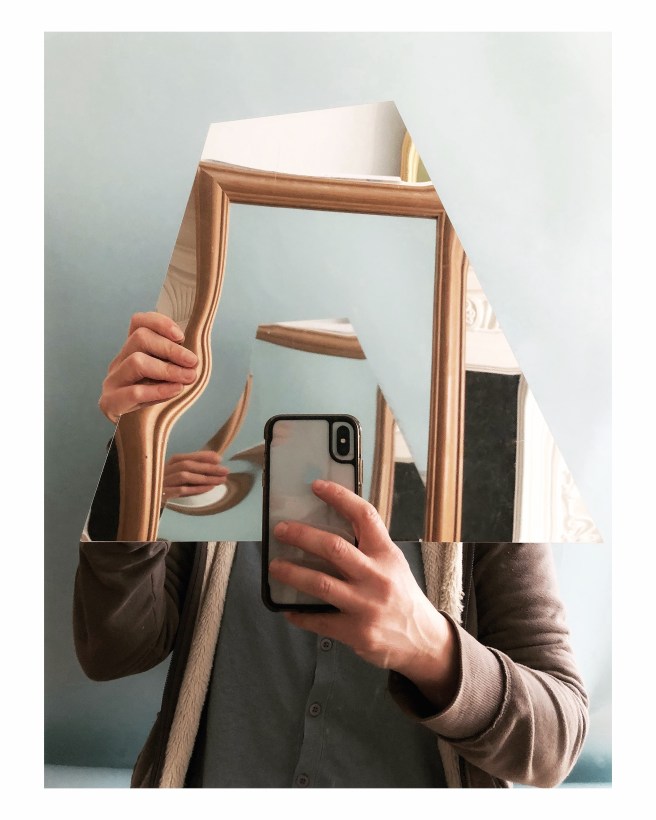
CS Part 1: The Photographic Activity of Postmodernism, Douglas Crimp, 1980

As with the previous post, I first looked at this during UVC. It is a less hefty, daunting article than Benjamin’s and therefore more digestible. My first encounter seems to have been about becoming familiar with information; names, concepts, era-specific concerns.

Notes:

  • I have begun to suspect that artists are sometimes, perhaps even often, less radical than I had always assumed (and I am wondering if the general population also assume this about artists or was it just me and my naivety?) We tend to expect radical mavericks in our artists; in my imagination they are the people who question the status quo and hold a light up to societies’ assumptions. But, in fact, I sense a deep, (perhaps dishonest) conservatism ‘out there’ which stems from the institutions and their weight in terms of authoritative history – and I wonder if educational institutions, in particular, are guilty of perpetuating this. Do they keep artists in shackles? Perhaps the artists feel safe, as they focus inwards, making work that satisfies the institution’s demands and reinforces its authority, but which at times risk being irrelevant to anyone outside that circle. Crimp begins his article by examining this as he discusses postmodernism and the ‘return of repression’. He talks about postmodernism being a breach from modernism which is dictated by said institutions – namely “the first the museum; then, art history” (91). He suggests it is a fantasy that art is free from the dogma I have described above and that postmodernism aims to rupture that fantasy, in this instance by valuing the copy, the unoriginal, the appropriated. This was a direct response to Modernism, emerging in the 80s, and as an alternative and possibly an antidote to performance in the 70s, where ephemerality, as opposed to fixed longevity, was valued.
  • He goes on to question the dogma that only an original can contain presence; “it may seem a bit odd, because Laurie Anderson’s particular presence is effected through the use of reproductive technologies which really make her quite absent”. Today this looks like an early realisation that the direction reproduction is heading in means we will no longer be able to undervalue reproduction as something cheap and tacky, which we might do with the postcards of the Mona-Lisa. (And which people today do with Snap Chat filters for example.) Perhaps it’s already been written, but I am wondering how a short-story about an all-powerful ‘big Other’ which was conceived of and written in code, based on copies and reproductions, might look.
  • “The presence of the artist in the work must be detectable; that is how the museum knows it has something authentic. But it is this very authenticity, Benjamin tells us, that is inevitably depreciated through mechanical reproduction, diminished through the proliferation of copies” (94) There is so much work nowadays which relies on, queries, makes use of “copies and copies of copies”. I will be referring to Eric Kessels’s  2011 24 Hours in Photos project tomorrow in a workshop for 11-year-olds. Kessel’s work not only carries his presence but the presence of mass production, of the abundance of images, the and the literal physical weight of the spectacle and consumerism, as well as digital materialism (is there such a thing? I think so). The prints, usually only seen as data on a screen, are piled in a church illuminating the shift in power – from god to consumerism or the masses depending on which way you choose to look at it. Perhaps both are valid?  This conversation about aura and reproduction seems like it should be irrelevant today – perhaps it’s been usurped by the dull old insistence by some that analogue is valuable and digital isn’t. Although that particular nonsense might still carry weight in a few, but hopefully increasingly limited circles, I suspect it will need to give itself up soon as more and more people make work about code and its ability to self-generate, or which is interactive, or links up with the science that will take our reality wherever it is going. However, I’m not entirely sure the educational institutions – especially in relation to photography – are as caught up as they might be…
  • “It would seem, though, that if the withering away of aura is an inevitable fact of your time”… we humans will always mourn the passing of time and anything that tells us it is happening, such as technology developing (I wonder if those early wheel adaptors lamented the loss of a time when there was no such ease for older hardier humans who did without!) Even so, both Crimp and Benjamin are actually in favour of this withering away of aura (as each sees it) as it can be viewed as instrumental in the “liquidation of the traditional value of the cultural heritage.” (95).  However, it seems to me cultural heritage continues, to this day, to dominate and retains the world’s long-held structures in position, even with all the melting and blending of conceptual boundaries we know are taking place beneath the surface and above. (I’m continually reminded of the Royal Academy and its significant aura of respectability, power and the calm self-assured certainty it exudes.) Cultural heritage may be secular now in many instances, but it still dominates. 
  • “…then equally inevitable are all those projects to recuperate it, to pretend that the original and the unique are still possible and desirable. And this is nowhere more apparent than in the field of photography itself, the very culprit of mechanical reproduction” This feels like a much bigger conversation which I think relates back to the simple but crucial othering of self through language and what that means for us from the moment it begins to take place in infancy. Crimp quotes Sherrie Levine talking about walking in on her parents having sex, and then feeling the need as a child to split herself in two, as her original self remained distant and impassive, watching. But this is what it is to be human as Crimp describes too – we are constantly having to invent and perform what is expected of us as we struggle to recall earlier versions, which may become subsumed and altered by memory in any case.  
  • There is some attention to the painting’s ‘hatred of photography’. Again, we witness the very human addiction to groupishness. We critters will do this in relation to absolutely anything. Returning to my initial bullet point here – that artists are often not really radical at all. They conform to the same human shapes and patterns of behaviour as anyone else. The petty arguments and exclusions and cliquiness so typical of our species in painting or photography or fragmented groups within are a microcosm of what is taking place all over the world all of the time. What irks about it taking place here is the critical and superior way in which art and artists of all persuasions comport themselves. This article feels as much about that aspect as it does about anything else. I’m not sure how relevant this is but it feels important today, as hate and derision dominate, as superiority complexes clash on social media and then spill into the offline world. I keep meaning to write about The Goodness Paradox (2019) by Richard Wrangham and as reread this article, I was reminded of it. The desire to be in a group, even if the group claims to be about rejecting the main group, is such a powerful instinct. Wrangham’s thesis suggests that the ability to gossip about others meant that we were able to divert attention from ourselves (save ourselves) and accuse others who would risk being executed. The best way to avoid this would be to fit in. If you stood out, you attracted attention and your chances of being excluded/executed increased. Language at once reduces our reactionary aggression by allowing for time and planning but increases our more calculating aggression which is pre-meditated. Our need to be accepted equates literally to the difference between life and death and drives co-operation. With this instinct deeply embedded in our genetic coding, the arguments which rage between painting and photography, or analogue and digital, RA trained or self-taught feel critical because it’s about survival. And the institution is gargantuan and seemingly impossible to stand up against. But civilisation is too far developed to do without so they are necessary and useful – but there is always a loss. Crimp acknowledges the struggle, but equates it here to space on the gallery walls – the life, and death of certain mediums or styles or trends. As digital technology brings in sweeping changes, what can seem like petty and daft arguments to outsiders (and some practitioners) becomes more understandable. And there is a big shift towards self-publication as it becomes more and more possible and affordable. What does this mean for the institution?
  • I will leave any comments about Sherman until I have been to her exhibition with the OCA.

https://www.academia.edu/5728395/The_Photographic_Activity_of_Postmodernism

Wrangham, R. 2019 The Goodness Paradox (Kindle Edition), Profile Books

Revisiting essays and critical theory

I am so glad I did Understanding Visual Culture earlier in my OCA studies – much of what we’ve been asked to look at in the early stages of CS was covered in the previous version of UVC. Saying that, the introductory passages in the CS folder are well written and give excellent and brief but precise descriptions of the main ‘ism’s, which I found useful.

I note the importance of context and meaning in Post-structuralism and see how it echoes a developing understanding of context within interdisciplinary conversations across the sciences, and in particular within physics. I think one of the first times I came across this idea about context and particles may in Carlo Rovello’s Reality is Not What it Seems (2017), although Hayles must surely have mentioned it in How We Became Post Human (1999) which I read earlier. But I have since seen it discussed in a number of other books, including The Systems View of Life: A Unifying Vision (2014) by Fritjof Capra and Pier Luigi Luisi who do an excellent job of linking up various disciplines in a way that some other less expansive thinkers don’t. (Perhaps I mean to say other myopic and parochial thinkers, but I’m being polite.)

Rovelli writes, “The theory [quantum] does not describe things as they are; it describes how things occur and how they interact with each other. It doesn’t describe where there is a particle but how the particle shows itself to others. The world of existent things is reduced to a realm of possible interactions. Reality is reduced to interaction. Reality is reduced to relation.”

and

“In the world described by quantum mechanics there is no reality except in the relations between physical systems.” (Rovelli, 2017; 115)

This is crucial because that theory informed the way code was developed. Although language might be considered a metaphysical system, we everyday users of code (a form most of us have little knowledge of) internalise its mechanisms, which, it is argued, inadvertently influences our understanding of reality. This is further reinforced by systemic feedback loops. Perhaps it will become important to try to describe what I mean by this elsewhere or later in the module. I can see feedback being something worth playing with for BOW at some point, and fun too.


Attachment-1
Screenshot from a video I was playing around with during S&O while making the A5 film. I did not pursue it in the end.


25939196007_312c83c8a8_o
This was another experiment exploring the notion of feedback loops made in 2018 shortly after beginning DI&C


We have been asked to read the following essays/extracts and I think it will be interesting to see what I make of them in comparison to how I responded before. I am not going to read my earlier notes yet, but am placing them here to return to later after I’ve read the articles.

Brief of notes on The Photographic Activity of Postmodernism

2: 1 The work of art in the age of mechanical reproduction

Project 3.1 (b): Rhetoric of the Image

We are also asked to look at Crimp’s Museum in Ruins and I made some work which I felt was a response to what I’d read there shortly beforehand.

A5: A Sketch, putting myself in Michael Snow’s Slidelength (1971)…the year I was born, incidentally

Another UVC post worth relooking at are my thoughts stemming from Chandler’s Semiotics: The Basics:

Notes: Paradigmatic & Syntagmatic

Finally, although many writers connect digital technology to photography, few make the connection with quantum theory (which underpins part of digital development in many ways). However, Fred Ritchin does in his book, After Photography (2009).  The other is Katherine Hayles in How We Became Posthuman: Virtual Bodies in Cybernetics, Literature, and Informatics (2009).

Ref:

Rovelli, C. 2017 Reality is Not What it Seems London Penguin