BOW 1.1: Live audio recording of Sirens

As described in the assignment submission I introduced live voices to the recording when showing this work to the collective in London just before the summer. Some of the group bravely joined in and went for it with tremendous trust and generosity, for which I was grateful.

The track was provided by Carla. Please note it contains a silent section with lasts just over a minute in the middle.

As I mentioned before, I do think it was the sort of thing which is best experienced live and is somewhat toe-curling as a recording!


BOW 1.1: Development

I did not intend to submit the film I made with Emma for BOW until after I had shown it at the day in London organised by course leaders Carla Reece and Caroline Wright in London.

Therefore my development notes are on my Sketchbook blog but can be accessed here.

https://sarahjanefieldblog.wordpress.com/category/work-in-progress/oca-music-collective/


BOW 1.2: Development

A short film to be shown in a group show on a platform or in a circle which functions as a village of work made by the collective.

Latest iteration following feedback: Password Village3

Following some constructive (and helpful) feedback from the regular OCA online hangout I attend, plus some comments from Ruth in my last tutorial, I have continued to develop this film (See earlier versions below). It is half the length than it was and has a less fragmented audio track. I am thinking I will only provide the audio online and visitors must use their phones to hear it in the gallery or on a computer at home, not least of all because it will drive the invigilators completely insane if it is on the whole time. There are further reasons to do this but I will discuss that on my blog. I need to match some clips up with obvious bits in the music still, but I think this is a much more accessible idea – although still incomprehensible I’m sure to some. In an accompanying brief statement, I need to say something like the following:

An audiovisual moving image collage, which contains themes and fragments that emerged out of a conversation with 5 other artists, and took place over several months as we were researching and developing the overall inquiry into what a village might be. Images, mostly found but some original, are combined with music from a well-known computer game from the 80s which was usually played on a portable handheld device, a precursor to today’s ubiquitous mobile phone. (When I played it, aged 11 or so, my three brothers were horribly annoyed that I reached the high score and saw the prize before any of them did.)

Earlier iterations  – all same password as above. 

Version 5

Original I shared with anyone


Themes and topics in the next blog

BOW 1.1: Feedback form and tutorial​

Yesterday I had a meeting with Ruth online and this morning I have added to the feedback form and sent it over to her.

An abbreviated version below: 

The film demonstrates technical and visual skills, and imaginative handling of the found footage to draw out its haptic qualities and communicate a critical re-reading of the material. The three sections ‘verses’ have distinct atmospheres. Overall sense of the film: it could be much shorter and thereby allow the viewer to be swept up in the whirl of the imagery and music but not start figuring out what is going on.  The length somewhat detracts from the open-endedness of the film, and suggests a potential narrative. Let’s discuss this, along with choice of film, precedents (similar/related work); rhythms (from sound and visual edits such as speed, image manipulation etc.)

Before meeting for an online tutorial, I sent Ruth a blog post (password protected, available on request or supplied for assessment) which explained why even though I agreed in the main with her about the film, I felt reworking Sirens was impractical and undesirable. I have been working on another collaborative project and suggested submitting the results (or a part of them) for the A1.2 and sent some work in progress. I can see that the course wants us to be prepared for reworking projects as part of an ongoing process. But I have often done this in any case during my time with the OCA and either do so or sometimes choose not to, moving on to something new instead or ditching previous ideas/work altogether and starting again from scratch. So accepting feedback and reworking is not unknown to me. We agreed in the end that Sirens had been a good stepping-stone but that my time would be better used moving forward with the next project.

Extra information which I’ve not talked about on the feedback form

Ruth and I agreed that submitting the Pic London work will be the best use of my time. I had shared some Work in Progress.

  • A film
  • A set of stills taken in the village I was in Italy (some of which are in the film at the moment – WIP – so who knows if they’ll stay)
  • A poem I wrote while making and thinking about this work. The poem will be in a booklet accompanying the installation made by the Pic London group and is a research document rather than a catalogue.

Ruth said as the film stood now she couldn’t make sense of it. But that she thought the poem was strong. I ended the session ready to ditch the film altogether but that feeling had dissipated by the end of the day. The film is important but needs more work. I try to remind myself of Adam Curtis’s comment about showing unfinished work. “I just think it’s incredibly risky to show stuff early on when you’re trying to combine, say, two or three different narratives together to make a bigger point. It’s so easy to get it wrong. Because you can see it in your brain, but they don’t know your brain.” (2018)

https://www.theguardian.com/film/2019/jan/18/adam-curtis-and-vice-director-adam-mckay-on-how-dick-cheney-masterminded-a-rightwing-revolution

However, it was great to have such positive feedback about the writing and I have been thinking about how I might show it outside the book, if at all. Ruth suggested submitting that part for A1.2.

I think the best thing to do is forge ahead thinking in terms of the exhibition and then think about which elements I submit to the OCA, if not all of it. One thing Ruth said which struck a chord was that there will be a lot of work at the venue, and it will be like a graduate show which I have thought before too. How do I make sure my work doesn’t get drowned out? Maybe I can’t ensure it doesn’t but presenting something striking but simple is one possible way of addressing this. The writing could potentially work, as it’s full of visual imagery but isn’t an image.


Bow: A1.1 & A1.2 Reflection/pre Tutorial feedback

I have had some feedback from Ruth for BOW A1 and have a meeting planned later today.

The BOW course is structured so that the initial assignment is reworked and split into two sections. Reworking the film is tricky for two reasons.

  1. It’s a collaboration and any editing would entail asking Emma to make time to collaborate again on the rework. I’m not sure this is viable. I cannot mess with the music without her as it would undermine the work she put in in the first place.
  2. The other issue is the central and underlying concept, which I must admit always felt somewhat contrived, revolves around the limited amount of footage of women, sans monsters and disasters, in the overall film; an irony, given it’s about visiting a planet populated by women only. In fact, eleven-minutes is probably not all that accurate. The women in the film certainly don’t appear for as long as the men. But I could have calculated a more exact time. We might also have been more robust with the concept. I suspect one reason for this failure is due to a lack of genuinely deep collaboration between Emma and me and a panicked feeling of needing to have something to show.

While the eleven-minute figure is a little tenuous, going back to start again and unravelling it all would mean starting from scratch with the same film and I just can’t see Emma having the time or inclination.

One of Ruth’s suggestions in her feedback is to shorten the film; “Overall sense of the film: it could be much shorter and thereby allow the viewer to be swept up in the whirl of the imagery and music but not start figuring out what is going on.  The length somewhat detracts from the open-endedness of the film, and suggests a potential narrative.” (2019)

I agree with Ruth  – but I also feel that work is done – for better or worse and it was a useful exercise from which I learned a great deal.

I have since worked on a subsequent film, also the result of a collaboration  – and the things I learned while producing Sirens have been applied in this new project, and Ruth’s advice about length, avoiding fixed and typical narratives, rhythms, etc are all constantly whirling around in my head. It feels, therefore, a far better use of time to submit this second film for A1.2

Another reason for doing this is to keep both these early experiments as far away from the end result of BOW as possible. Both will inform where I venture next, but neither is yet in the vicinity of where I hope to arrive (no idea where that may be either).

  1. Pic London Project

What I will suggest is submitting the collaborative work I’ve produced for the Pic London project I’ve been involved with rather than a reworking of Sirens.

I am in a group who worked with Hal Silver (I’ll explain who that is if/when I submit this work in a more expansive blog). However, the group working together consist of six early-career artists/students recently graduated, or in their final year.

Here is a draft text about the collaborative project (written collectively):

A collective inquiry that began in a game set in an imaginary village, riven with rumours of witchcraft and industry. Over three months, six artists exchanged challenges and responses, out of which common themes emerged: loops and circles, colonies and growth, architecture and language, nature and storytelling. The exhibition is a settlement of images, objects, installations, moving image and living bacterial cultures, questioning what it means to form a community and, furthermore, emphasises the stories and concepts the community is built on.

Each artist will contribute work which they made in response –  joining in greater or lesser degrees with other members of the group. The work will be shown in/on a circular three-dimensional ‘set’.

The main element I have contributed is a film – work in progress.

Password Village3

The film is a representation of feelings, words, and phrases which I arrived at after having conversations, reading responses, noticing mine – with or related to the group both off and online. These words prompted me to look for certain clips/footage.

Collective

Rumour

Gossip

Execution

Village

Publican

Fire

Isolating

Darkness

Yeast

Network

Growth

Contagion/Hyperdyadic

Fiore – Flower – Berlusconi the Goat

That Goddam Enlightenment

Suicide

Small – Big

Particles

Language

The impossibility of

Walls

War

Civilisation

Pink dᴉuʞ

Garden

(Of)

Earthly Delight(s)

Community

Loss

Circle

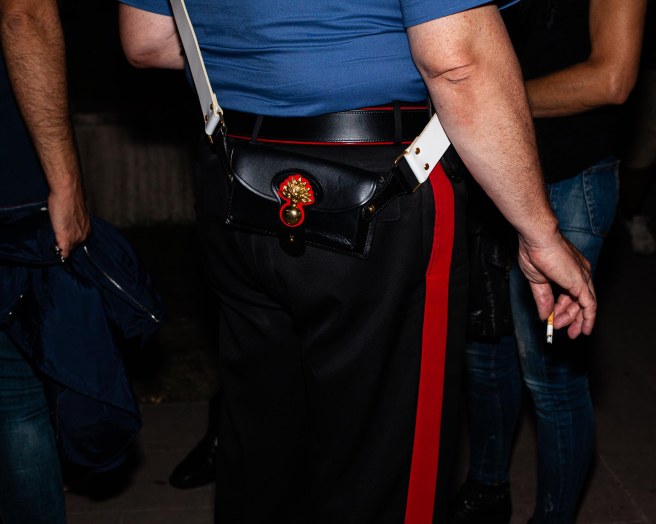
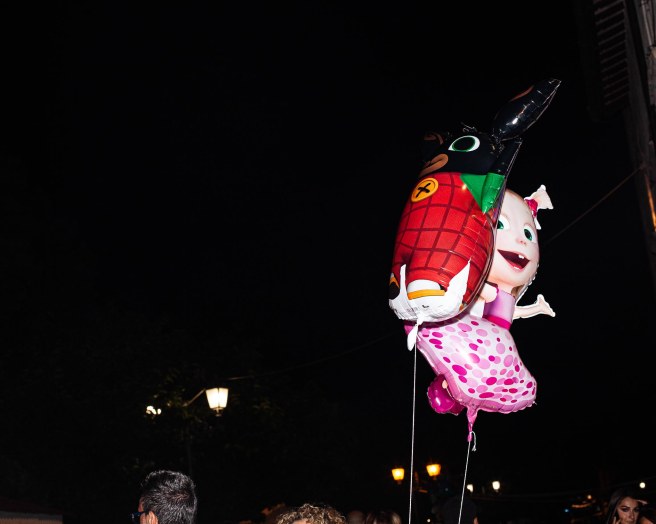
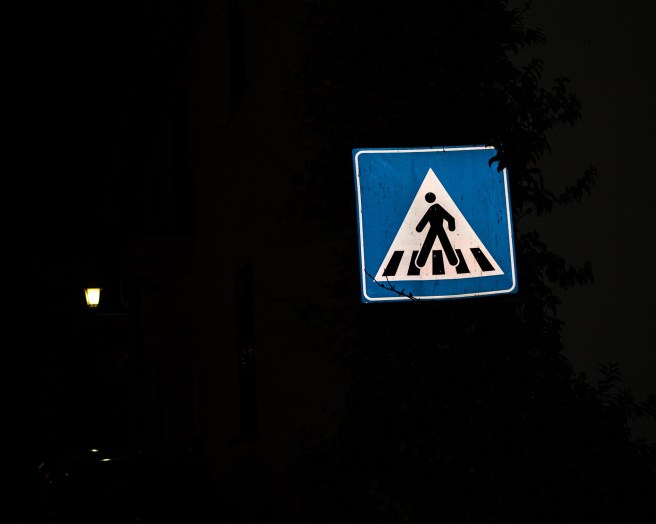
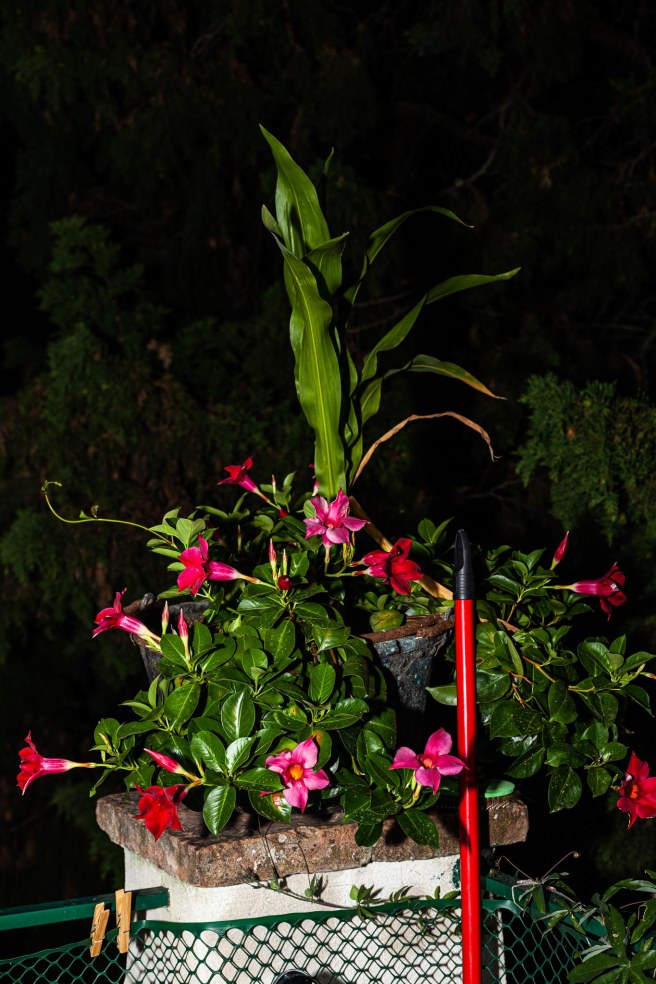
Here are images which I took myself (in no particular sequence). Some of these but not all are in the film. They were taken in the village I spent the summer in. 

Rumour(c)SJField2019-7277Rumour(c)SJField2019-6979Rumour(c)SJField2019-6958Rumour(c)SJField2019-6939Rumour(c)SJField2019-6730Rumour(c)SJField2019-6535Rumour(c)SJField2019-6531

A sketch by artist/recent graduate Christel Pilkaerthomsen illustrating how we plan to show the work

70908895_389869788575594_3679266691688169472_n-01

2. Section 2 (Bits I made while thinking/preparing but which I don’t think fit, but including here to demonstrate development)

Here is a poem I wrote while living in a village over the summer and was prompted by my research and development for this project –  I shared it with the group to be included in an accompanying book, however, I just don’t think it fits any more with the work – perhaps/we will see.

On the edge of the village


On the edge of the village, too far for the water to reach

two mummies lay on plastic sun loungers,

hoping and waiting for a glimpse of death in the sky. It was dark,

but the moon was full and high.


“When I was little, you told me the stars were dead people,” said the younger mummy, accusingly. Then excitedly, “There’s one! Did you see it?” Death lights up for a microsecond.


Don’t blink.


The older mummy missed it.

“I thought the sky was filled with ghosts looking down at me.”


On the edge of the village, beyond the reach of the bin men,

the mummies remember Fiore who lived in the barn below,

a second home for the summer months. His main

house was in the village square. But he was rarely there.


“When Fiore died, who inherited everything?” the younger mummy asked.

Long ago cancer killed his wife, then his daughter did it to herself. “And another!”  Ephemeral, mortal, gone.


Never put bricks in your eyes.


The younger mummy smiled.

“I think it must have been the housekeeper. She and Fiore were close.”


Far from the men who grabbed the older mummy or the women

who took against her after her own husband died,

they lay there and waited for death to arrive. Too much light

makes it difficult to see though.


“Why wouldn’t he eat Berlusconi, his badly behaved goat?” wondered the younger mummy. Then she sat up and cried, “Look! That one lasted forever.” The planet’s demise was fantastic so the mummy made a wish.


Listen instead.

Both mummies lay still.

“I think it was because he loved him,” thought the older mummy. Though she kept quiet.

Some images that might have worked with that text. (In no particular order) At the moment, they are not included in the project anywhere but I could print and place on the circular platform. 

IMG_6846.jpgIMG_6848.jpgIMG_6859.jpg

IMG_6844.jpg


A collective Instagram Account where each of us was able to post images, research, and ideas.

https://www.instagram.com/arumourreachedthevillage/


BOW Assignment 1: Sirens – an eleven-minute tale, a collaborative project for the OCA New Music Collective.

OCA New Music Collective 

When I responded to the call out for collaborators to work on projects under the banner of the OCA New Music Collective, I had no intention of using any work made for BOW/CS or L3. Rather, I saw it as an opportunity to experiment with original music but I also wanted to continue my ongoing investigations into imagery and its affect on us. Additionally, as I’ve done in previous projects, I hoped to explore the transitional structural state I believe we are experiencing today, by comparing and investigating how we respond to various media, i.e. sound, imagery, text (if at all possible). I was assigned to a composing student who I will refer to on my blogs simply as Emma, at her request. We began our journey together about three or four months ago.

Lately, I have been working more and more with moving image, and with appropriated found footage influenced by work I looked at during Digital Image & Culture, so it felt natural to keep heading in the same direction.  Unlike my DI&C film Origin of the Common-Place, however, the work I made for the NMC does not contain still images, so I was a little concerned it might not be appropriate for BOW A1. However, after liaising with my tutor, Ruth, I felt that the work demonstrates where ‘I’m at’ for now, better than a set of random still images might. It also deals with some of the themes I identified in my proposal – ‘the language of actresses and fairy tales’ although as I pointed out in my email to Ruth, in this case myth might be a better word.

Although I did not originally intend to submit this work, I did, however, keep a record of of development and reflection on my Sketchbook blog. (Once I’m back in London, if I’ve not had a chance to do so beforehand, I will transfer some of these notes to the correct menu on this blog.)

Film

The film was shown to a group of OCA students and tutors on 20 June 2019 at Toynbee Hall. An improvised live ‘choir’ (volunteers I cop-opted from the NMC) joined in during the final section. The following text was not shared with the group and I am not certain how much of it would be needed by an audience – or if some of it is merely a part of my own private background work. The indented paragraph is probably a draft statement and the following text a description for study purposes.

Voyage to the Planet of Prehistoric Women is a 1967 film about a journey to Venus where a group of intrepid male astronauts encounter a host of dangers in the form of a crash, a range of monsters and a band of sirens. Despite being about a world inhabited by women lasting nearly one and a half hours, the film contains roughly eleven minutes of footage where the women appear alone. That increases to just under twenty minutes if you include scenes where the women carry a dead fishy creature or appear alongside impending disasters or monsters.

This re-imagined film is a journey through time and a sample of the visual representation of sirens.

Sirens is a visual and audio poem which consists of three verses, and the entire length amounts to roughly the same time given to the women themselves in the original film.

Verse 1 contains the original film, sped up.

Verse 2 A version of the footage, containing the women, is reversed and blended with a negative copy of itself.

Verse 3 is a further representation of the women modified by a proprietary app and will be accompanied by a series of live vocal improvisations as we attempt to bring the sirens to life in the present.

I have discussed this film in my first Contextual Studies essay.

Live voice

When Emma and I showed the work we included a live improvised choir of the Sirens based on the sort of exercises devised by Pauline Oliveros which she calls Sonic Meditations. I wrote on my Sketchbook:

“While developing our film I had the thought that it would be great to introduce human voices in the final section but we did not have the time to write for and organise a choir. I had recently done some improvisation games with the Pic London group, which were very much like the ones I spent three years doing while at drama school (1991-94). Although I have not acted in some years now, the skills – I have recently learned – are still embedded within me; and improvisation and performance seem to be a language I am relatively fluent in. Revisiting has felt like a wonderful ‘awakening’ and these experiences are encouraging me to keep heading in this direction. I suggested to Emma we try out the improvised vocal games with volunteers, to see how that goes, and she was open to the idea.” (2019)

The improvisation went well and was effective as described in my post. What’s more, from a personal point of view, it feels like a significant step towards literally using my own voice in my work, and perhaps reflecting the more metaphorical meaning too, i.e. finding my voice.

Collaboration

The collaboration was not an immediate easy one, as Emma will no doubt also admit. We are quite different people with different backgrounds. I have talked about this a bit more on my other blog. I am very grateful to Emma for the extremely suitable and excellent music she wrote in the end. But I think will need to develop my communication skills and be more confident with my intentions – plus understand that I might be coming from a very different place to new collaborators initially. However, I approached the project with the expectation that we would really collaborate from scratch and I wouldn’t simply give instructions about the sort of music a finished project might require. We got there in the end but I think Emma was expecting me to work in a more traditional way.

Earlier versions – some of which are quite rough indeed:


Other slightly removed BOW work

As well as working on this project, I have been slowly writing very short fragments of short stories. I am not sure yet whether these will ultimately develop into something usable or not. But I felt they were worth recording as possible BOW work on my Sketchbook blog and I do intend to keep writing them as they keep popping into my mind.

Reflection

Demonstration of technical and visual skills

I always find it a bit tricky to write about this, as with this sort of work I am deliberately looking for the sort of artifacts in the found footage that modern photography does its best to avoid. I did manage to do some work in Premier Pro after fixing a long standing issue with my desktop and software, although in the end, for the sake of time, I edited it mostly on my phone and in iMovie. I suspect previous editing experiments have paid off as I become more fluid with the technology I do manage to use.

Quality of Outcome

The early experiments were a bit limited and it wasn’t until I felt slightly panicked as described in my notes that I found a way to make this project work visually. The middle section where I blended backward moving film with negative layer of itself went a long way towards bringing the film up a level.

Demonstration of creativity

This work is original and perhaps challenging for people who are looking for straight photographs, especially as I deliberately challenge notions of taste and simplicity, and by using proprietary apps – hopefully referencing apps such as Snapchat, filters, and the coded language used everyday by regular people. However, I hope to continue finding new ways to explore the subjects and themes I am interested in, and that may well lead me back to using my camera in a traditional way.

Context

The notes I have made in the coursework are probably at a good enough level for this stage in the course. This work does link to the concerns I discussed in both BOW and CS.