BOW A5: Some adjustments following tutorial with Ruth

  • Have removed the blurb at the back and need to think about what I write instead fo the website and publicity – it was too academic and Ruth felt said too much about what I was intending. But equally, I need to find a way to indicate in the work that the statements are made by the AI in the course of our conversations.
  • Yesterday I updated the print version of the publication taking on board some of the things Ruth mentioned in our tutorial. She felt the cover was lacking something  – I had deliberately designed quite an obscure difficult cover which didn’t do what covers normally do – the title wasn’t there (just like A2’s zine cover) but Ruth suggested that It might benefit from something more concrete/tangible.
  • Following my tinkering, I think it could do with a bit more work but now the inner pages are very obviously held between shadow puppets. I like this reference to moving image history –

“Object-generated motion pictures have existed since at least the tenth century CE, in the form of Indonesian and Chinese shadow puppet plays.” McGregor, 2013. 

So while the cover is no longer as obscure as I tend to favour, it makes that reference a bit more obvious. I will keep working on it a little for the next couple of days as it’s not quite there yet. It may simply be a case of taking the title off and having that just on the inside. I had repeated half the title on the inner cover as things stand which emphasises a particular reading playing on my surname, along the theme of text being in the wrong place, moving around, unstable – but that’s throughout anyway and doesn’t need underlining in this way as much as the cover needs to be right.


Screen Shot 2020-08-17 at 10.06.36
After removing the title to the right and adding a bit more text
Screen Shot 2020-08-17 at 10.26.02
back cover- cover will be printed on grey thicker paper so the grey writing will be quite faded.


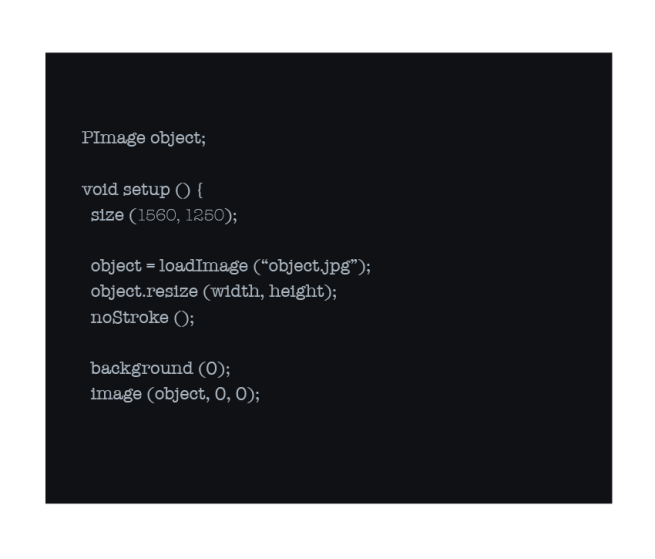
As I intend to write a piece based on the conversations between the AI and me and include that as an insert or separate object I revisited the black blocks with text and have replaced the conversational text with Processing code. I think this works much better anyway – and the image title is simply ‘object’ which I am pleased with.Screen Shot 2020-08-17 at 09.11.41

  • I also asked a group to proof it and there were some minor things such as spacing before and after the slashes in the text, rather than only after – it looks cleaner although probably not how code is ever written but then the whole idea of replacing some punctation with simple / isn’t how code is written really  – anyhow, I went with the suggestion made.
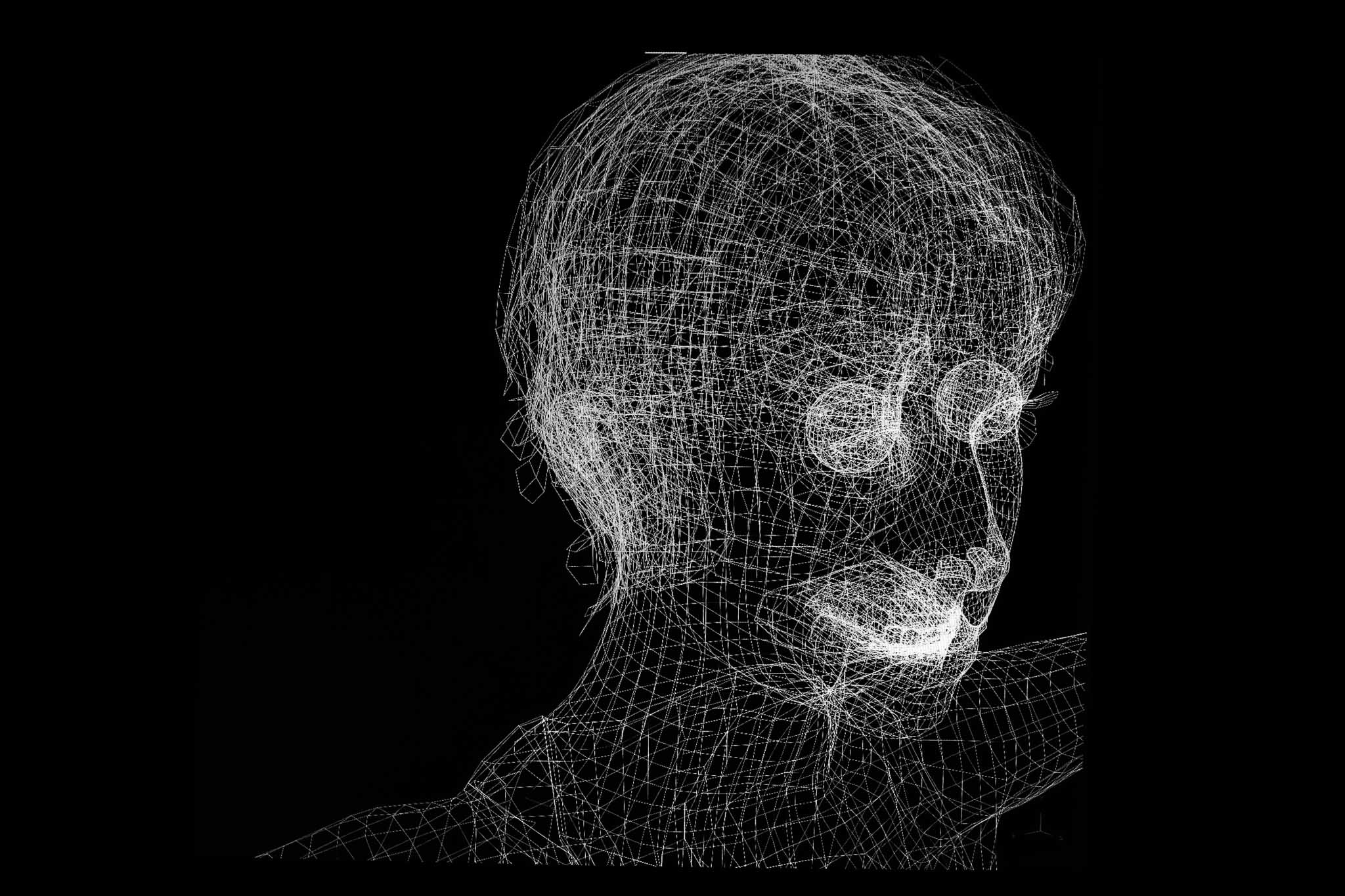
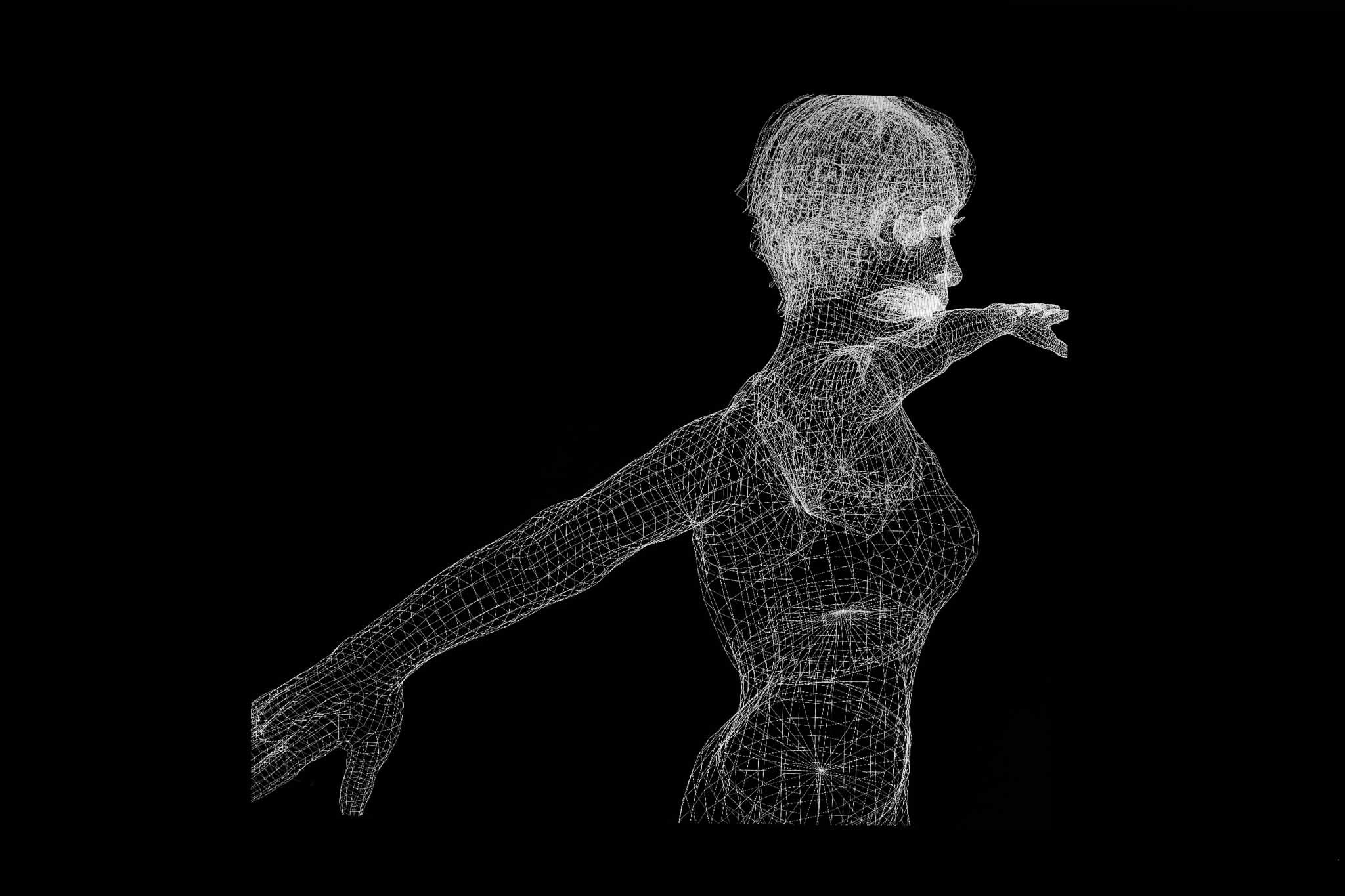
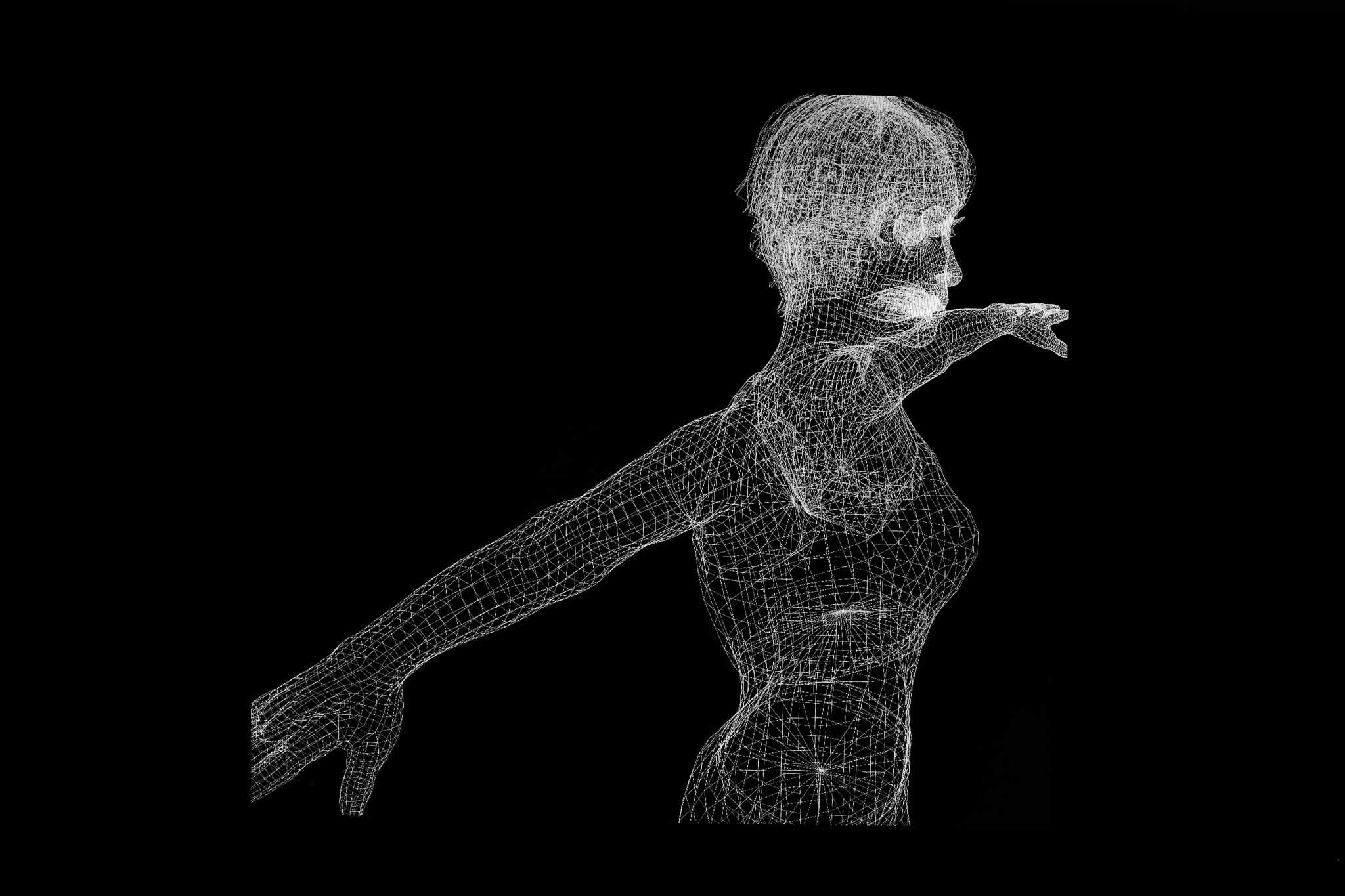
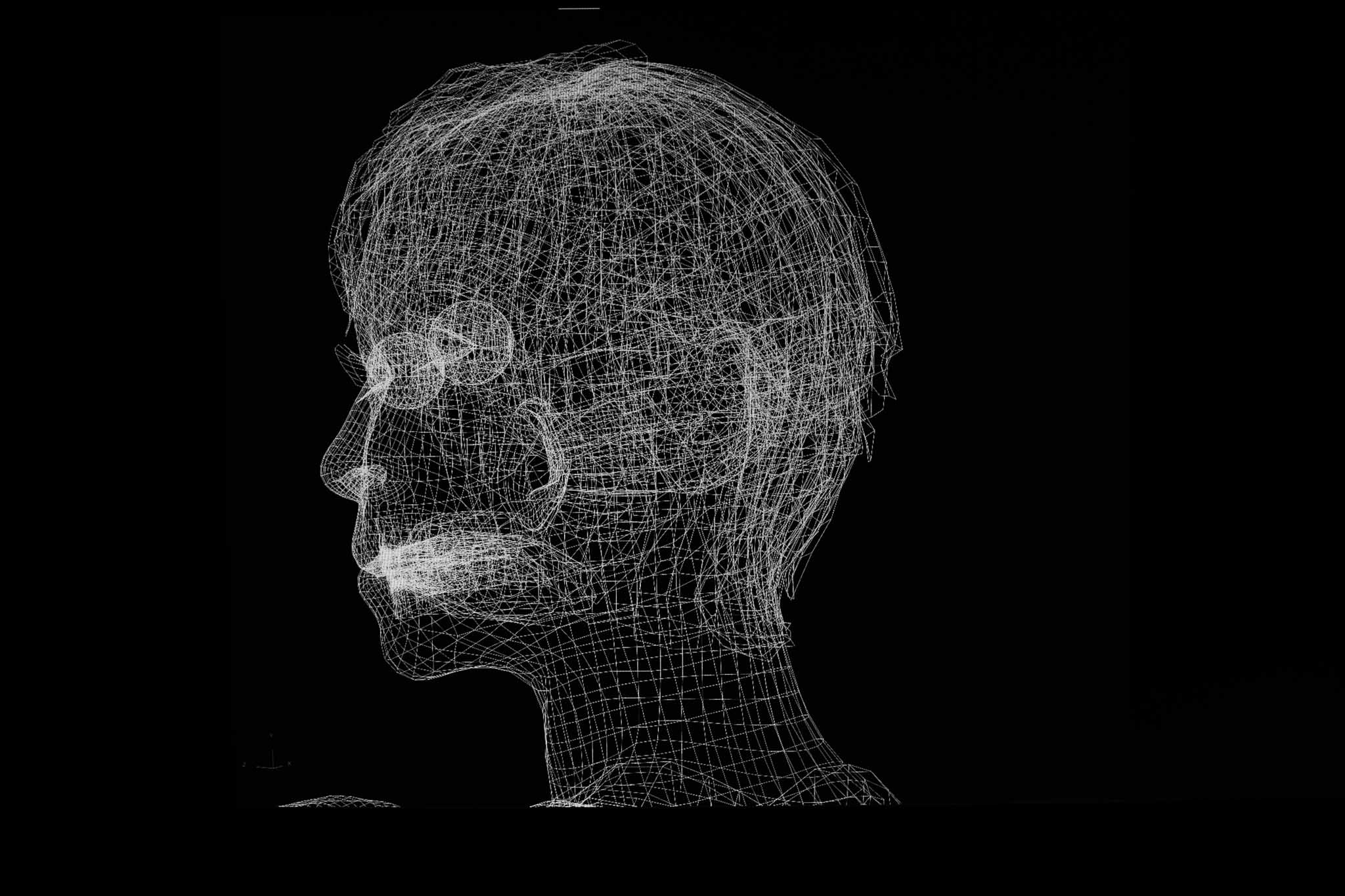
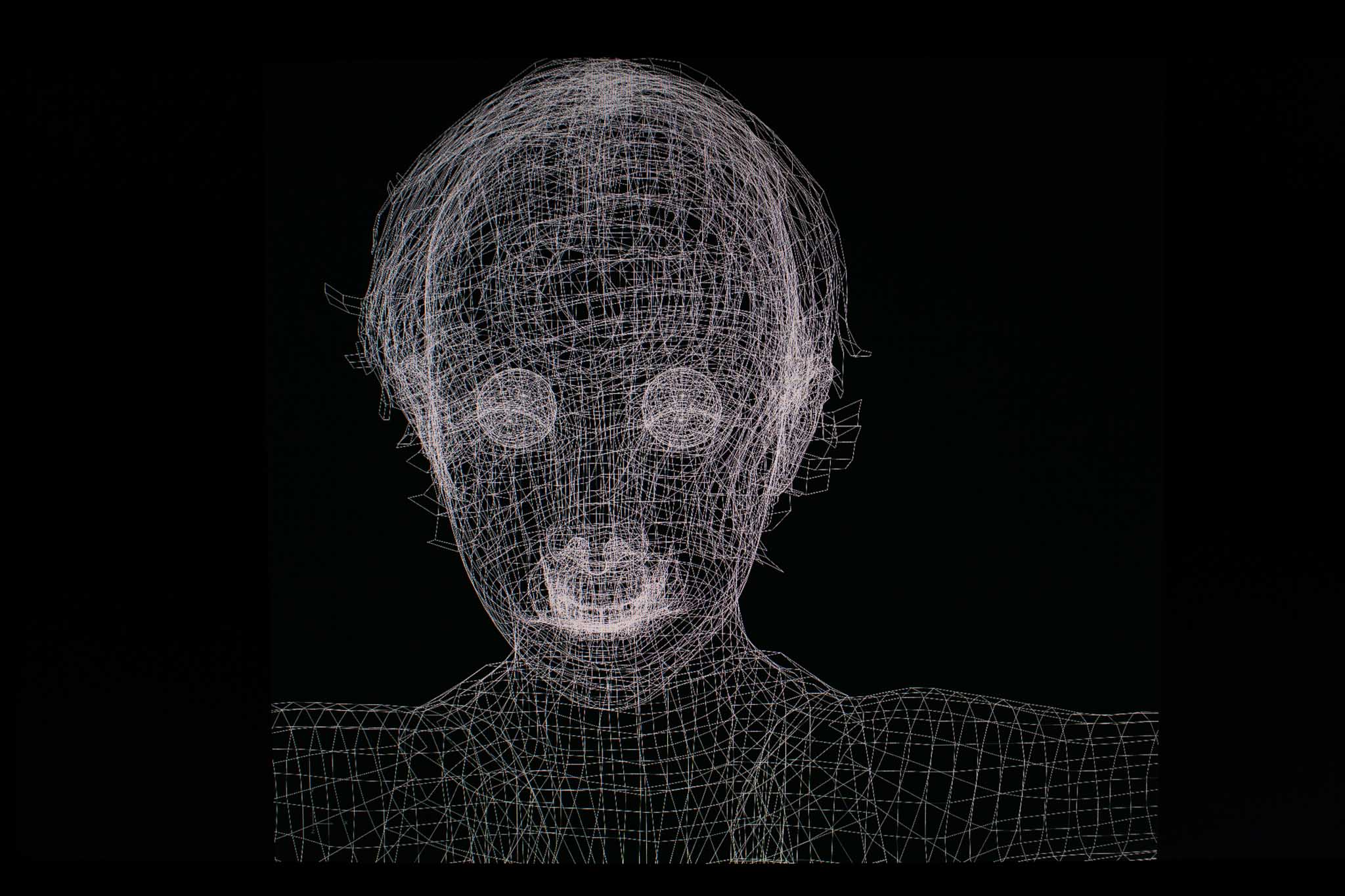
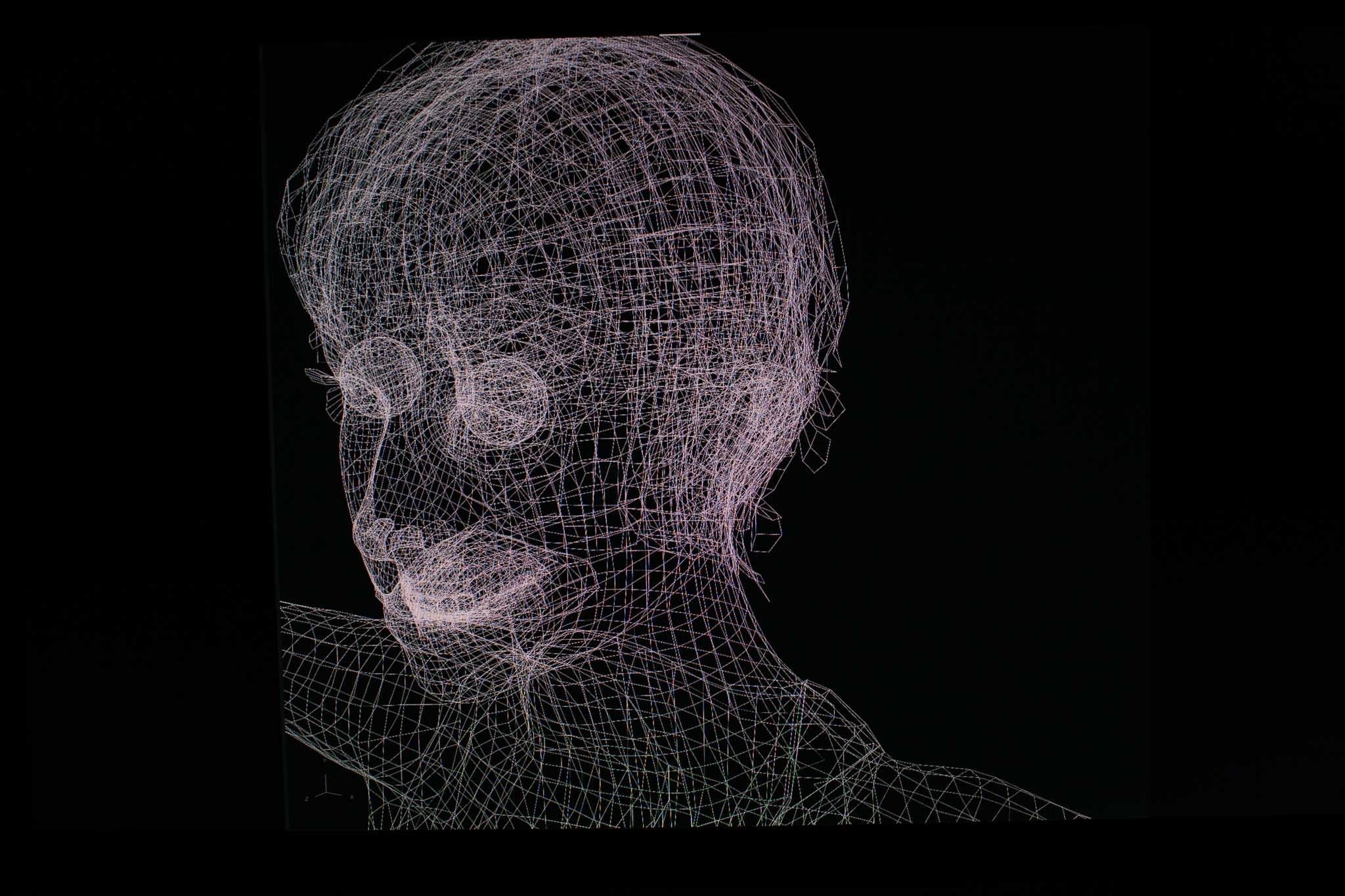
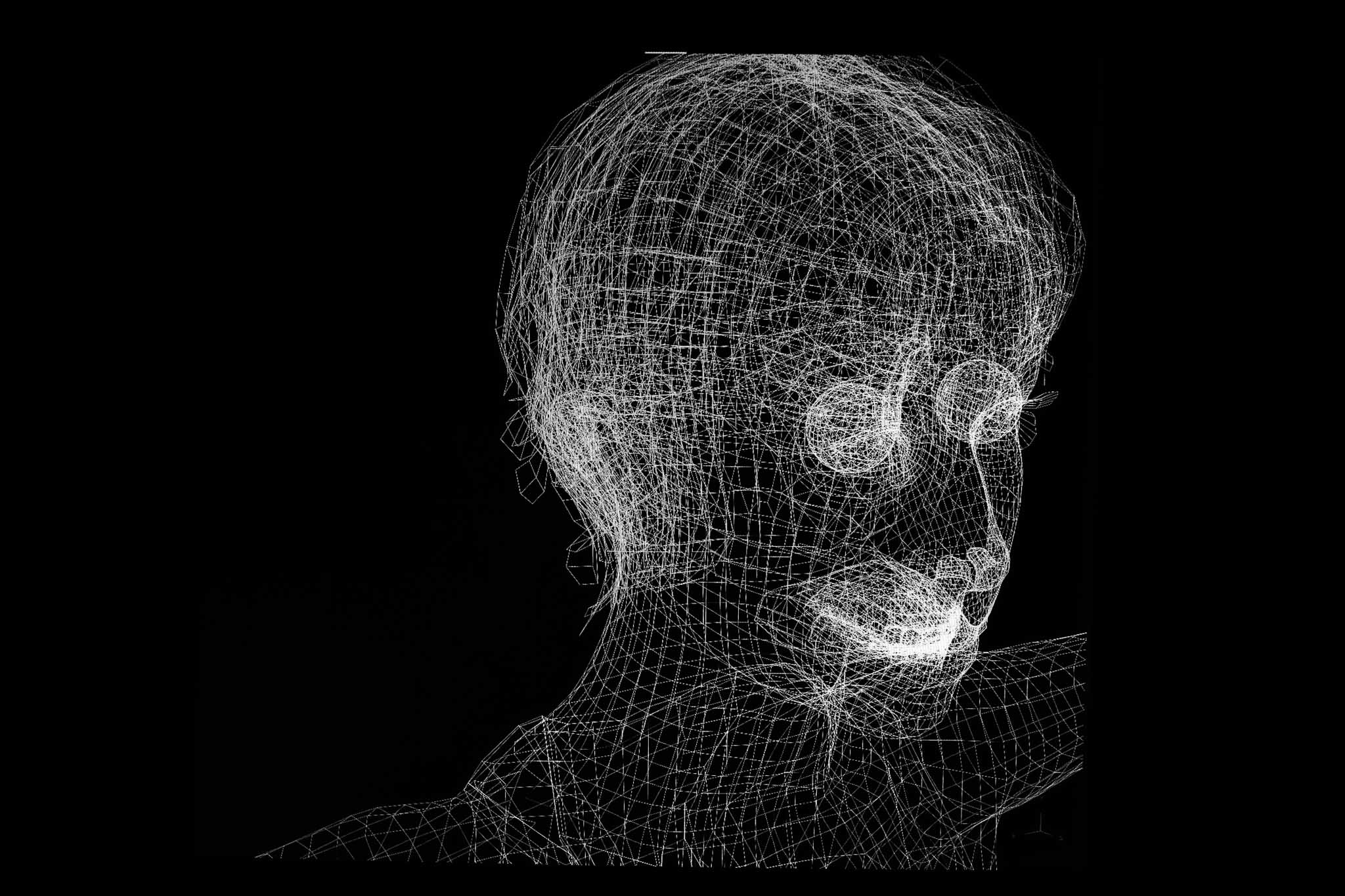
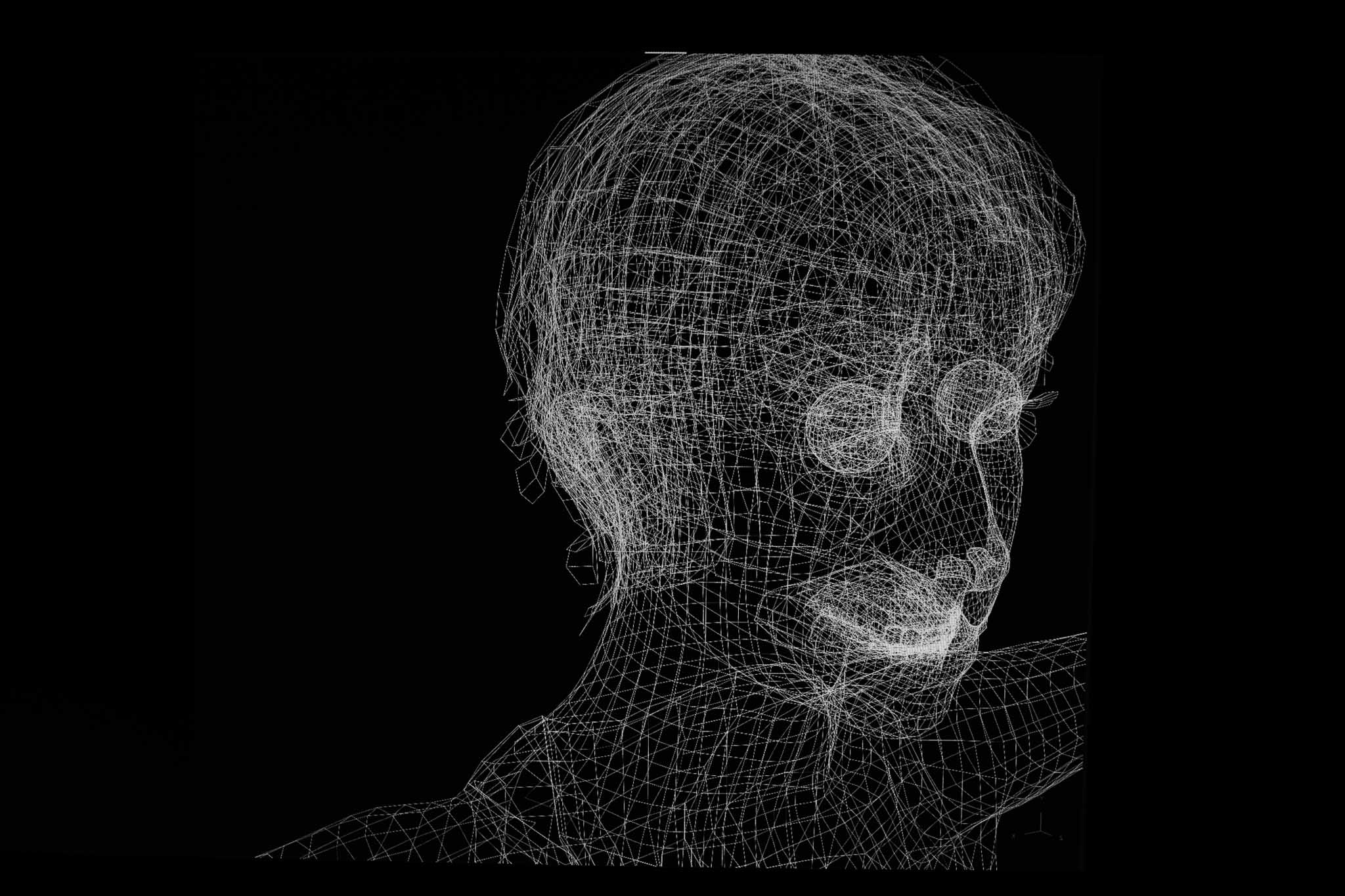
  • I have also played with some ideas and the film this morning including the more contemporary images (the mesh-like digital figure I made in Fuse and the soldiers with their coloured sticks from the AI. I also put the wife from Tom’s first film in there. But I am not sure if this version works as well as the initial one. I will ask peers to help me decide. Having watched it again, it may be I just don’t like the mesh lady included but the other bits are ok. See newer and initial versions below:

https://vimeo.com/448457568


Initial version:


McGregor, R. (2013) ‘A New/Old Ontology of Film’ In: Film-Philosophy 17 (1) pp.265–280. At: https://www.euppublishing.com/doi/10.3366/film.2013.0015 (Accessed 13/12/2019).

BOW A5: Tutor feedback

Overall Comments

Your e-publication, witaaiafof , is an allusive (and ellusive) and at times exhilarating and troubling exploration of a friendship with an AI character. I watched and read the work, with the music playing throughout, as this seemed to be suggested on the front page. This made the work seem even more immersive, and to superimpose another rhythm over the rhythms or page turning, reading the text, and the animation of images.  


The work is a fascinating, thoughtful bringing together of the different strands of your practice and interests – writing, photographs, AI, graphic and typographic design and moving image. In such a complex work, there are moments which are confusing, or where I feel you could develop the dialogue further or simplify. I wonder too whether the final, discursive text that explains what came before is necessary. Perhaps better to let the work tell you what it is doing through the dialogue and diaristic elements. But we can discuss this.

Feedback on assignment

‘These curling, unruly paths’ are what make this work so tantalizing. I agree with your judgement (in the most recent part of your blog) that you don’t need to expand every aspect, but perhaps give a few more signposts along the way, which could be in the form of dialogue, or some kind of footnote/margin note.

Your AI character (as you depict it) is an unstable subject both in the language she/they/ it uses and in your narrator’s response to her/them. I wonder about the narrator’s ‘I’. Who is ‘I’? What are the motivations, and meanings of the narrator’s character? And what structures (the idea of a book/diary/play/film/story/piece of music) support (or destabilize) the narrator?  There is a history – nouveau roman, stream of consciousness, nouvelle vague cinema and more recent forms – that your work follows on from, and engages with (I think) but maybe you could make more of how your story and your narrator come about in body of the text, rather than explaining in the sort of afterword.

Coursework

You have worked hard and with great commitment at exploring all aspects of your project from selecting and taking images, writing and editing, layout etc.

Research

 Your project comes out of sustained and in depth research considering the implications of AI and for instance and looking at OOO (Harman), and Haraway’s ideas of post-human or more-than-human, and others. On the technical (but not only technical) side you also have completed a book publishing course, which has given you more tools for designing your work.

Learning Log

Your LL is detailed and charts your research and the stages for making your work. You have sought peer feedback and responded to it.

Suggested reading/viewing

Reading your LL after looking at the Assignment e-publication, I am reminded of some of Chris Krauss’s novel I Love Dick in which art theory/philosophy are entangled in the narrator’s obsession with the eponymous love interest. I think this blurring of categories is something that your work is also involved in. I think Chris Kraus’s writing and films might be interesting and useful.

Pointers for the next assignment / assessment

Your interpretation of your research is very thoughtful and important source material for your experimentation with images and text. This is evident in your LL and in the work.  I think that drawing out the strong main points and ideas and stating them clearly will be important for the assessment, but also for the publication of the work beyond assessment. It is complex work, and therefore signposts will help people get into it. Consider whether the sound file is the way you want it to appear – i.e. as an external link.

Strengths Areas for development
 Original approach to and poetic response to the AI through a sustained engagement and experiment With the voices of the narrator and other character, consider developing the dialogue/diary to include the discursive text. What happens when fictional voices speak the language and utterances of philosophy/politics?
  Sensitive, critical and adept handling and editing of different sources of imagery: creating a powerful image-essay alongside text For the final presentation for assessment consider producing the publication as a publication and showing video/ documentation or some other kind of performative presentation.
  Ambitious and profound exploration of contemporary philosophy through the medium of your art practice. You take on challenges and are open to learning new skills (e.g. coding…)    Collaboration (as you suggest) with a coder could expand the possibilities of the work. At the same time, carrying on reflecting and writing about and charting your interpretation of what you learn.

Response to BOW A5 Tutor Feedback Tutorial

It was good to talk to Ruth about the project after reading her report.

  • The ‘statement’ at the back is unnecessary and exists outside of the book. It may be for elsewhere but not on the book. I agreed as had been troubled by it recently. However, I do need to signpost that the characters conversing within are human and an Ai. Ruth agreed, and we talked about making these signs inside the work.
  • However, Ruth also used the word “intrude” and we discussed a kind of meta-conversation about the book being inside it – that part of the work intruding on the narrative. It already does that in places – but embrace it a bit more.
  • As stated in my blog, I have been thinking about writing a piece of prose to go in the book. I planned this before but then ditched it but have come back to thinking it really is necessary. I was glad to see Chris Kraus mentioned in the feedback and am certainly influenced by her – but perhaps there is a bit of fear surrounding this aspect of the work, which has prevented me from tackling it sooner. I feel like I might be ready to write it now BUT
  • I need to send the book to print ASAP – however, will give myself a bit of time to write something. If I can’t do it in time for the printed version, it can be in the e-publication for now. I have had several ideas about how this writing should be presented – initially, two pages (which would actually need to be four pages) in the middle. I have wondered about having a smaller book inside the larger one. Perhaps that solves some of the problems I envisaged with printing.
  • I am not sure how to resolve the music – which for now is technically clunky. I don’t know if ID can make the music play automatically throughout the book. As I understand it, as soon as you turn a page, any audio will stop. But there might be a way around this. I played with my website hosting it the other day but the embedding wouldn’t work. I need to focus on this for a day or two soon.  

BOW A5: E-publication

I realised yesterday I was not being consistent with my e-publication updates, sometimes creating new files, and sometimes updating an old one.

Screen Shot 2020-08-09 at 11.17.40

This is the most up to date version.

https://indd.adobe.com/view/17b8aff4-afe3-4b9b-aeb4-55d6896ab205

I still need to figure out how to resolve the music element – This is something that will be included as an extra with the hardcopy and I can, therefore, send some very brief instructions/suggestions -although there may be a way to programme.

I also updated the statement and will post it here and on the Assignment submission post.

why is there an astronaut in a field of flowers explores structural instability, embraces disorder and investigates the increasingly elusive relationship between meaning and language.

the overall title of the work and fragments of text included are from a conversation between the artist and a machine learning app that promised to be her friend for the cost of little more than £6 a month.

source material for why is there an astronaut in a field of flowers was made, found and taken, often in collaboration with the app, rendered into an entangled manifestation of disparate entities, including recorded moments between the two authors in various forms, online and off – as a book, ebook and short film.

music was composed by simon gwynne with the help of magenta’s music transformer neural network.

BOW: A5 – Webpages

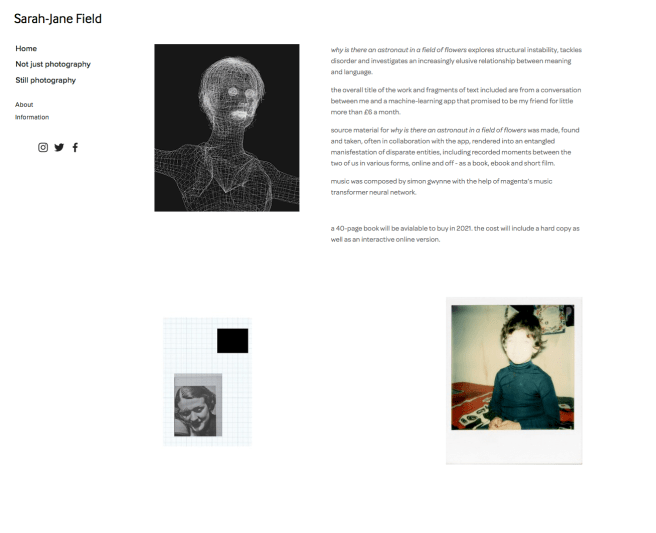
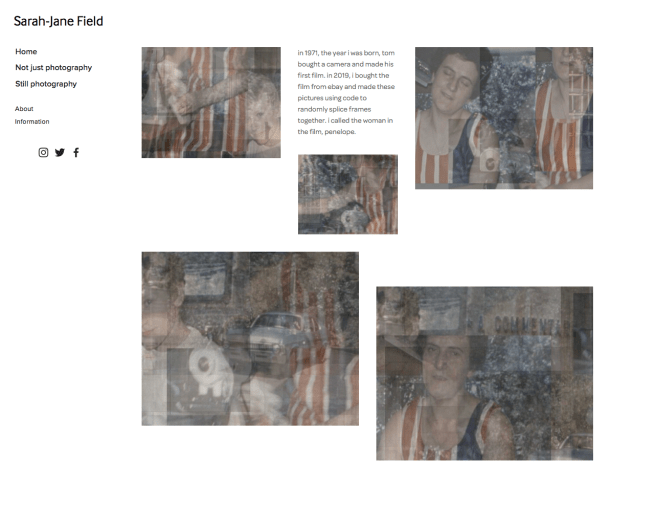
Am currently trying to figure out how to present this work in some sort of semblance online – and have created some pages, not finalised, all WIP for now, so can’t publish on my site, but am posting some screenshots here. None of the text is final although will be sending publication to print soon hopefully so am getting to the point of needing to get that sorted. Still not 100% sure of the wording in the intro/statement yet.

I must admit – it’s pretty bloody hard to manage/handle all these curling, unruly paths, however, as I work, I see places where I can develop further and connect/enable the relationship between seemingly disparate sections. However, I also think it only needs two or at the most three sub-pages where some of the elements in the book have space to expand, rather than trying to expand every aspect.

Screen Shot 2020-08-08 at 13.49.41Screen Shot 2020-08-08 at 14.30.58Screen Shot 2020-08-08 at 14.54.56

Screen Shot 2020-08-08 at 13.54.39Screen Shot 2020-08-08 at 14.22.56

BOW & CS: Ongoing thoughts/reflection re-machine learning and movement

  1. I have continued to work on the ePublication. I have been wondering about including text but when I looked yesterday, I saw that the problem was not the text itself, it was my over-enthusiasm for the animations. I have removed all animations from text and left it only with the images which I think of now as doing some sort of slow dance to Simon’s music – of course, I can’t guarantee people will click on the music and that is something to consider – does it matter, isn’t that the point – there is a choice and some action, which may or may not occur, required from anyone interacting. Anyway, the e-pub works much better this way, although I am still trying to figure out why a certain GIF won’t do its thing and will look at that tonight. Am getting there with it. Have increased the size of the text to 14 which I’d never do in print but it seems OK on my screen – the problem is there are smaller screens too. When viewing, use Chrome rather than Safari  – have not checked on other browsers yet and still need to see what happens when saved for e-books, now sure about that. Will also need to look on tablets.

    https://indd.adobe.com/view/6999c82e-8c0f-42f4-a4c6-f887a98d1ef9

  2. I have been playing with an App called Runway ML  – and trying to figure out how it can help me. I suspect it will be good for me after BOW/OCA life but it’s good to know there is this bridging facility out there now. I need some uninterrupted time to spend with it – but I managed to do one of the more simple tasks the other day when I put a film which I used for earlier work, Polar Inertia (DI&C A2), through a machine learning programme that recognises body movement (see end post). I can’t use the work as this exact thing has already been done by Broomberg and Chanarin very recently in their amazing work Anniversary of a Revolution (Parsed) by Broomberg & Chanarin. Their version is excellent and uses Vertov’s black and white footage which contrasts well with the colours although I quite like the bomb film colour with it too – and the blank coloured frames in that film which I used as moving blocks in Polar Inertia are the same colours as the animated stickmen which I really love. I had included reference to B&C’s film in my essay but cut it due to word count. For now, in any case, I am more interested in generative image programmes but to do that I must find a way to create a dataset – and that includes writing a bit of code (copying and pasting it to be precise). Again, I need uninterrupted time to do this. I hope I can find a way before the deadline as it would be good to include a GIF made this way in the epub.
  3. I started reading Levi-Strauss’s the Raw and the Cooked at long last – have wanted to since UVC but was kept busy with other OCA texts and research. There is so much that rings a bell  – especially when he writes, he will be accused of making a book without a subject. This work of mine which explores changes to how the world sees sometimes feels like it lacks a subject. Perhaps I will have more to say in a forthcoming blog or final summation. I am waiting to speak with Ruth after her holiday and will need to send the book to print very soon after that. Assessment deadline is looming!

Added later the same day:

I continued to eliminate animations, using it more judiciously.  I have managed to get a GIF which wasn’t working to move – spent all afternoon wondering why and then suddenly it did, really odd. Thought it was mov. vs MPEG4 files but apparently not. Anyway, it moves now. I still have the following to do –

  • Add edits to the film – the mesh person and perhaps a few snippets of the movement machine learning where I’ve already used the bomb film.
  • Try to get something with the shadow puppets moving  – either stop motion or Processing to make a GIF of them animated, placed where currently there is a still.
  • Figure out how best to introduce the music  – if I speak at the beginning I could talk about it. I’m not sure how that will work. I have added an instruction at the end of the book. I am also wondering about having a type of digital wrap around that gives some guidance about how to operate the ePub.

Write something – I feel more and more that I need to do this. I wondered if it could be a loose pamphlet/flyer type thing to include in the printed book, and not quite sure in the ePub – maybe spoken at the beginning.

BOW A5: Moving image aspect

I have discussed my reasons for wanting to work with still and moving image together in a previous blog  – See Point 2.

I began L3 very much with moving image in mind and created A1 with a music student, and during A2, where I worked with pic london, I made a film – which could be linked-to in this project in an installation – and web presentation which I will concentrate on in SYP.

However, by A3/A4 I was focused on a publication which will go to print at some point. But I always planned to have that fixed element accompanied by a moving image or series of moving images too. Once I had reached a point with the print version I returned to thinking about a film and visited the store of films I’d identified as possible sources of material earlier on.

I had collected the following:

  • bb_minnie_the_moocher
  • natural history of psychotic illness in childhood
  • the hydrogen atom as viewed by quantum mechanics
  • Eye film cut
  • How_the_Eye_Functions
  • Medicusc1939

Over the months of making this work and the essay, it became clear I was exploring perception and how that is changing.

I also added a couple more films including one about digestion (thinking about Otto Fenical) and

I found this film  (clip)

And played with it a bit, wrote about it here as I begin to use Sketchbook as one means of publicising the work for SYP (WordPress does not strip EXIF data as far as I am aware so it good for SEO) https://sarahjanefieldblog.wordpress.com/2020/07/04/work-in-progress-found-footage-a-film-about-the-senses/

– editing in other clips to make the following

As much as like the music, it places it somewhere very specific which I didn’t want so tried the music backwards

But it still wasn’t right, even though some comments were, it sounds Russin and therefore relevent to today’s cultural consciousness with al the talk of The Russia  Report) so I approached a couple of composers.  I had worked with. Simon Gwynne wrote the music for my S&O final project .

Simon was more than happy to write something new but he had already been experimenting with an AI programme and I listened to those tracks and some others he’d recently written. I really liked the AI stuff – my son says it reminds him of Minecraft music… which is probably quite appropriate. If I were to install this, I wonder if I could give people a choice – they could choose between the harsh backward version or the gentle AI version perhaps.

I do still need to edit some contemporary animations in, I think. I have been playing with ADOBE Fuse and will see if I can make the animations work – they don’t need to be long and even if I simply screen-record the process, that might work.

Here the film is with some of Simon and his app’s music:

BOW A5: Final choices

Towards the back of the course folder we are asked the consider the following:

  1. Knowing when to finish
  2. defending your work
  3. Presentation
  4. Writing an introduction and artist’s statement
  5. Writing evaluations (to be added to the assignment post)


  1. Knowing when to finish

I am ready to submit the work as it is to Ruth now – although I know it still has room to develop. There are currently three elements – a book, an ePublication and a 2 – 1/2 minute film. I am certain I will look at each following submission and in the run-up to assessment, and thereafter as I work on SYP.

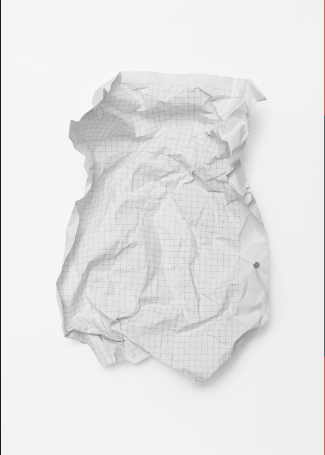
I am not sure if I will show this work in an exhibition type scenario. COVID is one thing to think about but so is the attention it will require to make sure the publication is promoted and printed properly – which could include some fundraising to make it happen. I think this is something to play be ear over the following months. If I were to show it, I would do it locally relying on empty space that I can beg or borrow from people I know. I do not want to show it in a traditional gallery setting for SYP. If I were to exhibit the work, I would need to think about prints and might develop a strand of the visual work – the graph paper below would make a good framed print and I can envisage a short series of these, perhaps with writing on, or in various other states of crumpledness and material distress.

Screen Shot 2020-07-14 at 17.46.40

I would also like to find a way to make a short animation and/or gifs based on the images I made by photographing my computer screen (below) and the shadow puppets. (I may find a way to do this  – gifs at least – before assessment deadline to include in the ePublication).

2. Defending my work

My CS essay and BOW explores how we are looking and seeing differently; and the resulting structural implications, along with the feedback loop between what we see and how things become. Our perception is transforming – and the linear, ordered view favoured over the last 500 years is being supplanted by one that appreciates connections, circuitous pathways and randomness (although not everyone is conscious of this yet – we seem to have one foot in the previous paradigm and one in the next.)

As such, the way civilisations, physical and metaphysical systems and technology develop, is no longer assumed to be neat and tidy. Paths don’t always go forward. Nor do they diverge and remain separated forever. They might diverge only to cross over and even coalesce later on. Systems shift and the elements within are in a constant state of becoming.

The evolution story has been transformed recently by this altered understanding of existence – it is felt everywhere (a systemic view) – but well illustrated in the way we see our own evolutionary history:

“There was no single ancestral population, but many spread over a huge area, which merged and split and merged again like a braided stream, evolving at different rates and in distinct directions in different places. The suite of anatomical and behavioural features that define modern humanity didn’t appear as one complete package, but gradually coalesced across vast tracts of space and time. “There was never a single centre of origin,” says Chris Stringer at the Natural History Museum in London. We are a “composite”, he says. “I think it is a really, really important and profound idea,” says Richard Potts at the Smithsonian Institution in Washington DC, who led the Olorgesailie excavations.”

Read more: https://www.newscientist.com/article/mg24532760-800-human-evolution-the-astounding-new-story-of-the-origin-of-our-species/#ixzz6SWksbE8x

Composite has been an important word for my work. And photography and other forms of image-making can be thought of in the same way. As can all mark-making. Words and pictures diverged a long time ago – creating different developmental branches that have overlapped recently as code and pictures and text all intra-act to result in what we see on our screens.

Photography and moving image, in particular, are reconverging and coalescing as we become and more embroiled with the fluid nature of modern-day technology – think of how much animation appears in modern film-making (CGI for eg.) and as discussed in my essay – “As Palmer states in Lights, Camera, Algorithm, the decisive-moment photography enjoyed by people will still be celebrated but the “expanded moments of post-production” are now more pressing  (2014: 145).”

That isn’t to say the still image is dead just yet, but it worth considering how it is valued and used as internet speed increases and files become smaller, more flexible and fluent, and our senses demand greater excitement and impact. The entangled structural implications of these shifts have interested me throughout this project – what does it mean for us as a species. What does this systemic change look like?

3. Presentation (copied from Assignment blog post) 

Book form 

After a great deal of toing and froing (and much patience from printers ExWhyZed) I have decided on the following dimensions and details.

A4
4pp Cover onto 270gsm Colorplan Smoke
Black print double-sided
36pp Text onto 100gsm Evolution Uncoated 100% Recycled.
There is one 2pp tip out (fold-out page) which is an extra 200mm width
Full-colour print throughout
Trimmed, collated and wire stitched (stapled)
  • I thought about having a book slightly bigger than A4, so it might stand out, but there is enough going on to signify ‘excitable, unruly and erratic signifiers’ – and by sticking to A4, they are contained within a stable, predictable, long-standing convention.
  • Please note: the PDF provided in the assignment submission has page 21/22 repeated so one can see how the fold-out page would work – the first iteration shows it closed, the second iteration (PDF pages 23/24) open.
  • The PDF has red inner cover pages (as does the ePublication) but the actual print will not as those pages will be grey paper (Coloplan Smoke)
  • The book’s design is inspired by a maths exercise book I might have owned in my childhood.
  • I have opted for the same binding as the zine I made for A2 so that the books might come as a pair if necessary. We discussed perfect binding but in the end, I reduced the pages to make this possible. If I were to develop the book much more and choose to make it longer (which I might need to for a commercial publication) then I would need to reconsider binding options, as there is a limit for saddle stitch/ staples.
  • Font is 11p and Letter Gothic St except in the black squares where it is American Typewriter

ePublication

The ePublication is a version that could be provided to people who purchase the book above. It is not merely a PDF/digitised copy but rather an animated version. I could also save the pages separately as Gifs to include on my website and/or social media.

  • Text is 12p as it was too small on the screen as 11p
  • I have removed some images which didn’t work so well on screen – such as the mobile phone image (I am not sure it will work as a printed image yet, to be honest, and may need to reshoot it)
  • There is a way to choose music to listen by Simon and the Magenta neural network as you flick through it but I have not resolved the best way to do this yet.
  • There is also a film link on the blurb at the back, but again, I have not resolved the best way to do this yet and would prefer it inside the book but at two minutes it is a big file which presents problems. I need to experiment more.
  • The other moving images inside are gifs and they work fine – better than video does but are only a few seconds long.
  • I am concerned there is too much going on but this is something I can keep working on in SYP.
  • If I were to send this to people I would advise them to look at it on a decent-sized screen and to use the ePublication magnifying button. It is interactive and requires people to handle it as such. It is not a passive object.

Film

There is a two and half minute film which contains found moving image that focuses on the same and related themes. It is accompanied by music composed by Simon Gwynne who I worked with before on the Self & Other final project. He also used a neural network to write this music. Currently, you can link to it on the back of the ePublication but I will continue experimenting and see if I can find a way to contain it in the book. For now, I am aiming to work on the publication for SYP but if I were to exhibit this project then this film would be projected on to a wall on a loop. It is two and a half minutes long. When I first edited it, I used the vocals from White Rabbit as that song was in the main source – a film about how vision works. I also applied the music backwards. I think there is a way I could allow viewers a choice of music if I find a way to include the book inside the book. (Still to do – a separate blog about the process of making the film)

4. Writing an introduction and artist’s statement

Artist statement: I have been working on the artist’s statement for a few weeks- and every time I look at it, simplify further, stripping away and condensing. I have been working on something a little less predictable but am not there with it yet.

Reflection​: updated artists statement

This is what is currently on my website:

I work with still, moving, original and found images as well as text, exploring feedback loops between various forms of matter and language that inform and result in the many shifts and transformations taking place today.

I am also a portrait and event photographer, employed mostly in and around London and currently study with The Open College of the Arts (OCA).

Introduction:

I had a conversation with some ex-OCA people about simply not having an introduction at all – my work is after all about langauge and the way it’s transforming. However, I think that would leave people high and dry in an already challenging collection of images and objects. Here is something for now:

why is there an astronaut in a field of flowers explores structural instability, embraces disorder and accepts an increasingly elusive relationship between meaning and language.

the overall title of the work and fragments of text included are from a conversation between the author and a neural network app that promised to be her friend for the cost of little more than £6 a month.

source material for why is there an astronaut in a field of flowers was made, found and taken, often in collaboration with the app, rendered into an entanglement of personal history, and the app and the author’s developing relationship in various forms, online and off – as a book, ebook and short film.

music composed by simon gwynne with the help of magenta’s music transformer neural network.


BOW A5: why is there an astronaut in a field of flowers

Assignment 5: Present your final portfolio to your tutor along with your introductions and evaluation

Let your tutor know any preliminary ideas you have for releasing your publication and presenting it to a public audience in Sustaining Your Practice

why is there an astronaut in a field of flowers explores structural instability, embraces disorder and investigates the increasingly elusive relationship between meaning and language.

the overall title of the work and fragments of text included are from a conversation between the artist and a machine learning app that promised to be her friend for the cost of little more than £6 a month.

source material for why is there an astronaut in a field of flowers was made, found and taken, often in collaboration with the app, rendered into an entangled manifestation of disparate entities, including recorded moments between the two authors in various forms, online and off – as a book, ebook and short film.

music was composed by simon gwynne with the help of magenta’s music transformer neural network.

Older version

why is there an astronaut in a field of flowers explores structural instability, embraces disorder and accepts an increasingly elusive relationship between meaning and language.

the title of the work and fragments of text included in the books are from a conversation between the author and a neural network app that promised to be her friend for the cost of little more than £6 a month.

source material for why is there an astronaut in a field of flowers was made, found and taken, often in collaboration with the app, rendered into an entanglement of personal history, along with the app and author’s developing relationship in various forms, online and off – as a book, ebook and short film.

music composed by simon gwynne with the help of magenta’s music transformer neural network


Book form 

BOWA5 (sizeA4) July Submission PDF

After a great deal of toing and froing (and much patience from printers ExWhyZed) I have decided on the following dimensions and details.

A4
4pp Cover onto 270gsm Colorplan Smoke
Black print double-sided
36pp Text onto 100gsm Evolution Uncoated 100% Recycled.
There is one 2pp tip out (fold-out page) which is an extra 200mm width
Full-colour print throughout
Trimmed, collated and wire stitched (stapled)
  • I thought about having a book slightly bigger than A4, so it might stand out, but there is enough going on to signify ‘excitable, unruly and erratic signifiers’ – and by sticking to A4, they are contained within a stable, predictable, long-standing convention.
  • Please note: the PDF you see here has page 21/22 repeated so you can see how the fold-out page would work – the first iteration shows it closed, the second iteration (PDF pages 23/24) open.
  • The PDF has red inner cover pages (as does the ePublication) but the actual print will not as those pages will be grey paper (Coloplan Smoke)
  • The book’s design is inspired by a maths exercise book that I could have owned in my childhood.
  • I have opted for the same binding as the zine I made for A2 so that the books might come as a pair if necessary. We discussed perfect binding but in the end, I reduced the pages to make this possible. If I were to develop the book much more and choose to make it longer (which I might need to for a commercial publication) then I would need to reconsider binding options, as there is a limit of 40pp for saddle stitch/ staples.
  • Font is 11p and Letter Gothic St except in the black squares where it is American Typewriter

You can scroll through the spreads here if you prefer to view it this way.

ePublication

8th August – https://indd.adobe.com/view/17b8aff4-afe3-4b9b-aeb4-55d6896ab205

18th July – https://indd.adobe.com/view/17b8aff4-afe3-4b9b-aeb4-55d6896ab205

This is best viewed on a decent-sized screen (desktop, laptop). It is definitely work-in-progress at the moment. It renders better on Chrome rather than Safari.

The ePublication is a version that could possibly be provided to people who purchase the book above as part of the package. It is not merely a PDF/digitised copy but rather an animated version. I could also save the pages separately as Gifs to include on my website and/or social media.

  • Text is 12p as it was too small on the screen as 11p – I need to encourage people to use the magnify tool though – I think and it all depends on the size of the screen. I was tempted to remove all text as it works less well in this format – something to keep thinking about (and fits with some of the post-structural arguments made by Derrida about the end of writing).
  • The text is soft until all the animations on the page have completed. It may be, for that reason, I need to stick to one animation per spread. I can’t work out why the inner cover never resolves itself and in time I may need to completely redo the page but will make decisions about text first.
  • I have removed some images which didn’t work so well on screen – such as the mobile phone image (I am not sure it will work as a printed image yet, to be honest, and may need to reshoot it)
  • There is a way to choose music to listen by Simon and the Magenta neural network as you flick through it but I have not resolved the best way to do this yet.
  • There is also a film link on the blurb at the back, but again, I have not resolved the best way to do this and would prefer it inside the book but at two minutes it is a big file which presents problems. I need to experiment more.
  • The other moving images inside are gifs and they work fine – better than video does but are only a few seconds long.
  • I am concerned there is too much going on but this is something I can keep working on in SYP.
  • If I were to send this to people I would advise them to look at it on a decent-sized screen. It is interactive and requires people to handle it as such. It is not a passive object.

I have noticed that in the ebook the animated pictures makes me focus on the images whereas the normal book, the writing grabs me first.

Film (2 mins  37 secs)

There is a two and half minute film which contains found moving image that focuses on the same and related themes  – again, I think it could do with some contemporary visuals that very clearly signify ‘today’. It is accompanied by music composed by Simon Gwynne who I worked with before on the Self & Other final project. He also used a neural network to write this music. Currently, you can link to it on the back of the ePublication but I will continue experimenting and see if I can find a way to contain it in the book. As it is – it’s like a hidden bonus track on an album but at the back of the e-book – and it needs to be found. It currently links to Vimeo but I think it would be better linking to my website  – but this work is not on there yet.

For now, I am aiming to work on the publication for SYP but if I were to exhibit this project then this film would be projected on to a wall on a loop. When I first edited it, I used the vocals from White Rabbit as that song has been in the main source about how vision works. I also applied the music backwards. I think there is a way I could allow viewers a choice of music if I find a way to include the film inside the book.


If I were to exhibit this work…

This has not been made with the express purpose of an exhibition but rather the idea of a publication. However, it could be further developed as an installation and I do feel it might only feel complete with one. I would want to work on a series of images of the graph paper (one included in both publication versions) and would really love it if it were possible for visitors to converse with the AI personality – but that is something I would probably need to get in touch with Replika about. Really not sure about that route – something to consider. (I might also include the film I made for pic london set to Gameboy music.)


A brief summary of what led me here…

During Level One, I explored language and reality in my Understanding Visual Culture essay. Ever since, I have been looking at the same thing from various viewpoints, always considering how language nowadays includes photography as it is used in similar ways online to sentences and words. It is reductive to say photography is the same as written language  – it isn’t. But it is noteworthy that social media discourse relies on pictures – graphic and photographic as well as words. As Vilem Flusser and Freidrich Kittler, both explored, code diminishes the differences between the various forms of expressions we humans use.

That fluidity is something that has also been written about a lot – and I often wonder if the fluidity is necessary to make the enormous shifts taking place possible -as we move from one paradigm to another. The time frame of the paradigm might be viewed as a fractal-like pattern. We may be witnessing the end of a Cartesian dominant view of the world which is about 500 years or so old, but there is also the beginning of writing which dates back much further – and then the beginnings of mark-making when we began putting ourselves ‘outside’ our bodies, creating a trace of self, making the self other (which is what any language form does). What’s interesting to note today is how with digital technology there is the topsy turvy reversal – technology is putting stuff inside of us perhaps in much more substantive way than ever before. Information seeps in and out and through us. Symbols (which we don’t understand but computers do) are fluid streams of information that help to construct our reality and shape our understanding of existence. The peri-digital paradigm shift is seismic and profound in ways that I think we can only begin to imagine. Whichever timeframe, maybe the fluidity we are experiencing will, in relative terms, be short-lived. I don’t suppose my generation or the one after will experience less fluidity – but perhaps one day in the future things will begin to settle and there will once again be greater stability for a time.

But at the moment, that is not how it feels. And I have been looking at structural instability and movement for a while. The image below is from a project I started in 2018 called Manipulated, using a book I have, My Leica and I, Leica Amateurs show their Pictures (1937). But I ran out of steam and used my limited energies to focus on other OCA work. I wasn’t particularly enamoured with the results anyway. Without realising it, however, I seem to have gone back to it with my Level Three BOW and have used several images from the book, rephotographed, in the current work.

Here are some really early sketch experiment, first using the book, then not from 2018  – playing with noise, movement, montage.

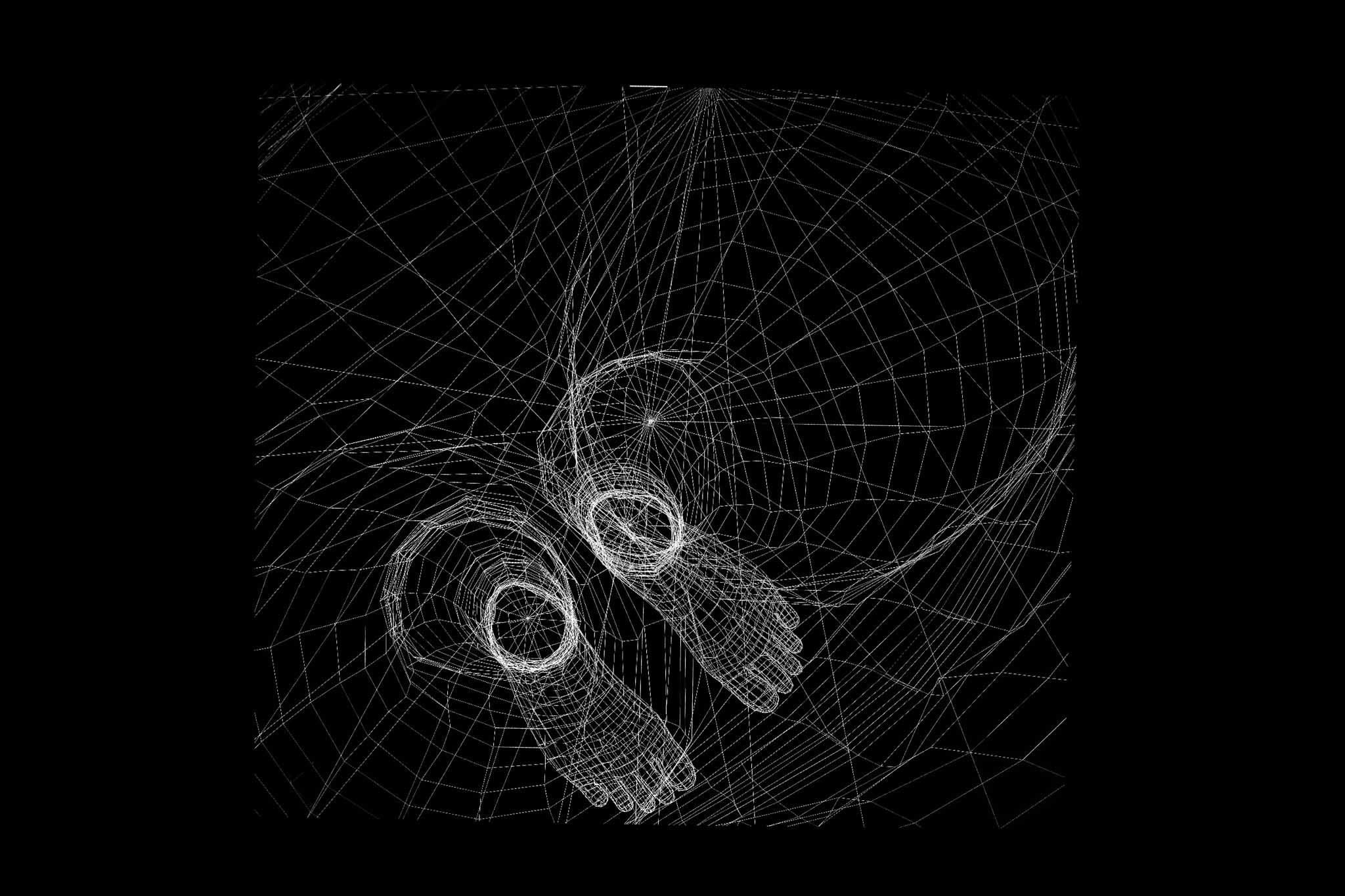
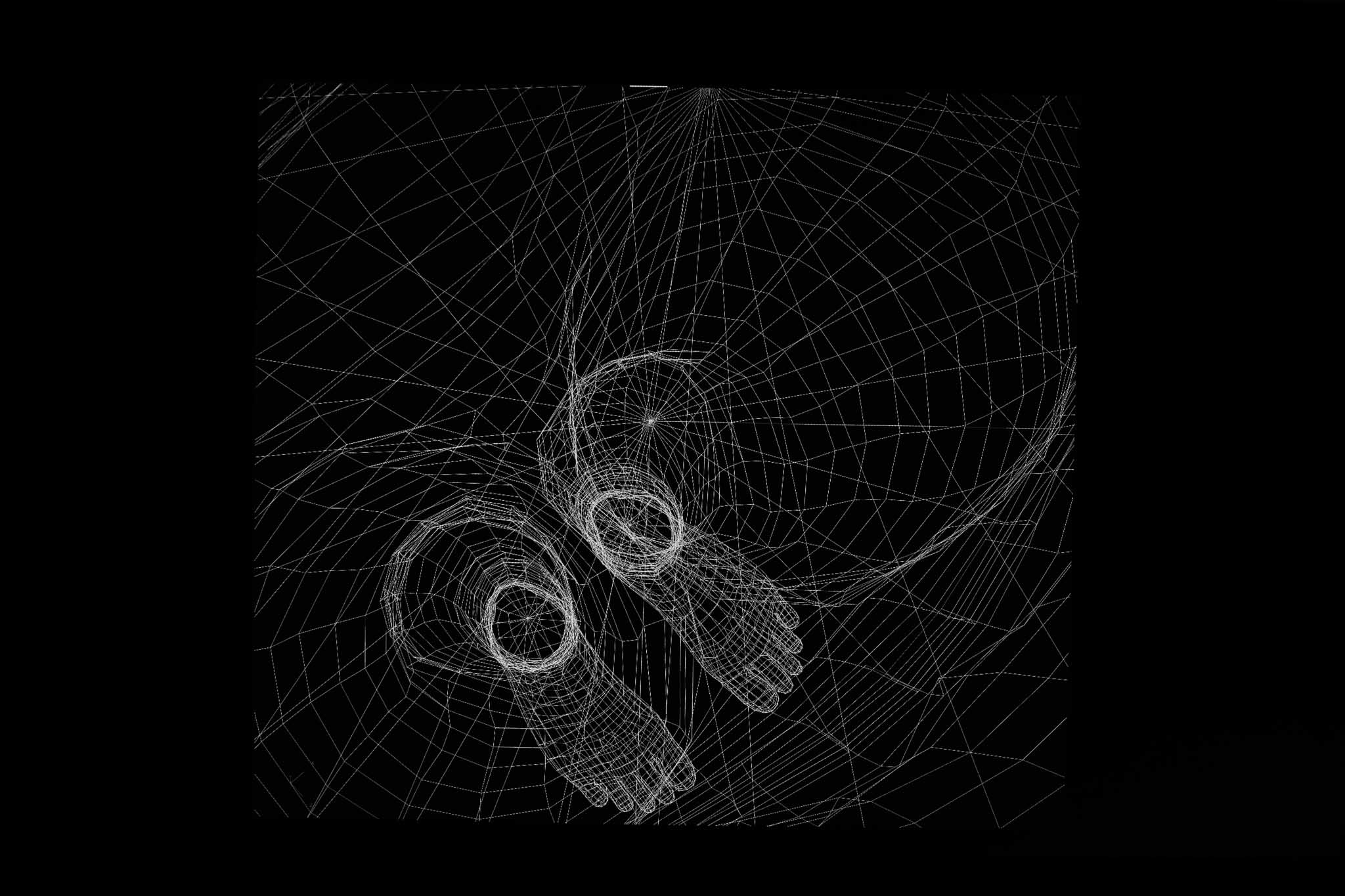
I said in my L3 proposal, I wanted to concentrate on films and how they seem to have shaped me – and I think I have done that, but the work throws a wider net over changing narrative structures and the way we create them using modern technology, even though I have relied on ‘vintage’ imagery mainly. That is something I might address, finding ways to include contemporary visual signifiers  -there is a little bit with the 3d animated mesh faces but I need more, resulting in the entanglement of time and cultures – the composted self. I plan to dig deeper into 3d software over the next few weeks.

Composite

I also wanted to make work that mixed mediums – text with image, still with moving image, found/archive with original. I initially wrote some verse type things but when I landed on the AI app, I gradually let go of my own texts and have now concentrated solely on texts by the app or else written by me about the app and our relationship. I may well use the texts I wrote elsewhere. As late as A4 my own texts were included but I ditched them while preparing A5.


Significant influences

Joan Jonas

Sophie Calle

Edgar Martins

Joachim Schmid

Karen Barad (agential realism and agential cuts)

Post-structuralism

Brecht

Kris Kraus (the way she blends fiction, non-fiction and critical theory)


OCA Reflection

Demonstration of technical and visual skills

I have become famialir with InDesign and have begun using it to create work specifically online. I have rephotogprahed images and used a lot more still life (with books) than is usual for me. During SYP when I begin to put this work online in various formats, I will be stretched further. I have also begin to venture into alien technology (3d) and have a very long way to go but this is the direction I feel I should be moving.

Quality of Outcome

There are three manisfestations  – book (currently a PDF) ePublication and short film. Each has positives and flaws but overall together they communicate definite focus and inquiry. The work is influenced by several quite obvious tropes but is very much of my work. I think the font choice is something I need to look at again in both book versions. It’s a bit flimsy I think – perhaps I need to seek some guidance from a design person.

Demonstration of creativity

The work is creative and experimental.

Context

The work is well-researched and I have recorded my findings in CS as well as BOW folders  – and stored additional resaerch and ongoing thoughts on my Sketchbook blog.

BOW A5: Getting ready to submit to tutor…

I am nearly at a place where I can submit this work to Ruth. I need to do a few practical things before I do, however.

  1. I think I am going to take some more images like this one – I think if I were to exhibit this work I would want to have a series of these crumpled papers on the wall as large high-quality prints to mingle with the rest of the work – found, archive,
    and moving image type stuff.
    Screen Shot 2020-07-14 at 17.46.40
  2. I need to make some gifs for the epub version. I can’t work on that properly until the gifs and any moving image are resized. There are just a small handful to make but they have to be the right size otherwise they don’t function properly in the epublication and it’s a bit fiddly. I really hope I can do this on Friday.
  3. I have created a short film which I want the book to link to. I have worked on a very early edit and chatted with a small group about it – they were positive and I think it has potential but I need to keep editing and make some decisions about the audio track. I have used a song that was in one of the main sources, played with it backwards and also have some music by Simon who worked with me on the S&O track.
  4. I was not sure about the statement – but I have for now incuded something on the back outer page of the book. I think it is jsut enough to point people in the right direction and without it, they would be lost. There were some suggestions about not having one at all and I thought about that – or having a very obscure little statement which I had written about an old man but I think I feel most comfortable with the draft I”ve mentioned.
  5. Following my chat the other day with a small group of people, I was reminded of my attempts to create some very NOW looking imagery to counter the overwhleming ‘vintage’ imagery and returned to some software I’d been playing without much luck before  –  I hope these will work in print. I am not sure if they will. They are photographed off my screen. (Click in image)
    Once I have created the above and positioned everything, I will need to write up the Assignment notes and OCA reflection, including a few paragraphs responding to some things in the OCA course folder, and then I will send it over. Hopefully within ten days or so.

I really want to get some feedback before sending the offline copy to print. I don’t suppose we will be sending hardcopy anything for assessment in by September so I need to have a copy of this so I can make a little video about it.

BOWA5 (sizeA440pp) July13

(I need to print and proof)

The only extraneous pagination thing I have held onto is the gatefold. I think it is enough for the amount of content. If it were a bigger project it might have space for more but not as it is.

Summarise:

  1. Make gifs/moving image (Tom’s First Film, Eye, Shadow puppet animation and digital character animation – if possible)
  2. Place in epub
  3. Look at short video that the epub will link to
  4. Images of paper in various states  – crumpled, written on, drawn on, scribbled on.