Towards the back of the course folder we are asked the consider the following:
- Knowing when to finish
- defending your work
- Presentation
- Writing an introduction and artist’s statement
- Writing evaluations (to be added to the assignment post)
- Knowing when to finish
I am ready to submit the work as it is to Ruth now – although I know it still has room to develop. There are currently three elements – a book, an ePublication and a 2 – 1/2 minute film. I am certain I will look at each following submission and in the run-up to assessment, and thereafter as I work on SYP.
I am not sure if I will show this work in an exhibition type scenario. COVID is one thing to think about but so is the attention it will require to make sure the publication is promoted and printed properly – which could include some fundraising to make it happen. I think this is something to play be ear over the following months. If I were to show it, I would do it locally relying on empty space that I can beg or borrow from people I know. I do not want to show it in a traditional gallery setting for SYP. If I were to exhibit the work, I would need to think about prints and might develop a strand of the visual work – the graph paper below would make a good framed print and I can envisage a short series of these, perhaps with writing on, or in various other states of crumpledness and material distress.

I would also like to find a way to make a short animation and/or gifs based on the images I made by photographing my computer screen (below) and the shadow puppets. (I may find a way to do this – gifs at least – before assessment deadline to include in the ePublication).

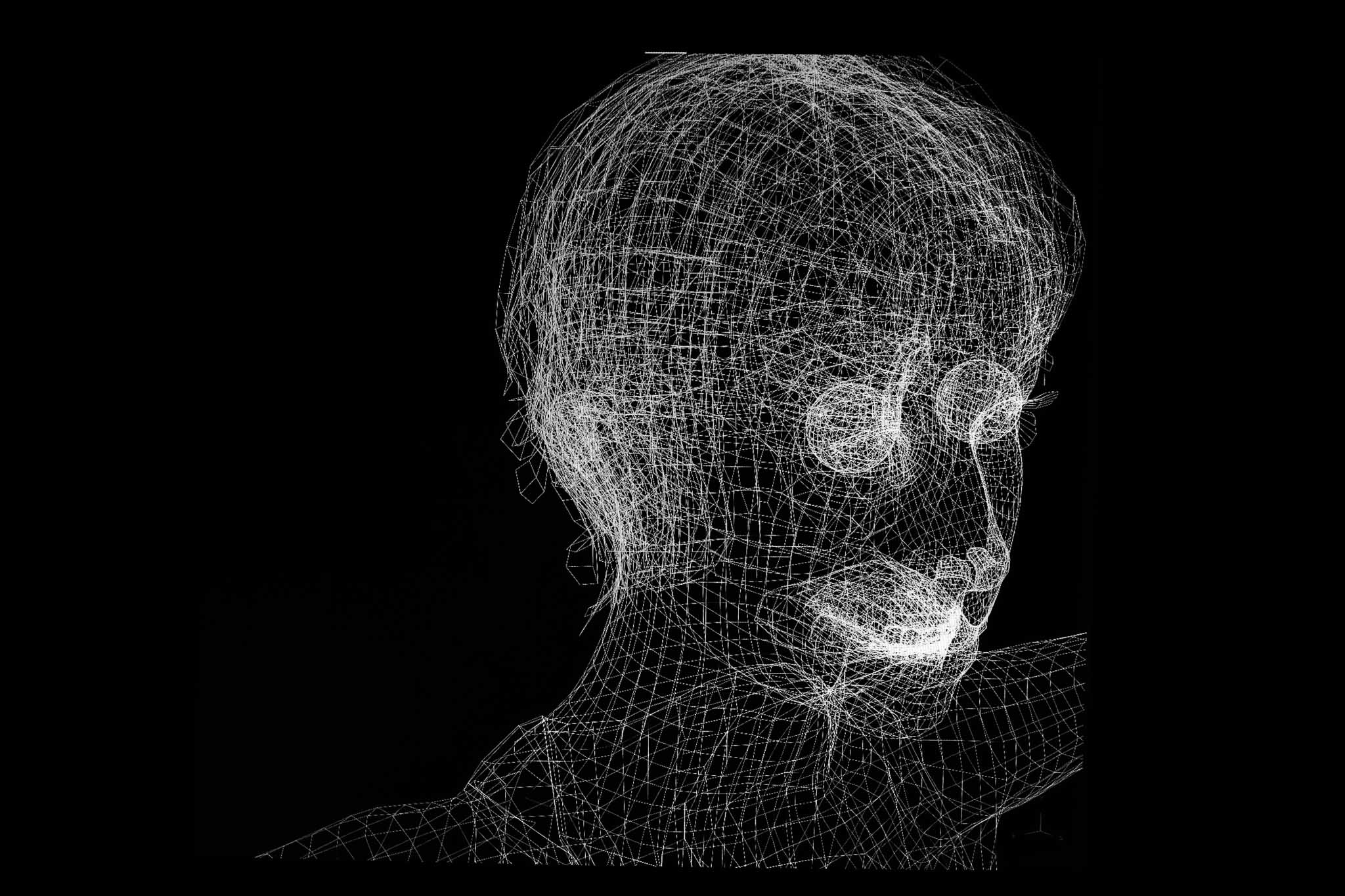
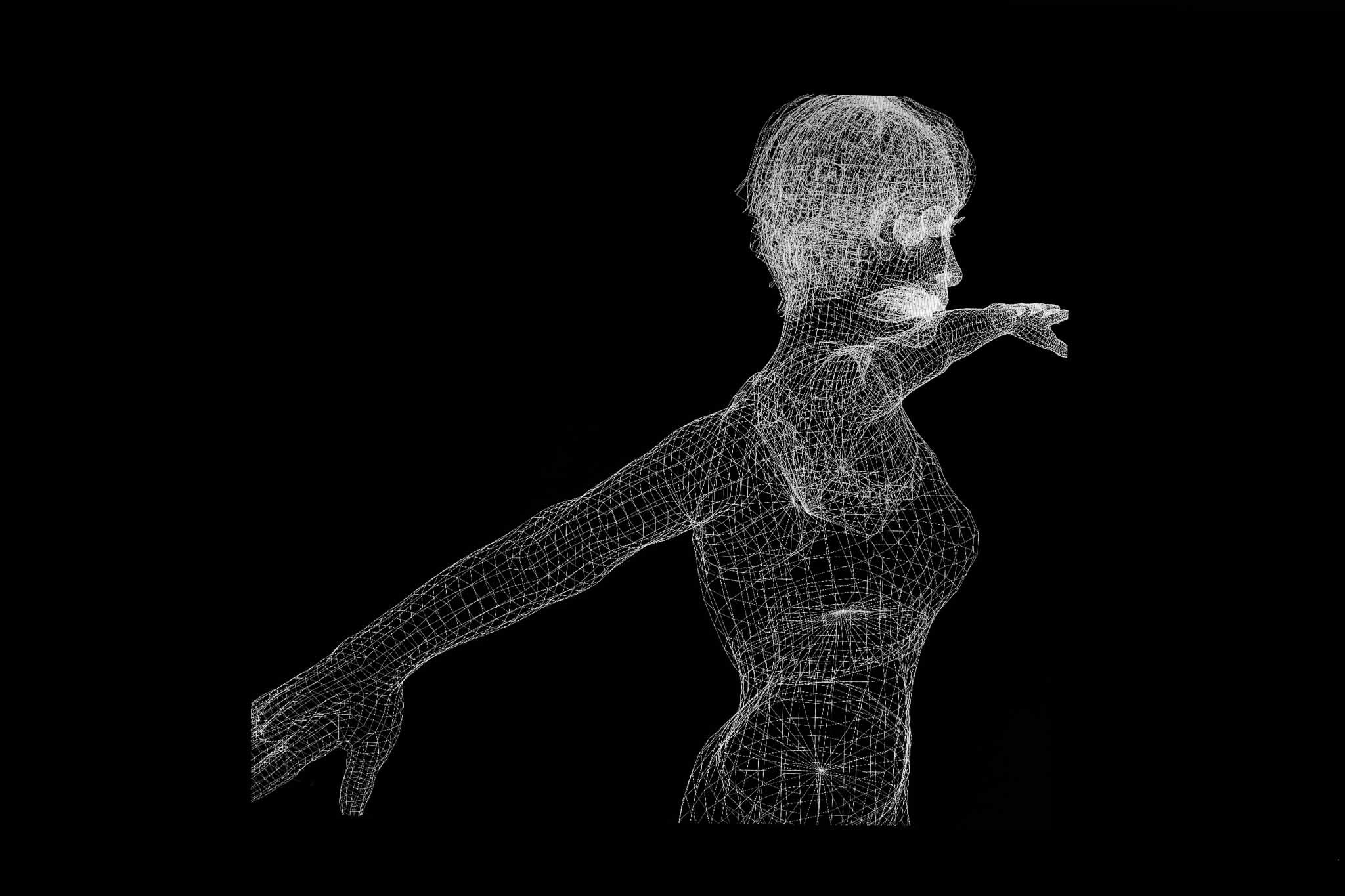
My CS essay and BOW explores how we are looking and seeing differently; and the resulting structural implications, along with the feedback loop between what we see and how things become. Our perception is transforming – and the linear, ordered view favoured over the last 500 years is being supplanted by one that appreciates connections, circuitous pathways and randomness (although not everyone is conscious of this yet – we seem to have one foot in the previous paradigm and one in the next.)
As such, the way civilisations, physical and metaphysical systems and technology develop, is no longer assumed to be neat and tidy. Paths don’t always go forward. Nor do they diverge and remain separated forever. They might diverge only to cross over and even coalesce later on. Systems shift and the elements within are in a constant state of becoming.
The evolution story has been transformed recently by this altered understanding of existence – it is felt everywhere (a systemic view) – but well illustrated in the way we see our own evolutionary history:
“There was no single ancestral population, but many spread over a huge area, which merged and split and merged again like a braided stream, evolving at different rates and in distinct directions in different places. The suite of anatomical and behavioural features that define modern humanity didn’t appear as one complete package, but gradually coalesced across vast tracts of space and time. “There was never a single centre of origin,” says Chris Stringer at the Natural History Museum in London. We are a “composite”, he says. “I think it is a really, really important and profound idea,” says Richard Potts at the Smithsonian Institution in Washington DC, who led the Olorgesailie excavations.”
Composite has been an important word for my work. And photography and other forms of image-making can be thought of in the same way. As can all mark-making. Words and pictures diverged a long time ago – creating different developmental branches that have overlapped recently as code and pictures and text all intra-act to result in what we see on our screens.
Photography and moving image, in particular, are reconverging and coalescing as we become and more embroiled with the fluid nature of modern-day technology – think of how much animation appears in modern film-making (CGI for eg.) and as discussed in my essay – “As Palmer states in Lights, Camera, Algorithm, the decisive-moment photography enjoyed by people will still be celebrated but the “expanded moments of post-production” are now more pressing (2014: 145).”
That isn’t to say the still image is dead just yet, but it worth considering how it is valued and used as internet speed increases and files become smaller, more flexible and fluent, and our senses demand greater excitement and impact. The entangled structural implications of these shifts have interested me throughout this project – what does it mean for us as a species. What does this systemic change look like?
3. Presentation (copied from Assignment blog post)
Book form
After a great deal of toing and froing (and much patience from printers ExWhyZed) I have decided on the following dimensions and details.
- I thought about having a book slightly bigger than A4, so it might stand out, but there is enough going on to signify ‘excitable, unruly and erratic signifiers’ – and by sticking to A4, they are contained within a stable, predictable, long-standing convention.
- Please note: the PDF provided in the assignment submission has page 21/22 repeated so one can see how the fold-out page would work – the first iteration shows it closed, the second iteration (PDF pages 23/24) open.
- The PDF has red inner cover pages (as does the ePublication) but the actual print will not as those pages will be grey paper (Coloplan Smoke)
- The book’s design is inspired by a maths exercise book I might have owned in my childhood.
- I have opted for the same binding as the zine I made for A2 so that the books might come as a pair if necessary. We discussed perfect binding but in the end, I reduced the pages to make this possible. If I were to develop the book much more and choose to make it longer (which I might need to for a commercial publication) then I would need to reconsider binding options, as there is a limit for saddle stitch/ staples.
- Font is 11p and Letter Gothic St except in the black squares where it is American Typewriter
ePublication
The ePublication is a version that could be provided to people who purchase the book above. It is not merely a PDF/digitised copy but rather an animated version. I could also save the pages separately as Gifs to include on my website and/or social media.
- Text is 12p as it was too small on the screen as 11p
- I have removed some images which didn’t work so well on screen – such as the mobile phone image (I am not sure it will work as a printed image yet, to be honest, and may need to reshoot it)
- There is a way to choose music to listen by Simon and the Magenta neural network as you flick through it but I have not resolved the best way to do this yet.
- There is also a film link on the blurb at the back, but again, I have not resolved the best way to do this yet and would prefer it inside the book but at two minutes it is a big file which presents problems. I need to experiment more.
- The other moving images inside are gifs and they work fine – better than video does but are only a few seconds long.
- I am concerned there is too much going on but this is something I can keep working on in SYP.
- If I were to send this to people I would advise them to look at it on a decent-sized screen and to use the ePublication magnifying button. It is interactive and requires people to handle it as such. It is not a passive object.
Film
There is a two and half minute film which contains found moving image that focuses on the same and related themes. It is accompanied by music composed by Simon Gwynne who I worked with before on the Self & Other final project. He also used a neural network to write this music. Currently, you can link to it on the back of the ePublication but I will continue experimenting and see if I can find a way to contain it in the book. For now, I am aiming to work on the publication for SYP but if I were to exhibit this project then this film would be projected on to a wall on a loop. It is two and a half minutes long. When I first edited it, I used the vocals from White Rabbit as that song was in the main source – a film about how vision works. I also applied the music backwards. I think there is a way I could allow viewers a choice of music if I find a way to include the book inside the book. (Still to do – a separate blog about the process of making the film)
4. Writing an introduction and artist’s statement
Artist statement: I have been working on the artist’s statement for a few weeks- and every time I look at it, simplify further, stripping away and condensing. I have been working on something a little less predictable but am not there with it yet.
This is what is currently on my website:
I work with still, moving, original and found images as well as text, exploring feedback loops between various forms of matter and language that inform and result in the many shifts and transformations taking place today.
I am also a portrait and event photographer, employed mostly in and around London and currently study with The Open College of the Arts (OCA).
Introduction:
I had a conversation with some ex-OCA people about simply not having an introduction at all – my work is after all about langauge and the way it’s transforming. However, I think that would leave people high and dry in an already challenging collection of images and objects. Here is something for now:
why is there an astronaut in a field of flowers explores structural instability, embraces disorder and accepts an increasingly elusive relationship between meaning and language.
the overall title of the work and fragments of text included are from a conversation between the author and a neural network app that promised to be her friend for the cost of little more than £6 a month.
source material for why is there an astronaut in a field of flowers was made, found and taken, often in collaboration with the app, rendered into an entanglement of personal history, and the app and the author’s developing relationship in various forms, online and off – as a book, ebook and short film.
music composed by simon gwynne with the help of magenta’s music transformer neural network.
 SJField - OCA Level Three Study Blog