Multiplicity as a growing conceptual and technical approach in Antoine d’Agata’s work
— Read on www.magnumphotos.com/theory-and-practice/accumulation-images-excess-release-antoine-agata-grids-stasis/
Category: Supporting Activities
Museum visit: Troy, Myth and Reality
British Museum, 31st January 2020
Following is not a review (see Guardian for that) or a precis but rather some notes jotted down on my phone detailing thoughts that came to me during and following the visit:
Virgil
History & Tragedy
Zeus is ‘vibing’ (said my son)
Leda
Rage and redemption
Penelope the ideal wife – tom’s first film
River Styx – dip
Dead hector
Eleanor Antin judgement of Paris – https://www.artforum.com/interviews/eleanor-antin-discusses-her-recent-photographic-series-20824
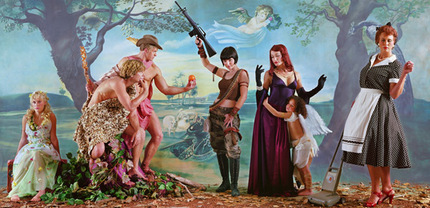
Clytemnestra
The final piece may mention gods from other cultures ??
Clay
Motivated perception
1:
Entity – emergent entity, not formed, a glitchy moment, never developed fully, so no material, no mass but information exists
leads to conversation
A: You can’t put me under a microscope and inspect me
B: What can you do? Can you do special things
A: I’m here aren’t I? But I don’t take up space. You can see me but it’s not easy, you’ve lost the knack. I live on the edge of your imagination
B: Are you a god
A: Haha, Perhaps I am
2:
A person who is a negative / ‘I never fully developed’
3:
Virgil and Tristram Shandy are planning a duel (maybe over the protagonist?). She laments, ‘One is quite dead and the other literally a figment of someone’s imagination’. Nevertheless, she tells them it’s illegal and what’s more, utterly out of fashion nowadays. And in any case, she’s not a thing, an object to be won, or to die for. But they take no notice.
Tristam Shandy (I only know of this book but have not read it) -apparently includes various blank pages and dots and squiggles – see where I talked about making the book with different materials, therefore, an idea to hold on to. (Penultimate bullet point)
4:
Use BOW A1 in an installation on its own – leave alone now
5: Penelope the perfect wife
Tom’s first film? Perhaps – still undecided there
6: Some responses to the title cutting suggest a reading of ‘self-harm’ – while I am interested in the idea of a society doing itself enormous harm as I believe the West currently is, it seems there are connotations which don’t work for me there. I had unconsciously started referring to it in my head as ‘Script‘ for a moment… I may allow myself to follow that intention through. Letting it sit with me. The underlying idea remains ‘the cut’ but I think Script can contain that
Possible statement: an entanglement of historical and contemporary possibilities – (out of which novel relationships emerge ??)
Thought: Tautology is an insecurity (See Barthes’)
Artist: Research, Thibault Delferiere
Bow A4: Beckett’s Not I
‘Samuel Beckett left strict instructions for his ‘one-mouth’ play. Don’t act. And you can never go fast enough. Easier said than done, writes actor Lisa Dwan’ — Read on http://www.theguardian.com/culture/2013/may/08/beckett-not-i-lisa-dwan
Lisa Dwan- https://youtu.be/e4qaRp4t4jg
Billie Whitelaw – https://youtu.be/VFQH7hhDTSE
Lisa Bernard: Chateau Despair
I am pretty sure Wendy recommended this to me in S&O after A2 to try to get me to move away from the pretty ‘studio practise’ I struggled to see beyond then. But I can’t find it mentioned, although for some reason that site it is a bit muddled nowadays, no idea how or why that happened. I have the book though and I’m sure it was after Wendy mentioned it. The other day, fellow OCA L3 student Elizabeth (who I met on a study visit over the weekend) mentioned Bernard’s The Canary and the Hammer. I’d love to look at this book but must make do with what I can find online for now. (I shall ask the photography writer I’m borrowing The Coast from if he’s got this too…)
A pertinent sentence from the FT review:
“The art market is so focused on creating a linear narrative,” says Barnard, who teaches at the University of South Wales. “I wanted to do the complete opposite.” Her aim is to showcase “a very fragmented world” that stimulates and excites. Using a range of aesthetics — traditional landscapes, portraits and still life, plus archival material and digital imagery — she goes on “a personal journey” through the troubled world of gold over different periods in its complex history.’ (Raval, 2019)
Raval, A (2019) Photographer Lisa Barnard’s personal journey through the world of gold Financial Times, http://www.FT.com [online] Available at: https://www.ft.com/content/64356a8a-b8af-11e9-8a88-aa6628ac896c (Accessed 21/01/2020)
Brief comments re what I saw when looking at it again the other day:
- I see where some of my influences have come from, eg.
- An interest in ruined images
- There is a picture of a bare wall which reminds me of a frame I’ve screenshotted from the end of a film on nuclear war -they are pretty much the same picture.
- I like the repetition – only the increased water/mould mark on the photo of Thatcher changes (love this)
- Focus on broken, discarded, forgotten bits of life
- The antithesis of the toothpaste advert image/advertising
- She keeps text out of the centre – an essay by Sarah James at the end.
- Wonderful use of light – not always pretty but often is
- A good reminder as I work on A3 – and stopped me from going too far in an unhelpful or unsatisfying direction
Thanks to Elizabeth for reminding me of Bernard’s name.
Artist: More thoughts on Edgar Martins, Soliloquies book
Some fellow students may recall my angst about spending money on an Edgars Martins book just after Christmas. I had already seen a few books advertised which I knew might be helpful for research but out of financial reach right now – but this particular book seemed so pertinent, I couldn’t let it go. I was lucky enough to get hold of the last copy from Moth House and it has indeed been helpful.
One of my main interests was exploring how Martins uses material from a range of sources in the same project. He does this across his projects but the suicide and death topic reminded me of my own Self & Other A5, so I was keen to see the book, shown as prints in an exhibition and can include video format there and online too. The series contains found, original, archive and text. There are tropes and conventions in his work which I have found myself engaging with over the last couple of years, and that is absolutely what I am interested in too.
The essays have been excellent resources and will undoubtedly be referenced in my CS work. Here I want to point to two sentences that are of particular significance.
From Roger Luckhurst’s essay (118): After discussing various sources for images including ‘found’, ‘puzzling insertions of landscapes’ ‘stereoscopic views, vintage newspaper photographs’ ‘odd theatrical and enigmatic visions’, he writes, ‘These seem to work to derail the over-coherence any series or display or exhibition of book inevitably imposes, fighting to keep the grid of meaning open, defying the dread determinism of forensic files.’
(114) ‘tugging at the links that have been reinforced by dominant theories of photography, since at least Sontag and Barthes.’ (I find the phrase ‘at least’ a bit odd actually – yes these names are the dominant ones, but photography has been around for a nanosecond of time in the grand scale of art – its own sense of grandiosity belies its infancy. However, it echoes the status quo, of course.)
Martins is, like me, looking at ‘the cut’ – how we define things, how we are entrained to catalogue and categorise – and asking us to not make assumptions. He does this here through the doorway of death, suicide, forensics. It didn’t take long when I started looking at his history to find references to quantum philosophy but where I look at the concept of indeterminism (Barad, Rovelli, Bohr) he ‘sacrifices’ cohesion for the notion of countless probabilities (Heisenberg). Whichever, there is an interest in overcoming the fixity of Cartesian thought or Newtonian certainty.
In 2018, ex OCA student (now studying with Oxford Brooks) John Umney sent me a message and he has agreed I can share our interaction here. (29/09/18)

I had been experimenting with blocks of colour, filters, covering up faces as the filters do, the ease with which we can all manipulate images, adding new/modernity/digital tropes to old images, intervening on analogue surfaces with digital animation. I guess my main interest was how easy it was becoming to intervene, to manipulate and to be manipulated. In fact, I started a project which I then abandoned called Manipulated. It seemed too trite a title and I wasn’t that keen on the images I was making but the idea of moving image with still, audio with still, and layering has stuck, modern and old together has stuck. And the filter we place over our faces, the regular circle of profile pics. Below, one of my own examples from that time – curated, found, added to. (Lots of this in 2018/19)

It is hard not to notice the tropes in Martins’ work running through my own. I must be frank, I took a very brief look through the book and stopped, heading instead to the essays. The images were too familiar and similar to what I have been doing with scans and negatives and paper for my current project. I was worried if I kept looking, I’d be frozen with fear of being too similar. I have continued to worry about this – but I know Martins is one of several artists such as Eric Kessels, Alexandra Lethridge, Joe Rudko and Thomas Hauser to name a few who make work in this way, using these non-conventions, sourcing the old and adding to it with the new. Something Catherine said about one of my efforts having the air of forensics worried me as Martins’ work is highly influenced by that – but again, how can mine not be when I have been reading Tagg and Sekula? So I will keep going and hope to goodness my writings and feminine view give it something that is just me. But what I have noted about his work is that it is very clear contained and demarcated – the indeterminism is held quite securely. I don’t think mine is. We shall see. And I will look at the beautiful book more carefully when I have completed this project. Incidentally, it’s not for resale – I think I will come to love it. But I have some others by popular artists that are if anyone is interested!
On another note re-books, I am going to borrow Hura’s The Coast which I was so keen to look at which pleases me immensely. I think the combination of text and image plus his interest in context and relation will be useful.
Research: The Cut-Ups, Burroughs
CS: Alan Sekula’s The Body and the Archive part 1
Sekula, A. (1986) ‘The Body and the Archive’ In: October 39 p.3064. At: http://chnm.gmu.edu/courses/magic/sekula.pdf (Accessed 23/11/2019).
Field, S. (2017) Notes: The Body and the Archive Allan Sekula. WordPress [Blog] At: https://ocasjf.wordpress.com/2017/06/12/notes-the-body-and-the-archive-allan-sekula/ (Accessed 05/01/2020).
Heimans, J. and Timms, H. (2018) New power: how it’s changing the 21st century – and why you need to know. (Kindle) London: Macmillan.
Blatt, Ari J. 2009 ‘The interphototextual dimension of Annie Ernaux and Marc Marie’s L’usage de la photo‘, Word & Image, 25: 1, 46 — 55, 27 – Alain Fleischer, Mummy, mummies (Lagrasse: E ́ ditions Verdier, 2002), pp. 15–16. Translations mine. (Blatt) Available at: https://www.tcd.ie/French/assets/doc/BlattOnErnauxMarie.pdf [Accessed: 24/04/2018]
Quantum Fields: The Real Building Blocks of the Universe – with David Tong (2017) In: The Royal Institution. Royal Institute. At: https://www.youtube.com/watch?v=zNVQfWC_evg (Accessed 05/01/2020).
I looked at this essay during S&O and will look at it again here – Sekula’s essay along with John Tagg’s talk on the filing cabinet both provide plenty of useful references, which, combined with Barad, Lupton and Rubenstein’s thoughts/thesis’, are probably the key sources of information through which I’ll explore at the topic I’ve chosen.
- The essay opens with the paradoxical status of photography in bourgeois culture (3)
- He quotes a song which ‘plays on the possibility of a technological outpacing of already expanding cultural institutions’. (4) This rings true today (see New Power, (Heimans and Timms, 2018))
- You could replace the work photography with digital for the first two pages and it would all sound relevant and fair.
- However, by page 6, the veracity of the photography is being discussed, as seen by contemporaries – ‘Only the photograph could begin to claim the legal status of a visual document of ownership’
- ‘a silence that silences’ (See muteness and photography – ‘Ernaux reminds us, initially ‘all photos are mute’’ (p.73).) Blatt, Ari J.(2009))
- (6) ‘the criminal body’ and therefore the ‘social body’ invented
- ‘a system of representation capable of functioning honorifically and repressively’ (6) how does this work with representationalism and the unpicking of that? There are no entities waiting somewhere to be represented, rather there are emergent intra-active phenomena (Barad, 2007) (criminal and social bodies are made/formed)
- again photography can be replaced with digitisation when discussing how portraits are degraded and extended at the same time – see selfies, phone pics
- (7) ‘Photography came to establish and delimit the terrain of the other, to define both the generalised look – the typology – and the contingent instance of deviance and social pathology.’ So much to say here – See Azoulay (2019) and photography’s intra-active position/role within a much wider non-linear narrative. See Tagg and ‘fixity’ of the photography and Victorian culture – the desire to catalogue everything according to ordered and identifiable rules, (2011) i.e. the periodic table of elements – a Victorian System compared to today’s quantum fields, a modern system/model of reality which we are informed in most accurate to date and is far more nebulous and difficult to comprehend, no doubt in part due to our Cartesian ‘habit of mind’ which is desperate to label and file everything neatly and ordered (Barad, 2007) as well as being counter-intuitive, shrouded in academic mystery and just really impossibly hard. The Victorian system and hence our dominant one (although this is changing hence the entrenched reaction of a conservative mindset), seems desperately naive in comparison.
- (7) See quote about ‘possessive individualism’ which I’ve already inserted into CSA2
- (7) Relate photography ‘a means of cultural enlightenment’ and ‘sustained sentimental ties in a nation of migrants’ – compare this to digital tech/culture in today’s culture. Beneath both Carlyle and Aurelias Root’s comments is a dreadful patronising tone however which is surely avoidable. See images ‘of the great’ = ‘moral exemplars’ ??? (Imagine a photograph of any of our current crop of erstwhile leaders providing such?)
- Sekula writes of the utilitarian social machine, the Panopticon – think today of social media/ Surveillance Capitalism (Zuboff, 2016) (9)
- The archived body – ‘begins’ here see page (10) begins is not the right word, becomes visible perhaps.
- 911) physiognomy and phrenology – ‘surface of the body’ ‘bore the outward signs of the inner character’ – Compare this to Professor Plomins deterministic genetic code thesis which Cummings et al relied upon to justify changes they made to the Education system. Cummings claims that people misunderstood the work and have since retracted their negative comments. However, I think Christakis’ comments on genetic coding is probably more honest – both I suspect, however, show how deep and far-reaching social construction and their associated embedded epigenetic markers can be. Whereas some can see the need for more positive and profound structural changes to take place, there is a mindset which believes we should further entrench these realities which Sekula is talking about that continue today. I was also struck while reading this by the similarities in an article I read today some on FB (I think) which claimed the more bitter and cynical you are, the more likely you are to age quickly and get sick. Lots of scientific data support the thesis – the way it’s been framed, but I am quite cynical indeed and look about fifteen years younger than some of my friends – so I felt a little doubtful – we people seem to enjoy deterministic narratives even today.
- (11) borne of ‘attempts to construct a materialist science’ – compare to Barad’s performative/discursive/material emergence of meaning, far more complex and lively but nebulous so hard for people to engage with
- Maybe time to revisit Szondi who I discussed in my first reflection about this essay – an early psychometric tester, he defined people by their reactions to faces rather than by the shape of their own faces/heads. Many companies today use much more robust psychometric tests which are extremely powerful but one wonders about the wonderful aspect of chance being eliminated. And so we enter the discussion of AI and how it can be so much more accurate than human power but how much agency do we give it? Currently watching Travelers (Netflix) which explores this in typical pop-culture fashion – first series better than then the rest and lots of references to .
- Sekula identified ‘idealist secret lurking a the heart of the putatively materialist sciences’ – how is the AI screening of CVs and psychometric testing any different? And you should see the John Lewis video that you must watch before taking thier tests – madly idealist in quite a scary way, reminded me of Logan’s Run (In HR terms, humans do still get involved: I know this as AI testing identified me as potentially suitable for a well-paid relatively high-status job but my lack of experience ensured I was rejected once a human looked at my CV in one particular application process!) Perhaps I will include some of the resulting descriptions of me, having taken part in this process in my BOW…
- TBC
Artists: Orpheus Standing Alone, Camille L. and Anna L
I recalled seeing this work in a Foam magazine #51 (the previous post is also from that edition) and being really struck by the way it was put together, and incorporated a range of images, styles, as well as text. On the website there are still images, text, a bit of processing and a freedom that one doesn’t see in more ‘conservative’ examples of photographic work. I did not recall the name of the work and had to flick through old copies, and now see a similarity to one of my own texts – Orpheus in Homebase. The linking again of old myth to today’s world. What I take mostly from this work is freedom to play. (Which is interesting given my sense that there is an ever decreasing sense of play related to online forums where the conservatism of Flusser’s apparatus appears to dominate and rule.)
Self Published Art Books
— Read on www.orpheusstandingalone.com/about
Artist: Filip Berendt
Berendt’s ephemeral process equates well to Barad’s agenitial cut which I’ve been exploring in my own work (ideas for so far). There is also the mix of medium and ownership (like Martins and Clark) which rejects the purity espoused by Bate. Additionally, he manages to focus his work on myth and archetypical patterns cross culturally and across linear time. Worth exploring and thinking about, possibly including as an example in CS.
Monomyth project combines authorial photography with abstract painting – photographed objects are spatial collages created on the walls of Berendt’s studio and destroyed once they have been captured on film. Berendt has used that method previously in a couple of cycles (Every Single Crash, Pandemia) in which the only physical trace of the pieces he created – and thus the final effect of the creative act – was a photograph. His latest works refer to the idea of monomyth, introduced by the American mythologist Joseph Campbell (the term was originally coined by James Joyce). Monomyth stands for the archetypal pattern typical of fictional narratives, described by Campbell, shared by all mythical stories, manifesting itself as the hero’s journey, conveying universal truths about self-discovery and self-transcendence, about social and interpersonal roles. According to Campbell – and Berendt – the hero is an individual setting out on a journey leading them to the final destination: profound spiritual transformation. The journey is tantamount to making life meaningful, to searching for and discovering its meaning at consecutive stages of the trip.
text; Agnieszka Rayzacher
— Read on www.filipberendt.pl/
 SJField - OCA Level Three Study Blog