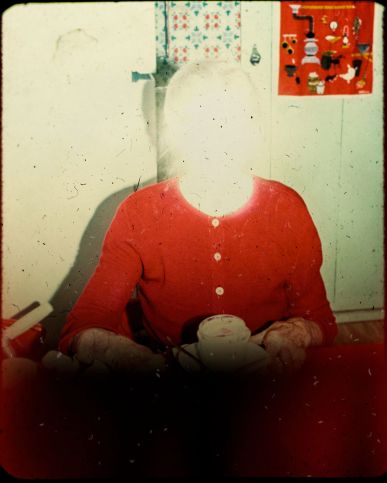
CS: Notes on what ‘Performativity’ means in new materialism terms

From – https://newmaterialism.eu/almanac/p/performativity.html

  • re Derrida and Austin’s Theory of Speech Acts, Judith Bulter develops the idea of sexuality and gender as performative
  • “Butler has put it herself: “This very concept of sex-as-matter, sex-as-instrument-of-cultural-signification […] is a discursive formation […]” (ibid., p. 50).”
  • “Haraway’s notion of the material-semiotic that thinks the material, bodily fleshiness and the discursive-linguistic together, and thus breaks through the long-standing nature/culture divide (see e.g. Haraway, 1988 and 1997) – critical re-readings and re-engagements with Butler’s notion of (gender) performativity slowly but surely came into being”
  • “For Barad, performativity is not only linked to the coming into being of the human subject and the (gendered) materialization of bodies, and the socio-political interpellation process that goes along with it (i.e. Butler’s more recent understanding of performativity as articulated in Bodies), but is about the processes of the materialization of “all bodies” and the “material-discursive practices” that engender differences between for example human and non-human bodies (Barad 2003, 810).”
  • Matter is not a passive actor – (i.e. body/camera, body/phone – see Charlotte Prodger, phone shot on phone)
  • Barad “moves away from an individualistic atomistic metaphysics, the modern Cartesian mind/body split, our strong cultural belief in representationalism, our Western tendency to thingify or basically objectify, and a mere discursive-linguistic concept of performativity”
  • “but bodies themselves “come to matter through the world’s iterative intra-activity – its performativity” (ibid., p. 824).” So  – intra-activity is performativity in Barad’s theory. Rovelli talks about reality being relational  – “reality is reduced to relation” “We, like waves, and like all objects, are a flux of events; we are processes, for a brief time monotonous…” Events, therefore, are performances, using Barad’s language.  (Rovelli, 115/116)
  • “Reality, according to Barad, is rather “a dynamic process of intra-activity” or “an ongoing open process of mattering through which ‘mattering’ itself acquires meaning and form in the realization of different agential possibilities” (ibid., p. 817).” So – therefore exactly what I have been unraveling and which is explained in the Hoffman book, Systems Theory, Rovelli etc. Barad applies it to the humanities and is interdisciplinary or in her words discursive and diffractive (I think?).
  • “Materiality is no longer “either given or a mere effect of human agency,” but rather “an active factor in processes of materialization” (ibid., p. 827)” See the previous point.

Susan Yi Sencindiver on the Oxford Bibliography website writes: “Important as this [constructivist] ideological vigilance has been for unearthing and denaturalizing power relations, and whose abiding urgency new materialism does not forego, the emphasis on discourse has compromised inquiry by circumscribing it to the self-contained sphere of sociocultural mediation, whereby an anthropocentric purview and nature-culture dualism, which constructivists sought to deconstruct, is inadvertently reinscribed.” (2017)  https://www.oxfordbibliographies.com/view/document/obo-9780190221911/obo-9780190221911-0016.xml


CS & BOW Book Notes & Quotations: Data Selves, Deborah Lupton 201C

Lupton, D. (2019) Data selves: more-than-human perspectives. Cambridge, UK ; Medford, MA: Polity.

I am not sure when I started following Deborah Lupton’s blog or how I came across it but as we were preparing the installation for Pic London, I read her post about the forthcoming publication of her book Data Selves in my WordPress app. The word ‘assemblage’ stood out as one of the other artists, Josh Phillips had mentioned it several times. I wrote about it here and mentioned a discomfort with the word as it felt like an adjective that was being used as a noun. I have become used to the word now and it no longer jars every time I hear it. (I am not sure why I felt annoyed by the word – irrational irritation perhaps.)

Whatever the reasons, the work our group constructed, A rumour reached the village (2019) might be described as an assemblage of many smaller assemblages. There is something fractal about the ‘village’ of things we constructed. And so after reading Lupton’s blog, I ordered her book and am glad to have read it now, not only because it seems so relevant to my overall inquiry in which I am attempting to make sense of the way in which digital culture is changing the structural nature of existence, but because it led me to Karen Barad’s work. Actually, Barad had been mentioned to me before by another of my Pic London collaborators, Rowan Lear. But her name only sunk in while reading Data Selves.  

I expect I will need to investigate Barad further for CS and BOW but in the meantime here are some quotations from Lipton’s book with page numbers that could come in handy.

  • “Popular representations of these personal data and their futures often lean towards polar extremes.” (4)
  • “lively data” and “these data can continue to be lively even once the human they refer to is dead” (6)
  • “function creep”  – tech used in ways that go beyond their original purpose. (8)
  • Surveillance Capitalism (8)  – see https://www.theguardian.com/technology/2019/jan/20/shoshana-zuboff-age-of-surveillance-capitalism-google-facebook
  • “predictions that are made by data analytics can result in predictive privacy harms, in which people can be categorized against within certain social groups” (8) (See end of book where she talks about the limitations of data analytics – how our paranoia that too much is known about us prevents us from seeing how basic and limiting the categorisations can be (124)
  • (13 – NB pa) Personal data blur and challenge many of the binary oppositions and cultural boundaries that dominate in contemporary Western societies.
  • Rather than user – exister Amanda Lagerkvist (2017)
  • “In new materialism, the poststructuralist emphasis on language, discourse, and symbolic representation is enhanced by a turn torwards the material: particularly human embodied practices and interactions with objects, space and place.” (15)
  • “Braidotti (2018) terms ‘critical posthumanities’, in which the concept of human exceptionalism is done away with. This more-than-human approach sees human bodies as extending beyond their fleshy envelopes into the physicalenvironmentt, while the environment likewise colonised human bodies” (15)
  • “If we view personal digital data as manifestations of vitality, as recording, monitoring and influencing human lives, generating biolvalue and indeed as essentially part of humans, then they become part fo the domain of biopolitics.” (15)
  • “Feminist new materialists celebrate the renewal and liveliness of the capacities that human-nonhuman assemblages generate at the same time as identifying the ways in which these capacities can be closed off or limit the freedoms and potentials of some people or social groups or generate harm for the more-than-human world, as in environmental degradation, global warming, species extinction, pollution and climate change.” (17)
  • “While digital data assemblages are often conceptualised as immaterial, invisible and intangible, I contend that they are things that are generated in and through material devices (smartphones, computers, sensors), stored in material archives (data repositories), materialised in a range of formats that invite human sensory responses and have material effects on human bodies (documenting and having recursive effects on human flesh (19)
  • See quote by Koro-Ljungber et al. 2017; Taylor et al. 2018) NB
  • Diffractive methodology  – making entanglements visible. Barad suggests a diffractive approach is “good to think with”. (21) I agree. (Also 29)
  • More-than-human rather than posthuman (22) good para over to 23 – “interconnected and trans-agential.” Life, or vitality is not seen as possessed by any individual actor, but rather as constantly generated” (24)
  • Line about Caterisan dualism between mind and body (but see Alan Jasanoff (2018) for this too)
  • Animism – (25) quotes Haraway ” human ontologies must be understood as multiple and dynamic rather than fixed and essential (Bhavnani and Haraway, 1994)
  • Haraway’s ‘composite’ theory (26) See my own comments in BOW A2. (tentacular thinking)
  • Barad – “humans don’t know about the world because they are observing from outside it. They know about the world because they are inseparably part of it” (27)
  • Re agential cuts (29) And “Photographs make agential cuts that produce life forms rather than simply documenting them. “It is a way of giving form to matter” (Kember and Sylinska 2012:84) See 45 Years in lit review. more about agential cuts here: https://newmaterialism.eu/almanac/a/agential-cut.html – “Any attempt to impose meaning and order” […] “inevitably part of the matter it seeks to preserve or document” . Link this to Flusser and apparatus  – what he says about photographers (funny!)
  • Thing power and enchantment (30) “strange ability of ordinary, man-made items to exceed their status as objects and to manifest traces of independence and aliveness, constituting the outside of our own experience” Quoting Jane Bennett (2001 and 2009) – compare this to OOO Graham Harmen
  • Page 31 – assemblage “function of grouping of different things in an assemblage, each operating in conjunction with the others (including humans)” (Bennett 2004: 354)
  • 32 – Bennett recognises “mass-produced commodities as possible sites of enchantment” NB para
  • 33 – others working in technological design …recognise “humans invest digital devices with animistic or magical properties” See Marx and use-value.
  • 39 “death is more of a continuum” see page 40 too (Re mummies text)
  • 42/43 Summary about human and non-human entanglement inc. data and machine.
  • Liquid metaphor “data sweat” (Melissa Gregg 2015) ; data leaking, emerging from within the body to outside  – reveal ambivalence to data as it moves between “high value and useless – or even disgusting – waste product” (Abjection) 46
  • 53 uncanny valley, not quite right, see Mario Klingman – my blog S&O
  • 57 – Good Kristeva quote re creepiness, abjection.
  • 59 – Dirty data, “What matter is considered dirty or clean?” – attitudes can be related to underlying fears and anxieties about loss of control. Rowan Lear suggested the following after I posted a picture of the mould produced by her yeast started in the collective work and a picture of this section of the book – https://www.upress.umn.edu/book-division/books/against-purity?fbclid=IwAR1W0EQEaOOzd4jWd1Knp2iBmyse8bB22tN6sM0GayAg7o33KF1KyVo-Yj0
  • 63 – emphasis on all senses, not just visual “data physicalisations” See http://dataphys.org. Plenty of artists listed who are making alternative to visual art drawn from data
  • 68 NB – bias/visual data materialisations  – instead list artists making “multisensory, unconventional and surprising” materialisations
  • Doing Data chapter – less than critical of some of the neoliberal ways in which data is enmeshed with people’s lives, potentially making them more rather less neurotic. Little critical analysis, more reporting of her data about how this affects people who use the data.
  • Sharing and exploiting data  – caring/intimate surveillance concerns 103

The first section of the book is probably the most useful to me as it expresses ideas that I have found while reading about systems, a move away from mind-body dualism and digitisation’s impact on our perception of a less fragmented world. It is one of many books and articles which follow on from Kathryn Hayle’s posthuman book which has been so influential for me. I am inundated by such essays on Academia since reading a number of them. I like the sensible and pragmatic relationship Lupton has with data and technology even though she doesn’t seem all that critical of some aspects of data monitoring which strike me as nuts/unhealthy/hellish such as the constant surveillance of babies breathing – this kind of thing is very telling about our society and I could probably write a thesis on it alone.


Artist: Allan Kaprow

https://www.guggenheim.org/blogs/findings/how-allan-kaprow-helped-create-happenings

I have been thinking about this word ‘assemblage‘ and ended up talking about it with friends. I was directed towards Kaprow who used the word and titled a book with it – but relied on the French accent – I have a feeling it wasn’t really used in English at that time (50s) although I can’t pinpoint why I would think such a thing and may just be making it up.

Search for etymology brings up the following:

1704, “a collection of individuals,” from French assemblage “gathering, assemblage,” from assembler (see assemble). Earlier English words in the same sense include assemblement, assemblance (both late 15c.). Meaning “act of coming together” is from 1730; that of “act of fitting parts together” is from 1727.

https://www.etymonline.com/word/assemblage

It is used extensively in the blog and book I mentioned yesterday by Deborah Lupton – Data Selves: More than Human (2019) – due out tomorrow.

From the Guggenheim website:

“One of the movement’s major texts, Assemblage, environments & happenings is in the special collections. It features Kaprow’s theory of the evolution of abstract expressionist painting into Neo-Dada, assemblage, environments, and happenings of the early 1960s. This rare book documents works by Kaprow and artists including Robert Rauschenberg, Red Grooms, Robert Whitman, Jackson Pollock, Jim Dine, Yayoi Kusama, Claes Oldenburg, George Segal, Jean Tinguely, and the Gutai group.”

https://www.guggenheim.org/blogs/findings/how-allan-kaprow-helped-create-happenings

I hope I can see a copy of the book as it may prove useful for both BOW and CS research.

I may add to this post as my investigations continue.

Research/Notes: Fiore & Berlusconi

https://www.tcd.ie/French/assets/doc/BlattOnErnauxMarie.pdf

I had reason to return to the above text recently. I referred to it in S&O A5 as it mentions writer/artist Alain Fleischer and his work made in Ferentillo which is where I am now. He links photography with mummification as I quoted in S&O. One of my partners highlighted a different quote when I shared it with them.

“In the darkness of the catacombs … mummies are like

photographic images that have been developed but not fixed,saved from a fatal and definitive exposure to the light of the living, rescued from an ultimate oxidation by death’s

corrosives, thanks to a red, inactinic light, a laboratory light.

Like photographs yet to be printed, cadavers … to become

mummies, were initially material supports, emulsions, conserved in the dark, subsequently treated with acids, then exposed to light before being brought back underground.”

I visit the village regularly as my mother moved here in 2000 with her husband. He died suddenly in 2005. I made work for TAOPA5 and S&OA5 as well as a smaller project in between modules.

https://ocasjf.wordpress.com/2018/05/17/assignment%e2%80%8b-5-i-will-have-call-you/

http://sjf-oca.blogspot.com/2015/06/assignment-5-context-narrative.html

This summer, after my mother broke her ankle badly and ended up remaining here for far longer than she might have done, the boys and I decided to spend most of the break in Ferentillo with her, for a variety of reasons, not least of which was a desire to escape the U.K. and it’s interminable internal wrangling over Brexit.

As the collaborative project I’m involved with (Pic London) is based around the idea of a village it is perhaps fortuitous to be in this particular village with its references to death, mummification and previous work for an extended period.

I have also been re-reading James Elkin’s and struck by the discussion he has with himself about a realisation we are at times little more than hungry, violent critters despite all the symbolism with which we prop up our illusions of reality.

In addition, I sent in an essay for CS1 and have had some extremely helpful feedback from Roberta, my CS tutor which has prompted further thoughts and responses. I’ll revisit this on my return to London – however, some of my thoughts will likely end up in some writing I’m doing in preparation for the pic london work. (Not sure yet, how this writing will inform or be part of any work yet).

The writing centres around a man called Fiore who lived “both inside and outside” the village (Field, 2019 – draft foundation text for Pic London project). I don’t want to repeat myself but briefly, Fiore befriended my mother and her husband Roger. He built an illegal pool which we swam in and which was never blue, as Fiore couldn’t quite get to grips with the filter or chlorine. He had lost his wife to cancer and his daughter killed herself in grief soon afterwards. Later he got together with his housekeeper, Dora. He was a good friend to my mother’s after Roger died. Fiore owned a goat called Berlusconi who was strangled to death when his chain got caught on a tractor wheel. All Fiore’s neighbours were invited to a feast of Berlusconi but Fiori refused to eat him.

The writing is, like my previous writing, like a plait made up of different strands that will incorporate Fiore’s story, my reasons for being here – austerity, middle-class angst around failure, and a discussion about photography in relation to bacteria, citing Elkins’ book, and death.

At first I thought I’d be making a film like the previous two projects I’ve done – Origin of the Common-Place and Sirens. But the more I work on it the more it feels like it might be a photo-text like the ones discussed in the paper above:

The interphototextual dimension of Annie Ernaux and Marc Marie’s L’usage de la photo by Ari J. Blatt

There is not very much time but we’ll see.

Things to do;

Look at Robert Mapplethorpe’s work. I keep coming across his stuff which feels odd, like the universe is asking to to look at it. Then I suddenly clicked – flowers/Fiore. (Not to mention death).

In Format’s Talent there is a series called Flowers for Donald. I plan to take another look at that in more depth.

Try to find a vintage film/old book about flower arranging for possible use

Themes other than the subject of flowers which has emerged in the highly flashed night images I’ve been taking; water, stars, shooting stars, hear, climate, death.

Not sure how this work relates to BOW yet but some of the research Roberta talked about re. Modernism and appropriation should be relevant at the very least.

(NB: Quotes about photographs being mute and the closed circular arguments that arise out of only reading photography books in Blatt’s paper)

Inside out confusion

I’ve been alluding to what I understand as a relatively new phenomena recently in my CS1 essay and in one of the short story fragments; others’ exteriorisation emerging internally in individuals due to technology’s ability to do away with traditional boundaries between individuals. (How interesting this should have come about in an era when individualism has been so highly valued.) I think is something I should look into more and am re-reading (and reading some chapters for the first time) Hayles’ How We Became Posthuman. Chapter 7 Turning Reality Inside Out: boundary work in the mid-sixties Novels of Philip K Dick is probably going to be useful and clearly demonstrates how these issues arose prior to the internet – although made far far tangible and evident by its now overwhelming presence.

“When system boundaries are defined by information flows and feedback loops rather than epidermal surfaces, the subject becomes a system to be assembled and disassembled rather than an entity whose organic wholeness can be assumed” (160)

… “the weaker system is made to serve the goals of the stronger rather than pursuing its own system unity” (ibid)

“… a persistent suspicion that the objects surrounding us – and indeed reality itself – are fakes” (161)

And finally for now …

“The interpellation of the individual into market relations so thoroughly defines the characters of these novels that it is impossible to think of the characters apart from the economic institutions into which they are incorporated” (162)

Artist: Gisèle Freund 1912-2000

I read about Freund in Fifty Key Writers on photography and think her writing will be useful for me. Reading about her, I see further references to meaning being dissolved during the years leading up to WWII. “They (she and Benjamin) shared a mutual desire to displace the empty, iconic forms of fascist art and writing with an intimate humanism in the arts, and a need to restore meaning and value to a world emptied of content.https://jwa.org/encyclopedia/article/freund-gisele

I have written about zero signs a plenty and will no doubt continue to do so.

Freund’s commitment to images which contained a sense of humanism and her aversion to props, posing and styling echo my own working preferences. She worked as I try to, engaging in a conversation and capturing moments which she didn’t believe signified the whole person or their ‘soul’ but aimed to represent a kind of stream of consciousness, according to the author of the Encyclopaedia of Jewish Women page on Freund, Carleen Meeker.

Her writing sounds very much like the sort of thing I’d find useful – she too is interested in ‘the role of context in meaning’ or ‘the relationship of “the artistic scope of a work to the social structure at the time of its production”‘ – and she sees the negative and positive aspects of technology when describing its affect and impact (2013, 110).

I look forward to finding out more.

Durden, M. 2013 Ed. Fifty Key Writers on Photography, Routledge, Abingdon

Artist: Christiano​ Volk, Sinking Stone

I do wish I had some money to spare right now. This is the second photobook I’ve seen this week which I’d love to be able to buy.

Cristiano Volk’s Sinking Stone, a meditation on Venice, looks great. The reviewer writes:

“…rather than showing us a seemingly satisfying totality of Venice in the form that is viewed and reproduced by tourists, Volk confronts us with many jarring fragments that often flash by as in a short but powerful dream.”

and

“On the artistic side, I am very pleased that in his depiction of a city Volk has gone way beyond the traditional methodology of such genres as street photography. This project is an excellent example of making a statement by presenting ambiguities; this kind of fine art requires the participation of the viewer to reflect on issues that affect us all.”Clausing, 2019

You can see more here – worth the click!

Cristiano Volk – Sinking Stone

00-volk

Artists: Paul Thulin

Recording article – https://www.lensculture.com/articles/paul-thulin-a-ballad-through-time

This book looks just the sort of thing that relates to my own visits to Ferentillo and the long-term recording of my time with the boys there.

I’m interested in the various types of images included here and the blending of a family album with something ‘more’ – as described in the article, “Fact and fiction become indecipherable from one another and family history turns into folklore, with switching viewpoints and protagonists that morph into their predecessors with the turn of a few pages, while eerie mythical characters lurk in the shadows. Rather than preserving history in a neat and orderly fashion, this is a family album that activates it, allowing the past to flood the farmhouse, its inhabitants and the surrounding orchard as it stands today.” (Wright, 2019)

This chimes with many of my ideas and in particular Random Notes for a Short Story which I’ve been jotting down over on my Sketchbook blog.

I am as frustrated as Thulin seems to have been: “Thulin’s first steps into photography were as a nascent philosophy graduate who had grown increasingly frustrated by the limits of language. Describing his approach as “docu-literary,” the artist favours the enigma and emotional dimension of text and image, as well as the fact.” (ibid)

I also can’t say how much I LOVE this old image  – and that is it included in the book alongside mono, new and old. Thulin’s way of working reflects a dissolution of boundaries which emerges from a more systemic way of looking at life. (Another article I’ve saved this recently describes this well – “We are dealing with the complexity of a profound societal change and the transition towards diverse regenerative cultures as manifestations of not only a different way of being in the world, but also a different way of seeing the world.” (Wahl, 2017)

434e5e3d-f848-487f-99c3-08f5747d8b16.jpg
I Cannot Remember © Paul Thulin from https://www.lensculture.com/articles/paul-thulin-a-ballad-through-time

I originally came across Thulin on Lensculture but BJP’s article is more comprehensive and clearer too. https://www.bjp-online.com/2019/02/paul-thulins-pine-tree-ballads/

https://www.paulthulin.com/home

View at Medium.com