Artist: Peter Horvath

https://www.riseart.com/article/2019-12-17-artists-interviews-peeling-back-contemporary-collage-with-peter-horvath

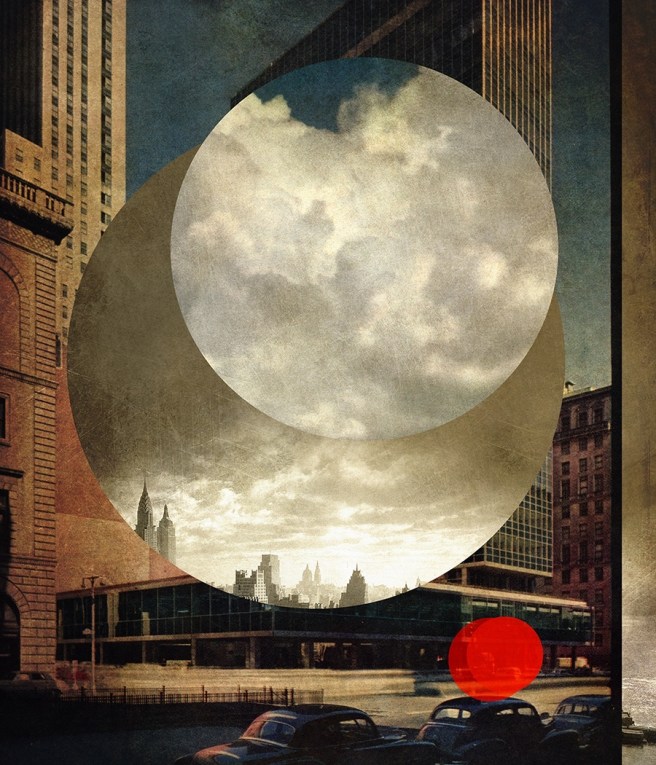
Peter Hovarth New York State of Mind 2018

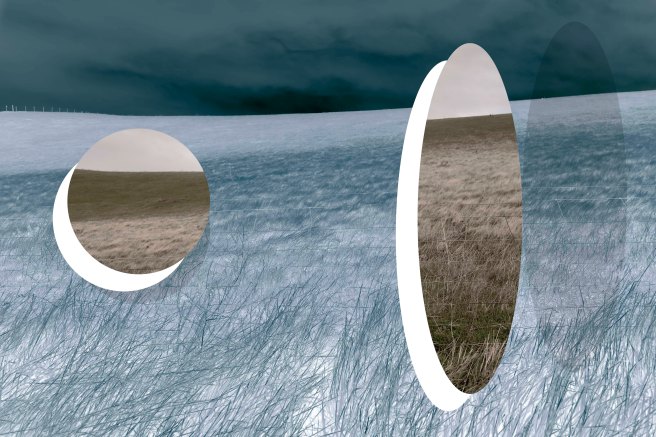
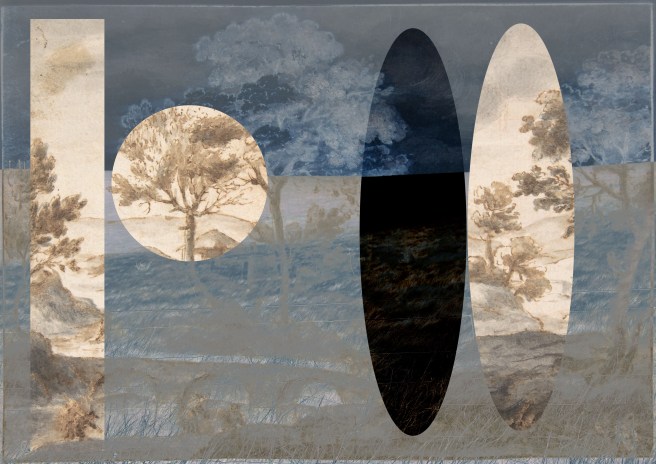
Using mainly images from early 20th Century advertising and Hollywood, these pieces explore early consumer culture. However, by taking these images out of their usual context, Horvath repurposes them and completely redefines their meaning in fresh and interesting ways. We caught up with Peter to find out a little more about his artistic journey, process and some of his plans for the future.‘ Couldn’t be more relevant!

Useful example of someone making work about consumerism. Will keep as someone to refer to possibly when writing up BOW notes. And although I’ve sort of rejected or not developed what I was playing with earlier this quarter, some of his images are reminiscent of these experiments.

Artist (photobook): Sohrab Hura, The Coast


Absolutely love the look of this book, reviewed by Gerhard Clausing, and it seems inordinately relevant for me and my direction for BOW/CS. The mix of stories, images, the multiple states, not to mention the fantastically bold colours and content all appeal. Some of the images remind me of a clip from one of the films I’ve identified as a possible source a narrative in my own BOW, which will also be a collection of short stories alongside images – some very short indeed. Click on the link for the full review:

https://wordpress.com/read/blogs/4927285/posts/14353


00-coast
Image from the review – see link


“The carefully edited sequence of images and the surrounding mysterious short story versions go hand in hand. Sohrab Hura demonstrates that meanings can be altered by ever-so-slight changes in visual and verbal juxtapositions. This mirrors the current social media frenzy of believing imagined or constructed contexts or rumors more than facts that can be documented in incontrovertible detail. Is the person shown really injured?” (2019)

https://www.sohrabhura.com


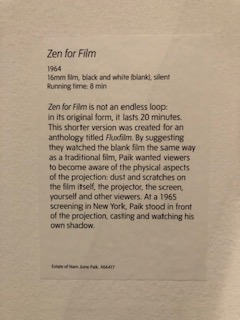
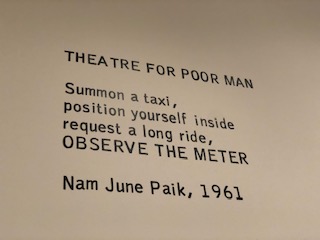
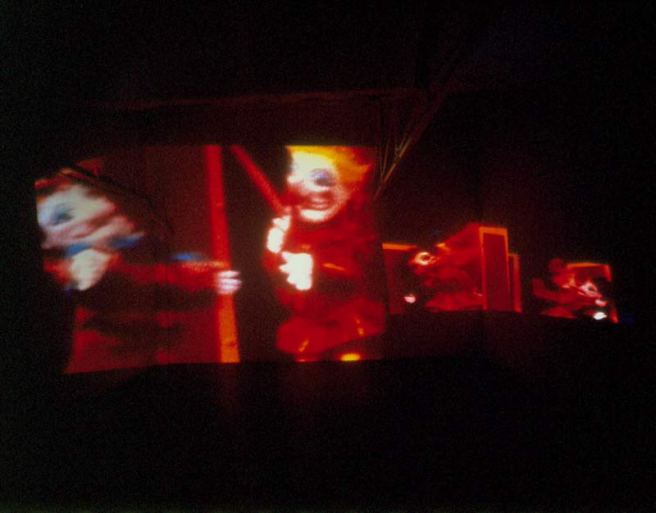
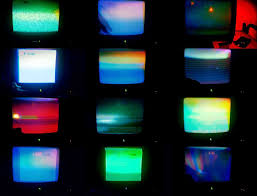
Artist: Nam June Paik, Tate November, 2019

I really enjoyed this exhibition and will do doubt return when I will spend more time there, and maybe even make proper notes. In the meantime, I felt the following was important to record and ingest.

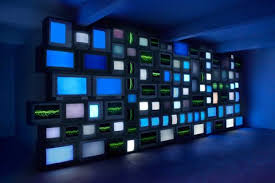
The statement for TV Garden describes how Paik “imagines a future landscape where technology is an integral part of the natural world”. And “His approach follows a Buddist philosophy that everything is interdependent. It also suggests that technology not in conflict with nature but an extension of the human realm. ” (Tate, 2019) I would say more than an extension and using Barad’s word, intra-related. I think that word is one of the most useful things (amongst a lot of useful things) to come out of my study of her ideas.

(c)SJFIeld2019-9810
An earlier version of interactive light art as seen in Olafur Eliasson’s exhibition


(c)SJFIeld2019-9809
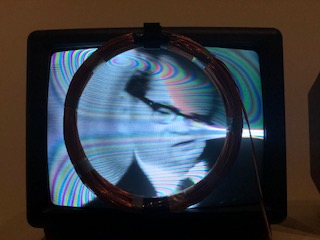
Really loved this magnet making the picture of Nixon wobble. 

IMG_0434IMG_0439IMG_0449IMG_0456IMG_0464


Artist: Noami Uman

I wrote about Uman towards the end of Self & Other and was reminded of her yesterday when reading about performativity  (Lloyd, 2015: 18 quoting – MacKinnon 1987: 171).

“Pornography, for MacKinnon, is not, as it has conventionally been understood, a matter of obscenity, free speech, or morality. Akin to hate-speech it is rather a matter of social inequality, inequality that is “substantially created and enforced – that is done through words and images” (MacKinnon 1994: 9, original emphasis). Pornography, for MacKinnon, is a “constitutive practice” (1987: 173) that produces gender inequality by constructing the abuses suffered by women (she cites rape, battery, sexual harassment, and prostitution) as sex. It “sexualizes” these abuses and “thereby celebrates, promotes, authorizes, and legitimizes them”. In so-doing it constructs women “as what men want from sex”(MacKinnon 1987: 171) and, in the process, “institutionalizes the sexuality of male supremacy”.7 As such pornography “eroticizes hierarchy … [and] sexualizes inequality” (MacKinnon 1987: 172). MacKinnon’s contention, however, is that pornography does more than only subordinate women (as if that were not enough).”

From Screening the past website:

Removed is more than just a feminist intervention into the pornographic genre (although it is that, too). Rather than exposing what many believe to be the “essence of [mainstream] pornography – woman without substance”, Uman renders woman as substance, a powerful, pulpy, roiling presence. [14] In his work on ‘screendance’, Douglas Rosenberg introduces the term “recorporealisation”, writing that in order for a body to be recorporealised, it must first be decoporealised or stripped of its somatic and fleshly resonances through mediatisation. [15] Under Uman’s recorporealisation of her, the women of Removed become ‘untouchable’ – the male hands that attempt to stroke their bodies “simply sink into light”. [16] Strangely, it is Uman’s abstinence from touching the whole bodies of her filmic women that renders them impervious to the male touch on-screen. Uman allows the bleach to do its work on the female figures, transforming them into skeins of light. Uman has said that she “wanted to see what would happen if [she] remove[d] the women” from her found footage, asking: “Would it still be pornography?” [17] In Uman’s film, however, the ‘erased’ body returns with a new and more powerful force. The body becomes hyper-visible as a relational and material-kinetic presence. What is manifested on-screen is the body’s kinetic twin; a double which both exceeds the body and originates from within.

Although I first came across Uman’s Removed (1999) I am also interested in the Tin Woodman’s’ Home movie below a) because it references such an iconic film and I have long been interested in doing something with Gone with the Wind (although I have no idea if I ever will get to it not least because doing so potentially invites all sorts of trouble) ; b) it relates to strongly to our childhood – collectively as people continue to watch this film – one of my own sons watched it obsessively when he was about three years old. These narratives which we are exposed to as young children have such a profound effect on us for the rest of our lives – fixing expectations which then become enormously difficult to divert, change, transform.

https://www.youtube.com/watch?time_continue=25&v=-JnRFAgHNKQ&feature=emb_logo

Lloyd, M. (2015) ‘Performance and Performativity’ In: Ditsch, Lisa and Hawkesworth, Mary (eds.) The Oxford Handbook of Feminist Theory. Oxford: Oxford University Press. pp.572–592. At: https://repository.lboro.ac.uk/articles/Performativity_and_performance/9470270 (Accessed 07/11/2019).
Bergen, H. (2018) Pornography, Ectoplasm and the Secret Dancer: A Twin Reading of Naomi Uman’s Removed. [Online magazine] At: http://www.screeningthepast.com/2018/02/pornography-ectoplasm-and-the-secret-dancer-a-twin-reading-of-naomi-umans-removed/ (Accessed 10/11/2019).
Field, S. (2018) Artist: Naomi Uman. [Blog] At: https://ocasjf.wordpress.com/2018/03/20/artist-naomi-uman/(Accessed 10/11/2019).

Artists: Susan Hiller 1960-2019

Suggested in A2 BOW Feedback: Susan Hiller – e.g. Punch and Judy (7 March 1940 – 28 January 2019)

2-02
From https://www.mattsgallery.org/artists/hiller/exhibition-2.php
Ghost Susan Hiller from Artrabbit
From Art.rabbit.com https://www.artrabbit.com/events/susan-hiller-ghost-tv
Demons and Dancing
From https://thequietus.com/articles/25645-susan-hiller-interview

(Gosh, I am annoyed I missed Hiller’s work which was being exhibited in London until recently.)

https://www.artrabbit.com/events/susan-hiller-ghost-tv

From the above video

  • “translations of phenomena of light”
  • “translating into something we can perceive” (see Donald Hoffman’s theory)
  • “science has gone beyond this” (dualism between rational and irrational) – I so agree and want this in my work somehow
  • “we spend an enourmous amount of time dreaming and that is beyond reason”
  • “committed to looking at things which are not acknowledged or ridiculed  – a whole range of things like this”

From

  • Also interested in the way cinema has replaced religion (I have been so interested in how the cinema is making the same stories as we have seen in mythology)
  • She is interested in the devices of cinema and how they communicate the magical, magical, non-rational
  • Think Hiller’s work is extremely relevant for me
  • The Clinic piece is “very austere, very difficult, and challenging” which relies entirely on people’s imagination and willingness to engage.
  • belief in rationality is a belief system
  • looks at the commodification of spirituality
  • looks at social world
  • difference between subject matter (e.g. apples) and content (about other things)
  • people get diverted by the subject matter and don’t reflect on the content
  •  different relationships between sense and modality  – sees this as a possibility
  • voice is body
  • work today is heavily influenced by the 70s
  • See 19.16 mins to see moving image and object installed
  • I’m only at the sketchbook stage, she ends her interview with

I love what I have seen of this work so far.


Artist: Mark Lewis

Mark Lewis was a photographer but he now works with film and creates video installation. He explores “duration” and “the “species present” (AA School of Architecture, 2017), i.e. the impossible to pin down in-between space ‘bookended’ (ibid) by past and future.  Work has a temporal span but “do not expect action”. Talks about a tension between boredom and revelation.

He tends to strip film convention back to its most basic elements and avoids using audio because it is too powerful and emotive. (I avoided music in very first documentary/type moving image project for this very reason.)

Makes film installation specifically for the museum and not the cinema – short, exploring camera moves and taking them to their extremes. Long shot might go on for ten minutes.

Says art increasingly focusing on the quotidian  – painting and photography went a very different way to the way cinema was going. (Asks why film went down the path it did… suggests there was no reason and it was a choice to become dramatic/theatrical.)

I really like how Mark Lewis describes his working process as ‘intuitive’. He takes pictures, pins them up on a wall and then if he’s lucky it might evolve into something a few months later. I suppose I recognised this in my own meanderings.


Artist: Hito Steyerl, How Not to be Seen: A Fucking Didactic Educational.​MOV File, 2013

Recommended by CS tutor Matt White, Hito Steryerl – Guardian review (can’t believe I missed this!):

  • “Tart, funny and furious, filled with rants and “semi-poems”, Steyerl’s latest project is difficult to approach” I love the term semi-poems! I think this probably suits my loose text-based ramblings. I hate calling them poems. They’re not and the word, unfortunately, feels a little grandiose or archaic nowadays.
  • “Once configured (and doing that already had me hyperventilating), your phone is now your interface with the gallery. Forget direct looking. Forget an embodied experience. Only connect, the app store and a strong enough wifi signal willing.”
  • “more and more people let their phones do the looking, trying to capture on their devices the experience they are not really having. I am far from immune.” This is our world… today I talked about the journey towards a simulated reality which will be indistinguishable from the one we currently think of as ‘real’ (and there are plenty of examples of  “more-than-human” (Lupton, 2019) hybrids – e.g. chips helping to regulate heart rate https://www.hopkinsmedicine.org/health/treatment-tests-and-therapies/loop-recorder-implantation. but more than that we are integrating with our phones. They more than represent us. They are us.
  • “With this complicated splicing of fact and fantasy, social reality and grim futurology, Steyerl sucks us in. But don’t get too seduced, she seems to be saying. Along with the fun stuff and the pretty flowers in the gallery, life for many people is hell. Hear their voices, walk with them.?
  • I wonder how much she relied on others to help bring this to fruition. I always think of my roots with Brecht and making work with no money – this is virtually impossible in today’s work if you’re trying to address the construction of a seamless alternative reality (which is no longer alternative). Screens, technology, expertise – all of these cost and so this type of work which I love because it’s addressing current concerns (unlike the endless iterations fo alternative processes) BUT it’s inherently elitist.
  • Looking forward to finding out more.

https://www.theguardian.com/artanddesign/2019/apr/10/hito-steyerl-review-serpentine-sackler-gallery-london


Searle, Adrian (2019) ‘Much of the experience is meant to be horrible’: Hito Steyerl review | Art and design | The Guardian. [Online] At: https://www.theguardian.com/artanddesign/2019/apr/10/hito-steyerl-review-serpentine-sackler-gallery-london (Accessed 04/11/2019).

MOCA (2016) What is Contemporary? A Conversation with Hito Steyerl [Online] At: https://www.moca.org/program/what-is-contemporary-a-conversation-with-hito-steyerl (Accessed 04/11/2019).

Hito Steyerl, (2013) How Not to be Seen: A Fucking Didactic Educational.MOV File, 2013 [Online Magazine] At: https://www.artforum.com/video/hito-steyerl-how-not-to-be-seen-a-fucking-didactic-educational-mov-file-2013-51651 (Accessed 04/11/2019).

Artists: Lewis Bush’s Ways of Seeing 2019 (WIP)

I love this. It’s so refreshing to see someone experimenting with forms and processes that are relevant to today’s world rather than languishing in some sort of nostalgic fantasy from the 19th century. That’s not to say one shouldn’t explore our history, and Bush does that here, but if I see one more ‘alternative processes’ project or read yet again about the merits of analogue over digital, I might fall off my perch with boredom. Seeing this, I am encouraged to stick to my convictions and keep experimenting with digital


Ways of Seeing Algorithmically

http://www.lewisbush.com/ways-of-seeing-algorithmically/


Artist: Allan Kaprow

https://www.guggenheim.org/blogs/findings/how-allan-kaprow-helped-create-happenings

I have been thinking about this word ‘assemblage‘ and ended up talking about it with friends. I was directed towards Kaprow who used the word and titled a book with it – but relied on the French accent – I have a feeling it wasn’t really used in English at that time (50s) although I can’t pinpoint why I would think such a thing and may just be making it up.

Search for etymology brings up the following:

1704, “a collection of individuals,” from French assemblage “gathering, assemblage,” from assembler (see assemble). Earlier English words in the same sense include assemblement, assemblance (both late 15c.). Meaning “act of coming together” is from 1730; that of “act of fitting parts together” is from 1727.

https://www.etymonline.com/word/assemblage

It is used extensively in the blog and book I mentioned yesterday by Deborah Lupton – Data Selves: More than Human (2019) – due out tomorrow.

From the Guggenheim website:

“One of the movement’s major texts, Assemblage, environments & happenings is in the special collections. It features Kaprow’s theory of the evolution of abstract expressionist painting into Neo-Dada, assemblage, environments, and happenings of the early 1960s. This rare book documents works by Kaprow and artists including Robert Rauschenberg, Red Grooms, Robert Whitman, Jackson Pollock, Jim Dine, Yayoi Kusama, Claes Oldenburg, George Segal, Jean Tinguely, and the Gutai group.”

https://www.guggenheim.org/blogs/findings/how-allan-kaprow-helped-create-happenings

I hope I can see a copy of the book as it may prove useful for both BOW and CS research.

I may add to this post as my investigations continue.