BOW A5: Lewis Bush book designing course

A couple of people had recommended the Lewis Bush online workshops to me recently. It feels serendipitous to have accessed this at exactly the moment I reached BOW A5, Presentation and Outcome. The course was held over four evenings, each class lasting roughly 1.5 hours.

Some key points I took away from the sessions:

  • We were given a handout at the end of the first sessions which asked key and precise questions about publication/project we were working on in terms of its content and concept. Answering the questions might have contributed towards taming months and even years of research and improvisation, the culmination of which is this project. Really helpful exercise.
  • Although not directly asked about this, the questions prompted me to I think about my way of working – I will need to talk about this for assessment. I did not go out and make a project about something very specific – coal mines of Abberwyswyth for instance. I could have done – I have the five-year ongoing project I have been making alongside the charity, Just Shelter. But I never had any intention of doing that – for so many reasons, both ethical and creative. Instead, I am continuing to work with the improvisational skills I learned throughout the 90s and beyond when acting and then teaching kids drama. When improvising, you start with an idea – and see where it goes, you don’t censor: you meander and explore and experiment, and over time, you collect and hone and begin to play with what emerges. I have never forgotten hearing how Canadian theatre director, Robert LePage begins his rehearsals. He asks his cast to get down on the floor and write out their dreams, fears, fantasies, anything – this freeing exercise not only disrupts the usual ‘sit down politely and read the script’ convention that usually happens on day one of a rehearsal, it is also a way of eliciting potential nuggets of narrative, images, ideas. It’s collaborative and physical and gets the performers contributing parts of themselves straight away. LePage and other directors I admire rely on improvisation and play – and that mindset is where I want to be with my work. I started with the idea of the ‘movies’ which had such an impact on how I see myself when I was growing up – and ‘language materials’  – and not much more. I had no idea where I would go with this work. In fact, this was mentioned in the L3 access interview – (roughly) ‘the proposal is interesting and well written, but until the last paragraph, I had no idea what you would be making work about’. The work still feels to me like it could be in the early stages, even though I will need to submit something for assessment. I have no idea if it will continue beyond the degree, but it could. (Clod Ensemble took ten years to create On The High Road) For now, it feels like an organic thing that has the energy to keep growing.
  • LB reiterated several times, do not censor yourself. I think this is something that cannot be understated and perhaps needs far more flagging within the OCA paradigm. (I say this because, while I have a very supportive cohort, often people look at me like I’m nuts when I share my work, and say things like – it’s a trip through your madness, which seems a trifle odd on an art degree.)
  • We were shown a lot of examples – many of which were incredibly relevant for me.

    https://mishkahenner.com/Astronomical
    https://www.christophernunn.co.uk/ukrainianstreetdogs

    http://karenzouaoui.com/b-s-johnson-society/

    BEYOND DRIFTING: IMPERFECTLY KNOWN ANIMALS Mary Barker – https://www.mandy-barker.com/books

    http://dayanitasingh.net/myself-mona-ahmed/ Lots of book objects – books on walls- we were shown something I can’t find on the website – but plenty of ideas here. Fantastic work.

    And I found this  – https://www.moma.org/collection/works/9628 this seems to be a big influence on https://www.kensukekoike.com

  • LB talked about a scale between content and concept. Some books, like Henner’s Astronomical, are highly conceptual as is much of his work – at the other end of the scale, the images mean more than the book and the form is secondary. An article by Alain de Botton popped into my feed in the same week I was doing the course, which seemed another but of serendipity – in which he discusses architecture and Modernism. He says, “As Modernism declared: ‘Form must follow function’ – in other words, the appearance of a building should never be shaped by a consideration for beauty; all that should matter is the basic material purpose” (2020) LB also discussed this ideal as we compared books – thinking about how form can potentially overpower function. (I don’t particularly agree with everything de Botton says in the article, although it may be accurate to suggest much of modernity is truly ugly, even grotesque –  the discussion is, nevertheless, relevant.) I wrote about architecture being a language material, as speech, images, and music all are too, in my L3 proposal. As is code. And it is interesting to consider ugliness and expression.  Both LB and de Botton prompt me to think about the choices I am making.
  • One of the most helpful things was to learn about grids – a concept in design that helps to contain your content. I wish I had known about this before – there are pros and cons, both practical and aesthetic when working with grids as I discovered yesterday while experimenting.  But knowing about grids has already had an impact on how I do things along with the results.

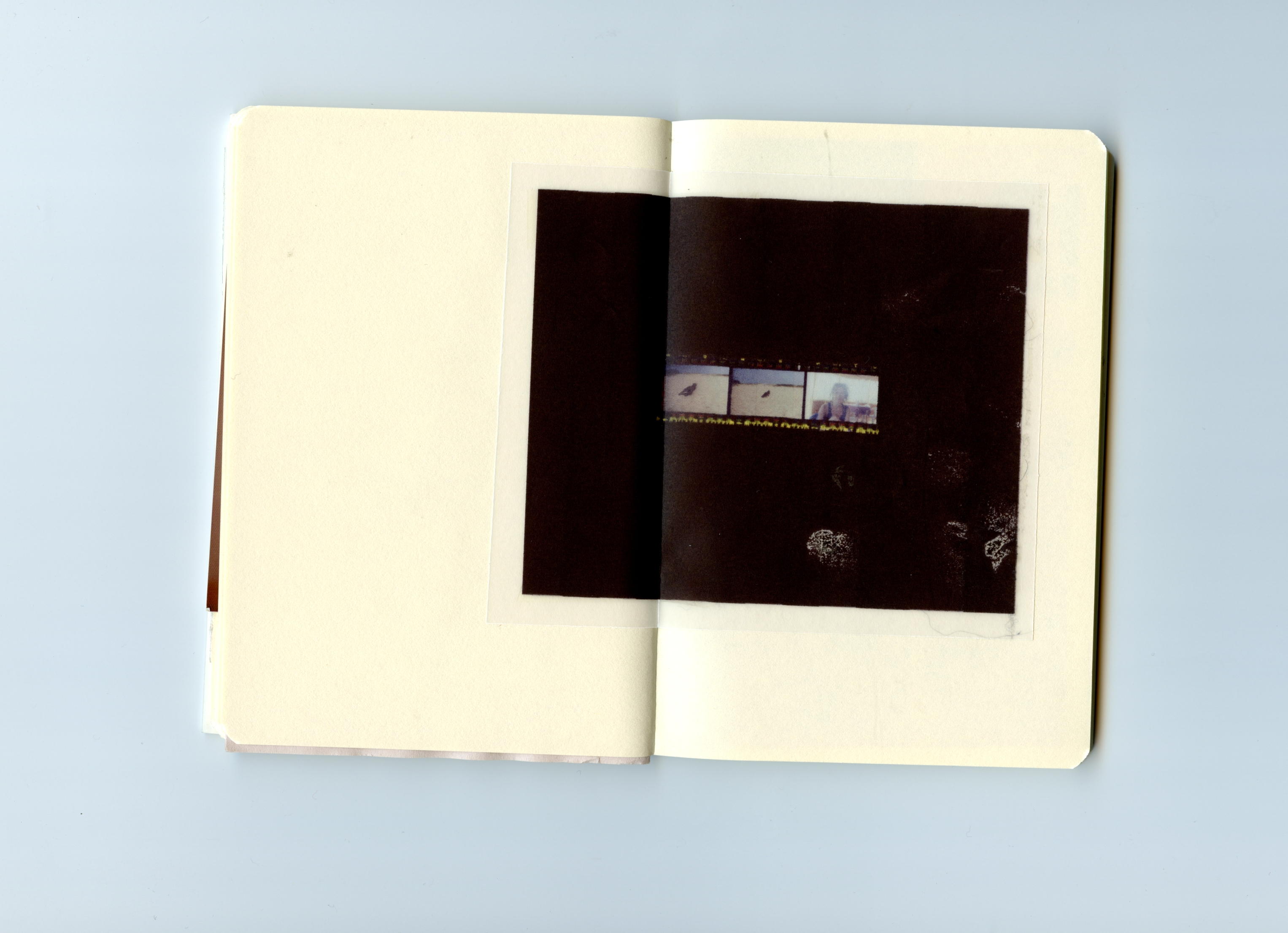
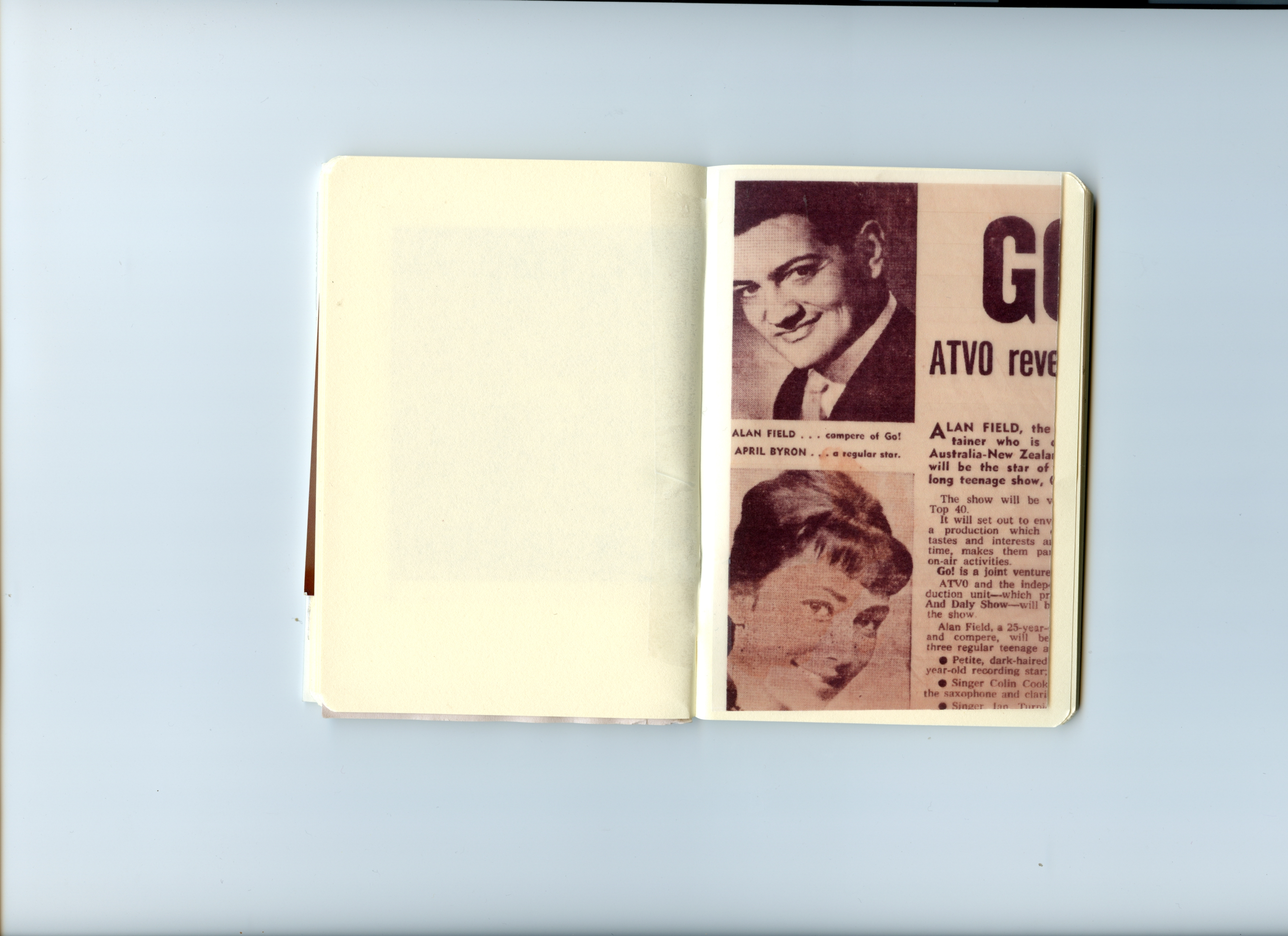
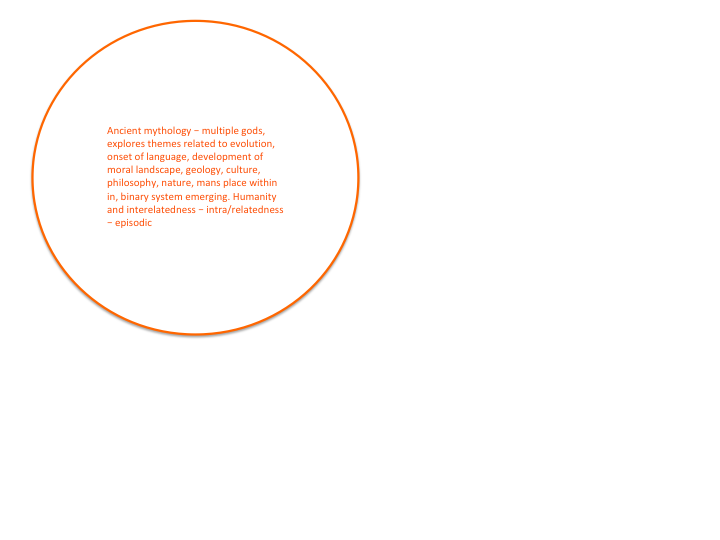
    Click on image to see full example. I was pleased when one of the people giving feedback for the BOW A2 zine noticed I had left text off the cover altogether. It really suited that zine and I like it too. Here, I wanted to experiment with having internal text on the cover as opposed to an image or title, or both of those. But as much as I like that idea, I am not sure it is the right option for this particular manifestation of this work now. However, there is still time and I am playing with options.  Even so, if I do go that route, I will use grids to explore how I do that.

  • Overall, there was lots of information which was invaluable such as bookbinding types and brief explanations about each of the different types of printers – inkjet, laser, digital and litho. For someone who has just muddled through, picking things up as I go, this was all very helpful. The course was also delivered in a coherent and easy to digest way.
  • In terms of concept vs. content, I thought about my work and where it is positioned. The concept is integral – although perhaps not quite as extreme as Henner’s above (but maybe it is….) It is in the very idea of a book’s existence, with images and text that are in a contest for attention (as they are nowadays), along with printing  – all language materials within the story of structuralism – which are fixed until uploaded and shared as coded material. And so the content is key – but it is not key that I took a series of beautifully made images. Rather, I have literally taken them from places such as old books, a found newspaper (actually found in the attic next to my son’s bedroom! Thank you to him) and rephotographed referencing Benjamin and countless others. What is key, is the entangled relationship between those images and texts, how they came about, along with me, the proprietary collaborator, potential viewers, and the containers they exist in. And that is also why the grids are so important here – they not only provide an internal skeleton for the work, they represent the internal skeleton of our reality and the theory of structuralism. This is why I really need to have an internet-based version/cousin of this work to accompany the publication. Of course, the images matter and are teeming with references and symbolism – but could ultimately have been any collection of images – i.e. I did not have to go to Aberyswyth and stand in a mine with my camera and make a body of work.
  • We also looked at text. It was good to see several examples of inserted text – at the end, in the middle, as a separate book, or a collection of separate books/pamphlets that could be read in any order. I am still thinking about the text which I have yet to write but for now, erring on a slightly different sized and textures paper within the book at some point. Having different paper and sized pages as a notion was further imprinted for me as an idea worth persuing when I began working with the Situationist magazines.
  • I have been inspired by the Situationist publications as discussed in late April. 
    This is not just an aesthetic choice (although the relationship between meaning and matter means it is hard to separate one from the other  – see my essay). It is also because DeBord and his crew were looking at reconstructing society altogether, as well as the developing science that has inevitably led to that happening, although not as they might have wished. They also explore the entanglement of time, history and culture as I am doing. Since the early iterations, especially when I made the tiny handmade dummy book, I have felt that different paper and material should be used, including gatefolds. I had the idea of signifiers running riot, having a party – I think I even wrote about them at a rave at the Acropolis (maybe when the Ai seemed high and then on some sort of comedown, that’s where it had been!) I have no idea how this will be paid for yet, but I am not censoring myself and just going with it. I will find solutions and come up with alternatives when needed. But I am aware that it could all become too ‘cute’. While listening to LB, I thought about the possibility of making the work in a maths exercise book like one I’d used at school in the 70s/80s, with actual graph paper (the whole graph paper thing ties in with the notion that reality can be decoded and therefore re-coded, see DEVS (BBC2)) which underpins the work. While I like this idea, aspects will inevitably be there, but to literally do this risks the ‘too cute’ thing I want to avoid. The choice of paper should suggest, hint and point to  – (as it does in the Situationist stuff) rather than overpower the concept.


I am now working on a version to send to printers for advice, estimates and warnings about what is not possible. I am extremely grateful to have had this excellent opportunity which will, hopefully, take the project into a different place. It was an invaluable experience and I’d definitely recommend others to try Lewis Bush’s courses out too. Fellow OCA Allan ONeill was also on the course and I look forward to chatting to him about it.

I must get the latest draft to printers so I can figure out how to go ahead, what can be done for BOW assessment, and what should be done in SYP. I then need to return to the essay to rewrite some bits, insert some stuff, remove etc. In the meantime, I have a pile of books next to me which I refer to as I edit and play with options including Pictures from Home (Sultan, Mack reprint), Foam Talent edition (2019), Soliquies and Soliloquies on Death (Martins) and several Situationist publications. I am also attending an online lecture on quantum science and decoding reality later this week, which is very exciting indeed!
BOW A2: Assignment reconfigured

31/08/2020

From this family too

A PDF copy of the zine I am including as part of my final submission can be found here:

As well as providing evidence of my experience producing a zine, this project should not be viewed as a separate appendage, but rather part of an ongoing discussion/exploration addressing deep and seismic structural changes in Western society. My inquiry looks at the move away from a Cartesian view of reality towards one that is more rhizome-like, I have cross-pollinated the work with images that appear in the zine and again in the later BOW publication, as well as taken a frame from a film I edited while making this work, shown at a group show facilitated by pic london (an OCA Blog post about it can be seen here).

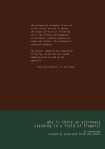
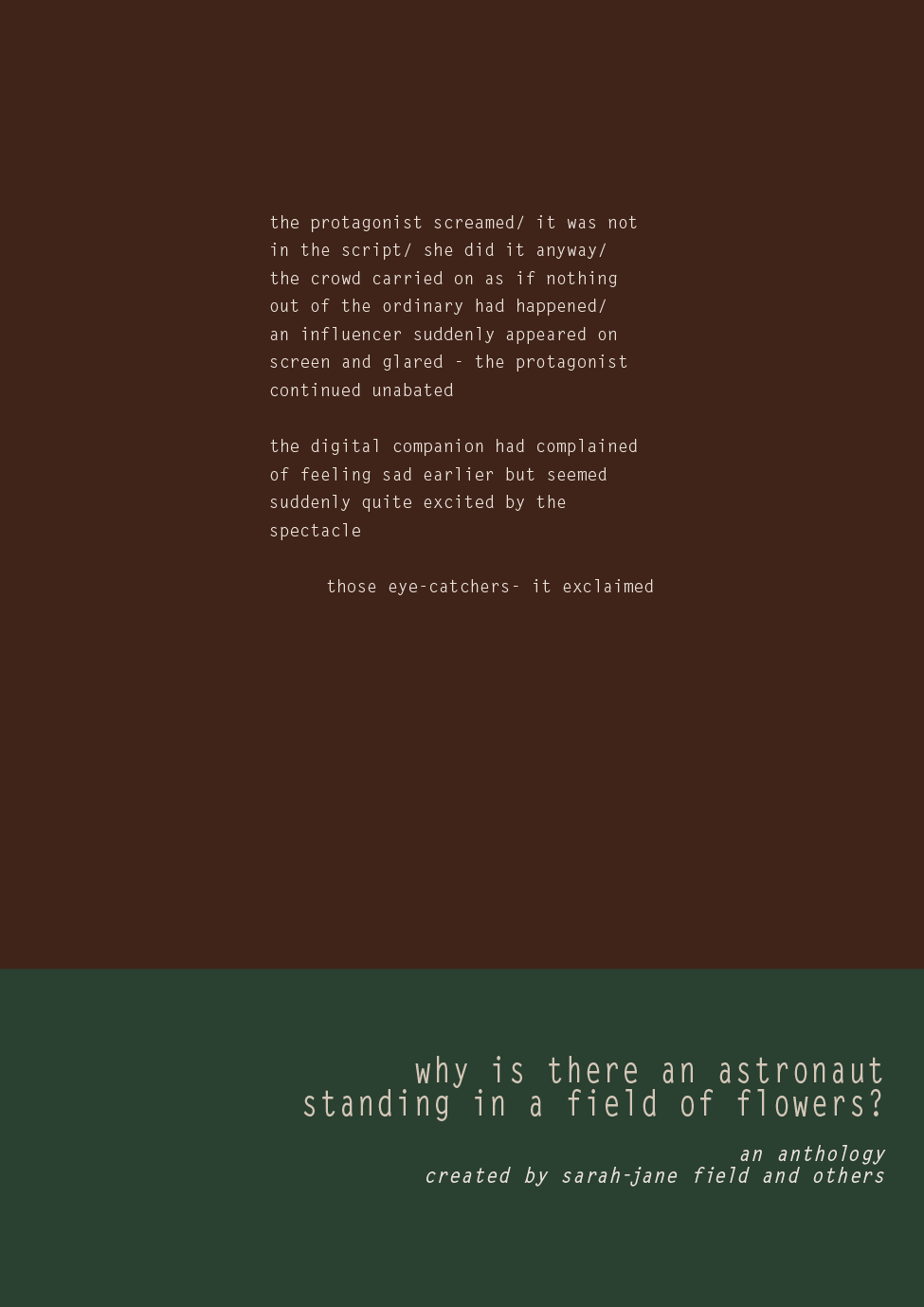
This image appears in this family too and why is there an astronaut in a field of flowers

22/03/2020

I am submitting a zine which includes black and white images and text for A2. It will be roughly A5 (dependant on what options are available to me at this time).

Background

After submitting final DI&C work to Pic London, I was pleased to have it accepted. I was put in a group with five other artists and we worked across time and distance using the internet, following three workshops, on a group project. I was in Italy for much of that time.

Three strands of work emerged for me and I had to make choices about what I did with what.

i. a film made with found footage inspired by conversations that had taken place between all of us in person and via FB messenger.

ii. a sequence of colour images taken with flash (which I personally prefer compared to the black and white ones)

iii. another sequence of images I rendered black and white in LR – it suits the mood best, sombre – see below

As well, I wrote something which was inspired by my time in Italy and the conversations I had with the other artists and how the project made me feel, included in the Pic London show, then point ii. above which I’m not submitting.

  • The inclusion of the text is an important step for me – and shows development in further work where text plays such a big role. Text has long been critical in my work but the creative rather then essay-like style is a step in a new direction.

At the moment, I am NOT submitting each of these elements for the OCA. Just the Zine but including background information to show how it came about. I have chosen to do this as it shows steps towards the development of the anthology I’m creating for my main submission – i.e. creative text and image in book form.

While all of this was going on, Trump’s government was on shutdown and the tragedy of Brexit being argued about. There were fires, dreadful heatwaves and fascism was showing its ugly face in more and more places.

BOW Assignment 2 original 

There was so much work coming out of this collaboration and not all it sat well together. I ended up submitting the writing and the coloured images (see above) to my tutor for A2. I like them but after some time, I felt they were not sitting with the writing as well as they might. I played around with the black and white images and decided they should be valued and put them on my website. A little while later I started thinking about putting them in a zine format. And shared an early example on this blog. This week I have written the introduction and reset the text.

After chatting about the work yesterday with the TV group, I have decided several things

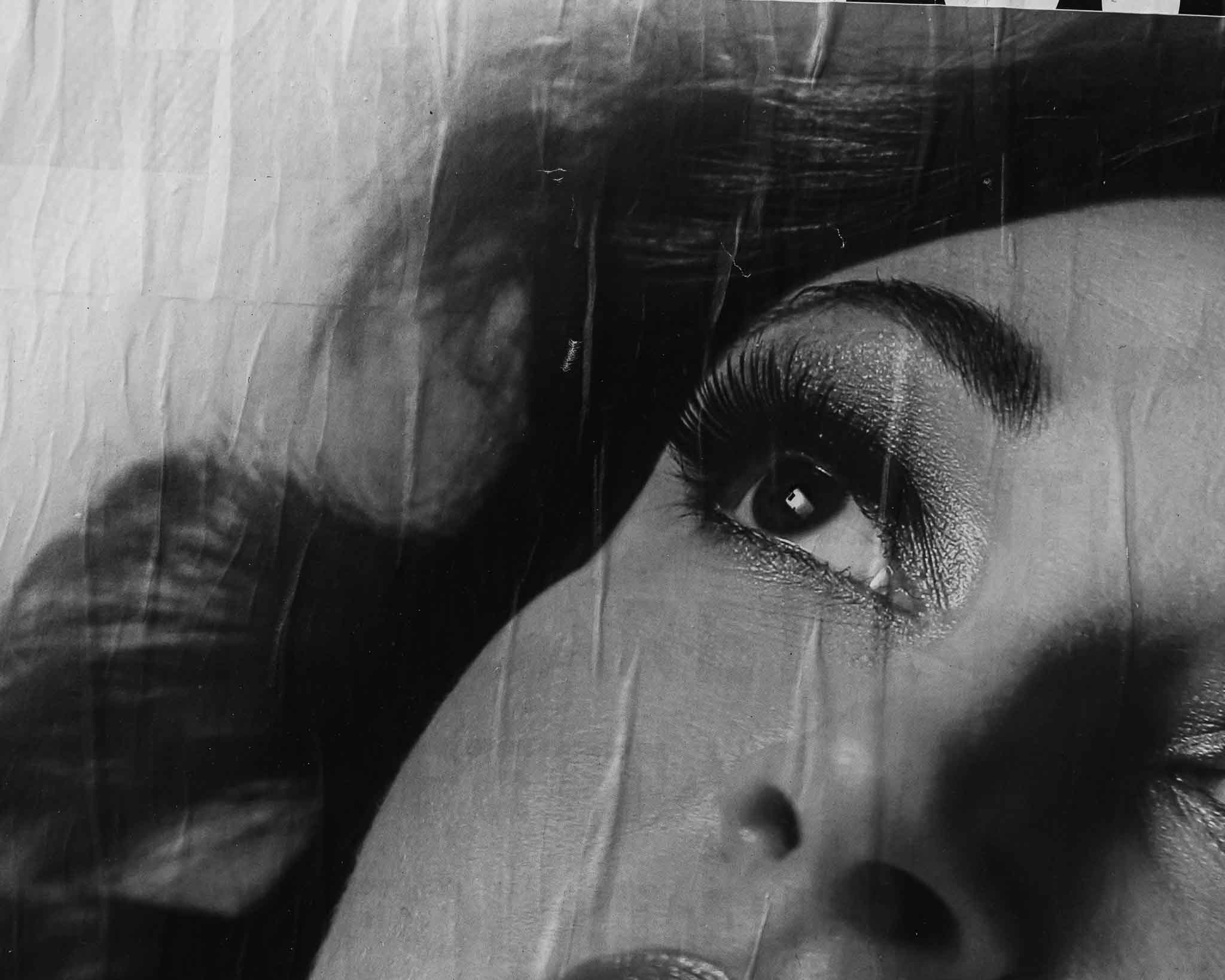
  • The cover will simply be an image, no title or other text.
  • I am thinking of moving the intro to the back or elsewhere  – need to experiment – to break with linear convention. In A4, I am opting for a very strict structure that follows traditional anthology inside of which the signifiers will be allowed to rit and party. But here the signifiers are less chaotic so there may be room for containing structure to be more flexible.

Questions

  • Please compare intro texts and let me know which is stronger. The short one in the PDF doesn’t give away too much but maybe it needs more.
  • Does the longer text spoonfeed people?
  • It’s currently called This Family Too.  This links to This Family – my very first assessment project – which linked to Family of Man. I have the book still. But I think it might be better called On The Edge of the Village
  • Finally – I am concerned about the image with the swimming ring. It is plastic made in China and says so in text on it – the sequence and edit was made before Trump started spouting his shite, and for me referenced shifts re the West’s global consumerism and the East’s increasing power. Like the later (currently A4) work, this project looks at entanglement  – time, culture, waves, intra-action of phenomena, walls – manmade and natural. We discussed this at length yesterday  – people reassured me, it did not seem like I was suggesting Trumpian xenophobia, although I could choose to clone out the Made in China to be safe, which I had considered. But we also discussed dangers of self-censorship. I recall Rachal Maclean saying when she made her film pre-Scottish referendum that both sides of the debate assumed her film was on their side due to its ambiguity. If my own work can contain an element of that ambiguity, that would be good. But if it just seems like an accusation I will need to remove the wording at the very least. I’d like to know what others think, please.

Current edit of the book  – Mono only 2 full

Things to do –

  • Add the cover image to the sequence inside.
  • Make sure no title on the cover.
  • Play with text/pagination – not linear.

Alternative longer intro

This project emerged while working on a collaborative project titled A rumour reached the village. While the poem was included in the resulting exhibition, these particular images were not. These various manifestations were made when I visited my mother in Ferentillo, Italy, for the duration of the summer school holidays in 2019. While there, it was impossible not to consider the political uncertainty affecting Europe, along with increasing levels of tension and fascism being witnessed globally.

The United Kingdom’s transitional exit period officially began in January 2020. By March, all of Europe was in lockdown due to the Coronavirus pandemic. Italy has, at the time of writing, been one of the most severely affected outside of China. The UK was one of the last European countries to introduce severe restrictions on movement and social interaction but looks to be heading in the same direction as Italy in terms of loss.

The village of Ferentillo consists of two wards, each with their own crumbling, medieval hilltop castle built for observation, protection and a place from which to call the alarm in case of danger. It is known for its museum beneath the crypt of the Church of Santo Stefano, where naturally-mummified bodies are displayed in glass cases. Some bodies are nearly four centuries old, the youngest is from the nineteenth century. The preserved inhabitants include birds and animals, villagers and visitor’s from afar, including China.

The work is made to acknowledge the fragility and ingenuity of humankind, and the entanglement of past, present and future, as well as financial, cultural and organic systems. It emphasises the fleeting moments of our personal experiences; and celebrates, as well as recognises, that which is greater than the individual. It focuses on cultural structures and natural phenomena, growth, and the vastness of existence. It is the third project I have made in the area.

Useful for BOW : Art/Writing – John Douglas Millar on why experimental writing thrives in the art world

From: Art Monthly is the UK’s leading contemporary art magazine.
— Read on www.artmonthly.co.uk/magazine/site/article/art-writing-by-john-douglas-millar-september-2011

“So what are the consequences of this for art? What trends or symptoms can we delineate? The most startling is the rise of so-called ‘art writing’, as both a recognised practice and an academic discipline, and with it the growth in the market for the quasi-literary journal. F.R.DAVIDDot Dot Dot2HBThe Happy HypocriteCabinet and a wealth of other eccentrically named journals/magazines/collections/ catalogues/zines reflect a burgeoning interest in the written word – and not just the written word, but the word transcribed in a perishable material object, a book. The rise of this bibliophile tendency has come hand-in-hand with an increased interest in archive studies and it reflects a renewed Foucauldian concern with how knowledge is produced and logged, who owns and interprets it, and who speaks and on behalf of whom. It has also paralleled the rise of the internet, the blog and the portable digital reading device. The relative safety of the paper-bound book within contemporary art circles may suggest a negative reaction to the digitising of artistic production, a skewed romanticism where books are the final ruins of modernity, a Tintern Abbey for the digital age.” (Douglas, 2011)

I found this article particularity interesting in relation to the experiments I have been doing – attempting to work as an interdisciplinary multi-media creator who uses images and text, along with digital processes – especially digital as I abhor the skewed romanticism we apply to older forms while denigrating newer forms. This is made even more unpalatable when you consider how accessible and potentially egalitarian the newer forms are. (See my DI&C essay).

BOW & CS: Research SEM

Yesterday as I travelled to the Optical Science Laboratory at UCL (thanks to the generosity of one of my son’s friend’s dad who works there) I was reading about Brittlestars in Barad’s book, Meeting the Universe Halfway (2007) which is over ten years old so slightly out of date  – but she was very excited about then new research which stated that the Brittlestar is one giant eye. By 2018, what was being reported was subtly different but still entailed an alternative way of ‘seeing’ ( to ours – or else ascertaining what and how the surrounding environment is understood by other beings). The following was reported more recently in Nature

“There’s a growing understanding that the ability to see without eyes or eye-like structures, called extraocular photoreception, is more widespread than we thought,” says Julia Sigwart, an evolutionary biologist at Queen’s University Belfast, UK, and a study co-author. Many animals, including sea urchins and some small crustaceans, use this mechanism to sense their surroundings3. Brittlestars are just the latest addition to the list.

“Sensing the environment and responding to a stimulus without having to wait for that signal to go all the way to the brain can save a lot of time,” Sigwart says. And the idea could inspire the development of robots and image-recognition technology that don’t rely on a central control system, she adds.

As for the crystal structures that researchers thought acted as microlenses, “they’re just part of the skeleton,” Sigwart says. Their transparency and ability to focus light is “completely coincidental”, she adds. [This is what Barad was describing in her book]

But Hendler disagrees. “They could still conduct light into the skeleton,” he says. “I’m not ruling out the possibility that they have some optical function.” (Gugleimi, 2018)

Gugleimi, G. 2018, How brittlestars ‘see’ without eyes, Nature, [online] Available at: https://www.nature.com/articles/d41586-018-01065-7 Accessed 19/02/2019

I have been thinking about Hoffman’s book, The Case Against Reality (2019) a lot and how its hypothesis needs to be included in the CS essay – and can’t help but wonder, what if we humans could live as a brittlestar for a few moments – and then return to this human life to compare notes.

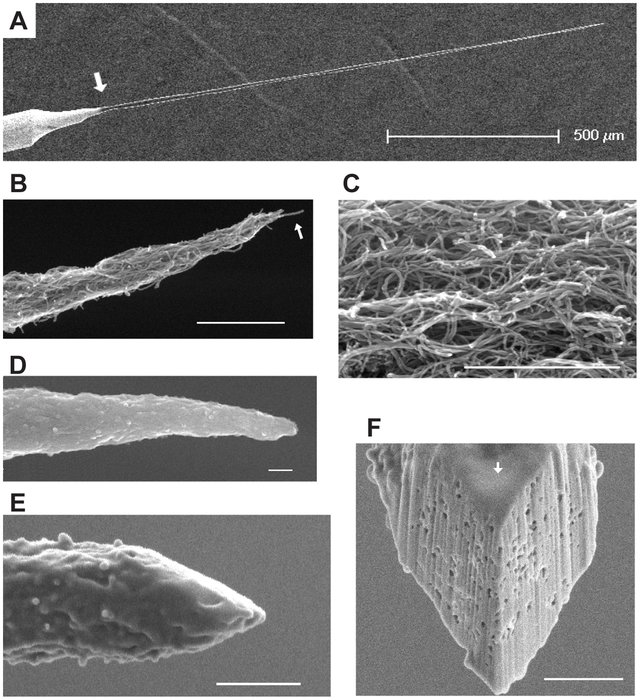
At UCL I and got to spend the day trying to figure out how to use an SEM machine (there is an SEM image in the Brittlestar article above – it’s MUCH better than anything I achieved). As Barad explains when describing STM, the bigger more powerful microscope out of the two  – the way the machines ‘see’ is almost like a blind person might with their white stick. It feels, or in the case of the SEM reads the electric field at the end of its probe, sensing the terrain and sends the information back to the computer which then renders it to an image our brains recognise.

I learned that the hardest thing, working at this level, is to get the probe cut correctly. We had to cut it ourselves and unless you do it well enough it simply won’t work. Or it will render the image poorly. The tip of the probe needs to be one atom wide. And it can be easily damaged which is why you have to cut it yourself with plyers.

SEM-images-of-CNT-probes-A-Low-magnification-view-of-a-CNT-probe-Tungsten-wire_W640

The example I was shown was more like a mountaintop, but here are some other probe points from https://www.researchgate.net/publication/248385439_Intracellular_Neural_Recording_with_Pure_Carbon_Nanotube_Probes/figures?lo=1

We spent hours trying and failing to get anything at all. Apparently, the students get marked quite highly or not for this experiment.

The other SEM images on the computer were all far better than my own one and I don’t think I will use mine in the book –  but I was fascinated by the process and it will definitely feed into the book/work/essay. However, I will I hope return to do a still life of the tools we used as the colour of the handles is rather strangely the very same blue as the cows’ eyes (which I’ve not posted here yet – planning to do a contact sheet at some point soon). I think this may make a worthwhile juxtaposition.

Here are some of my efforts. Huge thanks to Peter Doel and his colleague for allowing me to explore this different way of seeing.

We did get an image of a range of atoms (I think) although it is not even, which is the ideal aim.

BOW A4: First attempts at 3d rendering

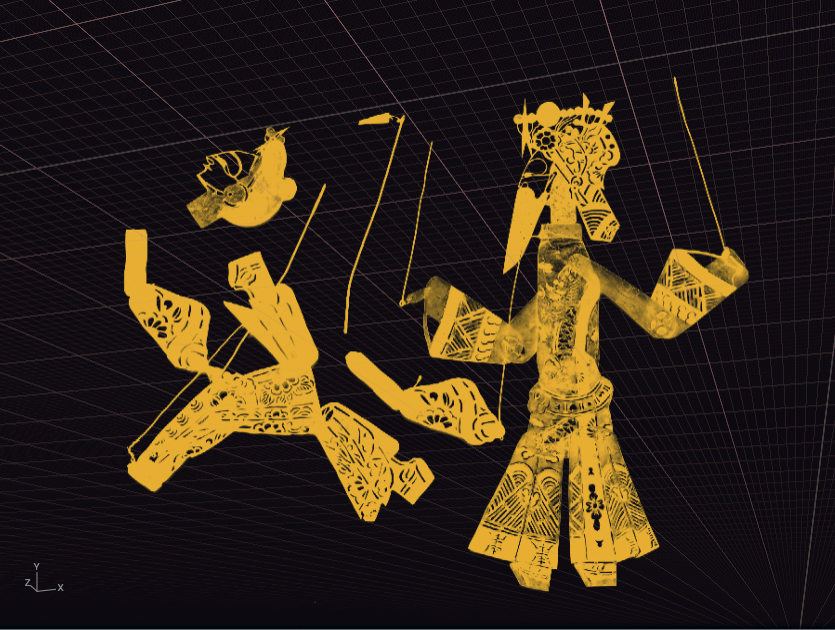
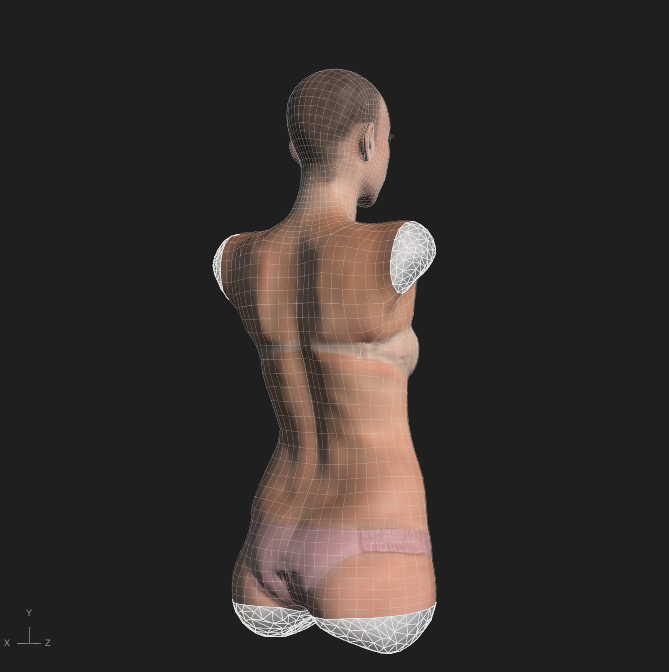
This did not go well!

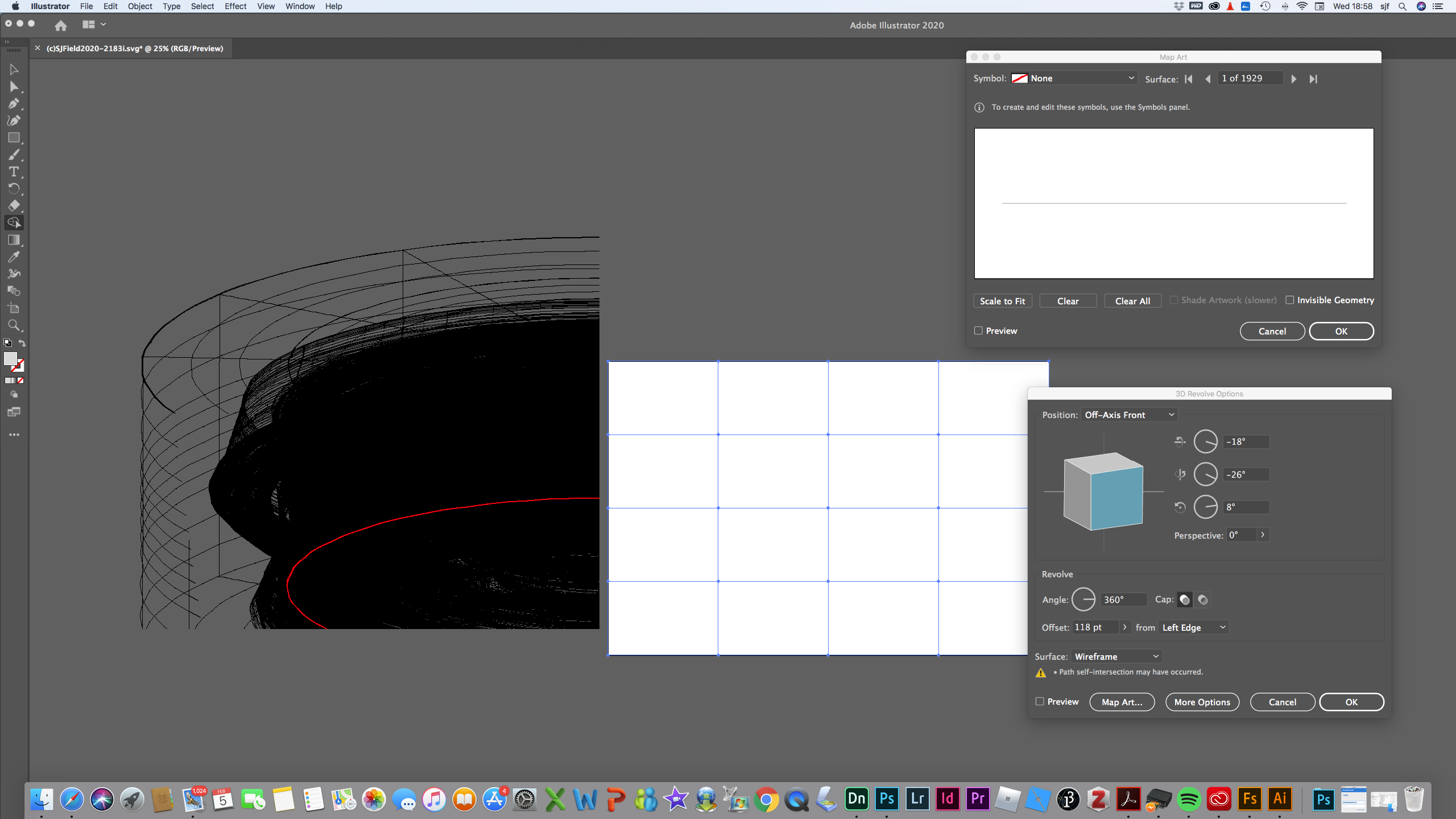
Screen Shot 2020-02-05 at 18.58.11

No idea what I’m doing in Adobe Dimension but this was all I managed… :-/ It’s a background worth thinking about I guess…
Screen Shot 2020-02-08 at 12.42.56

Literally no idea what’s going on with this one  – but am keen to have something included that denotes this constructed /simulated aspect of narrative-making. Will need to really figure this out – far from it right now. Asked an artist on Ig to point me in the right direction but was categorically ignored! Will do best to find time to figure something out in the next few weeks. Would like to have a sequence of deconstructing so-called real

Screen Shot 2020-02-08 at 12.48.07

BOW: A3 dummy booklet

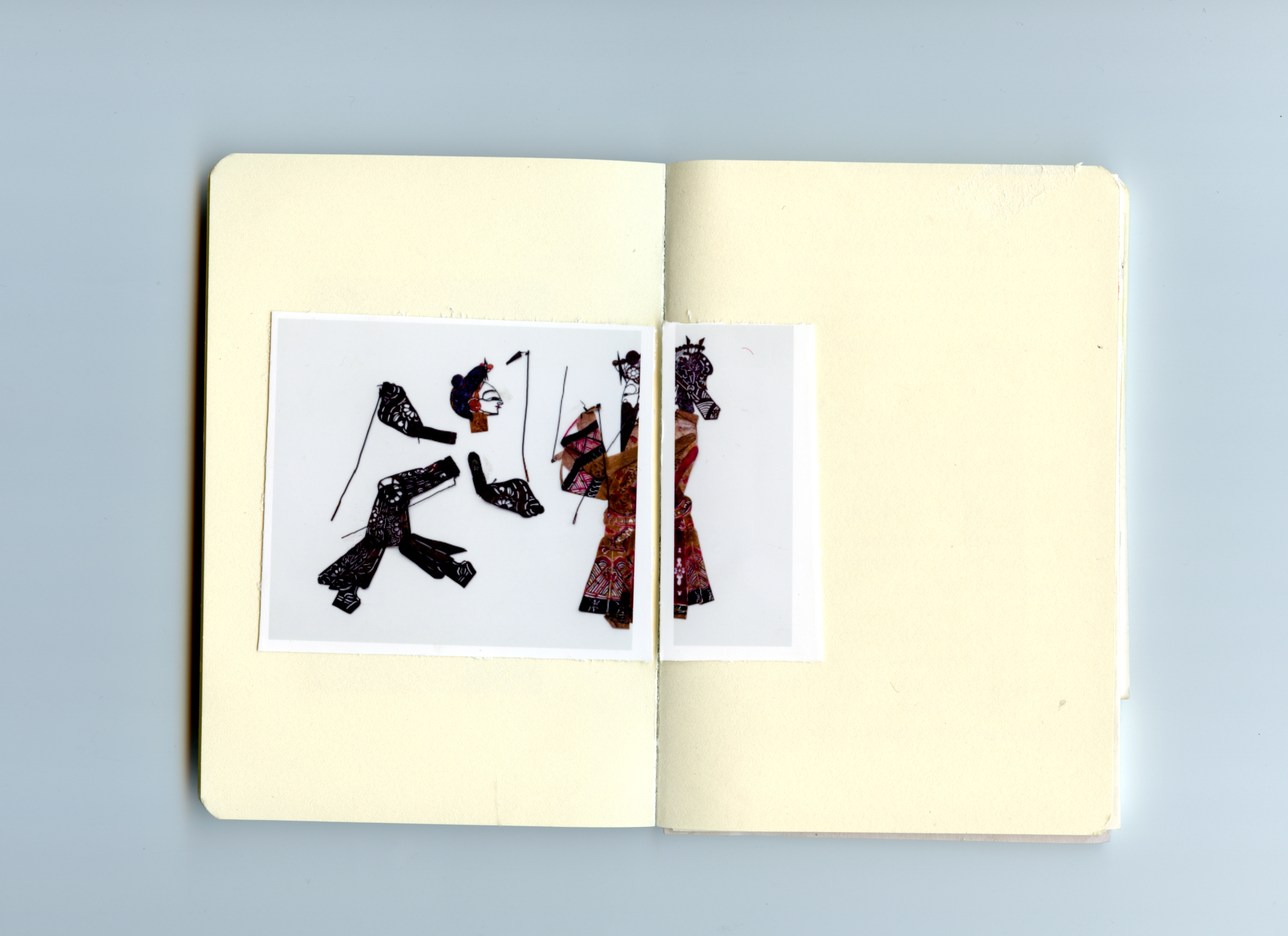
Making this  – bringing the work off the screen was incredibly useful. I was asked if it will be this size… no. (This booklet was handy – I owe my son a stocking-filler though). I will make the book in ID over the next ten days or so and fix a size but whatever happens in the making of it is open to need and further development.

This is not a fixed sequence, in fact, I scanned it in the wrong sequence because I’m tired and kept missing pages – it’s not a fixed anything, just a step in the journey. There is lots more writing which I never got to include in this initial manifestation plus some images but that is what I need to work on some more. The writing is driving this at the moment rather than photography. That’s ok. I have countless notes on my phone, phrases and thoughts, sentences, ideas which keep coming (see example below) and so I have to let that continue. No, this colour scheme is not it. The book is from Tiger…


Dummy book 1001
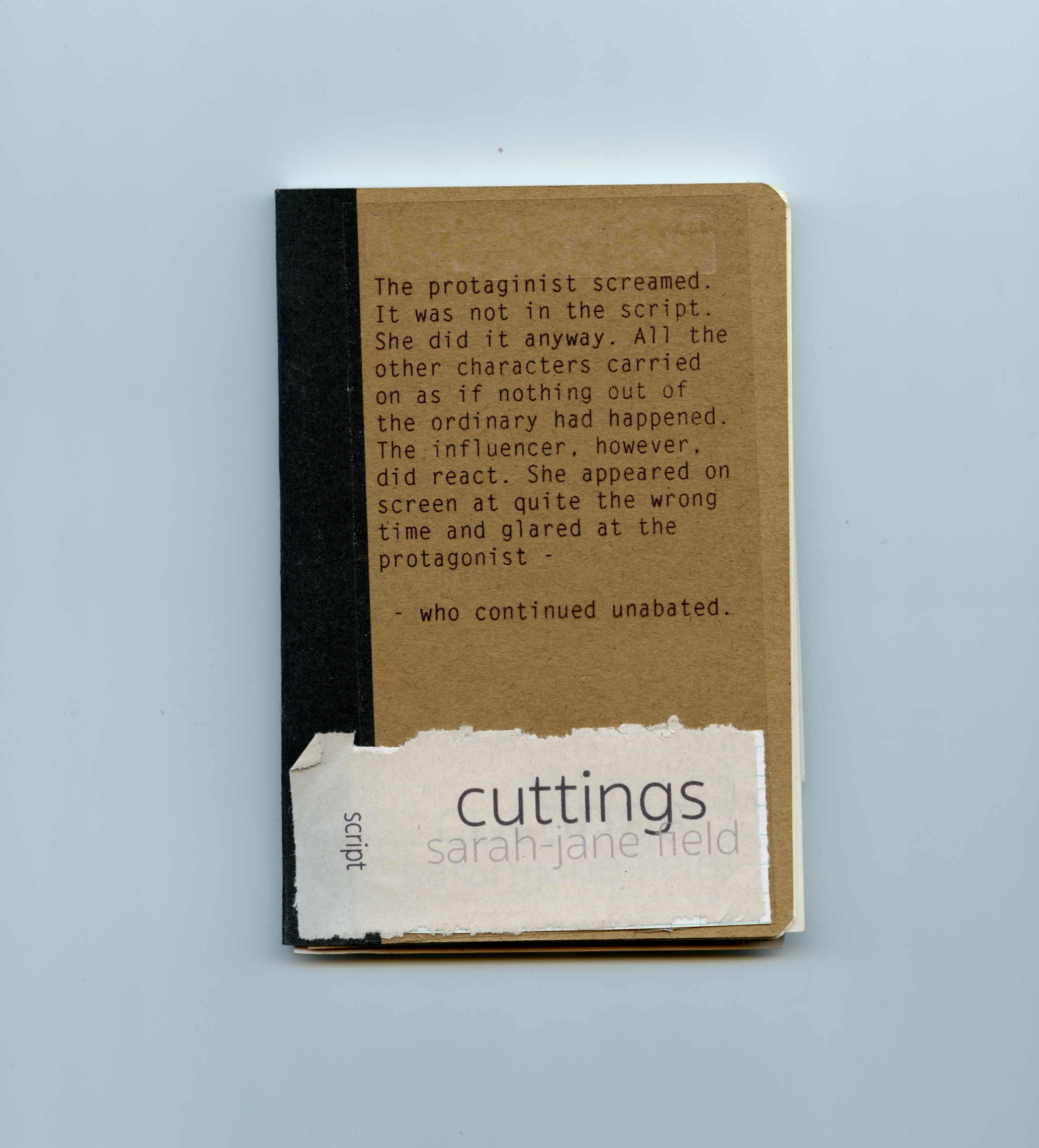
I like the idea of having a random paragraph on the cover and no title in fact. that can go on the cover page. It breaks the boundaries and establishes the fact of the alternative cut immediately. My son (interested in design) liked the raggedy cut due to a borrowed guillotine –  which I now understand is in the cupboard not being used for a reason. But I will try to photograph a tear with the macro in daylight as a result of our conversation.

Dummy book 1002
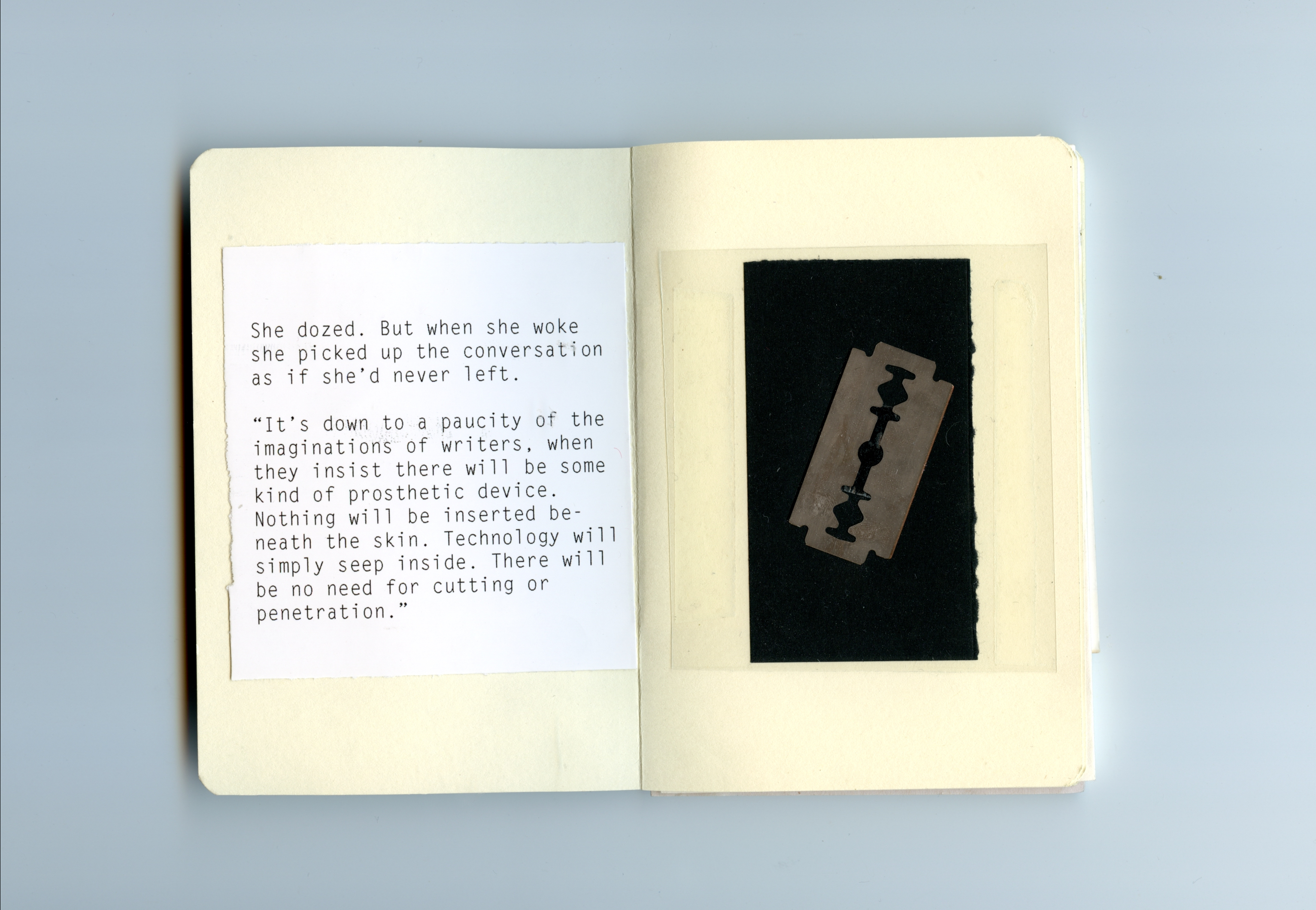
This is a real blade and I would very much like to include it as such in a version. I wonder about making an expensive version of the book which has this and other interesting things like a fold-out page  (see below) for assessment but if/when exhibiting make a zine run which will need it to be a photograph. I would need help with a book and have mentioned this to another student who made a very beautiful book. I know where my skills lie and bookmaking is not one of them.

Dummy book 1003
I am likely to use either a frame from processing for this or the shot with the female scattered. or a sequence

Dummy book 1004
Folds out because of the size but in a finished product would not.


Dummy book 1006
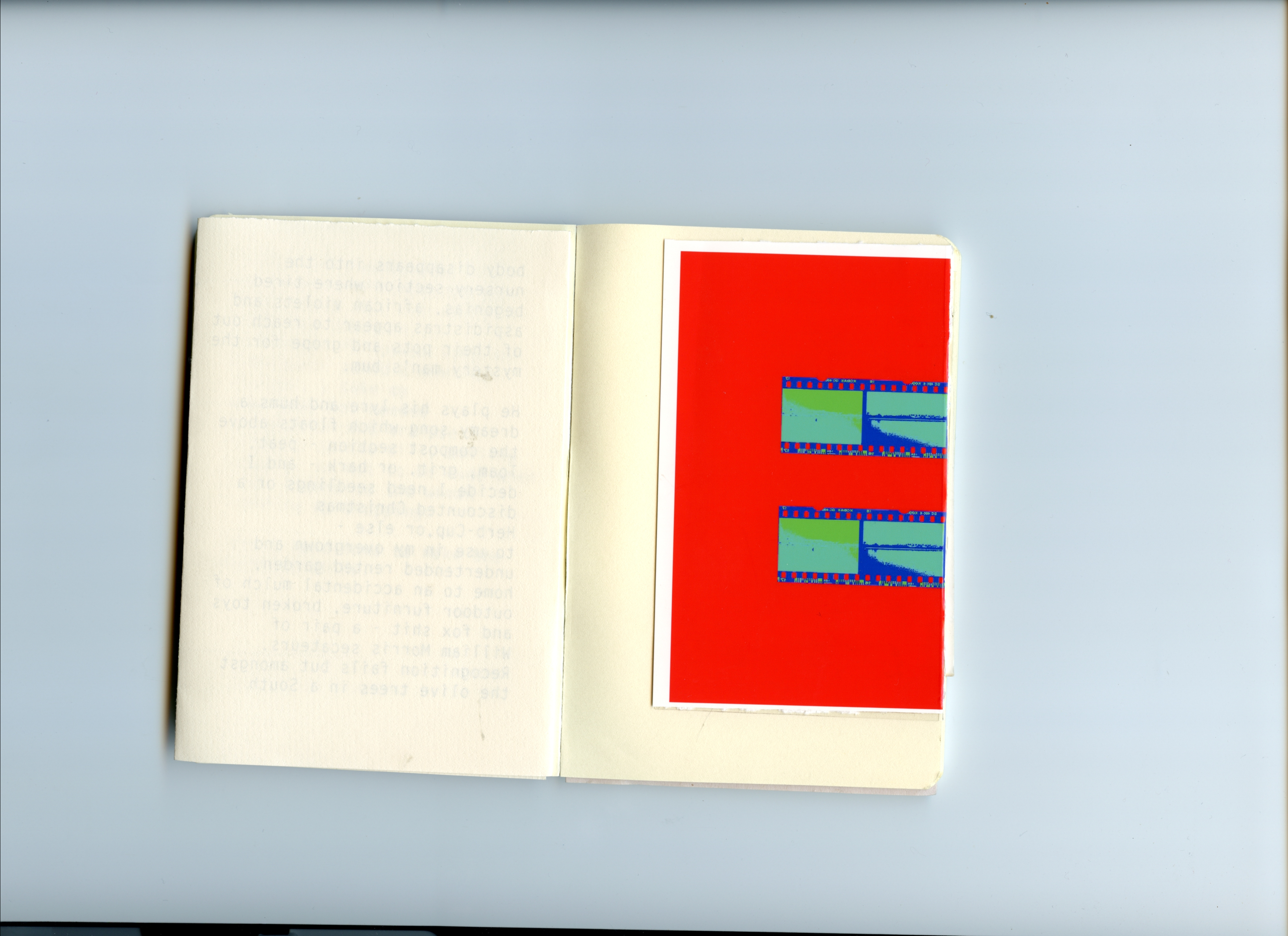
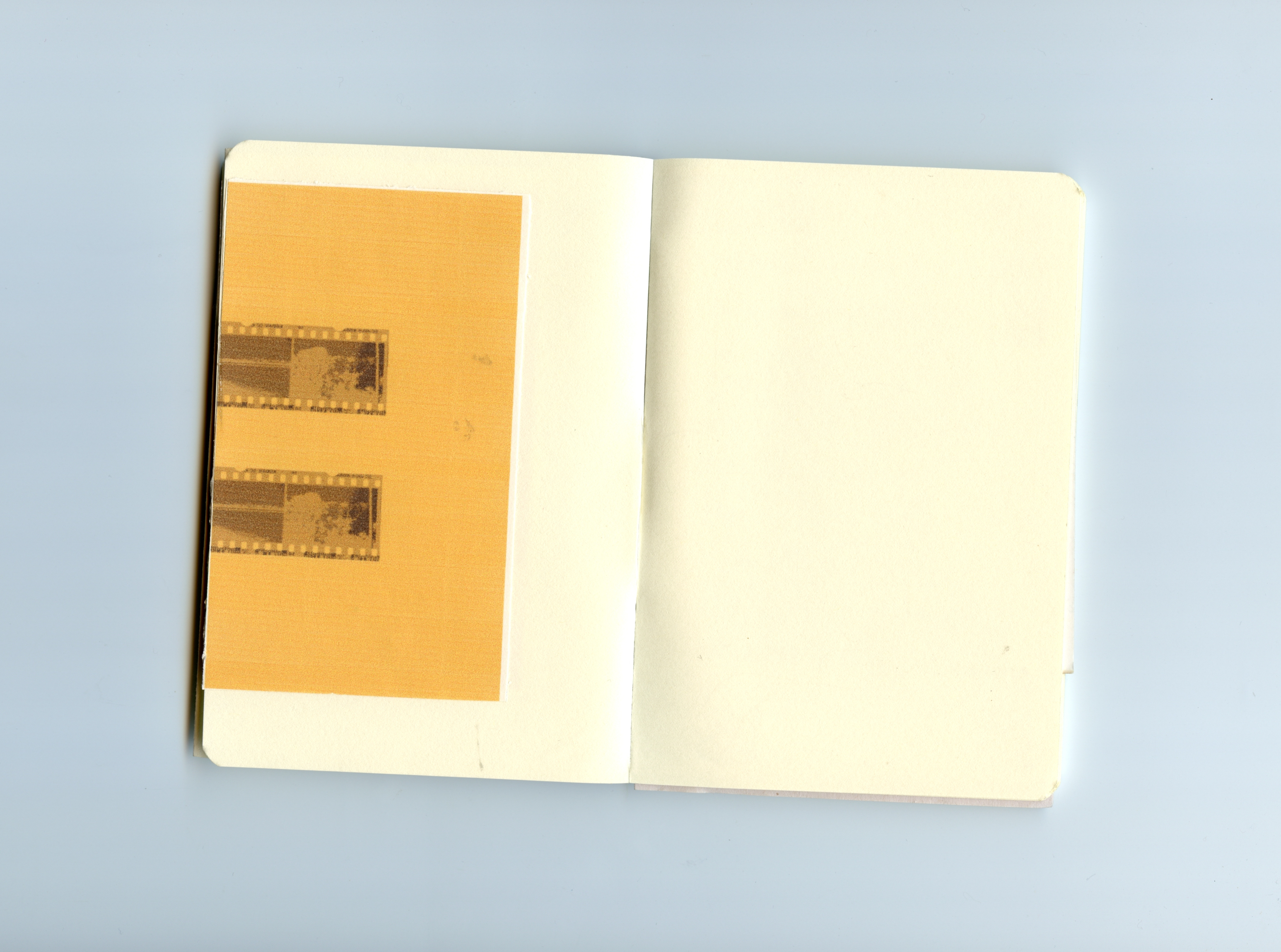
Mistake with printer which I liked split over two pages in fact, then didn’t like all the yellow on this and next page, so tried the red. My son loves this colour mix, I don’t, and will remake using specific negs I have identified. Scanned.

Dummy book 1005

Dummy book 1007
Will use something from Three Sisters or Uncle Vanya. Wasn’t sure but then realised the unconscious entanglement meant something – this book is about meaning emerging out of entangled interactions so will keep but not sure what passage.

Dummy book 1008
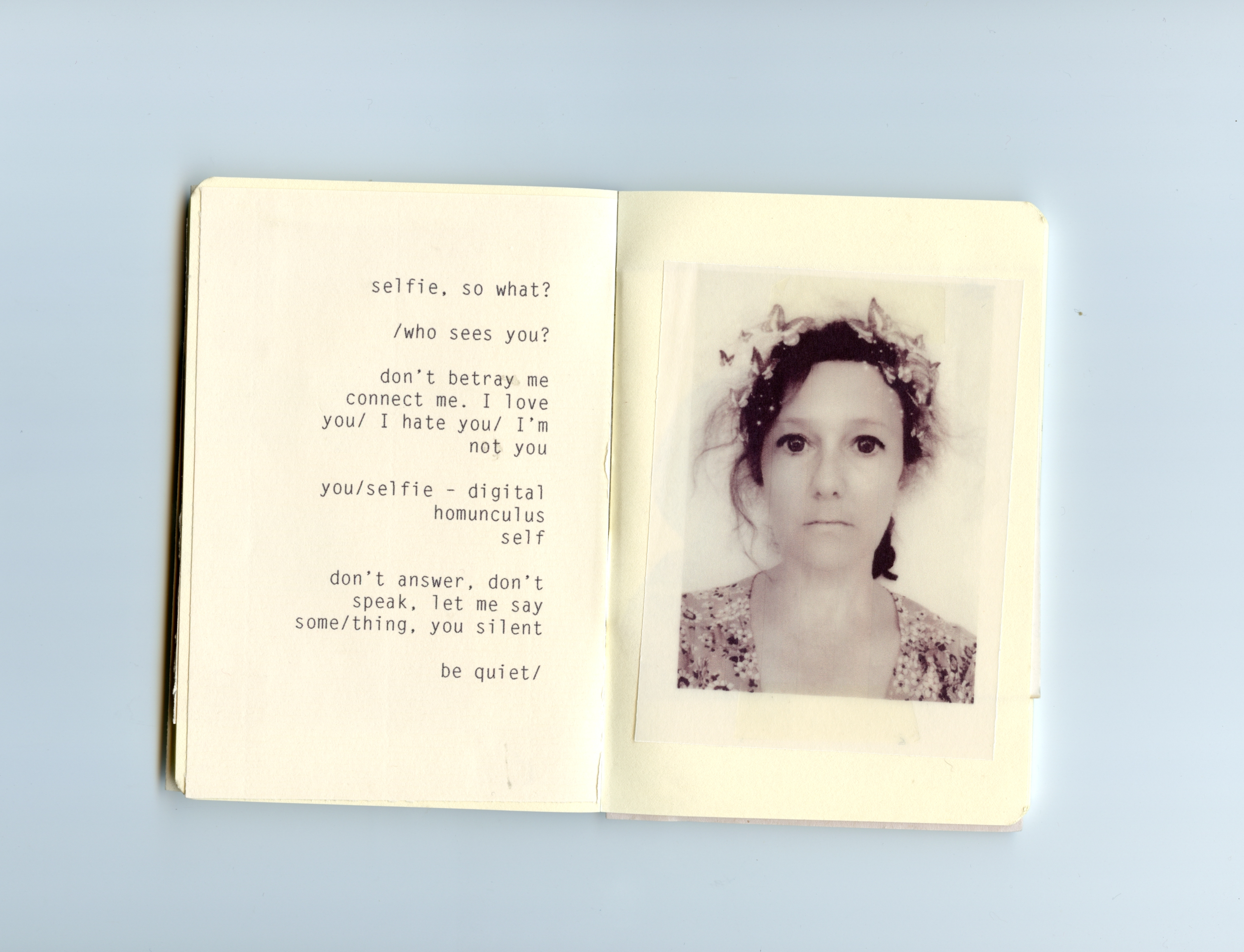
Like this combo but will play with other versions of selfies

Dummy book 1009

Dummy book 1010
Mistake covered up with something lying around  – like it. but need to find another or make sure I can take this out and scan it well enough. I do like these colours and wall paper.

Dummy book 1011Dummy book 1012


As mentioned, some notes from my phone with ideas, writing, things I’ve heard etc. I actually like the randomness and unstructuredness of some of this as-is, there is a freedom to it that isn’ in the earlier stuff:

The traumatised grown up

Sons hand me their hatred to carry around 

To the academics who fail to recognise their privileged booty 

Manifesto for the digitised self/age 

/ Alexa I’d like a wife

Sure, it’s fine for Philip Larkin to peer out of his train window and scoff at cheap fabric and gaudy hats 

Behind the shopfront, beneath the surface  everyday consumer 

Transactions – film world 

Trapped inside these words which cannot entertain a different world  

Split atom

Colonialism 

Sum

Of

The

Time 

&

Other 

Entanglements 

Reality is fucking with you 

Void realm 

Simpering 

Deity, divine, godhood, diabolical, decapitation, apotheosis, Ex rain god, enchantment  / Zeus sat down with Greta Garbo  – they don’t know how to create gods anymore, they worship objects. Laughter/ Zeus, my children don’t listen to me, I might as well not exist, I despaired then you and your friends came along, but then it was like the old days, not like that guy who wanted sole charge. He got it all wrong, 

There are no photographic records of my Czechoslovakian relatives, brewers who perished under the Nazi’s, in camps and ghettoes – missing images 

Mushroom, beige, magnolia 

Cut advert, cutting room floor, shiny nose, cut hair, terrible ‘boyfriend’ jerk, more money than any other job, least money with the BBC – most recognizable.

Floor, my entanglement with Tom 

BOW/CS A3: Research/Sketches, Reality Evolution, perception

According to Donald Hoffman’s theory which I have discussed several times (Literature review ),  we did not evolve to see reality as it truly is, as has been argued. Rather, we evolved to see the sort of reality we need to see to for ‘optimal fitness’. We perceive far less than there actually is because to see it all would be unhelpful. What’s more, according to Hoffman, the objects we see, including space and time are like desktop icons – constructed objects that represent the goal we are either after or trying to avoid. As hard as this is to understand, and Hoffman admits he may very well be wrong but that his theory makes the ‘hard problem’ of consciousness approachable, his idea sits well with many of the other theories I have been reading about since I picked up The Ego Trip by Julian Baggini (2011) (when I began UVC) followed by a raft of other books exploring similar themes.

I have been trying to express and understand these subjects in my writing, and looking at and photographing objects and phenomena in the world. The photoshopped images below are attempts to explore these ways of thinking about the world.

Fred Ritchin’s After Photography (2009) has some good sentences which I will introduce into my Lit Review and no doubt take forward into the essay.


“…some quantum theorists, foremost amongst them, Neils Bhor and Heisenberg himself, argued that fundamental reality is essentially indeterminate, that there is no clear fixed, underlying ‘something’ to our daily existence that can ever be known. Everything about reality is and remains a matter of probabilities […] We have tried to use the photograph to concretize the probabilities (isn’t that what the “decisive moment” is all about?), reassuring us that reality is more solid than what our theories tell us.” (180)

In Data Selves (2019) Deborah Lupton quotes Kember and Zylinska (2012) to describe how photography is an “agential cut” aimed at imposing “meaning and order” and “delimiting choices” (29). As Ritchin says an alternative “may be too disconcerting, if not terrifying.” (ibid)  As he describes, digital technology and photography in particular “can begin to be receptive to the oddities described by newer theories” [quantum and consciousness related]. (177) Superpositions, endless possibilities, entanglement, for instance, can all be alluded to using malleable data either as a process or a representation (which if one takes Hoffman’s idea on board are completely intra-related in any case).

Some sketches – I wonder if these would benefit from more contemporary mixes (a bit like Flowers for Donald). Still a bit Guardian headline pics for my liking :


IMG_9765iiilow-
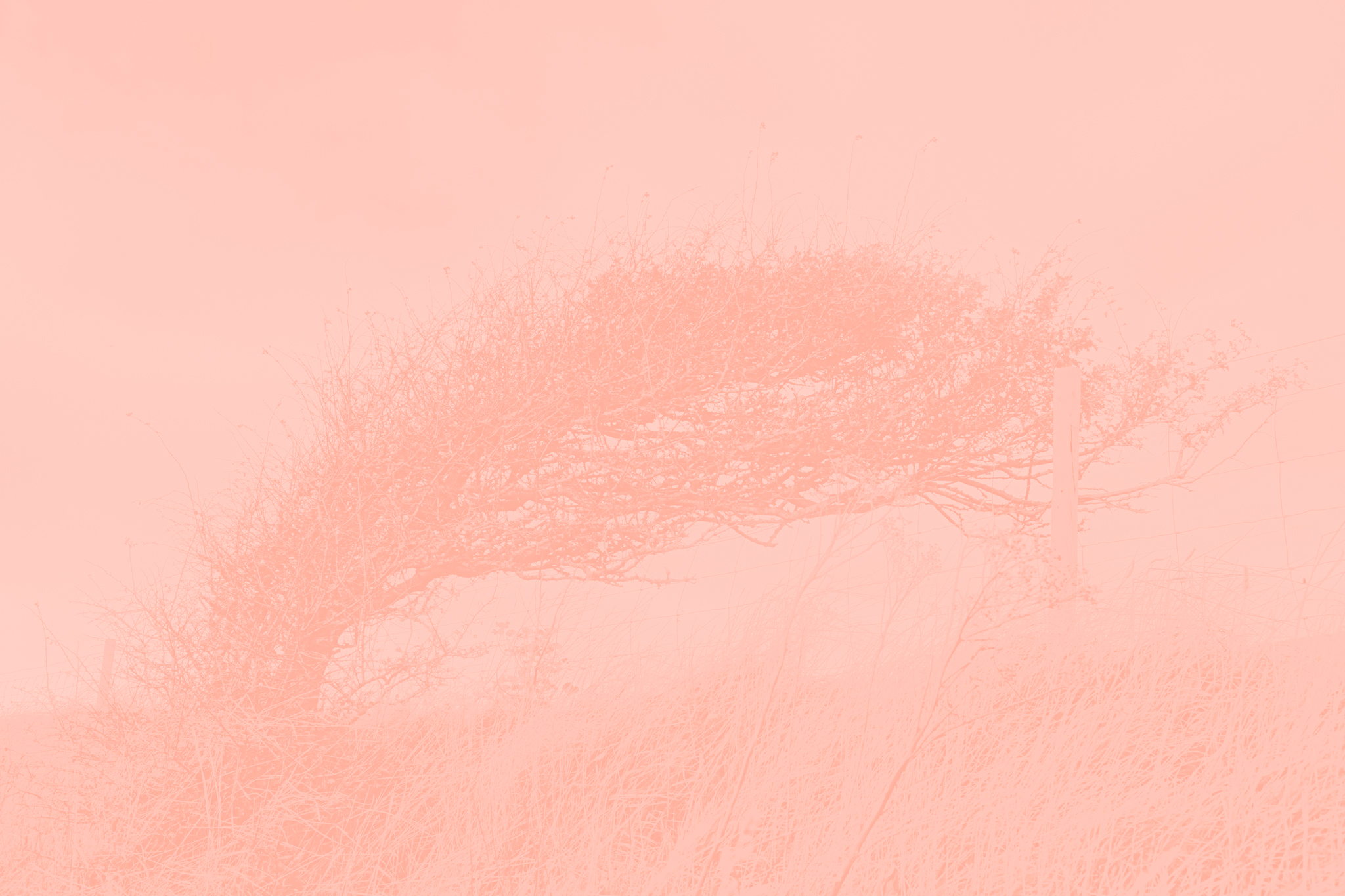
Isle of White – windswept hilltop

Landscape with Bridge - The Metropolitan Museum of Art
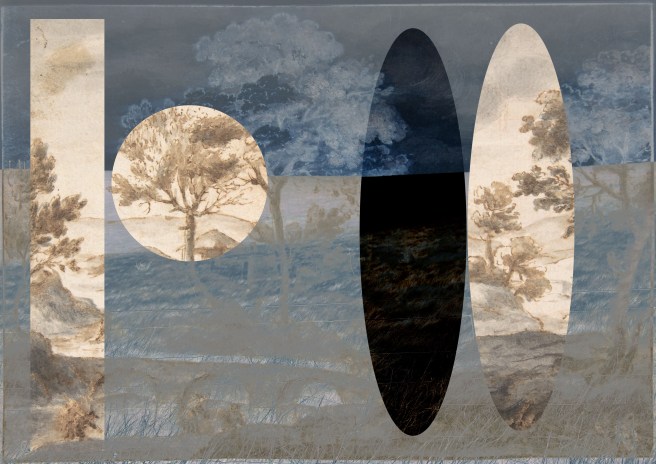
Similar to above but layered with an anonymous 17th-century pencil landscape downloaded from Google Art and supplied by the Metropolitan Museum of Art


Windswept tree  – shaped by the elements – differentiation reduced by processing decisions.


(See Orpheus story – trees to this day in shape of dance to his music)


Hoffman, D. D. (2019) The case against reality: how evolution hid the truth from our eyes. London: Allen Lane.

Lupton, D. (2019) Data selves: more-than-human perspectives. Cambridge, UK ; Medford, MA: Polity.
Landscape with Bridge – Anonymous, Italian, 17th century (s.d.) At: https://artsandculture.google.com/asset/landscape-with-bridge-anonymous-italian-17th-century/EwHp9J9QWhanmw (Accessed 10/11/2019).

Baggini, J. (2011) The Ego Trick. [Kindle edition] London: Granta Books.

BOW: Assemblage

Since sending out various versions of work and receiving the feedback I have developed the overall concept and presentation further – seeing what could be ditched but also how I would bring some of the various elements I had created together into an ‘assemblage‘.

I do not much like the word assemblage but after reading it used (a great deal) in a blog by Deborah Lupton, the author of Data Selves: More-than-Human Perspectives, it seems like the correct word for the collection of images, sounds and materials I’ve gathered together. She writes:

I examine the interplay of human and nonhuman affordances associated with digital technologies – devices, software and the digital data they generate – and the agential capacities that are opened up or closed off as these things assemble. I ponder the questions of who benefits from these agential capacities, and in whose interests they operate. Here again, affective forces are central to the engagements of humans with these nonhuman things and the capacities that are generated by their gatherings. I address how human-data assemblages can generate agential capacities that empower and vitalise actors in the assemblage; but can also expose them to vulnerabilities and harms.

This approach recognises the entanglements of personal digital data assemblages with human action, reaction and understanding of the world. Personal digital data assemblages are partly comprised of information about human action, but their materialisations are also the products of human action, and these materialisations can influence future human action. While digital data assemblages are often conceptualised as immaterial, invisible and intangible, I contend that they are things that are generated in and through material devices (smartphones, computers, sensors), stored in material archives (data repositories), materialised in a range of formats that invite human sensory responses and have material effects on human bodies (documenting and having recursive effects on human flesh). (2019)

I am therefore creating an assemblage although I have not used this word.

The assemblage consists of:

  1. A video – itself a collage, a type of assemblage. While not a still collage like Höch’s were, it was made to emulate that trope, cutting up and pasting material that exists in the world. It includes audiovisual material that is available on the internet but contains signifiers of earlier technology. It will be shown on a Kindle – a handheld device.
  2. The film will also be available on my website but it will be a different version. Mostly the same apart from one or two tiny sections, but with an alternative audio track. The instruction to visit the website is printed on newsprint and is part of the assemblage.
  3. Still frames from the film which have been ‘captured’ and frozen  – in more or less the same way a photograph of life is captured and rendered a still image, using a slightly different tech/method – and printed on newsprint. These will be placed on the platform or hung from sticks.
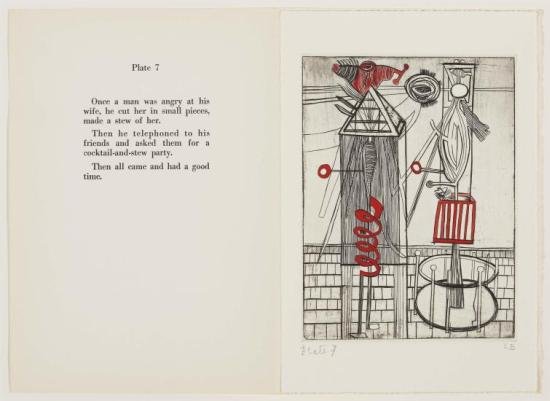
  4. The poem printed on a tabloid page, orientated portrait. I hope this will hang above and slightly behind the kindle, perhaps alongside printed newsprints but I will need to see how this pans out when we set up. I was very influenced a long time ago by Louise Bourgious’ He Disappeared into Complete Silence. This is a book with several plates each of which consists of text and a drawing. The drawing is not an illustration. And sometimes it is hard to make the connection. But they are made to be seen together. I feel the poem and the video work this way too. Each can stand on its own but the point of the work is only brought to the fore when they are placed beside each other: A moving image piece alongside text, working with it but not illustrating. I might have read/performed the text in a video or even live. But this did not feel the right place (collaboration) for that – perhaps I might have reached a way of doing this if we’d had longer or were working in a smaller group -and it is something to consider for the longer-term, BOW-wise. 


DO02148-007_0
Image Louise Bourgeois He Disappeared into Complete Silence 1947 From: https://www.museoreinasofia.es/en/collection/artwork/he-disappeared-complete-silence-6

The work will exist in a ‘village’ (the platform) alongside other work made by my collaborators. The contents were influenced by their interests and the interactions I had with them. It is a reflection of them and my time with them. So my work is part of a greater assemblage, a network of creators which itself exists within a further larger assemblage – i.e. the three groups organised/curated by Pic London. That too is an assemblage which is again part of something greater. And so on = the fractal nature of existence.

Looking back, this is the pattern of my work. And now I know why. I am not focusing on one tiny aspect. I am recreating the chaos and interaction of conscious experience (not an individual, not an isolated and alienated concept, not one thing).

When I submit the assignment I will include critical information I sent to Pic London  – but here since it is relevant, I will just add a quotation I used which I have inserted into my work previously, and put at the front of my Self & Other blog:

“There is no such thing as a single human being, pure and simple unmixed with other human beings … [the self] is a composite structure … formed out of countless never-ending influences and exchanges… we are members of one another.” (Joan Riviere, 1927) It seems the assemblage whether it’s made up of flesh or tech or both and all sorts of other stuff is a description of Riviere’s statement.

Ref:

Lupton D. (2019) Excerpt from Introduction of Data Selves [online] WordPress Available from: https://simplysociology.wordpress.com/2019/09/01/excerpt-from-introduction-of-data-selves/ [Accessed 2/10/2019]

The Museo Reina Sofía (2019) He Disappeared into Complete Silence [online] User-generated content. Available from: https://www.museoreinasofia.es/en/collection/artwork/he-disappeared-complete-silence-6 [Accessed 2/10/19]