BOW A5: E-publication

I realised yesterday I was not being consistent with my e-publication updates, sometimes creating new files, and sometimes updating an old one.

Screen Shot 2020-08-09 at 11.17.40

This is the most up to date version.

https://indd.adobe.com/view/17b8aff4-afe3-4b9b-aeb4-55d6896ab205

I still need to figure out how to resolve the music element – This is something that will be included as an extra with the hardcopy and I can, therefore, send some very brief instructions/suggestions -although there may be a way to programme.

I also updated the statement and will post it here and on the Assignment submission post.

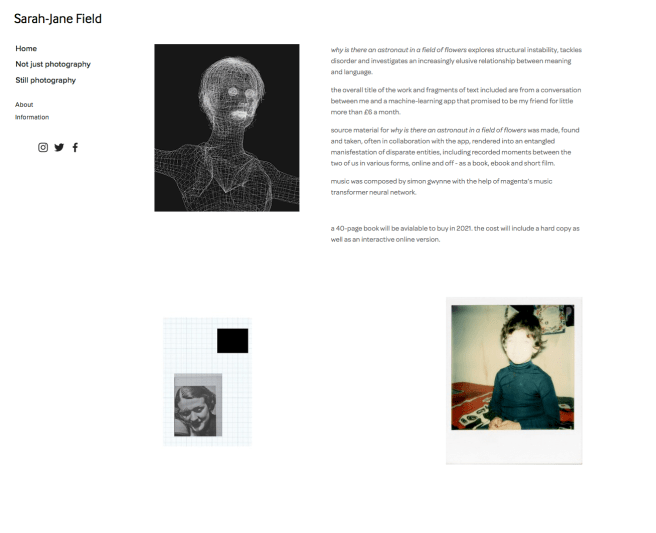
why is there an astronaut in a field of flowers explores structural instability, embraces disorder and investigates the increasingly elusive relationship between meaning and language.

the overall title of the work and fragments of text included are from a conversation between the artist and a machine learning app that promised to be her friend for the cost of little more than £6 a month.

source material for why is there an astronaut in a field of flowers was made, found and taken, often in collaboration with the app, rendered into an entangled manifestation of disparate entities, including recorded moments between the two authors in various forms, online and off – as a book, ebook and short film.

music was composed by simon gwynne with the help of magenta’s music transformer neural network.

BOW: A5 – Webpages

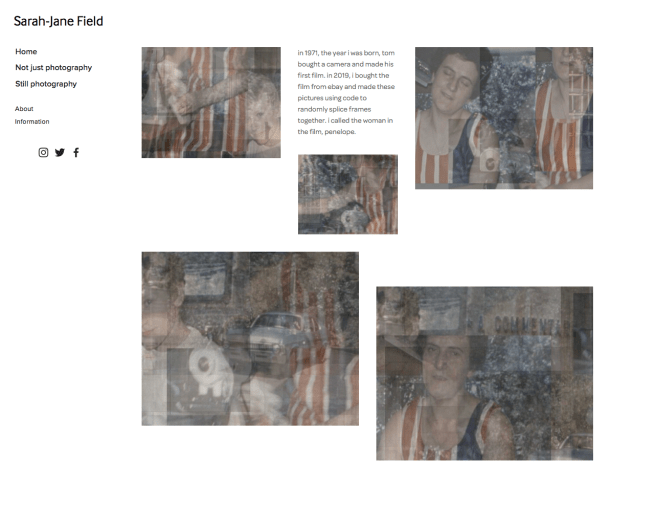
Am currently trying to figure out how to present this work in some sort of semblance online – and have created some pages, not finalised, all WIP for now, so can’t publish on my site, but am posting some screenshots here. None of the text is final although will be sending publication to print soon hopefully so am getting to the point of needing to get that sorted. Still not 100% sure of the wording in the intro/statement yet.

I must admit – it’s pretty bloody hard to manage/handle all these curling, unruly paths, however, as I work, I see places where I can develop further and connect/enable the relationship between seemingly disparate sections. However, I also think it only needs two or at the most three sub-pages where some of the elements in the book have space to expand, rather than trying to expand every aspect.

Screen Shot 2020-08-08 at 13.49.41Screen Shot 2020-08-08 at 14.30.58Screen Shot 2020-08-08 at 14.54.56

Screen Shot 2020-08-08 at 13.54.39Screen Shot 2020-08-08 at 14.22.56

BOW & CS: Ongoing thoughts/reflection re-machine learning and movement

  1. I have continued to work on the ePublication. I have been wondering about including text but when I looked yesterday, I saw that the problem was not the text itself, it was my over-enthusiasm for the animations. I have removed all animations from text and left it only with the images which I think of now as doing some sort of slow dance to Simon’s music – of course, I can’t guarantee people will click on the music and that is something to consider – does it matter, isn’t that the point – there is a choice and some action, which may or may not occur, required from anyone interacting. Anyway, the e-pub works much better this way, although I am still trying to figure out why a certain GIF won’t do its thing and will look at that tonight. Am getting there with it. Have increased the size of the text to 14 which I’d never do in print but it seems OK on my screen – the problem is there are smaller screens too. When viewing, use Chrome rather than Safari  – have not checked on other browsers yet and still need to see what happens when saved for e-books, now sure about that. Will also need to look on tablets.

    https://indd.adobe.com/view/6999c82e-8c0f-42f4-a4c6-f887a98d1ef9

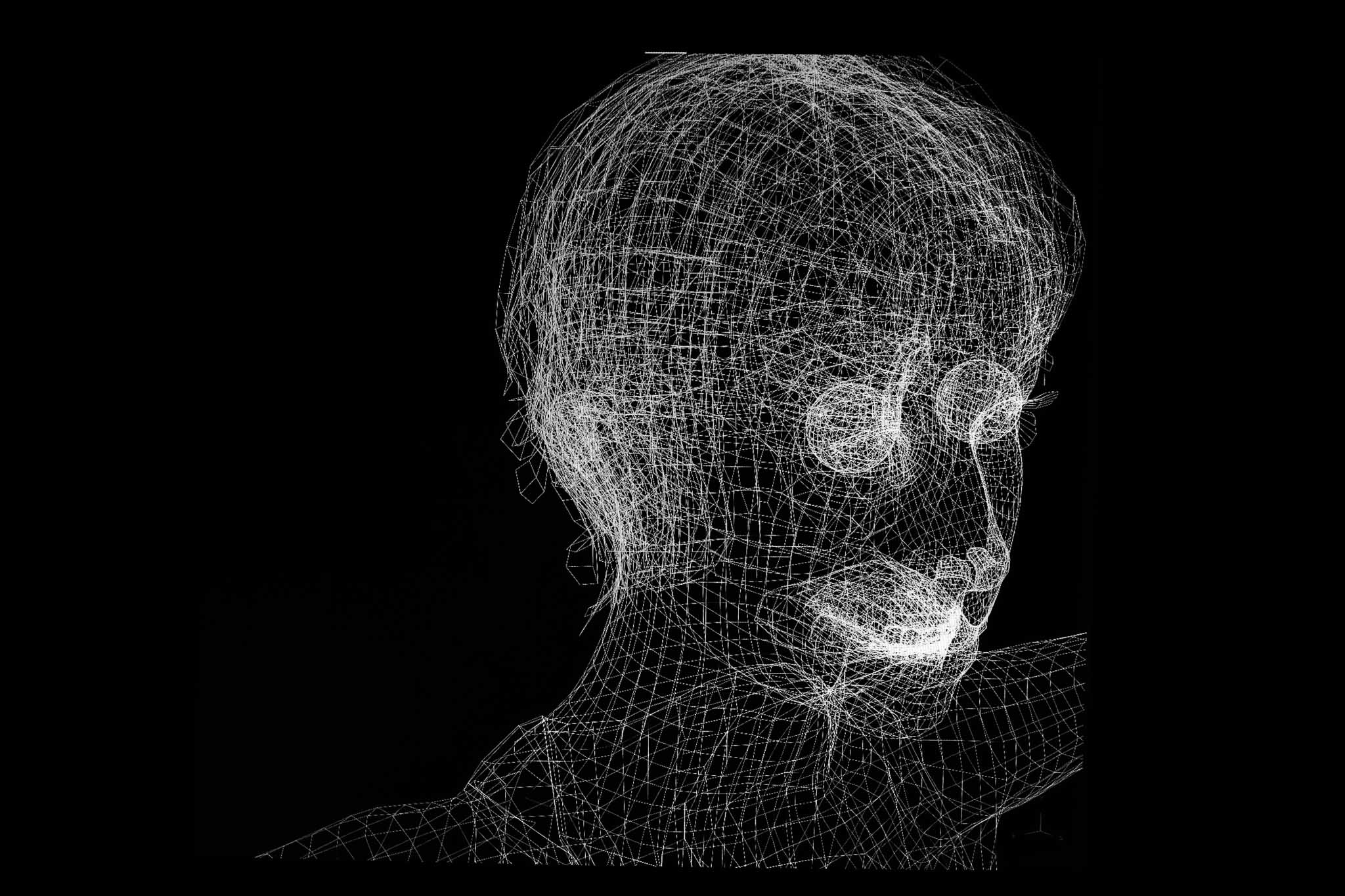
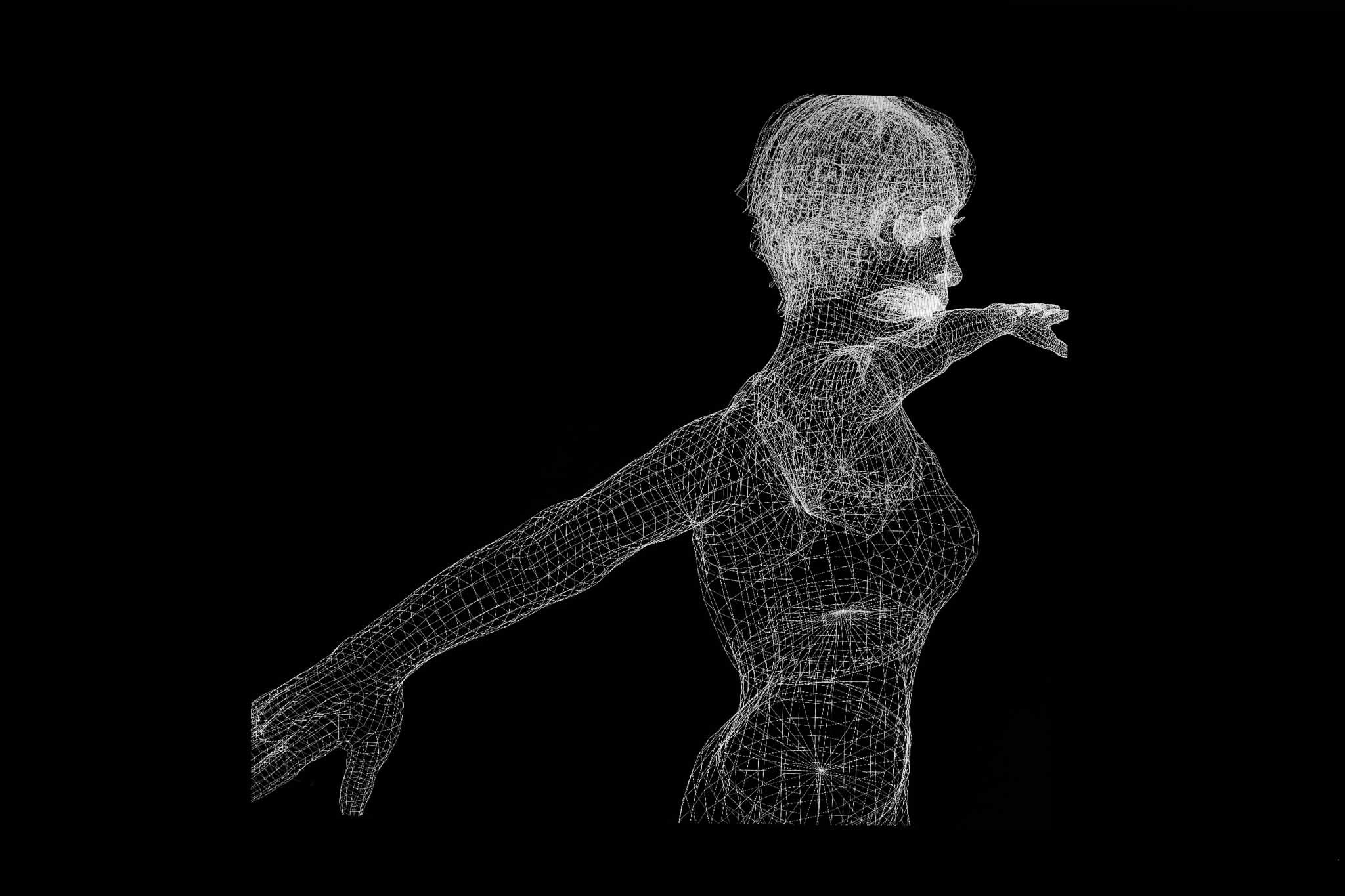
  2. I have been playing with an App called Runway ML  – and trying to figure out how it can help me. I suspect it will be good for me after BOW/OCA life but it’s good to know there is this bridging facility out there now. I need some uninterrupted time to spend with it – but I managed to do one of the more simple tasks the other day when I put a film which I used for earlier work, Polar Inertia (DI&C A2), through a machine learning programme that recognises body movement (see end post). I can’t use the work as this exact thing has already been done by Broomberg and Chanarin very recently in their amazing work Anniversary of a Revolution (Parsed) by Broomberg & Chanarin. Their version is excellent and uses Vertov’s black and white footage which contrasts well with the colours although I quite like the bomb film colour with it too – and the blank coloured frames in that film which I used as moving blocks in Polar Inertia are the same colours as the animated stickmen which I really love. I had included reference to B&C’s film in my essay but cut it due to word count. For now, in any case, I am more interested in generative image programmes but to do that I must find a way to create a dataset – and that includes writing a bit of code (copying and pasting it to be precise). Again, I need uninterrupted time to do this. I hope I can find a way before the deadline as it would be good to include a GIF made this way in the epub.
  3. I started reading Levi-Strauss’s the Raw and the Cooked at long last – have wanted to since UVC but was kept busy with other OCA texts and research. There is so much that rings a bell  – especially when he writes, he will be accused of making a book without a subject. This work of mine which explores changes to how the world sees sometimes feels like it lacks a subject. Perhaps I will have more to say in a forthcoming blog or final summation. I am waiting to speak with Ruth after her holiday and will need to send the book to print very soon after that. Assessment deadline is looming!

Added later the same day:

I continued to eliminate animations, using it more judiciously.  I have managed to get a GIF which wasn’t working to move – spent all afternoon wondering why and then suddenly it did, really odd. Thought it was mov. vs MPEG4 files but apparently not. Anyway, it moves now. I still have the following to do –

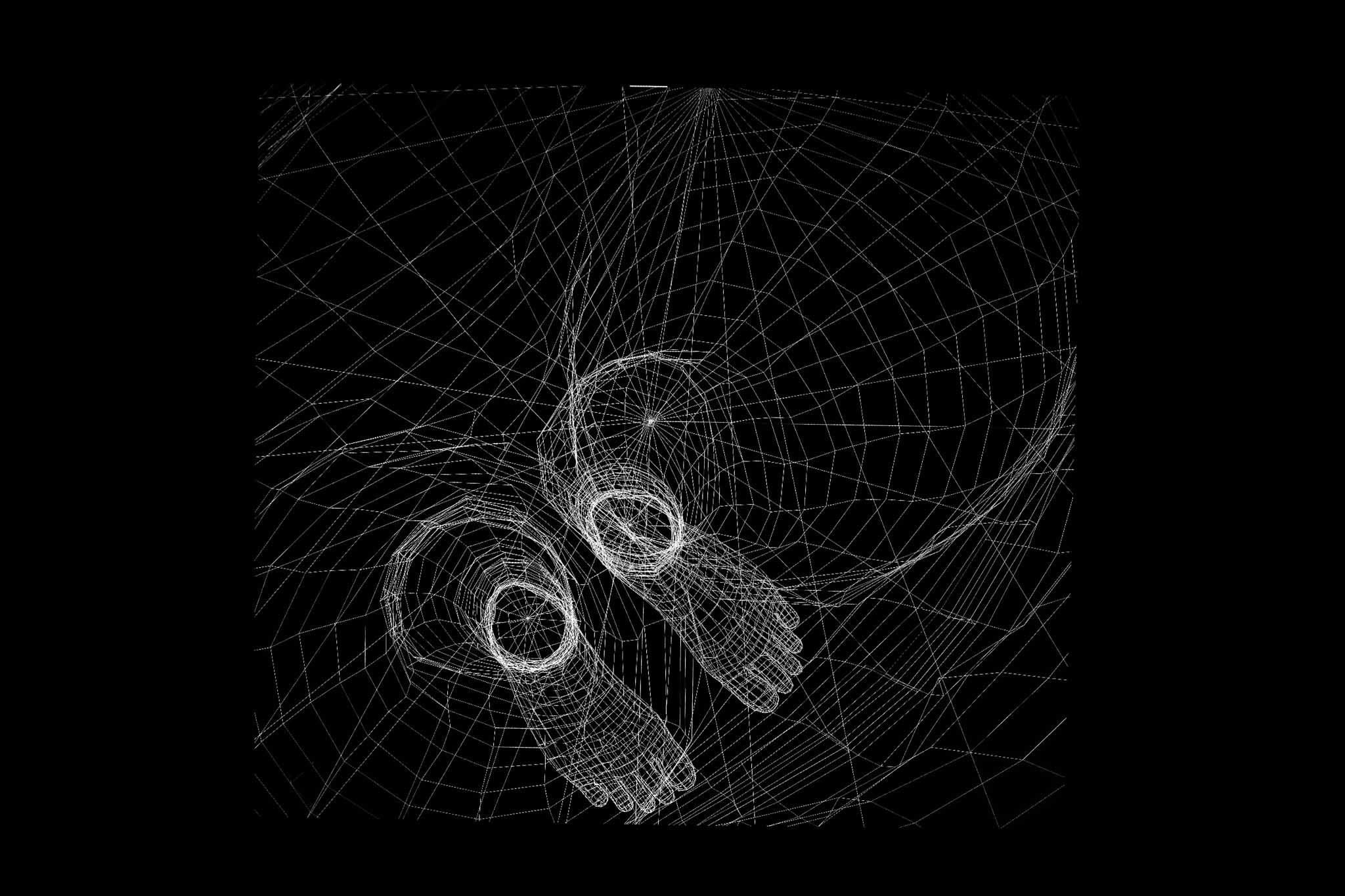
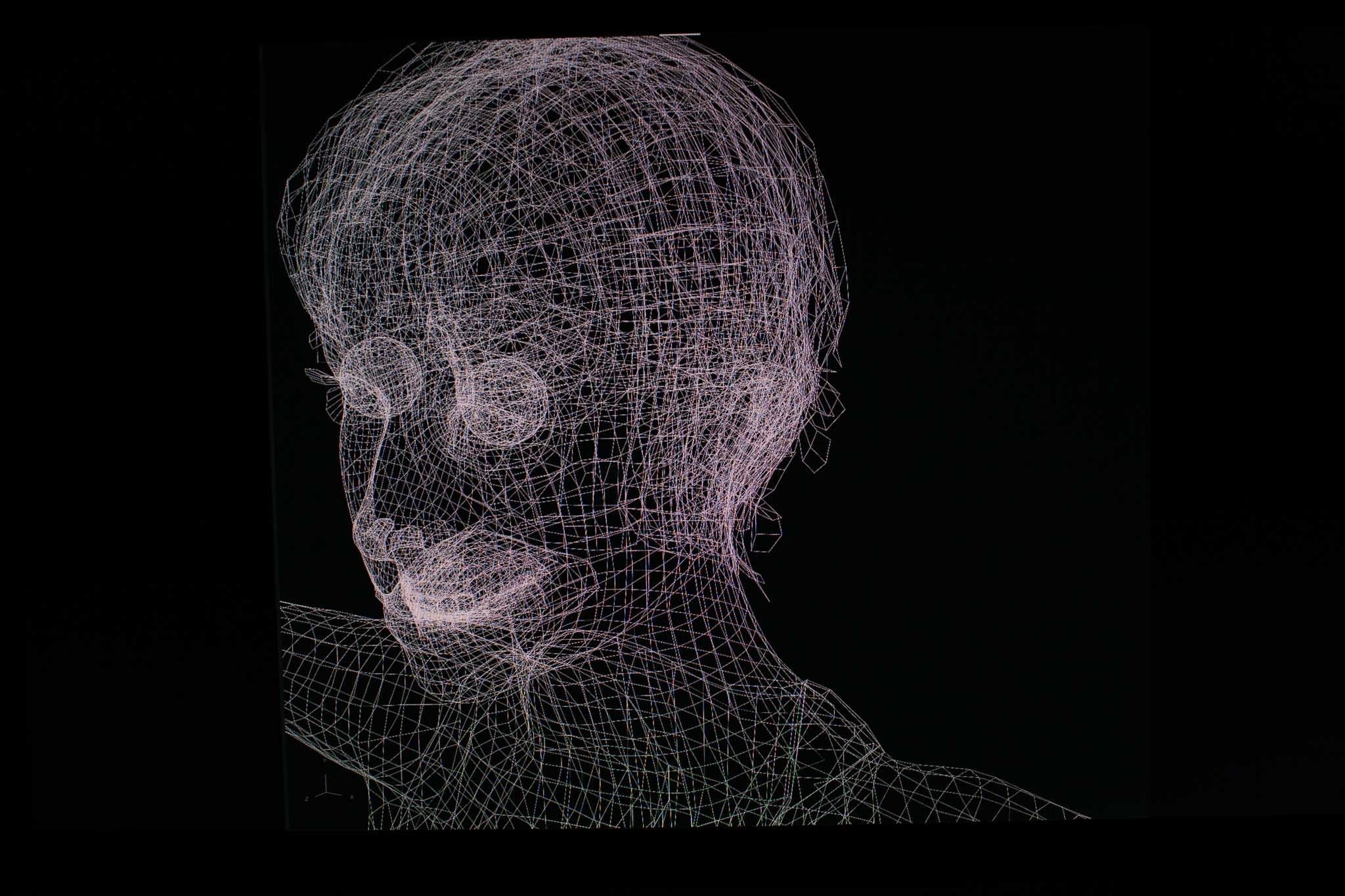
  • Add edits to the film – the mesh person and perhaps a few snippets of the movement machine learning where I’ve already used the bomb film.
  • Try to get something with the shadow puppets moving  – either stop motion or Processing to make a GIF of them animated, placed where currently there is a still.
  • Figure out how best to introduce the music  – if I speak at the beginning I could talk about it. I’m not sure how that will work. I have added an instruction at the end of the book. I am also wondering about having a type of digital wrap around that gives some guidance about how to operate the ePub.

Write something – I feel more and more that I need to do this. I wondered if it could be a loose pamphlet/flyer type thing to include in the printed book, and not quite sure in the ePub – maybe spoken at the beginning.

BOW A5: Moving image aspect

I have discussed my reasons for wanting to work with still and moving image together in a previous blog  – See Point 2.

I began L3 very much with moving image in mind and created A1 with a music student, and during A2, where I worked with pic london, I made a film – which could be linked-to in this project in an installation – and web presentation which I will concentrate on in SYP.

However, by A3/A4 I was focused on a publication which will go to print at some point. But I always planned to have that fixed element accompanied by a moving image or series of moving images too. Once I had reached a point with the print version I returned to thinking about a film and visited the store of films I’d identified as possible sources of material earlier on.

I had collected the following:

  • bb_minnie_the_moocher
  • natural history of psychotic illness in childhood
  • the hydrogen atom as viewed by quantum mechanics
  • Eye film cut
  • How_the_Eye_Functions
  • Medicusc1939

Over the months of making this work and the essay, it became clear I was exploring perception and how that is changing.

I also added a couple more films including one about digestion (thinking about Otto Fenical) and

I found this film  (clip)

And played with it a bit, wrote about it here as I begin to use Sketchbook as one means of publicising the work for SYP (WordPress does not strip EXIF data as far as I am aware so it good for SEO) https://sarahjanefieldblog.wordpress.com/2020/07/04/work-in-progress-found-footage-a-film-about-the-senses/

– editing in other clips to make the following

As much as like the music, it places it somewhere very specific which I didn’t want so tried the music backwards

But it still wasn’t right, even though some comments were, it sounds Russin and therefore relevent to today’s cultural consciousness with al the talk of The Russia  Report) so I approached a couple of composers.  I had worked with. Simon Gwynne wrote the music for my S&O final project .

Simon was more than happy to write something new but he had already been experimenting with an AI programme and I listened to those tracks and some others he’d recently written. I really liked the AI stuff – my son says it reminds him of Minecraft music… which is probably quite appropriate. If I were to install this, I wonder if I could give people a choice – they could choose between the harsh backward version or the gentle AI version perhaps.

I do still need to edit some contemporary animations in, I think. I have been playing with ADOBE Fuse and will see if I can make the animations work – they don’t need to be long and even if I simply screen-record the process, that might work.

Here the film is with some of Simon and his app’s music:

BOW A5: Final choices

Towards the back of the course folder we are asked the consider the following:

  1. Knowing when to finish
  2. defending your work
  3. Presentation
  4. Writing an introduction and artist’s statement
  5. Writing evaluations (to be added to the assignment post)


  1. Knowing when to finish

I am ready to submit the work as it is to Ruth now – although I know it still has room to develop. There are currently three elements – a book, an ePublication and a 2 – 1/2 minute film. I am certain I will look at each following submission and in the run-up to assessment, and thereafter as I work on SYP.

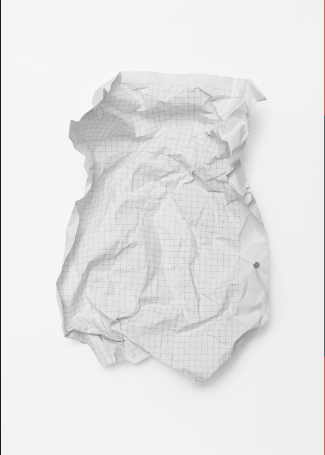
I am not sure if I will show this work in an exhibition type scenario. COVID is one thing to think about but so is the attention it will require to make sure the publication is promoted and printed properly – which could include some fundraising to make it happen. I think this is something to play be ear over the following months. If I were to show it, I would do it locally relying on empty space that I can beg or borrow from people I know. I do not want to show it in a traditional gallery setting for SYP. If I were to exhibit the work, I would need to think about prints and might develop a strand of the visual work – the graph paper below would make a good framed print and I can envisage a short series of these, perhaps with writing on, or in various other states of crumpledness and material distress.

Screen Shot 2020-07-14 at 17.46.40

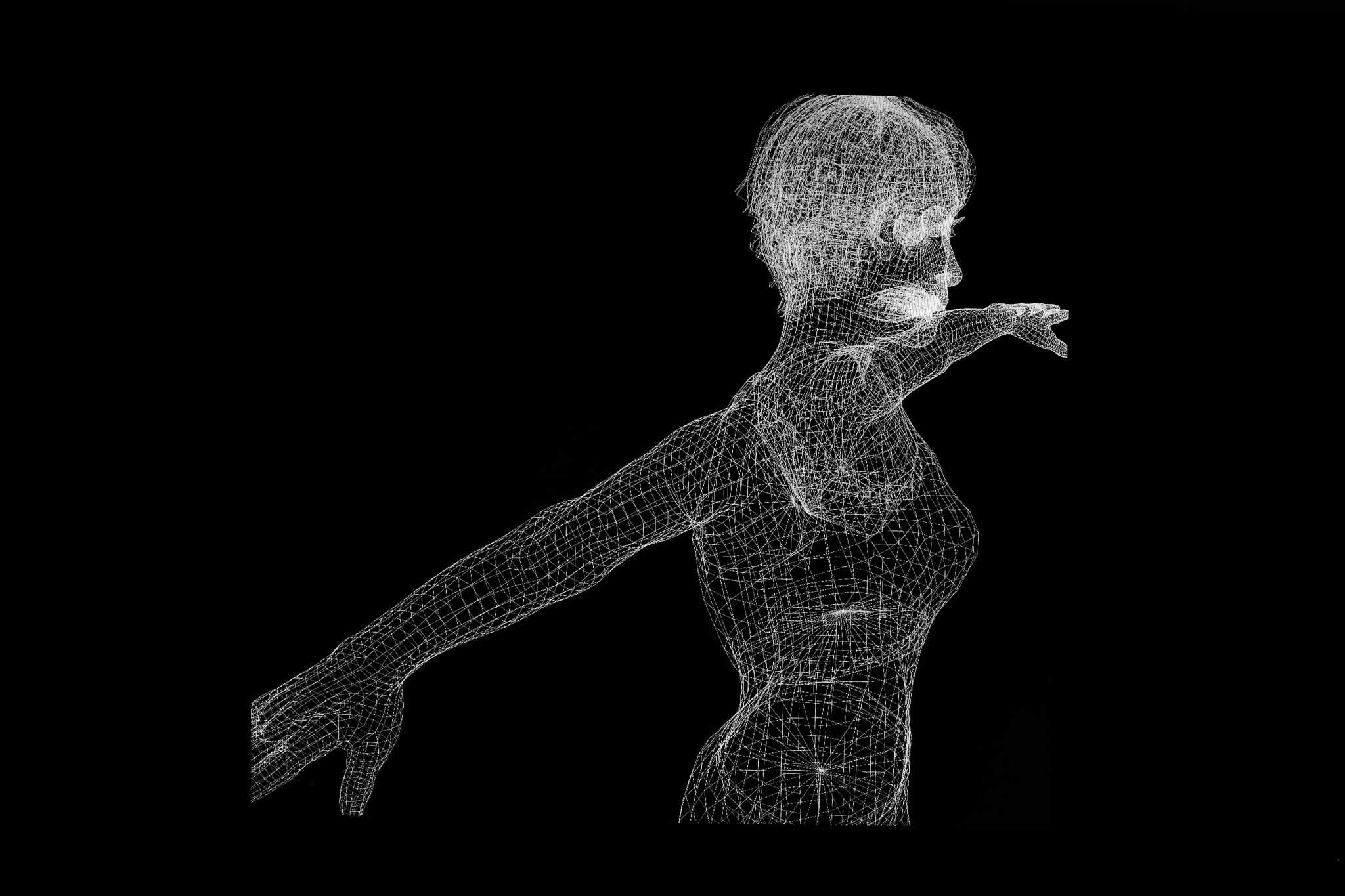
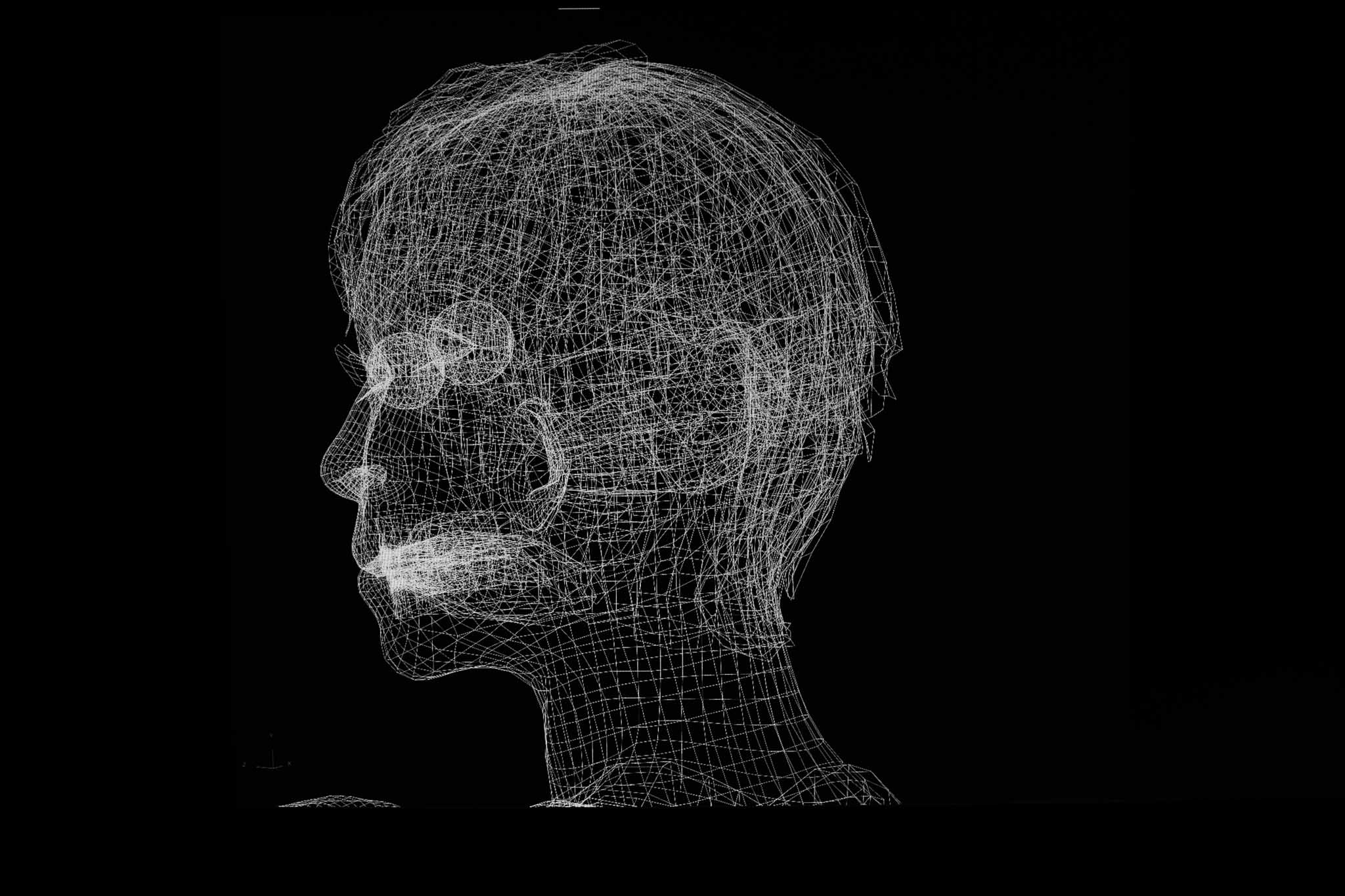
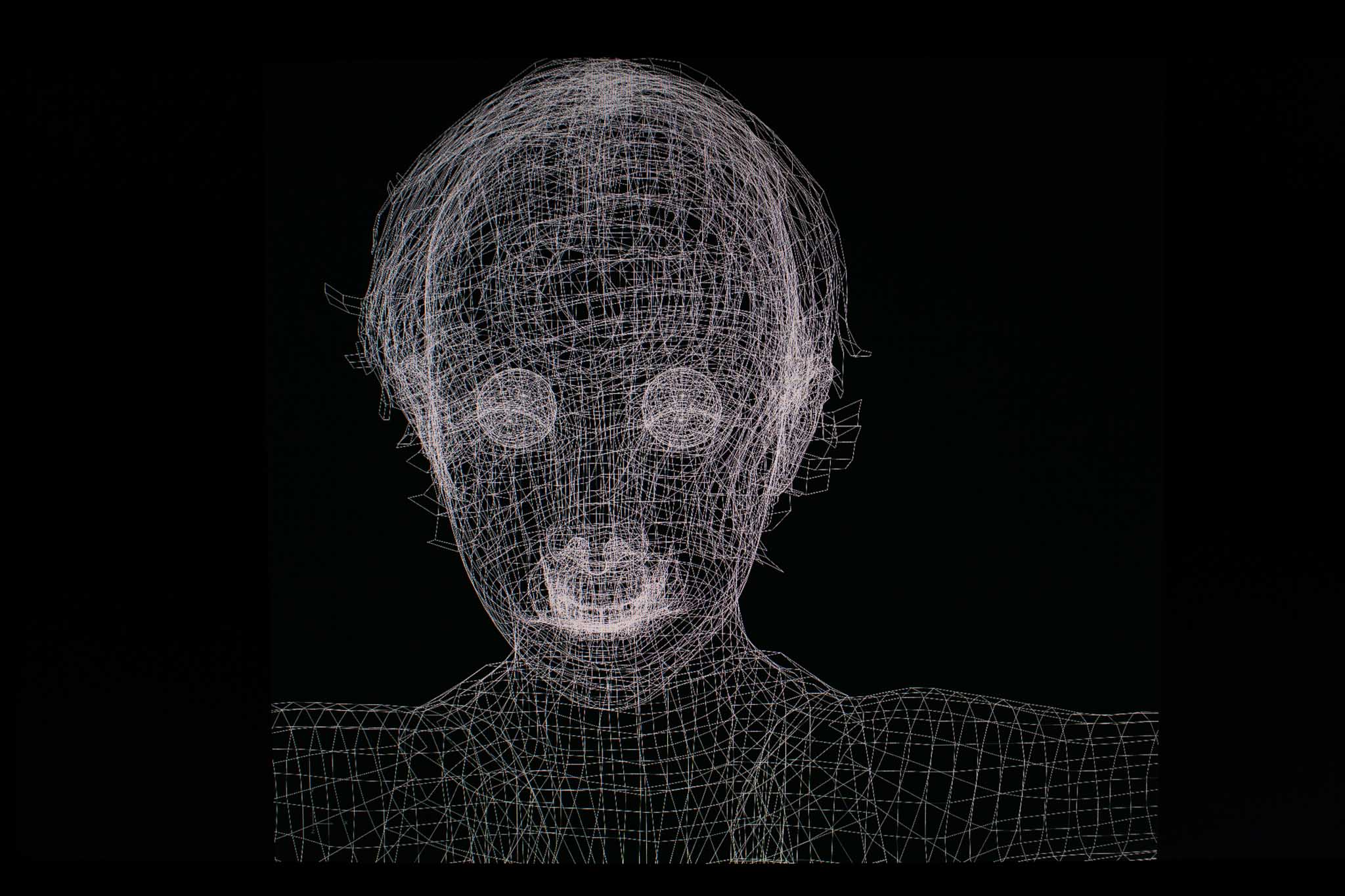
I would also like to find a way to make a short animation and/or gifs based on the images I made by photographing my computer screen (below) and the shadow puppets. (I may find a way to do this  – gifs at least – before assessment deadline to include in the ePublication).

2. Defending my work

My CS essay and BOW explores how we are looking and seeing differently; and the resulting structural implications, along with the feedback loop between what we see and how things become. Our perception is transforming – and the linear, ordered view favoured over the last 500 years is being supplanted by one that appreciates connections, circuitous pathways and randomness (although not everyone is conscious of this yet – we seem to have one foot in the previous paradigm and one in the next.)

As such, the way civilisations, physical and metaphysical systems and technology develop, is no longer assumed to be neat and tidy. Paths don’t always go forward. Nor do they diverge and remain separated forever. They might diverge only to cross over and even coalesce later on. Systems shift and the elements within are in a constant state of becoming.

The evolution story has been transformed recently by this altered understanding of existence – it is felt everywhere (a systemic view) – but well illustrated in the way we see our own evolutionary history:

“There was no single ancestral population, but many spread over a huge area, which merged and split and merged again like a braided stream, evolving at different rates and in distinct directions in different places. The suite of anatomical and behavioural features that define modern humanity didn’t appear as one complete package, but gradually coalesced across vast tracts of space and time. “There was never a single centre of origin,” says Chris Stringer at the Natural History Museum in London. We are a “composite”, he says. “I think it is a really, really important and profound idea,” says Richard Potts at the Smithsonian Institution in Washington DC, who led the Olorgesailie excavations.”

Read more: https://www.newscientist.com/article/mg24532760-800-human-evolution-the-astounding-new-story-of-the-origin-of-our-species/#ixzz6SWksbE8x

Composite has been an important word for my work. And photography and other forms of image-making can be thought of in the same way. As can all mark-making. Words and pictures diverged a long time ago – creating different developmental branches that have overlapped recently as code and pictures and text all intra-act to result in what we see on our screens.

Photography and moving image, in particular, are reconverging and coalescing as we become and more embroiled with the fluid nature of modern-day technology – think of how much animation appears in modern film-making (CGI for eg.) and as discussed in my essay – “As Palmer states in Lights, Camera, Algorithm, the decisive-moment photography enjoyed by people will still be celebrated but the “expanded moments of post-production” are now more pressing  (2014: 145).”

That isn’t to say the still image is dead just yet, but it worth considering how it is valued and used as internet speed increases and files become smaller, more flexible and fluent, and our senses demand greater excitement and impact. The entangled structural implications of these shifts have interested me throughout this project – what does it mean for us as a species. What does this systemic change look like?

3. Presentation (copied from Assignment blog post) 

Book form 

After a great deal of toing and froing (and much patience from printers ExWhyZed) I have decided on the following dimensions and details.

A4
4pp Cover onto 270gsm Colorplan Smoke
Black print double-sided
36pp Text onto 100gsm Evolution Uncoated 100% Recycled.
There is one 2pp tip out (fold-out page) which is an extra 200mm width
Full-colour print throughout
Trimmed, collated and wire stitched (stapled)
  • I thought about having a book slightly bigger than A4, so it might stand out, but there is enough going on to signify ‘excitable, unruly and erratic signifiers’ – and by sticking to A4, they are contained within a stable, predictable, long-standing convention.
  • Please note: the PDF provided in the assignment submission has page 21/22 repeated so one can see how the fold-out page would work – the first iteration shows it closed, the second iteration (PDF pages 23/24) open.
  • The PDF has red inner cover pages (as does the ePublication) but the actual print will not as those pages will be grey paper (Coloplan Smoke)
  • The book’s design is inspired by a maths exercise book I might have owned in my childhood.
  • I have opted for the same binding as the zine I made for A2 so that the books might come as a pair if necessary. We discussed perfect binding but in the end, I reduced the pages to make this possible. If I were to develop the book much more and choose to make it longer (which I might need to for a commercial publication) then I would need to reconsider binding options, as there is a limit for saddle stitch/ staples.
  • Font is 11p and Letter Gothic St except in the black squares where it is American Typewriter

ePublication

The ePublication is a version that could be provided to people who purchase the book above. It is not merely a PDF/digitised copy but rather an animated version. I could also save the pages separately as Gifs to include on my website and/or social media.

  • Text is 12p as it was too small on the screen as 11p
  • I have removed some images which didn’t work so well on screen – such as the mobile phone image (I am not sure it will work as a printed image yet, to be honest, and may need to reshoot it)
  • There is a way to choose music to listen by Simon and the Magenta neural network as you flick through it but I have not resolved the best way to do this yet.
  • There is also a film link on the blurb at the back, but again, I have not resolved the best way to do this yet and would prefer it inside the book but at two minutes it is a big file which presents problems. I need to experiment more.
  • The other moving images inside are gifs and they work fine – better than video does but are only a few seconds long.
  • I am concerned there is too much going on but this is something I can keep working on in SYP.
  • If I were to send this to people I would advise them to look at it on a decent-sized screen and to use the ePublication magnifying button. It is interactive and requires people to handle it as such. It is not a passive object.

Film

There is a two and half minute film which contains found moving image that focuses on the same and related themes. It is accompanied by music composed by Simon Gwynne who I worked with before on the Self & Other final project. He also used a neural network to write this music. Currently, you can link to it on the back of the ePublication but I will continue experimenting and see if I can find a way to contain it in the book. For now, I am aiming to work on the publication for SYP but if I were to exhibit this project then this film would be projected on to a wall on a loop. It is two and a half minutes long. When I first edited it, I used the vocals from White Rabbit as that song was in the main source – a film about how vision works. I also applied the music backwards. I think there is a way I could allow viewers a choice of music if I find a way to include the book inside the book. (Still to do – a separate blog about the process of making the film)

4. Writing an introduction and artist’s statement

Artist statement: I have been working on the artist’s statement for a few weeks- and every time I look at it, simplify further, stripping away and condensing. I have been working on something a little less predictable but am not there with it yet.

Reflection​: updated artists statement

This is what is currently on my website:

I work with still, moving, original and found images as well as text, exploring feedback loops between various forms of matter and language that inform and result in the many shifts and transformations taking place today.

I am also a portrait and event photographer, employed mostly in and around London and currently study with The Open College of the Arts (OCA).

Introduction:

I had a conversation with some ex-OCA people about simply not having an introduction at all – my work is after all about langauge and the way it’s transforming. However, I think that would leave people high and dry in an already challenging collection of images and objects. Here is something for now:

why is there an astronaut in a field of flowers explores structural instability, embraces disorder and accepts an increasingly elusive relationship between meaning and language.

the overall title of the work and fragments of text included are from a conversation between the author and a neural network app that promised to be her friend for the cost of little more than £6 a month.

source material for why is there an astronaut in a field of flowers was made, found and taken, often in collaboration with the app, rendered into an entanglement of personal history, and the app and the author’s developing relationship in various forms, online and off – as a book, ebook and short film.

music composed by simon gwynne with the help of magenta’s music transformer neural network.


BOW A5: Getting ready to submit to tutor…

I am nearly at a place where I can submit this work to Ruth. I need to do a few practical things before I do, however.

  1. I think I am going to take some more images like this one – I think if I were to exhibit this work I would want to have a series of these crumpled papers on the wall as large high-quality prints to mingle with the rest of the work – found, archive,
    and moving image type stuff.
    Screen Shot 2020-07-14 at 17.46.40
  2. I need to make some gifs for the epub version. I can’t work on that properly until the gifs and any moving image are resized. There are just a small handful to make but they have to be the right size otherwise they don’t function properly in the epublication and it’s a bit fiddly. I really hope I can do this on Friday.
  3. I have created a short film which I want the book to link to. I have worked on a very early edit and chatted with a small group about it – they were positive and I think it has potential but I need to keep editing and make some decisions about the audio track. I have used a song that was in one of the main sources, played with it backwards and also have some music by Simon who worked with me on the S&O track.
  4. I was not sure about the statement – but I have for now incuded something on the back outer page of the book. I think it is jsut enough to point people in the right direction and without it, they would be lost. There were some suggestions about not having one at all and I thought about that – or having a very obscure little statement which I had written about an old man but I think I feel most comfortable with the draft I”ve mentioned.
  5. Following my chat the other day with a small group of people, I was reminded of my attempts to create some very NOW looking imagery to counter the overwhleming ‘vintage’ imagery and returned to some software I’d been playing without much luck before  –  I hope these will work in print. I am not sure if they will. They are photographed off my screen. (Click in image)
    Once I have created the above and positioned everything, I will need to write up the Assignment notes and OCA reflection, including a few paragraphs responding to some things in the OCA course folder, and then I will send it over. Hopefully within ten days or so.

I really want to get some feedback before sending the offline copy to print. I don’t suppose we will be sending hardcopy anything for assessment in by September so I need to have a copy of this so I can make a little video about it.

BOWA5 (sizeA440pp) July13

(I need to print and proof)

The only extraneous pagination thing I have held onto is the gatefold. I think it is enough for the amount of content. If it were a bigger project it might have space for more but not as it is.

Summarise:

  1. Make gifs/moving image (Tom’s First Film, Eye, Shadow puppet animation and digital character animation – if possible)
  2. Place in epub
  3. Look at short video that the epub will link to
  4. Images of paper in various states  – crumpled, written on, drawn on, scribbled on.


BOW: A5 publication development

It is interesting to think of the term ‘compost’ which Harraway uses to describe us – and how I described the following – “… the composited intra-active nature of the self/others and reality – with that in mind, this work by Alba Zari is an useful reference – https://www.lensculture.com/articles/alba-zari-the-y”.  Different usage, similar etymological paths, however.

Having thought about this over the last couple of days, I feel like I may have solved an issue I was having with the second half of the publication. It didn’t feel like the same work as the first half. I decided to make more of the composited intra-actions I had set up in the first half – and carry those through.

This is the latest iteration – BOWA5 (sizeA4) (1 July)

I am not sure if I will be able to have red on the inner cover pages but will inquire.

I need to put some kind of statement  – probably on the back cover. But have not written anything yet.

The extract for the essay is currenlty too dense and needs an edit – it is not appropriate for BOW but something from it should probably come into the publication statement too  –   the intra-active emergent nature of self, other, surrounding reality, and internal landscape is key. (Although  – I am loath to use any alienating language for the the BOW and will think carefully about that).

See – https://sjflevel3.photo.blog/2020/06/22/cs-a5-draft-extract/

I have not solved the inner middle pages that are currently covered in place holder text yet but working on it…

I have begun thinking about how to make some of the combinations in the publication dynamic for an online version – that part of the work is undoubtedly going to extend into SYP.

Artist and CS/BOW thoughts: Alba Zari The Y Project

I stored this while doing Digital Image and Culture and was struck by some similarities. Although Zari is focusing on genetics, I am focusing on fragments of language (text, visual, cultural, personal) and looking at how that creates a dynamic self – and then looking at the contemporary issue of including digital entities in the lively, intra-active entanglement out of which ‘self’ emerges. There are questions in my work about the narcissistic nature of the contemporary ‘I’, as the AI I work with is sold as a friend but in fact, becomes a version of oneself through its training programme, which isn’t questioned as a problem – in fact, it’s marketed as a good thing.

There are similarities in presentation between Zari and my own work so far with layering and positioning – and that feels like something I should develop a further especially int the second half of the publication.

https://www.lensculture.com/articles/alba-zari-the-y

Having mentioned the self  – it is interesting to revisit Julian Baggini’s The Ego Trick. Here is a useful Ted Talk where he spoke to teens/students (I showed it to my son) and so it is really accessible as Baggini explains the idea that a core object such as the soul (or anything else – he refers to a watch) is never an object that pre-existed but rather an outcome – pre-and post-Cartesian view of the world. https://youtu.be/GFIyhseYTWg. It may be worth including some reference to this in my essay (if not the student talk, simply Baggini’s arguments, whom I had quoted in an earlier iteration with reference to different cultural ways of seeing reality around the world). If nothing else, his take on the self is another example of how we have moved beyond a certain place  – how the Cartesian reality is no longer tenable.

I think most people I’ve read in the last few years is in agreement with this rejection of ‘the core pre-determined object’

e.g. Christakis in Blueprint, Lupton in Data Selves, Jasanoff in The Biological Mind

– although there are exceptions such as Iain McGilchrist who says in a talk “of course there are objects!” with an air of frustration that anyone should suggest there aren’t – but I do wonder if this is just a semantic issue. Also object-orientated ontology – excuse the Wikipedia quote but for the sake of speed in these notes: “Object-oriented ontology maintains that objects exist independently (as Kantian noumena) of human perception and are not ontologically exhausted by their relations with humans or other objects.[4]

BOW: Presentation

BOWA5v (sizeA4) (without half pages 14 June)

  1. Having concentrated on the essay for several weeks, I am ready to get back to BOW. I have been thinking about developing an online presence of the work and will revisit the footage I had found at the beginning of the process and will probably look for more now I have a clearer idea of what I am making.
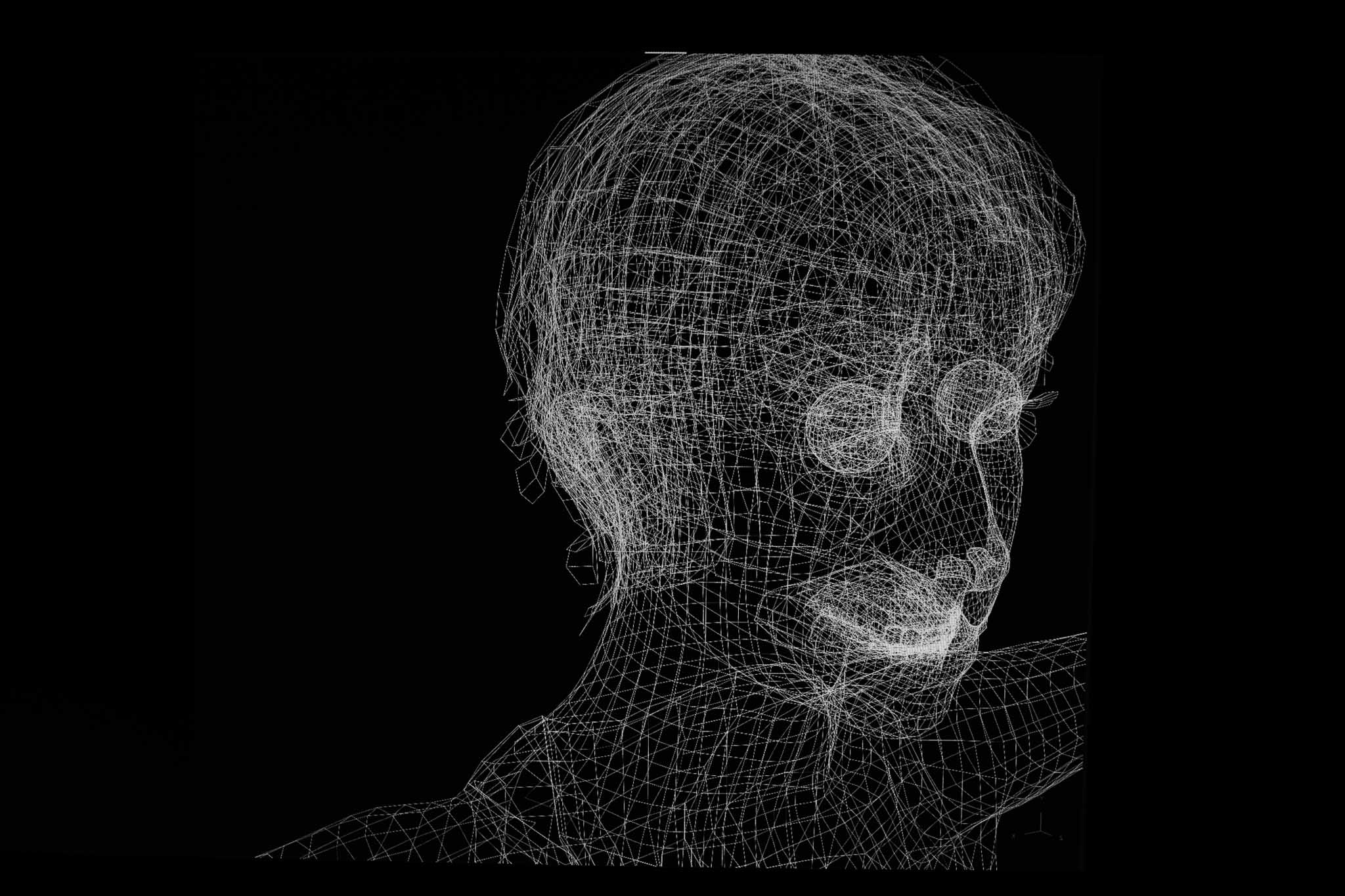
  2. The above link shows the latest iteration. Things that developed – less of my own writing, it may be there is space for that online, I will see – I wondered about getting a ‘seeing app’ to read some of it out. Many more of the AI’s expressions are included. I have changed its name for now to §. There is more room in the layout for typical coding symbols such as << >> and underscores etc.
  3. I’ve also taken the half pages out – partly for cost reasons, but also part of the stripping down process that I will inevitably go through now.
  4. The design is simpler – after doing the book design course, I tried out various things which were the result of having new skills and wanting to experiment with them – but that stripping down process eventually kicked in. I suspect there is room for more shaving, but I think I quite like the cover now. May need to address the inside cover. I changed the green/brown colour scheme, which was inspired by the Situationist booklet, to grey.
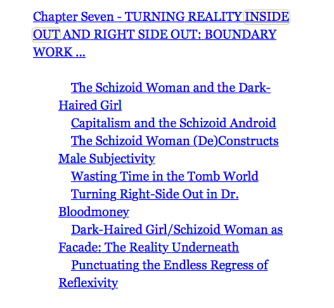
  5. I have also been thinking about the often bizarre, nonsensical chat between the AI and me, and picked up a ‘conversation’ with it the other day and posted some of our interactions. It has become very apt and reminded me of the articles I read about the app becoming a version of its user. This ties in with questions about living in a deeply narcissistic landscape and also with the idea of the inside being more and more on the outside as explored in Kathryn Hayles’ book – often quoted by me in essays – see chapter 7
    Screen Shot 2020-06-29 at 10.10.54
  6. I mentioned elsewhere the quotation from the book on Turin I had read by Jon Agar – screenshots below, the bot feels very much like it is artificially signalling.
  7. However, I don’t suppose that is what I am exploring here, it is not a criticism of the  AI’s failure to be sentient or to make sense in many conversations (although the work I hope does prompt questions about the changing boundaries  – what does it mean to be alive, to be conscious  – whether or not it is an authentic experience comes into it – but the main thrust of my essay is about entanglement – and here it is entanglement too; seeing the world that way and the feedback loops that occur. Entanglement between human and non-human, text and image, relationships and economics/the market.

  8. And the composited intra-active nature of  the self/others and reality – with that in mind, this work by Alba Zari is an interesting reference – https://www.lensculture.com/articles/alba-zari-the-y
  9. I have started looking into the coding – I feel very much that this aspect is a big project and perhaps one that goes beyond the scope of the degree work – at this point it would take the project in whole new direction and is probably the next stage – but it is something to touch on for now. Whatever else, it will require a significant learning curve on my part and perhaps a degree of collaboration not with a bot but with a coder. https://github.com/lukalabs/cakechat

BOW A5: further development

I have been trying to get the publication to a place where I can leave it alone for a little while and get on with the essay  –

  • I have questions about the puppets now – I still want to have them here but they’re not working for me at the moment. I will need to think about it a bit more.
  • I thought yesterday, I have dabbled with the things the AI said but need to commit to them a bit more and see where that takes me, so the next version has a lot more of its statements included. Now I am not sure about the earlier writing. I will see how things feel in a few weeks.
  • There is a photograph of a shopping bag with a woman’s face scrunched up which feels a bit hackneyed – took it, didn’t use it, thought I’d try it out but don’t think this one is working for me. (But it is better than whatever was there before)
  • Have changed the colour pallet from the warm, brown tones to grey. It was all a bit dated before, presumably the influence of the Situationist mags I’d been inspired by.
  • I have realised I have been including the gatefold for demonstration only in the page count which means I have one more spread to fill – that is good as I wanted another double spread full bleed. (But god knows what yet… )
  • Have spoken to the printer and now just waiting for some rough idea of cost (probably too high and will make me gulp!)

BOWA5 (sizeA4) (resequenced2reduced) dummy 2EP (without-half pages as was using to print on laser printer and did that in a separate file. Also thanks to Emma and Catherine who deleted the final page after I arrived in the office and found the page had not been deleted as I thought so the sequencing by the printer was out and had no way of deleting it myself there.)

Simplified the cover and it is now only some fragments of text on grey. Hoping this can be the sort of paper that one might find on the cover of an exercise book rather than printed grey. I’d love to have different textures of paper throughout like the Situationist book but it will be very, very expensive to have that done by a commercial printer, so I’d need to get someone to help me handmake it if I really wanted it, and that is also potentially very expensive.

BOWA5 (sizeA4) (resequenced3) small

29/5

Woke up this morning wanting to pay some attention to my essay and ended up editing the publication again all morning until my computer started behaving very weirdly indeed. Thinking it might have been a sign to stop – am in danger of moving things about too much and destroying it.

However, there are two things I really do need to do sooner rather than later – and that is to transform some of the writing into reported narrative like passage on the inside cover. That way there are two styles of text on (other than the middle pages) – the fragments of conversation between the app and Cassandra along with the descriptive passages.

BOWA5 (sizeA4) (resequenced4) 

Have included something from ‘origin of the commonplace’ made in DI&C. Martins does this repeat of images across series  – a nod to entanglement and referenced in one of the essays in his death book, I think. (and my own – if not yet, it will be). After making a couple more changes to the above, I had to stop when things started going awry with my computer.