I am submitting a zine called this family too as part of the final project as I have included images and references from this work in the overall project, why is there an astronaut in a field of flowers, demonstrating the entangled approach I was aiming to explore. The zine also aims to investigate the deep and seismic structural change we are currently living through. In addition, preparing this zine ended up being a useful practice for the following project.
You can read about the journey in A2 reconfigured and another post which I wrote for the OCA blog.
/(email) Zine – text again is good, in parts really good. A really really useful productive exercise and I can see why you did it. Really good end product, definitely professional standard quality. Images are ultimately a WIP and could be progressed into something more mature if you wanted to.
It looks like you are making a lot of progress in a really short amount of time it’s actually quite frightening to see how much shit you get through!
(email – ex OCA) The first thing I thought was about text and (visual) image. With text we naturally, sub-consciously, often without regard start at the first word top left and read from left to right, top to bottom. I thought of this in respect of the visual images that came after the text, about how difficult it is to interrupt that structural, taught, cultural position. It is different – albeit maybe only directionally – in other written languages.
And also about how the process of reading (the words) from front to back, another construct, delivers the context by which the visual images work with this reader; how they might, or might not, resonate with this reader… I felt “positioned” by the text. I knew where to start by the construct of who I am, the position of the text, the way the text was placed told me where the work began. It’s start.
The images, perhaps by design, perhaps as a product of the process, are soft. And I think that lack of didacticism works – even with the agency of the text ringing in my ears. I could sense a tension about where the images sat on the page(s). The continued resistance to engage with a traditional form, to ensure that I, as a viewer, would have to look in order to see.
Did you edit this by yourself, or did you work with someone? Either way I’d be interested in the thought processes.
(email) Thanks again for sending the zine to me – it’s soo good to see an idea come to fruition. The text and images do work well together and I ws particularly struck by the linkage between “Both mummies lay still. …….” On the bottom on one page followed on the next page by the photograph of the elderly lady waving.
(message) Interesting without a title on the cover. I like the image on the inside cover too. The text reads well and is nicely spaced making it easier to read and digest. I like the mix of image sizes and layouts. It has one of my favourite images in it although I prefer that image in colour./I’m sitting here now trying to workout the significance of the Virgin Mary and the two mummies./
(email – non OCA) I was left kind of wanting to find out more about this place you visited for your research. I thoroughly enjoyed reading and looking at your work. I wish it was a big book to be able to see those great images. I thought [it] was a very honest exploration of family and religion perhaps?, and motherhood with some pictorial references that reminded me a bit of the suffering of the ‘madre Dolorosa’ that griefs for the flesh of his son.
As well as providing evidence of my experience producing a zine, this project should not be viewed as a separate appendage, but rather part of an ongoing discussion/exploration addressing deep and seismic structural changes in Western society. My inquiry looks at the move away from a Cartesian view of reality towards one that is more rhizome-like, I have cross-pollinated the work with images that appear in the zine and again in the later BOW publication, as well as taken a frame from a film I edited while making this work, shown at a group show facilitated by pic london (an OCA Blog post about it can be seen here).
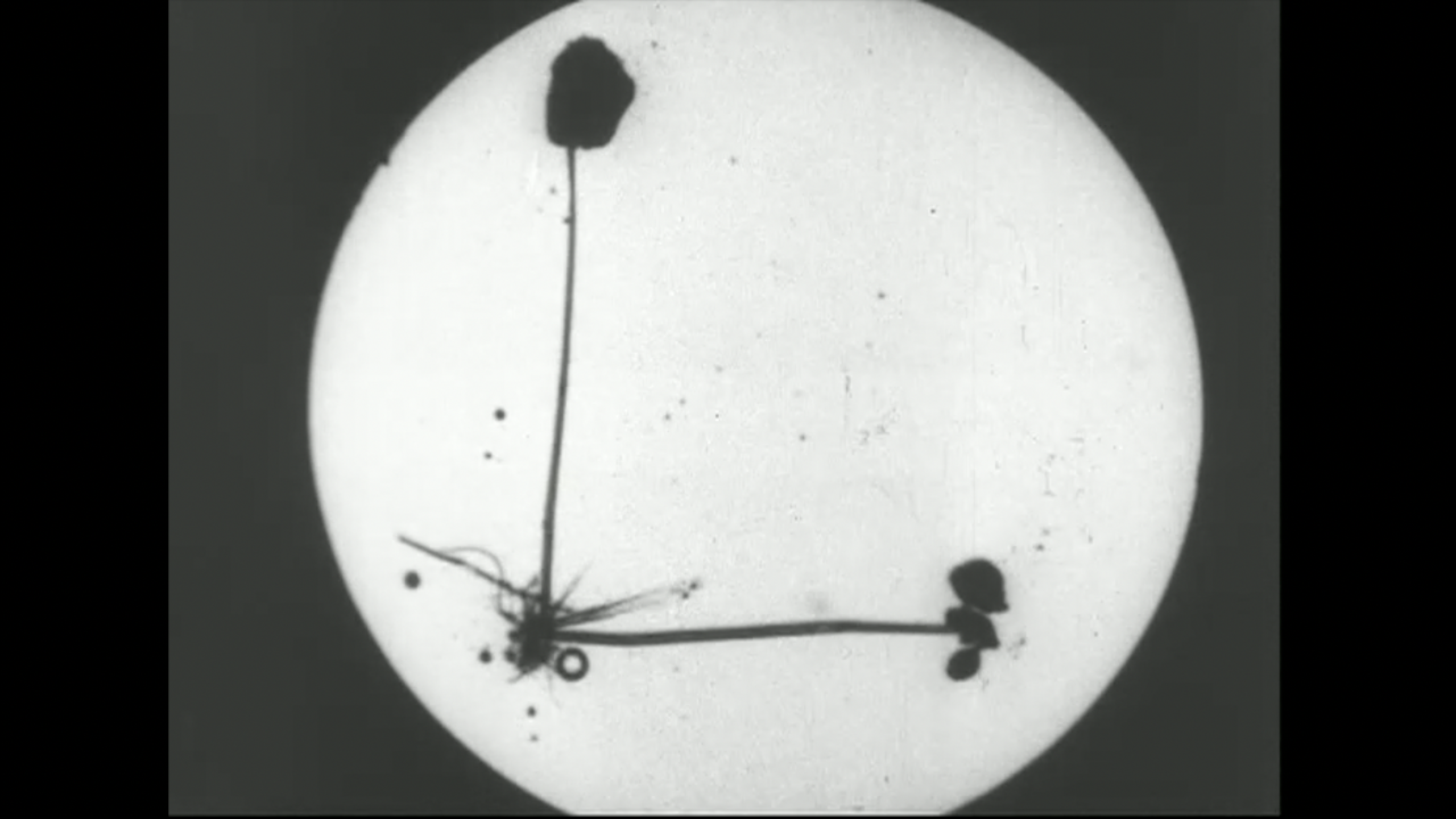
This image appears in this family too and why is there an astronaut in a field of flowers
22/03/2020
I am submitting a zine which includes black and white images and text for A2. It will be roughly A5 (dependant on what options are available to me at this time).
Background
After submitting final DI&C work to Pic London, I was pleased to have it accepted. I was put in a group with five other artists and we worked across time and distance using the internet, following three workshops, on a group project. I was in Italy for much of that time.
Three strands of work emerged for me and I had to make choices about what I did with what.
i. a film made with found footage inspired by conversations that had taken place between all of us in person and via FB messenger.
ii. a sequence of colour images taken with flash (which I personally prefer compared to the black and white ones)
iii. another sequence of images I rendered black and white in LR – it suits the mood best, sombre – see below
As well, I wrote something which was inspired by my time in Italy and the conversations I had with the other artists and how the project made me feel, included in the Pic London show, then point ii. above which I’m not submitting.
The inclusion of the text is an important step for me – and shows development in further work where text plays such a big role. Text has long been critical in my work but the creative rather then essay-like style is a step in a new direction.
At the moment, I am NOT submitting each of these elements for the OCA. Just the Zine but including background information to show how it came about. I have chosen to do this as it shows steps towards the development of the anthology I’m creating for my main submission – i.e. creative text and image in book form.
While all of this was going on, Trump’s government was on shutdown and the tragedy of Brexit being argued about. There were fires, dreadful heatwaves and fascism was showing its ugly face in more and more places.
BOW Assignment 2 original
There was so much work coming out of this collaboration and not all it sat well together. I ended up submitting the writing and the coloured images (see above) to my tutor for A2. I like them but after some time, I felt they were not sitting with the writing as well as they might. I played around with the black and white images and decided they should be valued and put them on my website. A little while later I started thinking about putting them in a zine format. And shared an early example on this blog. This week I have written the introduction and reset the text.
After chatting about the work yesterday with the TV group, I have decided several things
The cover will simply be an image, no title or other text.
I am thinking of moving the intro to the back or elsewhere – need to experiment – to break with linear convention. In A4, I am opting for a very strict structure that follows traditional anthology inside of which the signifiers will be allowed to rit and party. But here the signifiers are less chaotic so there may be room for containing structure to be more flexible.
Questions
Please compare intro texts and let me know which is stronger. The short one in the PDF doesn’t give away too much but maybe it needs more.
Does the longer text spoonfeed people?
It’s currently called This Family Too. This links to This Family – my very first assessment project – which linked to Family of Man. I have the book still. But I think it might be better called On The Edge of the Village
Finally – I am concerned about the image with the swimming ring. It is plastic made in China and says so in text on it – the sequence and edit was made before Trump started spouting his shite, and for me referenced shifts re the West’s global consumerism and the East’s increasing power. Like the later (currently A4) work, this project looks at entanglement – time, culture, waves, intra-action of phenomena, walls – manmade and natural. We discussed this at length yesterday – people reassured me, it did not seem like I was suggesting Trumpian xenophobia, although I could choose to clone out the Made in China to be safe, which I had considered. But we also discussed dangers of self-censorship. I recall Rachal Maclean saying when she made her film pre-Scottish referendum that both sides of the debate assumed her film was on their side due to its ambiguity. If my own work can contain an element of that ambiguity, that would be good. But if it just seems like an accusation I will need to remove the wording at the very least. I’d like to know what others think, please.
This project emerged while working on a collaborative project titled A rumour reached the village. While the poem was included in the resulting exhibition, these particular images were not. These various manifestations were made when I visited my mother in Ferentillo, Italy, for the duration of the summer school holidays in 2019. While there, it was impossible not to consider the political uncertaintyaffecting Europe, along with increasing levels of tension and fascism being witnessed globally.
The United Kingdom’s transitional exit period officially began in January 2020. By March, all of Europe was in lockdown due to the Coronavirus pandemic. Italy has, at the time of writing, been one of the most severely affected outside of China. The UK was one of the last European countries to introduce severe restrictions on movement and social interaction but looks to be heading in the same direction as Italy in terms of loss.
The village of Ferentillo consists of two wards, each with their own crumbling, medieval hilltop castle built for observation, protection and a place from which to call the alarm in case of danger. It is known for its museum beneath the crypt of the Church of Santo Stefano, where naturally-mummified bodies are displayed in glass cases. Some bodies are nearly four centuries old, the youngest is from the nineteenth century. The preserved inhabitants include birds and animals, villagers and visitor’s from afar, including China.
The work is made to acknowledge the fragility and ingenuity ofhumankind, and the entanglement of past, present and future, as well as financial, cultural and organic systems. It emphasises the fleeting moments of ourpersonal experiences; and celebrates, as well asrecognises, that which is greater than the individual. It focuses on cultural structures and natural phenomena, growth, and the vastness of existence. It is the third project I have made in the area.
I have managed to look at this, this afternoon after feeling rubbish all week, working from home for my part-time role, trying to keep going with the BOW A4 project, and keeping the children occupied without all the various online education things set up properly yet. The whole world is in the same boat – and I just have to accept everything will take longer – we’re not going anywhere, I guess, so it doesn’t matter. We are being made to slow down. Which is a good thing no doubt – and what’s more, the Conservatives have been forced into shifting dramatically closer towards socialist principles, although it does seem to be business rather than sick, old, and vulnerable who have the support so far (I wonder if Johnson will be booted out soon and Rishi Sunak put in a caretaker role…)
Anyway, I am getting closer to writing an introduction for BOW A4 but in the meantime has developed the one for this. It’s a tricky precarious path I’m treading … some will misinterpret so I need to find ways to remain ambiguous but explore what I’ve been looking at throughout the modules – entanglement.
At the moment, the (poetry) writing is at the back of the book. I wonder if it needs to be at the front?
I need to re-edit the fish pic – it’s too black.
But otherwise, here, I think it is. Will send to peers shortly and see what they say/
I have also been looking at doing this as a postcard book but struggling with the poem bit at the moment. Not sure how to typeset it and make it work.
alternative introduction :
This project is one of several strands of work which emerged while working on a collaborative project titled A rumour reached the village. While the poem was included, these particular images did not end up in the shared exhibition. They and the group show were made while contemplating the political uncertaintyaffecting the European Union, when I visited my mother in Ferentillo, Umbria, for the duration of the summer school holidays in 2019. [The sequence arrived at in late 2019].
The United Kingdom’s transitional exit period officially began in January 2020. By March, all of Europe was in lockdown due to the Coronavirus pandemic. Italy has, at the time of writing been one of the most severely affected outside of China where the virus is believed to have emerged. The UK was one of the last European countries to introduce severe restrictions on movement and social interaction imposed to stop the spread of the virus.
The village of Ferentillo consists of two wards, each with their own crumbling, medieval hilltop castle built for observation, protection and a place from which to call the alarm in case of danger. It is known for its museum beneath the crypt of Church of Santo Stefano, where naturally-mummified bodies are displayed in glass cases. Some bodies are nearly four centuries old, the youngest is from the nineteenth century. The preserved inhabitants include birds and animals, villagers and visitor’s from afar, including China.
The work is made to acknowledge the fragility and ingenuity ofhumankind, and the entanglement of past, present and future, as well as financial, cultural and organic systems. It emphasises the fleeting moments of ourpersonal experiences; and celebrates, as well asrecognises, that which is greater than the individual. It focuses on cultural structures and natural phenomena, growth, and the vastness of existence. It is the third project I have made in the area.
Spend some time reviewing your personal reflection and yourtutor feedback. Develop a series of carefully considered images that moves your idea forward. Hand in this series to your tutor together with a new reflective commentary setting out where you plan to go from here.
After discussing my plans with Ruth, I decided to submit new work rather than developing the first assignment, Sirens (2019) any further. The research, development, and various elements I made during the leadup to this submission have many of the same qualities and tropes as Sirens, i.e. exploring versions of collaboration, working with archival images and moving-image collage. However, what I’m actually submitting is very different. Nevertheless, the work is still ‘my voice’ and ‘style’ and I see it as a development from the previous work.
A brief preamble:
I submitted OCA DI&C work to pic.london’s open call. A blog for We Are OCA (Field 2019) describes my experience albeit in a relatively easy to digest way. I didn’t feel in a position to write anything more analytical in that forum but it may be worth scanning, (although there is no need for the purpose of this assignment as everything necessary should be on this page).
Up until very recently, I thought I would submit the work included in the show for this assignment – see here. However, after more thought (explained below), I decided not to, as the book I’ve made seems more of a cohesive project than the collective ‘manifestation’ – and stronger than the collage film I edited.
Therefore, for this assignment, I will talk about my experience in the collaboration as well but submit a proposal for a book which is not part of the pic.london exhibition but a development using some of the material I included there in a different format.
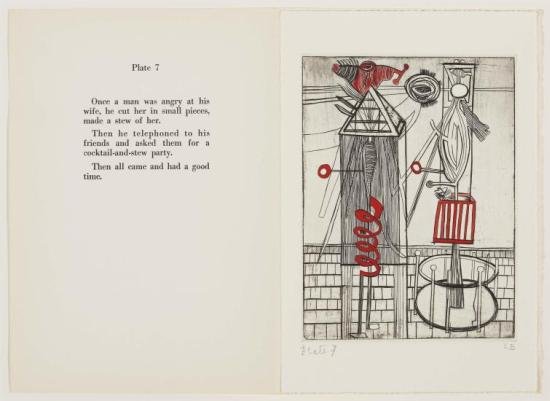
In the book version, the verse is split across pages emulating the Bourgeois book below but I might prefer it on one page.
Assignment work
ON THE EDGE OF THE VILLAGE
Individual Plates below or PDF of A5 -BOW Assignment Two Draft 5 (Please click on images to see a larger version)
Work in progress and contact sheet
Some of these images were originally included in the film – I really wanted to experiment with found and original images together. But I didn’t feel it was working so took them out. That doesn’t mean it couldn’t work but I was unable to find a way with this. I feel like this work has the potential to grow into something else and may eventually include something of the film or an element that might emerge from it.
I am submitting this work as work in progress – knowing the sequence isn’t finalised and some of the images could yet be replaced and crop revisited, the text re-set. Below is a small contact sheet. Should I wish to add to these in the future (perhaps before assessment) I think I would want to make sure they were taken in the same village, which would mean waiting for my next trip there.
I have also wondered if I would just present the text with a single image and played around with that option.
Additional layout suggestion (added 16/10/2019) which does not follow Bourgeois’ pattern and keeps the verse in one place (although still not content with the way it’s presented here). Again – sequencing not set.
Although there is a wide range of influences feeding into my ongoing work, and I discuss them at length in all my blogs, some key artists and writers are summarised in L3 BOW A2 Research & Reflection, Cultural Influences blog, there are three significant ones for this project as presented above.
Louise Bourgeois He Disappeared into Complete Silence 1947
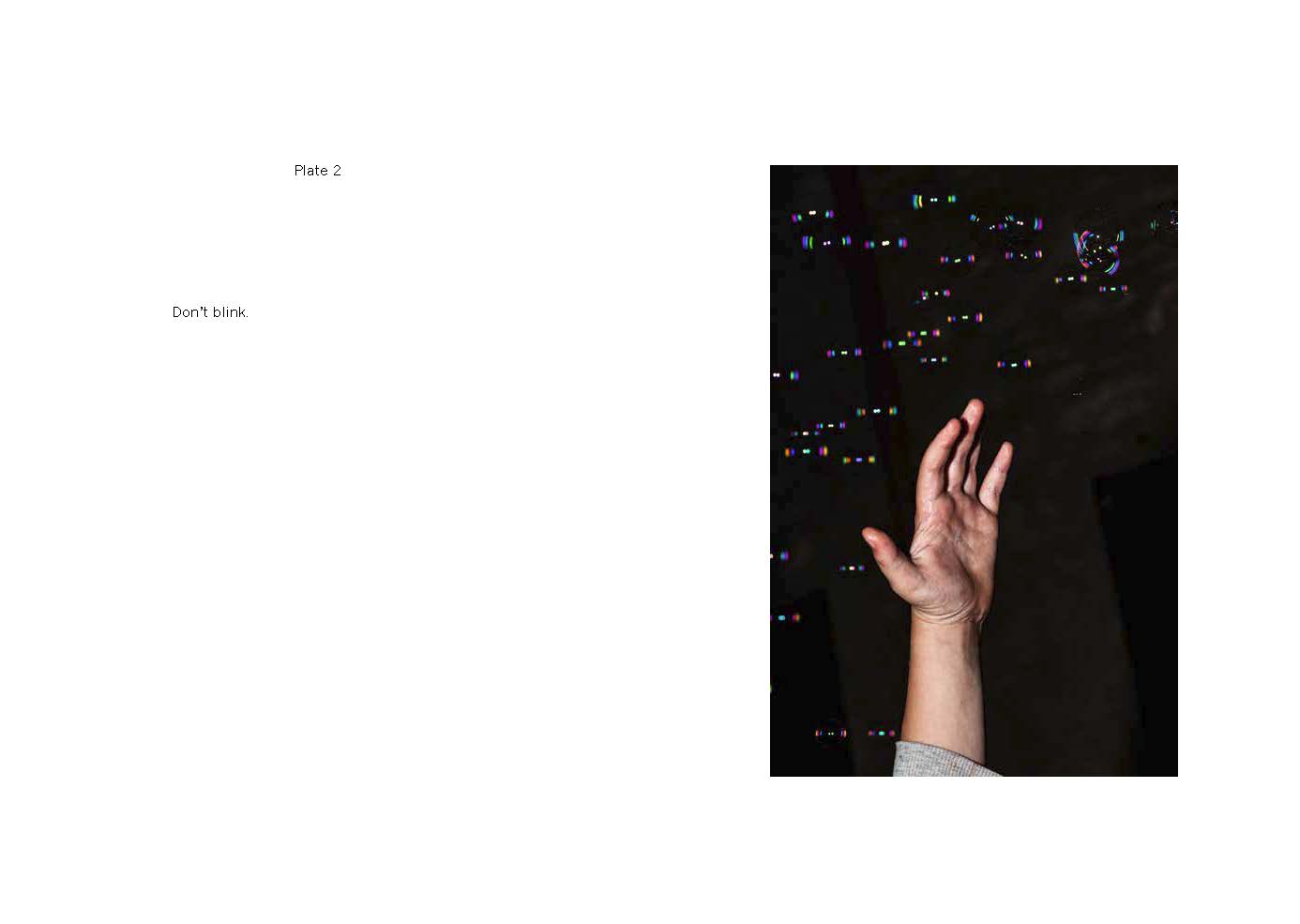
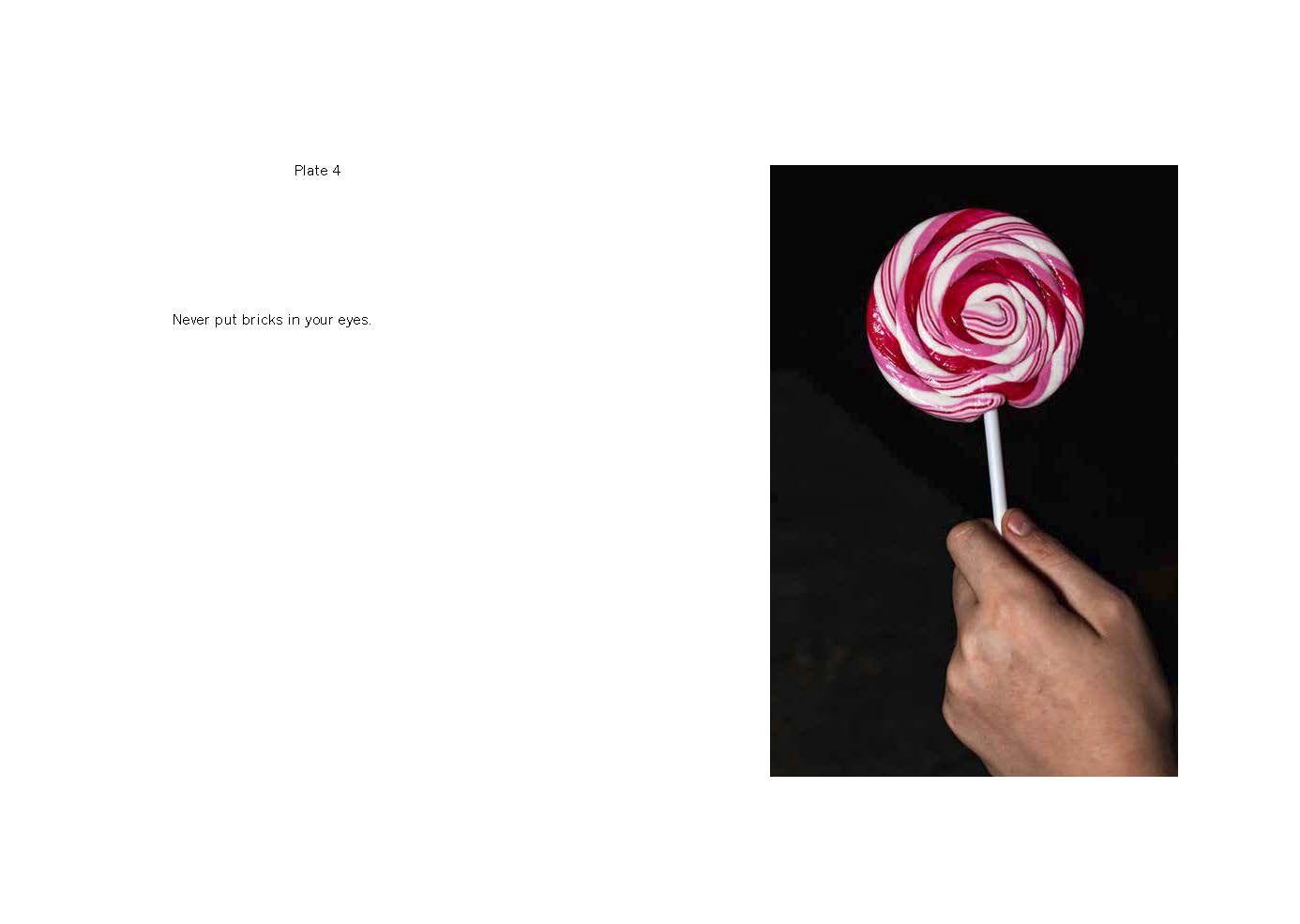
I was very struck by Bourgious’ book He Disappeared into Complete Silence (1947) when I saw the plates in a retrospective at Tate Modern (2015). I have wanted to do something inspired by the layout, and combination of text and image which don’t seem obviously related. (See my UVC notes on Barthes Rhetoric of the Image (2016)) Bourgious’parabels are individual whereas my text follows on, but I hope that my plates could function as self-contained items too. I have emulated the layout in the PDF mock-up above.
2. Assemblage
I am currently reading Deborah Lupton’s Data Selves (2019) as I suspect it will be integral to CS and BOW work. She summarises her ‘more-than-human’ approach in the opening chapter: she “recognizes that humans and non-humans are entangled in hybrid, unstable, and generative ways; takes into account the importance of considering the distributed agency and ‘vital capacities’ (‘thing-power’) of human and non-human assemblages” and “places an emphasis on the embodied, sensory and otherwise material nature of meaning, knowing, perceiving and making as part of human embodiment” (43)
Lupton is interested in “where the boundaries between object and life are constantly blurred” (25). “Western societies”, she says, privilege “world views that seek to stringently define and police the boundaries between humans and non-humans and nature and culture.” (25). She defines her approach as diffractive but stemming from a feminist new materialist viewpoint. A significant part of her book is about the boundaries between life and death, and of course, digital culture and technology’s impact on that. Although I had not read or even heard of Deborah Lupton until recently, many of her ideas seem related to systems theory, Santiago’s theory of cognition, and quantum-influenced philosophy which inform my own thoughts. I have also since discovered, thanks to fellow OCA student Holly Woodward, Object Orientated Ontology (OOO) (Field, 2019b) which rejects materialism and is suspicious of the over-belief in scientific philosophies where the idea of process rather than object dominates, but also rejects the privileging of human beings over everything else in the universe. (I don’t understand the view that materialism is reductive because emergence is so important – emergence, it seems to me, is where the inexplicable occurs, where the strangeness and ‘enchantment’ (Lupton, 2019: 32) (Bennet, 2001: 2) take place. Emergence, I think, gives us this vast mysterious area that exists between raw information (process) and solid lived experience (objects). For emergence to occur there has to be various types of assemblage.
Lupton also quotes Donna Haraway who “now positions humans metaphorically as compost, intertwined with other living and non-human entities in a rich dense matter in which the boundaries between objects cannot be distinguished” (Lupton, 2019: 26) (Franklin and Haraway, 2015: 50). She refers to herself as a compost-ite according to Lupton. (26) As much as I like the metaphor (and the humour) and personally buy into a rejection of Cartesian separateness while embracing the idea of relationship and a multi-dimensional meshlike universe, I think language, our parochial positioning, and our evolutionary visual system prevents it from accurately describing our reality. Granted, our version of reality may indeed be a complete illusion and according to Donald D Hoffman, author of The Case Against Reality (2019), the objects we see may effectively be icons on a desktop, contrivances in a user-interface which we have evolved over a very long time to give us the best chance of surviving long enough to make and raise offspring. Nevertheless, it’s the only reality we’ve got access to for the moment and I suspect quite a long time to come. And isolating, defining language is fundamental to our being.
3. Alain Fleisher Mummy, mummies 2002
I have quoted and referenced Alain Fleisher’s work repeatedly since Self & Other when I stumbled across a mention of him in another student’s blog. I describe why I noticed him on my Sketchbook blog while writing about some images I took of my family,
“Each year I visit a small village in Umbria called Ferentillo where my mother owns a house. While there, like most mothers I take lots of photographs of my children. Ferentillo is one of two places in Italy with a strange and unusual history relating to mummification. Beneath the church, Santo Stefano, in Precept, one of two sides to Ferentillo, there is a crypt where 20 mummies are displayed. The bodies become mummified due an unusual micro-orgamism in the soil. You can read a little more here. After reading a paper via a fellow student’s blog which links the mummies to photography I decided to explore this further since I had already made work for an early module in the photography degree I am doing while visiting Ferentillo about my family called This Family. In the previous project I documented my family and combined words in a short book. (2017)
I mention and refer to him again at the end of S&O when describing the still images element of my A5 project, i will have call you
“Mummification and photography are united against the disappearance of appearances: they are alike in their materiality, their techniques, and their codes of resemblance” (Alain Fleischer) A photographic performance, placing mirrors in my mother’s garden in Ferentillo, known for a micro-chemical in its soil which mummifies the dead. Mirrors have historically been seen as a doorway between the living and the dead. Phones nowadays perform some of the same functions as a mirror, seen most notably in relation to Selfies. (2018)
There is a decent image of the front cover of Fleischer’s book here. He has photographed the mummies in black and white and made them look very much more dramatic than they do in real life. Although that is quite dramatic too. But in Fleisher’s images he’s beautified the mundaneness of them. For many years there was a huge shabby 70s table (which my ex-husband was desperate to buy and I’m very glad he didn’t/couldn’t because it struck me as ugly, shabby and not in a good way, which could also describe the venue) at the entrance fo the ‘museum’ which has the feel of someone’s basement. The mummies are behind glass and are rotting (albeit arrested/extremely slow rotting) and there is something quite tacky about these poor souls on show. They are simply dead bodies – the word mummies exoticizes them somehow. They’re not very pleasant as you might imagine. However, as Deborah Lupton says about some other remains, they are “reanimated with affective force and meaning” (38) and so a ‘lively’ element in the universe (which she likens to digital data). Death when seen in this way, she says, is a continuum. (39)
Collaboration
A rumour reached the village is a collective inquiry that began in a game set in an imagined community, riven with witchcraft, industry and accusation. Over three months, six artists exchanged challenges and responses, out of which common themes emerged: loops and circles, colonies and growth, architecture and language, nature and storytelling. The culminating exhibition is a settlement of images, objects, moving image and living cultures, questioning the stories and materials on which communities are built. (2019)
The work I’m submitting emerged from my collaborative time with 5 other artists working under the auspices of pic.london. My collaborators were:
As part of my on-going research into language, culture and reality, I’d been reading Richard Wrangham’s The Goodness Paradox (2019) and books by Nicholas Christakis who wrote Connected (2009) which is about social networks (in general, not just digital ones.)
Wrangham’s book centres around the idea that human beings evolved with an ability to temper their immediate aggression, while simultaneously developing a propensity for calm, rationally-considered, pre-planned violence. Humans also became hyper-co-operative; and today collaboration is part of our DNA. Wrangham suggests these trends are underwritten by our ability to talk to and about each other, and that we have an ever-present unconscious fear someone might be watching, gossiping, and planning to do away with us if we don’t conform. Gossip allows us to conjure up stories, deny and blame others, and plan punishment for anyone deemed a deviant. Wrangham’s theory along with Christakis’ ideas about connection sit at the centre of my contribution to the project. (2019a)
We created a research booklet, thanks to the efforts of Rowan Lear and the Publication Studio at CCA Glasgow, and built an installation onto which we placed images, objects, moving image, and living cultures. (see below)
I hesitate to write the following as I am well aware much of my frustration comes from my own uncertain place which is bound up with having been an actor and wanting to incorporate that into new work. Despite leaving acting years ago, it’s still a huge part of my inner being. What’s probably important for me to take on board is the others are visual artists rather than actors. They did not go to drama school nor did they spend a lot of time attending acting classes and learning to improvise.
When you begin a theatre job as long as you’re lucky with your director you might spend a good amount of time playing games that allow you to build up relationships. Even simple rehearsing with a text should be like game-playing and games are often used to facilitate exploration. These relationships go on to help form a universe. It has to happen fast – you might get three weeks to rehearse and then you must create the universe you’ve made every day in a show where it should continue to evolve and grow. At the end of a job (they are often just a few weeks long), it often dissipates just as fast which can feel weird given how close everyone might have felt a few days earlier.
I come from a school in which ensemble is highy valued – companies who work this way often work together for a long time. You cannot have an ensemble unless all contributors are invested in the universe you’re creating. Being invested means different things, but having conversations and responding to others helps. For some reason, this was extremely difficult and I don’t think it was simply because we were scattered about the world, although technology did play a part.
Ensemble is – I think – all about making that compost which Haraway describes. But definition or form which might emerge cannot happen unless the compost has been made. And because we are creatures of language, definition seems worth aiming for – when collaborations are most successful the definition is often something no individual could have created on their own. There is a synthesis in that middle emergence ground as described above.
Although there is some valuable work, I don’t feel we made rich enough compost. And so the work is less of an ensemble than a collection of individual’s work presented in a form which shows potential but which ultimately doesn’t meet the criteria for ensemble. The word collaboration seems to carry many versions of people working together though – and ensemble is probably the most cohesive ideal to aim for.
Saying all of that we worked together well when we began to install the work. And communication is much freer now after the event. We were also by far more of an ensemble than any of the othe groups who worked in pairs or alone or with others outside their group. (William Kentridge is a good example of an artist who embraces collaboration and ensemble).
Nevertheless, an overwhelming sense of isolation is what I’ve made work about here. Because that is what I picked up during the months we were trying to forge a common language. And it probably began to emerge quite specifically for me when I suggested a visual improvisation. We had agreed we wouldattempt to improvise using images/text via social media. After saying, let’s create a ‘self-portrait’ based on the character we’d played in a game during one of our workshops, someone refused saying, “portraiture was so isolating”. I felt blocked and frustrated by this probably because I had this memory of ensemble in my expectations; but, while I respect someone’s discomfort with the idea of photographing themselves (I don’t like it either) that kind of response goes very much against the spirit of the process. One of the most important rules in improvisation is to avoid blocking. If you’re handed something, no matter how awkward or difficult or uncomfortable, you go with it. You transform it. You make it work. If you don’t the improvisation dies and so when you refuse something, which you may feel ideologically compelled to, you should know you’re making that call. What’s more, what I’ve submitted here is a self-portrait although I don’t physically appear in any of the images. We can and must take liberties with language when improvising. For improvisation to flourish, we absolutely must take the baton pass it on. Anything else goes. That’s it for improvisation. But without those two crucial foundations, it cannot come to anything. I didn’t feel this happened and perhaps mainly because it’s not a familiar language for artists who are used to working on thier own.
Hence, my work explores that isolating experience and literally isolates objects using the flash, and in the text, I convey isolation hinting to much that was discussed before the Collaboration section in this blog as well as those feelings I’ve described. I was interested to watch Netflix’s The AO (2016/19) which explores the isolated lives of the characters who are separated by glass while forced to live in a cave – one of a plethora of modern productions about people who break boundaries between life and death, or else live in the afterlife (and I am looking at the significance of this if any in CS.). As I say in my CS literature review, unlike Plato’s Cave, the reality is not happening outside. It is inside the cave, the characters are the shadows themselves. There are many references to digital culture in the programme.
**
In the end, I made a film for the exhibition. All of the elements in it are a response to the conversations we did manage to have. But it was made alone and we never reached a place where we could share constructive criticism which I do find useful – plus it allows for a collaborative conversation to take place. I do know reaching such a point can take a good while and requires trust.
A group where the impro/game rules were very clear and the resulting example here truly collaborative https://artlicksweekend.com/2019/event/short-straw/ I woud not have known about this group if not for one of my ccollaborators. (Added 17/10)
What I showed there:
I showed three minutes of four-minute film on a Kindle within the collective circle (as described here)
The Kindle is an object of value itself and perhaps in a McLuhanesque way, perhaps it doesn’t matter what was on it. However, I wish I’d showed the final minute (Challenger exploding) rather than the first three. It’s called Gossip.
I also showed the same three minutes on a TV screen on the wall which alternated with a film of us playing the stick game. In fact, I wish I hadn’t added it. It’s a film made for projecting or watching on a computer or small digital device. Not a TV. But that’s just something to learn for next time. Before making final decisions about equipment make sure you’ve seen the work on various options.
The room is very light so projecting it wasn’t really an option although others just put up with the light or got the organisers to build them a dark space (which wasn’t desirable in our case).
I made a full version of the film available online. (see below) This differs from the exhibition version too as the sound online is the Game Boy audio-track. I do not like the space sounds I added to the exhibition version – it’s quite rubbish, really. And there are silly reasons for making that mistake but it’s done. I like the kitschiness of the online version of the film – it’s made that way by the combination of colours and the music and that works for me.
I showed the verse in full unlike here where it’s cut into segments on each plate. It was placed beside and under other’s contributions which worked well enough.
These elements existed in relation to others’ work and functioned as objects regardless of the material (digital/growing/image/archive/glass – crockery etc).
See the installation below. I do plan to take some images when I invigilate on Wednesday.
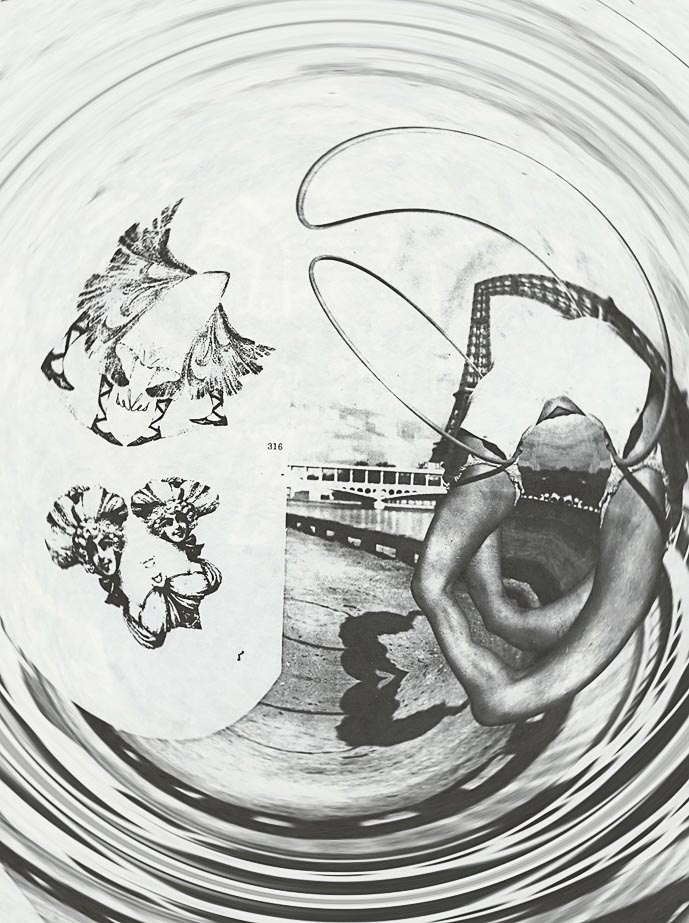
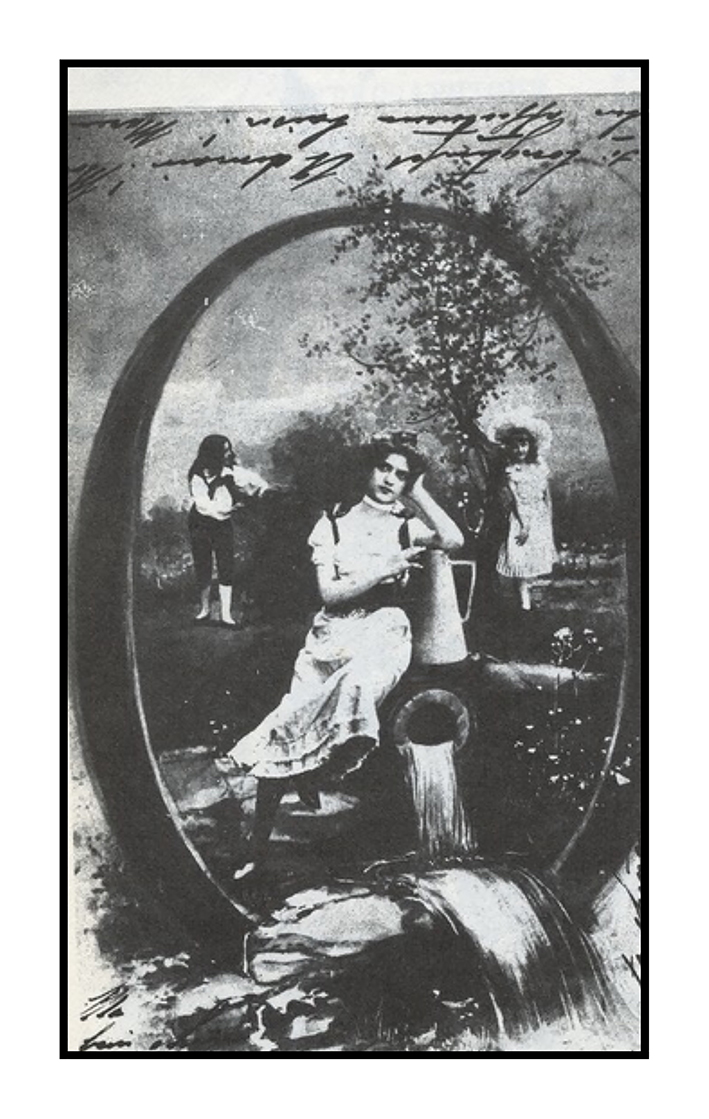
Some of the images I constructed on my phone while away and added to the IG platform (often but not always appropriated, some from a Situationist book, and adjusted using proprietary apps – playing with the accessibility of digital tools) Sadly my phone broke while away and I lost quite a few too. (click to see larger version)
Although I feel I have submitted a more cohesive element/work which emerged from this process, I like the kitschiness of the online version of the film. I think it is far better in the end than the version in the gallery but the sound was too much without earphones and one of the collaborators expressed ‘a hatred’ of earphones in galleries and I didn’t feel it was worth arguing about, perhaps because I was uncertain about the work in the first place. I also think the first section of the film is too long and it could afford to lose a minute or so.
I was also grateful to Josh Phillips for being in charge of the wooden platform and building it and making it work. Installation images:
OCA Reflection:
Demonstration of technical and visual skills
Further evidence of strengthening skills and the ability to recognise what and why things work or not. Lots of work to draw from.
Quality of Outcome
I think the book I’ve suggested is potentially much less incoherent than the film or the collective work. I quite like incoherence to be honest, or at least don’t’ have a problem with it but think something potentially precious never emerged in the collective, although it might have done. I think there is some interesting and strong individual work within the collective but that it does not work as an ensemble piece as well as it could have done. I am really interested in collaborating, assemblages and objects, however, and look forward to exploring this more. A book or an online version of some type is an assemblage in any case, as is the film above. I found it very difficult to think straight in a group of six quite different people. I think I also prefer the verse unbroken so if I decide to print a booklet for assessment I will play with different ways of compiling it.
Demonstration of creativity
The book format is much more sedate, perhaps even more mature, less histrionic than previous work. The written work is a good standard. (The film which I’ve not submitted is not as potent as my previous one although some aspects of the montage are are successful, the music with the challenger seems to have an effect on viewers.)
Context
Strong, pulling from different sources. Perhaps could add a photographer although looking at the issue of photography as a medium (rather than an art in itself) to make art within CS A2. References:
Blatt, Ari J.(2009) ‘The interphototextual dimension of Annie Ernaux and Marc Marie’s L’usage de la photo‘, Word & Image, 25: 1, 46 — 55, 27 – Alain Fleischer, Mummy, mummies (Lagrasse: E ́ ditions Verdier, 2002), pp. 15–16. Translations mine. (Blatt) Available at: https://www.tcd.ie/French/assets/doc/BlattOnErnauxMarie.pdf (Accessed: 24/5/2017)
Cluitmans L & Zeqo A(2011) He Disappeared Into Complete Silence, Rereading A Single Artwork by Louise Bourgeois, Amsterdam, De Hallen Haarlem/Onomatapee
Christakis, N. and Fowler, J. (2011). Connected. 1st ed. London: HarperPress.
THIS WAS THE DRAFT FOR A2 BUT IN THE END, I DECIDED TO SUBMIT QUITE A DIFFERENTLY REALISED PROJECT – ALTHOUGH USING THE SAME MATERIAL AND SO HAVE LEFT THIS UNFINISHED AS A RECORD OF MY PROCESS
Spend some time reviewing your personal reflection and your tutor feedback. Develop a series of carefully considered images that moves your idea forward. Hand in this series to your tutor together with a new reflective commentary setting out where you plan to go from here.
After discussing my plans with Ruth, I decided to submit new work rather than developing the first assignment any further. However, it has many of the same qualities/tropes, and moves my practice forward, i.e. exploring versions of collaboration, working with archival images and text, and moving-image collage.
Quotes below were not included in the final work but the work circles around these ideas and if I pull together a booklet for assessment, they wouldn’t be out of place.
“It is hard to imagine [] considering the inherent silliness, cruelty and superstition of the human race, how it has contrived to last as long as it has. The witch-hunting, the torturing, the gullibility, the massacres, the intolerance, the wild futility of human behaviour over the centuries is hardly credible.”
Noel Coward quoted in The Goodness Complex by Richard Wrangham, 2019
**
“[Quantum mechanics] does not describe things as they are: it describes how things occur and how they interact with each other… [] Reality is reduced to a relation.”
Reality is Not What it Seems by Carlo Rovelli, 2014
**
“Just as brains can do things that no single neuron can do, so social networks can do things that no single person can do.”
Connected: The Amazing Power of Social Networks by Nicholas Christakis and James Fowler, 2019
**
“There is a glut of images in the world and a stubborn obsession with holding on to them… [] Far from satisfying our need for information, the ungraspable abundance of indiscriminate data leaves us just as ignorant but much more confused .”
Pandora’s Camera by Joan Fontcuberta, 2014
The Goodness Complex by Richard Wrangham centres around the idea that human beings evolved with an ability to temper their immediate aggression, and simultaneously developed a propensity for calm, rationally-considered, pre-planned violence, for which language is needed. Humans also became hyper-co-operative across all activities, in particular with childcare and hunting/gathering, and are unlikely to have been the success they are without collaboration. Alongside that drive, there is an inherent desire to be good even when there is seemingly no payoff.
Wrangham suggests these paradoxes were facilitated by our ability to talk to and about each other, and that even when we aren’t necessarily being spoken about, there is always an unconscious awareness that we will be. Once humans were able to gossip, they could avert blame, conjure up stories and plan punishment for anyone who deviated or might be seen as a threat. Gossip, in these terms, underpins who and what we are as a species.
Wrangham’s theory sits at the centre of my contribution to this project.
Work to be included here:
About Pic London:
Workshops:
About Hal Silver:
Artists involved in the collaboration:
Resulting work:
Group Statement:
A rumour reached the village is a collective inquiry that began in a game set in an imagined community, riven with witchcraft, industry and accusation. Over three months, six artists exchanged challenges and responses, out of which common themes emerged: loops and circles, colonies and growth, architecture and language, nature and storytelling. The culminating exhibition is a settlement of images, objects, moving image and living cultures, questioning the stories and materials on which communities are built.
Images of Group set-up and links to relevant collaborator’s work where possible:
Individual work withinexhibition:
Gossip emerged from the original game via an imagined midwife and evolved over time during off-and-online conversations with the other artists/characters in the group. The result is a reflection and response to that interaction; a mixture of text and, downloaded from the Internet, appropriated still frames, moving image, and sounds from space.
There are two versions of the video. Each has the same footage and edit but the gallery version has a simple audio track of sounds from space from the Nasa website. This will be/was shown on an electronic tablet in amongst the other objects and accompanied by some text and still frames from the film captured and printed in newsprint.
A second version of the video is available on my website. There is an instruction to visit it built into the installation (assemblage.) This online edition has music from a well-known game from the eighties which was played on an early handheld device.
Research booklet:
Additional Context
” The circle is timeless but also modern and hi-tech: lenses, records, cogs and clocks. Time is circular on Napoleon’s personal carriage clock, seized at Waterloo, the hands always showing the hours past as well as those to come. And perhaps space is circular too, at least in the mind of Anish Kapoor.” Cumming, L. (2016) Seeing Round Corners: The Art of the Circle review – the joy of life in the round, The Guardian [online review] Available at: https://www.theguardian.com/artanddesign/2016/may/29/seeing-round-corners-the-art-of-the-circle-review-turner-contemporary-margate [Accessed 13/10/2019]
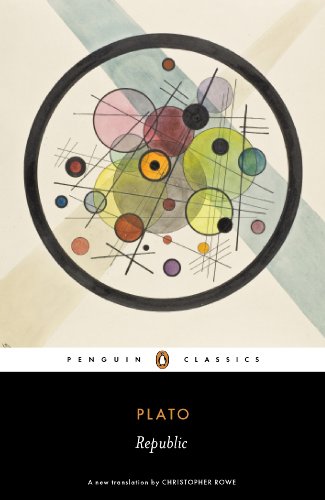
Given my growing focus on Plato’s Cave and contemporary references in popular culture to similar metaphors, I thought it was interesting to see the Penguin edition uses one of Kandinsky’s image of Circles (1923) on the cover.
From Amazon, 2019, [shopping] Available at: https://www.amazon.co.uk/Republic-Penguin-Classics-Plato-ebook/dp/B009LVOFPU/ref=sr_1_3?keywords=platos+cave+kindle&qid=1570964028&sr=8-3 (Accessed: 13/10/2019)The group talked about Bosch’s painting in one of the few meetings we had in person after one of the artists had created a plastic digital 3D print of a building she’d been photographing. I could imagine the object in the distance much like the pink and towers in the Bosch’s background, and indeed, everytime I saw a photograph it did (for me anyway) make reference to Bosch’s work.
Neurophilosopher, Patricia Churchland discusses the biological origins of empathy here. Her article includes:
“The overlap of moral virtues across cultures is striking, even though the relative ranking of the virtues may vary with a clan’s history and environment. Typically, vindictiveness and cheating are discouraged, while cooperation, modesty and courage are praised. These universal norms far predate the concept of any moralising God or written law. Instead, they are rooted in the similarity of basic human needs and our shared mechanisms for learning and problem-solving.”
“Neuroscience reminds us that our social nature and cultural practices, including the ones we call morality, are products of evolution, constrained by our biological heritage. Perhaps that knowledge, of a sense of morality rooted in nothing more than our mammalian origins, makes us a little less likely to be infatuated with our own moral superiority, and more likely to cast a sceptical eye on those who peddle utopian remedies to our problems.” (2019)
Since sending out various versions of work and receiving the feedback I have developed the overall concept and presentation further – seeing what could be ditched but also how I would bring some of the various elements I had created together into an ‘assemblage‘.
I do not much like the word assemblage but after reading it used (a great deal) in a blog by Deborah Lupton, the author of Data Selves: More-than-Human Perspectives, it seems like the correct word for the collection of images, sounds and materials I’ve gathered together. She writes:
I examine the interplay of human and nonhuman affordances associated with digital technologies – devices, software and the digital data they generate – and the agential capacities that are opened up or closed off as these things assemble. I ponder the questions of who benefits from these agential capacities, and in whose interests they operate. Here again, affective forces are central to the engagements of humans with these nonhuman things and the capacities that are generated by their gatherings. I address how human-data assemblages can generate agential capacities that empower and vitalise actors in the assemblage; but can also expose them to vulnerabilities and harms.
This approach recognises the entanglements of personal digital data assemblages with human action, reaction and understanding of the world. Personal digital data assemblages are partly comprised of information about human action, but their materialisations are also the products of human action, and these materialisations can influence future human action. While digital data assemblages are often conceptualised as immaterial, invisible and intangible, I contend that they are things that are generated in and through material devices (smartphones, computers, sensors), stored in material archives (data repositories), materialised in a range of formats that invite human sensory responses and have material effects on human bodies (documenting and having recursive effects on human flesh). (2019)
I am therefore creating an assemblage although I have not used this word.
The assemblage consists of:
A video – itself a collage, a type of assemblage. While not a still collage like Höch’s were, it was made to emulate that trope, cutting up and pasting material that exists in the world. It includes audiovisual material that is available on the internet but contains signifiers of earlier technology. It will be shown on a Kindle – a handheld device.
The film will also be available on my website but it will be a different version. Mostly the same apart from one or two tiny sections, but with an alternative audio track. The instruction to visit the website is printed on newsprint and is part of the assemblage.
Still frames from the film which have been ‘captured’ and frozen – in more or less the same way a photograph of life is captured and rendered a still image, using a slightly different tech/method – and printed on newsprint. These will be placed on the platform or hung from sticks.
The poem printed on a tabloid page, orientated portrait. I hope this will hang above and slightly behind the kindle, perhaps alongside printed newsprints but I will need to see how this pans out when we set up. I was very influenced a long time ago by Louise Bourgious’ He Disappeared into Complete Silence. This is a book with several plates each of which consists of text and a drawing. The drawing is not an illustration. And sometimes it is hard to make the connection. But they are made to be seen together. I feel the poem and the video work this way too. Each can stand on its own but the point of the work is only brought to the fore when they are placed beside each other: A moving image piece alongside text, working with it but not illustrating. I might have read/performed the text in a video or even live. But this did not feel the right place (collaboration) for that – perhaps I might have reached a way of doing this if we’d had longer or were working in a smaller group -and it is something to consider for the longer-term, BOW-wise.
The work will exist in a ‘village’ (the platform) alongside other work made by my collaborators. The contents were influenced by their interests and the interactions I had with them. It is a reflection of them and my time with them. So my work is part of a greater assemblage, a network of creators which itself exists within a further larger assemblage – i.e. the three groups organised/curated by Pic London. That too is an assemblage which is again part of something greater. And so on = the fractal nature of existence.
Looking back, this is the pattern of my work. And now I know why. I am not focusing on one tiny aspect. I am recreating the chaos and interaction of conscious experience (not an individual, not an isolated and alienated concept, not one thing).
When I submit the assignment I will include critical information I sent to Pic London – but here since it is relevant, I will just add a quotation I used which I have inserted into my work previously, and put at the front of my Self & Other blog:
“There is no such thing as a single human being, pure and simple unmixed with other human beings … [the self] is a composite structure … formed out of countless never-ending influences and exchanges… we are members of one another.” (Joan Riviere, 1927) It seems the assemblage whether it’s made up of flesh or tech or both and all sorts of other stuff is a description of Riviere’s statement.
















 SJField - OCA Level Three Study Blog