BOW: A3 images – the agential cut

I spent some time today working with the idea of the agential cut and photography. Tomorrow I will look at Processing/film/making the image move.

Just to remind people –

  • ‘An agential cut, therefore, can be viewed as making and giving meaning to human-data assemblages.’ (Lupton, 2019: 30)
  • “…any attempt to impose meaning and order is an intervention (a cut) that produces specific effects, and is inevitably part of the matter it seeks to observe or document. They [Kember and Zylinska (2012)] represent photography as a specific cut in meaning, a way of delimiting from all the choices availabe what can be recorded and displayed, and therefore, how meaning can be generated. It is the medium by which things are brought into being by humans and non-humans (e.g) cameras [phone, scanners, etc.] working together. Photography makes agential cuts that produce life forms rather than simply documenting them. ‘It is a way of giving form to matter’ (Kember and Zylinksa 2012: 84)’ (Lupton, 2019: 29)
  • ‘Images or representations are not snapshots or depictions of what awaits is but rather condensations or traces of multiple practices of engagement’ (Barad, 2007: 53)
  • Potential images to accompany writings


Today’s Contact Sheet (ones that stand out immediatelyadjusted in LT but none in PS):

CS: Alan Sekula’s The Body and the Archive part 1

Sekula, A. (1986) ‘The Body and the Archive’ In: October 39 p.3064. At: http://chnm.gmu.edu/courses/magic/sekula.pdf (Accessed 23/11/2019).

Field, S. (2017) Notes: The Body and the Archive Allan Sekula. WordPress [Blog] At: https://ocasjf.wordpress.com/2017/06/12/notes-the-body-and-the-archive-allan-sekula/ (Accessed 05/01/2020).
Heimans, J. and Timms, H. (2018) New power: how it’s changing the 21st century – and why you need to know. (Kindle) London: Macmillan.
Blatt, Ari J. 2009 ‘The interphototextual dimension of Annie Ernaux and Marc Marie’s L’usage de la photo‘, Word & Image, 25: 1, 46 — 55, 27 – Alain Fleischer, Mummy, mummies (Lagrasse: E ́ ditions Verdier, 2002), pp. 15–16. Translations mine. (Blatt) Available at: https://www.tcd.ie/French/assets/doc/BlattOnErnauxMarie.pdf [Accessed: 24/04/2018]
Quantum Fields: The Real Building Blocks of the Universe – with David Tong (2017) In: The Royal Institution. Royal Institute. At: https://www.youtube.com/watch?v=zNVQfWC_evg (Accessed 05/01/2020).

I looked at this essay during S&O and will look at it again here – Sekula’s essay along with John Tagg’s talk on the filing cabinet both provide plenty of useful references, which, combined with Barad, Lupton and Rubenstein’s thoughts/thesis’, are probably the key sources of information through which I’ll explore at the topic I’ve chosen.

  • The essay opens with the paradoxical status of photography in bourgeois culture (3)
  • He quotes a song which ‘plays on the possibility of a technological outpacing of already expanding cultural institutions’. (4) This rings true today (see New Power, (Heimans and Timms, 2018))
  • You could replace the work photography with digital for the first two pages and it would all sound relevant and fair.
  • However, by page 6, the veracity of the photography is being discussed, as seen by contemporaries – ‘Only the photograph could begin to claim the legal status of a visual document of ownership’
  • ‘a silence that silences’ (See muteness and photography – ‘Ernaux reminds us, initially ‘all photos are mute’’ (p.73).) Blatt, Ari J.(2009))
  • (6) ‘the criminal body’ and therefore the ‘social body’ invented
  • ‘a system of representation capable of functioning honorifically and repressively’ (6) how does this work with representationalism and the unpicking of that? There are no entities waiting somewhere to be represented, rather there are emergent intra-active phenomena (Barad, 2007) (criminal and social bodies are made/formed)
  • again photography can be replaced with digitisation when discussing how portraits are degraded and extended at the same time – see selfies, phone pics
  • (7) ‘Photography came to establish and delimit the terrain of the other, to define both the generalised look – the typology – and the contingent instance of deviance and social pathology.’ So much to say here – See Azoulay (2019) and photography’s intra-active position/role within a much wider non-linear narrative. See Tagg and ‘fixity’ of the photography and Victorian culture – the desire to catalogue everything according to ordered and identifiable rules, (2011) i.e. the periodic table of elements  – a Victorian System compared to today’s quantum fields, a modern system/model of reality which we are informed in most accurate to date and is far more nebulous and difficult to comprehend, no doubt in part due to our Cartesian ‘habit of mind’ which is desperate to label and file everything neatly and ordered (Barad, 2007) as well as being counter-intuitive, shrouded in academic mystery and just really impossibly hard. The Victorian system and hence our dominant one (although this is changing hence the entrenched reaction of a conservative mindset), seems desperately naive in comparison.
  • (7) See quote about ‘possessive individualism’ which I’ve already inserted into CSA2
  • (7) Relate photography ‘a means of cultural enlightenment’ and ‘sustained sentimental ties in a nation of migrants’  – compare this to digital tech/culture in today’s culture. Beneath both Carlyle and Aurelias Root’s comments is a dreadful patronising tone however which is surely avoidable. See images ‘of the great’ = ‘moral exemplars’ ??? (Imagine a photograph of any of our current crop of erstwhile leaders providing such?)
  • Sekula writes of the utilitarian social machine, the Panopticon – think today of social media/ Surveillance Capitalism (Zuboff, 2016) (9)
  • The archived body – ‘begins’ here see page (10) begins is not the right word, becomes visible perhaps.
  • 911) physiognomy and phrenology  – ‘surface of the body’ ‘bore the outward signs of the inner character’  – Compare this to Professor Plomins deterministic genetic code thesis which Cummings et al relied upon to justify changes they made to the Education system. Cummings claims that people misunderstood the work and have since retracted their negative comments. However, I think Christakis’ comments on genetic coding is probably more honest  – both I suspect, however, show how deep and far-reaching social construction and their associated embedded epigenetic markers can be. Whereas some can see the need for more positive and profound structural changes to take place, there is a mindset which believes we should further entrench these realities which Sekula is talking about that continue today. I was also struck while reading this by the similarities in an article I read today some on FB (I think) which claimed the more bitter and cynical you are, the more likely you are to age quickly and get sick. Lots of scientific data support the thesis – the way it’s been framed, but I am quite cynical indeed and look about fifteen years younger than some of my friends  – so I felt a little doubtful  – we people seem to enjoy deterministic narratives even today.
  • (11) borne of ‘attempts to construct a materialist science’  – compare to Barad’s performative/discursive/material emergence of meaning, far more complex and lively but nebulous so hard for people to engage with
  • Maybe time to revisit Szondi who I discussed in my first reflection about this essay – an early psychometric tester, he defined people by their reactions to faces rather than by the shape of their own faces/heads. Many companies today use much more robust psychometric tests which are extremely powerful but one wonders about the wonderful aspect of chance being eliminated. And so we enter the discussion of AI and how it can be so much more accurate than human power but how much agency do we give it? Currently watching Travelers (Netflix) which explores this in typical pop-culture fashion – first series better than then the rest and lots of references to .
  • Sekula identified ‘idealist secret lurking a the heart of the putatively materialist sciences’ – how is the AI screening of CVs and psychometric testing any different? And you should see the John Lewis video that you must watch before taking thier tests   – madly idealist in quite a scary way, reminded me of Logan’s Run (In HR terms, humans do still get involved: I know this as AI testing identified me as potentially suitable for a well-paid relatively high-status job but my lack of experience ensured I was rejected once a human looked at my CV in one particular application process!) Perhaps I will include some of the resulting descriptions of me, having taken part in this process in my BOW… 
  • TBC

BOW A3: Text’s rewritten and placed in a suggested format

I have spent the evening rewriting some of the texts and placing them into a book form – I’ve rejected the first ten or eleven I wrote but after that, they started to improve. -although still needed attention.

No doubt I will continue to write and make changes and add other writings. (Plus there are likely to be typos – editing straight into ID is not really ideal for me – I’ll have to transform to word and spell check later.)

I have not identified images to include but now that I can see an arc, I feel what is necessary will begin to emerge. I am interested in the Processing exercise I experimented with the other day using Tom’s First Film. (Not included any writing prompted by that in the collection below yet – will do later and then will see if it fits.) The possibility of corrupted, machine-informed collages might be just what is needed. Having put these texts into a format, I feel I can get on with that – I feel I have time and space ahead now (although received feedback from Matt for CSA3 which I need to write up and post too.). It would certainly fit the remit of ‘Chance’ to do things that way.

The theme of selfies seems to have emerged as significant which is hilarious given I stated quite clearly I was not interested in making a project about selfies in an earlier reflection.

This way of working feels completely counter to all I’ve been advised and learned the last few years… but it’s the way that’s led to something so I need to keep going. Saying that – it does feel emergent and informed and organic.

I have left space for images in the book as laid out  – I think space will be very important. But the order is not fixed, nor is the layout, or the texts included, or the size –  and there are no images (yes, I know, it’s a photography degree…) except for the ones I experimented with earlier. But I don’t think they are right at all.

And there is a bit of writing yet to be done – I have entered a heading on that page to show where it would go.

BOW A3

BOW: A3 ideas

  • Book
  • Website
  • Working towards installation consisting of moving image, still, text and objects

Main themes

  • Consumerism
  • Mythology (classical and modern) See below

https://vimeo.com/376661589


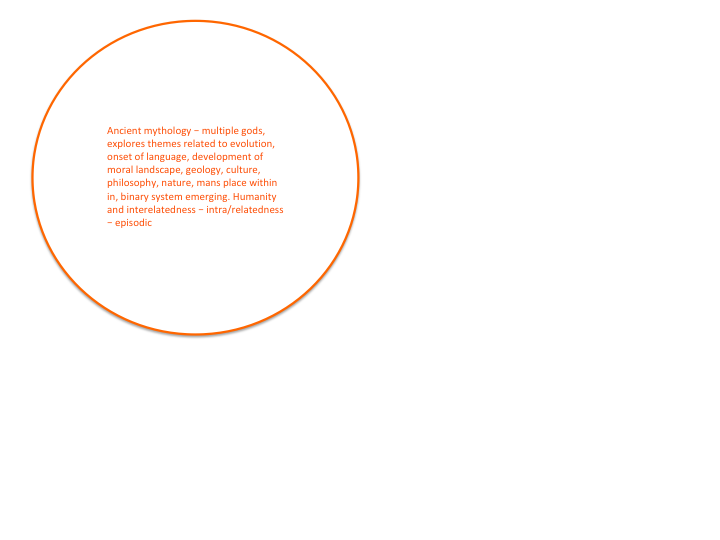
Click on slide below to see what each says – the animation above is meant o to indicate how all these are ‘entangled’ and part of the mesh life intra-active reality we live in today.

See more here: https://sjflevel3.photo.blog/2019/12/01/bow-ca-an-attempt-to-put-bubbling-concept-outside-of-me/

Current concepts to contain this:

Main Title – ‘????’  (Random notes for a short story?)

Subtitle – ‘ :a manifesto for the digitised self’

Will keep playing and thinking re the above – not there yet.

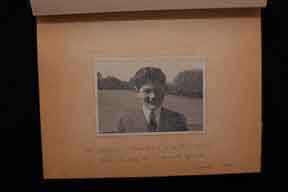
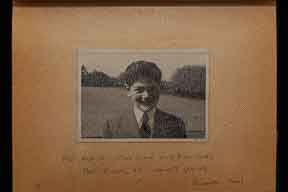
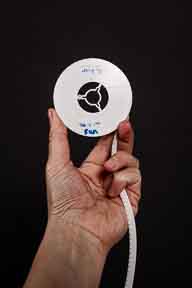
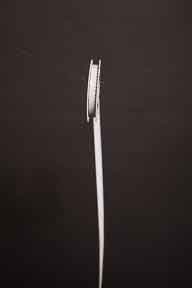
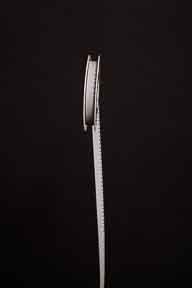
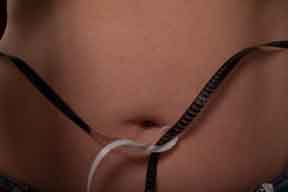
Need to focus on making work now – have been writing some of which is on Sketchbook blog – need to go back and re-look at quite a lot of the text, do rewrites etc. Feel The writing is the driver and the images playing second fiddle for now… need to change that. But in most cases, it was the writing which came first although Tom’s First Film (to be written) is inspired by the images in the film I bought to eBay. And having done that, I am returning to other films I’ve downloaded and looking for ‘kindling’ – i.e. frames that trigger texts. Below is a possibility for inclusion. Over the next several days (and beyond but in the immediate future, in order to submit A3), I hope to upload as many of these as possible and then will edit out much as one would with a sequence of images. using different materials to make ‘image’. This is an old image, incidentally, made while exploring S&O but not used.

Selfie-2  – A PDF to see what might look like in book form.

Selfie-1 –  Variation on a theme but prefer the above.

Many many more of these micro-stories to produce now….


BOW: Chance Coursework 1

From page 42 of the course folder:

A: Is there anything you feel compelled to do at this point in your work but you can’t figure out exactly how it will fit into your project? Talk to your tutor or write about it – perhaps it’s a change of direction. 

B: Would you be comfortable using opportunistic encounters to create your art? In your view, has Calle been deceitful or intrusive in creating the works discussed here? How would you defend or criticise her approach? 

  • I read in another student’s blog they had decided to leave CS aside for the moment and concentrate on the making. This worked well for that student. I, however, have done the opposite – certainly, in terms of images although I have concentrated on the ‘writings’ which I am likely to include in BOW (I do not like the word poems). Even so, one of the most challenging things with CS & BOW is doing them both together. And, I have really needed to understand – as best I can – some immensely complex ideas. So, the time taken to unpick these has been valuable and necessary – but I have reached a point where I really do need to start making imagery. However, when someone asked me what my subject was, I couldn’t give a concrete answer. (Not sure I can yet but perhaps getting there).
  • One of the first writings I pulled together was Orpheus in Homebase. At that point, I realised Consumerism was very much on my mind. but the work is not simply about that.
  • Reading the contributing essay’s in Edgar’s Martin Soliloquies book has led to finding some excellent quotations to add to the essay, and the whole book has given me a further understanding of how and why Martins’ is using multiple sources, which I feel compelled to do. I attempted to do this in A2 but for the submission, settled on a much simpler single series (original) to include although always with the idea that I might include that mini-series within the larger project – using multiple sources.
  • I will write up notes elsewhere but the following from Martins’ book is key and sums up my own intentions very well:

    Roger Luckhurst (academic, writer, literature and science fiction) describes how Martins’ uses found, original, vintage, and parallel projects to ‘derail the over-coherence any series or display or exhibition or book inevitably imposes, fighting to keep the grid of meaning open, defying the dread determinism of the forensic field’ (2016: 118) This reminds me of Robert Wilson’s intentions to keep meaning open, to explore and even embrace ‘the terror’ rather than comfort his audience with trite reassurances. ‘I try to open up, not narrow down meaning’ (Holmberg, 1996: 7)

  •  I have been trying to find ways of doing the above since UVC and not really understanding why – until recently when I think it has started to become clearer. Such experiments were sometimes received positively by OCA tutor guidance, but other times not so much. I see in photography (but not in some avant-garde theatre) a desire for simplicity and a rejection of complexity, which irritates me. It’s true, experimental attempts can be less successful when the outcome comes across as so incoherent there is nothing to grab hold of. (And I’m not saying my failed attempts were, in fact, anything other than that.) But there is something in academic photography that is stilted, conservative, and yes, ‘boring’ – which I find stultifying, overly myopic (ironically for a medium that is all about seeing) and smug. John Tagg talks about photography’s ‘fixity’ in his video on the cabinet and the Victorian desire to categorise and appoint value into the system (2011) – and it seems to me that photography is so mired in this urge – a systemic, ontologically encapsulated motivation, that it becomes almost impossible to avoid. And that even when photographers claim to be addressing the system by making work which is meant to query, unpick or criticise elements within the system, they invariably can’t help but confirm and reinforce the very thing they want to dismantle. (see Flusser 2012) I think Martins’ – and others such as Edmund Clark, Clare Strand and Joan Jonas, all people who work across mediums, are putting themselves in a good position to avoid the traps that working with an inherently isolating/othering medium sets for artists. These artists, to a greater or lesser degree, create rhizome-like systems of work which can respond to spaces or platforms as necessary, using multiple devices and materials. A single project might contain work from other projects and also appear in books, videos, galleries and online  – and in each space it will be different and appropriate to the situation.
  • Indeterminism is the heart of reality, so Carlo Rovelli tells us (2016). We little humans can’t stand that. We want certaintity. We want fixity. Indeterminism terrifies us. Contemporary fluidity terrifies us (as well it might when utilised and taken advantage of by badly motivated actors).
  • The ‘habit of the Cartesian mind’ (Barad, 2007) dominates our consciousness and perception. This is something we humans need to begin to understand – that the habit is constructed and therefore it is possible to deconstruct it. We are in some ways beginning to embody it but without consciousness/cognisance. What informs this habit and the underlying and ‘intra-active’ processes that are emerging today (and have been for a century) are the impetus of my evolving project.
  • Wendy M said when I was doing S&O, think of what you want to say and say it. I have summarised my key statement in an earlier post – STOP CATEGORISING ME!! That’s at the heart of what I want to say. And then, from that springs a whole range of other topics which we cannot ignore  – there is an urge to encourage others to consider the ‘habit of the Cartesian mind’ which spreads out and can be applied to anything and everything from feminism to economics to climate change to migration. By writing the small texts I hope to trigger thoughts and questions assumptions.
  • By refusing to work in the usual way  – i.e. the Cartesian way (which is so often tautological) and embracing context, intra-action, relation, emergence and rejecting discrete isolated objects, I hope to address those assumptions. (I genuinely have nightmares about how this will be received by OCA assessors!)
  • The way I’ve been doing this to date is to write  – and the themes that have emerged are as stated above consumerism (the modern religion) and mythology and ‘the simulation (i.e. the spectacle, the panoply of visual and aural  – moving – realities we live with and as). These are not singular nor are they isolated. They are intra-active and relational. They are lively and rhizome-like.
  • Finally, Martins manages to explore similar subjects through the doorway of ‘death’ and in particular violent suicide. At the moment I think my overriding subject is Entanglement and I am not sure that is as potent or direct. As mentioned the idea of the ‘agential cut’ and therefore ‘Cut’ and its various usages may serve as the title. The idea of lits of little micro-narratives in the form of the writings leads to me thinking about using ‘notes for a short story‘ or a variation on that as the subtitle persists in my mind. But I am aware it’s a bit nebulous for now – although this nebulousness is crucial to the message too.

B – Sophie Calle

I wrote about Sophie Calle during S&O (2017). It’s not really relevant or helpful for me at this point to cover her stalking or revelatory process again. But she is an interdisciplinary artist so a useful reference in that sense. I would, however, point to Sylvere Lotringer’s comments on revealing all in our capitalist culture  – see Overexposed (2007) but will leave it to others to consider whether Calle is critiquing this aspect of our society or not by engaging in it. It’s interesting, however, to compare her to Lortinger’s ex-wife Chris Kraus who wrote I Love Dick (1997) and the comments about Calle being ‘exploitative, invasive, silly if not simply crazy,’ (Shilling, 2011)  – sexist or accurate or double standards? (Think of the many, many violent and sick broken men out there whose behaviour continues unabated and excused constantly by a complicit society …)

Field, SJ. (2017) Self & Other Sophie Calle WordPress [blog] Available at: https://ocasjf.wordpress.com/2017/04/30/artist-sophie-calle/ (Accessed 03/01/2020)

Holmberg, A. (2004) The theatre of Robert Wilson. Cambridge; New York: Cambridge University Press.
Flusser, V. (2012) Towards a philosophy of photography. London: Reaktion Books.
Lotringer, S. (2007) Overexposed: perverting perversions. Los Angeles : Cambridge, MA: Semiotext(e) ; Distributed by The MIT Press.
Martins, E. et al. (2016) Siloquies and soliloquies on death, life and other interludes. (1st ed.) Portugal: The Mothhouse.
Shilling, M. (2017). The Fertile Mind of Sophie Calle. The New York Times. [online] Available at: https://www.nytimes.com/2017/04/10/t-magazine/sophie-calle-artist-cat-pregnant.html?_r=0 [Accessed 30 Apr. 2017].

BOW A3: Tom’s first film

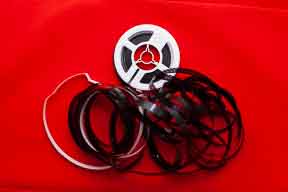
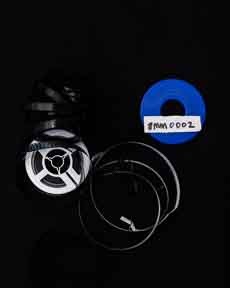
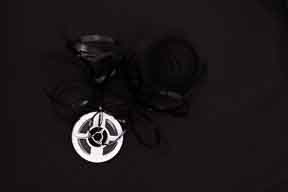
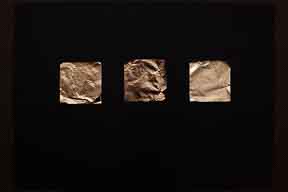
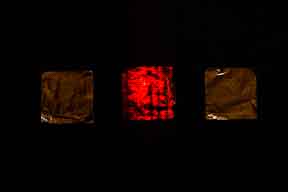
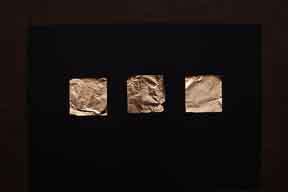
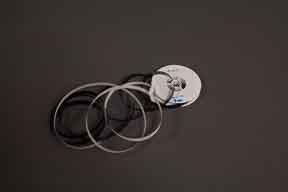
Tom’s first film (1971), which I bought from eBay is a bit of a shallow pool which I’ve been thinking about and looking at for some days now… How am I going to make work with the actual imagery? – I can, however, think of several possible ways to play with the object. Once the kids are back at school I will have space and time to take some photographs of the actual film which I wanted to do but goodness knows what to do with the footage…

The film has, alongside other activities, helped to further consolidate directions. And I wonder if the film will part be of the journey rather than anything final.

So far I have made two experiments, here’s one of them. If shown in a live setting, it would be preferable to have the processing running live rather than a screen recording like this. This video is generated by code in Processing  – by randomly relaying screenshots from the film (i.e ‘agential cuts’ into Tom’s amorphous and unformed recording).  The film reminded a friend of a Goerges Braque image in tone and structure, which was encouraging as I stared at it wondering whether it was anything or not (see below). Braque’s is called Violin and Candlestick (1910) and I guess I might call this Processing experiment Camera and Food Processor. I need to ask Simon C. who did the Processing course at the TPG with me how to stop the random placements from all heading in the same direction. I wish I could do the course again to augment some of what we learnt as I am currently picking through old files from the tutors very slowly as I try to figure out how to do things. I might also get the code to record the iterations and then handpick still combinations that are most striking. When its running live, I particularly like the frames where the food processor appears many times at once – with black holes all over the screen.


Violin_and_Candlestick
Georges Braque Violin and Candlestick (1910)


Artists: Orpheus Standing Alone, Camille L. and Anna L

I recalled seeing this work in a Foam magazine #51 (the previous post is also from that edition) and being really struck by the way it was put together, and incorporated a range of images, styles, as well as text. On the website there are still images, text, a bit of processing and a freedom that one doesn’t see in more ‘conservative’ examples of photographic work. I did not recall the name of the work and had to flick through old copies, and now see a similarity to one of my own texts – Orpheus in Homebase. The linking again of old myth to today’s world. What I take mostly from this work is freedom to play. (Which is interesting given my sense that there is an ever decreasing sense of play related to online forums where the conservatism of Flusser’s apparatus appears to dominate and rule.)
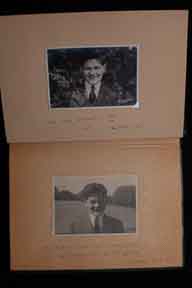
Self Published Art Books
— Read on www.orpheusstandingalone.com/about

Artist: Filip Berendt

Berendt’s ephemeral process equates well to Barad’s agenitial cut which I’ve been exploring in my own work (ideas for so far). There is also the mix of medium and ownership (like Martins and Clark) which rejects the purity espoused by Bate. Additionally, he manages to focus his work on myth and archetypical patterns cross culturally and across linear time. Worth exploring and thinking about, possibly including as an example in CS.
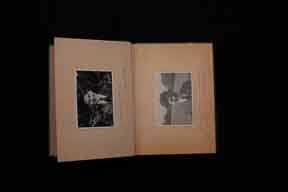
Monomyth project combines authorial photography with abstract painting – photographed objects are spatial collages created on the walls of Berendt’s studio and destroyed once they have been captured on film. Berendt has used that method previously in a couple of cycles (Every Single Crash, Pandemia) in which the only physical trace of the pieces he created – and thus the final effect of the creative act – was a photograph. His latest works refer to the idea of monomyth, introduced by the American mythologist Joseph Campbell (the term was originally coined by James Joyce). Monomyth stands for the archetypal pattern typical of fictional narratives, described by Campbell, shared by all mythical stories, manifesting itself as the hero’s journey, conveying universal truths about self-discovery and self-transcendence, about social and interpersonal roles. According to Campbell – and Berendt – the hero is an individual setting out on a journey leading them to the final destination: profound spiritual transformation. The journey is tantamount to making life meaningful, to searching for and discovering its meaning at consecutive stages of the trip.

text; Agnieszka Rayzacher

— Read on www.filipberendt.pl/