BOW 1.2: Development

A short film to be shown in a group show on a platform or in a circle which functions as a village of work made by the collective.

Latest iteration following feedback: Password Village3

Following some constructive (and helpful) feedback from the regular OCA online hangout I attend, plus some comments from Ruth in my last tutorial, I have continued to develop this film (See earlier versions below). It is half the length than it was and has a less fragmented audio track. I am thinking I will only provide the audio online and visitors must use their phones to hear it in the gallery or on a computer at home, not least of all because it will drive the invigilators completely insane if it is on the whole time. There are further reasons to do this but I will discuss that on my blog. I need to match some clips up with obvious bits in the music still, but I think this is a much more accessible idea – although still incomprehensible I’m sure to some. In an accompanying brief statement, I need to say something like the following:

An audiovisual moving image collage, which contains themes and fragments that emerged out of a conversation with 5 other artists, and took place over several months as we were researching and developing the overall inquiry into what a village might be. Images, mostly found but some original, are combined with music from a well-known computer game from the 80s which was usually played on a portable handheld device, a precursor to today’s ubiquitous mobile phone. (When I played it, aged 11 or so, my three brothers were horribly annoyed that I reached the high score and saw the prize before any of them did.)

Earlier iterations  – all same password as above. 

Version 5

Original I shared with anyone


Themes and topics in the next blog

Bow 1.2: Background

Since I am now going to submit some work I am doing in conjunction with a group called Pic London, or at least part of it for BOW 1.2, I need to record development and research in more detail than I have done to date.

I will be submitting work that is part of a group show titled A rumour reached the village. The project is the result of a collaborative process which took place over the summer and continues still, and is one for four groups showing work under the Pic London After School Collective strategies name at Lewisham Art House in October.

There are roughly six people in each group. Ours includes Michaela Lahat, Rowan Lear, Eva Louisa Jonas, Joshua Phillips, Christel Pilkaer Thomsen and me.

Why I submitted my work to Pic London in the first place

Before submitting for DI&C assessment I shared a newspaper element, which I eventually sent to the OCA, with OCA friends and a couple of external people for feedback. Sometimes when I share my work with people there are embarrassed silences as people don’t know what to do, where to look, or what to say. This can make it quite hard to feel OK with the work or get the sort of constructive feedback I am after. I have discussed this before and I am aware that quite often my work is hard to make sense of especially when it’s still in the early stages of being developed. Although I had received some useful feedback from my cohort about the way the paper might be construed by assessors (and a warning that I must stress the films were the main element in the submission while the paper a supporting document) I was searching for a conversation about what worked and what didn’t come across as I hoped. A good friend who is a photographer said she did not feel qualified to give me the sort of feedback that would be helpful but she felt the work was strong and urged me to submit it a call out by Pic London. (My fifteen-year-old son was in fact extremely helpful in the end.)

As an aside, my friend and I have spoken several times about where my work is heading and I have said I feel like the usual photography competitions are just not suitable places for me. And not do I want to be limited to straight photographs. I am in a constant state of flux at the moment about where my energies should be directed and what sort of work I should spending my time on. I am confused in my head and split, but not split in a clear and defined way. More a fragmented mess of a crisis way. This is probably apparent in the choices and mis-choices I am making with each discipline and how I choose to express it; commercial work photography and this other work I do for which I don’t yet have a name. I am also beginning to wonder if the commercial photography is the same as the non-commercial photography, so long as it is just photography; and the other unnamed stuff I do is not photography at all although at times it may contain images. That might sound terribly confusing   – and if it does, that’s an accurate reflection of where I am.

For Pic London, I submitted the final DI&C project, Origin of the Common-Place and Assignment 2 – Polar Interia along with the newspaper and was thrilled when it was accepted. However, having submitted that moving image work  – having so little experience in all of this – I felt that some form of video work in the same vein would be what was expected of me. Perhaps I was wrong – I am still figuring this all out.

Workshops

I actually had no idea what the resulting work would be. It took me a while to be really clear that whatever we had submitted wasn’t being shown but some new collaborative project which would emerge out of the workshops.

We were put into groups  – these were listed in the application where we had to state a preference. I went for Hal Silver who I had never heard about but that group seemed to suggest performance would be involved which sounded right for me and I was glad to be assigned to the group I wanted.

Hal Silver was made up from a group of RA photography students who wanted to explore practices beyond their narrowly photo-focused studies. I think they got together in 2010. The workshop leaders, Una Hamilton Helle, and Joshua Bilton have pages about Hal Silver on their websites but it was quite hard to pin down who or what Hal Silver was online prior to meeting them. I quite liked this slightly incognito and enigmatic air that Hal Silver projected when I tried to look him/her/it up. We were told he/she/it might not even turn up at all! So a form of performance seemed to begin before we even met or started playing together. (I do now wonder if the original members had hidden the relevant pages from their websites as none of us were able to find out much about Hal Silver by doing searches prior to the workshops beginning.)

Pic London’s description of Hal Silver’s plans:

The workshops will be experimental in nature and the focus of each session will be on collective forms of making, improvisation and group dynamics. This could take the form of games, role-play, unskilled mask and costume making, photography, video and sound recording. These process-led activities can be gathered into a final exhibition display, the form of which will be established throughout the workshop sessions. (2019)

We were given three talks from each of the leaders/groups over a period of several weeks on Saturday mornings, which were followed by workshops where the seeds of some ideas were introduced to us.

Find out more about each of the workshop leaders and focus on Pic London’s website.

As the work has not yet opened and is still in progress, I will either need to wait to publish any further information or publish privately (more likely the latter as I need to ensure there is enough material available for Ruth/assessors to see my process.)

BOW 1.2: Peer feedback

Peer feedback (to be added to as and when it arrives)

MA student, not OCA

Ok, watched it a couple of times and – sort of – in the spirit of your word suggestions:
erotic,
sensual,
creation,
procreation,
recreation,
fragility of the personal,
timelessness/cyclicalness
I think this is the best ending you’ve made so far, I loved it.
I was interested (and happy) to be confused by certain juxtapositions, the narrative structuring that built in my mind. And those confusions are quite important at the length of the piece.

OCA Student

I watched both the Village work and also your Collaborative (music) work and remain in awe of your creativity – well done.
As so often in the past I struggle to understand and this is maybe because I don’t let myself ‘feel’ rather than trying to interpret.  So bearing this in mind the video made me think of the microspores around us all the time and the beginnings of life.  Some of the images are intact quite sensual.  I found that I needed to watch to the end and was not tempted to cut it short.  Overall, thought-provoking and creative.
In terms of showing it, I suspect that if it cannot be projected you are stuck with a screen of some form.  How about embedding the screen in some form of ‘box’ or ‘lightroom.  This could be large or small depending on how you want the viewer to see the screen.  It could be looking at it through peep-holes or fully immersed in the ‘room’  Thinking randomly, the room could be made of some form of black drapes with a few places for people to look in.  Alternatively a form of tunnel with viewers looking in.  Difficult but I am sure somewhere an idea will gel.
OCA Student
I felt that there were elements of: texture, ambiguity, alien, biological, and possibly sexual. Micro to Macro overlays.  I found the appearance of the woman in the red dress very sudden. The colour of your own images is jarring, as is the sudden audio. I liked the overlay of the images and juxtaposition between them. There is a theme of flowers opening – sexual reproduction, particularly when overlain with the cell movement? I felt that towards the end there was an overlay of control / eugenics and possibly abortion? The final feeling for me was tragedy.
Reading your poem reminded me of a book I read a few years ago – Mitchell, D (2014) The Bone Clocks London: Sceptre – there is a quote that I used for a documentary project:

‘Then all those little pale lights,’ whispers Holly, ‘crossing the sand, they’re souls?’

‘Yes. Thousands and thousands, at any given time.’ We walk over to the eastern window, where an inexact distance of Dunes rolls down through darkening twilight to the Last Sea. ‘And that’s where they’re bound.’ We watch the little lights enter the starless extremity and go out, one by one by one.

 I, like Doug, found I needed to watch the film to the end. But if you decided to make it shorter it wouldn’t matter either. Probably the first half felt ‘slower’ to me than the second half.
I think Doug has made some excellent suggestions regarding presentation. You could either project on a wall and go large, or have an ipad or small phone as the screen and make people look up close, with some headphones. Both could work. With the idea of an iMac, it may distract from the piece itself?

2 October Hangout
  1. Version with Game Boy music: Really felt taken back to the 80s and enjoyed it. Imagined it being watched on a small screen reminding her of Nintendo Gameboy further. Enjoyed the sexual angst present in the film. Was confused by the presence of the men – but didn’t mind feeling that confusion. Felt the film worked as a conveyor of a specific feeling.
  2. Felt the film was still in early development and imagined it would be refined further but enjoyed it on the second watching. Felt too confused by it the first time around though.

    There was a discussion about moving image and still photography and how/why moving image is accepted on the course.  I stressed that all tutors have been very encouraging about using moving image and indeed, I’ve seen some of them encouraging others to experiment with it more.

BOW 1.1: Feedback form and tutorial​

Yesterday I had a meeting with Ruth online and this morning I have added to the feedback form and sent it over to her.

An abbreviated version below: 

The film demonstrates technical and visual skills, and imaginative handling of the found footage to draw out its haptic qualities and communicate a critical re-reading of the material. The three sections ‘verses’ have distinct atmospheres. Overall sense of the film: it could be much shorter and thereby allow the viewer to be swept up in the whirl of the imagery and music but not start figuring out what is going on.  The length somewhat detracts from the open-endedness of the film, and suggests a potential narrative. Let’s discuss this, along with choice of film, precedents (similar/related work); rhythms (from sound and visual edits such as speed, image manipulation etc.)

Before meeting for an online tutorial, I sent Ruth a blog post (password protected, available on request or supplied for assessment) which explained why even though I agreed in the main with her about the film, I felt reworking Sirens was impractical and undesirable. I have been working on another collaborative project and suggested submitting the results (or a part of them) for the A1.2 and sent some work in progress. I can see that the course wants us to be prepared for reworking projects as part of an ongoing process. But I have often done this in any case during my time with the OCA and either do so or sometimes choose not to, moving on to something new instead or ditching previous ideas/work altogether and starting again from scratch. So accepting feedback and reworking is not unknown to me. We agreed in the end that Sirens had been a good stepping-stone but that my time would be better used moving forward with the next project.

Extra information which I’ve not talked about on the feedback form

Ruth and I agreed that submitting the Pic London work will be the best use of my time. I had shared some Work in Progress.

  • A film
  • A set of stills taken in the village I was in Italy (some of which are in the film at the moment – WIP – so who knows if they’ll stay)
  • A poem I wrote while making and thinking about this work. The poem will be in a booklet accompanying the installation made by the Pic London group and is a research document rather than a catalogue.

Ruth said as the film stood now she couldn’t make sense of it. But that she thought the poem was strong. I ended the session ready to ditch the film altogether but that feeling had dissipated by the end of the day. The film is important but needs more work. I try to remind myself of Adam Curtis’s comment about showing unfinished work. “I just think it’s incredibly risky to show stuff early on when you’re trying to combine, say, two or three different narratives together to make a bigger point. It’s so easy to get it wrong. Because you can see it in your brain, but they don’t know your brain.” (2018)

https://www.theguardian.com/film/2019/jan/18/adam-curtis-and-vice-director-adam-mckay-on-how-dick-cheney-masterminded-a-rightwing-revolution

However, it was great to have such positive feedback about the writing and I have been thinking about how I might show it outside the book, if at all. Ruth suggested submitting that part for A1.2.

I think the best thing to do is forge ahead thinking in terms of the exhibition and then think about which elements I submit to the OCA, if not all of it. One thing Ruth said which struck a chord was that there will be a lot of work at the venue, and it will be like a graduate show which I have thought before too. How do I make sure my work doesn’t get drowned out? Maybe I can’t ensure it doesn’t but presenting something striking but simple is one possible way of addressing this. The writing could potentially work, as it’s full of visual imagery but isn’t an image.


Bow: A1.1 & A1.2 Reflection/pre Tutorial feedback

I have had some feedback from Ruth for BOW A1 and have a meeting planned later today.

The BOW course is structured so that the initial assignment is reworked and split into two sections. Reworking the film is tricky for two reasons.

  1. It’s a collaboration and any editing would entail asking Emma to make time to collaborate again on the rework. I’m not sure this is viable. I cannot mess with the music without her as it would undermine the work she put in in the first place.
  2. The other issue is the central and underlying concept, which I must admit always felt somewhat contrived, revolves around the limited amount of footage of women, sans monsters and disasters, in the overall film; an irony, given it’s about visiting a planet populated by women only. In fact, eleven-minutes is probably not all that accurate. The women in the film certainly don’t appear for as long as the men. But I could have calculated a more exact time. We might also have been more robust with the concept. I suspect one reason for this failure is due to a lack of genuinely deep collaboration between Emma and me and a panicked feeling of needing to have something to show.

While the eleven-minute figure is a little tenuous, going back to start again and unravelling it all would mean starting from scratch with the same film and I just can’t see Emma having the time or inclination.

One of Ruth’s suggestions in her feedback is to shorten the film; “Overall sense of the film: it could be much shorter and thereby allow the viewer to be swept up in the whirl of the imagery and music but not start figuring out what is going on.  The length somewhat detracts from the open-endedness of the film, and suggests a potential narrative.” (2019)

I agree with Ruth  – but I also feel that work is done – for better or worse and it was a useful exercise from which I learned a great deal.

I have since worked on a subsequent film, also the result of a collaboration  – and the things I learned while producing Sirens have been applied in this new project, and Ruth’s advice about length, avoiding fixed and typical narratives, rhythms, etc are all constantly whirling around in my head. It feels, therefore, a far better use of time to submit this second film for A1.2

Another reason for doing this is to keep both these early experiments as far away from the end result of BOW as possible. Both will inform where I venture next, but neither is yet in the vicinity of where I hope to arrive (no idea where that may be either).

  1. Pic London Project

What I will suggest is submitting the collaborative work I’ve produced for the Pic London project I’ve been involved with rather than a reworking of Sirens.

I am in a group who worked with Hal Silver (I’ll explain who that is if/when I submit this work in a more expansive blog). However, the group working together consist of six early-career artists/students recently graduated, or in their final year.

Here is a draft text about the collaborative project (written collectively):

A collective inquiry that began in a game set in an imaginary village, riven with rumours of witchcraft and industry. Over three months, six artists exchanged challenges and responses, out of which common themes emerged: loops and circles, colonies and growth, architecture and language, nature and storytelling. The exhibition is a settlement of images, objects, installations, moving image and living bacterial cultures, questioning what it means to form a community and, furthermore, emphasises the stories and concepts the community is built on.

Each artist will contribute work which they made in response –  joining in greater or lesser degrees with other members of the group. The work will be shown in/on a circular three-dimensional ‘set’.

The main element I have contributed is a film – work in progress.

Password Village3

The film is a representation of feelings, words, and phrases which I arrived at after having conversations, reading responses, noticing mine – with or related to the group both off and online. These words prompted me to look for certain clips/footage.

Collective

Rumour

Gossip

Execution

Village

Publican

Fire

Isolating

Darkness

Yeast

Network

Growth

Contagion/Hyperdyadic

Fiore – Flower – Berlusconi the Goat

That Goddam Enlightenment

Suicide

Small – Big

Particles

Language

The impossibility of

Walls

War

Civilisation

Pink dᴉuʞ

Garden

(Of)

Earthly Delight(s)

Community

Loss

Circle

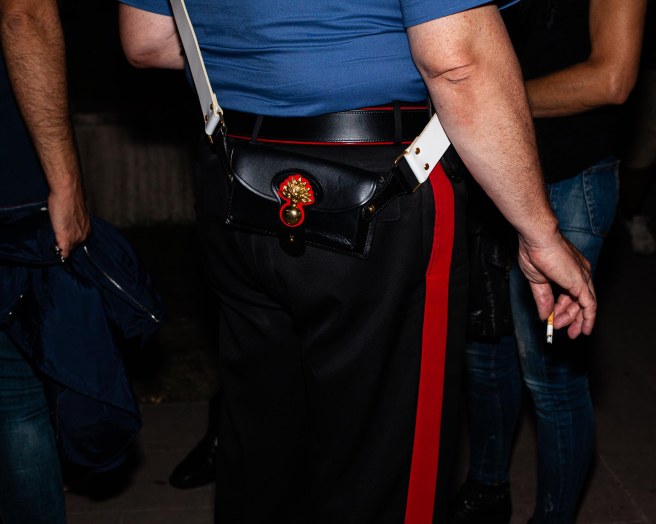
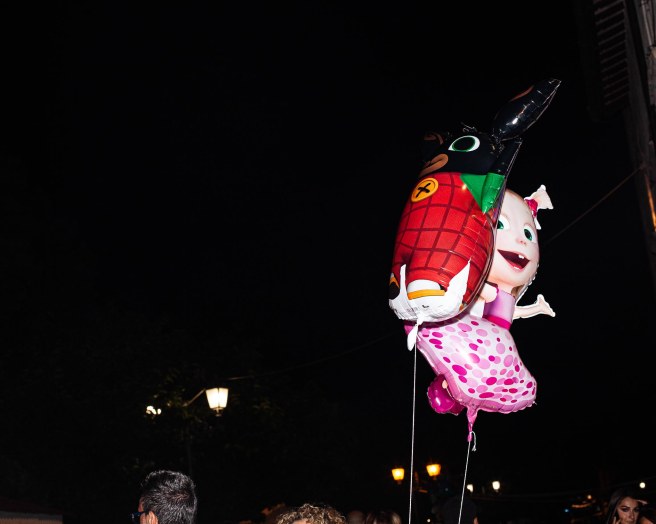
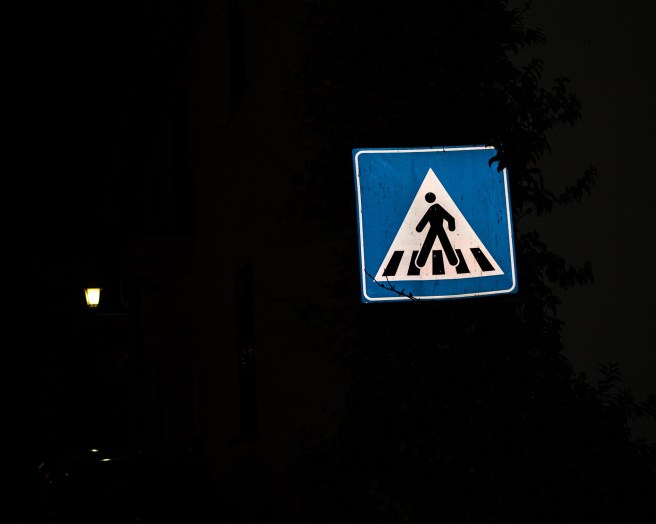
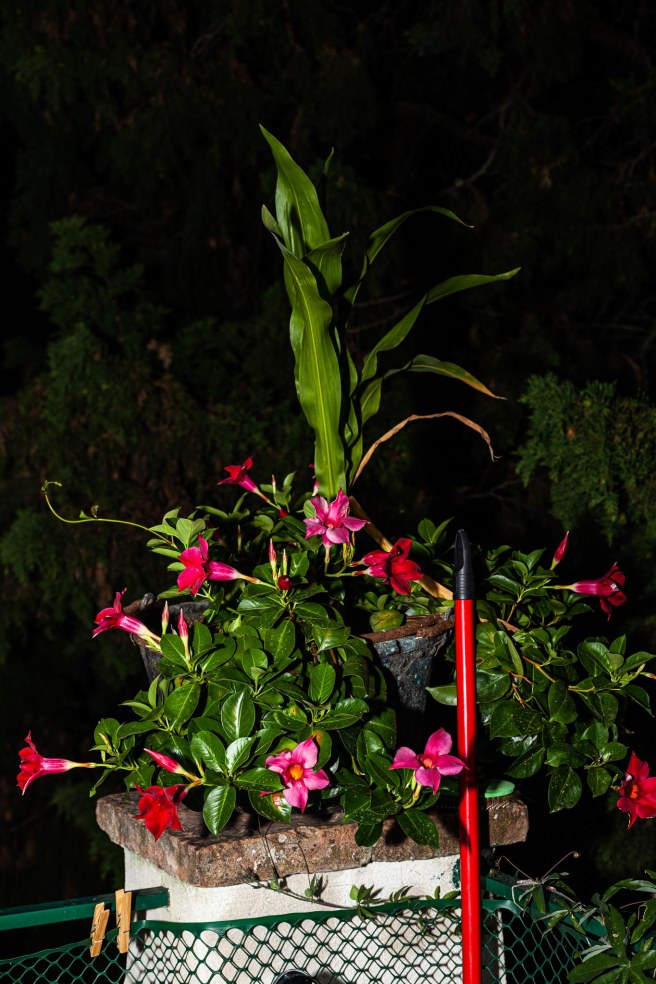
Here are images which I took myself (in no particular sequence). Some of these but not all are in the film. They were taken in the village I spent the summer in. 

Rumour(c)SJField2019-7277Rumour(c)SJField2019-6979Rumour(c)SJField2019-6958Rumour(c)SJField2019-6939Rumour(c)SJField2019-6730Rumour(c)SJField2019-6535Rumour(c)SJField2019-6531

A sketch by artist/recent graduate Christel Pilkaerthomsen illustrating how we plan to show the work

70908895_389869788575594_3679266691688169472_n-01

2. Section 2 (Bits I made while thinking/preparing but which I don’t think fit, but including here to demonstrate development)

Here is a poem I wrote while living in a village over the summer and was prompted by my research and development for this project –  I shared it with the group to be included in an accompanying book, however, I just don’t think it fits any more with the work – perhaps/we will see.

On the edge of the village


On the edge of the village, too far for the water to reach

two mummies lay on plastic sun loungers,

hoping and waiting for a glimpse of death in the sky. It was dark,

but the moon was full and high.


“When I was little, you told me the stars were dead people,” said the younger mummy, accusingly. Then excitedly, “There’s one! Did you see it?” Death lights up for a microsecond.


Don’t blink.


The older mummy missed it.

“I thought the sky was filled with ghosts looking down at me.”


On the edge of the village, beyond the reach of the bin men,

the mummies remember Fiore who lived in the barn below,

a second home for the summer months. His main

house was in the village square. But he was rarely there.


“When Fiore died, who inherited everything?” the younger mummy asked.

Long ago cancer killed his wife, then his daughter did it to herself. “And another!”  Ephemeral, mortal, gone.


Never put bricks in your eyes.


The younger mummy smiled.

“I think it must have been the housekeeper. She and Fiore were close.”


Far from the men who grabbed the older mummy or the women

who took against her after her own husband died,

they lay there and waited for death to arrive. Too much light

makes it difficult to see though.


“Why wouldn’t he eat Berlusconi, his badly behaved goat?” wondered the younger mummy. Then she sat up and cried, “Look! That one lasted forever.” The planet’s demise was fantastic so the mummy made a wish.


Listen instead.

Both mummies lay still.

“I think it was because he loved him,” thought the older mummy. Though she kept quiet.

Some images that might have worked with that text. (In no particular order) At the moment, they are not included in the project anywhere but I could print and place on the circular platform. 

IMG_6846.jpgIMG_6848.jpgIMG_6859.jpg

IMG_6844.jpg


A collective Instagram Account where each of us was able to post images, research, and ideas.

https://www.instagram.com/arumourreachedthevillage/


Artist: Douglas Gordan Feature Film (1999)

I just loved this AV project so much. The Tate tells us,

“Gordon’s installation focuses on James Conlon, the principal conductor of the Paris Opera at the time. He leads a hundred-piece orchestra playing Bernard Herrmann’s score for the psychological thriller Vertigo1958, directed by Alfred Hitchcock. Over 80 minutes, the combined length of all of the music in Vertigo, the camera never leaves Conlon. We follow his animated body, his agitated hands and his expressive face. The musicians are heard but never seen.

Herrmann’s score is an essential element of Hitchcock’s film. Endlessly circling and spiralling, the music perfectly matches the tale of duplicity and obsessive love. The original film is playing without sound on a monitor as part of the installation.” (Ladd, 2019)

I think the Artangel Youtube video has the most wonderful description, far more inventive than the Tate’s dry blurb.

“In Feature Film, Douglas Gordon arranged a divorce between sound and vision – and orchestrated an affair between what you remember and what you see.” (2016)

As a child, I was fed a diet of old movies. I loved them. And the music was always an incredibly important element – it prompted me to listen to classical music and imagine all sorts of dramatic scenarios in which I was the tragic star. I will have invented many a an imaginary SJF production playing in the rockery and tree-caves of our garden with this type of music and associated narratives in the back on my mind (or perhaps I should say the forefront).  A lot of my work has aimed in some way to come to terms with this although as I write now, I do remember that child and the imaginary games with tenderness  – and without the rancour I usually feel for being duped as growing up by a misogynistic society into thinking I was just a thing; a not very clever or valuable thing at that. Whatever all of that may mean or lead to, this music consequently feels a bit like the soundtrack for my own imagined construction of life, feminity and reality narrative. The title fits with this so much  – as an adult I feel I had internalised these films and tried to live my life as one, then struggled when I discover it wasn’t – or else perhaps got caught up in an unhelpful script.

I am terribly interested in pulling things apart and inspecting them – and this project does just that. I lay on the floor of the gallery and watched the silent Vertigo on a small screen turning to watch the footage of the composer from time to time. And when I tried to leave the music kept pulling me back for more. It’s perfect that it should be in the huge boiler basement room and that it should be so dark. (And I loved it when it was just me in there and slightly resented the other visitors for intruding… sorry for being mean!)

https://www.tate.org.uk/visit/tate-modern/display/tanks/douglas-gordon

https://www.youtube.com/watch?v=q24vjmUdOrk

Artist: Nan Goldin, The Ballad of Sexual Dependency (1979-86)

I went to the Tate, primarily to see the Olafur Eliasson show, but in the end, found two other rooms far more satisfying. One of these was Nan Goldin’s Ballad of Sexual Dependency (1979-86). I first referenced Goldin’s project at the start of UVC when planning an essay; “I was going to discuss Nan Goldin and The Ballad of Sexual Dependency which was shown as a slide show as a well as being produced as a book. She’s really interesting to me and I like that her work grew out of the tail end of the Punk movement which has been linked to Dada, both movements utilising new technologies as they emerge – to question and subvert the status quo. I also loved the way in which the title would link back to my love of Brecht’s work, Threepenny Opera“.

Because I have seen or thought and mentioned Goldin often while studying I was immensely pleased to see the slideshow in full and in person. One of my ex-tutors said the Tate does seem to sterilise work and I wonder if that is unavoidable in this case – bringing an underground, anti-commodified piece into a highly funded gallery such as the Tate. I would very much like to have experienced it in a club in the 80s in NY where the slideshow was shown originally. The video below, where it was presented in Arles alongside live music by The Tiger Lillies (2009) who collaborated with Goldin may be the next best thing. The band’s style reflects the title’s Brechtian routes and they bring their own contemporary flavour to the soundtrack which you can listen to here (not sure how long that link will remain live as Goldin appears to be relatively robust about copyright infringement.)

Even so, I was extremely moved by the work and watched at all the way through. Like the people it depicts, the images are the antithesis of advertising ‘perfection’. And I wonder if Millenials who have grown up with phone-cameras appreciate Goldin’s energy and the alacrity with which she photographs everything. I don’t think they can possibly imagine how unusual that may have been in the 80s. (Recently I looked through some old CDs of images taken by my mother in the early 90s and noticed how much time and how many geographical miles there were between images. Like most of us nowadays she is prolific with her digital picture taking ). While trying to engage my son in something productive before the summer, I suggested he photograph his life which I had to assume wouldn’t be too challenging nowadays – he’s got a good eye and phone camera on him always. Eventually, he said, “Mum, you don’t know how hard it is to remember to ….Oh, hang on, of all the people you do know!” Yes, I do know but I hadn’t realised how challenging it would be for him. Goldin’s project is a passionate quest which only she could generate for herself. Despite the current social habit of incessant picture-taking, my son’s comment makes me appreciate Goldin’s commitment even more. It’s also interesting to see how Goldin values images that may be unlikely to published today on anyone’s social media showreel of perfection – even by people who aren’t thinking about traditionally considered ‘good-picture taking rules’.

Today when questions surrounding ethics, quite rightly, play an important role in any documentary project, it’s hard to know whether this work may have been made at all, or if so, in this way, despite Goldin being at the heart of the community. And as stated on the Tate site, they “now stand as a time capsule of a community and culture that would soon be lost due to the AIDS crisis.” (Allen, 2019) This, of course, adds to the rage, anguish, and desperate sadness the project contains. And might make us consider how we navigate ethics and judge those who breach evolving boundaries. (I am not in any way saying we should encourage or accept certain situations such as photographing and then promoting the rape of a child) but I am suggesting ethical concerns are fraught with complex questions and the fact Goldin is a woman taking some of these images adds to the complexity. Some stories need to/must be told, some situations should not go unrecorded – finding ways to do it can be difficult.)

I hope to return again.

https://www.moma.org/calendar/exhibitions/1651

Allen, A 2019 Nan Goldin, Tate Website, Available at: https://www.tate.org.uk/visit/tate-modern/display/nan-goldin (Accessed 3/9/19)

https://www.youtube.com/watch?v=bUCht5iYYK8

https://vimeo.com/7265648


Research/Notes: Fiore & Berlusconi

https://www.tcd.ie/French/assets/doc/BlattOnErnauxMarie.pdf

I had reason to return to the above text recently. I referred to it in S&O A5 as it mentions writer/artist Alain Fleischer and his work made in Ferentillo which is where I am now. He links photography with mummification as I quoted in S&O. One of my partners highlighted a different quote when I shared it with them.

“In the darkness of the catacombs … mummies are like

photographic images that have been developed but not fixed,saved from a fatal and definitive exposure to the light of the living, rescued from an ultimate oxidation by death’s

corrosives, thanks to a red, inactinic light, a laboratory light.

Like photographs yet to be printed, cadavers … to become

mummies, were initially material supports, emulsions, conserved in the dark, subsequently treated with acids, then exposed to light before being brought back underground.”

I visit the village regularly as my mother moved here in 2000 with her husband. He died suddenly in 2005. I made work for TAOPA5 and S&OA5 as well as a smaller project in between modules.

https://ocasjf.wordpress.com/2018/05/17/assignment%e2%80%8b-5-i-will-have-call-you/

http://sjf-oca.blogspot.com/2015/06/assignment-5-context-narrative.html

This summer, after my mother broke her ankle badly and ended up remaining here for far longer than she might have done, the boys and I decided to spend most of the break in Ferentillo with her, for a variety of reasons, not least of which was a desire to escape the U.K. and it’s interminable internal wrangling over Brexit.

As the collaborative project I’m involved with (Pic London) is based around the idea of a village it is perhaps fortuitous to be in this particular village with its references to death, mummification and previous work for an extended period.

I have also been re-reading James Elkin’s and struck by the discussion he has with himself about a realisation we are at times little more than hungry, violent critters despite all the symbolism with which we prop up our illusions of reality.

In addition, I sent in an essay for CS1 and have had some extremely helpful feedback from Roberta, my CS tutor which has prompted further thoughts and responses. I’ll revisit this on my return to London – however, some of my thoughts will likely end up in some writing I’m doing in preparation for the pic london work. (Not sure yet, how this writing will inform or be part of any work yet).

The writing centres around a man called Fiore who lived “both inside and outside” the village (Field, 2019 – draft foundation text for Pic London project). I don’t want to repeat myself but briefly, Fiore befriended my mother and her husband Roger. He built an illegal pool which we swam in and which was never blue, as Fiore couldn’t quite get to grips with the filter or chlorine. He had lost his wife to cancer and his daughter killed herself in grief soon afterwards. Later he got together with his housekeeper, Dora. He was a good friend to my mother’s after Roger died. Fiore owned a goat called Berlusconi who was strangled to death when his chain got caught on a tractor wheel. All Fiore’s neighbours were invited to a feast of Berlusconi but Fiori refused to eat him.

The writing is, like my previous writing, like a plait made up of different strands that will incorporate Fiore’s story, my reasons for being here – austerity, middle-class angst around failure, and a discussion about photography in relation to bacteria, citing Elkins’ book, and death.

At first I thought I’d be making a film like the previous two projects I’ve done – Origin of the Common-Place and Sirens. But the more I work on it the more it feels like it might be a photo-text like the ones discussed in the paper above:

The interphototextual dimension of Annie Ernaux and Marc Marie’s L’usage de la photo by Ari J. Blatt

There is not very much time but we’ll see.

Things to do;

Look at Robert Mapplethorpe’s work. I keep coming across his stuff which feels odd, like the universe is asking to to look at it. Then I suddenly clicked – flowers/Fiore. (Not to mention death).

In Format’s Talent there is a series called Flowers for Donald. I plan to take another look at that in more depth.

Try to find a vintage film/old book about flower arranging for possible use

Themes other than the subject of flowers which has emerged in the highly flashed night images I’ve been taking; water, stars, shooting stars, hear, climate, death.

Not sure how this work relates to BOW yet but some of the research Roberta talked about re. Modernism and appropriation should be relevant at the very least.

(NB: Quotes about photographs being mute and the closed circular arguments that arise out of only reading photography books in Blatt’s paper)