Step by step notes – putting concepts outside head
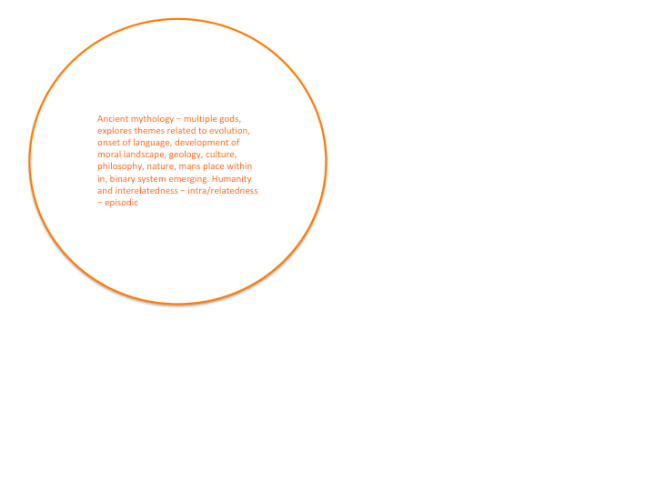
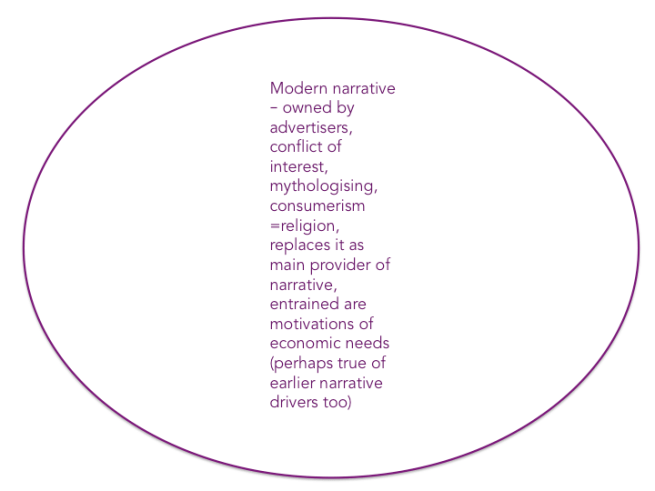
Today – Consumerism via narratives/moving image dominant form relating to ancient mythology



SJField – OCA Level Three Study Blog
Body of Work & Contextual Studies
Step by step notes – putting concepts outside head
Today – Consumerism via narratives/moving image dominant form relating to ancient mythology
I felt it would be useful for me to pause and consider where I am at this juncture, and where I came from in order to arrive here. The OCA has been an immensely useful container but the journey I’m on, the desire to understand something fundamental but hard to pinpoint began long before 2014. Perhaps as long ago as when I was a child watching how strangely the grown-ups behaved and wondering why. Or noticing how we (I) emulated others; accents, behaviours, tropes, and then absorbing these actions and making them ours (mine).
This will be a long post and is for my benefit rather than anyone else’s – it feels necessary and important to get these thoughts outside my head as a part of a process in relation to CS and BOW. And also, that it should be more conversational as opposed to confined by the rigours of academia although the habit to identify quotes is strong nowadays. Ruth (previous CS tutor) had suggested experimenting with form for CS and so I won’t rule out including sections of this, or developing it, if down the line that seems like a route I would like to take.
I started making notes for this blog yesterday as I marched along the street, sweaty because it was very mild and I was dressed for the artic, muttering to myself about what exactly it is I am exploring here in this work; I began to formulate a narrative that linked my life with the theories and ideas I am looking at.
Right now, I think it always starts with digitisation. I am fascinated by the revolution we are currently living through, by the assumptions people make about it. About where it comes from, what it’s doing, why we’ve contrived to arrive at this point (without volition – is that possible? Or is contrived the wrong word?)
Groups used to be smaller. For most of our evolutionary history, we lived in manageable extended families. Across cultures, there were some basic similarities. Nikolas Christakis covers these in his book Blueprint (2019). He talks about a social suite, which ‘includes individuality, love, friendship, co-operation, learning and so on’.
He also talks about the dyadic nature of humans. I really like this. It’s a word I came across when I was reading about babies and their primary carers. In the baby literature, it implies living in this secondary invisible placenta; it contains mother and child. Both are deeply connected within and even shielded from something outside the dyad. Not all mothers experience this. And modern culture seems to makes it challenging for genuinely dyadic relationships. Some people suggest the high numbers of post-natal depression are related to this failure to connect – and I suspect there is some truth to that although it can also be down to a lack of support, which is of course, another connection with other mothers/parents/helpers – or allo-parents, a term used by Sarah Blaffer Hrdy, a socio-anthropologist who writes about mothers.
I was lucky. I did experience a deep connection with all of my children. During my divorce, I seemed to be able to protect my youngest in this little bubble from all the toxicity outside of it. It also taught me that symbolic language isn’t always necessary (I should have been far more consciously and intellectually aware of this given my acting training)- that we can communicate without it, even while we are asleep. And that has been very important throughout this course. I’ve learned that symbolic language is a distancer. It helps us to distance ourselves from ourselves, never mind anyone or anything else. “Use your words” is a constant refrain to toddlers who prefer to lash out when angry. We ‘otherise’ ourselves, remove something and in the process de-intensify it – be it rage or love – through the use of symbolic language whether it’s written down or simply spoken. We send our thoughts out into the world with language; a little bit of ourselves leaves our bodies and lands elsewhere. It can land as a caress or a weapon and it has an effect but, while wounding with words can be devastating and the cause a chain of fatal events, it removes us from direct violence. Again, Christakis discusses this, as does Richard Wrangham in his book The Goodness Paradox (2019)
A little bit of us – a thought that gets heard is something that can affect others.
In a dyad between a mother and child, something else is going on. Physical reactions take place that don’t need words, not even as thoughts. A baby wakes in one room and your breasts start leaking in another. The prickly sensation of your milk ducts filling up is what alerts you and you check in to see your infant’s beaming face – and they seem to have known you were on your way. I’m painting an idyllic picture – it’s not always like this, obviously. And some women and babies have a really terrible time. There is so much in modern culture which gets in the way of the connecting behaviours that evolved to help us survive. But somehow most mothers (although not all) and also fathers overcome the many, many obstacles. When your child falls over, a jolting sensation takes place in your own body as if you too have fallen. The theory suggests mirror neurons are responsible, which apparently exist in all primates (and beyond no doubt). It happens with other relationships too but it’s very noticeable in parent/child pairs.
Christakis discusses the hyperdyadic nature of the human species. In other words, we are all connected, that is how we operate. Hegel talked about collective consciousness. Edward O’ Wilson has spent a lifetime investigating the hive and applying it to human behaviour. Social contagion or mimetics are other words to describe this phenomenon. Despite sounding so modern, it seems plain as day to me that we are networked creatures and always have been. Christakis’s earlier book is indeed titled Connected (2009). These connections mean that ideas spread around cultures and groups even when there has been no physical contact. Wilson discusses this strange ability seen throughout history when inventions take place in more than one place at the same time.
The Internet is a response to a lack of connection, perhaps in particular relation to population growth. As groups got larger, we stopped being connected. Social fragmentation, evident in the artwork of the early 20th century is one expression of this loss of connection between people and in relation to how reality felt. We humans then ingeniously came up with a way to address that. We dug down into reality and found a way to emulate it. Despite its relative technological advancement our code is still a crude copy. And there is a problem. The code we use to make these connections is a language. It underpins all the forms and media that we see on our screens, which is also another layer of language. So inherent and embedded in the anatomy of the Internet is a process of distancing. What’s even more difficult, as my lovely and intelligent friend rages about often, the people writing the code are very frequently a certain type. “They are the nerds!” she states angrily. “The people who aren’t naturally social, who don’t understand relationships, who are on the spectrum and can’t communicate. The ones who don’t have any empathy!” This is blatant stereotyping but the people writing the code are aware there is a problem. They know they need to write empathy into the code. They know this. However, for now, empathy is missing and the fact the whole thing is structured on language which is itself a distancing process means there is a structural problem which we may never be able to overcome, although I have faith in humanity
We can be optimistic because while we have collectively tried to re-connect using digital technology, which emulates natural linkages, today we’ve not even begun to see just how powerful our technology will be. This is both frightening and exhilarating. Once quantum computing moves out of its infancy we will not only emulate ‘hyperdyadicness’ (not a real word, I know), we will reach a point where simulation and nature are interchangeable. There are many, many foreseeable and unforeseeable problems but we will go on an incredible journey as our clever people look for the solutions.
We have begun the process though. So far it has wrought terrible consequences in the form of nuclear war. But what we’ve lost over time as language developed and civilisation grew is currently being rediscovered through quantum science and systems theory (which is interdisciplinary – don’t underestimate how crucial that is). People often see similarities between Eastern philosophies and the newer sciences. But I am wary of spouting racist claptrap. However, it is well documented that the Dalai Lama is interested in quantum mechanics and Luisi and Capra (2007) devote a carefully written chapter to the relationship between spirituality and science.
Karen Barad’s book Meeting the Universe Halfway (2007) deals with the philosophy of quantum science. She cannot stress the importance of entanglement enough. She explains how ideology and world-views are embedded in the apparatus’ and the framing of our experiments and subsequent related objects and behaviours. This embedding is also explored in Vilém Flusser’s Towards a Philosophy of Photography (2012). The ideology is in the apparatus and photographers (all except experimental ones) are flunkies or to use his word, functionaries – they ‘are inside their apparatus and bound up with it’ (loc 2086).
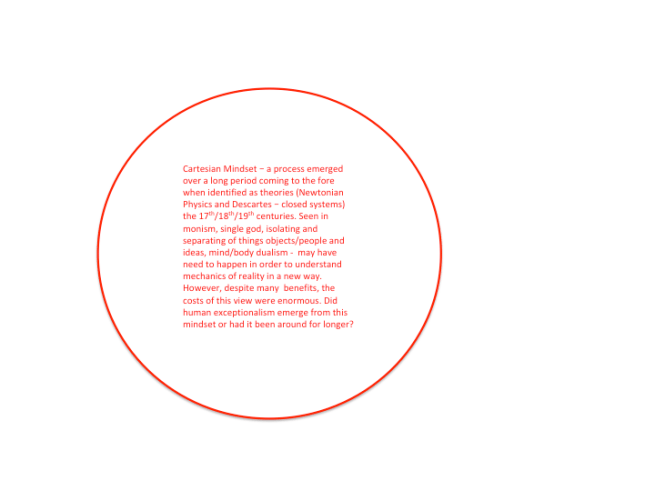
What stops us from seeing this is our ‘Cartesian habit of mind’ (Barad, 2007). Both Systems Theory and quantum science urge us to move away from the strictures of a Newtonian/Cartesian worldview where isolated objects exist in a void universe and nothing is connected or relational. Entanglement has been lost in our understanding of reality and we are working our way back to incorporating it now. But there is a long way to go and it’s on the fringes of society – although arguments to suggest it is becoming embodied through our interactions with digital data.
The problem with arbitrary lines around isolated objects is that it too often engenders a simplistic, black and white of view of the world. (And that is being kind.) This can be seen across disciplines and in photography it is endemic. Photography which claims so loudly to be a ‘caller out of injustices’ seems in fact to reinforces unhelpful mentalities, undermines any attempts to move away from hierarchical thinking, narrows down meaning, oversimplifies complex issues, attracts monism, flattens nuances, strips away context and relationships. Still photography in particular entrenches all of that. It isolates and insists on objects in a void. It suggests the opposite of a ‘dynamic and shifting entangling of relationships’ (Barad, 2007: 35) no matter how hard people point out – and writers such as Ariella Azoulay have done -– that history and the objects we construct are forever subject to re-examination, are alive with possibility and liveliness.
There is something inherently unavoidable and entrenched, in particular in still and analogue photography. I look at the ontology of a photograph and see that at its core, still and moving image are one and the same thing. We may intervene and add lots of frames together or else we isolate a single frame but they are both an agential cut (a Baradian term which I will explain more fully in my extended essay and in BOW). It’s the isolating that causes problems.
I find it hard that people fail to appreciate intra-relatedness. My interactions with a secondary school shocked and enraged me too as my child was being so badly affected by their entrenched position in an out-dated reality, in a constructed and ludicrous simulation of the past that is no longer relevant and entirely inappropriate to its surroundings, and that they seemed utterly oblivious to emergent changes to the world or else angrily against them. This is especially unhelpful for young people who have grown up with the problematised Internet which, despite its many issues engenders a networked view of reality. It is frustrating beyond belief that so many want to drill down into detail so tiny, they leave no room and can only focus on single issues, which they hope will somehow communicate something greater, rather than simply isolating themselves and their ideas in the void. It astounds me how this habit of monism fails us but is still so prevalent and is taught in schools and colleges and universities; but then I recall the citation which I begin CS A2 (draft) with by Capra and Luigi: ‘It [this habit I’ve described] derives from the fact most people in our modern society, and especially large institutions, subscribe to the concepts of an outdated worldview, a perception of reality inadequate for dealing with our overpopulated, globally interconnected world.’ (2014) Inadequate is the key term here. Inadequate. This old way of seeing and being will not serve us going forward. That is not to say we should forget history. We can’t. Because in an intra-related world the past is enmeshed with the future and the present. We must, as Azoulay (2019) recommends, re-evaluate our Cartesian linear view of time.
In my work I am, like the child who watched and noticed the adults and my friends all copying each other, performing roles, connecting. We have always done this. The Internet makes it visible. It somehow speeds the process up (See Virilio (2008) on speed and technology). The breaks are no longer in place. But we will write them into the code again. In the meantime, I do believe we need to find ways to communicate and explore intra-relatedness. We must challenge linear understanding, flat thinking, monism. Not everyone I value or follow agrees that there are no objects, that process supersedes things. However, we have lived with that myopic view for so long in the West and it has taken us to a very dangerous place. And so it behooves anyone who has the capability of addressing and deconstructing it to do so.
Like anyone on Academia.edu I’m bombarded and overwhelmed with potentially relevant titles from them and have had to put a mental block in front of any response to them for fear of information overload. But this title is immensely relevant for me.
https://www.academia.edu/7515758/Science_Fiction_as_the_Mythology_of_the Future.
Haven’t read it yet but feel it’s worth exploring even if only for references in the end. So storing here
From Hollin’s paper (2017) – actor-network theory. For me what is so interesting is the taking up of theatrical terms in social sciences. I don’t think this is just a weird happenstance but a specific relation to the fact that theatre has long been a laboratory; if we put these people in this situation and make these things happen what would happen? I don’t think it is worth arguing against Michael Freid – his dualistic thesis is tied up in a way of seeing that we have moved away from – something can be worthy/valuable/appealing whether they are theatrical or anti-theatrical and something can be an object in this decade but a piece of art in the next or visa Versa – context and what this speaker refers to as messy networks are what makes meaning, not the style. Am thinking about the above – which also explores power, as ‘an aesthetic allusion’. Not what an individual is exerting, but token moving through a network. Sees actors as non-human and human. The ‘study of relationships’.
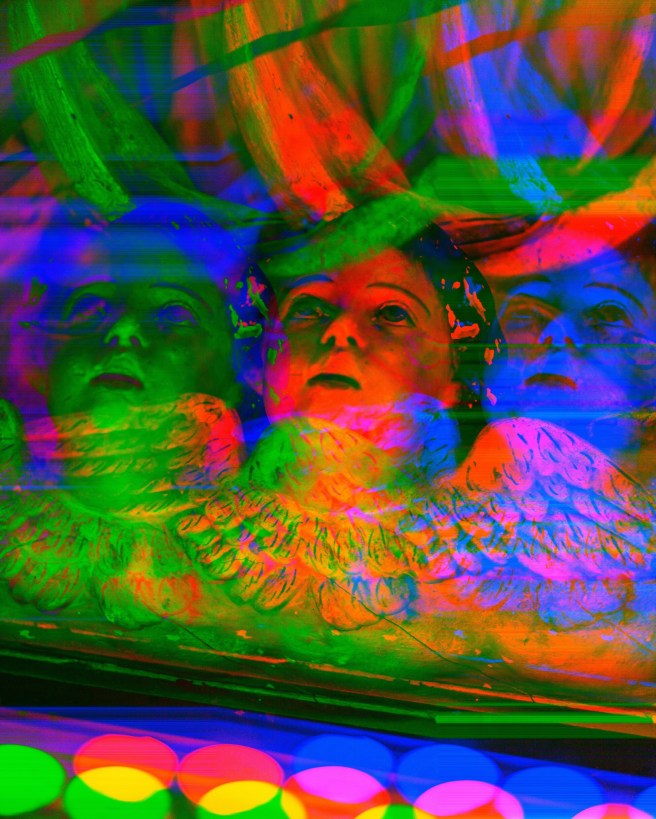
I have been working with some images I took in the Summer in Italy. And I keep returning to them. I feel like for now, they are the best and most accessible material suggestive of the themes I am exploring.
Although I hurriedly (relatively) created a short sequence of them and added them to my newish website I kept going back to them as they are really expressing something of what I am exploring – a seismic and profound overall of how we relate to the reality of which we are a part* – and I wanted to explore them further. I made these alongside the images I submitted for A2.
I am still thinking about creating, as suggested, a poetry book of images and text, and perhaps making a film to go alongside it.
I can envisage showing these various elements as objects in a scaled-up ‘reenactment’ of the way film is structured: i.e. frame after frame after frame. I am playing with the dismantling of a simulation – one that has been building for centuries.
I am a very long way from something yet – and also considering how I can bring found and original images together but here are two early testing-out examples of ideas I am playing with.
In DI&C A2 the work came about due to chance as I did not plan each and every animation carefully – I think I even wrote that I sort of metaphorically threw both films up in the air and then took a look at what occurred – I think that is how I need to work with any material I find – perhaps watching how these images work alongside an old Macdonalds training video I found – looking for odd combinations.
Or else is this set of images and title one of a collection of ‘poems’ to be included and compiled together? I don’t know yet.
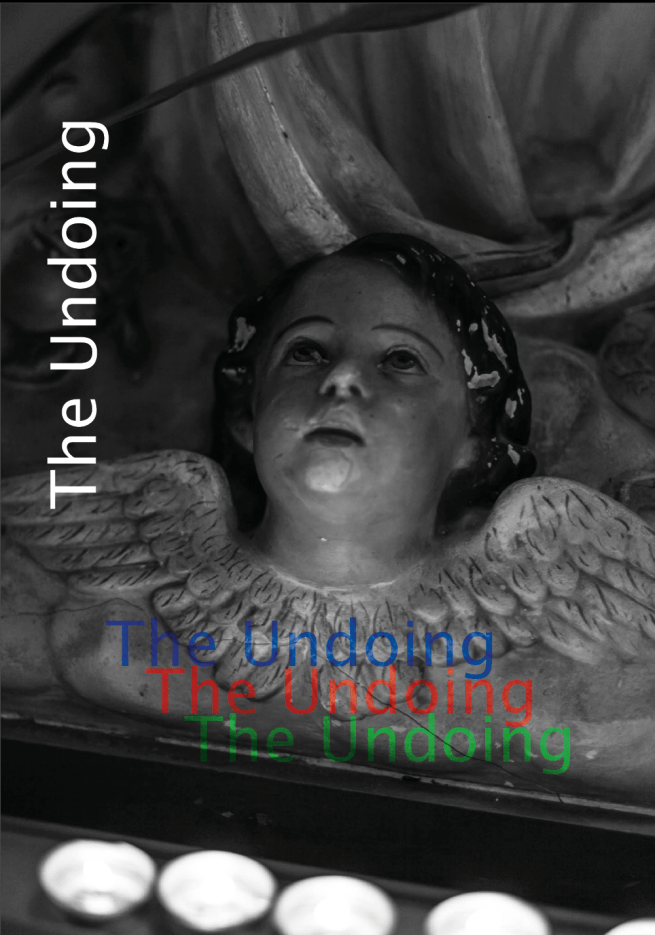
*Note the double meaning – ‘of which we are a part’. This phrase excellently captures how we are both part and a part – separate and enmeshed at the same time. Some people see one and others the other – there is a war being waged between the two world-views.
Looking for a critique of Barad’s work I have come across this which confirms some of my concerns and questions, although rather more acerbically than I might have done. It begins with the following which made me laugh – humour in an academic paper, good! I do wonder if there is an element of peevishness in the article – will wait and see:
‘In Artful, her collection of critical essays, Smith (2013: 41) reminds us of a childhood game designed to break the boredom of long car journeys – ‘Ten points to the person who can see the Forth Road bridge’ – and points to its direct suitability to the situation of the academic conference: ‘Ten points to the first person who hears someone say the words Walter Benjamin.’ In recent years, it has been possible to play a version of this game substituting ‘Karen Barad’ for ‘Walter Benjamin’. If we add in bonus points for a cluster of terms taken from her book Meeting the Universe Halfway: Quantum Physics and the Entanglement of Matter and Meaning (2007) – especially ‘entanglement’, ‘diffraction’, ‘intra-action’ and ‘agential realism’ – then a fine game of ‘Barad Bingo’ can be had far and wide across the humanities and social sciences: from conferences on ruins, animal ethics and informational infrastructures to journal articles on lifelong learning (Edwards, 2010), bullying in schools (S ̄ndergaarda, 2012) and feminist theories of fashion (Parkins, 2008).’ (Hollins, et al, 2017)
Hollin, G, Forysth, I, Giraud, G et al. (1 more author) (2017) (Dis)entangling Barad: Materialisms and ethics. Social Studies of Science, 47 (6). pp. 918-941. ISSN 0306-3127
Click to access Disentangling%20Barad%20-%20version%20for%20repositories.pdf
Will report back with further notes – but good to see some counterpoints
‘We conclude the article by arguing that in much of the literature drawing upon Barad there is a focus upon diffraction and entanglement and that this has come at the expense of considerations of complementarity and necessary exclusion. We suggest, however, that it is the radical potential of an ethics of exclusion which is perhaps most vital to those continuing to use Barad’s work.’ (5)
Hard not to disagree with the following or any other form of information which becomes a holy grail and therefore dogma spouted by dogmatic, excluding followers. ‘Despite seeing a number of potentials in agential realism, however, it is important to caution against uncritically extolling the value of this approach. As Willey (2016: 993) powerfully argues, it is dangerous to position new materialism as a radical break from feminist, postcolonial STS (see also Sundberg, 2014), and uncritically valorizing agential realism can lend strength to this trap.’
This book is vast and complex so I think I might try to make notes as I go. Although there is a risk in reading it that I will be carried away in unhelpful albeit exciting directions, I think it is worth taking because as I move through it I am beginning to have specific ideas about what I’m aiming to explore – and it’s very much linked to ‘seeing’. In DI&C A3 (2019) I began to explore the tendency for photography (both academic and more popular forms) to engage in hierarchical thinking, despite the fact that individuals within it often make great claims about using photography to interrogate society. This results in photography reinforcing rather than dismantling segregation of various forms.
Equipment and output are (perhaps catastrophically?) ‘entangled’ with the history and uses that engendered photography’s invention. I quoted Ariella Azoulay’s blog posts Unlearning the Origins of Photography (2018) which I now see are influenced by the same undoing of a Cartesian mindset that exists in Barad’s writing. I will also need to revisit Flusser’s Towards a Philosophy of Photography (2012) as the ‘apparatus’ – i.e. the social and economic machine in which the camera exists seems relevant.
So here are some bullet points notes for now:
‘The discursive practice approach is grounded in four insights concerning discourse. One is the affirmation that social realities are linguistically/discursively constructed. The second is the appreciation of the context-bound nature of discourse. The third is the idea of discourse as social action. The fourth is the understanding that meaning is negotiated in interaction, rather than being present once-and-for-all in our utterances.’ From http://voidnetwork.gr/wp-content/uploads/2016/09/Discursive-practice.pdf
My problem – and this runs throughout the Barad and New Materialism material I’ve read (still reading, still trying to understand and a way to go) is that, while I appreciate that language has been given more attention than material/matter as Barad argues in debates about power – language and verbal action are in my understanding material and that distinction between the two is what prevents people up from valuing digital language (code, digital photography) which they see as non-material and therefore less worthy (in art especially). (See Lupton, 2019, How data came to matter (79)) The other thing is, assemblages and intra-actions which include discursive practices, as well as matter, don’t exist in isolation which is the base of her world view (which also tallies with systemic theories as far as I can see – again, based on very basic knowledge). I am aware I have not yet got the gist of Barad’s arguments about matter so – watch this space – I might get it eventually.
See Fred Ritchin’s final chapter After Photography (2010) as a possible intro into finding ways to use digital photography to bring these quantum influenced ideas into the discourse beyond scientific circles.
Think Zizek has critiqued Barad and will need to find it and see what he has to say…  Been comparing what I recall of A Systemic View of Life


Azoulay, A. (2018) Ariella Azoulay – Unlearning Decisive Moments of Photography. [online blog/forum] At: http://www.fotomuseum.ch/en/explore/still-searching/authors/10605_ariella_azoulay (Accessed 15/11/2019).
Capra, F. and Luisi, P. L. (2014) The Systems View of Life: A Unifying Vision. (1 edition) Cambridge: Cambridge University Press.
Field, S. (2019) The Democratisation of Form, OCA Digital Image and Culture A3. [Essay]: WordPress. At: https://sjfdiculture.files.wordpress.com/2019/03/assignment-3-democratisation-of-form-submission-1.pdf (Accessed 15/11/2019).
According to Donald Hoffman’s theory which I have discussed several times (Literature review ), we did not evolve to see reality as it truly is, as has been argued. Rather, we evolved to see the sort of reality we need to see to for ‘optimal fitness’. We perceive far less than there actually is because to see it all would be unhelpful. What’s more, according to Hoffman, the objects we see, including space and time are like desktop icons – constructed objects that represent the goal we are either after or trying to avoid. As hard as this is to understand, and Hoffman admits he may very well be wrong but that his theory makes the ‘hard problem’ of consciousness approachable, his idea sits well with many of the other theories I have been reading about since I picked up The Ego Trip by Julian Baggini (2011) (when I began UVC) followed by a raft of other books exploring similar themes.
I have been trying to express and understand these subjects in my writing, and looking at and photographing objects and phenomena in the world. The photoshopped images below are attempts to explore these ways of thinking about the world.
Fred Ritchin’s After Photography (2009) has some good sentences which I will introduce into my Lit Review and no doubt take forward into the essay.
“…some quantum theorists, foremost amongst them, Neils Bhor and Heisenberg himself, argued that fundamental reality is essentially indeterminate, that there is no clear fixed, underlying ‘something’ to our daily existence that can ever be known. Everything about reality is and remains a matter of probabilities […] We have tried to use the photograph to concretize the probabilities (isn’t that what the “decisive moment” is all about?), reassuring us that reality is more solid than what our theories tell us.” (180)
In Data Selves (2019) Deborah Lupton quotes Kember and Zylinska (2012) to describe how photography is an “agential cut” aimed at imposing “meaning and order” and “delimiting choices” (29). As Ritchin says an alternative “may be too disconcerting, if not terrifying.” (ibid) As he describes, digital technology and photography in particular “can begin to be receptive to the oddities described by newer theories” [quantum and consciousness related]. (177) Superpositions, endless possibilities, entanglement, for instance, can all be alluded to using malleable data either as a process or a representation (which if one takes Hoffman’s idea on board are completely intra-related in any case).
Some sketches – I wonder if these would benefit from more contemporary mixes (a bit like Flowers for Donald). Still a bit Guardian headline pics for my liking :


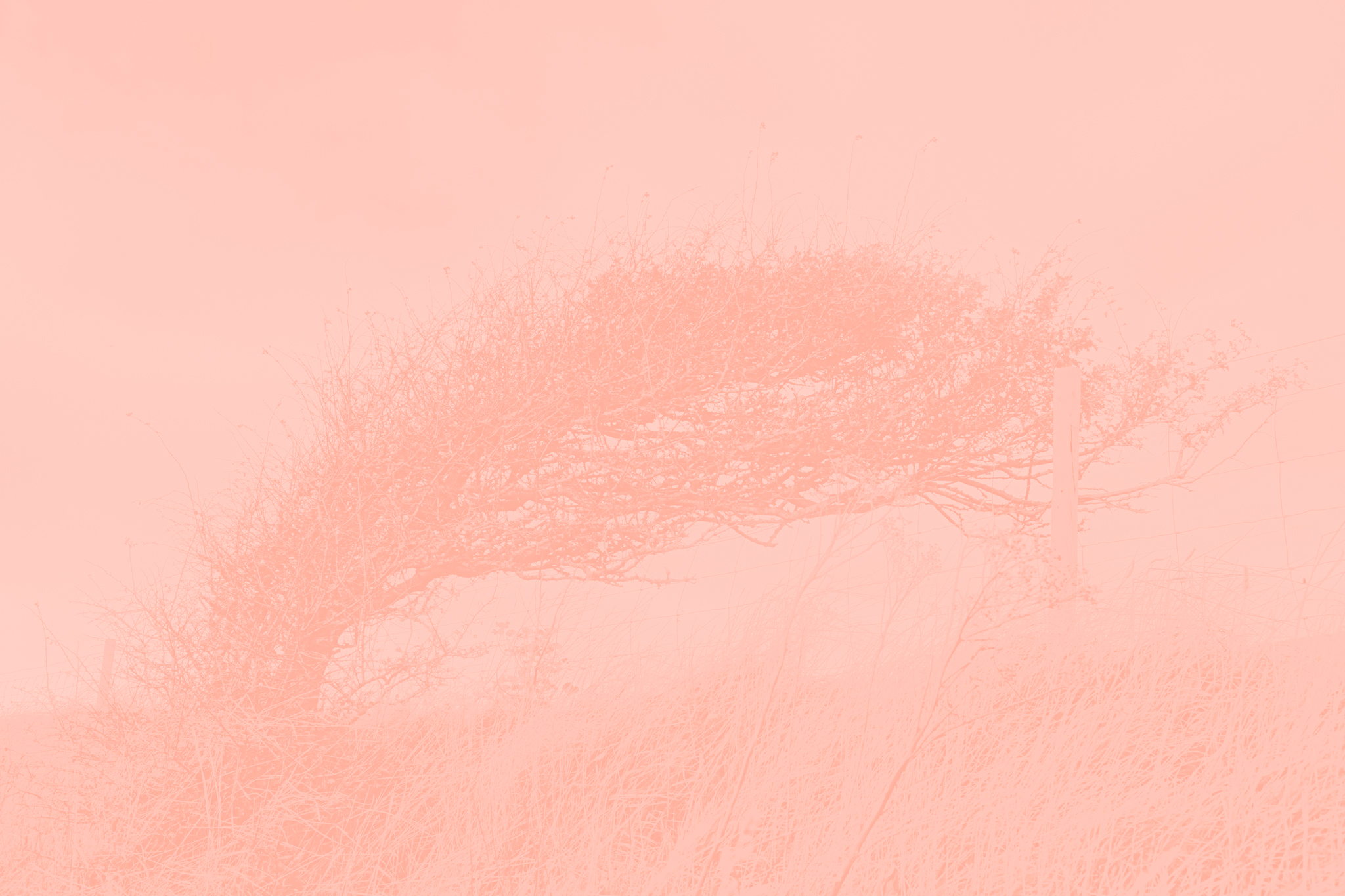


(See Orpheus story – trees to this day in shape of dance to his music)
Hoffman, D. D. (2019) The case against reality: how evolution hid the truth from our eyes. London: Allen Lane.
Lupton, D. (2019) Data selves: more-than-human perspectives. Cambridge, UK ; Medford, MA: Polity.
Landscape with Bridge – Anonymous, Italian, 17th century (s.d.) At: https://artsandculture.google.com/asset/landscape-with-bridge-anonymous-italian-17th-century/EwHp9J9QWhanmw (Accessed 10/11/2019).
feedback-sarah-janefield_tr_2-bow
I have had useful feedback from Ruth about the work I submitted. Attached are her thoughts and my responses, some of which we discussed in our meeting and some of which were written only (from both of us).
Main points –
 SJField - OCA Level Three Study Blog