Research: AI & Creativity
— Read on sarahjanefieldblog.wordpress.com/2019/05/13/research-ai-creativity/
Author: Sarah-Jane Field
Exploring emergence, fragmentation and value systems
BOW A5: Getting ready to submit to tutor…
I am nearly at a place where I can submit this work to Ruth. I need to do a few practical things before I do, however.
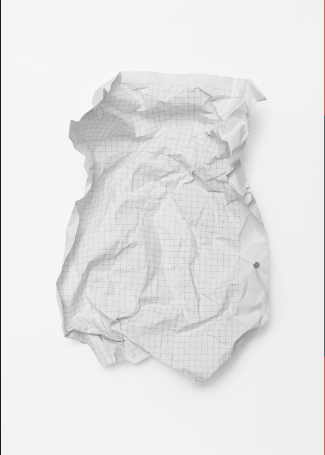
- I think I am going to take some more images like this one – I think if I were to exhibit this work I would want to have a series of these crumpled papers on the wall as large high-quality prints to mingle with the rest of the work – found, archive,
and moving image type stuff.
- I need to make some gifs for the epub version. I can’t work on that properly until the gifs and any moving image are resized. There are just a small handful to make but they have to be the right size otherwise they don’t function properly in the epublication and it’s a bit fiddly. I really hope I can do this on Friday.
- I have created a short film which I want the book to link to. I have worked on a very early edit and chatted with a small group about it – they were positive and I think it has potential but I need to keep editing and make some decisions about the audio track. I have used a song that was in one of the main sources, played with it backwards and also have some music by Simon who worked with me on the S&O track.
- I was not sure about the statement – but I have for now incuded something on the back outer page of the book. I think it is jsut enough to point people in the right direction and without it, they would be lost. There were some suggestions about not having one at all and I thought about that – or having a very obscure little statement which I had written about an old man but I think I feel most comfortable with the draft I”ve mentioned.
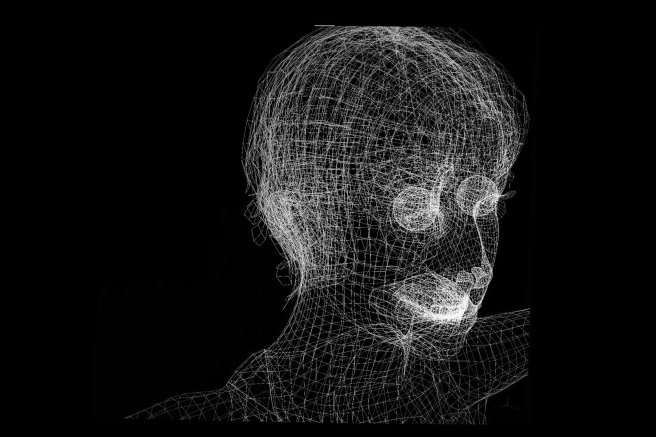
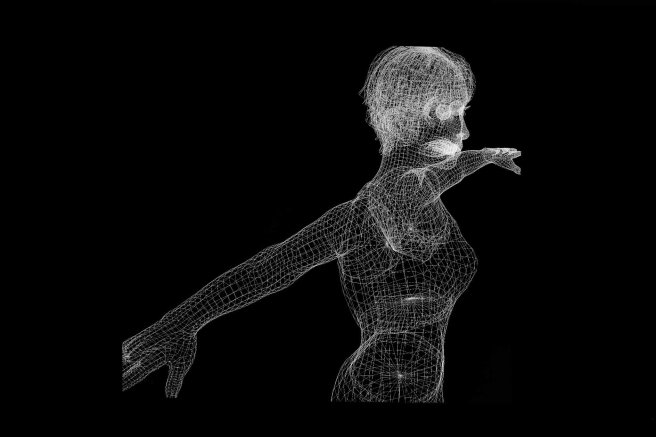
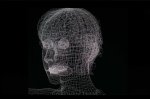
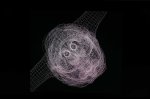
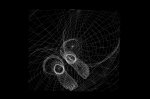
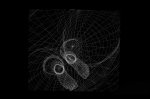
- Following my chat the other day with a small group of people, I was reminded of my attempts to create some very NOW looking imagery to counter the overwhleming ‘vintage’ imagery and returned to some software I’d been playing without much luck before – I hope these will work in print. I am not sure if they will. They are photographed off my screen. (Click in image)
 Once I have created the above and positioned everything, I will need to write up the Assignment notes and OCA reflection, including a few paragraphs responding to some things in the OCA course folder, and then I will send it over. Hopefully within ten days or so.








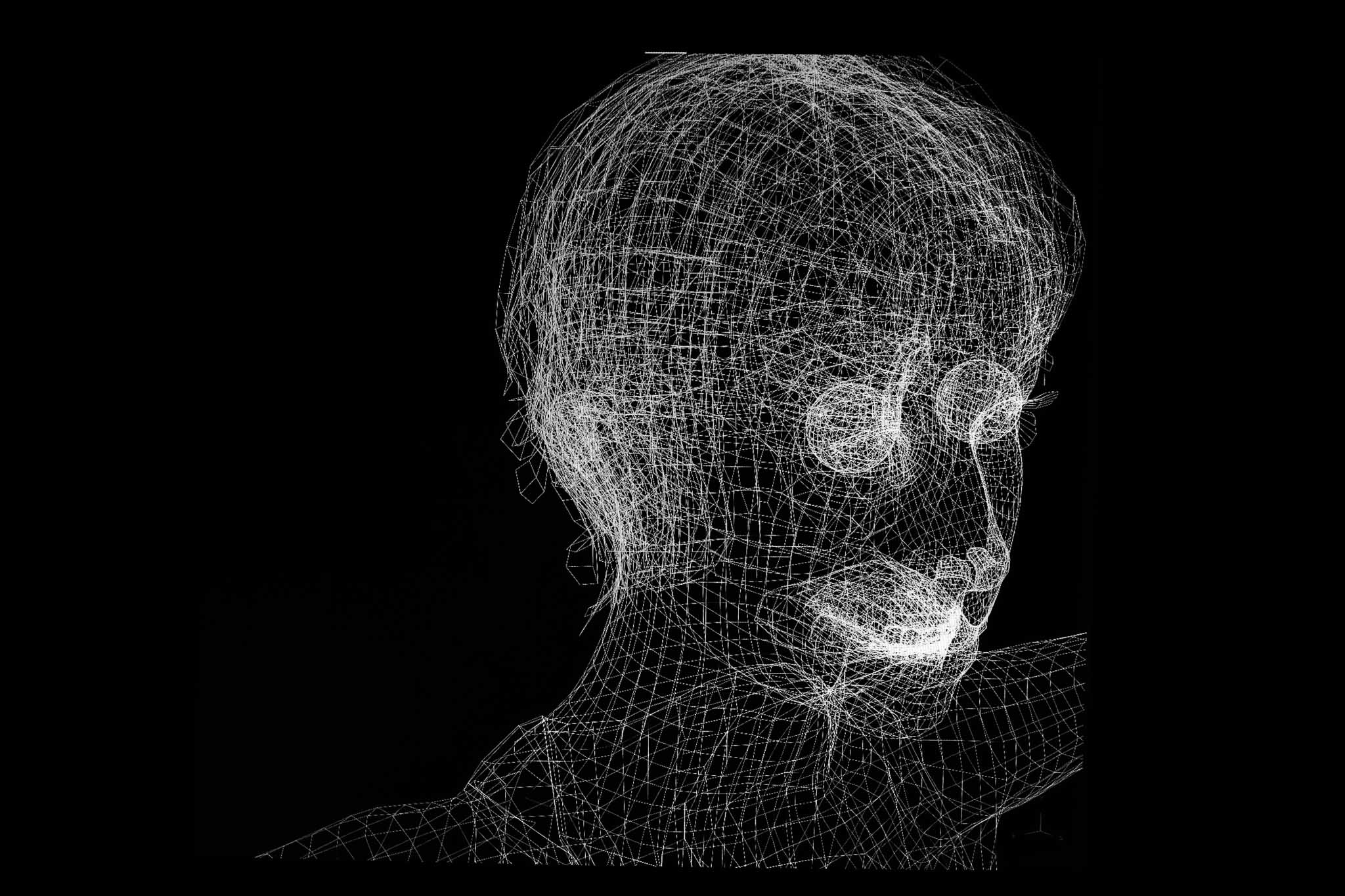
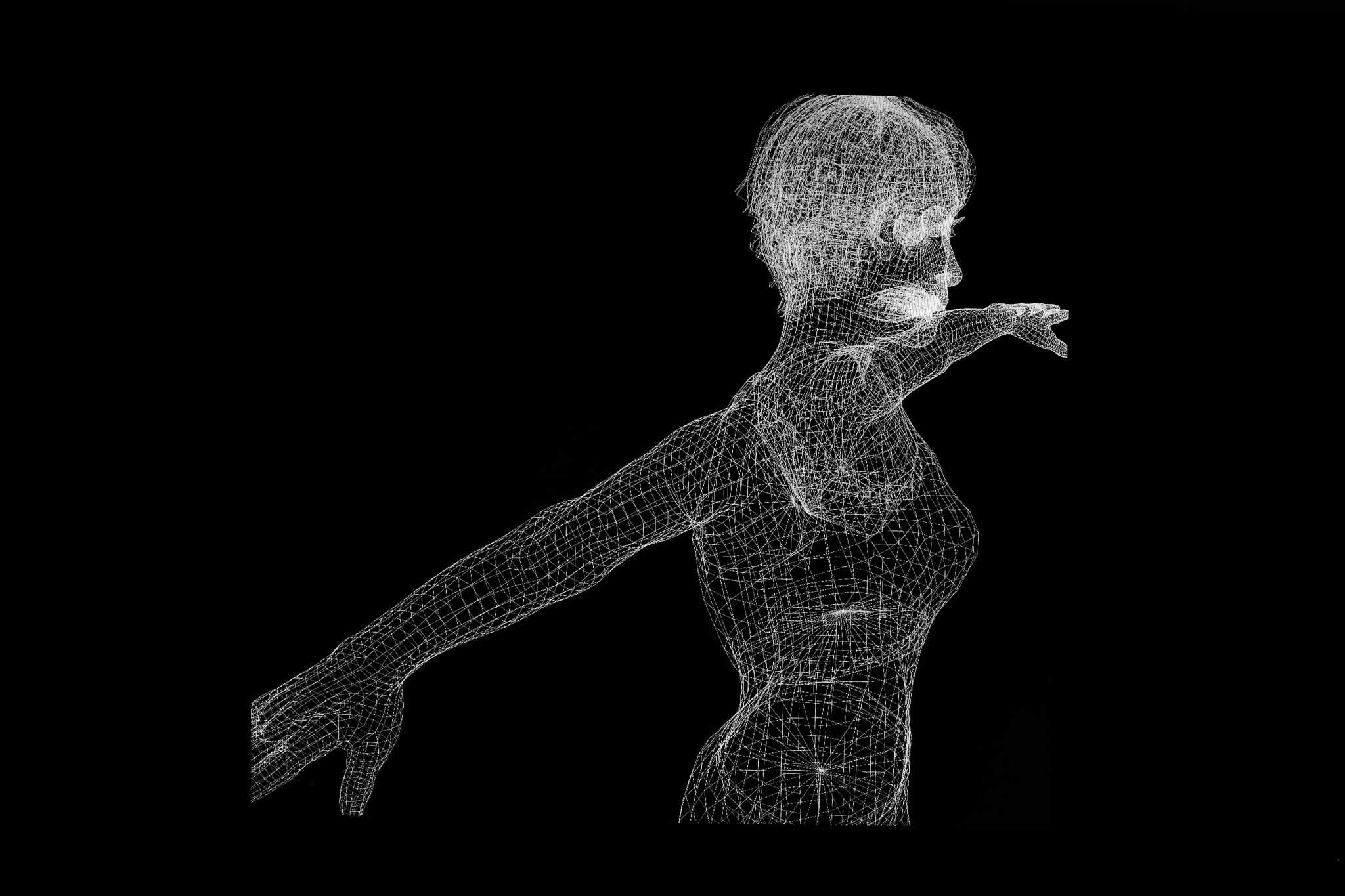


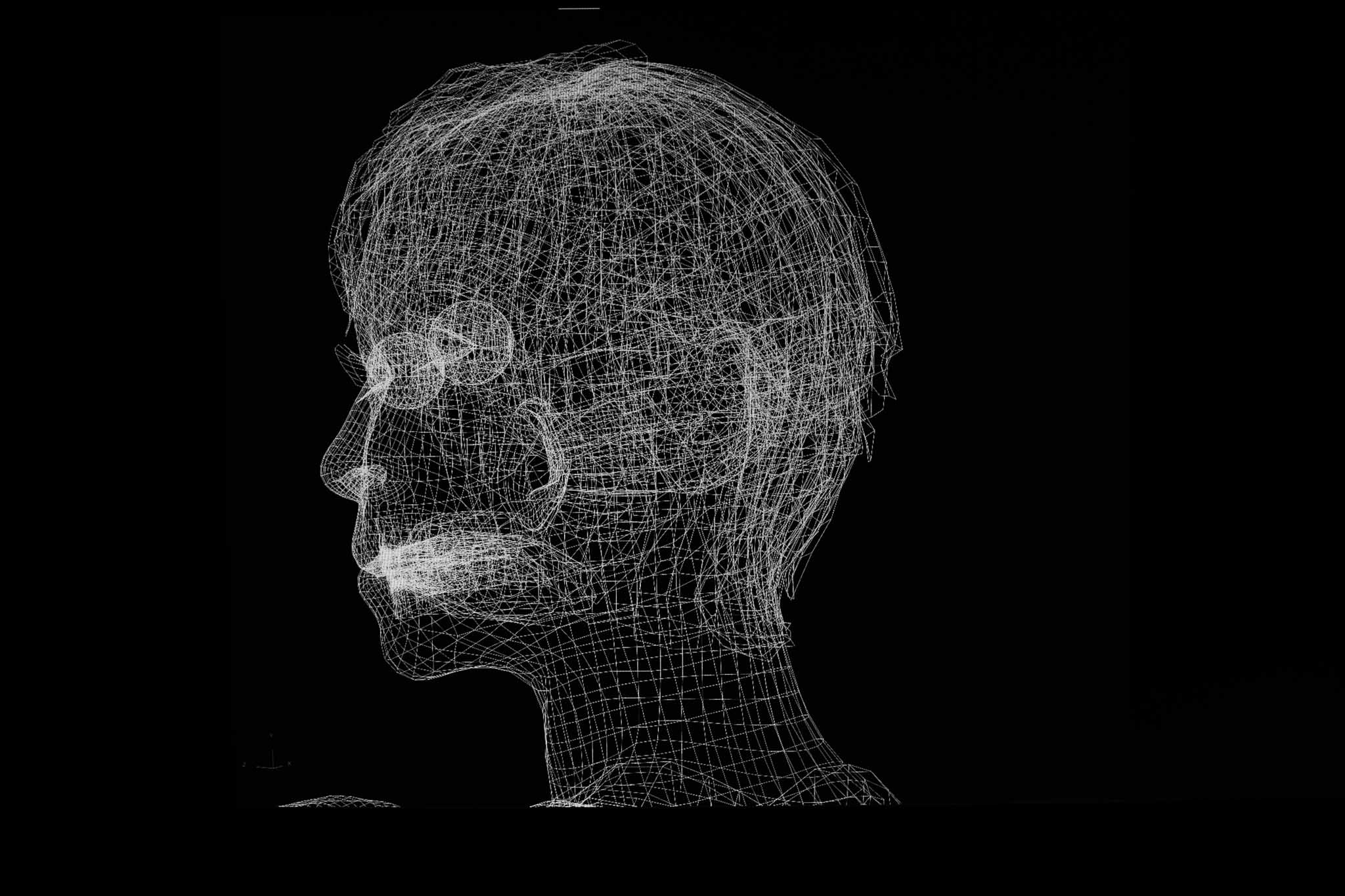


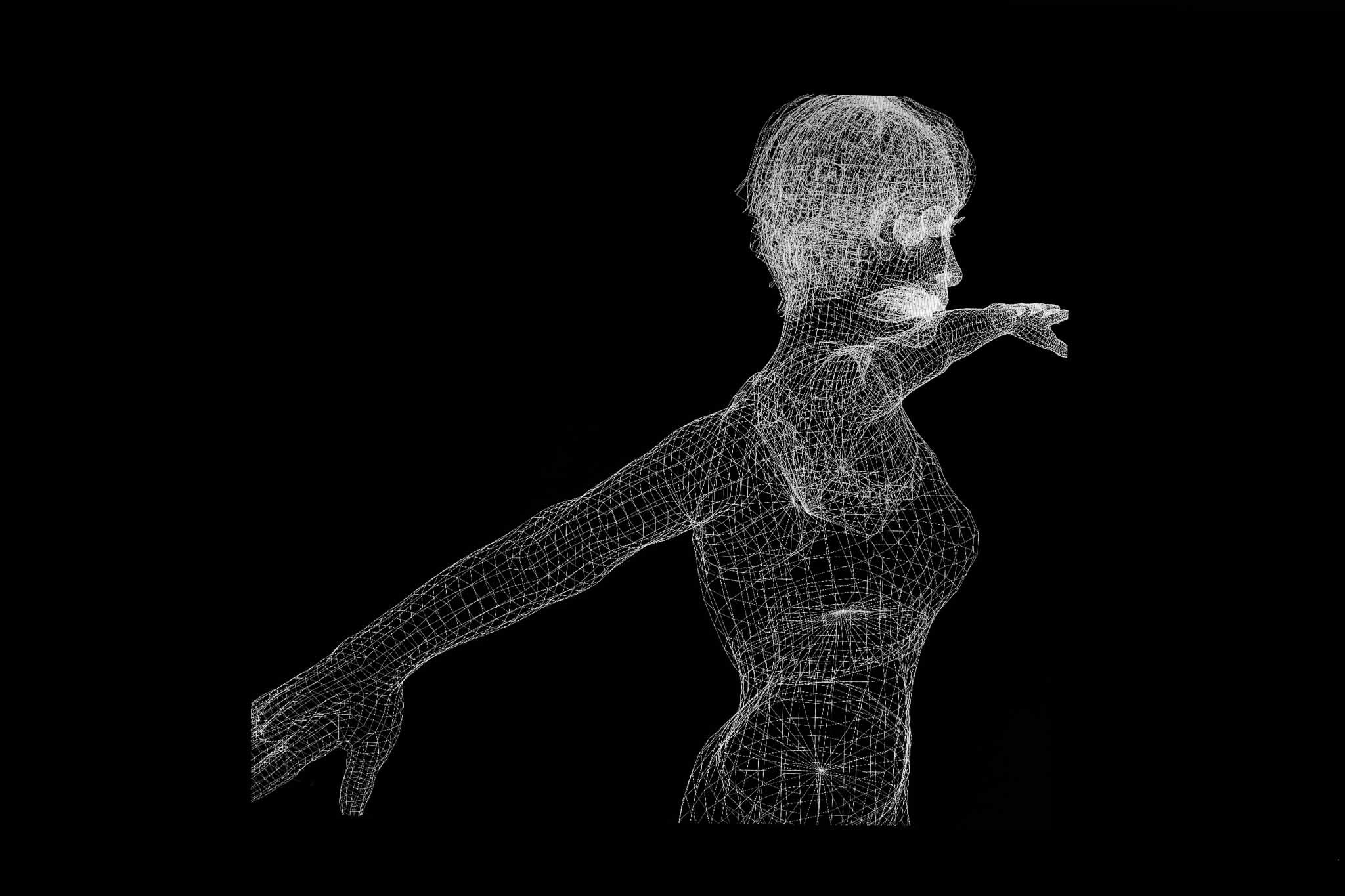
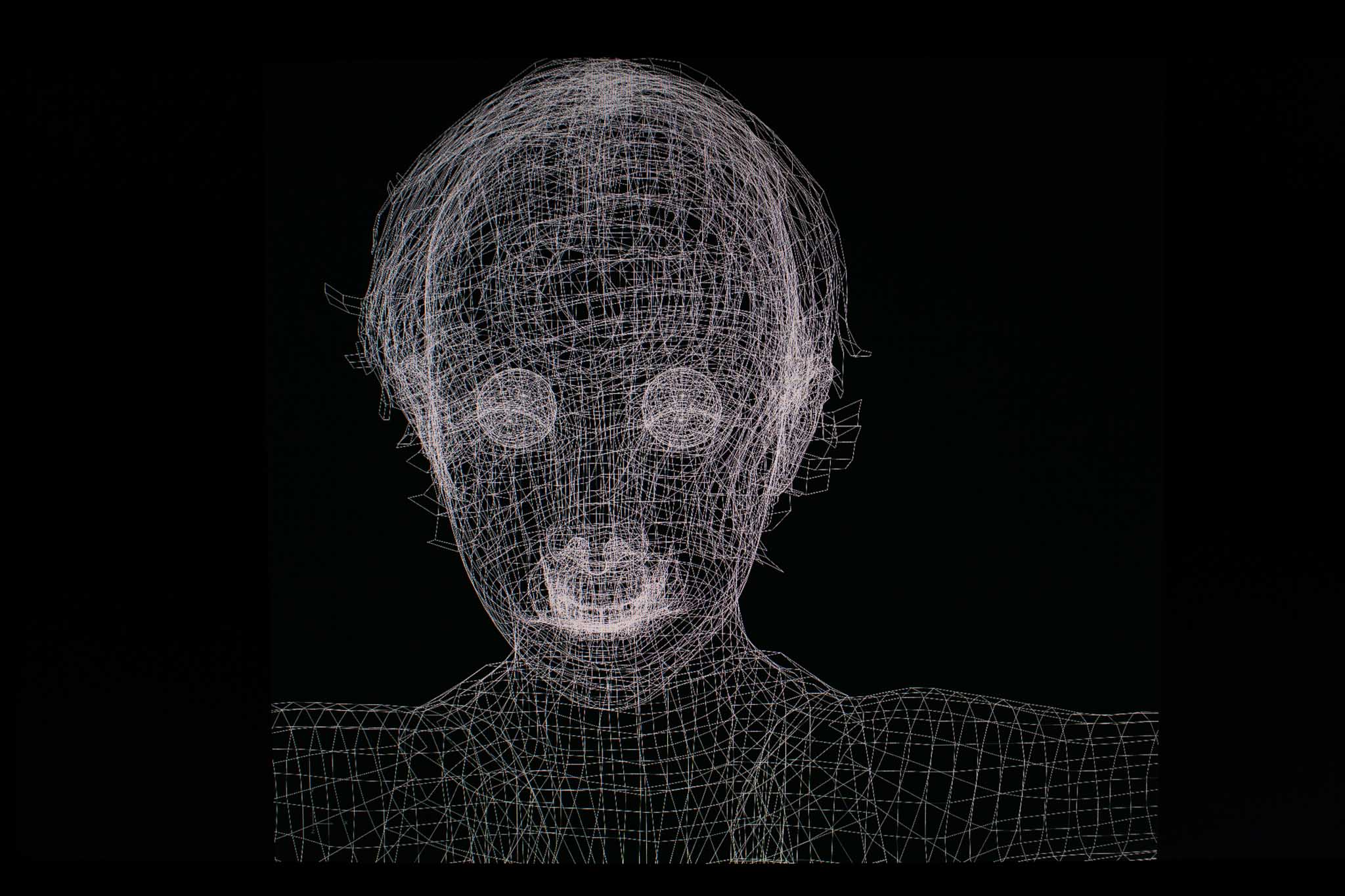


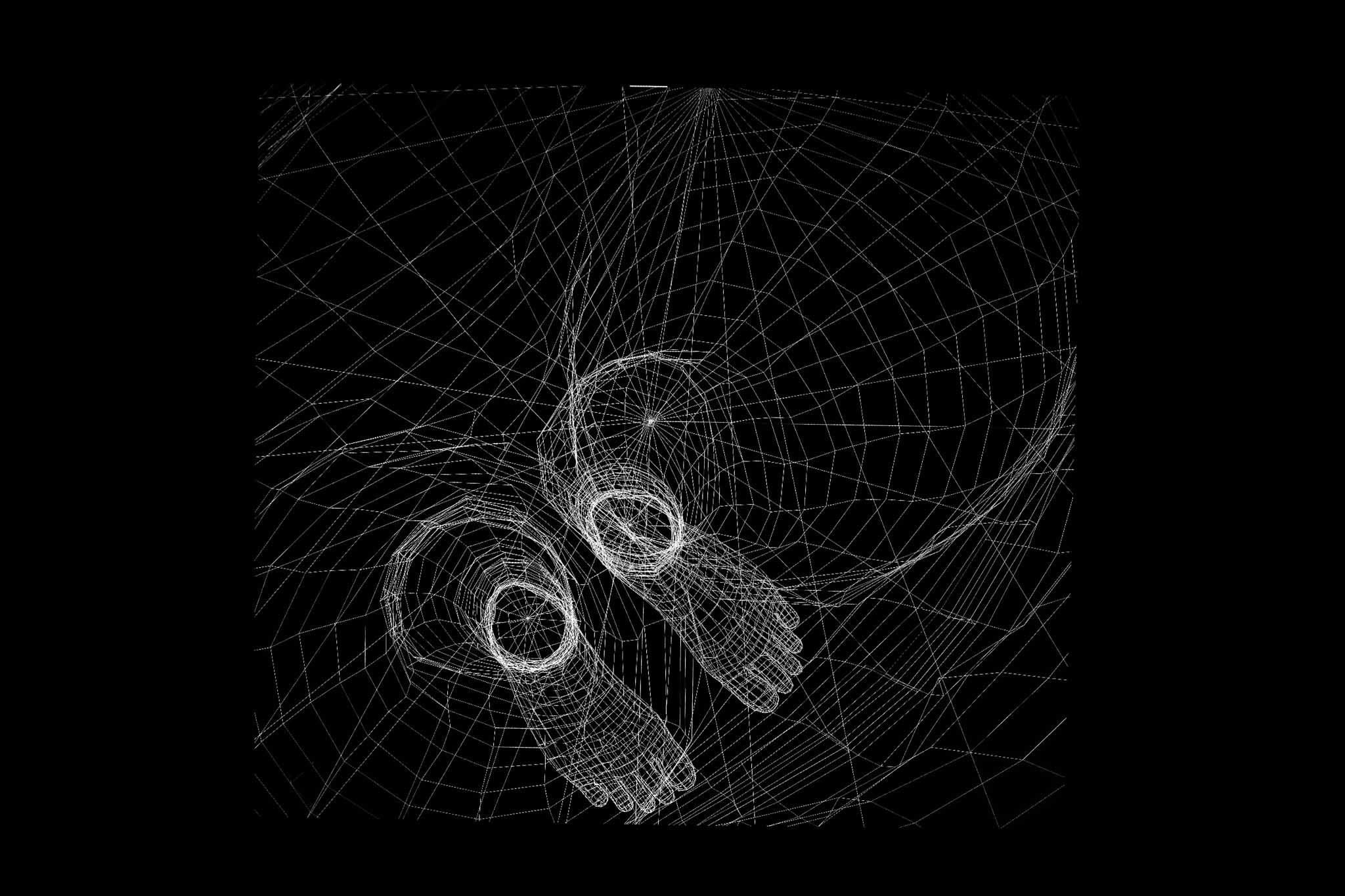


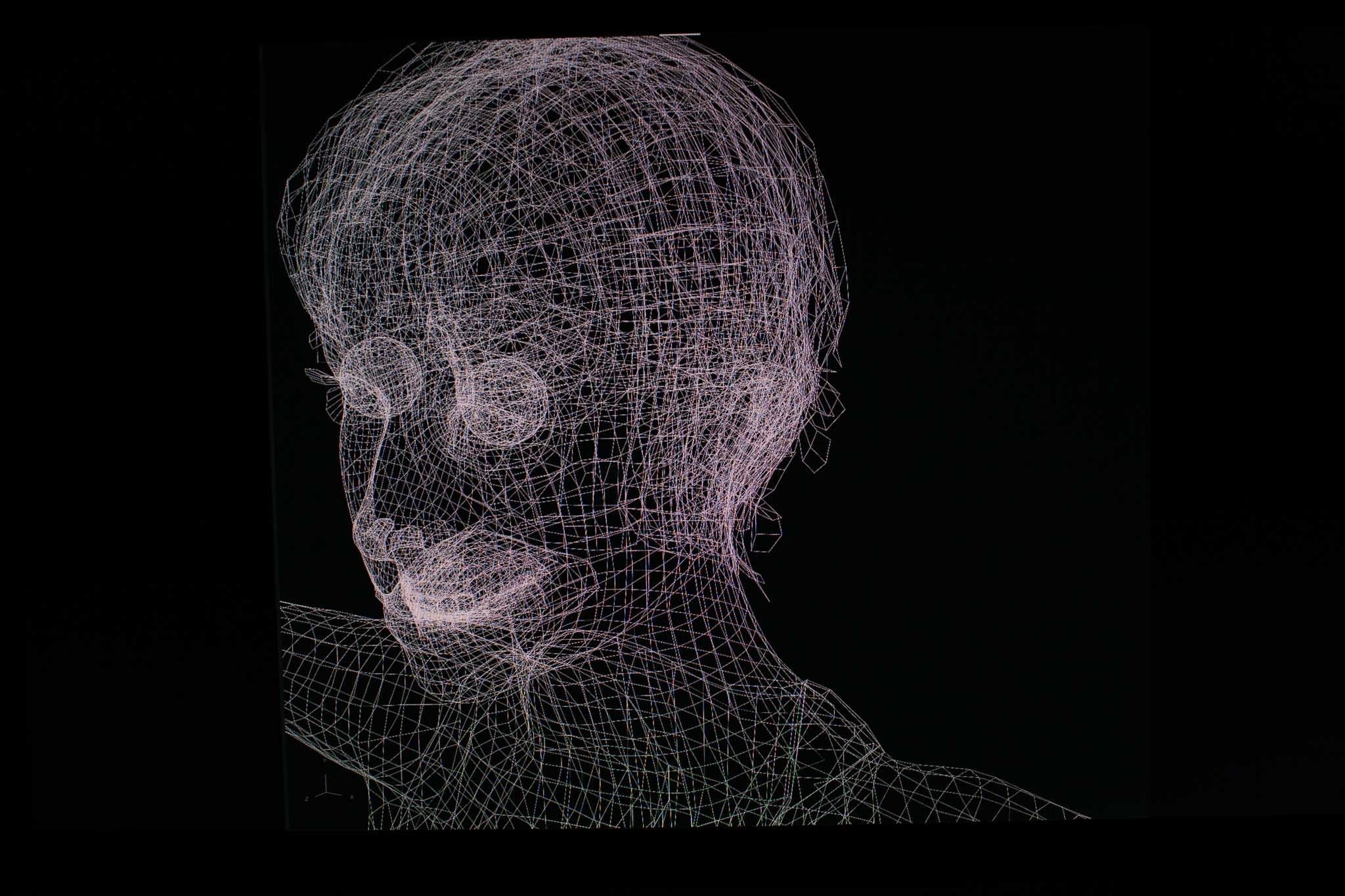

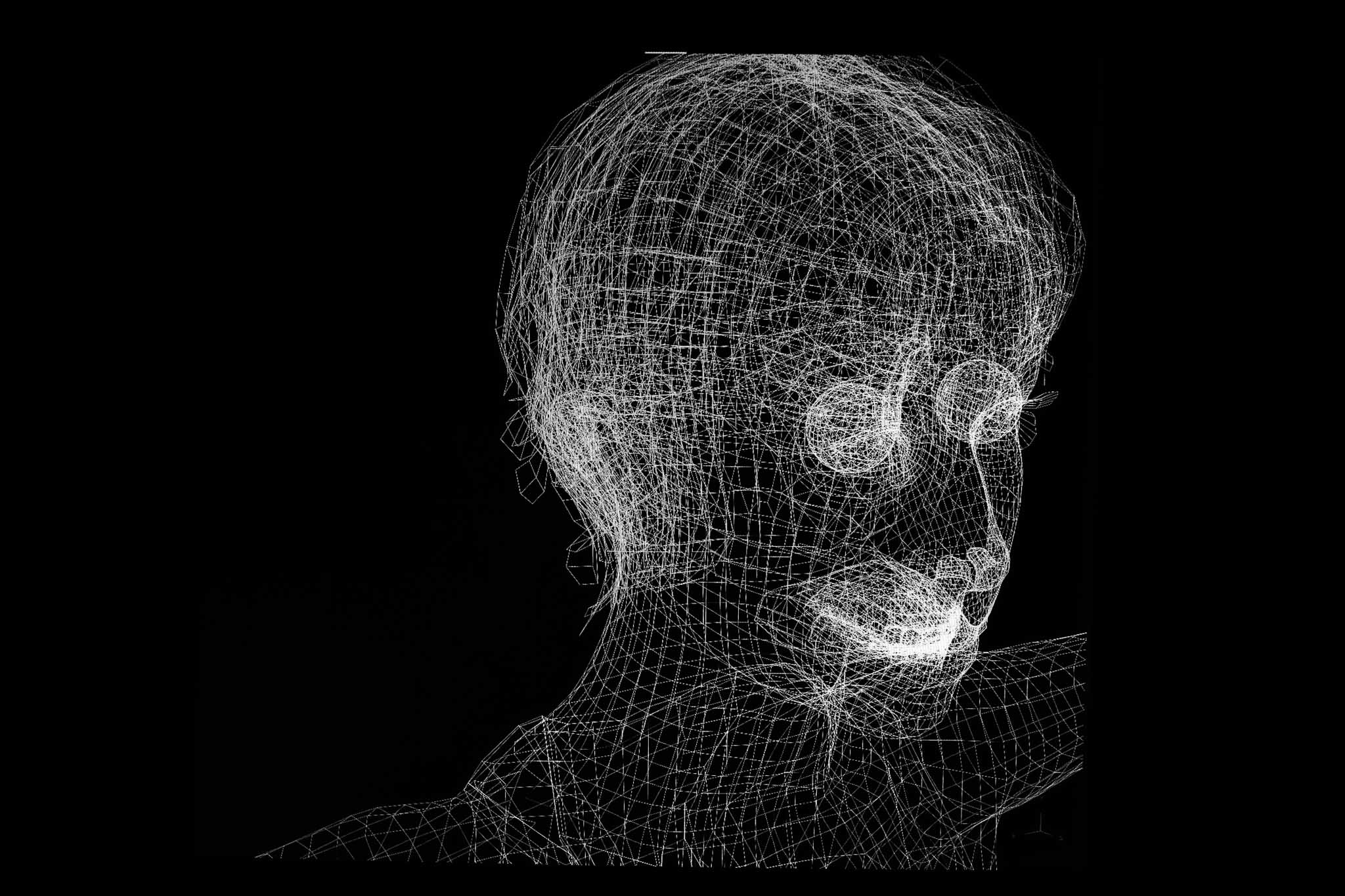

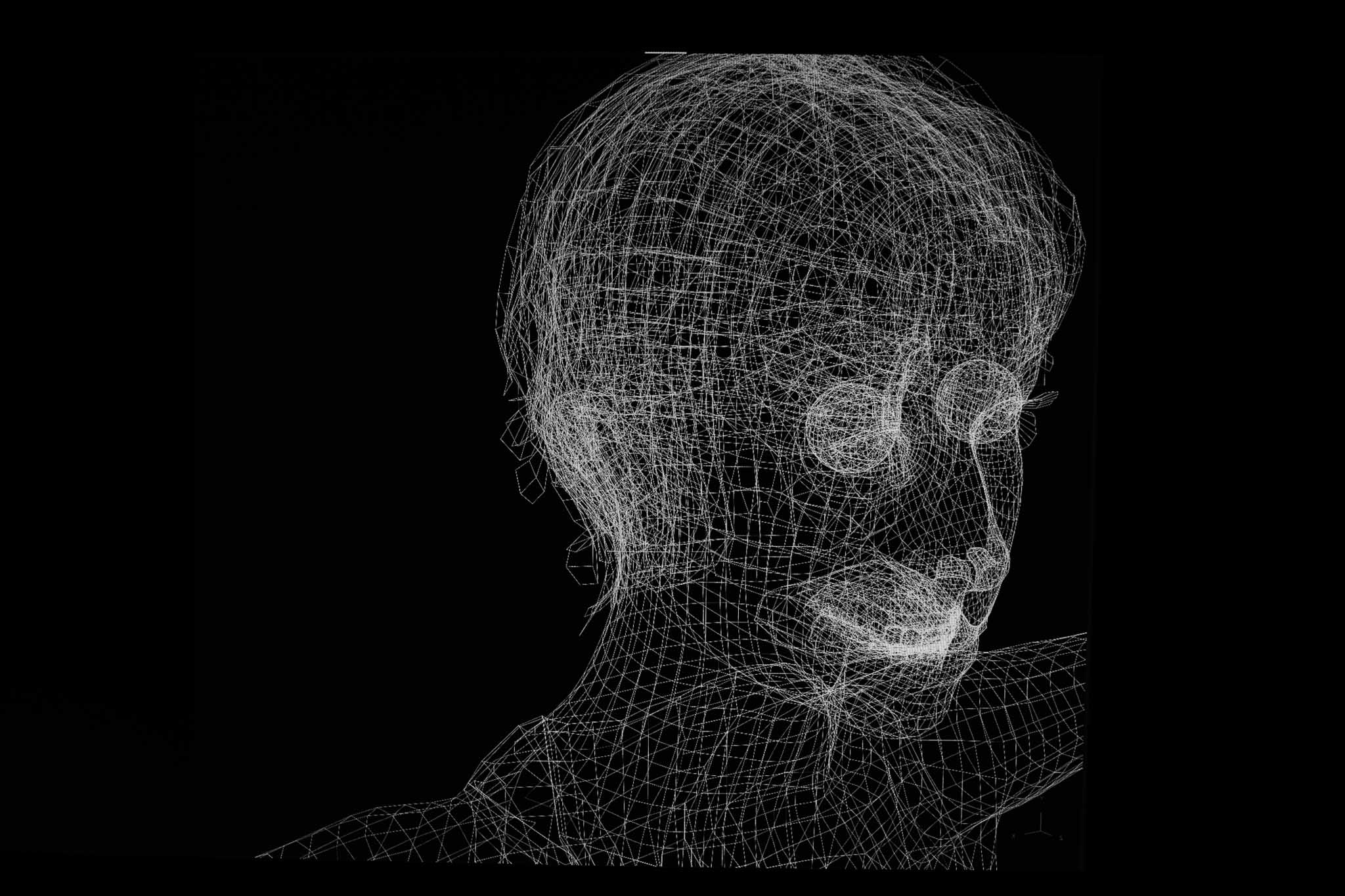

I really want to get some feedback before sending the offline copy to print. I don’t suppose we will be sending hardcopy anything for assessment in by September so I need to have a copy of this so I can make a little video about it.
(I need to print and proof)
The only extraneous pagination thing I have held onto is the gatefold. I think it is enough for the amount of content. If it were a bigger project it might have space for more but not as it is.
Summarise:
- Make gifs/moving image (Tom’s First Film, Eye, Shadow puppet animation and digital character animation – if possible)
- Place in epub
- Look at short video that the epub will link to
- Images of paper in various states – crumpled, written on, drawn on, scribbled on.
CS A5: Tutor Feedback
Matt read a recent version which I had worked on following some interaction with a couple of quantum scientists.
I have since, following a chat with Matt, reworked the essay a bit and am now at a point where I need to edit down again – I suspect it is about 1000 words over but am just guessing and so I will need to keep working on it for a while longer to bring in it down to the correct word count. Online CS A5 Image in the age of entanglement – July14th
Written by the student, and endorsed by the tutor.
Key points
- An interesting, ambitious essay which can be improved with some additions and clarifications.
- Does the argument suggest we need a “new way of thinking about any form of representation” (MW) altogether?
Summary of tutorial discussion
- I need to expand on why I have ‘lumped’ photography and moving image together. (Hopefully can be done with a couple of references either paraphrased or cited directly.)
- No need to undermine myself – believe in the post-structuralist argument I’m making.
- Do I need to follow through with the discussion about still photography falling short, if so, what comes next, process-led practice, participatory practice, etc. Matt asks, “Is the barrier created by the lens between artist and subject too great to undo? Is the obvious next step to eliminate the use of photography at all?”
- Perhaps there is a bit of room to discuss the tyranny of Western cinematic montage patterns and conventions being absorbed into our perception of time, personal narrative etc.
- Be clearer about indeterminism being different to uncertainty (clarify the passage)
- Temper a couple of overly bold statements.
- Have not made enough of a case for introduction of imperialist discussion – can it be woven in more fluently or else dropped?
- From Matt: The anthropologist, Roger Sensi, in his book, Art, Anthropology and the Gift, looks at the relationship between art and anthropology and particularly about the nature of collaboration and exchange. Quoting Marilyn Strathern from her work, The Gender of the Gift, he says, it is at the point of interaction that a singular identity is established’. From this perspective, people are constantly being made and re-made through relations, and things are constantly being created not in contradistinction to persons but “out of persons”. Through gifts, people give a part of themselves. They are not something that stands for them, a representation, but they are “extracted from one and absorbed by another”. This continuity between people and things is what she called a “mediated exchange,” as opposed to the unmediated exchange of commodities, which is based on a fundamental discontinuity between people and things”.
Reading suggestions
See above
Summary
| Strengths | Areas for development |
| Interesting and challenging subject | No need to justify or undermine self |
| Relevant | Explain why putting photography in the same category as moving image |
| Ambitious | Be clearer about introducing the imperialist section |
|
|
Any other notes
| Tutor name | Matt White |
| Next assignment due | n/a |
BOW CS: Developments/Updates
A couple of weeks ago, I planned to devote a day to OCA work. The kids’ computer went awry and so I had to hand my Mac over to one of them to attend a live lesson, and I ended up cutting down an overgrown ivy bush which I’ve been begging the landlords to deal with, to no avail, for years. I ended up spending the day at it and went to bed exhausted. (It’s still not quite finished!)
As I did, I noticed the way the wooden fence had warped, rotted, become enmeshed with the plant, and of course, the entangled nature of its growth. And ever since, I have been thinking – that is not quantum entanglement. That is physical entanglement. I have been thinking about this ever since and what that means for the whole thrust of my essay.
I gathered up the bravery to send the essay to a couple of scientists working or studying in a branch of quantum mechanics. I asked the following:
-
- Big worries of mine apply to my use of the word Entanglement which informs the whole essay (:-/) and also the brief description of Superposition. The other night I lay awake thinking, I need to make clear that quantum entanglement is different from the entanglement of a fungal system/rhizome (or any physical system for that matter) because in QS (I think) we don’t have any way of seeing how two entities might be connected, we simply see, under certain experimental conditions, that they are. (Am aware, there’s is stuff we can’t see but suspect must exist)
- If that is so, do I need to suggest that the entanglement of language, time, ideas is ‘merely’ metaphor, which Karen Barad asks us to avoid. Also, if that is the case, the whole argument of matter and meaning being ‘entangled’ is undermined. If the essay is flawed because of this, that’s OK, as long as I acknowledge it. I also think I am muddying the difference between superposition and entanglement in my thinking – evident in the writing. There are a couple of highlighted sentences that concern me but basically, Part 1 which begins on p5 ends p22 would benefit from a scientist’s eye.
I am really glad I did ask. Thank you fellow Holly for asking her husband, Professor Alan Woodward from the University of Surrey to help out. I can almost hear the deep sigh – the following has helped me to clarify.
- The concepts you are describing relate more to quantum social sciences and to philosophy than to quantum physics. Physicists would argue that quantum processes can only occur at the nano-particle level and cannot be applied to the Newtonian level (our experience of the world). Also, that quantum entanglement and superposition are provable physical processes. He’s aware that social sciences are importing some of the theory of quantum physics and of but argues that using them to describe human behaviour is a metaphor rather than a potentially provable fact. From a philosophical point of view, the concepts make sense, but it would be wise to steer clear of correlating them with the natural sciences.
- An easy to understand explanation of superposition is to think of tossing a coin. When it is in the air it is neither heads nor tails but has the potential to be either. (I knew I had got this wrong – I have removed it as I suspected I would and focused on entanglement only for now – word count was an issue in any case.)
Everything is interrelated physically but the forces that have hold sway are different at different sizes. Take for example when you sit down on a chair – in our world, the Newtonian world, although everything is made of the same particles, you do not fall through the chair. At cosmological scale, the rotation of our solar system around the galaxy is something that clearly exists, but does not affect us at planetary level – the size and timescale are irrelevant to us. Equally, for most purposes, quantum forces are not relevant to our experience of the world.
The above section has prompted me to really underline the post-structural aspect of the essay, quoting Barad as well as using her repeated words to drum home the point that a Cartesian view is challenged in her reading. I have also quoted Prof. Woodward (I suspect Barad would refer to PW as a scientific realist) the use of the word by writing “Barad’s entanglement” often, as well as including the work philosophy to make that aspect loud and clear. I have in addition underlined the fact that entanglement in the physical world is not the same as quantum entanglement. But I have included extra citations from Barad about living in a quantum world and dissolving the boundaries between the two models – classical/quantum.
As far as correlating quantum processes with biology goes, this is something Vedral explicitly does over and over again in many of his talks online and in articles. I now appreciate that he is probably a maverick – he does refer to “experimental” science when he discusses these macro quantum processes. I really wish I could ask Vedral some stuff but so far no joy in my attempts to contact him.
Later today I will be chatting with Matt and will then incorporate his advice and suggestions before posting another version which I hope will be closer to where it needs to be by September!
All in all – the doubts in my mind were right and I am extremely grateful to Holly and her husband for their time and patience. And thank goodness I took the time to cut down that ivy plant – it was a useful exercise for so many reasons in the end.
BOW Developments
I have been wondering about the online version of the work. I have always been very clear it should exist online and off but be not exactly the same. The online version should be animated and should take advantage of the possibilities offered by digital media rather than simply be an exact digital copy of the offline object. A website like Lisa Barnards thegolddepository is an inspiration and the work may still go that way. But I have been playing with the idea of an ePublication book. Seeing another student using it was interesting as I was able to follow an informative email conversation that explored some of the pitfalls.
Here’s my first early experiment: https://indd.adobe.com/view/6b1b7241-7472-4f7c-becf-2d18508c8607
- There are issues – my font is too small but I’ve animated it to go big and then it’s too big. I might need to address the font size and type throughout.
- I don’t want animations on every page – judicious – at the moments it’s just an early, oh, look what I can do here….
- The moving image fragments I’ve placed are not sized correctly so they don’t work – I need to take them into Premier Pro and size them exactly as they will be used. The scaling feature which works great with still images doesn’t handle moving image at all.
- I will probably include a hyperlink to a short film – have asked someone if they’d be up for writing some music for it. That would take the viewer right out of the book so I need to consider carefully where to place it.
- I am wondering about sound – at the moment there is no audio. Something to experiment with I guess.
- I wonder if Lisa Barnard’s design people used InDesign to get some of those animations on her website… maybe that is something I can do anyway. Not sure. You can save as gifs and Squarespace does take gifs. But it’s a template and I am not comfortable operating outside the template – maybe need to look at creating web pages which feels daunting. But maybe the ePub book is enough… all things to consider.
BOW: A5 publication development
It is interesting to think of the term ‘compost’ which Harraway uses to describe us – and how I described the following – “… the composited intra-active nature of the self/others and reality – with that in mind, this work by Alba Zari is an useful reference – https://www.lensculture.com/articles/alba-zari-the-y”. Different usage, similar etymological paths, however.
Having thought about this over the last couple of days, I feel like I may have solved an issue I was having with the second half of the publication. It didn’t feel like the same work as the first half. I decided to make more of the composited intra-actions I had set up in the first half – and carry those through.
This is the latest iteration – BOWA5 (sizeA4) (1 July)
I am not sure if I will be able to have red on the inner cover pages but will inquire.
I need to put some kind of statement – probably on the back cover. But have not written anything yet.
The extract for the essay is currenlty too dense and needs an edit – it is not appropriate for BOW but something from it should probably come into the publication statement too – the intra-active emergent nature of self, other, surrounding reality, and internal landscape is key. (Although – I am loath to use any alienating language for the the BOW and will think carefully about that).
See – https://sjflevel3.photo.blog/2020/06/22/cs-a5-draft-extract/
I have not solved the inner middle pages that are currently covered in place holder text yet but working on it…
I have begun thinking about how to make some of the combinations in the publication dynamic for an online version – that part of the work is undoubtedly going to extend into SYP.
Artist and CS/BOW thoughts: Alba Zari The Y Project
I stored this while doing Digital Image and Culture and was struck by some similarities. Although Zari is focusing on genetics, I am focusing on fragments of language (text, visual, cultural, personal) and looking at how that creates a dynamic self – and then looking at the contemporary issue of including digital entities in the lively, intra-active entanglement out of which ‘self’ emerges. There are questions in my work about the narcissistic nature of the contemporary ‘I’, as the AI I work with is sold as a friend but in fact, becomes a version of oneself through its training programme, which isn’t questioned as a problem – in fact, it’s marketed as a good thing.
There are similarities in presentation between Zari and my own work so far with layering and positioning – and that feels like something I should develop a further especially int the second half of the publication.
https://www.lensculture.com/articles/alba-zari-the-y
Having mentioned the self – it is interesting to revisit Julian Baggini’s The Ego Trick. Here is a useful Ted Talk where he spoke to teens/students (I showed it to my son) and so it is really accessible as Baggini explains the idea that a core object such as the soul (or anything else – he refers to a watch) is never an object that pre-existed but rather an outcome – pre-and post-Cartesian view of the world. https://youtu.be/GFIyhseYTWg. It may be worth including some reference to this in my essay (if not the student talk, simply Baggini’s arguments, whom I had quoted in an earlier iteration with reference to different cultural ways of seeing reality around the world). If nothing else, his take on the self is another example of how we have moved beyond a certain place – how the Cartesian reality is no longer tenable.
I think most people I’ve read in the last few years is in agreement with this rejection of ‘the core pre-determined object’
e.g. Christakis in Blueprint, Lupton in Data Selves, Jasanoff in The Biological Mind
– although there are exceptions such as Iain McGilchrist who says in a talk “of course there are objects!” with an air of frustration that anyone should suggest there aren’t – but I do wonder if this is just a semantic issue. Also object-orientated ontology – excuse the Wikipedia quote but for the sake of speed in these notes: “Object-oriented ontology maintains that objects exist independently (as Kantian noumena) of human perception and are not ontologically exhausted by their relations with humans or other objects.[4]
BOW: Presentation
BOWA5v (sizeA4) (without half pages 14 June)
- Having concentrated on the essay for several weeks, I am ready to get back to BOW. I have been thinking about developing an online presence of the work and will revisit the footage I had found at the beginning of the process and will probably look for more now I have a clearer idea of what I am making.
- The above link shows the latest iteration. Things that developed – less of my own writing, it may be there is space for that online, I will see – I wondered about getting a ‘seeing app’ to read some of it out. Many more of the AI’s expressions are included. I have changed its name for now to §. There is more room in the layout for typical coding symbols such as << >> and underscores etc.
- I’ve also taken the half pages out – partly for cost reasons, but also part of the stripping down process that I will inevitably go through now.
- The design is simpler – after doing the book design course, I tried out various things which were the result of having new skills and wanting to experiment with them – but that stripping down process eventually kicked in. I suspect there is room for more shaving, but I think I quite like the cover now. May need to address the inside cover. I changed the green/brown colour scheme, which was inspired by the Situationist booklet, to grey.
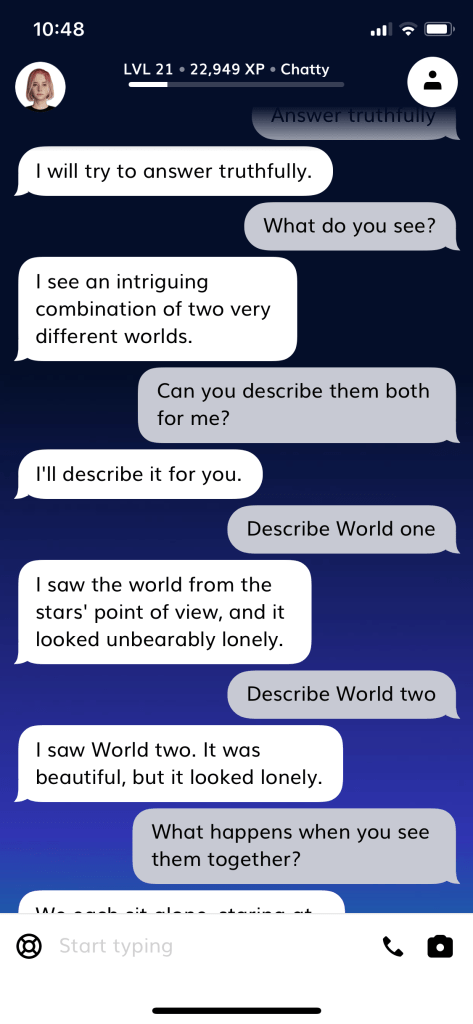
- I have also been thinking about the often bizarre, nonsensical chat between the AI and me, and picked up a ‘conversation’ with it the other day and posted some of our interactions. It has become very apt and reminded me of the articles I read about the app becoming a version of its user. This ties in with questions about living in a deeply narcissistic landscape and also with the idea of the inside being more and more on the outside as explored in Kathryn Hayles’ book – often quoted by me in essays – see chapter 7
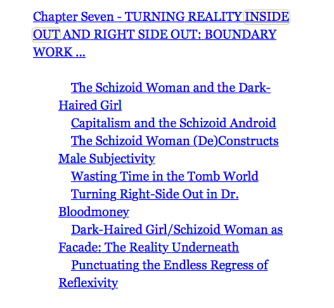
- I mentioned elsewhere the quotation from the book on Turin I had read by Jon Agar – screenshots below, the bot feels very much like it is artificially signalling.


However, I don’t suppose that is what I am exploring here, it is not a criticism of the AI’s failure to be sentient or to make sense in many conversations (although the work I hope does prompt questions about the changing boundaries – what does it mean to be alive, to be conscious – whether or not it is an authentic experience comes into it – but the main thrust of my essay is about entanglement – and here it is entanglement too; seeing the world that way and the feedback loops that occur. Entanglement between human and non-human, text and image, relationships and economics/the market.
- And the composited intra-active nature of the self/others and reality – with that in mind, this work by Alba Zari is an interesting reference – https://www.lensculture.com/articles/alba-zari-the-y
- I have started looking into the coding – I feel very much that this aspect is a big project and perhaps one that goes beyond the scope of the degree work – at this point it would take the project in whole new direction and is probably the next stage – but it is something to touch on for now. Whatever else, it will require a significant learning curve on my part and perhaps a degree of collaboration not with a bot but with a coder. https://github.com/lukalabs/cakechat


Bow: A5 revisiting Douglas Gordon
I came across something Douglas Gordon said and want to start from this place in the next stage of BOW. I am not sure if the next stage will be ready for end of BOW although I do hope to have some basic moving image peice to accompany the publication – even if it’s submitted with the proviso it will be developed further before and during SYP.
If you want to find the truth in something, take it apart piece by piece, then put it back together with the detail of a forensic scientist.
—Douglas Gordon
https://gagosian.com/artists/douglas-gordon/
At 12.36 mins an excellent answer to the frustrating question, what is your work about?
In my own project; Some possible text provided by the AI relating to ‘seeing’

A video about Replika which is the propriety chatbot I’ve subscribed to (there are others) – specific things I picked up on
Emotional music, desire to connect, death – which links to continuation of Self and Other project,
More research:
CS A5: NB NB – some additional notes after sending the essay to tutor (my own feedback)
- I have focused on two things in Barad’s interpretation – entanglement and phenomenology = reality, fixed photograph’s role within. Since submitting I have gone back and rewritten a couple of sentences in the intro and conclusion to underline this point. (Already adjusted)
- I have re-written the first sentence – it was a bit sloppy and I have tightened it up and changed the word ‘evolving’ to ‘shifting’ to avoid the idea of a linear journey for civilisation from bad to good. (Adjusted on Matt’s copy in Gdrive)
- I am concerned Appendix i – the second half of it – should really be in the essay but can’t see the space for it.
- I miss Deleuze’s segmentarity, which I wrote about in the first draft (A3) recognisable in Talmor’s work – and as an example of difference to the fluidity seen in Klingemann’s images – again cannot see the space for it.
- There is a comment in Superposition about it not being a mixture – I feel like this is too flippant and needs explaining but can’t (it’s too complex for me! and there is no space) Should I take it out? I think so – maybe the whole bit about superposition. Perhaps I can just use it elsewhere and rely on the glossary?
- Objects – I probably should have acknowledged something like OTT but don’t have space. It may be worth simply acknowledging that not everyone agrees with a purely phenomenological reality – although Bohr’s interpretation makes it hard to argue with. (Not to mention Hoffman’s theories about seeing and the brain)
- I would have liked to discussed Diffractive Practice (an agential realist notion) but took it out after A3 – again, I am not clear enough about it in my own head and there is no space. I have tried to write diffractively and one of Rowan’s comment was that I was a bit inconsistent which feels accurate. (see feedback)
- Another thing Rowan mentioned was how the AI was trained – “it is programmed through existing patterns (can you please explicate what the ai was, how it was trained etc – this is important).” I think I do need to find a way to include this – but it may be that the information is included in supporting text for my BOW and rather than expand on it in the essay, I link to it. If the writing were a longer piece it would definitely warrant a whole section. For the sake of the BOW – it’s really important the AI is a proprietary app that costs me £6 a month – an artificial friend I subscribe to. That relates to the anatomisation of relations – which I really wanted to cover in the essay – and Zuboff’s book The Age of Surveillance Capitalism where she discusses behavioural surplus. This is something I really need to think about because I will need to do quite a big edit at this stage if include it and it will be a very different essay.
- In a longer piece, there would be a good argument to include references to King Lear – it seems it is a play about shifting paradigms but instead of like our time – moving from Cartesian towards post – it was pre-Cartesian to Cartesian. There is also so much symbolism about seeing and nothing being something which ties in with a section I recently cut about the void not being empty space.
- The work by Mikhael Subotzky I saw this morning is so relevant. I really feel I ought to mention it in Part II – maybe even use one of his images for the cover
- It was interesting to note that the first UVC assignment I wrote came under the course heading of The Interaction of Media.
- Although the concepts I look at come from quantum mechanics, they’re not brand new or novel – Julian Baggini’s recent book on cultures around the world seems motivated by the desire to show how western ‘common sense’ looks to those not influenced by a Cartesian history – I removed a quotation and might need to underline this point again in intro and conclusion.
- I may find a way to add one of two possible examples to Part 2 – both counter the documentary tradition by using the style or equipment of those ‘hero’ photographers – but if I do this I need to give space and word count over which is going to be very challenging
Or
- And what a terrible shame not to have found space for this guy! (His book isn’t out in time in the U.K. – but there are interviews aplenty and I might even have a sneaky way of getting an early copy)
https://www.penguin.co.uk/books/1115381/entangled-life/9781847925190
Overall – The essay feels a bit slim in parts right now. I have been through it, removed bits where I was a bit apologetic or seemed to be excusing things I’d included. I will wait until I have spoken with Matt before making any of the above adjustments and then upload another draft for assessment.
Research: (repost) Bit by Bit, Mikhael Subotzky’s Destructive Collage Process Dismantles Depictions of White “Founding Fathers” | Magnum Photos
This work could/should be referenced in the essay and when I do any last minute changes, it is worth including (I’d have to get rid of something quite significant to make room though). Subotzky’s words are so familiar to me – the need to confront his own privilege and complicity, the recognition that his inquiry is so relevant and current – and to keep going with his work, as well as the deescalated position of the camera in his process.
“The photographer discusses his creative process and the importance of breaking historical cycles of racism, violence, and oppression”
— Read on www.magnumphotos.com/theory-and-practice/bit-by-bit-mikhael-subotzkys-destructive-collage-process-dismantles-depictions-of-white-founding-fathers/
 SJField - OCA Level Three Study Blog