Well timed for my purposes – Lewis Bush’s article below. I expect I’ll be quoting from it as it links directly to what I’ve been exploring over the last year or so – the comparative effects of still and moving image along with comparisons between audio, visual or text forms https://witness.worldpressphoto.org/photographic-narrative-between-cinema-and-novel-354baac43a19
Author: Sarah-Jane Field
Exploring emergence, fragmentation and value systems
Genre: Notes and reflection including Research points for BOW Part 1 (ii)
Responding to the archive
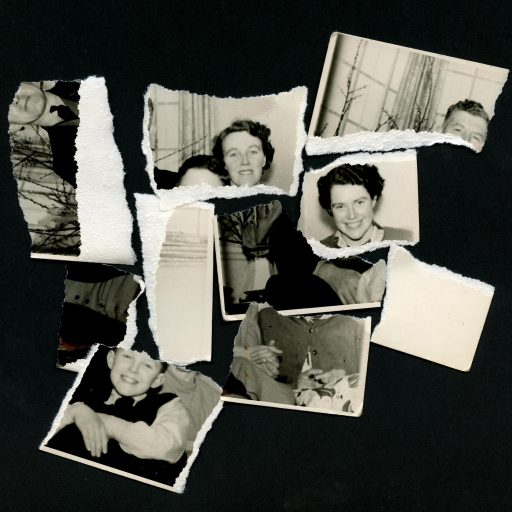
I just loved getting involved with old images during Digital Image & Culture. I am not sure I was doing it for the same reasons many other artists seem to – Nicky Bird is mentioned in the course folder and we are told she is concerned with social histories. OCA alumni and my friend John Umney is interrogating memory through family archive. Joachim Schmid is “concerned with the visual ecology’ in a world where we are inundated with new images by the second which according to him leaves us “ignorant but much more confused” (Fontcuberta, 172) He often uses images which have been left out of any archive, found, individuals he may have bought at market, or images discovered in job lots. He adds that the “production of images” should no longer concern us after 100 years of image-making, but rather the way they are used.
For DIAC A4/5 I used mainly moving images from a website called Archive.org – and see this as a response to the archive too. The internet is one giant archive – modern technology is based on archiving. Vast databases sit behind our screens and on the cloud, in huge computers which support the web, facilitating modernity. Archiving is a fundamentally human activity which supports civilisation and everything that stems from that practice. It becomes more and more adept, widespread and controlling as humanity develops. When I respond to the archive I am trying to figure out how meaning enters our language, and how power equates to the signified. Bringing that down to the most simple terms – why is it my words carry so little weight but a lying lunatic or a mega-company wield so much power? Why is the language we use so unstable right now?
Responding to the archive nearly always comes across as conceptual and I will address this under the relevant heading at the bottom of the page.
I gave a (slightly too grown-up – it was OK they loved it and made great pictures) workshop to some eleven-year-olds recently about the practice of re-using images. As I told them, the artists we looked at and the ones mentioned above are all doing something similar even if they individually state they are focused on a variety of different issues. Each of them is disrupting the usual value system. We live in a world where the production of stuff must continue. In order to sustain the economic system which upholds our world, things must be made and value must be apportioned where the advertisers dictate. When an artist rifles through a market or discovered an old archive in the attic or found an image on the street and turned it into ‘art’, they are saying no to the dominant system which insists the value of something emerges out of symbols it has established and owns – in Flusser’s terms – handed down from the all-governing apparatus, the capitalist system.
As I said in my blog about the workshop for eleven-year-olds, I enjoy sharing my developing knowledge with others regardless of their age as it helps me to consolidate my own learning and make connections. One of the things I talked about with the children was waste products and how we as a society view ‘waste’; not only commercial production waste but our own. Mention of ‘poo’ and ‘pee’ got them laughing and perhaps this is why they enjoyed it – but it is a serious point. Duchamp’s use of the porcelain urinal is not a random object. It is a powerful signifier that represents a new world, one where factories are available to mass-produce porcelain products which we humans will use to collect and manage (and sometimes store) the increased levels of waste products we produce*; increased as mass-production, along with other related factors such as a stable climate (now no more), and which enabled and exponentially increased population. Hence more human waste. What to do with it all? And with all our after-effects – pollution? There is an ongoing feedback loop between production, waste, and population growth which exists within a system that is related to a range of other greater and less dominant systems. I am not sure I would have seen this looping quite so patently had I not done the workshop. And so, I am grateful to the eleven-year-olds for indulging me. (I have had several very positive comments from teachers, parents, and children so despite the fact the work I shared may have been a little too sophisticated for such young children they loved it anyway.) And so, artists who disrupt our value system – and highlight their own individual concerns along the way – are helping us to challenge the advertisers, or those managing the apparatus. They are the experimental photographers Flusser tells us we need. (2000)
I really like the passage in the course folder about John Tagg included in CS1. The course author writes, “The other narrative Tagg refers to are exemplified by ‘feminist’ and ‘socialist’ histories of photography, which he sees as equally problematic insofar they continue to overlook various institutions and social contexts in which photographs are made.” (Alexander, 2013, p18) Critical thinkers, artists or scientists from a range of disciplines need to adopt a systemic view. It will become more and more important. We cannot continue to look at anything in isolation because the causes and effects we all live with are inter-related. It seems like this fact is one of the most pressing messages to get across because bizarrely there are still far too many people in charge (teachers, politicians, business people) who haven’t caught up. Working with old images, investigating archival material, is perhaps one way of making this point – regardless of what the ‘issue’ at the forefront of any work might seem to be.
Changing the way we perceive is happening regardless, and this is examined in various books about systems theory. However, the following passage from an article on systems and changed perceptions is useful; “Einstein’s widely quoted advice that “we cannot solve our problems with the same thinking we used when we created them” seems more appropriate than ever. We are dealing with the complexity of a profound societal change and the transition towards diverse regenerative cultures as manifestations of not only a different way of being in the world, but also a different way of seeing the world.” (Wahl, 2017)
Finally, on another note, as I was playing with old images in photoshop during DI&C, it amused me to revisit comments I’d made during UVC about tampering with older artworks. I felt it was ‘extreme arrogance’ for Clement Greenberg to have tampered with his late friend’s art. “However, a quick Google search on Greenberg reveals that he worked with several artists, two of whose work, after their deaths, he changed and adjusted,[2] altering lines and even removing paint from sculptor David Smith’s work claiming that he was not an important colourist, so it didn’t matter.” Looking back, it seems the reasoning is arrogant but the act might be more complex. Context is everything though and nowadays I suspect I’d look to this more closely before condemning him. Anyway, I have tampered with and adjusted plenty of old images – and often wonder if this is more palatable since the images are anonymous. What would happen if I did the same with a Berenice Abbot print I own? Is it less or more acceptable if I scan the image and don’t ‘damage’ the print? Does the gesture carry less weight if I scan it even though I am playing with scans (being one of several ‘after photography’ tools)?

Psychogeography
I feel like this is the least accessible genre for me. It requires ample time and space (which is often accompanied with some form of private income) for a photographer to devote to wandering around observing the way our landscape is shaped in the way the original fläneurs will have done. (Do people, in fact, refer to this sort of work as urban landscape photography.) And my time is not my own. It’s hard enough fitting my photography in unless as it is and I know that the idea of the fläneur has attracted some feminist criticism. So, I do feel a sense of ambivalence about it really, given the original intention may have been a reaction against capitalism. I wrote about it during UVC and had quite a good conversation with other students too here.
I have also been really quite taken with the Situationists ideology, along with Guy Debord’s written work, and have referenced them constantly throughout the course. But here again, I must admit, while I don’t agree, I do have a smattering of sympathy for Scroton’s defensive reaction towards the ‘middle-class anarchists’ he thinks saw in the Paris ’68 riots. The people at the very bottom, the most down-trodden, (perhaps not in France but in England it does feel this way) those who struggle the most to stay alive in the world have no time for such outbursts. Simply being is too exhausting. Too challenging. There may be little or no time or energy for protests of any description be it via photography, thinking about using less plastic, worrying about middle-class mores in relation to child-rearing or anything else other than surviving and keeping one’s kids alive. Of course, many would argue that this is intentional on behalf of those in power, and all the more reason to find ways to fight it. Even so, wandering about the planet taking lovely photographs all the while claiming you’re querying capitalism’s horror can seem like quite an extraordinary privileged lack of awareness, as fellow photographer John Umney commented; “Interesting: You touched an many themes why I don’t care for the concept of Flaneurism. It was, and perhaps still is, a bourgeois pursuit – who else had the time or capacity for ambling? Certainly not the great unwashed who were busy being busy earning a crust – see later ideas from Benjamin.. And echoed again when you talk about not having access to education AND not being male. Women simply didn’t idly amble in the 19th century, and today psychogeographers are, in the vast majority, loaded with testosterone – absenting oestrogen from the discourse… I could go on…” (2016)
I’d say the street photography I used to do a lot of (despite the limits – having my phone camera certainly helped) sometimes fits in with this genre. Here’s one I took recently on my phone which I imagine fits the genre in some ways. I have stopped doing this type of photography for so many reasons, but perhaps I just ran out of energy as I focused on making other sorts of work
Given the UVC blog and the student comments below, I will move on now to conceptualism which I have combined with genre-hopping because for me conceptualism takes on many forms.
Conceptual photography and Genre Hopping
Although my work has been very much rooted in personal journeys and at times in fictional autobiography, it is also more and more, flirting with conceptualism. It’s true, the term is nebulous and means different things to people. For some, it’s simply about black and white documentary images of 70s performance art and that’s it. But in my mind, all photography should be conceptual, which is echoed in the folder. However, I don’t really see the necessity for the slight dig in the course folder, “that needn’t mean there’s no room for aesthetics.” (If one was going to say that, why not in the psychogeography section where so much photography is quite dry indeed and has specific (as John said testosterone-laden) narrow appeal?) If the black and white photography from the 70s shadow still has any value, then it might be because conceptual art has had such a profound impact across disciplines since, including photography. Art which is embedded first and foremost in ideas, and where then the medium is almost secondary to that, is everywhere. As the Conceptual Art in Britain (1964-79) exhibition book introduction tells us, it “changed the priorities of art”… “these moves took place within a wider landscape of art”. (2016) Idea art which queries our humanity, culture and institutions are more necessary for our society nowadays than painted religious scenes for instance. I wrote in the CS section, “.. like the evolving nature of gods and God as civilisation develops, what we need from art changes too. And conceptualism rather than dogmatic religious iconography is clearly more relevant today as the nature of reality is unpicked and newly understood.” (2019)
I’m not sure what the first Source video tells us, other than it might be a terrible faux-pax to describe one’s photography as conceptual. However, I would imagine the term tells people something about that sort of work they can expect. I also think that photography students who venture away from pure photography (like myself and others) are exploring other avenues of ‘art’ that are less defined, and in which ideas are often the initial medium – if not the form. That’s not to say the photography purists don’t have ideas too.
As I mentioned in yesterday’s post, I am not entirely comfortable relying on narratives which don’t belong to me for work. It feels a little like I would be commodifying other people’s issues and when it is my own children’s issues, in particular, that feels really wrong, although I do admit to skirting the boundaries of my moral compass.
During DI&C A4/5 I identified the word ‘deviance’. I did not consciously choose the word but came upon it as I delved further into a hotchpotch of ideas and sketches I was making. I eventually connected the word to one of my children who has always been slightly left of field and is currently causing me a good deal of worry. (Along with others in my life, perhaps including me.) There is a multitude of possible reasons for this and some of them might be neurological while others, the result of experiences he’s gone through. One way of coming to terms with this would be to make a documentary piece about him or my reaction to some of his unfolding behaviour. But that feels so completely out of order. I do not like the way reality TV and then social media have encouraged us to reveal every last detail about ourselves to strangers. Awful cheap TV which preys on troubled children’s’ behaviour and struggling families (often produced by Oxbridge educated television makers) for the nation to watch and judge have caused untold harm to individuals.
Sylvère Lotringer discusses this ‘overexposure’ and links it to a perversity in our culture which he also connects with capitalism. I tend to agree. An argument against my stance might be that it would be useful for other parents to hear about my struggles with my son. But I sense this is an excuse for social prurience which has been normalised in society. People ‘get off’ on others’ difficulties as it removes them from their own.
However, as someone who creates to make sense of the world, I still want to explore. Making work for which the term conceptual might make sense helps me to overcome the dilemma. It also stops the work from being overly inward-looking and self-referential. In other words, it has the potential to be more universal – as the work I made operated on several levels as it looked at growth, transformation, and language including structuralism. A risk of working this way is that it might hide the ‘me’ that is interesting in any project (as the truthful ‘me’ of anyone is always valuable and worth sharing – I use the word truthful with trepidation. It has such connotations in post-modern art circles and completely different to those in acting parlance.)

Finally, projects which respond to the archive (any archive) often ‘look’ conceptual and I note that John Stezaker is listed as a reference on the Source page we are instructed to view. David Bate and Mark Powell seem like purist photographers. Gossip tells me that Bate does not encourage anything outside the frame in final shows at Westminster. Even so, their practice seems highly conceptual to me. The ideas driving them are very definite. They’re not simply making pretty pictures. However, if I were to describe Polly Borland, who is certainly a photographer as conceptual, I imagine people would take on board that the work might include more than ‘straight’ photographs and perhaps be a bit ‘weird’. Cindy Sherman is certainly a conceptual artist but she is also a performer who uses photography as her medium. Joan Jonas is a conceptual performance artist who uses a range of mediums in her practice including still photography and moving image but much, much more besides. Interestingly she came from a sculpting background and enjoyed performance which she needed to record and document. She is far removed from the purist photographers who can come across as quite po-faced about anything outside their own medium. As someone who was once an actor, I am not sure where I am situated just now and have used this course to experiment widely (and perhaps wildly). When I consider what might come after this course, I am not only thinking about photography MAs but others too more along the line of Creative Arts.
Refs:
Fontcurberta, J. 2014 Pandora’s Camera, Photogr@phy After Photography, Mack
Flusser, V. (2000) Towards a Philosophy of Photography Trans. Mathews A. (Kindle Edition) London: Reacktion Books
Tate, 2016. Conceptual Art in Britain 1964-79, London, Tate
Holmberg, A, 1996 Directors in Perspective, The Theatre of Robert Wilson, Cambridge Press, Cambridge.
http://www.source.ie/feature/what_is_conceptual.php
Artist: Christiano Volk, Sinking Stone
I do wish I had some money to spare right now. This is the second photobook I’ve seen this week which I’d love to be able to buy.
Cristiano Volk’s Sinking Stone, a meditation on Venice, looks great. The reviewer writes:
“…rather than showing us a seemingly satisfying totality of Venice in the form that is viewed and reproduced by tourists, Volk confronts us with many jarring fragments that often flash by as in a short but powerful dream.”
and
“On the artistic side, I am very pleased that in his depiction of a city Volk has gone way beyond the traditional methodology of such genres as street photography. This project is an excellent example of making a statement by presenting ambiguities; this kind of fine art requires the participation of the viewer to reflect on issues that affect us all.”Clausing, 2019
You can see more here – worth the click!

Genre: Notes and reflection including Research points for BOW Part 1 (i)
Tableaux
If there is any validity in Maya Deren’s advice to film-makers that they are better off embracing what the medium of film offers instead of trying to emulate theatrical tropes, (and I think there is), I wonder too if it’s worth thinking about applying the same advice to still photography in relation to cinema or painting. As I write this, however, I remind myself I also believe we shouldn’t limit ourselves by the fixed boundaries we place around ideas and concepts. I’m also loathed to sound like the deeply conservative Roger Scruton in his essay Photography and Representation in The Aesthetic Understanding: Essays in the Philosophy of Art and Culture (1983), as part of the thinking I’m highlighting here is the way still photography can reveal something accidentally or unintentionally in the split second that the frame is made. Of course, painting can also do that over a longer time frame too – the artist paints or draws and when a viewer looks at the result, they might perceive something the original artist had no intention of revealing about themselves or saying, or they might impose a new meaning onto it. Signification has plasticity in any medium, depending on context and who engages with the signifier, regardless of form.
Gregory Crewdson’s work, in particular, however, often makes me wonder why he didn’t just make a short film instead. At the same time, his work harks back to painting, especially Edward Hopper scenes, only Hopper’s work doesn’t carry the same sense of contrivance as Crewesdon’s expensive and highly processed work.
If one is going to create a fictional scene using still photography, then really taking an idea as far to the edge as possible is more understandable (for me at any rate). Joel Peter Witkin and Les Krim seem to take what advertising aims to do, which is construct a scene that presents a version of reality, then they push it into a place which demonstrates it is completely made up, and therefore highlight how that is how it is with all images. And so, whether you ‘like’ what they create or not, there is a sense of having made a statement about our vision of reality. In my opinion, Crewdson’s work does not do this despite the fact there is always much in the press about his very expensive and elaborate process. Given how much money he spends and can presumably get hold of, and it might seem a bit harsh to say, why not make a film instead? Photographers do go on to become filmmakers and their visual fluency often shows, such as Wim Wenders, Agnès Varda, or Stanley Kuberick.
In relation to moving-image, I recently saw Synecdoche by Charlie Kauffman and can see some visual similarities between Kauffman’s landscape and Crewesdon’s, however, the film’s presence made sense to me; it’s contemplation on the apparent pointlessness of existence narrated via bizarre motifs, such as the fact the character Hazel lives in a house which is always on fire – but only at the end of a long life does she die of smoke inhalation. Kauffman uses film and its relationship to time and temporality to play with this idea along with many others related in the narrative. Therefore film is the perfect medium for this work.
Crewdson also creates surreal realities and perhaps those are the ones that appeal to me more than the simpler Hopperesque scenes, even though I might feel tremendous sympathy for the state of alienation he seems to be exploring in an American landscape. As I write, I am reminded of another moving image work – this time television, which explores similar themes, Lodge 49 (2018) – i.e. alienation of the individual in our epoch. Perhaps all of this – my responses – relates to something I read about in the Paul Thulin article – and that is a frustration with the limits of language – in Crewdson’s work, for me anyway, the photographic image seems insufficient. Maybe I’ll change my mind in time as I have done with other work.
I do have some ideas I want to play with over the summer which would probably fit neatly into Tableaux, and in the past, I have made staged images, (TAOP A3 and S&O A5) but my own images (still and moving) are nearly always more likely to be situated within Personal Journeys and Fictional Autobiography. But, if I were to opt for more tableaux style images, I think I need to remember to play with pushing the boundaries of reality.
Personal Journeys and Fictional Autobiography
This is probably where I am most at home. But my own personal journey is not as gritty, exciting or exotic as some of the examples we are given in the course folder; Goldin, Mapplethorpe, Billingham. I know this shouldn’t matter – but of course, it’s hard not to feel it does. Nevertheless, there is a lot of drama in my life and as Kauffman’s film above demonstrates, we are all the main characters in our own drama – but making work about my dramas has limited appeal. That’s not to say I don’t use the things I experience to inform work. I just prefer to avoid what I – perhaps a bit impatiently and unkindly – refer to as ‘woe is me’ type documentary. Perhaps I will say more when discussing conceptual photography.
Larry Sultan’s Pictures from Home and Sally Mann’s lifelong work exploring her children and family were the earliest examples of work I was encouraged to look at, which is why I probably initially headed down that path. Even so, I feel quite ambivalent about continuing to do so. I continue to document my family life, sometimes candid, sometimes set-up and generally submit those type of images to photography competitions, or share them as they are the ones I feel people respond to, even though they are not in my mind the most interesting work I am making. But there are aspects of my own family story which belongs to the other people in it and they may not want me to bare their issues and problems with life online or in photographs – so I would always be quite wary and need to toe a personal line.

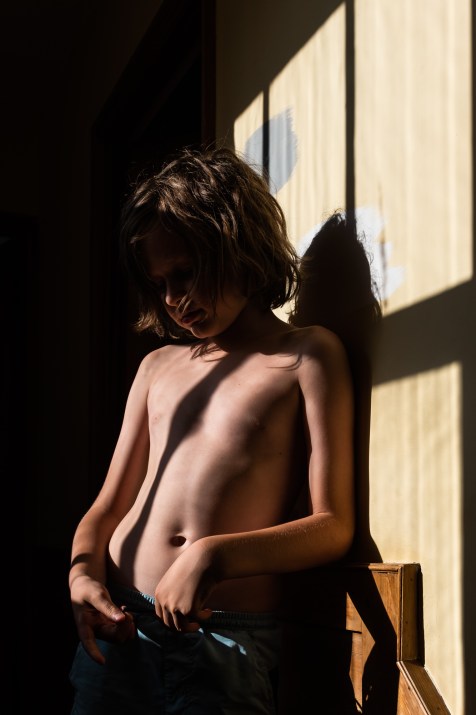
However, the boys and I will make some fictional work over the summer (if they want to which they claim to for now – well two of them do) which will no doubt be personal too. I may be influenced by the Random Short Story notes… or maybe not.
I will respond to the other genres mentioned in the folder in the next blog.
Refs:
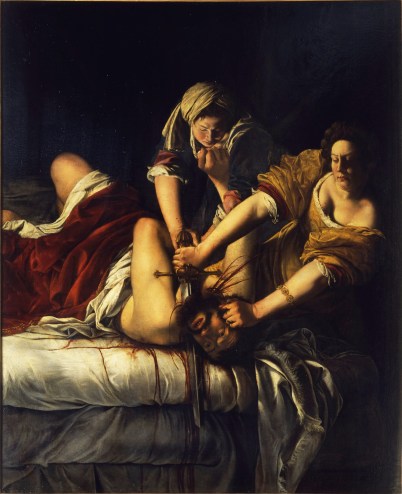
https://artsandculture.google.com/asset/judith-and-holofernes/oQF3gDEYNkutBA?hl=en-GB
https://www.sarahjanefield.co.uk/OCA-My-Mothers-Name-is-Eve/n-gW3jjr/
Artists: Paul Thulin
Recording article – https://www.lensculture.com/articles/paul-thulin-a-ballad-through-time
This book looks just the sort of thing that relates to my own visits to Ferentillo and the long-term recording of my time with the boys there.
I’m interested in the various types of images included here and the blending of a family album with something ‘more’ – as described in the article, “Fact and fiction become indecipherable from one another and family history turns into folklore, with switching viewpoints and protagonists that morph into their predecessors with the turn of a few pages, while eerie mythical characters lurk in the shadows. Rather than preserving history in a neat and orderly fashion, this is a family album that activates it, allowing the past to flood the farmhouse, its inhabitants and the surrounding orchard as it stands today.” (Wright, 2019)
This chimes with many of my ideas and in particular Random Notes for a Short Story which I’ve been jotting down over on my Sketchbook blog.
I am as frustrated as Thulin seems to have been: “Thulin’s first steps into photography were as a nascent philosophy graduate who had grown increasingly frustrated by the limits of language. Describing his approach as “docu-literary,” the artist favours the enigma and emotional dimension of text and image, as well as the fact.” (ibid)
I also can’t say how much I LOVE this old image – and that is it included in the book alongside mono, new and old. Thulin’s way of working reflects a dissolution of boundaries which emerges from a more systemic way of looking at life. (Another article I’ve saved this recently describes this well – “We are dealing with the complexity of a profound societal change and the transition towards diverse regenerative cultures as manifestations of not only a different way of being in the world, but also a different way of seeing the world.” (Wahl, 2017)
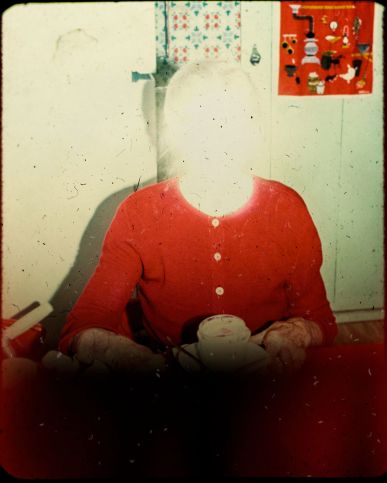
I originally came across Thulin on Lensculture but BJP’s article is more comprehensive and clearer too. https://www.bjp-online.com/2019/02/paul-thulins-pine-tree-ballads/
Notes: for CS A1 Essay
Write a 1,000–1,500-word essay that relates your current work (the work that you made or are making in Body of Work) to an aspect of visual culture discussed in Part One.
Your text should be fully referenced and illustrated with your own photographs plus supporting figures where appropriate. Submit your essay to your tutor by whatever means agreed, either a hard copy in the post or a Microsoft Word or PDF document in an email.
You may find it difficult initially to identify which of the five concepts discussed in Part One (i.e. modernism, postmodernism, poststructuralism, photography and reality, globalisation) are relevant to your practice. However, this challenge is part of the objective of the exercise. Consult your tutor if you are experiencing difficulties.
Modernism
- It becomes increasingly obvious to me that separating photography and its invention from the world in which it exists is risky. Recalling Ariella Azoulay’s comments which I included in DI&C A3, ““To take this excursion to 1492 as the origin of photography—exploring this with and through photography—requires one to abandon the imperial linear temporality and the way it separates tenses: past, present, and future. One has to engage with the imperial world from a non-imperial perspective and be committed to the idea of revoking rather than ignoring or denying imperial rights manufactured and distributed as part of the destruction of diverse worlds” (2018) This is reminiscent of some of the theories about time which emerge from Quantum science – theories that are desperately difficult to comprehend.
- Nevertheless, Modernism appears to be a very specific awakening. We humans can breakdown and dissect reality. However, the first stirrings did not begin then, and Leanoardo’s much earlier famous drawings are an obvious testament to a growing understanding of what human consciousness is capable of.
- Perhaps Modernism is a moment we can pinpoint where a gradual turning inwards, or an increasingly inverted look, can be charted as having sped up.
- If the Greeks looked upwards towards the stars and saw how big everything was culminating in the Rennaissance and Newtonian physics, then the Modernists were really getting humans busy with looking inwards and at the very small which continues apace with quantum exploration – and this tussle with the arrow of time.
- Pages 392 – 397 in Blue Print summation of history’s journey as the understanding of human relationship with self and nature evolves
Post-Modernism
- ‘a rejection of meta-narratives’ (Lyotard, 1979) (OCA CS folder, page 17) – due perhaps to the underlying scientific narrative which posits context and relationship “The theory [quantum gravity] does not describe how things are; it describes how things occur and how they interact with each other.” or “relations between physical systems” – particle A meets particle B and something occurs but without that interaction particle A and B are meaningless. Particle A’s interaction with Particle C may be entirely different from the previous interaction. What’s more A, B and C never operate in a vacuum are entirely affected by environment. They are not discrete objects in a universe but part of the fabric of the universe
- pluralism (ibid)
- Tagg – “photography evolves by a process of internal self-criticism towards the ever-sharper definition of what the medium uniquely is” (page 18) – in my, but not the photography purist’s opinion – the ability to harness light using chemicals (at that time) and make a naive copy of reality which has since become increasingly more sophisticated, leading to the inevitable; photography is part of a journey whereby reality will having turned inwards be able to give birth to itself. And therefore photography cannot be uniquely anything as it is one element of many within a much larger human project
- See above, inwards and small – this happens in tandem with the development of science and computing which relies increasingly heavily on quantum sciences as well as multi-disciplinary endeavors such as the Macy conferences.
- Photography cannot go it alone despite many wishing or thinking it were so
- “a hybrid construction of the self emerging from cultural theory and technology” Brown, 2008
- Again, Tagg is critical of feminist or socialist histories for similar reasons – they overlook context.
- NB – “Good people can do bad things (and visa versa) simply as a result of the structure of the network in which they are embedded, regardless of the convictions they hold or that the group espouses. It is not just a matter of being connected to ‘bad’ people; the number and pattern of social connections is also crucial” (Christakis, 2019. 106) Context, the shape and nature of the connections made seem, at every level of reality, to be all-important. Therefore, attempting to draw photography out and see it in isolation renders any conversation about it potentially meaningless.
Post-Structuralism and the language of photography
I have been convinced that this is where my work is situated. I am just fascinated by semiotics and how our reality is contained in the language we use. For me, this is the most interesting work to be persuing. But it seems very much tied up with the next section. The language we use, which emerges from us and also feeds back is the material out of which reality is built so both this section and the next section are important to me.
Early seeds for BOW, which I have started recording on my Sketchbook pertain to the performance of identity and experience, how we perform our roles and accept scripts handed to us by the narratives we watch/read/hear. We learn these scenes, responses, actions from the films and TV, now games, we engage with – and therefore the Bate quote on page 21 of the course folder may be worth delving into further.
My work on the previous course looked at this – the language of film and music which I grew up with and experienced in early adulthood.
Photography and reality
- There seems to be a catastrophic breakdown of trust in reality itself, within the West, at any rate, as a collective loss of trust in what was once certain emerges. Truth is not reliable and in its place exists an overriding sense of skepticism. If nothing’s real, then why should anything matter? At least, that appears to be the mentality. Or perhaps, this dissolution I describe brings about abject terror and so certain groups feel compelled to retreat to a place where they imagine the rules of life were more tangible, less confusing. Men were men, women women – and everyone knew their place.
- See notes in S&O and DI&C on cybernetics and the development on self and communal reality.
- Digital photography and it’s potential and possibility are both immensely exciting and terrifying as nothing is certain – see Modernism notes.
- See Lars Von Triers Nymphomaniac and the separate photo book by Casper Sejerson Belongs to Joe as a template – photography and text used to convey, as well as being linked to and explored, various universal themes – all of which feed into developing ideas about reality, learning, human knowledge and ability to understand him/herself, such as fishing, the Fibonacci Sequence, trees, and music theory. The book and films (regardless of whether we like them) are multi-layered and complex
- As is reality
- Reality cannot, in my view, be explored purely via photography critique but the form and technique need to be looked at systemically, as elements of form all of which feed into our relationship with reality
Photography and the global age
This heading is the least interesting for me – simply because of all of the above links directly to it anyway – and so feel I can’t fulfill a separate heading. However, I am interested in briefly discussing comments about art and finance. It becomes increasingly clear to me that art, and photography in my experience, is so much about money, snobbery, elitism, and privilege. A person can buy oneself a career if they have the funds and time to do so. Of course, any endeavor whether in the arts or not is often reliant on networking and ‘playing a certain game’ – and it’s impossible to escape that kind of thing. It’s probably always horrible and I’m very uncomfortable with it – it feels grotesque and very ugly indeed to me. It means some artists are at an advantage before they’ve even made anything at all. I also notice how art is used in the City or people’s homes to demonstrate wealth and status. The information contained in certain pieces of work is less about the artists’ claimed original intention and more about money and showing off. Perhaps it’s not Salgado’s fault but his work does this for me and recent experiences of this type of thing as I’ve met people in the industry have made me feel really awful and like running away into the hills never to be seen again.
Refs and possible research links
Brown, A . 2008 Demonic Fictions, Cybernetics and PostModernism
https://www.academia.edu/2020158/Demonic_fictions_cybernetics_and_postmodernism
Christakis, N. 2019 Blueprint, New York, Little Brown Spark
Lotringer, S. 2007 Over Exposed, Los Angeles, Semiotext(e)
Rovelli, C. 2016 Reality is Not What it Seems, London, Penguin
Artists: Walter and Zoniel
I was fortunate enough to have an opportunity to chat with collaborative artists, Walter and Zoniel recently. They work together using alternative processes to create images which are both conceptual and representative.
Here, saltwater prints are made with the actual sea water in the image:
https://walterandzoniel.weebly.com/the-nature-of-interdependence.html
Here, photographs of chairs burning in the darkest forests are printed on material which is created by pulping down the burnt chairs and turning it into paper. The light of the fire which illuminated the darkest forests where the images were made is truly captured in the print.
https://walterandzoniel.weebly.com/life-with.html
The pair have been working together for several years and their collaboration seems to have emerged out of a genuine relationship with came about organically. Their work is therefore uncompromised by any form of ‘blind-date’, contrived or engineered collaboration, the likes of which I’m beginning to have my doubts about. Collaboration is fashionable nowadays, but perhaps only as we admit that this is probably how many people always worked. I wonder if the couple would have been described as Walter AND Zoniel had they been making work in the same way at the beginning of last century.
It was interesting to hear from both of them separately. Walter was so enthusiastic as he described his journey from physics-major to artist, as he became obsessed with alternative processes. Initially, he had to write to the Eastman Gallery and ask for the collodion recipes as it wasn’t possible to obtain it ready-made here in the UK. (I suspect he may have had to play around with them too as chemicals react differently in different environments.) Mark Osterman and France Scully Osterman, the resident Kodak Eastman alternative process experts, who I have done a course with, gladly helped them. I think I recall them telling us about Walter, and there were apparently a few disagreements about what might be possible. When Walter suggested making large prints, they said it couldn’t be done as there were no big enough cameras, so he made one! There was a portable replica of his original construction at the venue and I was able to walk around inside it. Quite the opposite to our phones!
It was a good opportunity for me to think about the relationship between physics, material, and the digital, quantum world. I am, for now, firmly invested in the digital and committed to it – for me exploring the tensions between these different points is far more interesting than any regressive, romanticising about old processes – but I didn’t get that sense from the couple at all. They just seemed to be having the most fun. Their work was very beautiful and worth seeing when the opportunity arises.
Artist: Hicham Berrada
Berrada is concerned with some of the same things I seem to be focusing on – but his practice is completely different from where mine is heading for now. I can’t find my way out of representation and while I am inspired by the scientific theories I see, he actually uses the chemicals and scientific practice to make the work.
“The aim of science is to produce new knowledge, whereas I am trying to disorient our points of reference. My practice is artistic, but it uses the tools and methods introduced by science, and the protocols of scientific experiments. Science has provided us with excellent tools for apprehending the real world, as well as for manipulating and giving form to reality. I use these tools as a visual artist to produce forms and images that do not have a specific scientific purpose.” (From an interview on the Hayward Gallery website, 2019)
https://www.southbankcentre.co.uk/blog/interview-artist-hicham-berrada
The film I made for DI&C A5 began with the word deviation which I noticed being used a lot in Turin’s essay about morphogenesis. I think what I end up doing is making connections with the language we use – leading to more opaque and less comprehensible results than Berrada’s. But I wonder if that somehow links to the way language operates; it contains information that isn’t always easy to unravel and see so clearly.
I have been looking this weekend with more depth at epigenetics (with frustratingly limited science knowledge). Our DNA is spooled around histone proteins (I think!) and that makes it impossible for all of the DNA information to be read. Epigenetics is the way a second level of information – highlights and blackouts and markers means some information to be accessed and triggered. I’m still figuring it out! … I’m wondering if this could be a good metaphor for how language works too – maybe, maybe not. Will see.
Berrada’s work will be at the Hayward Gallery from tomorrow and I intend to go along and see it as soon as possible.
“For this solo exhibition – his first in a UK institution – the artist brings together a number of new and existing works, including a series of illuminated tanks that feature delicate and ephemeral chemical landscapes, and a large-scale immersive video installation that explores morphogenesis, the biological process that causes an organism to change shape.” (Hayward Gallery website, 2019)
https://www.southbankcentre.co.uk/whats-on/exhibitions/hayward-gallery-art/hicham-berrada
CS: Chapter 2 ‘Photography’ Howell’s (2011) Visual Culture
We are asked to look at Chapter 2 “Photography” by Richard Howells (2011). To begin with, the chapter sums up the very short history of photography. Although not Areilla Azoulay’s non-Cartesian version, which I talked about in my DI&C essay, and which posits that we cannot separate the invention of photography from its related activities, that of empire building which began in the 14th century when Columbus sailed across the Atlantic and began the process of taking people and land on behalf of European conquerors. I’ll touch on this briefly later. However, the author does take us back to cave-drawing (as far back as 25 000 years rather than 40 000 which is where academics have placed the earliest discoveries; coded symbols that can found over eons of space and time). This is important because photography is simply one more way for us to exteriorise our inner selves, to other the self, to store consciousness. That it’s mechanical is important but doesn’t render it less than.
It was interesting to touch base with the received story again, having read about it in various books while studying but specifically, in a wonderfully entertaining book called Capturing the Light by Helen Rappaport and Roger Watson (2013) which goes into much greater detail, although with less critical depth.
However, I found it difficult after reading the chapter to get beyond the inclusion of Roger Scruton’s essay, Photography and Representation‘ in “The Aesthetic Understanding‘, Essays in the Philosophy of Art and Culture‘ (1983). Scruton isn’t only a Conservative, he is a reactionary extremist who promotes the most appalling ideas and is a friend of the Spiked bunch, who, quite frankly, seem completely nuts. (And I used to quite like some of what Frank Ferudi said about parenting.) Scruton was recently sacked from his position at the head of the Government funded Building Better, Building Beautiful Commission (what he was doing there, is anybody’s guess – a mate of a mate, no doubt) for making comments that aren’t even worth repeating. He has spent his whole life offending people and seems to feel hard done by, having ostracised himself from various British academic institutions. His own father was, by all accounts, chaotic and damaged and very anti-establishment. Read into that what you will.
I appreciate that the original chapter was written some time ago (2003) and Scruton may, in keeping with the times and contemporary discourse, have virulently amplified his conservative message in recent years. But I find his argument sort of ridiculous – and Howell talks about it being flawed. I also know difference of opinion is important and having both sides of any argument is thought to bring about some form of synthesis, leading to a balanced idea of reality. However, modern science and philosophy are rendering the arguments included in Howell’s chapter and in particular Scruton’s, not only flawed but almost irrelevant. Before introducing Scruton, Howell tells us how some people felt that photography cannot be art because it merely records the natural world, reality, as it is, which is where Scruton we are told, positions himself.
For a moment, I’ll deviate here and talk a bit about ‘reality’.
Two years or so ago I got off a train at a station beyond my intended stop. I realised my mistake but wasn’t sure how long I’d been distracted by my book, and looked at the map on the platform to see where I was and where I needed to get to. For a short moment, but long enough to cause a sense of panic and alarm, my memory stopped working. I recognised the signs on the maps as signs but had no recollection of what any of them meant, no access to their meaning. It was like looking at a map in a foreign language at the same time as not even knowing what a language might be. It may have been an early sign of something sinister healthwise to come, however, it has not happened since and I hope and suspect it was simply a brain glitch brought about by stress, tiredness, and distraction. It felt like it lasted about a minute. The experience, however, demonstrated what my consciousness and its integral function, memory, does for me. It enables me to get from A to B so I can survive. Without that ability I would not be able to move about in the world, feeding myself, interacting with people, finding a mate – doing all the things that keep the genes alive and reproducing. This is what our consciousness is – an evolved survival mechanism. And as hard as it is to accept, we have evolved to see only what we need to see in order to exist. We have a limited, locally based view of reality that is myopic but highly specialised. Some criticise this materialist view suggesting it leads to emptiness, an existence that lacks meaning, but the illusion of reality is literally all we have and to belittle or undervalue it isn’t automatic or necessary. One hopes we can afford to be honest with ourselves, although as we look about today, it does at times seem perilous and perhaps terrifying for people.
I am looking forward to receiving my delayed copy of “The Case Against Reality” by Donald D Hoffman. But since 2015 I have been reading as much as I can to understand this illusion of reality including Reality is Not What is Seems Rovelli (2016), The Ego Trick Baggini (2015), and The Biological Mind Jasonoff (2018) amongst many others which look at life systemically. I think the science contained in these books potentially nullifies any arguments about photography being simply a recording of reality – because our reality is SO subjective and particularly nowadays when digital technology is fundamentally changing what we expect from reality – and because any language form, photography included, is an emergent property which is what is so fascinating about mark making – however we choose to do it. And that’s before we even touch on individual subjectivity (as opposed to species subjectivity), technical ability, and choice, or processing whether in the darkroom or your desktop.
And in any case, the arguments against photography of any description being an art form because it is a copy, where photographers simply record rather than dictate what’s included, were made redundant the moment a urinal was placed in an art gallery. If you think photographs merely copy reality, then they are the ultimate readymade. Although I do see some conservatives are likely to dismiss appropriation as a viable art form too, missing the point of it entirely. But like the evolving nature of gods and God as civilisation develops, what we need from art changes too. And conceptualism rather than dogmatic religious iconography is clearly more relevant today as the nature of reality is unpicked and newly understood. Photography, being an emergent property that came along with the evolution of technology over several centuries alongside its sibling, or perhaps its close cousin, Capitalism, is not only interesting as a concept but crucial to the way we see and understand life today, and therefore an integral form in any artistic exploration regardless of whether it ‘ideal or real’ (Scruton’s distinctions). Even if all the artist is doing is making something pretty, which is of course just as valid as documenting society, or commenting on language. These distinctions are as silly as the ones about digital technology not being ‘lovely’ enough to produce art.
I am looking forward to receiving my book by Hoffman so I can keep investigating this subject and bringing it into my own work. In the meantime, I used to think that all the technological advances we relied on were changing our evolutionary path whereas now I see that they are part and parcel of our evolutionary path. They are expressions which lead to feedback loops. I think that’s why distinguishing between forms and saying one is art and one isn’t is a limited and limiting view.
CS Part 1: Rhetoric of the Image, Barthes, 1964
While doing UVC in 2016, I was asked to look at Rhetoric of the Image and talk about a couple of advertisements, relating them to Barthes’ ideas. It’s really interesting to look back, as the examples I explored were to do with the yet-to-be-held referendum. Barthes’ style is so opaque at times, I am still not sure if I was making the right sort of connections, but I don’t think I’d change much of what I said as I view my blog in retrospect, with three years of history between the time I wrote it and today.
- A slight diversion from Barthes’ essay but relevant and perhaps linked to another of his well-known essays: It’s interesting I picked up on the tautology in the advert – it seems to me (in my personal and most likely biased view) that Brexit and tautology are very closely related. “A vote is a vote” in the advert seems like a forerunner to “Brexit is Brexit”. Do we really need to be told a word means a word? Why must political ideas all be reduced to meaningless empty circular straplines? Does this negate meaning or invert it? Is the advertising industry guilty of dumbing us all down to such an extent, that we really are only capable of hearing and taking on board – ‘Apple means Apple’. See my Notes on Myth Today (1957) “Tautology – An ugly thing. One takes refuge in tautology as one does in fear, or anger, or sadness. Tautology creates a dead motionless world. See my blog post for Project 1 – Operation Black Vote advert” (Field, 2016)

From: https://www.theguardian.com/media/2016/may/25/eu-referendum-poster-minority-ethnic-voters (24/06/19) - Looking at the advert I originally, critiqued, I am also struck by the dreadful stereotypes it perpetuates. This is hardly surprising, given the advertising industry tends to be populated by people who might never have met anyone who exists outside their quite narrow circles. We must all fit into neat little boxes and woe-betide anyone who can’t. There is no space for anyone ill-fitting in the post-post-modern digital archive of consumers out of which our current reality is forced.
- I have been stuck these last few years by how ignorant of others less fortunate than them, even the most well-meaning people can be. Friends who work in or near Whitehall might have the best ‘liberally’ minded intentions but simply have no idea of the suffering that is actually taking place in this country, of what drove people to vote against the ruling classes in 2016. The UK still seems shackled to a ruling class, many of whom are the great-grandchildren of those who ruled in centuries gone by. That British people aren’t more shocked by this is incredible. That people don’t see it or question it is extraordinary. However, I think and hope more and more people will be less satisfied and more incredulous by that reality, as social media reveals the extraordinary levels of incompetence amongst our rulers. Myths are being upended by social media, but sadly at the same time, new myths are being constructed. We are in a state of chaos and flux.
- Yesterday, I saw Andy Holden’s Laws of Motion in a Cartoon Landscape (2011-2016). In it, Holden compares Capitalism to a cartoon character who runs off the cliff but has no idea of the danger until it becomes conscious and then collapses. He likens this to the banking collapse but that might be seen as one wave in a succession of waves, to come. Perhaps society is becoming conscious of the myths we have lived with – what will it take to up-end them, or are they in the most horrific way upending themselves? The hivemind is far more complex than we understand – as a group, we do not seem able to take control of events until they have run their course, no matter how horrific or vile we understand them to be.
Some notes of my most recent reading of Rhetoric of the Image:
The Linguistic message
- Linguists, we are told, were suspicious of the linguistic nature of the image. Surely, this can’t the case anymore as people use images and emoticons to communicate more and more, perhaps even usurping text. (33) See page 11 of Derrida’s Grammatology (tr. Spivak, 2016)… “[the] nonfortuitous conjunction of cybernetics and the ‘human sciences’ of writing leads to a more profound reversal”.)
- Images and text, he states, are ‘antipathetic’ to lived experience. (33) Douglas Crimp also touches on this in The Photographic Activity of Postmodernism, which I looked at previously. Again, Derrida writes “In this play of representation, the point of origin becomes ungraspable. There are things, reflecting pools and images, an infinite reflection, from one to the other, but no longer a source, a spring.” I wonder if this is why we’ve reached this place where tautology rules. We are just so far removed from the origin through layers and layers of representation – we cannot find it anymore.
- Barthes then begins by staying he will use adverts to explain himself as meaning is intentional and frank. The signifiers are “full, formed, with a view to the optimum reading” (34) Barthes’ might have been interested to see the following adverts...
These adverts (regardless of one’s thoughts about the content) are tapping into society’s mistrust of advertising and consequently meaning. As the meaning of advertising signification is now suspected of being false, (and so much more besides) we might question Barthes statement in retrospect. Although unusual, these adverts do not subscribe to Barthes analysis so easily. Meaninglessness is a big issue today – also referred to as ‘fake news’. A century of being manipulated by advertisers might be responsible for this sense of society having been gas-lit, leaving us all in an unstable landscape (like the cartoon landscape of Holden’s film). Images, which can and do invite multiple readings, even with the tyranny of advertising slogans, but which ultimately lie to us have contributed to this.
(Below – my comments are in orange, otherwise quoted from Barthes)
- Panzini – French and ‘Italianicity’ Denotational and connotational – in a single sign therefore seen as one message.
- Image – not linear, order therefore not important
- A return from the market = freshness (despite the dried and tinned aspects) and domesticity
- Half open bag = shopping around for oneself as opposed to the hasty filling up of a more ‘mechanical’ civilisation.
- Colour (which we don’t see in the reader) implies Italianicity. Stereotypes (based on the fact this is a French advert selling a product that is supposedly Italian. Is this another example of Tautology or reinforcing a message which has already been stated in the pastiche of a name, again underscoring stereotype of otherness – a different group)
- The sign of the still life (nature-morte) – heavily cultural and reflects history of art in the advert (sales, mechanical, mass produced)
- “A message without a code”? see below
- The Panzini photograph/advert offers three messages – The linguistic message and two iconoc messages which Barthes’s suggest – we might have the right to separate: the perceptual message, and the cultural message. (Confusion comes about from function of the mass image).
- Linguistic message – “today at the level of mass communications, title captain, accompanying press ect… we are still civilisation of writing”. Some suggest we are becoming less and less so – as iconic signs are used to advertise very well known brands more often than ever. (However, for now, at any rate, these images emerge from written code (the computer translates to another code which we don’t understand and cannot read and that too is a sequence of symbols))


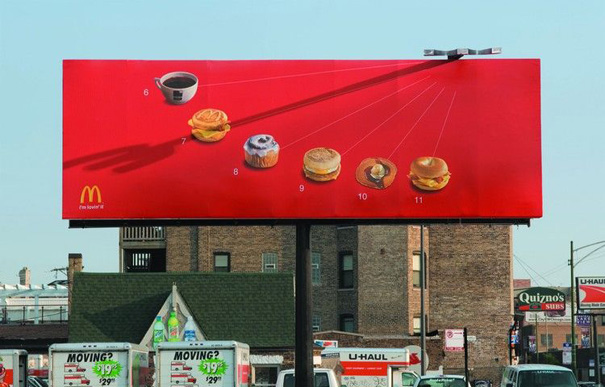
- Linguistic sign acts as anchorage and relay – the above images have very little or no writing (which Barthes’ says doesn’t matter, any presence acts as anchorage and relay) I wonder if the power contained within certain corporate non-linguistic signs are so great that it is able to operate as an anchor itself while being read by today’s consumers. If anchorage is control, and certain of its sign then this type of sign is possibly the most self-assured.
- All images are polysemous – underlying their signifiers, a floating chain of signifieds, the reader able to choose some and ignore others. Polysemy poses a question of meaning and this question always comes through as dysfunction (note the language of Freud).
- Societies ‘fix’ the floating signifieds to counter the terror of uncertain signs. Today, it might seem there are too many unfixed signs as we transition from one epoch to whatever is coming next, digital technology perhaps destabilises, the reaction against this (culture war, as it has been termed) is to head backward, to fix things down, to make things certain again. You see this is the rhetoric of Make America Great Again. A giant, global attempt to fix unstable, ‘flickering signifiers’ (Hayles, 1999). Additionally, all advertising then taps into this terror. Buy this thing and feel safe is the underlying connotated message. Powerful, beautiful, one of the crowd, above the crowd – all of these are second level messages which sit above the initial one – about keeping the ‘terror of uncertain signs’ at bay.
- Linguistic signs have the power to suggest, “What goes without saying …” & “What is conspicuous by its absence” (Chandler, loc 1622) Anchorage banishes one possible signified…it acts a counter taboo. Anchorage can be ideological (and Barthes Myth plays a critical part in this), it remote controls, subtle dispatching, certain of its sign. anchorage is control
- With respect to the liberty of the signifieds of the image, the text has thus a repressive value and we can see that it is at this level that the morality and ideology of a society are above all invested.
The Denoted Image
- Barthes tells us – only the photograph is able to transmit the (literal) information without forming it by means of discontinuous signs and rules of transformation. Drawing is coded he says, i.e. the style of drawing transmits information. But he insists the photograph does not. Again, unless I’m really misinterpreting something, I find this difficult to accept. Photographic decisions, especially today, seem to contain all sorts of social and structural information – but then today’s photographs are more like drawing than ever as various levels of digital manipulation (or decisions to avoid it) impute information about the society – in the same way, perspective in drawing does in the West – and therefore, potentially say a great deal. The expertise and practiced execution of any drawing carry connotation and denote messages too. I cannot see why lighting, sets, film stock (or the digital re-enactment of it) don’t also carry such connotations. I don’t believe that just because something is mechanical, it doesn’t carry a code. In fact, it might carry a very specific code informed by ‘the apparatus’, which is very difficult to shrug off except by experimental photographers who are deliberately finding ways to debate with the code directly, as argued by Vilém Flusser (2000)
- I wonder if today, our suspicions of photography negate this argument of Barthes of a photograph being without a code, and especially amongst tech-savvy sophisticated younger readers of images who have grown up with Snapchat and Instagram filters.
- If I were to use a Snapchat style image of a woman with animated sparkly bunny rabbit ears in an advert – there are several possible readings (perhaps anchored by an ironic strapline for more sophisticated consumers or else reinforced by one aimed at teens who love that kind of thing) but the structural code is inescapable and only a Martian would find it difficult to read. There are quite specific codes in all of the examples I have included here – the overzealous processing in the Vote is. Vote advert speaks volumes, for instance.
Refs: All accessed 23/24 June 2019
https://stylecaster.com/beauty/vintage-chanel-no-5-ads/#slide-11
http://www.cinemamuseum.org.uk/2019/andy-holden-laws-of-motion-in-a-cartoon-landscape/
https://www.theguardian.com/media/2016/may/25/eu-referendum-poster-minority-ethnic-voters
Barthes. R (2013) Rhetoric of the Image in Visual Culture: A Reader, London, Open University, Sage Publications; 33-40
Flusser, V. (2000) Towards a Philosophy of PhotographyTrans. Mathews A. (Kindle Edition) London: Reacktion Books
N. K. Hayles. (1999) How We Became Posthuman: Virtual Bodies in Cybernetics, Literature and Informatics. Chicago: University of Chicago Press
 SJField - OCA Level Three Study Blog