Hangout: 13th November 2019

Some recommendations to Nicola & Allan, relevant to both their projects really – and useful to consider in terms of what I’m looking at –  an evolving understanding of humanity’s situation with/in the rest of the universe – although for now, my own work does not focus so specifically on any single aspect. Both examples worth thinking about further

Mandy Barker

https://www.bjp-online.com/2018/11/bastard-countryside-by-robin-friend/


CS: A2 Tutor Feedback

Scroll to the bottom for PDF link or read additional notes first:

I had an extremely useful and relatively long tutorial with a new CS tutor after my previous tutor resigned from the OCA. As is usual with me, I submitted knowing there was still much to do but I reach a point where it’s helpful to get it the work off my hands and receive constructive, meaningful feedback even though I know things are still quite murky.

I have read significantly more since finishing the draft I handed in and am continuing to do so, refining and zoning in on the one hand, but also delving further into such a rich and fantastically difficult/confusing vein of knowledge on the other – that I am still in a thinking place.

I think I mentioned elsewhere that Matt advised me to write my plan/research question (A3) then return to A2 to strip out the unnecessary stuff and focus more on the key topic, not that I know yet what that is, but I am getting a clearer idea. For a while, I thought it was performativity which I have been busy investigating and how that relates to representation and ultimately photography/moving image. I still think that is the case but I keep thinking about boundaries and the collapse of them – also representation,  – a lot of the creative writing I am doing over on Sketchbook is tackling the issues I’m thinking about but in a more instinctive way than one might do so academically. I think that is a better way of working for me. I write, then read what I have and out of that I begin to see what my concerns are.

As far as performativity goes, it seems to have two paths leading to it (Lloyd, 2015) – one theatrical and the other sociological (Austin). One is about acting – playing the role of being a person in the scheme of things, and one is about reaching potential or expectations (or not) i.e. this hoover is not performing as well as advertised; to be a female non-subject one must live up to certain expectations – the  performativity of being a ‘girl’ / ‘women’ = e.g. taking care of one’s looks/physique, acquiescing (don’t be too bolshy or difficult  – that is underperforming  – think Kate in The Taming of the Shrew), having a certain a maternal aura, kind, gentle, quiet when necessary etc. Some women perform ‘well’ (like a hoover – they match up to requirements) others, myself included, ‘fail’ to. I think that is the very basic difference between the two versions of performativity and that needs to go into my Lit Review. Then there is theatricality – dismissed by the modernists and many more besides (Fried, 2008/1967) – especially nowadays when it’s de rigueur to be slapdash or else anti-commodified, or to give the impression of being so even when not.

I need to figure out how to tie (or if I must) this in with photography being ‘boring’ (Elkins, 2011 – and many more, including me.) Incidentally, I don’t necessarily dislike any of those anti -things, and really like them at times. However, I have noticed I can be far more ‘mundane and every day -ish in my writing than I can be in my photography.

I have yet to really get anywhere near to grips with Barad’s use of performativity at the quantum level but I have just ordered her Meeting the Universe Half Way, and I think there will be plenty of direct passages that can help me with my research there.

I am also wondering if I should have a glossary – is that allowed? There are some tricky words that I don’t want to spend too long explaining  – or waste too many words explaining unless it is necessary – I need to find out if this is considered acceptable or not.

Here is the feedback which I wrote up following the tutorial. A2 CS Feedback Form


Artist: Noami Uman

I wrote about Uman towards the end of Self & Other and was reminded of her yesterday when reading about performativity  (Lloyd, 2015: 18 quoting – MacKinnon 1987: 171).

“Pornography, for MacKinnon, is not, as it has conventionally been understood, a matter of obscenity, free speech, or morality. Akin to hate-speech it is rather a matter of social inequality, inequality that is “substantially created and enforced – that is done through words and images” (MacKinnon 1994: 9, original emphasis). Pornography, for MacKinnon, is a “constitutive practice” (1987: 173) that produces gender inequality by constructing the abuses suffered by women (she cites rape, battery, sexual harassment, and prostitution) as sex. It “sexualizes” these abuses and “thereby celebrates, promotes, authorizes, and legitimizes them”. In so-doing it constructs women “as what men want from sex”(MacKinnon 1987: 171) and, in the process, “institutionalizes the sexuality of male supremacy”.7 As such pornography “eroticizes hierarchy … [and] sexualizes inequality” (MacKinnon 1987: 172). MacKinnon’s contention, however, is that pornography does more than only subordinate women (as if that were not enough).”

From Screening the past website:

Removed is more than just a feminist intervention into the pornographic genre (although it is that, too). Rather than exposing what many believe to be the “essence of [mainstream] pornography – woman without substance”, Uman renders woman as substance, a powerful, pulpy, roiling presence. [14] In his work on ‘screendance’, Douglas Rosenberg introduces the term “recorporealisation”, writing that in order for a body to be recorporealised, it must first be decoporealised or stripped of its somatic and fleshly resonances through mediatisation. [15] Under Uman’s recorporealisation of her, the women of Removed become ‘untouchable’ – the male hands that attempt to stroke their bodies “simply sink into light”. [16] Strangely, it is Uman’s abstinence from touching the whole bodies of her filmic women that renders them impervious to the male touch on-screen. Uman allows the bleach to do its work on the female figures, transforming them into skeins of light. Uman has said that she “wanted to see what would happen if [she] remove[d] the women” from her found footage, asking: “Would it still be pornography?” [17] In Uman’s film, however, the ‘erased’ body returns with a new and more powerful force. The body becomes hyper-visible as a relational and material-kinetic presence. What is manifested on-screen is the body’s kinetic twin; a double which both exceeds the body and originates from within.

Although I first came across Uman’s Removed (1999) I am also interested in the Tin Woodman’s’ Home movie below a) because it references such an iconic film and I have long been interested in doing something with Gone with the Wind (although I have no idea if I ever will get to it not least because doing so potentially invites all sorts of trouble) ; b) it relates to strongly to our childhood – collectively as people continue to watch this film – one of my own sons watched it obsessively when he was about three years old. These narratives which we are exposed to as young children have such a profound effect on us for the rest of our lives – fixing expectations which then become enormously difficult to divert, change, transform.

Lloyd, M. (2015) ‘Performance and Performativity’ In: Ditsch, Lisa and Hawkesworth, Mary (eds.) The Oxford Handbook of Feminist Theory. Oxford: Oxford University Press. pp.572–592. At: https://repository.lboro.ac.uk/articles/Performativity_and_performance/9470270 (Accessed 07/11/2019).
Bergen, H. (2018) Pornography, Ectoplasm and the Secret Dancer: A Twin Reading of Naomi Uman’s Removed. [Online magazine] At: http://www.screeningthepast.com/2018/02/pornography-ectoplasm-and-the-secret-dancer-a-twin-reading-of-naomi-umans-removed/ (Accessed 10/11/2019).
Field, S. (2018) Artist: Naomi Uman. [Blog] At: https://ocasjf.wordpress.com/2018/03/20/artist-naomi-uman/(Accessed 10/11/2019).

BOW/CS A3: Research/Sketches, Reality Evolution, perception

According to Donald Hoffman’s theory which I have discussed several times (Literature review ),  we did not evolve to see reality as it truly is, as has been argued. Rather, we evolved to see the sort of reality we need to see to for ‘optimal fitness’. We perceive far less than there actually is because to see it all would be unhelpful. What’s more, according to Hoffman, the objects we see, including space and time are like desktop icons – constructed objects that represent the goal we are either after or trying to avoid. As hard as this is to understand, and Hoffman admits he may very well be wrong but that his theory makes the ‘hard problem’ of consciousness approachable, his idea sits well with many of the other theories I have been reading about since I picked up The Ego Trip by Julian Baggini (2011) (when I began UVC) followed by a raft of other books exploring similar themes.

I have been trying to express and understand these subjects in my writing, and looking at and photographing objects and phenomena in the world. The photoshopped images below are attempts to explore these ways of thinking about the world.

Fred Ritchin’s After Photography (2009) has some good sentences which I will introduce into my Lit Review and no doubt take forward into the essay.


“…some quantum theorists, foremost amongst them, Neils Bhor and Heisenberg himself, argued that fundamental reality is essentially indeterminate, that there is no clear fixed, underlying ‘something’ to our daily existence that can ever be known. Everything about reality is and remains a matter of probabilities […] We have tried to use the photograph to concretize the probabilities (isn’t that what the “decisive moment” is all about?), reassuring us that reality is more solid than what our theories tell us.” (180)

In Data Selves (2019) Deborah Lupton quotes Kember and Zylinska (2012) to describe how photography is an “agential cut” aimed at imposing “meaning and order” and “delimiting choices” (29). As Ritchin says an alternative “may be too disconcerting, if not terrifying.” (ibid)  As he describes, digital technology and photography in particular “can begin to be receptive to the oddities described by newer theories” [quantum and consciousness related]. (177) Superpositions, endless possibilities, entanglement, for instance, can all be alluded to using malleable data either as a process or a representation (which if one takes Hoffman’s idea on board are completely intra-related in any case).

Some sketches – I wonder if these would benefit from more contemporary mixes (a bit like Flowers for Donald). Still a bit Guardian headline pics for my liking :


IMG_9765iiilow-
Isle of White – windswept hilltop
Landscape with Bridge - The Metropolitan Museum of Art
Similar to above but layered with an anonymous 17th-century pencil landscape downloaded from Google Art and supplied by the Metropolitan Museum of Art


Windswept tree  – shaped by the elements – differentiation reduced by processing decisions.


(See Orpheus story – trees to this day in shape of dance to his music)


Hoffman, D. D. (2019) The case against reality: how evolution hid the truth from our eyes. London: Allen Lane.

Lupton, D. (2019) Data selves: more-than-human perspectives. Cambridge, UK ; Medford, MA: Polity.
Landscape with Bridge – Anonymous, Italian, 17th century (s.d.) At: https://artsandculture.google.com/asset/landscape-with-bridge-anonymous-italian-17th-century/EwHp9J9QWhanmw (Accessed 10/11/2019).

Baggini, J. (2011) The Ego Trick. [Kindle edition] London: Granta Books.

Writer: Raymond Carver 1938-1988

Raymond Carver was mentioned in my feedback. I don’t know his work really so have been taking a look. I can see why he was suggested – the prose-like verse, the everydayness of the view, the content re death.

In this first text I looked at, I just loved the reason he gives for eyes being sewn shut. I laughed out loud. Good to see this.

7

Poetry Foundation (1989) Another Mystery by Raymond Carver. [text/html] At: https://www.poetryfoundation.org/poetrymagazine/browse (Accessed 08/11/2019).


Artists: Susan Hiller 1960-2019

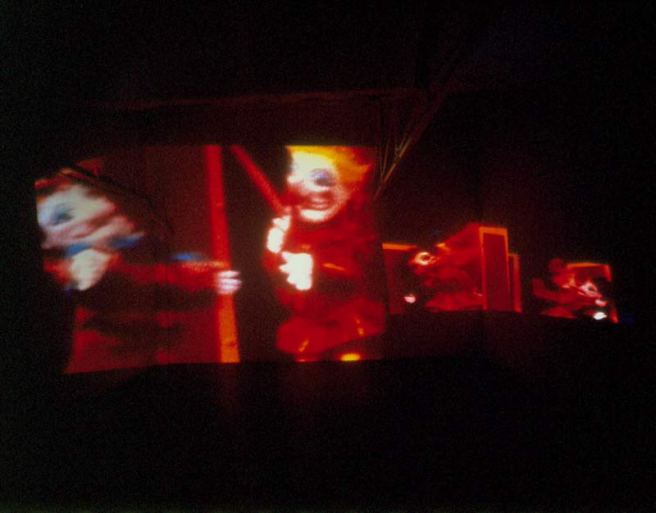
Suggested in A2 BOW Feedback: Susan Hiller – e.g. Punch and Judy (7 March 1940 – 28 January 2019)

2-02
From https://www.mattsgallery.org/artists/hiller/exhibition-2.php
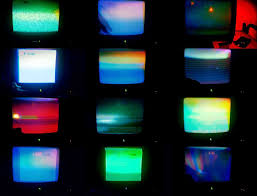
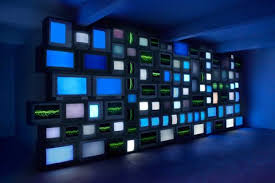
Ghost Susan Hiller from Artrabbit
From Art.rabbit.com https://www.artrabbit.com/events/susan-hiller-ghost-tv
Demons and Dancing
From https://thequietus.com/articles/25645-susan-hiller-interview

(Gosh, I am annoyed I missed Hiller’s work which was being exhibited in London until recently.)

https://www.artrabbit.com/events/susan-hiller-ghost-tv

From the above video

  • “translations of phenomena of light”
  • “translating into something we can perceive” (see Donald Hoffman’s theory)
  • “science has gone beyond this” (dualism between rational and irrational) – I so agree and want this in my work somehow
  • “we spend an enourmous amount of time dreaming and that is beyond reason”
  • “committed to looking at things which are not acknowledged or ridiculed  – a whole range of things like this”

From

  • Also interested in the way cinema has replaced religion (I have been so interested in how the cinema is making the same stories as we have seen in mythology)
  • She is interested in the devices of cinema and how they communicate the magical, magical, non-rational
  • Think Hiller’s work is extremely relevant for me
  • The Clinic piece is “very austere, very difficult, and challenging” which relies entirely on people’s imagination and willingness to engage.
  • belief in rationality is a belief system
  • looks at the commodification of spirituality
  • looks at social world
  • difference between subject matter (e.g. apples) and content (about other things)
  • people get diverted by the subject matter and don’t reflect on the content
  •  different relationships between sense and modality  – sees this as a possibility
  • voice is body
  • work today is heavily influenced by the 70s
  • See 19.16 mins to see moving image and object installed
  • I’m only at the sketchbook stage, she ends her interview with

I love what I have seen of this work so far.


BOW: A2 Tutor Feedback

feedback-sarah-janefield_tr_2-bow

I have had useful feedback from Ruth about the work I submitted. Attached are her thoughts and my responses, some of which we discussed in our meeting and some of which were written only (from both of us).

Main points –

  • stick to working on my own for the moment. I agreed and had reached that conclusion already. As interested as I am in collaboration because a) I used to act so was used to that way of working – although have found working on my own more productive and the autonomy more satisfying b) I am interested in the collapse of boundaries and boundaries between selves is one aspect of that – from a personal point of view, establishing and maintaining my own boundaries is something I have needed to do and so I have resolved, for now at any rate, to do that.
  • If I were to write down what the book I submitted was about in two sentences how would I do it? I am not yet sure but I know I am looking at nebulous boundaries, a lack of certainty and a move away from ‘fixedness’ in today’s world.
  • The writing I included was written after several weeks of watching the stars and listening to stories wondering why on earth humans are so hubristic and nuts about our egos since all you have to do is look up and see how insignificant we are. A favourite line from Measure for Measure which I have referred to before is;
    “…man, proud man,
    Dress’d in a little brief authority,
    Most ignorant of what he’s most assur’d—
    His glassy essence—like an angry ape
    Plays such fantastic tricks before high heaven
    As makes the angels weep; who, with our spleens,
    Would all themselves laugh mortal.”Measure For Measure Act 2, scene 2, 114–123 
  • My own more direct version is here.
  • Keep writing, keep taking images. I am doing so. I must say that the text I wrote about the mummies took a summer of being in Italy and having relatively little to distract me. Normal life is frustratingly less conducive but I am doing what I can.
  • Look at photobooks and similar themes.


CS & Bow Notes: More re. Performativity

One of things about studying this way (as opposed to in a classroom) is there’s plenty of freedom to go off and explore – which I do a-plenty. But because I tend to stray quite far (which is a good thing, I think, despite unavoidable pitfalls) I am prone to missing out on some basics which would make things simpler for me if I’d visited them before approaching certain topics, or at the start of doing so. I probably should have read the following and along with notes on philosopher John Austin before tackling Karen Barad’s paper. Having done a bit of digging, I get a much clearer picture about her rejection of language in favour of matter although I probably stand by my arguments for seeing language as a form of matter. I am also certain my experience of ‘actioning’ a script is going to inform my understanding and will be invaluable. I will add to this post once I’ve read Moya Lloyd’s chapter below.

To read and makes notes:

  • Metaphore widely used – perform
  • Derives from performance studies  – dramatic terms OR sociology to perform a function in everyday life
  • Connote different things  – 1 to act out or 2 to achieve an acceptable level of proficiency – a 50s man reached pique performance if he went to work and provided for the wife who achieved hers if she provided supper and slippers, etc. (no matter the cost to either)  – etymologically different:
    “late a5c., “accomplishment” (of something), from perform + -ance. Meaning “a thing performed” is from 1590s; that of “action of performing a play, etc.” is from 1610s; that of “a public entertainment” is from 1709. Performance art is attested from 1971.”
  • Difference between performance – performance studies and performativity from linguistic studies – (verbal acts which have an effect on the world)
  • Bulter in Gender trouble suggests both gender and sex are performative (3)
  • Austin JL  – originates from
  • Beauvoir (Second Sex) body is not a ‘natural fact’ but an ‘historical idea’ (4)
  • An identity through a ‘stylized repetition of acts’ (Beauvior, 1988-519) (5)
  • Butler – Turner, life as a ritual social drama – depends on repetition of social performances – (see Chater) page 6
  • repeated social performances (6)
  • replication of corporeal repertoire (7)
  • a gendered subject is produced (little autonomy or volition) NBNBNB
  • Collective rules around acting out gender and sexuality
  • Page 11/12/13 Erving Goffman – “frames”
  • Sociological sorting 1977:302-3
  • Doing gender is unavoidable page 14/15 west and Zimmerman 1987:137
  • Differences in gender performance between Goffman and Butler page 17
  • (Remember entanglement – Barrie who wants value non-linguistic elements of an assembly that results in)
  • How to do things with words
  • MacKinnon 1987: 171 page 18 pornography see example in S&O – nail polish NB page

Lloyd, M. (2015) ‘Performance and Performativity’ In: Ditsch, Lisa and Hawkesworth, Mary (eds.) The Oxford Handbook of Feminist Theory. Oxford: Oxford University Press. pp.572–592. At: https://repository.lboro.ac.uk/articles/Performativity_and_performance/9470270 (Accessed 07/11/2019).

Artist: Mark Lewis

Mark Lewis was a photographer but he now works with film and creates video installation. He explores “duration” and “the “species present” (AA School of Architecture, 2017), i.e. the impossible to pin down in-between space ‘bookended’ (ibid) by past and future.  Work has a temporal span but “do not expect action”. Talks about a tension between boredom and revelation.

He tends to strip film convention back to its most basic elements and avoids using audio because it is too powerful and emotive. (I avoided music in very first documentary/type moving image project for this very reason.)

Makes film installation specifically for the museum and not the cinema – short, exploring camera moves and taking them to their extremes. Long shot might go on for ten minutes.

Says art increasingly focusing on the quotidian  – painting and photography went a very different way to the way cinema was going. (Asks why film went down the path it did… suggests there was no reason and it was a choice to become dramatic/theatrical.)

I really like how Mark Lewis describes his working process as ‘intuitive’. He takes pictures, pins them up on a wall and then if he’s lucky it might evolve into something a few months later. I suppose I recognised this in my own meanderings.


Research: CA A2 Daniel C Blight’s response to Charlotte Cotton’s Photography is Magic – Photography​ is Not Magic

I just discovered this as a draft – but never posted. The following passage is great.

“We might also beg questions of photography’s current relationship to non-representational theory here, a space in which we attempt to do away with the linguistic connotations of “reading photographs”. For as Piere Taminiaux notes in his The Paradox of Photography (2009) ‘Photography thus signifies both an end and a beginning to representation.’ Whichever theory of representation one might support, let’s remember John Harvey’s lines in his Photography and Spirit (2007), as both a criticism and a warning against such inconsistencies, which seem to forget that in the context of photography (and pertinently in the case of the algorithm), magic might not be made by the makers of photographs at all: ‘Pseudo-photographic relics and spirit photographs share not only the mystery and miracle of their manufacture but also the status of being representations of the spirit by the spirit’ [my italics].” (2015)

Update after finding post:

It seems that scientific theory is heading towards rendering representation key to our existence (Hoffman, 2019), I am not sure what to make of “Photography thus signifies both an end and a beginning to representation.’ It’s an odd sentence which I can’t make head nor tale of.

I do know Representation is under suspicion. On the one hand, science tells us we might only exist in a world of representation and reality is an illusion – on the other, science suggests phenomena rather than representation matters most. (Barad, 2003)  Barad’s critique/thesis “refuses the representationalist fixation on “words” and “things” and the problematic of their relationality, advocating instead a causal relationship between specific exclusionary practices embodied as specific material configurations of the world (i.e., discursive practices/(con)figurations rather than “words”) and specific material phenomena (i.e., relations rather than “things”).”

Daniel Rubenstein argues against Michael Freid’s negation of theatre as art, quoting Lyotard. ” In Libidinal Economy Lyotard proposed that the role of the artist is to lay bare the mechanisms of theatrical [perhaps here we don’t even need the word theatrical] representation, to show that if there is anything real about representation, it is because there also exists a fully real virtual domain constructed not from objects and things, but from intensities, desires and surfaces” (2017)

As I figure out what my A3 research question is – the word representation seems to be one of the key subjects along with performativity and the collapse of fixed and certain boundaries (which representation seems so reliant on).  I keep thinking about the conundrum of maths  – supposedly the least emotive language that exists. Is maths a language or is it a real thing. Apparently, the clever people can’t make up their minds. But what if it’s both?

Hoffman’s book on reality paints a picture (see the video on Aeon in references) that seems to suggest that our reality is *one giant representation – a user interface, the purpose of which is to ‘hide reality’ which allows us to ‘control [our] reality’. Our objects are icons that we recognise to work out our best fitness choices – otherwise, we would be distracted by reality. Not sure yet where the maths conundrum fits here  – but I do think if Hoffman’s theory has any credence then the illusion we create is the only reality we know and have, therefore it is real to us least, even though it is also representation. (“As an actor, I was not trying to fake it – I was trying to live it” – the most extreme example, the Method.)

*”When I see an apple it is a data structure  – I am rendering it when I look at it. This rendering happens in everyday life (a description of fitness payoffs.)

  • data structure
  • rendering
  • space-time itself is a data structure
  • conscious agents – passing experiences back and forth
  • reality is like a vast social network
  • Emergence
  • Entanglement


Barad, K. (2003) ‘Posthumanist Performativity: Toward an Understanding of How Matter Comes to Matter‘ In: Signs: Journal of Women in Culture and Society 28 (3) pp.801–831. At: https://www.journals.uchicago.edu/doi/abs/10.1086/345321 (Accessed 30/10/2019).

Blight, D. C. (2015) Photography Is Not Magic: Photographic Images and their Digital Spirit.  (AXA Online] At: https://americansuburbx.com/2015/10/photography-is-not-magic-photographic-images-and-their-digital-spirit.html (Accessed 06/11/2019).

Aeon (2019) It’s impossible to see the world as it is, argues a cognitive neuroscientist | Aeon Videos  At: https://aeon.co/videos/its-impossible-to-see-the-world-as-it-is-argues-a-cognitive-neuroscientist (Accessed 06/11/2019).

Rubinstein, D. (2017) ‘Failure to Engage: Art Criticism in the Age of Simulacrum‘ In: Journal of Visual Culture 16 (1) pp.43–55. At: http://journals.sagepub.com/doi/10.1177/1470412917690970 (Accessed 06/11/2019).