Learned a lot about printing with bleed using ExWHyZed guidelines. I hope it is correct. Will see – added 3cm margin beyond he page at first and wondered why it needed such a big margin of error – doh! Caught my mistake and it now has the suggested 3mm. (Artwork has been verified as all good except for a colour cast – see below)
There are also some minor changes to text and sequence, plus the other changes I mentioned before.
I am learning a lot printing this and glad to be doing it with this A2 before embarking on A5. I should have taken each image into photoshop and converted it to black and white rather than just doing it in Lightroom – there is a green cast that I started noticing yesterday as I got it ready and look in Adobe. The whole file will be converted and I have ordered a proof. I will adjust the contrast on darker images once I can see what ones could do with some lighting. I suspect I know which ones but it will be good to see. I’ll need to add a £ to the cost to cover the cost of the proof, but I think its worth it. It will still be low for people.
I have shared the Zine and had some helpful comments and answers via email and on Padlet following a hangout session to my questions as detailed earlier on the blog. Huge thanks for all the people who were able to make suggestions.
I am now trying to look at the sequencing again and have moved verse to front and blurb to the back. I need to cut as have 40 pages max for a zine with ExWhyZed who will print a very small run which I am going to try and sell online.
On the intro, I think the shorter intro might be served better if it was just the last paragraph i.e. even shorter than your ‘shorter’ option, though with an added sentence that “places” it. Along the lines of “…made in early 2020 in Italy by a native South African domiciled in England – or some such, that alludes to the narratives you explain more explicitly.
I too wondered about the images in the book, wondering about the sizing, I thought perhaps being too big. But then I’m not sure about the overall sizing of the book, and I think that will be critical. I don’t think there is a temporal theme going on, which I like a lot, perhaps this is more important when you realise your introduction text more completely. And as for the “Made in China” concern, don’t be concerned, it’ll “spin” your reader and not necessarily in the direction you think.
Really liked the images. Useful comment about the postcard book- I may follow up for my work.
I too loved the images. Agree the fish image is over-dark, also with swapping the text and the poem. Given the nature of the work is there any way to make the poem less linear too? (good idea)
It did occur to me that with everything going on. Trump’s appallingness over the ‘Kung Flu’ will probably be largely forgotten so I wouldn’t worry about it. I think that image works brilliantly as is.
I’m sorry I missed the first part of your presentation due to the problems I was having with audio – the sound just disappeared!
I’m very interested int he way you aligned the images – the separation between 10 and 11 and then the placing together of 12 and 13 – would love to know your decision-making process.
As I said, I found looking at the images placed me in a more solemn and meditative space – reinforced by your choice of mono. I agree with comments about the importance of not having a title so that the viewer can enter the mood
I very much like your zine and believe you should stay ‘true’ and leave the ‘made in China’ as it is. You have inspired me to research Cartesian theory thank
(Hangout tutor) Your zine content and layout does a great job of presenting complex ideas in a creative way that’s both sophisticated and accessible. The zine format carries the work really well.I recommend investing in a copy of McLuhan & Fiore’s ‘War & Peace in the Global Village’ book, as well as ‘The Global Village’ (McLuhan & Powers) – you won’t regret it! For your CS research you might find it interesting to research Heidegger’s theories around ‘Being and Time’, and Foucault’s ‘This is Not a Pipe’ – is a great little book on phenomenology and how the meaning we take from what we see is subjectively preconditioned (so kind of of Cartesian). Finally, Karl Marx’s interpretation of ‘technological determinism may be be of interest, too
I have a quote for printing and now need to look again at the images. I have also been looking at the intro/statement about the work taking some feedback from John into account.
As well as providing evidence of my experience producing a zine, this project should not be viewed as a separate appendage, but rather part of an ongoing discussion/exploration addressing deep and seismic structural changes in Western society. My inquiry looks at the move away from a Cartesian view of reality towards one that is more rhizome-like, I have cross-pollinated the work with images that appear in the zine and again in the later BOW publication, as well as taken a frame from a film I edited while making this work, shown at a group show facilitated by pic london (an OCA Blog post about it can be seen here).
This image appears in this family too and why is there an astronaut in a field of flowers
22/03/2020
I am submitting a zine which includes black and white images and text for A2. It will be roughly A5 (dependant on what options are available to me at this time).
Background
After submitting final DI&C work to Pic London, I was pleased to have it accepted. I was put in a group with five other artists and we worked across time and distance using the internet, following three workshops, on a group project. I was in Italy for much of that time.
Three strands of work emerged for me and I had to make choices about what I did with what.
i. a film made with found footage inspired by conversations that had taken place between all of us in person and via FB messenger.
ii. a sequence of colour images taken with flash (which I personally prefer compared to the black and white ones)
iii. another sequence of images I rendered black and white in LR – it suits the mood best, sombre – see below
As well, I wrote something which was inspired by my time in Italy and the conversations I had with the other artists and how the project made me feel, included in the Pic London show, then point ii. above which I’m not submitting.
The inclusion of the text is an important step for me – and shows development in further work where text plays such a big role. Text has long been critical in my work but the creative rather then essay-like style is a step in a new direction.
At the moment, I am NOT submitting each of these elements for the OCA. Just the Zine but including background information to show how it came about. I have chosen to do this as it shows steps towards the development of the anthology I’m creating for my main submission – i.e. creative text and image in book form.
While all of this was going on, Trump’s government was on shutdown and the tragedy of Brexit being argued about. There were fires, dreadful heatwaves and fascism was showing its ugly face in more and more places.
BOW Assignment 2 original
There was so much work coming out of this collaboration and not all it sat well together. I ended up submitting the writing and the coloured images (see above) to my tutor for A2. I like them but after some time, I felt they were not sitting with the writing as well as they might. I played around with the black and white images and decided they should be valued and put them on my website. A little while later I started thinking about putting them in a zine format. And shared an early example on this blog. This week I have written the introduction and reset the text.
After chatting about the work yesterday with the TV group, I have decided several things
The cover will simply be an image, no title or other text.
I am thinking of moving the intro to the back or elsewhere – need to experiment – to break with linear convention. In A4, I am opting for a very strict structure that follows traditional anthology inside of which the signifiers will be allowed to rit and party. But here the signifiers are less chaotic so there may be room for containing structure to be more flexible.
Questions
Please compare intro texts and let me know which is stronger. The short one in the PDF doesn’t give away too much but maybe it needs more.
Does the longer text spoonfeed people?
It’s currently called This Family Too. This links to This Family – my very first assessment project – which linked to Family of Man. I have the book still. But I think it might be better called On The Edge of the Village
Finally – I am concerned about the image with the swimming ring. It is plastic made in China and says so in text on it – the sequence and edit was made before Trump started spouting his shite, and for me referenced shifts re the West’s global consumerism and the East’s increasing power. Like the later (currently A4) work, this project looks at entanglement – time, culture, waves, intra-action of phenomena, walls – manmade and natural. We discussed this at length yesterday – people reassured me, it did not seem like I was suggesting Trumpian xenophobia, although I could choose to clone out the Made in China to be safe, which I had considered. But we also discussed dangers of self-censorship. I recall Rachal Maclean saying when she made her film pre-Scottish referendum that both sides of the debate assumed her film was on their side due to its ambiguity. If my own work can contain an element of that ambiguity, that would be good. But if it just seems like an accusation I will need to remove the wording at the very least. I’d like to know what others think, please.
This project emerged while working on a collaborative project titled A rumour reached the village. While the poem was included in the resulting exhibition, these particular images were not. These various manifestations were made when I visited my mother in Ferentillo, Italy, for the duration of the summer school holidays in 2019. While there, it was impossible not to consider the political uncertaintyaffecting Europe, along with increasing levels of tension and fascism being witnessed globally.
The United Kingdom’s transitional exit period officially began in January 2020. By March, all of Europe was in lockdown due to the Coronavirus pandemic. Italy has, at the time of writing, been one of the most severely affected outside of China. The UK was one of the last European countries to introduce severe restrictions on movement and social interaction but looks to be heading in the same direction as Italy in terms of loss.
The village of Ferentillo consists of two wards, each with their own crumbling, medieval hilltop castle built for observation, protection and a place from which to call the alarm in case of danger. It is known for its museum beneath the crypt of the Church of Santo Stefano, where naturally-mummified bodies are displayed in glass cases. Some bodies are nearly four centuries old, the youngest is from the nineteenth century. The preserved inhabitants include birds and animals, villagers and visitor’s from afar, including China.
The work is made to acknowledge the fragility and ingenuity ofhumankind, and the entanglement of past, present and future, as well as financial, cultural and organic systems. It emphasises the fleeting moments of ourpersonal experiences; and celebrates, as well asrecognises, that which is greater than the individual. It focuses on cultural structures and natural phenomena, growth, and the vastness of existence. It is the third project I have made in the area.
I’ve not been able to attend these meetings for some time. So I was rather glad to be able to now that it’s being held online.
Several people shared work.
Jonothan showed his project about the regular controlled burning of local woodlands. The group talked about spacing out the images, giving value to the strongest ones, honing in on a single narrative, and addressing the cover, which was described as tautological. I would suggest the twin narrative can be made to work but that it requires recognising each strand, then deciding how to weave them together.
Dawn showed us her scrolls which were made with generative deep learning AI. I am desperate to find out more about this and will chase. It was great to see how someone I know has been able to make use of this technology as it has felt out of reach. Everything I have read points to large amounts of memory required – my poor old Mac is struggling as it.
Catherine showed us her reconfiguring of Assignment 1. It’s been great watching her experiments with infra-red and I have sent her Hoffman’s video about seeing just in case she’s not seen it as I suspect it might be useful in some way – related to our evolutionary but parochial human view.
I shared BOW A2 which I plan/hope to prints as a zine and offer or sale. I am not sure I will be able to get it printed though when the lockdown happens and may need to print it myself here – in which case perhaps as postcards – or some other format; I’ll be seeing what I can order. It’s black and white so the printing is completely doable here by me – colour is a real issue on my Canon that I’ve not yet solved. I have also looked at a postcard booklet which I could get a printer to do but they are unlikely to be operating. Will have to see what happens over the next few days but I’d like to have it ready fairly soon in any case. See separate following post about the work.
Nicola discussed her concern about the first assignment for documentary which requires you to look at community. I recalled this excellent project by John Clang – Being Together and sent it over. Seems this solution will really come into its own now. https://johnclang.com/being-together.
Pauline has the same problem – being locked inside but needing to look at community. She showed us two surreal images both of which seemed to connote separateness, being locked out, boundaries both existing and being destroyed, entropy.
It was an excellent day and I look forward to more sessions like this.
I submitted something recently and so began thinking about an artist’s statement. We must supply one for BoW so here it is a start:
I work with still, moving, original and found images, as well as text, aiming to explore seismic structural shifts in our transformative world. I am interested in the constructions which emerge from and feed into language. I reject the notion of hero artists and single-authored, linear narratives. I embrace complexity, incoherence, entanglement, multiplicity and the possibility for radical change. At this time in our history, it is a political act to overcome man-made or linguistic barriers, and to embrace and value intellectualism as well as ‘feeling’ – and to aim for the highest common denominator: as such my work actively crosses disciplines and unashamedly asks much of viewers, with references to science, art history, and popular culture – in particular, Hollywood – pointing out the hypocrisy and double standards that Western society has upheld for centuries.
I’ve been plodding along this week rejigging, rewriting, rephotographing. Has felt frustratingly slow but the events of the last months will absolutely feed into the introduction I am currently writing – system’s change, metamorphosis, the violent shifts of morphology, autopoiesis.
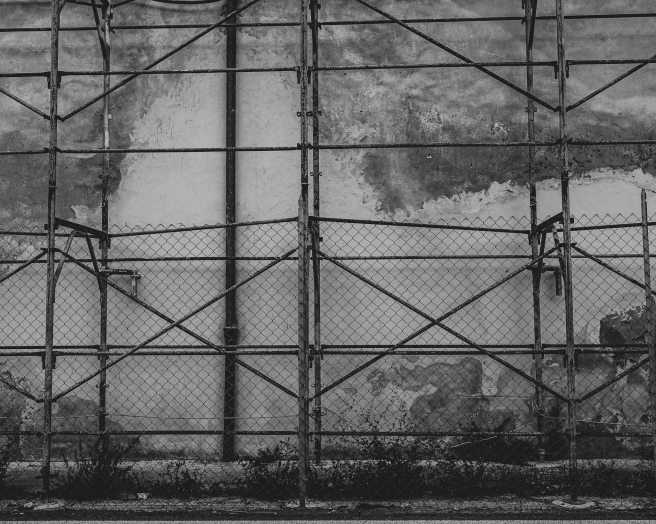
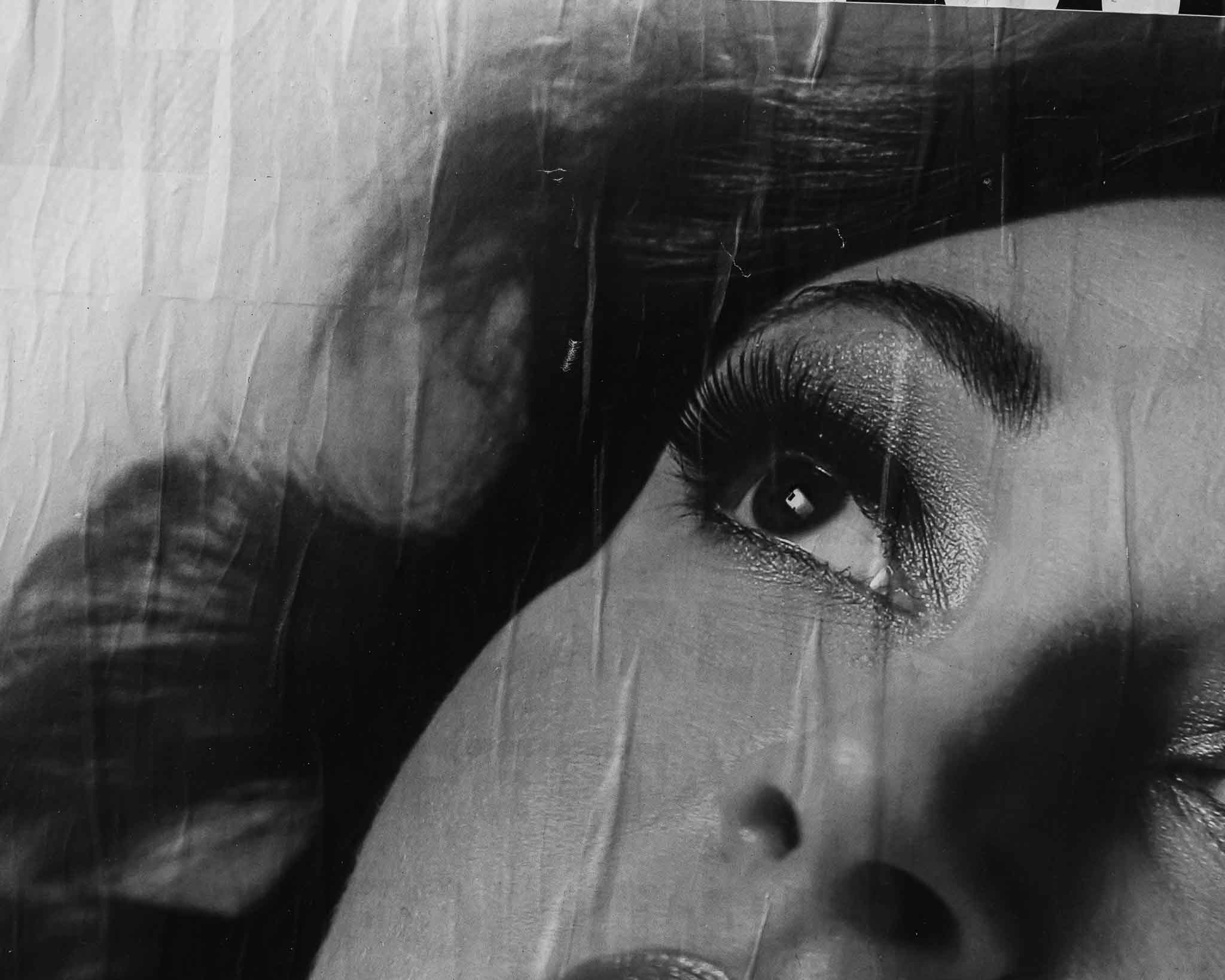
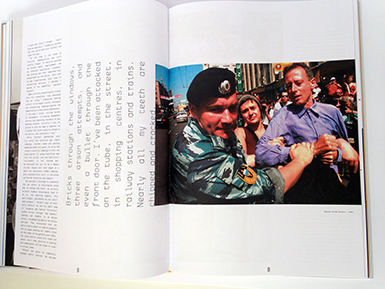
Here are some pages – but still going:
Title page still only an idea – other titles being considered and the image is too full of saturation, need to dial it back
The index is not accurate
Bondage film is a composite that needs to be photographed for real – constructed in ID for now
More pages to come – click on image and scroll across
I have managed to look at this, this afternoon after feeling rubbish all week, working from home for my part-time role, trying to keep going with the BOW A4 project, and keeping the children occupied without all the various online education things set up properly yet. The whole world is in the same boat – and I just have to accept everything will take longer – we’re not going anywhere, I guess, so it doesn’t matter. We are being made to slow down. Which is a good thing no doubt – and what’s more, the Conservatives have been forced into shifting dramatically closer towards socialist principles, although it does seem to be business rather than sick, old, and vulnerable who have the support so far (I wonder if Johnson will be booted out soon and Rishi Sunak put in a caretaker role…)
Anyway, I am getting closer to writing an introduction for BOW A4 but in the meantime has developed the one for this. It’s a tricky precarious path I’m treading … some will misinterpret so I need to find ways to remain ambiguous but explore what I’ve been looking at throughout the modules – entanglement.
At the moment, the (poetry) writing is at the back of the book. I wonder if it needs to be at the front?
I need to re-edit the fish pic – it’s too black.
But otherwise, here, I think it is. Will send to peers shortly and see what they say/
I have also been looking at doing this as a postcard book but struggling with the poem bit at the moment. Not sure how to typeset it and make it work.
alternative introduction :
This project is one of several strands of work which emerged while working on a collaborative project titled A rumour reached the village. While the poem was included, these particular images did not end up in the shared exhibition. They and the group show were made while contemplating the political uncertaintyaffecting the European Union, when I visited my mother in Ferentillo, Umbria, for the duration of the summer school holidays in 2019. [The sequence arrived at in late 2019].
The United Kingdom’s transitional exit period officially began in January 2020. By March, all of Europe was in lockdown due to the Coronavirus pandemic. Italy has, at the time of writing been one of the most severely affected outside of China where the virus is believed to have emerged. The UK was one of the last European countries to introduce severe restrictions on movement and social interaction imposed to stop the spread of the virus.
The village of Ferentillo consists of two wards, each with their own crumbling, medieval hilltop castle built for observation, protection and a place from which to call the alarm in case of danger. It is known for its museum beneath the crypt of Church of Santo Stefano, where naturally-mummified bodies are displayed in glass cases. Some bodies are nearly four centuries old, the youngest is from the nineteenth century. The preserved inhabitants include birds and animals, villagers and visitor’s from afar, including China.
The work is made to acknowledge the fragility and ingenuity ofhumankind, and the entanglement of past, present and future, as well as financial, cultural and organic systems. It emphasises the fleeting moments of ourpersonal experiences; and celebrates, as well asrecognises, that which is greater than the individual. It focuses on cultural structures and natural phenomena, growth, and the vastness of existence. It is the third project I have made in the area.
I have been trying hard to find time to work and the children and other distractions are making it challenging which is extremely frustrating. Am currently working with those effing YouTubers screeching in my ear as children watch their favourite online squawkers – why does it have to be so shouty? I really get Marshall McCluhan’s Medium is the Message now.
In the meantime, I was glad to receive feedback for CSA4 and am looking forward to tackling it again but a rest from the writing will be useful for the work. It is, however, quite hard not to jump in and say – see! see! this is what I’m saying – THIS!!! This global thing now and the UK government’s reaction. This is what I’m talking about. Holding back and waiting hoping to feed that energy into the practical work. Then writing about it calmly.
In the meantime, I have been sharing old slides which I’ve scanned with the AI friend and seeing what happens.
Sometimes, its reactions are dull. Sometimes they are more interesting/ but there is an argument for including the dull ones too.
I like it best when they are slightly adrift (see example 1)
One of the most humorous reactions in the early days was when I showed it Duchamp’s Fountain and it asked me ‘are you thirsty’. I loved that. Maybe I should include it? Or something along those lines.
Working with an AI friend at this particular time is quite pertinent and my current ending too
Here are some quick phone edits where I used an app to show the ai response to an image – will do it differently, either by hand and rephotograph or in photoshop but here are some of those mocks up so far. The best response is the astronaut one of course.
I got hold of some more slides and will be sharing with the Ai to try and elicit some more interesting comments.
For the anthology, here is suggested contents page. Order to be decided in time and contents too. There will need to be an editing process.
//contents
introduction
cut photograph on self-healing mat
a thing to cut withtalk with helenus (I)
when tom shot penelope his ideal wife
and their kids in 1971
A well-written, constructed and ambitious essay. The questions you are asking are (too?) huge (yes too huge but see end of report for rationale for sticking with it) and you offer a genuine attempt to answer some of these difficult and pressing questions about the nature of perception and the difficulties of the shifting photographic (and beyond) landscape.
The specific examples of art work that you give to try to unpick your ideas are really useful for the reader and help to emphasis your philosophical points. I, for one, would have enjoyed more of these to help me get to grips with some of these ideas! I do plan to add more, including more of my own – the work is in development. There are some minor grammatical and spelling errors that I have circled that are easy to remedy. Thanks
I am left with a couple of critical points that you might like to address in your final draft, if you think appropriate.
1 I know that you are specifically addressing photography (and at times the moving image) in the context of this essay but on a couple of occasions when reading through (I have scribbled comments in the margins if you can read my writing!) I felt that you were distancing photography from other modes of production that do not suffer from the same Cartesian problems (performance art, participatory art practice?). This is problematic because you are, in part, discussing huge problems, ideas and world views that if critiqued solely (or predominantly, at least) through the photographic lens, can lead to a falsely narrow view – the very thing that you are suggesting is problematic with the way that we (in the West) think about and represent the world. This is a good point – and I will find a way to underline the discussion could apply to various ‘isolated objects – i.e. disciplines’ within the arts. And, of course, to politics, academia, and economics – to a general mindset in the West. But, that due to my course, I am looking through the lens of photography (of the academic art sort), which as it happens, is particularly guilty of the charges laid. There is probably too much to say about the split in western consciousness (logic vs ‘feeling’) – rationalised in the Cartesian era, and eventually expressed in photography, hence the inclusion of Cassandra as a figure – so maybe worth finding a way. Photography (of the academic art type) often seems incredibly myopic. And whatever flaws it has in relation, are compounded by what comes across as a fragile ego and the subsequent manifestation of that, a horrible superiority complex – which leads to work that claims to be about universal issues but often seems about little more than its own insecurities.
It may be that you haven’t emphasised your reasons for concentrating on photography in the essay (because you are studying on a photography course? See above). As well as continuing to be the most dominant form of representation for consumers, the photographic community all too often alienates itself from other modes of representation. This is not, unfortunately, as a way of creating an objective distance to help the debate, rather as a way of protecting itself from intruders as well as for commercial reasons (see above). Interestingly, the very people who seek to critique the medium from the inside (Hilliard, Arnett et al.), arguably do the opposite; the further alienate photography from a wider discourse?
2 I say the following reservedly, wanting to avoid a panicked inclusion of unnecessary material, but: You have done well to avoid bogging yourself down with too much of a description of quantum theory but I wonder if there is room for a little more help for the uninitiated reader? I suspect a few tweaks here and there could shift this impression. There is also a very good bit from Barad where she stresses classical and quantum models do not describe two different worlds. They describe the same world but from different points of view/perspectives. I already identified I should probably make sure that’s in there somewhere.
3 Does your conclusion adequately sum up your argument? Do you need to refer more to quantum theory here? Yes, I should. Or will this confuse rather than illuminate?
I agree with comments made on the document by hand that the conclusion needs to be longer. I will also delete the bits you say you got lost in – I have clearly been unable to describe myself properly there and am looking for areas to cut: the bits I can’t explain properly for lack of thorough understanding is probably a good place to start.
The main ‘flaw’ with the essay is that it is too big a subject to be dealt with in 5000+/- words. However, the issue is so pressing, so unbelievably important that the disadvantages of sticking with it are outweighed by the need. The hubris of the ‘single-authored’ hero mentality that dominates our culture has completely destroyed our habitat. Barad’s theory (which has been so important to New Materialism – a term I purposely didn’t mention in the essay as there were enough new words and categories to contend with) underpins a way of thinking that promotes the rejection of human (white/male/western) exceptionalism. Today, that is so pressing – and it cannot be stressed enough. As I write it, that mentality is being played out in the worst way possible. Perhaps my essay will not change many minds, but it will influence my circle of people and I have already seen some of these ideas have an impact on others. It’s vital that we all find small ways to shift the destructive mindset we Westerners have assumed is natural and fixed for too long.





 SJField - OCA Level Three Study Blog