While doing UVC in 2016, I was asked to look at Rhetoric of the Image and talk about a couple of advertisements, relating them to Barthes’ ideas. It’s really interesting to look back, as the examples I explored were to do with the yet-to-be-held referendum. Barthes’ style is so opaque at times, I am still not sure if I was making the right sort of connections, but I don’t think I’d change much of what I said as I view my blog in retrospect, with three years of history between the time I wrote it and today.
- A slight diversion from Barthes’ essay but relevant and perhaps linked to another of his well-known essays: It’s interesting I picked up on the tautology in the advert – it seems to me (in my personal and most likely biased view) that Brexit and tautology are very closely related. “A vote is a vote” in the advert seems like a forerunner to “Brexit is Brexit”. Do we really need to be told a word means a word? Why must political ideas all be reduced to meaningless empty circular straplines? Does this negate meaning or invert it? Is the advertising industry guilty of dumbing us all down to such an extent, that we really are only capable of hearing and taking on board – ‘Apple means Apple’. See my Notes on Myth Today (1957) “Tautology – An ugly thing. One takes refuge in tautology as one does in fear, or anger, or sadness. Tautology creates a dead motionless world. See my blog post for Project 1 – Operation Black Vote advert” (Field, 2016)

From: https://www.theguardian.com/media/2016/may/25/eu-referendum-poster-minority-ethnic-voters (24/06/19) - Looking at the advert I originally, critiqued, I am also struck by the dreadful stereotypes it perpetuates. This is hardly surprising, given the advertising industry tends to be populated by people who might never have met anyone who exists outside their quite narrow circles. We must all fit into neat little boxes and woe-betide anyone who can’t. There is no space for anyone ill-fitting in the post-post-modern digital archive of consumers out of which our current reality is forced.
- I have been stuck these last few years by how ignorant of others less fortunate than them, even the most well-meaning people can be. Friends who work in or near Whitehall might have the best ‘liberally’ minded intentions but simply have no idea of the suffering that is actually taking place in this country, of what drove people to vote against the ruling classes in 2016. The UK still seems shackled to a ruling class, many of whom are the great-grandchildren of those who ruled in centuries gone by. That British people aren’t more shocked by this is incredible. That people don’t see it or question it is extraordinary. However, I think and hope more and more people will be less satisfied and more incredulous by that reality, as social media reveals the extraordinary levels of incompetence amongst our rulers. Myths are being upended by social media, but sadly at the same time, new myths are being constructed. We are in a state of chaos and flux.
- Yesterday, I saw Andy Holden’s Laws of Motion in a Cartoon Landscape (2011-2016). In it, Holden compares Capitalism to a cartoon character who runs off the cliff but has no idea of the danger until it becomes conscious and then collapses. He likens this to the banking collapse but that might be seen as one wave in a succession of waves, to come. Perhaps society is becoming conscious of the myths we have lived with – what will it take to up-end them, or are they in the most horrific way upending themselves? The hivemind is far more complex than we understand – as a group, we do not seem able to take control of events until they have run their course, no matter how horrific or vile we understand them to be.
Some notes of my most recent reading of Rhetoric of the Image:
The Linguistic message
- Linguists, we are told, were suspicious of the linguistic nature of the image. Surely, this can’t the case anymore as people use images and emoticons to communicate more and more, perhaps even usurping text. (33) See page 11 of Derrida’s Grammatology (tr. Spivak, 2016)… “[the] nonfortuitous conjunction of cybernetics and the ‘human sciences’ of writing leads to a more profound reversal”.)
- Images and text, he states, are ‘antipathetic’ to lived experience. (33) Douglas Crimp also touches on this in The Photographic Activity of Postmodernism, which I looked at previously. Again, Derrida writes “In this play of representation, the point of origin becomes ungraspable. There are things, reflecting pools and images, an infinite reflection, from one to the other, but no longer a source, a spring.” I wonder if this is why we’ve reached this place where tautology rules. We are just so far removed from the origin through layers and layers of representation – we cannot find it anymore.
- Barthes then begins by staying he will use adverts to explain himself as meaning is intentional and frank. The signifiers are “full, formed, with a view to the optimum reading” (34) Barthes’ might have been interested to see the following adverts...
These adverts (regardless of one’s thoughts about the content) are tapping into society’s mistrust of advertising and consequently meaning. As the meaning of advertising signification is now suspected of being false, (and so much more besides) we might question Barthes statement in retrospect. Although unusual, these adverts do not subscribe to Barthes analysis so easily. Meaninglessness is a big issue today – also referred to as ‘fake news’. A century of being manipulated by advertisers might be responsible for this sense of society having been gas-lit, leaving us all in an unstable landscape (like the cartoon landscape of Holden’s film). Images, which can and do invite multiple readings, even with the tyranny of advertising slogans, but which ultimately lie to us have contributed to this.
(Below – my comments are in orange, otherwise quoted from Barthes)
- Panzini – French and ‘Italianicity’ Denotational and connotational – in a single sign therefore seen as one message.
- Image – not linear, order therefore not important
- A return from the market = freshness (despite the dried and tinned aspects) and domesticity
- Half open bag = shopping around for oneself as opposed to the hasty filling up of a more ‘mechanical’ civilisation.
- Colour (which we don’t see in the reader) implies Italianicity. Stereotypes (based on the fact this is a French advert selling a product that is supposedly Italian. Is this another example of Tautology or reinforcing a message which has already been stated in the pastiche of a name, again underscoring stereotype of otherness – a different group)
- The sign of the still life (nature-morte) – heavily cultural and reflects history of art in the advert (sales, mechanical, mass produced)
- “A message without a code”? see below
- The Panzini photograph/advert offers three messages – The linguistic message and two iconoc messages which Barthes’s suggest – we might have the right to separate: the perceptual message, and the cultural message. (Confusion comes about from function of the mass image).
- Linguistic message – “today at the level of mass communications, title captain, accompanying press ect… we are still civilisation of writing”. Some suggest we are becoming less and less so – as iconic signs are used to advertise very well known brands more often than ever. (However, for now, at any rate, these images emerge from written code (the computer translates to another code which we don’t understand and cannot read and that too is a sequence of symbols))


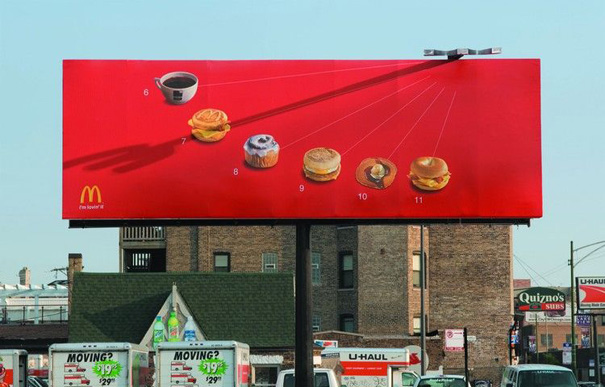
- Linguistic sign acts as anchorage and relay – the above images have very little or no writing (which Barthes’ says doesn’t matter, any presence acts as anchorage and relay) I wonder if the power contained within certain corporate non-linguistic signs are so great that it is able to operate as an anchor itself while being read by today’s consumers. If anchorage is control, and certain of its sign then this type of sign is possibly the most self-assured.
- All images are polysemous – underlying their signifiers, a floating chain of signifieds, the reader able to choose some and ignore others. Polysemy poses a question of meaning and this question always comes through as dysfunction (note the language of Freud).
- Societies ‘fix’ the floating signifieds to counter the terror of uncertain signs. Today, it might seem there are too many unfixed signs as we transition from one epoch to whatever is coming next, digital technology perhaps destabilises, the reaction against this (culture war, as it has been termed) is to head backward, to fix things down, to make things certain again. You see this is the rhetoric of Make America Great Again. A giant, global attempt to fix unstable, ‘flickering signifiers’ (Hayles, 1999). Additionally, all advertising then taps into this terror. Buy this thing and feel safe is the underlying connotated message. Powerful, beautiful, one of the crowd, above the crowd – all of these are second level messages which sit above the initial one – about keeping the ‘terror of uncertain signs’ at bay.
- Linguistic signs have the power to suggest, “What goes without saying …” & “What is conspicuous by its absence” (Chandler, loc 1622) Anchorage banishes one possible signified…it acts a counter taboo. Anchorage can be ideological (and Barthes Myth plays a critical part in this), it remote controls, subtle dispatching, certain of its sign. anchorage is control
- With respect to the liberty of the signifieds of the image, the text has thus a repressive value and we can see that it is at this level that the morality and ideology of a society are above all invested.
The Denoted Image
- Barthes tells us – only the photograph is able to transmit the (literal) information without forming it by means of discontinuous signs and rules of transformation. Drawing is coded he says, i.e. the style of drawing transmits information. But he insists the photograph does not. Again, unless I’m really misinterpreting something, I find this difficult to accept. Photographic decisions, especially today, seem to contain all sorts of social and structural information – but then today’s photographs are more like drawing than ever as various levels of digital manipulation (or decisions to avoid it) impute information about the society – in the same way, perspective in drawing does in the West – and therefore, potentially say a great deal. The expertise and practiced execution of any drawing carry connotation and denote messages too. I cannot see why lighting, sets, film stock (or the digital re-enactment of it) don’t also carry such connotations. I don’t believe that just because something is mechanical, it doesn’t carry a code. In fact, it might carry a very specific code informed by ‘the apparatus’, which is very difficult to shrug off except by experimental photographers who are deliberately finding ways to debate with the code directly, as argued by Vilém Flusser (2000)
- I wonder if today, our suspicions of photography negate this argument of Barthes of a photograph being without a code, and especially amongst tech-savvy sophisticated younger readers of images who have grown up with Snapchat and Instagram filters.
- If I were to use a Snapchat style image of a woman with animated sparkly bunny rabbit ears in an advert – there are several possible readings (perhaps anchored by an ironic strapline for more sophisticated consumers or else reinforced by one aimed at teens who love that kind of thing) but the structural code is inescapable and only a Martian would find it difficult to read. There are quite specific codes in all of the examples I have included here – the overzealous processing in the Vote is. Vote advert speaks volumes, for instance.
Refs: All accessed 23/24 June 2019
https://stylecaster.com/beauty/vintage-chanel-no-5-ads/#slide-11
http://www.cinemamuseum.org.uk/2019/andy-holden-laws-of-motion-in-a-cartoon-landscape/
https://www.theguardian.com/media/2016/may/25/eu-referendum-poster-minority-ethnic-voters
Barthes. R (2013) Rhetoric of the Image in Visual Culture: A Reader, London, Open University, Sage Publications; 33-40
Flusser, V. (2000) Towards a Philosophy of PhotographyTrans. Mathews A. (Kindle Edition) London: Reacktion Books
N. K. Hayles. (1999) How We Became Posthuman: Virtual Bodies in Cybernetics, Literature and Informatics. Chicago: University of Chicago Press
 SJField - OCA Level Three Study Blog